Home Quiz Old Paper PPT

Ppt on Coconut

Summary:

Uncover the significance of the coconut palm, its cultivation, applications, and economic impact in tropical regions. From coconut water to copra, learn about the various resources and challenges associated with this wish-fulfilling tree.

Summary

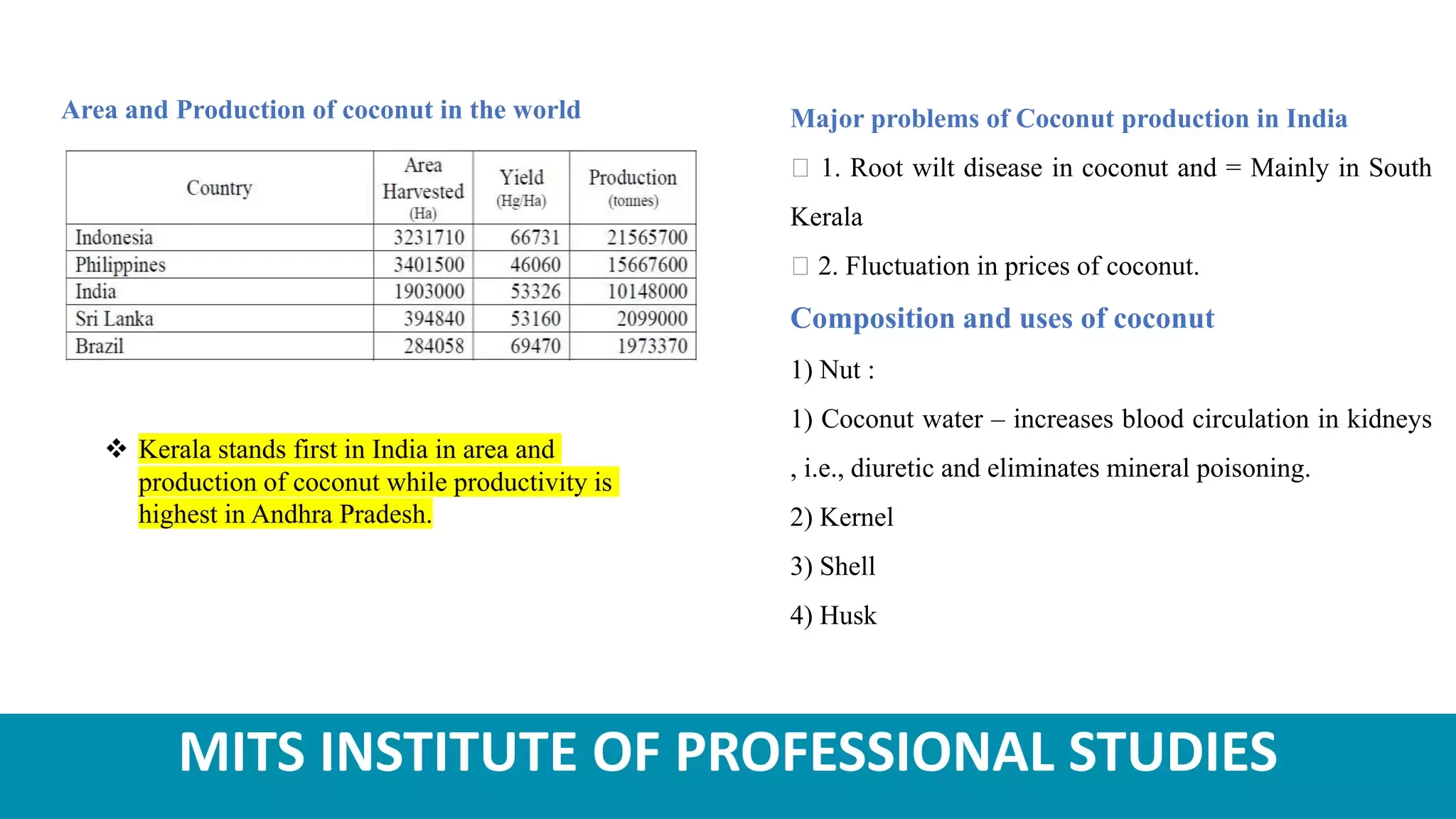
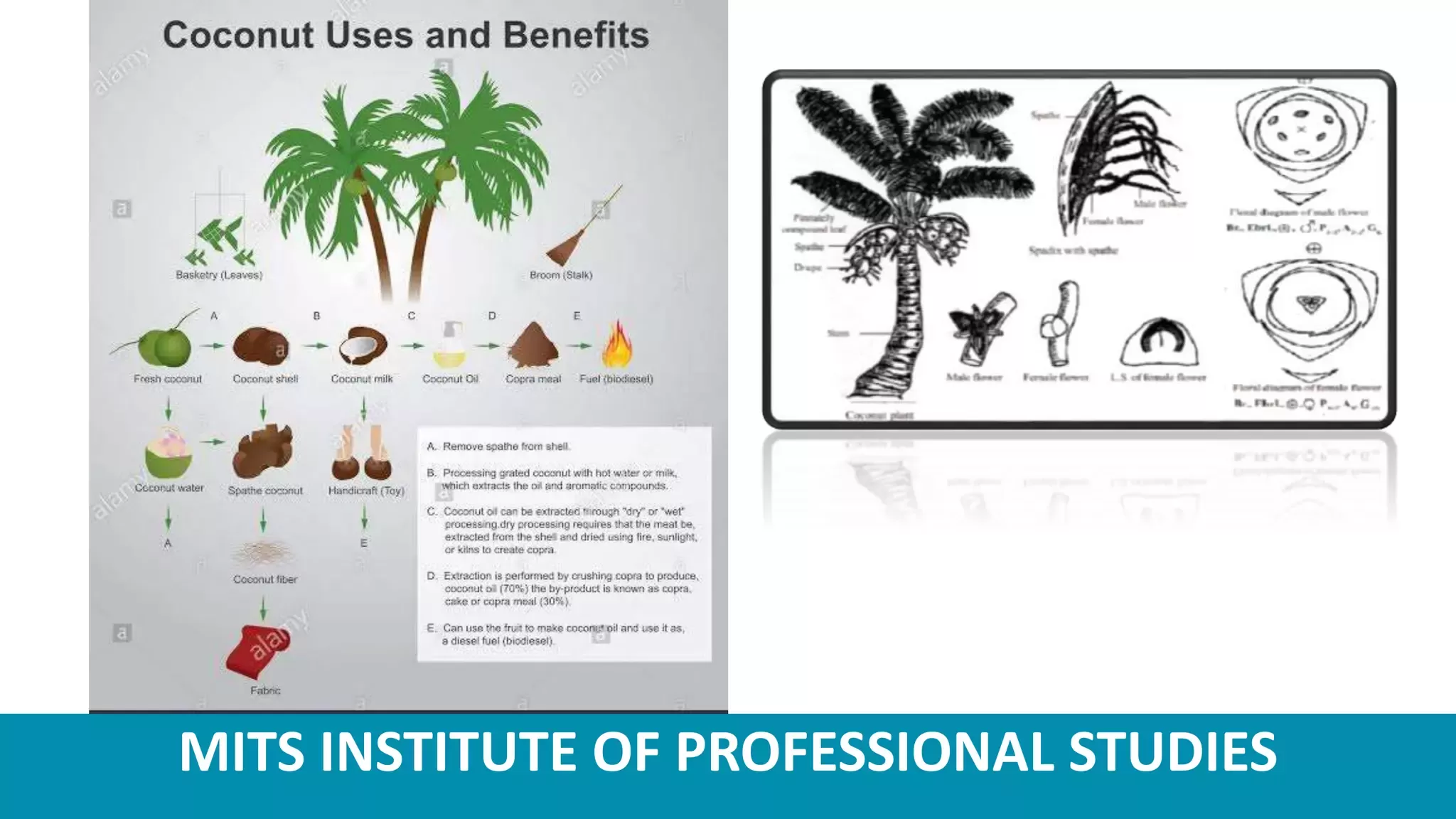
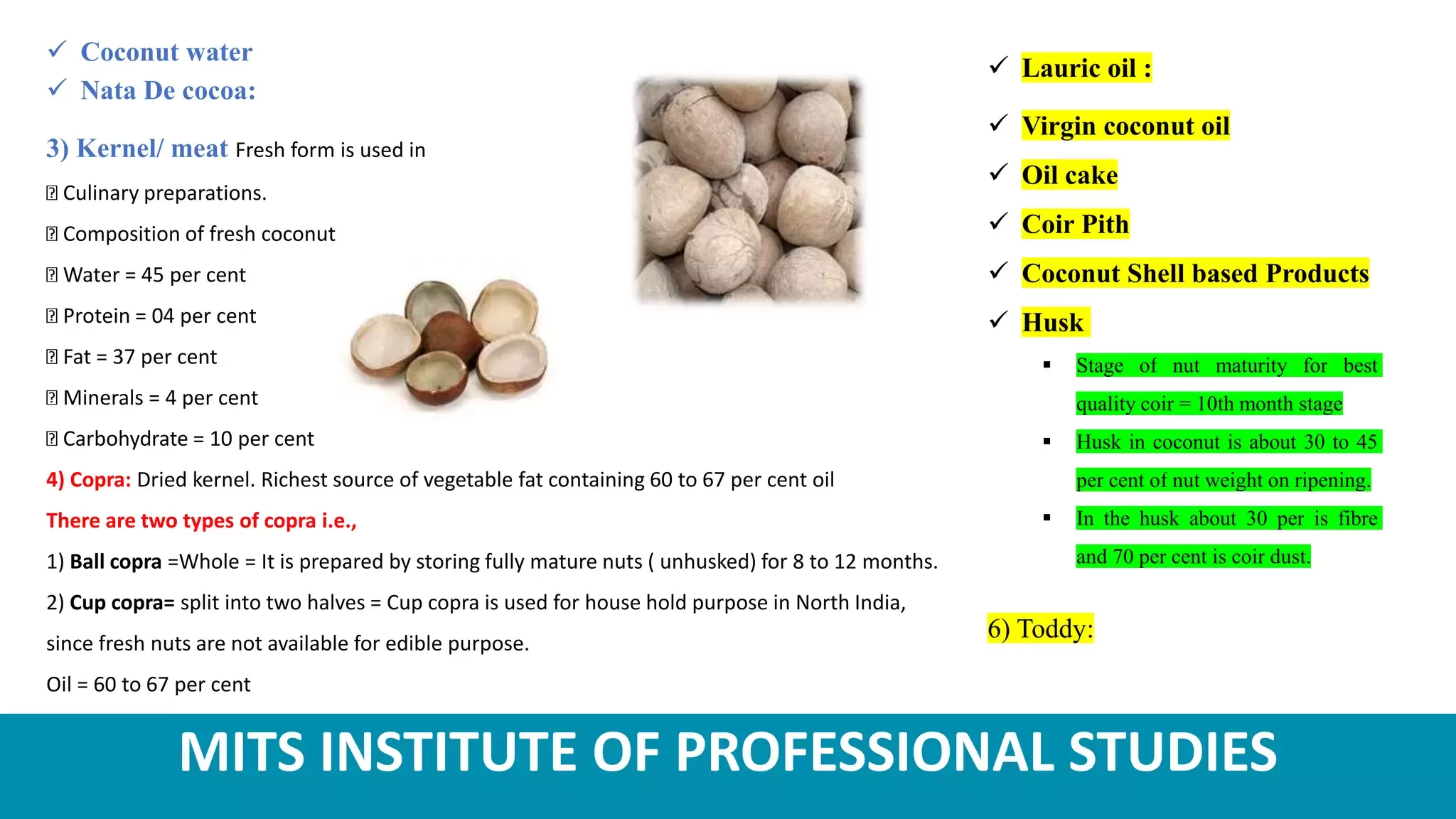
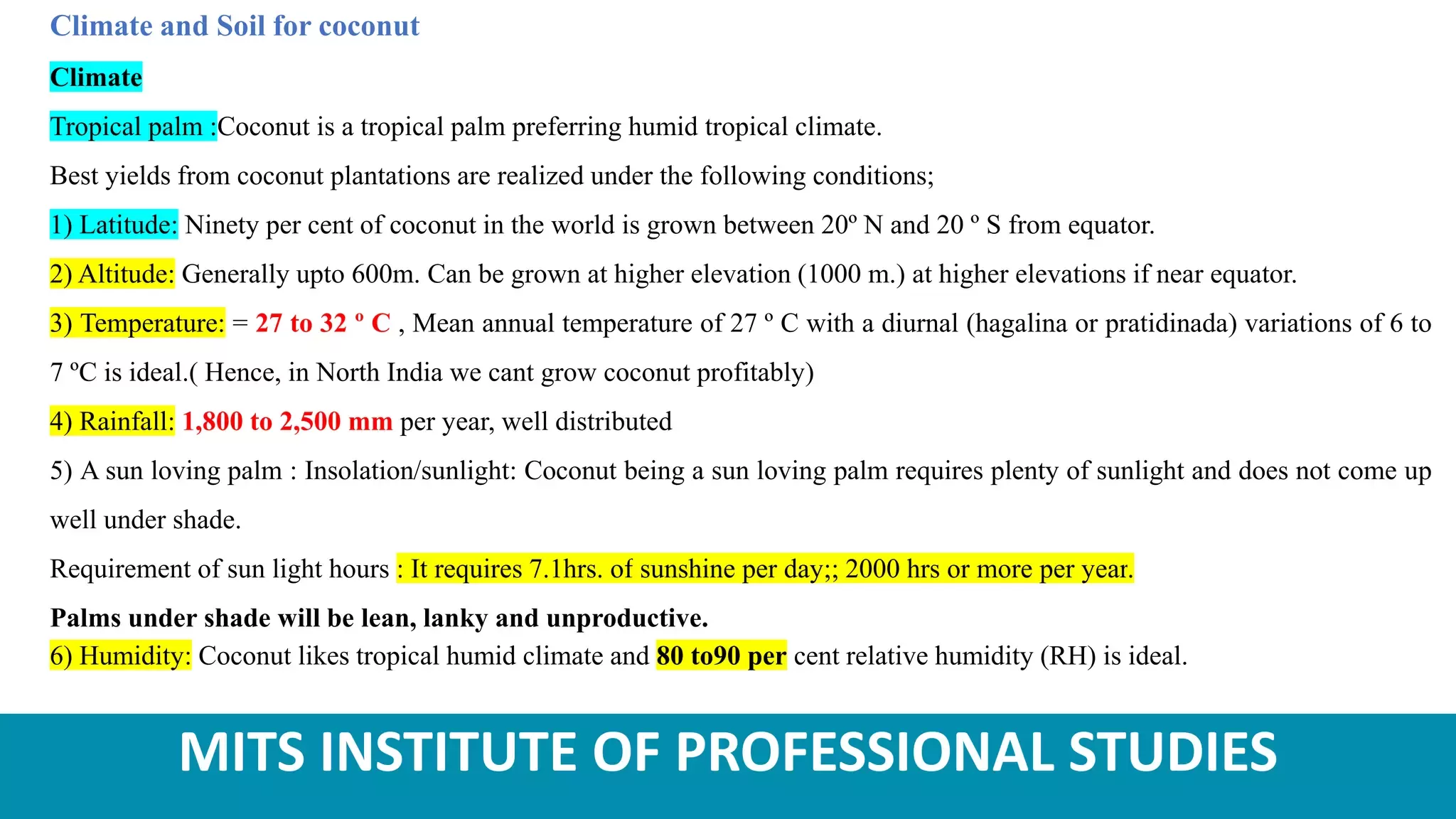
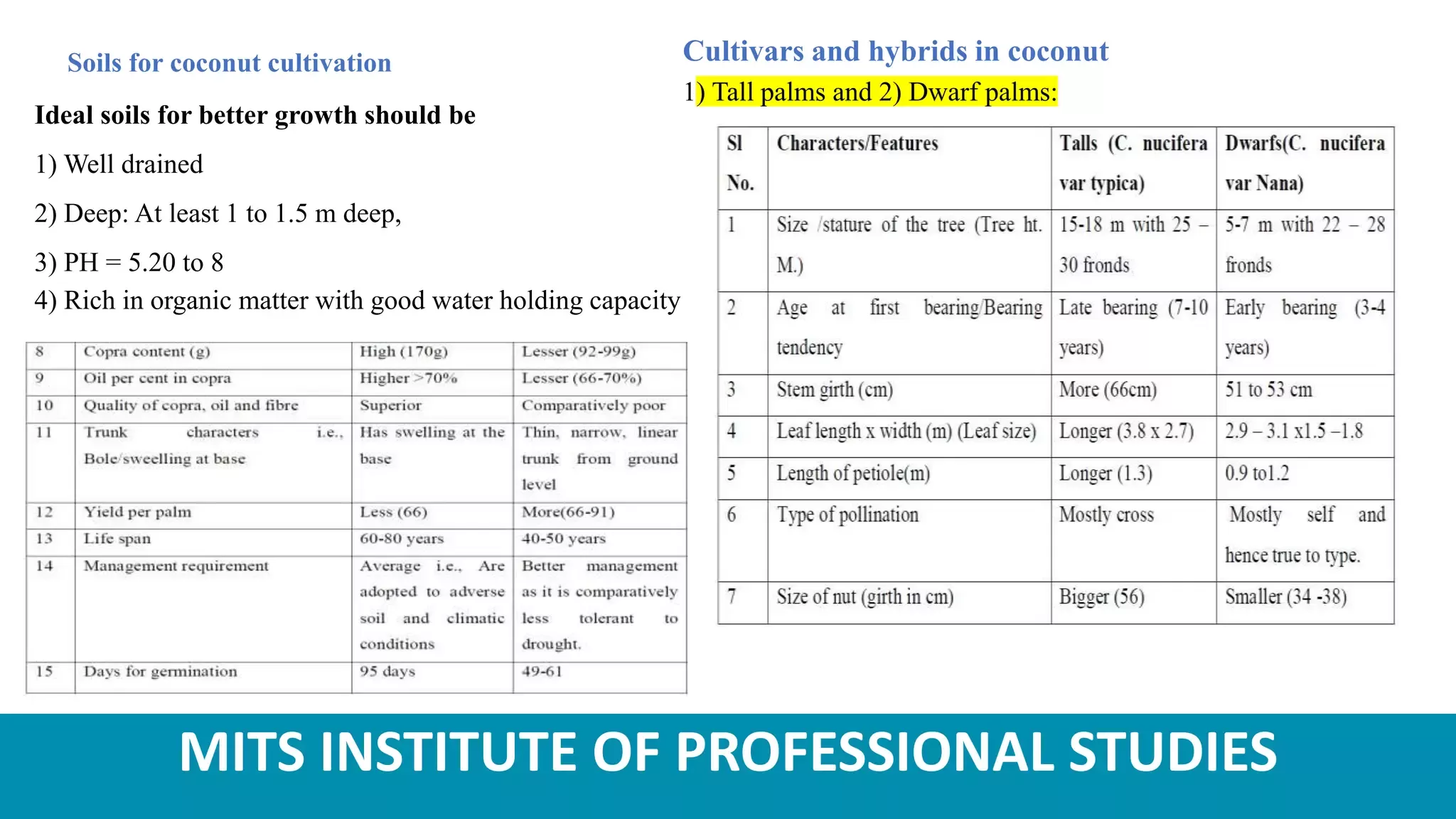
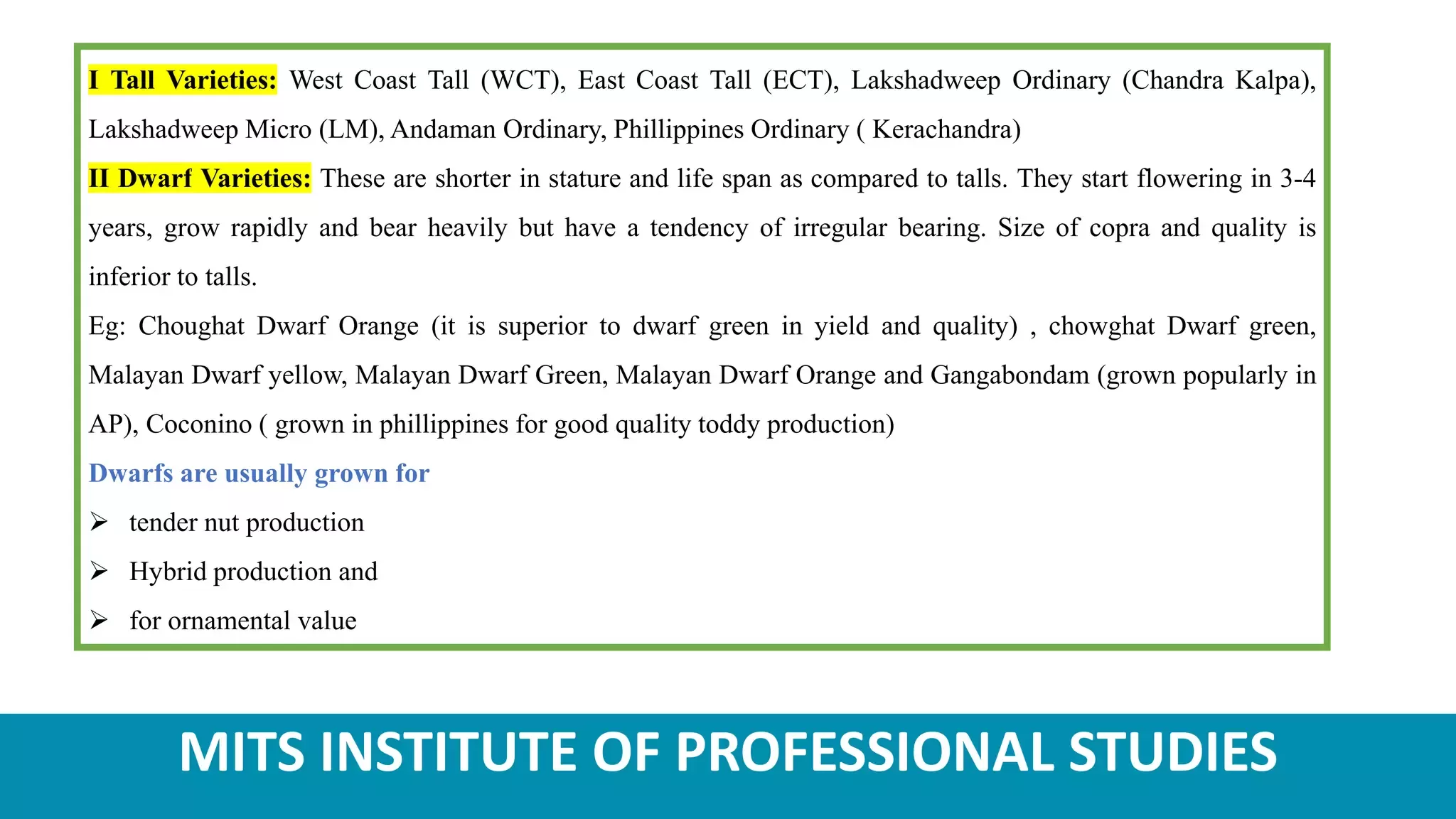
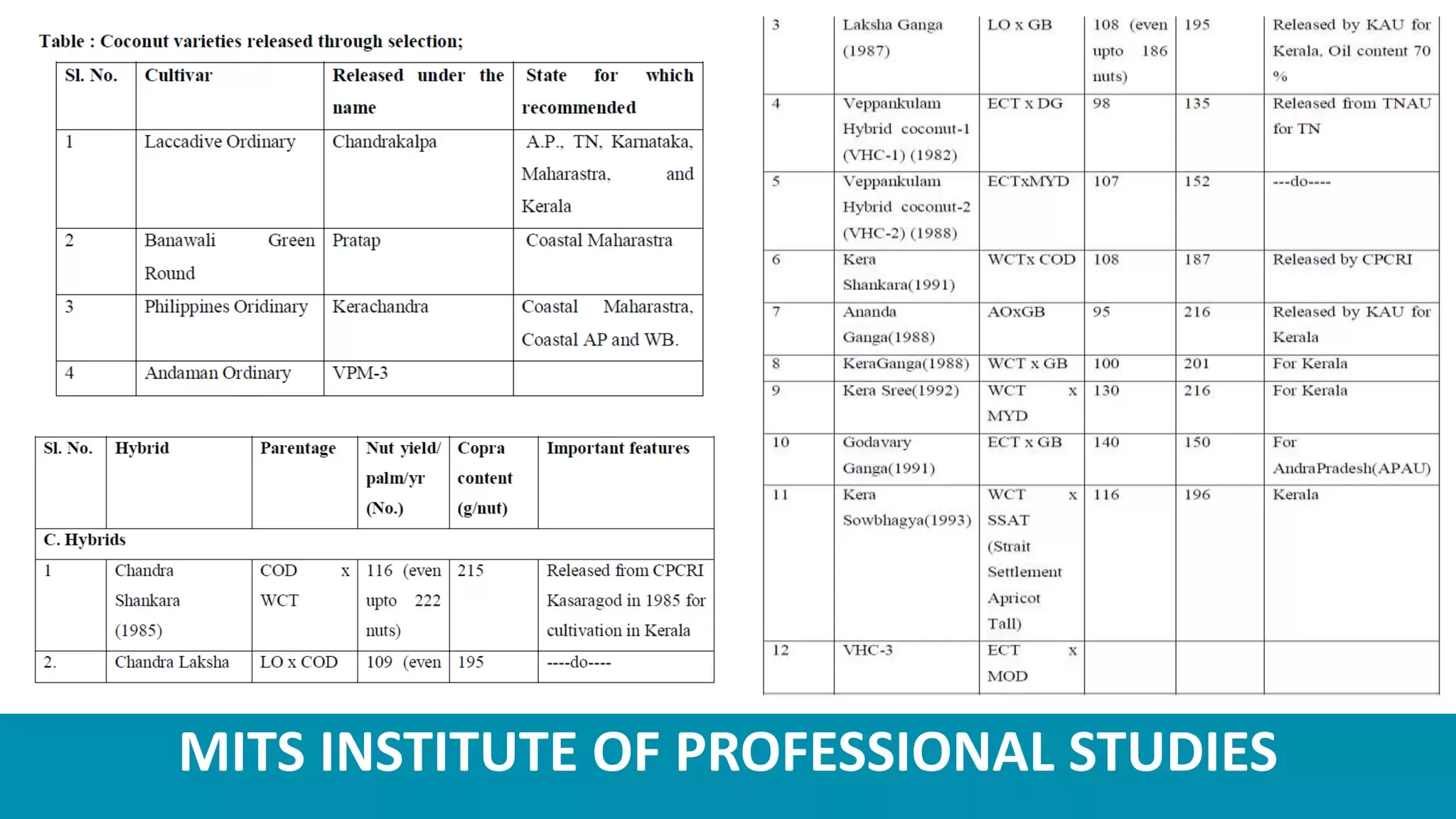
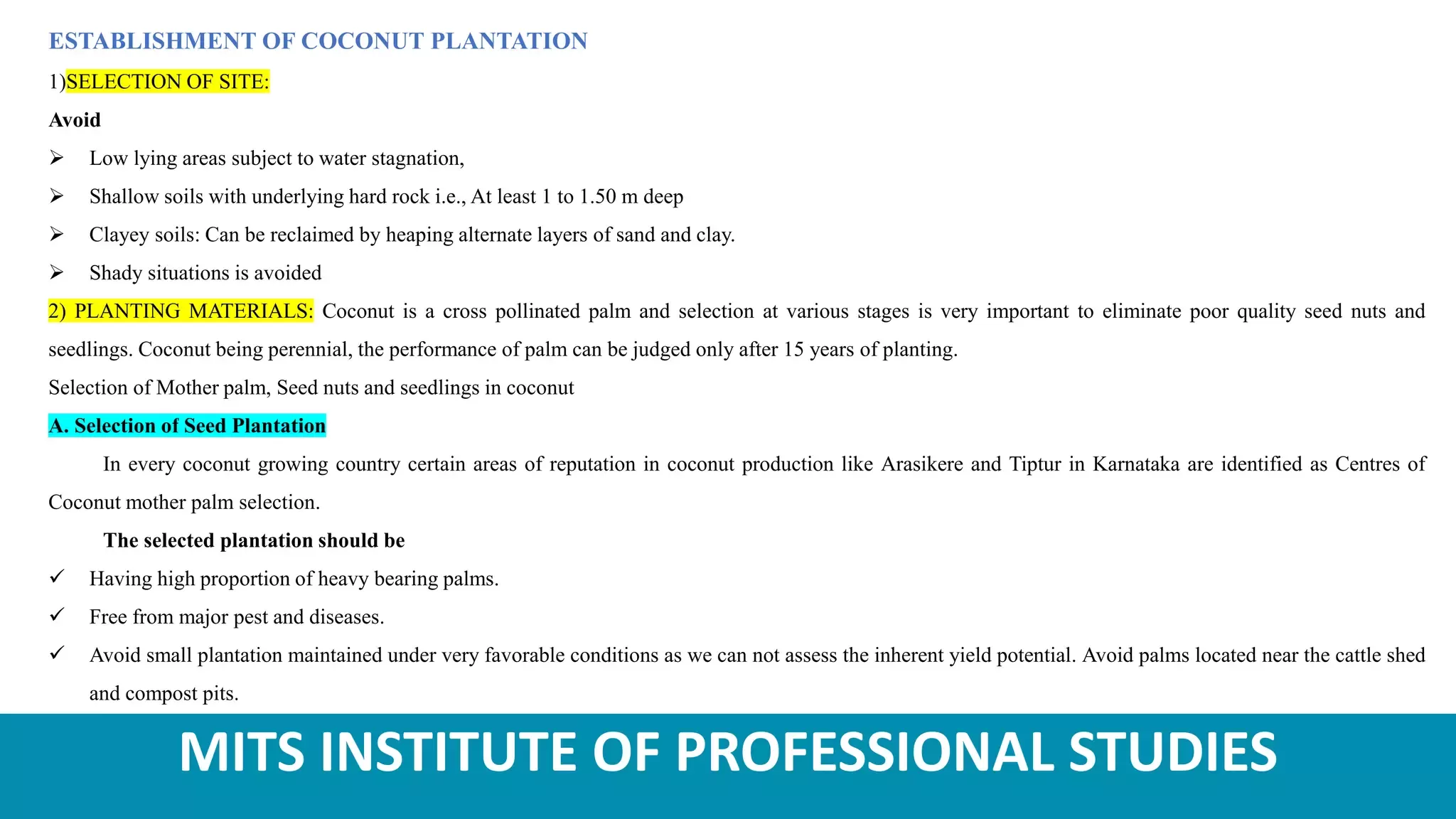
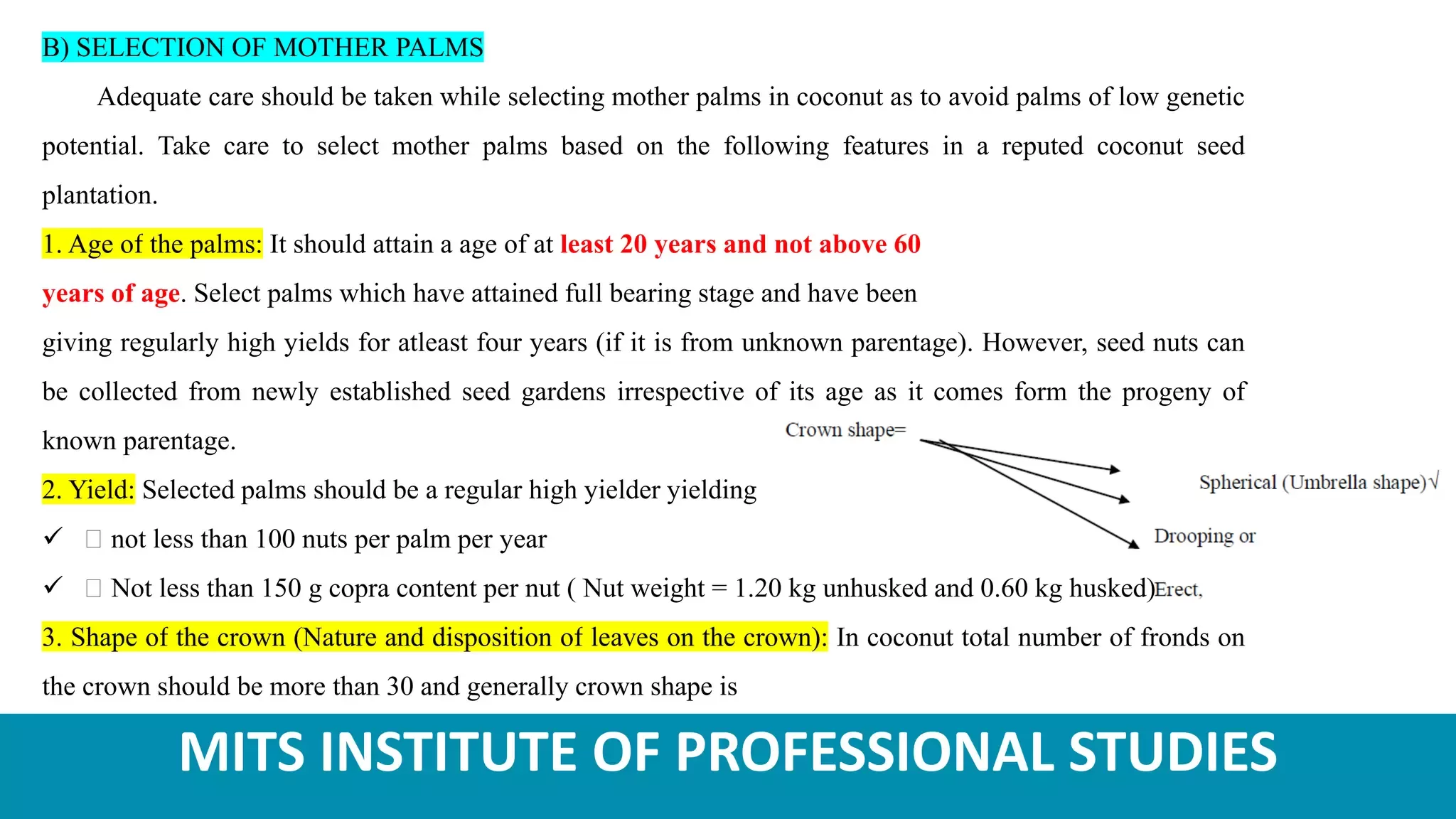
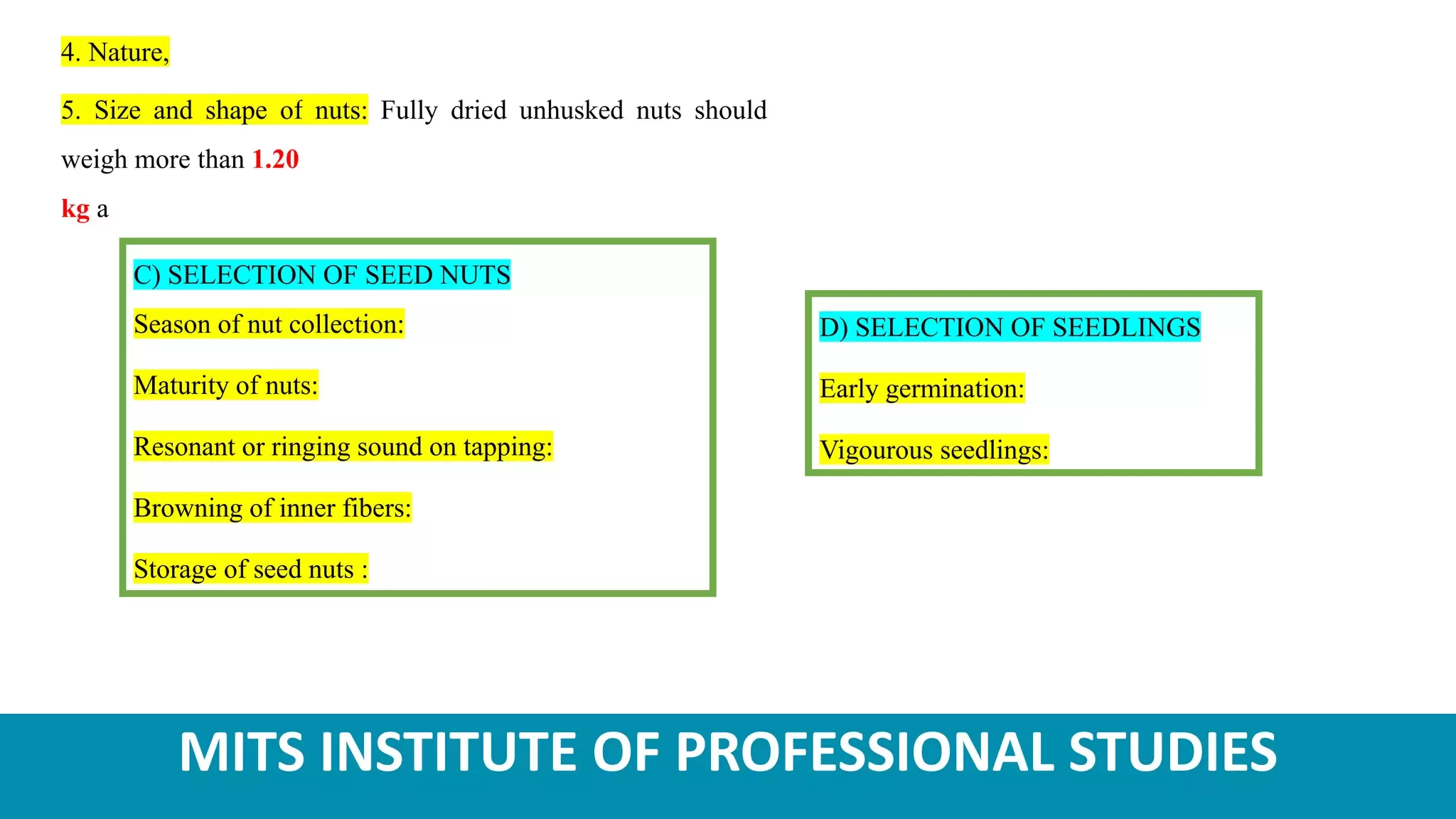
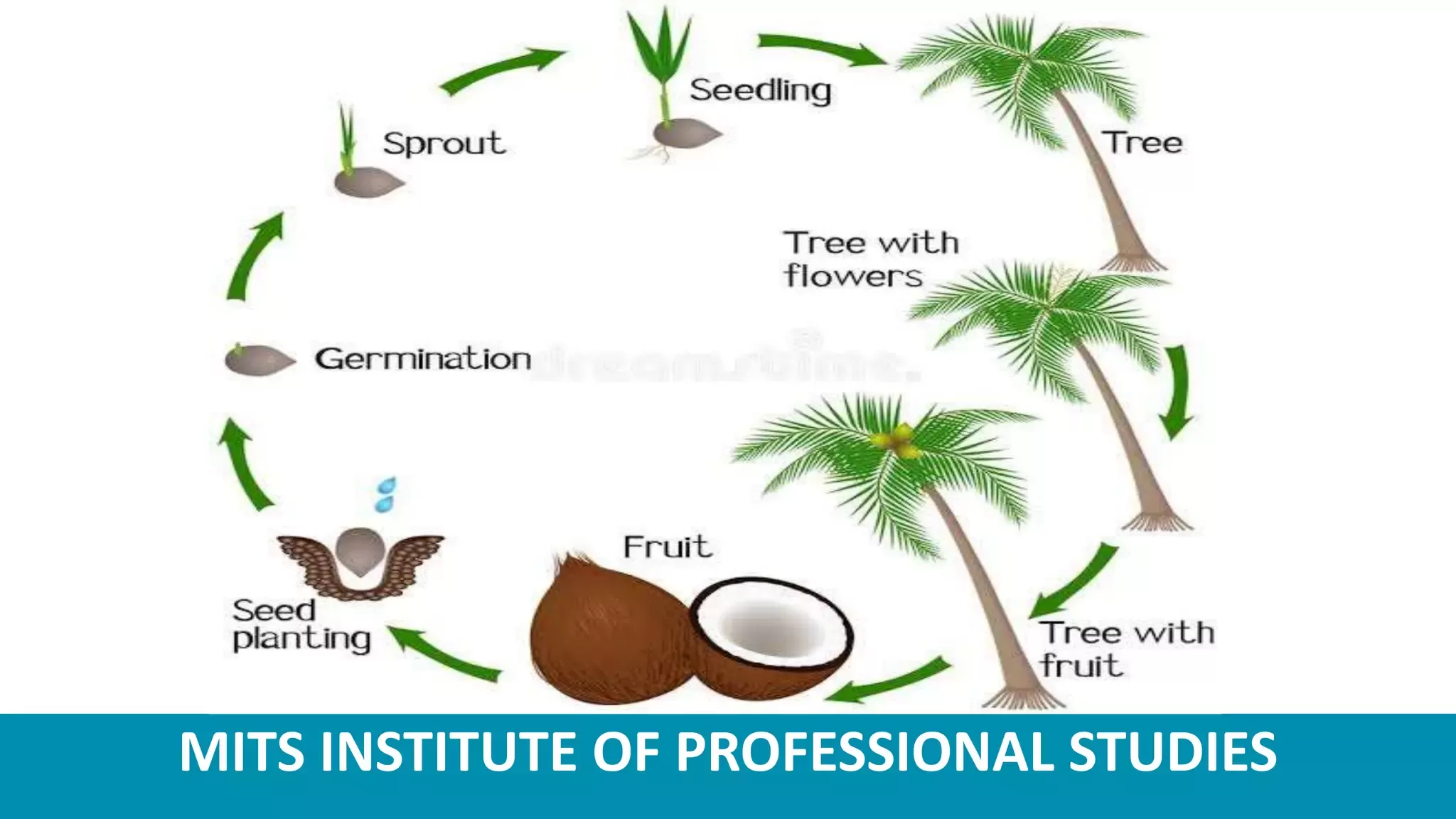
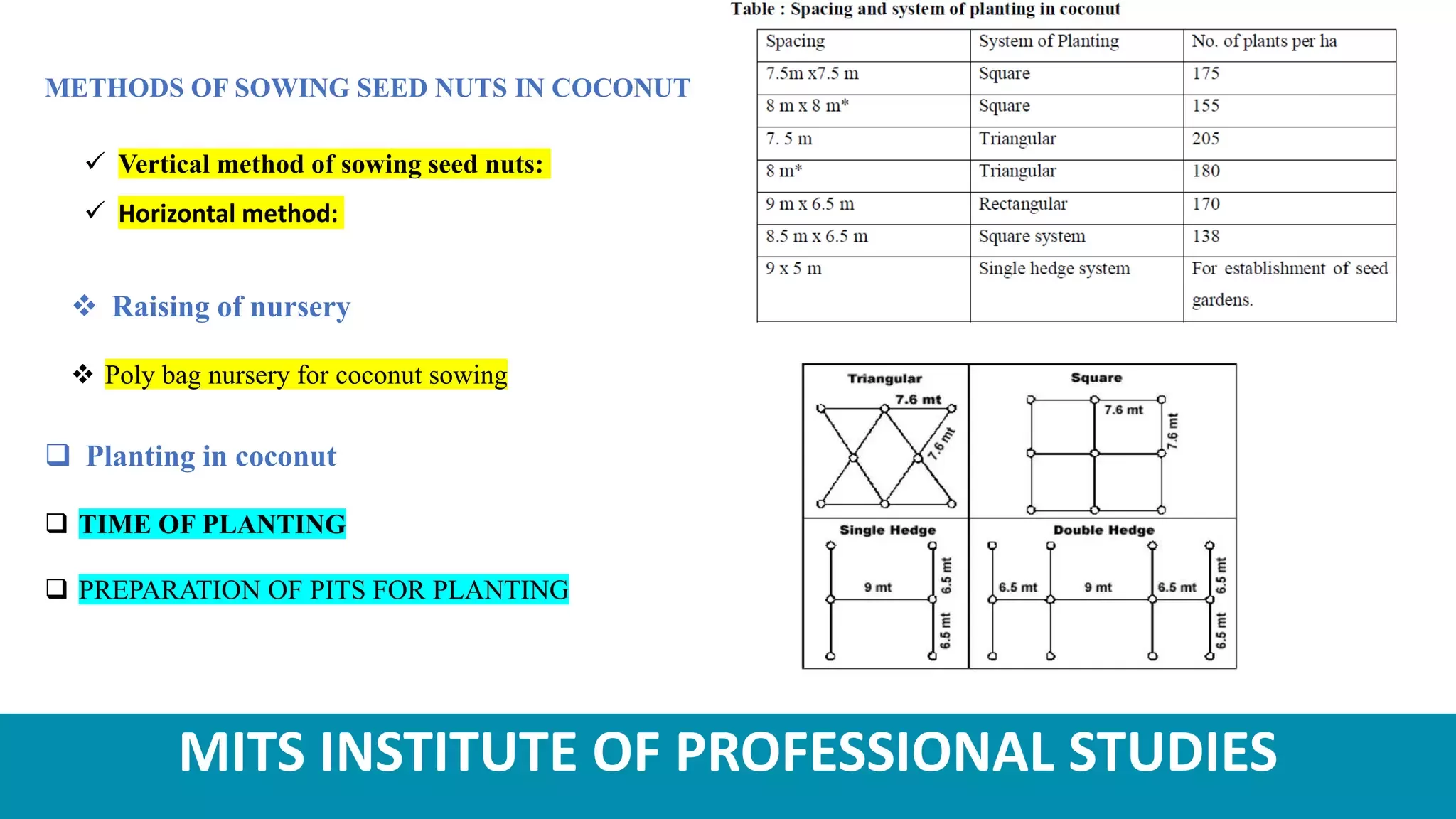
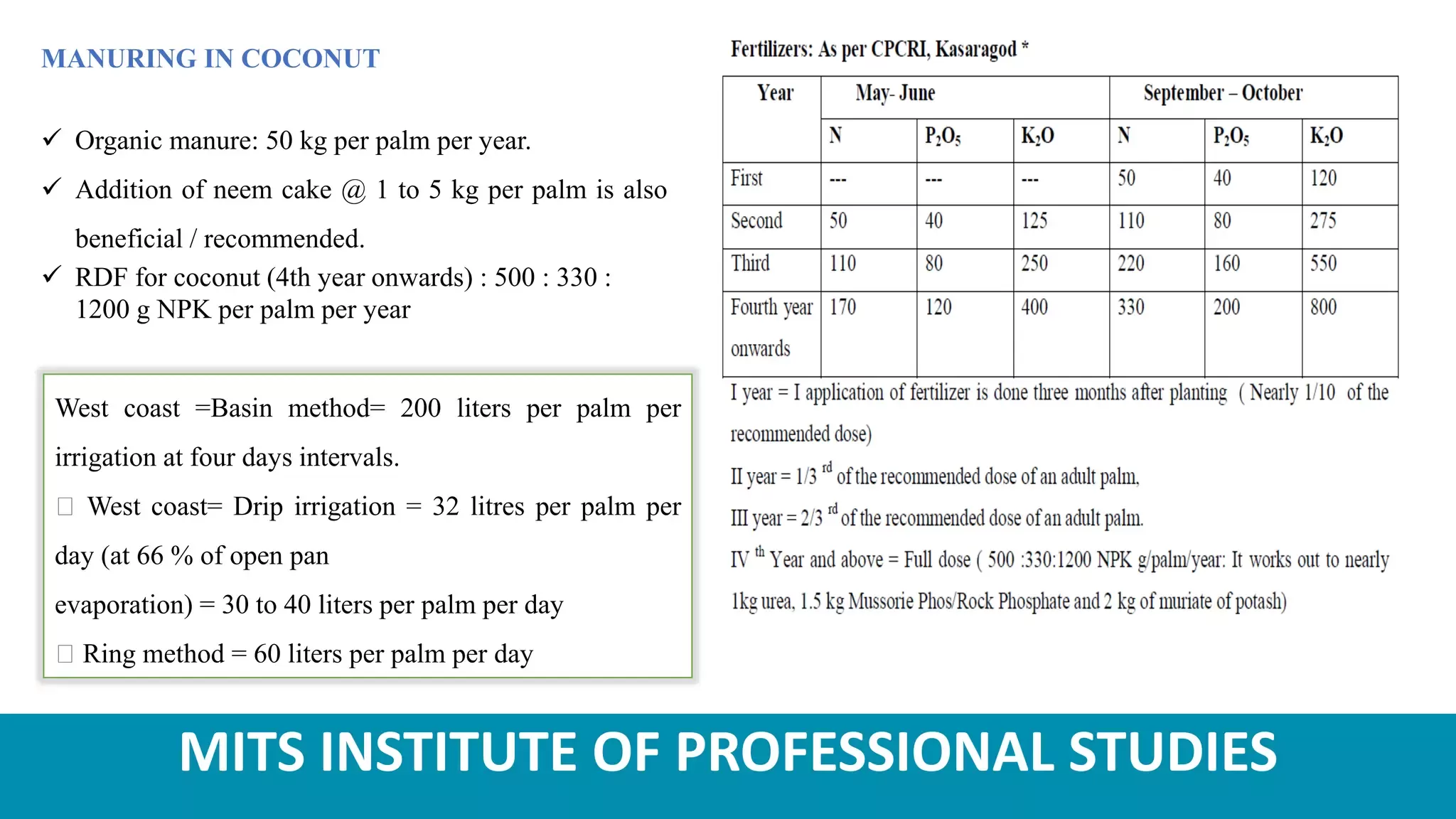
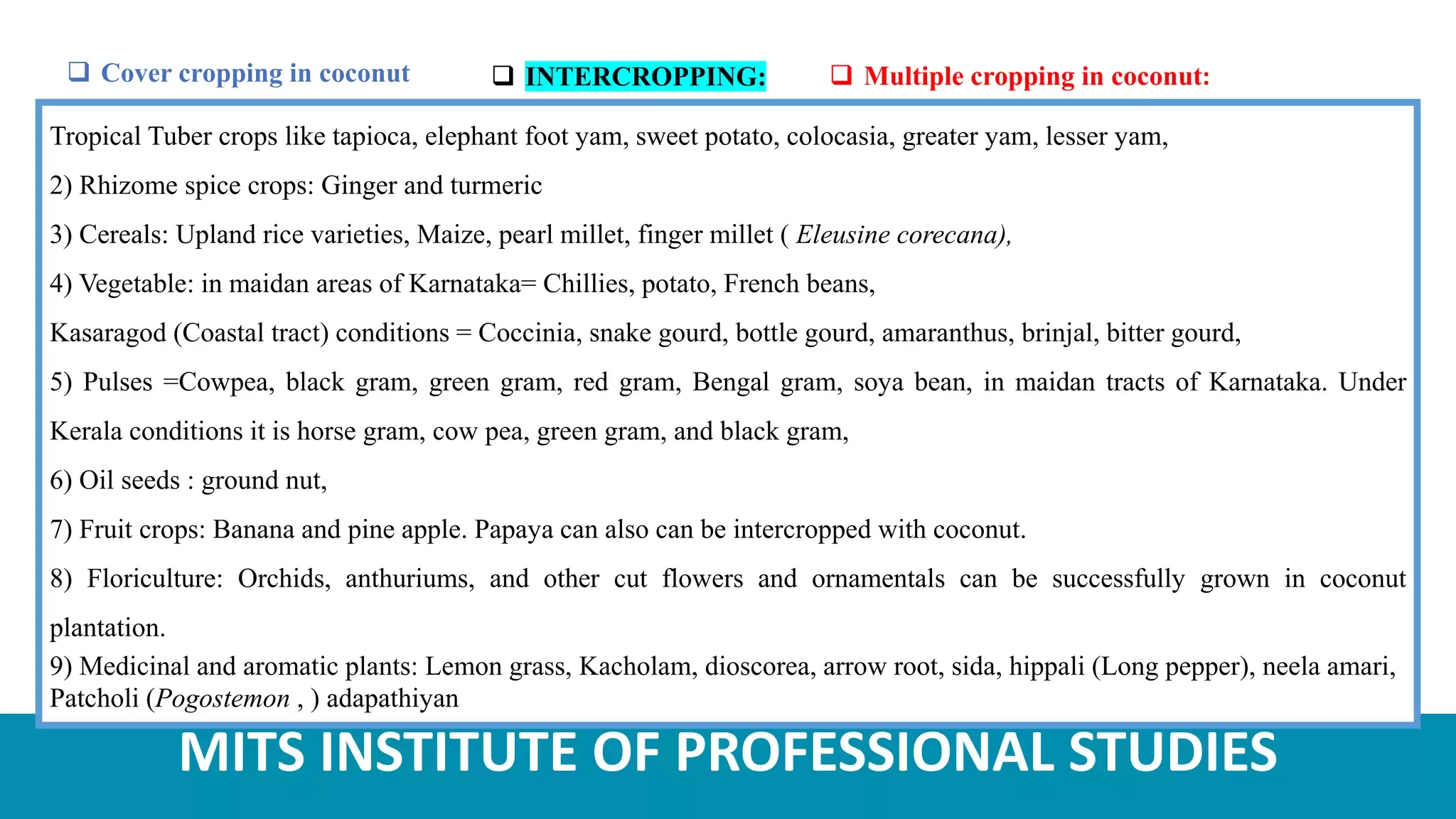
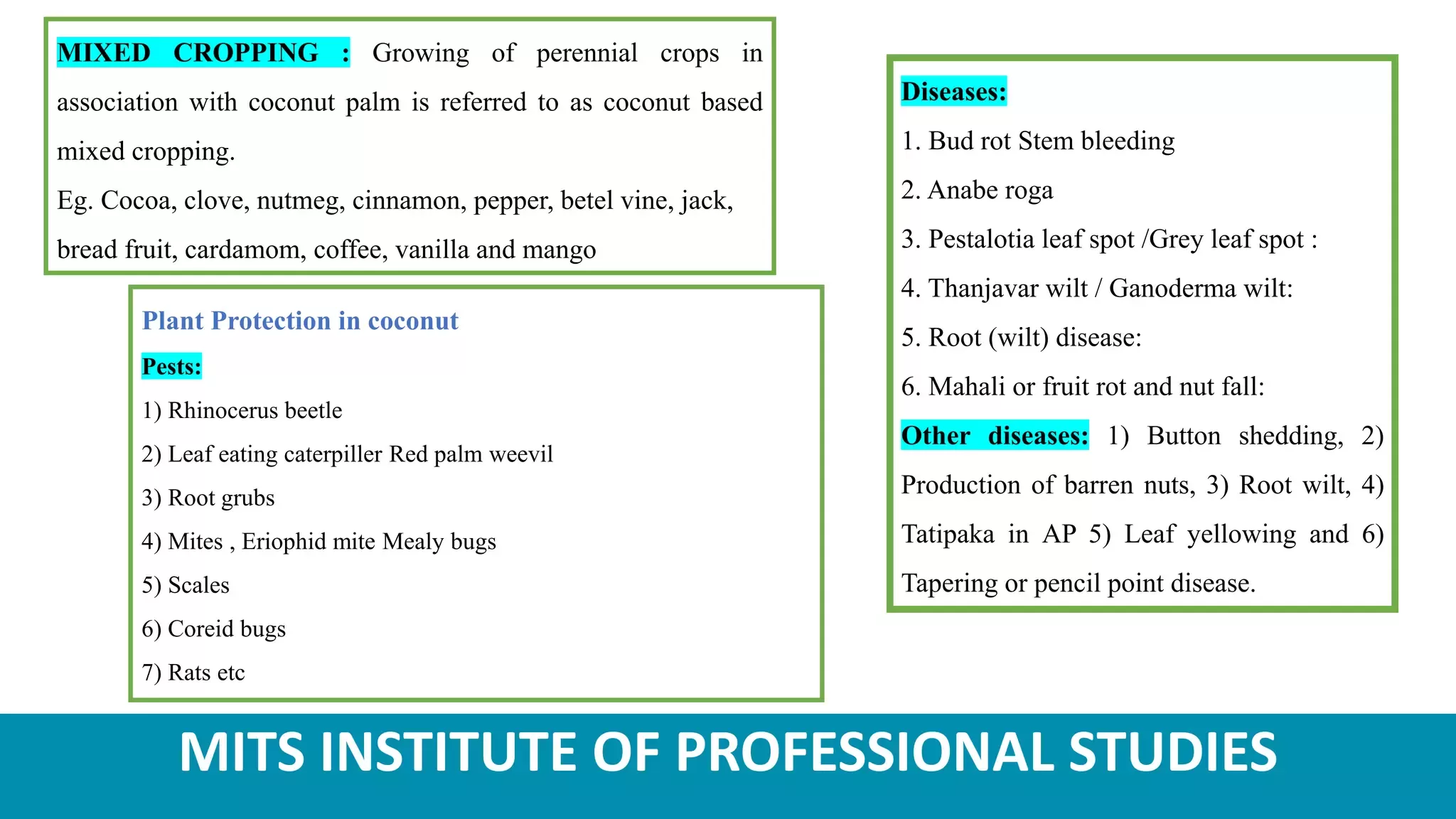
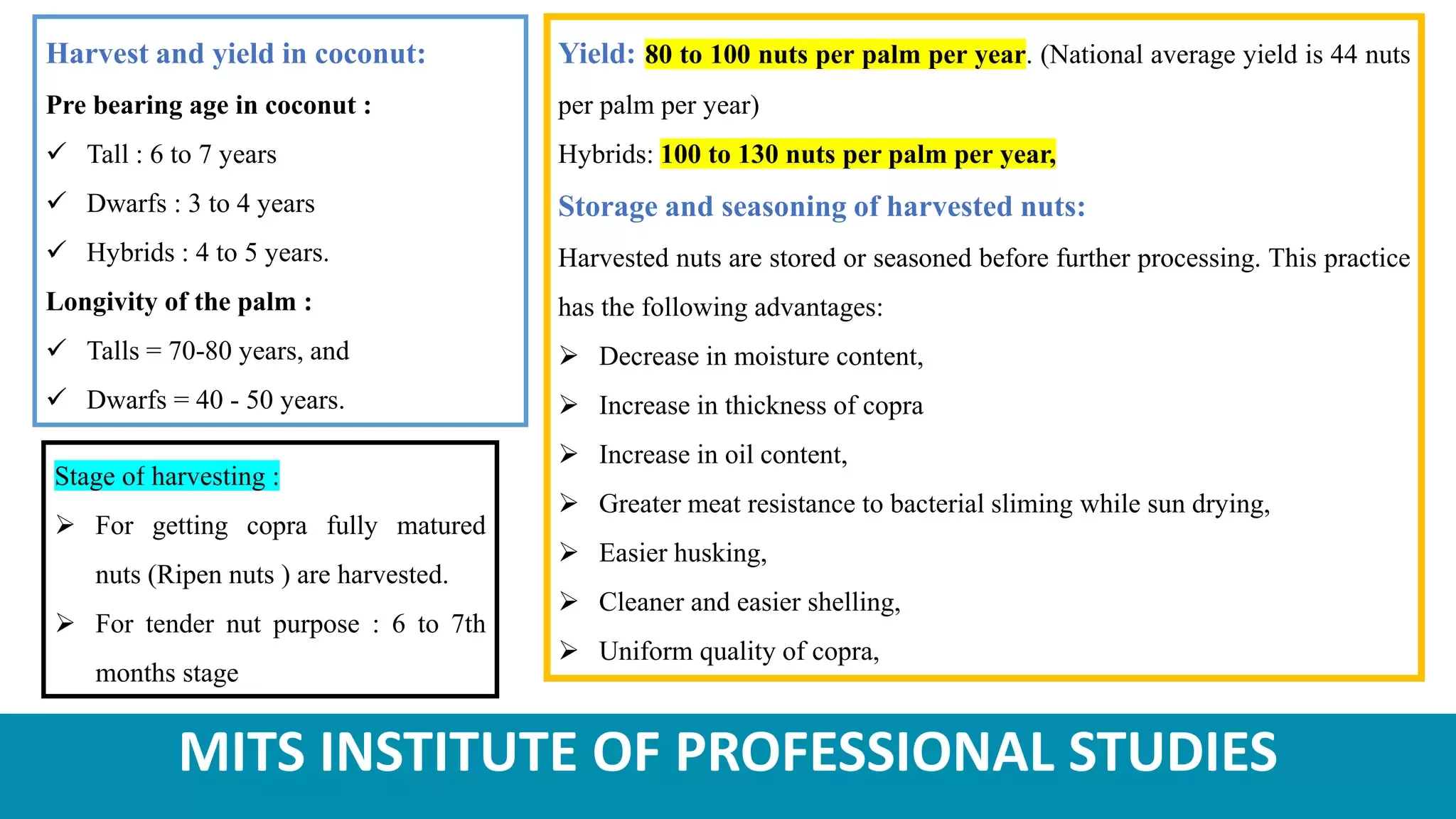
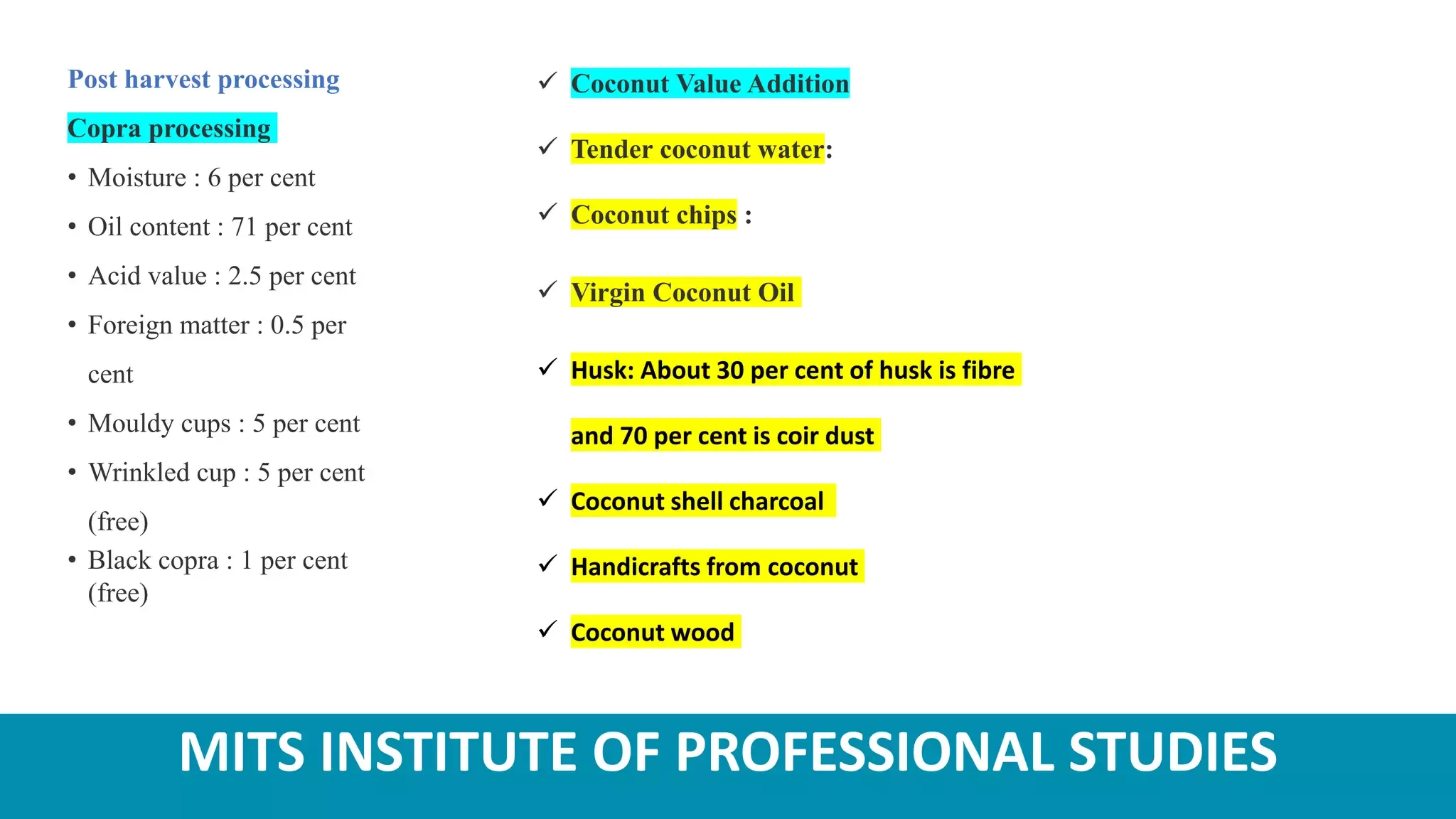
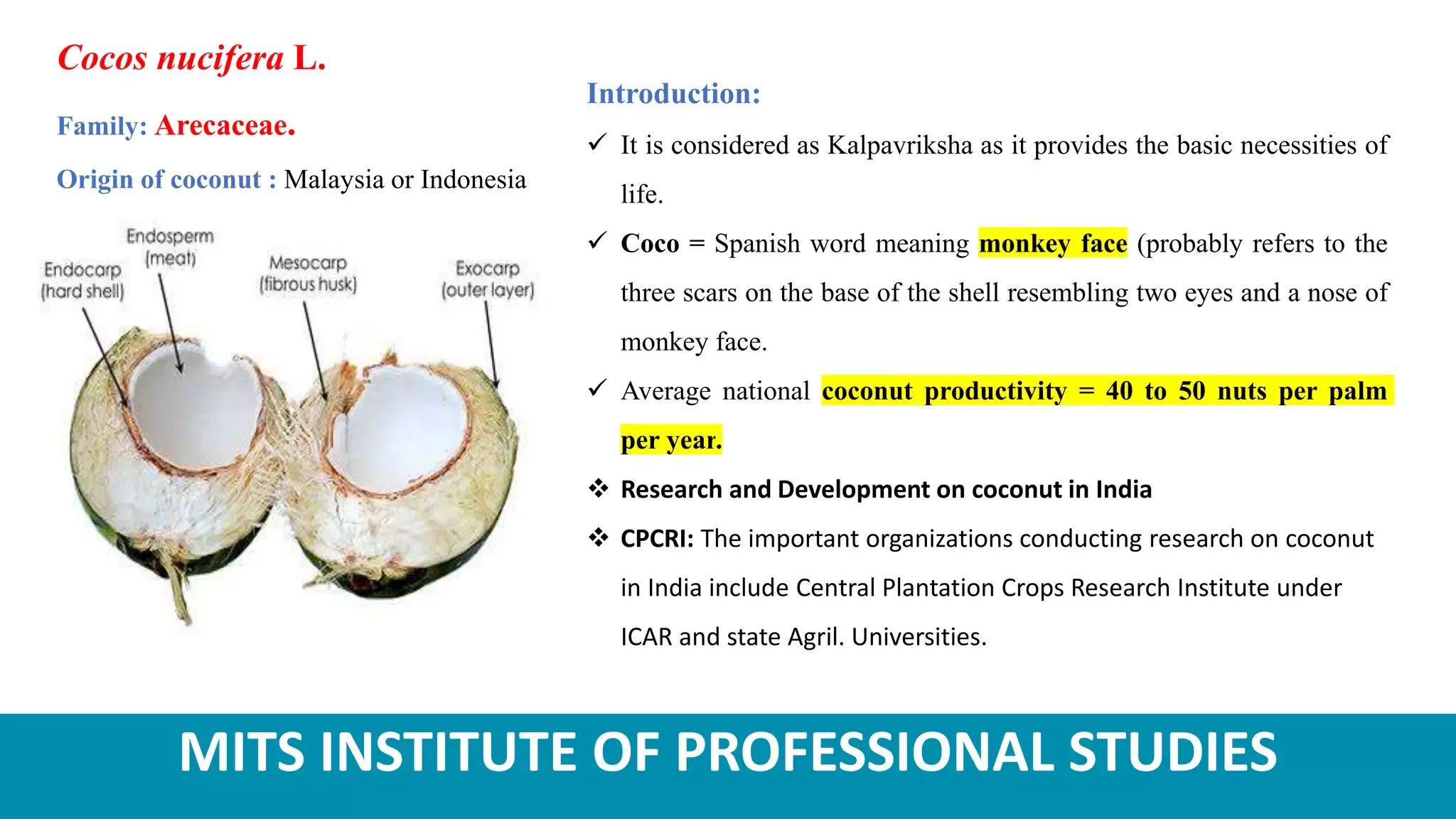
The coconut palm (Cocos nucifera L.), a member of the Arecaceae family, is a versatile plant native to Malaysia or Indonesia. Known affectionately as “kalpavriksha,” which translates to “wish-fulfilling tree,” the coconut palm offers numerous vital resources for human survival. The name “coco” is derived from Spanish, alluding to the monkey-like appearance of the coconut shell’s three scars. On average, a coconut palm yields 40 to 50 nuts annually, with Kerala leading in both area and production within India, while Andhra Pradesh boasts the highest productivity rates. Research into coconut cultivation in India is primarily conducted by organizations like the Central Plantation Crops Research Institute (CPCRI) under the Indian Council of Agricultural Research (ICAR) and several state agricultural universities. However, the industry faces significant challenges, including diseases such as root wilt, particularly prevalent in South Kerala, and the volatility of coconut prices. The coconut offers a wealth of components, all of which have various applications. The nut encompasses coconut water, known for its health benefits as a natural diuretic, along with the kernel, shell, and husk. Fresh coconut contains 45% water, 4% protein, 37% fat, 10% carbohydrates, and various minerals. Additionally, copra—dried coconut meat—is a dominant source of vegetable oil, containing 60-67% oil content. Two types of copra are produced: ball copra, which is left whole for extended periods, and cup copra, primarily used in Northern India. Coconut cultivation thrives in tropical climates, favoring well-drained soils and thriving between latitudes of 20º N and 20º S. Ideal growing conditions include mean annual temperatures of 27ºC, with rainfall between 1,800 to 2,500 mm annually and 7.1 hours of daily sunlight. The palm can grow in soils with a pH of 5.2 to 8, rich in organic matter. Cultivars of coconut are categorized as tall and dwarf varieties. Tall varieties, such as the West Coast Tall and East Coast Tall, are known for their longevity and regular yields, while dwarf varieties mature faster and are often utilized for tender nut production and intercropping. Establishing a coconut plantation requires careful site selection to avoid water-logged areas, shallow soils, and shaded conditions. It also necessitates the choice of high-yielding mother palms and superior seed nuts. Proper management techniques in coconut farming include organic manure application, irrigation methods, and cover cropping. Various intercrops like tubers, pulses, and vegetables can optimize land use efficiently. The protection of the coconut palm from pests, such as the rhinoceros beetle and various diseases, is vital for maintaining its health and productivity. Harvesting begins after the coconut palms reach pre-bearing age—typically 6 to 7 years for tall varieties and 3 to 4 years for dwarfs. The average yield per palm ranges from 80 to 100 nuts, with hybrid palms yielding more. Post-harvest, nuts are stored, improving copra quality through moisture reduction and increased oil content. Coconut post-harvest processing includes the creation of various products such as tender coconut water, coconut chips, and value-added items like handicrafts and wood products. The diverse applications and contributions of the coconut palm make it an essential component of many agricultural ecosystems and economies, particularly in tropical regions.

Slide 1
Slide 1

Slide 2

Slide 2

Slide 3

Slide 3

Slide 4

Slide 4

Slide 5

Slide 5

Slide 6

Slide 6

Slide 7

Slide 7

Slide 8

Slide 8

Slide 9

Slide 9

Slide 10

Slide 10

Slide 11

Slide 11

Slide 12

Slide 12

Slide 13

Slide 13

Slide 14

Slide 14

Slide 15

Slide 15

Slide 16

Slide 16

Slide 17

Slide 17

Slide 18

Slide 18

Slide 19
Slide 19
1 / 19

Ppt on Strawberry production technology

Summary:

Uncover the secrets of cultivating the ‘queen of fruit’ with a comprehensive PowerPoint presentation on strawberry production technology. Learn about optimal growing conditions, management practices, and pest control measures for a fruitful harvest.

Summary

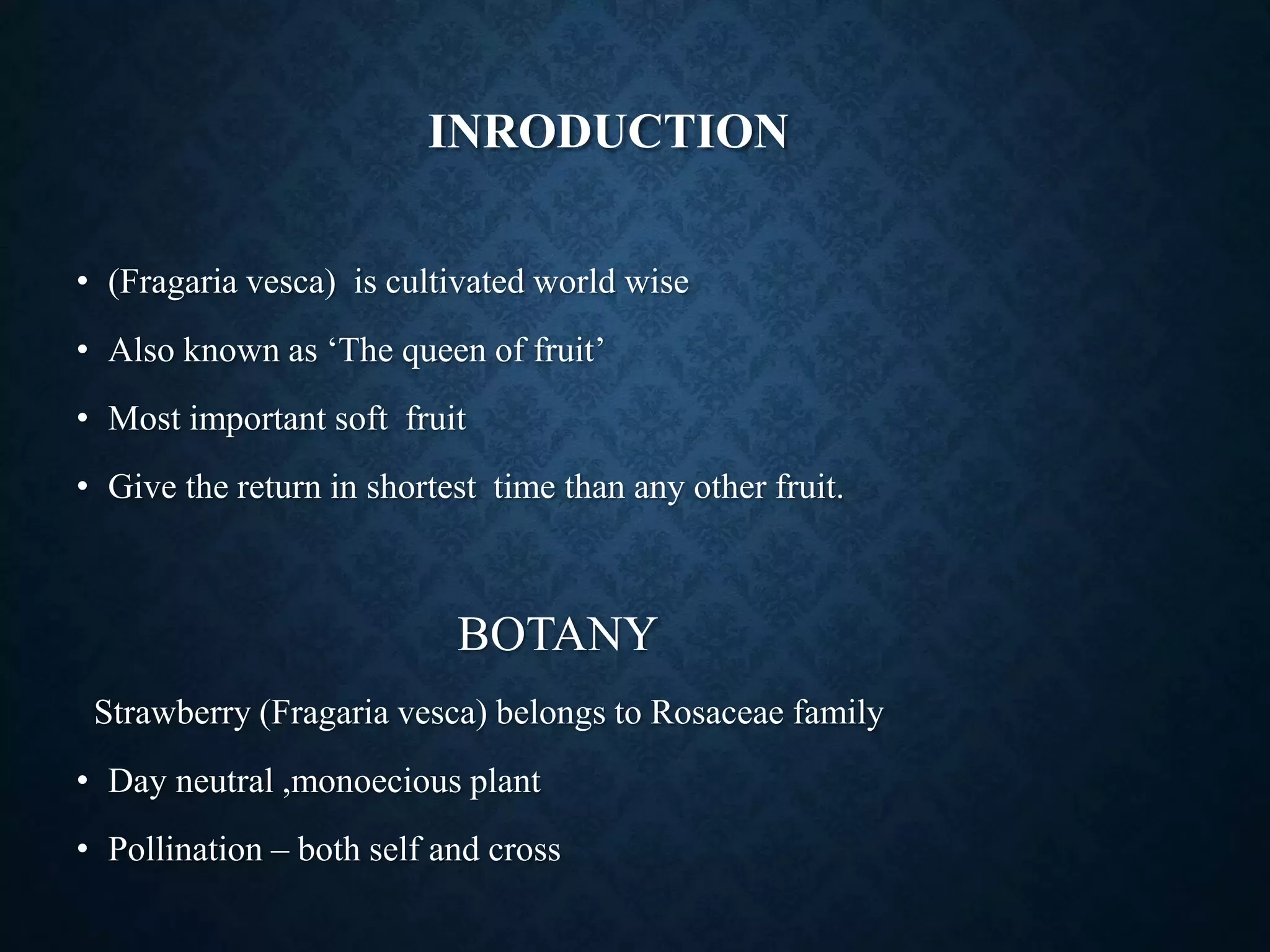
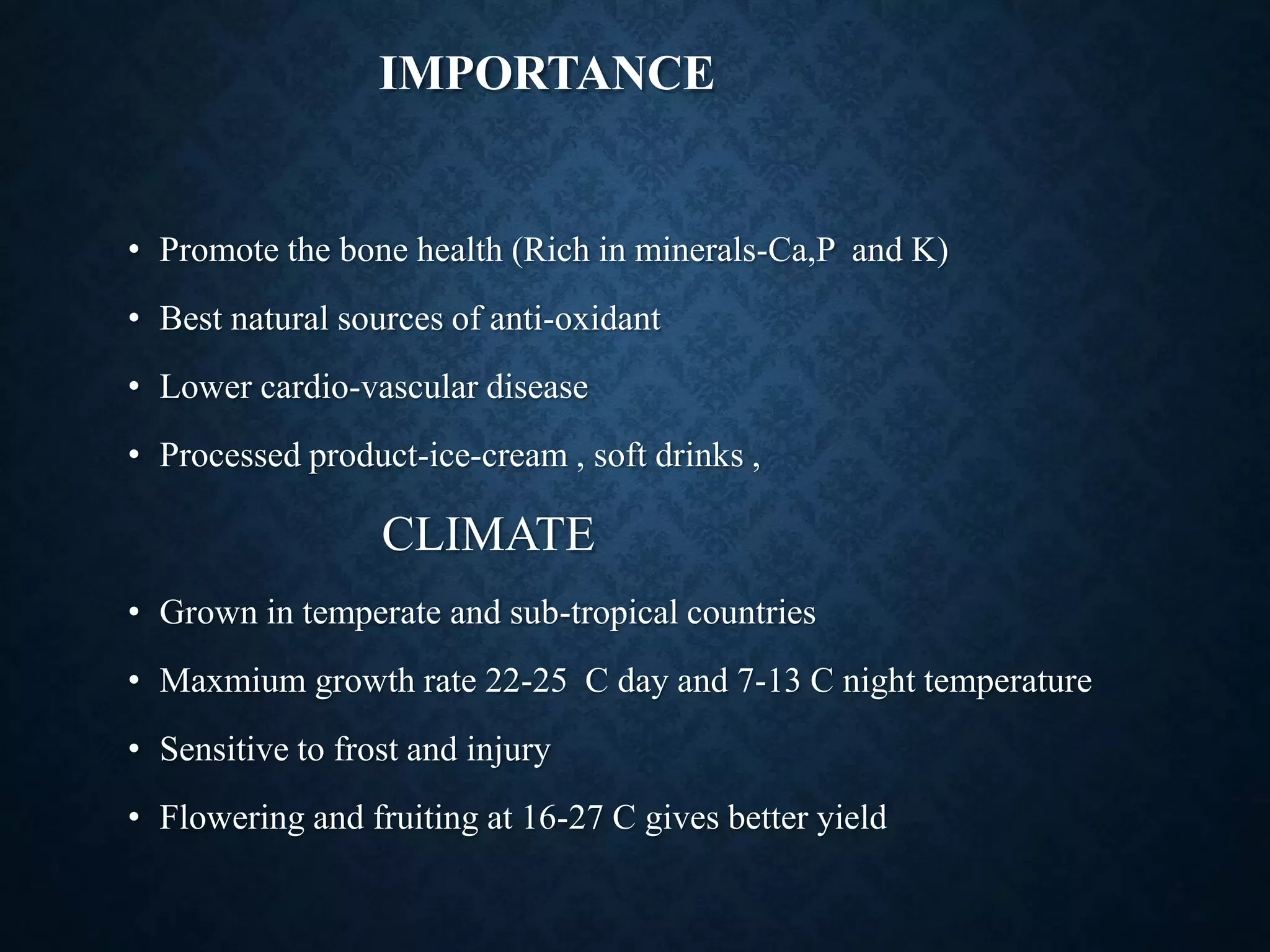
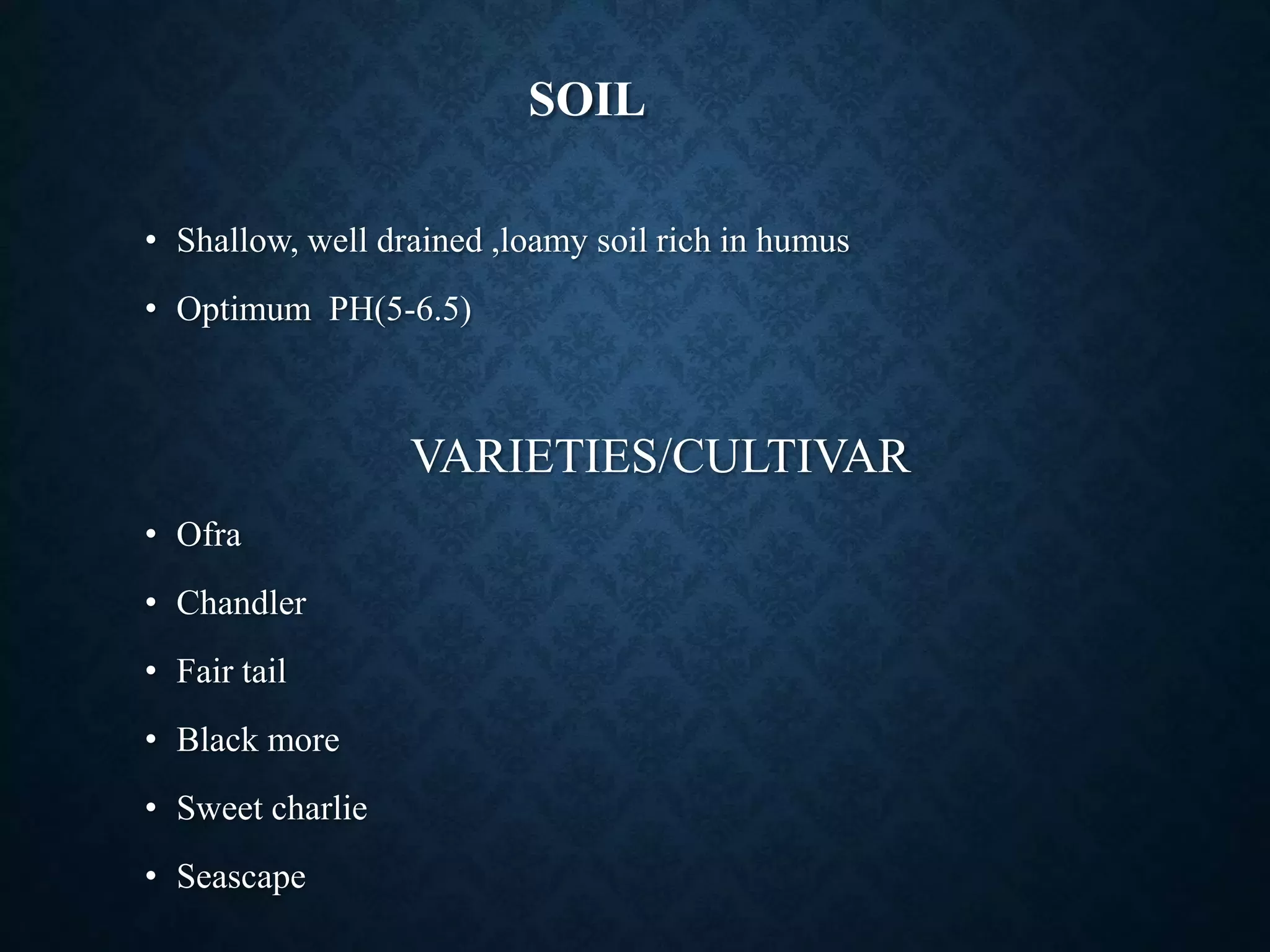
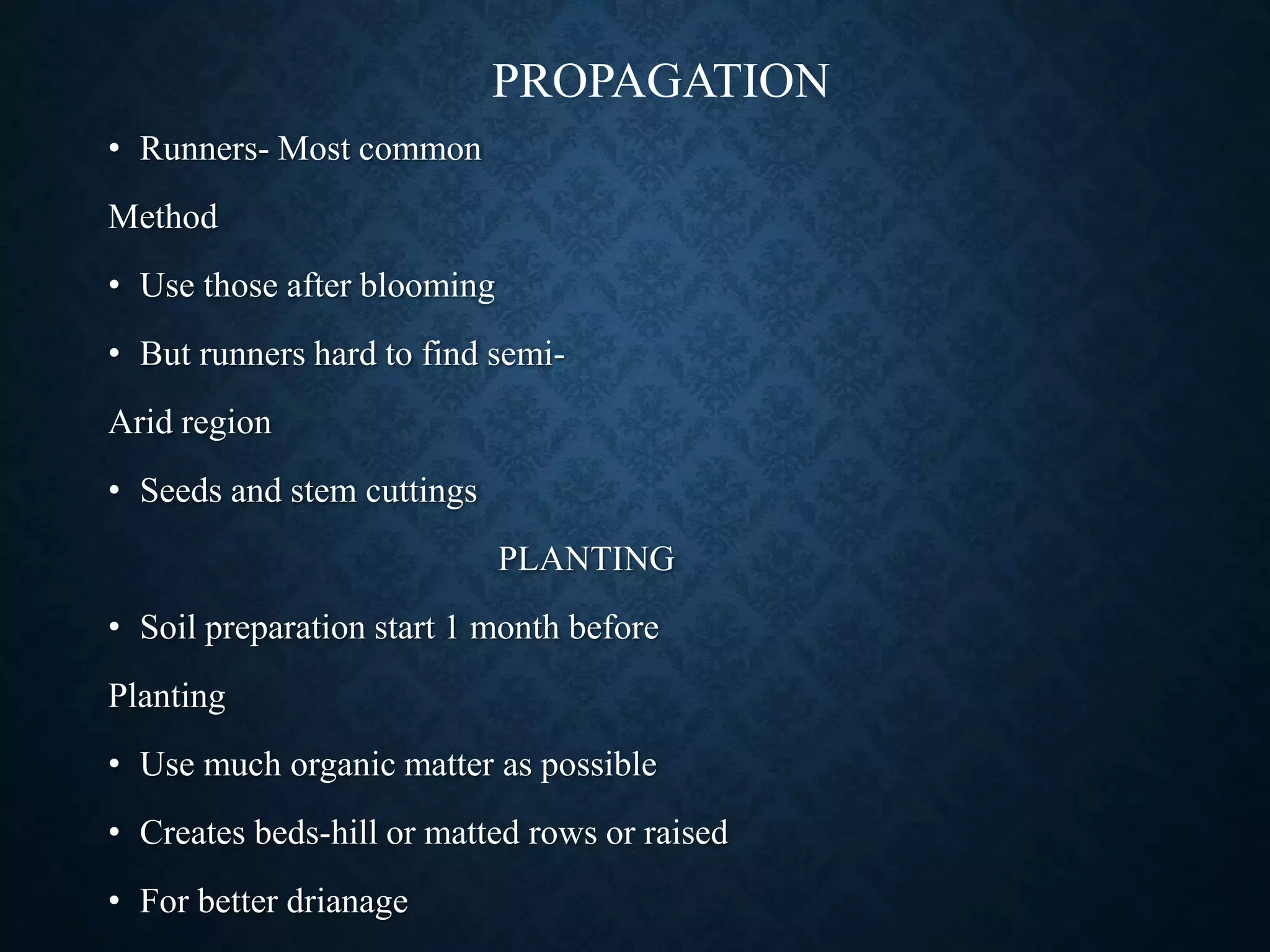
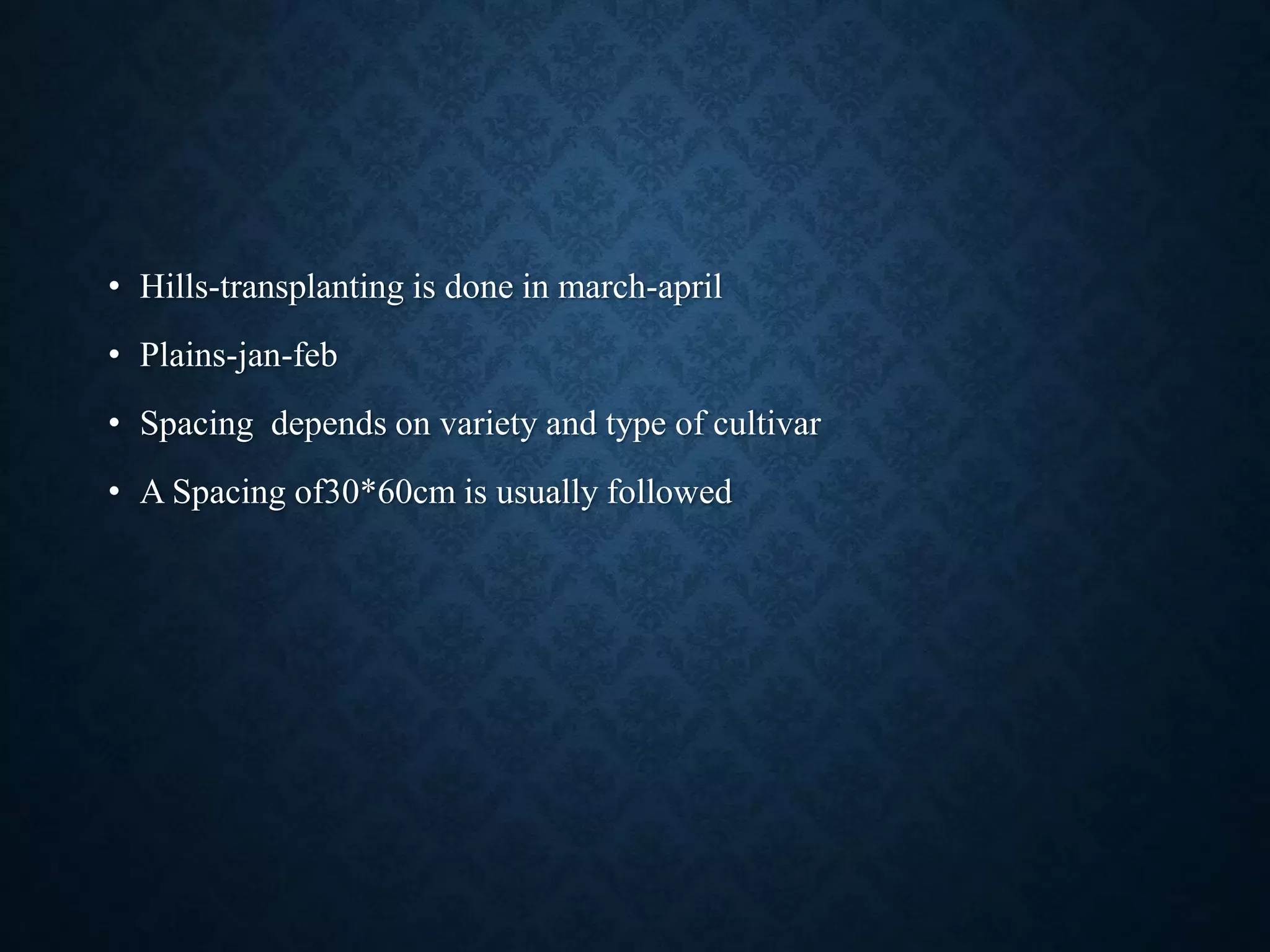
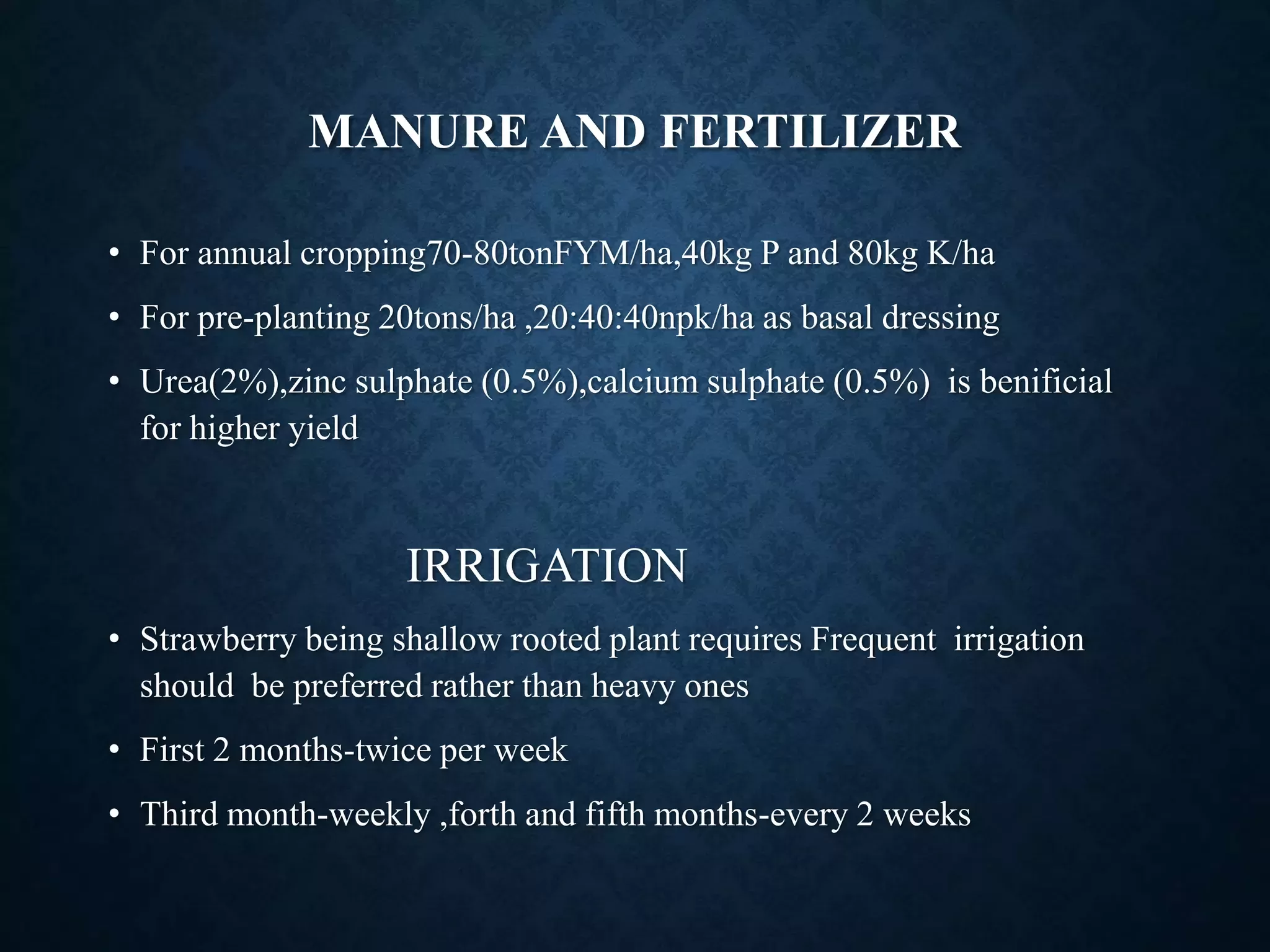
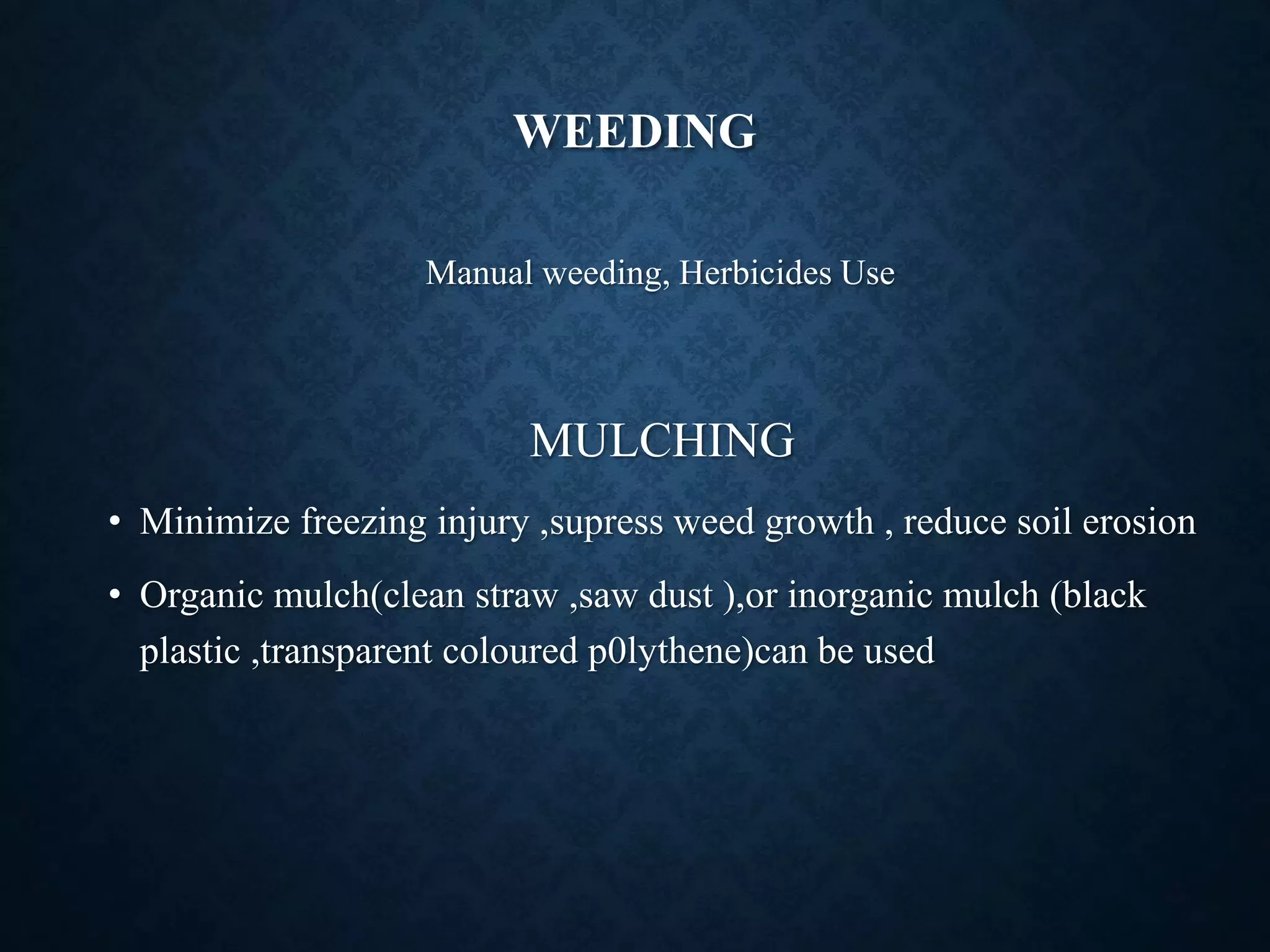
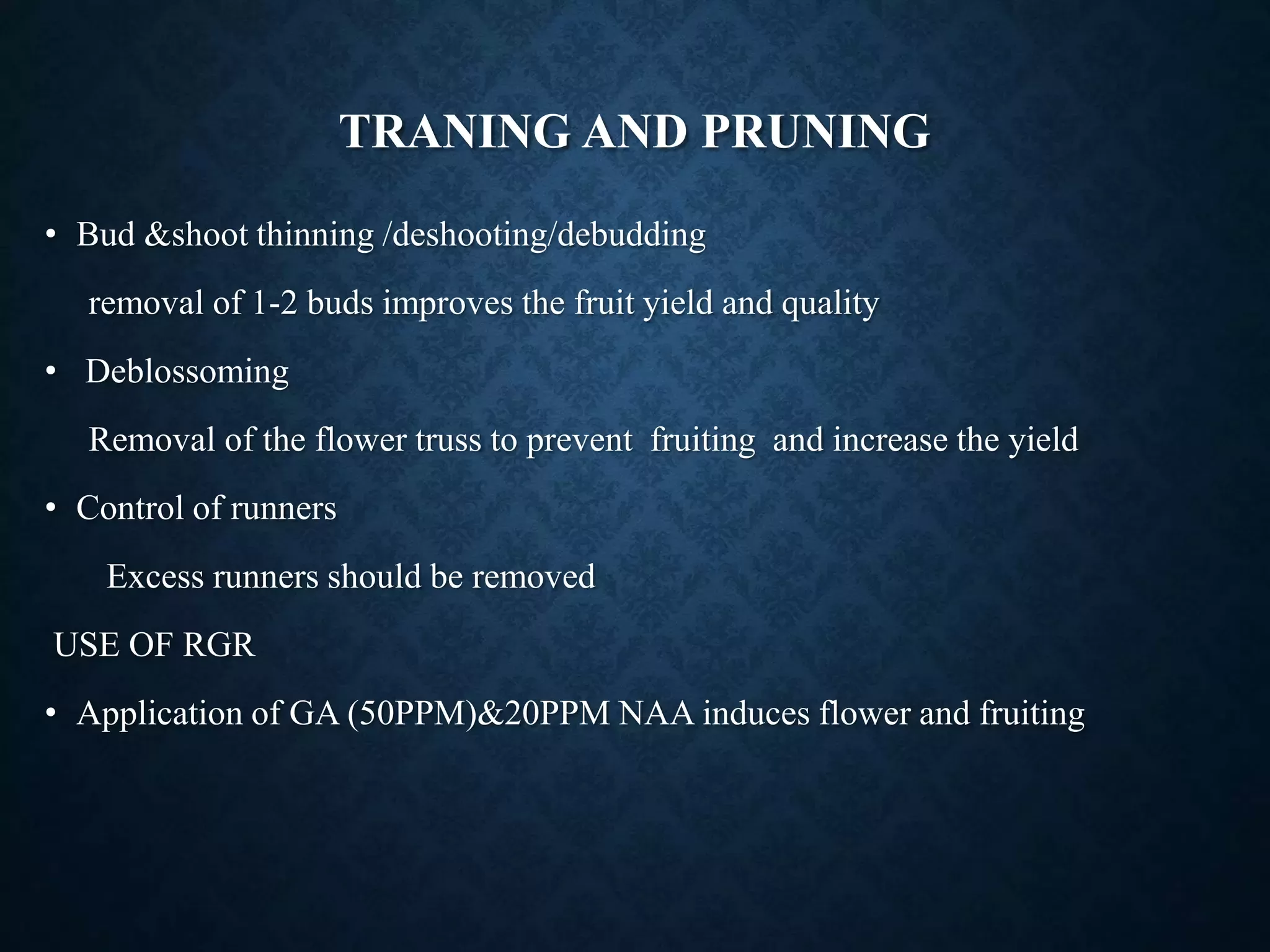
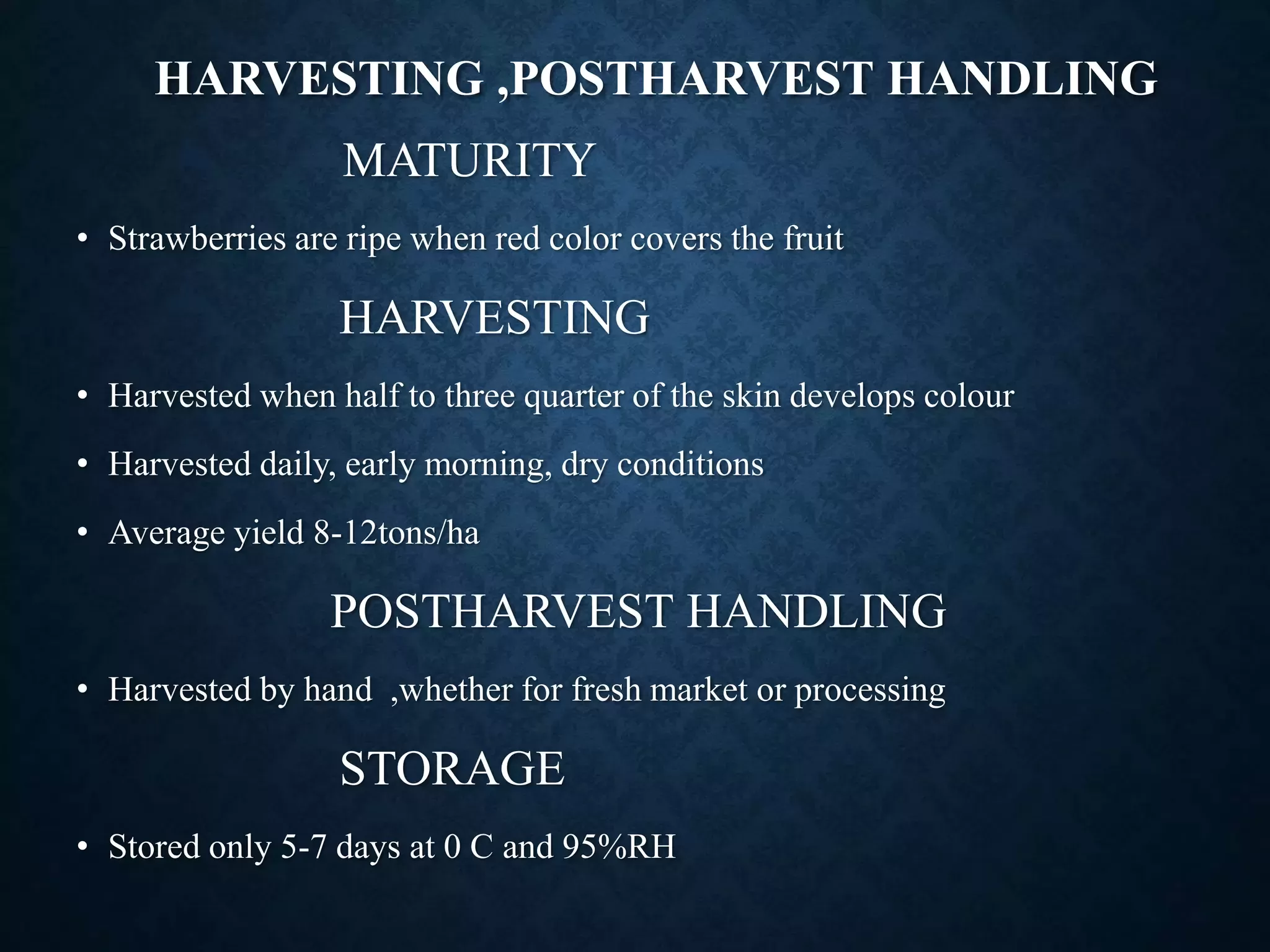
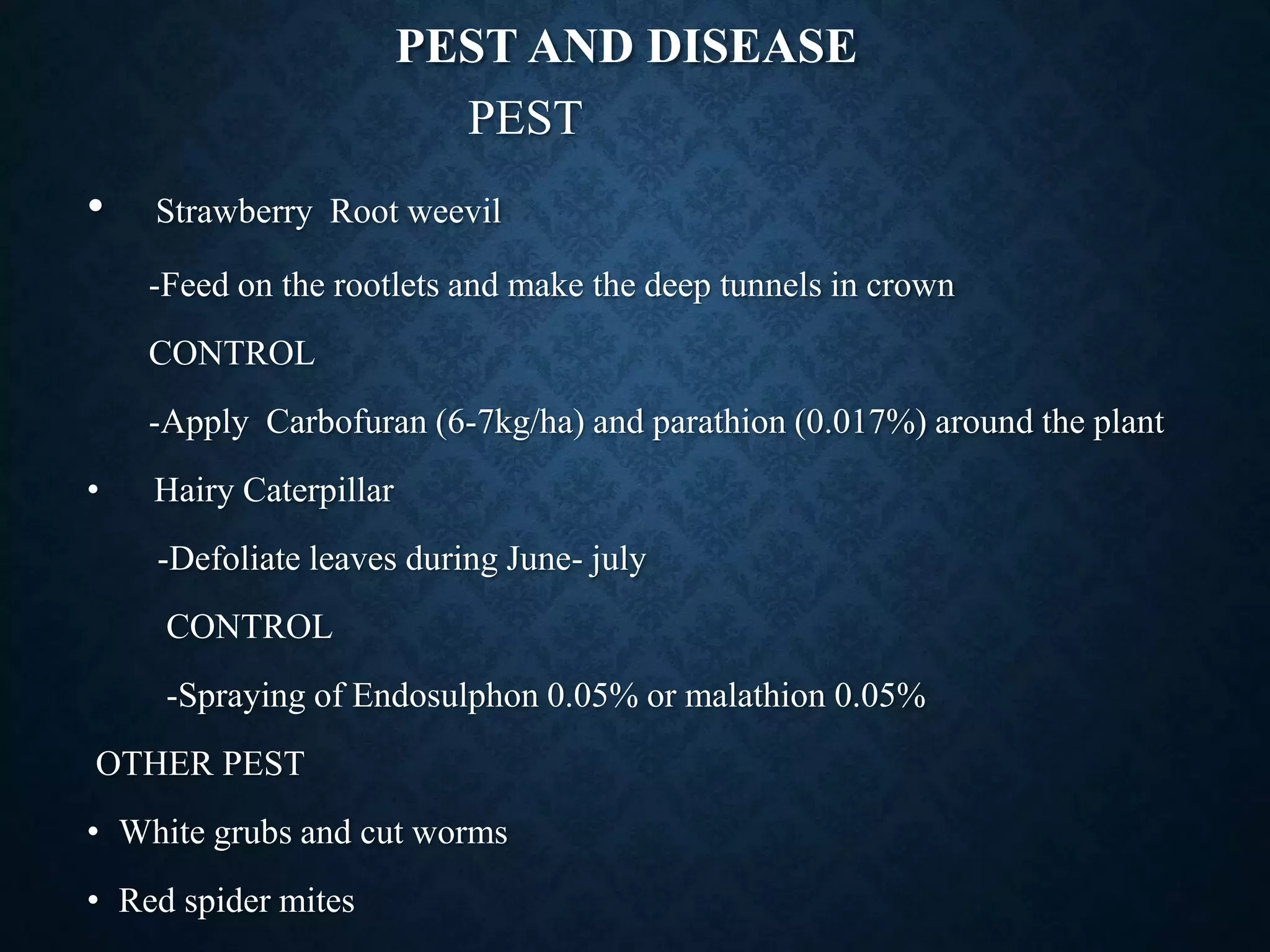
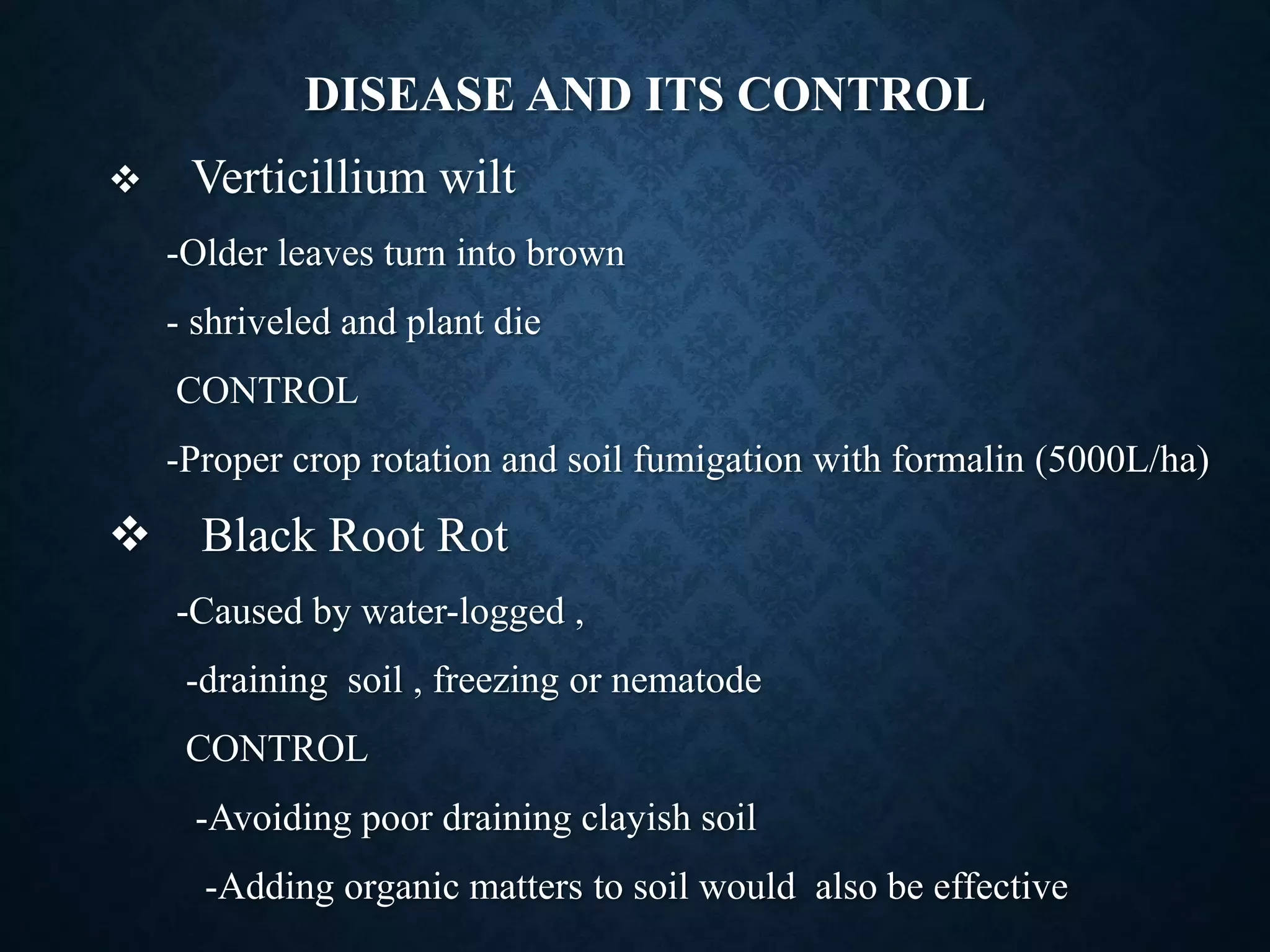
Strawberries, scientifically known as Fragaria vesca, are heralded as the “queen of fruit” and are among the most significant soft fruits cultivated globally. These delightful berries stand out for their quick return on investment, making them a preferred choice for both growers and consumers. As a member of the Rosaceae family, strawberries are unique in their botany, being monoecious and capable of both self and cross-pollination. The nutritional and health benefits of strawberries are noteworthy. They are rich in essential minerals such as calcium, phosphorus, and potassium, contributing significantly to bone health. Additionally, strawberries are esteemed for their high antioxidant content, which plays a role in reducing the risk of cardiovascular diseases. Beyond fresh consumption, strawberries are versatile, finding their way into various processed products like ice creams and soft drinks. In terms of climate, strawberries thrive in temperate and subtropical regions, flourishing optimally at daytime temperatures between 22°C and 25°C and nighttime temperatures of 7°C to 13°C. The plants are sensitive to frost, with ideal flowering and fruiting temperatures ranging from 16°C to 27°C to ensure better yields. Strawberry cultivation demands specific soil conditions. A shallow, well-drained, loamy soil rich in organic matter and with a pH level of 5 to 6.5 is most conducive to their growth. Various popular cultivars include Ofra, Chandler, Fairtail, Blackmore, Sweet Charlie, and Seascape. The propagation of strawberries can be accomplished through runners, seeds, or stem cuttings, with careful soil preparation required a month prior to planting. Once planted, strawberries require regular maintenance, including proper irrigation. As shallow-rooted plants, they should be irrigated frequently, with specific watering schedules noted for different growth phases. Weed management strategies include manual weeding and herbicide application, while mulching serves multiple purposes, such as preventing frost damage and reducing soil erosion. Training and pruning are critical aspects of strawberry care, as practices like bud and shoot thinning can enhance fruit quality and yield. The application of growth regulators may also be beneficial in encouraging flowering and fruiting. Harvesting strawberries requires keen timing; they are ripe when fully colored, typically signaling that they should be picked when half to three-quarters of the skin has developed color. Harvesting is ideally done daily, and under dry conditions, with average yields ranging from 8 to 12 tons per hectare. Postharvest, strawberries need to be handled carefully, as they can only be stored for about 5 to 7 days at temperatures around 0°C with high humidity. Finally, managing pests and diseases is crucial in strawberry production. Common pests include the strawberry root weevil and hairy caterpillars, which can be controlled with various chemical applications. Diseases such as Verticillium wilt and black root rot require strategic crop rotations and soil management to mitigate their impact. In summary, successful strawberry farming involves understanding the plant’s botanical characteristics, optimal growing conditions, rigorous management practices, and effective pest and disease control measures. With proper care, strawberry cultivation can lead to fruitful harvests and significant economic benefits.

Slide 1

Slide 1

Slide 2

Slide 2

Slide 3

Slide 3

Slide 4

Slide 4

Slide 5

Slide 5

Slide 6

Slide 6

Slide 7

Slide 7

Slide 8

Slide 8

Slide 9

Slide 9

Slide 10

Slide 10

Slide 11

Slide 11

Slide 12

Slide 12

Slide 13

Slide 13
1 / 13

Ppt on Scientific cultivation of muskmelon

Summary

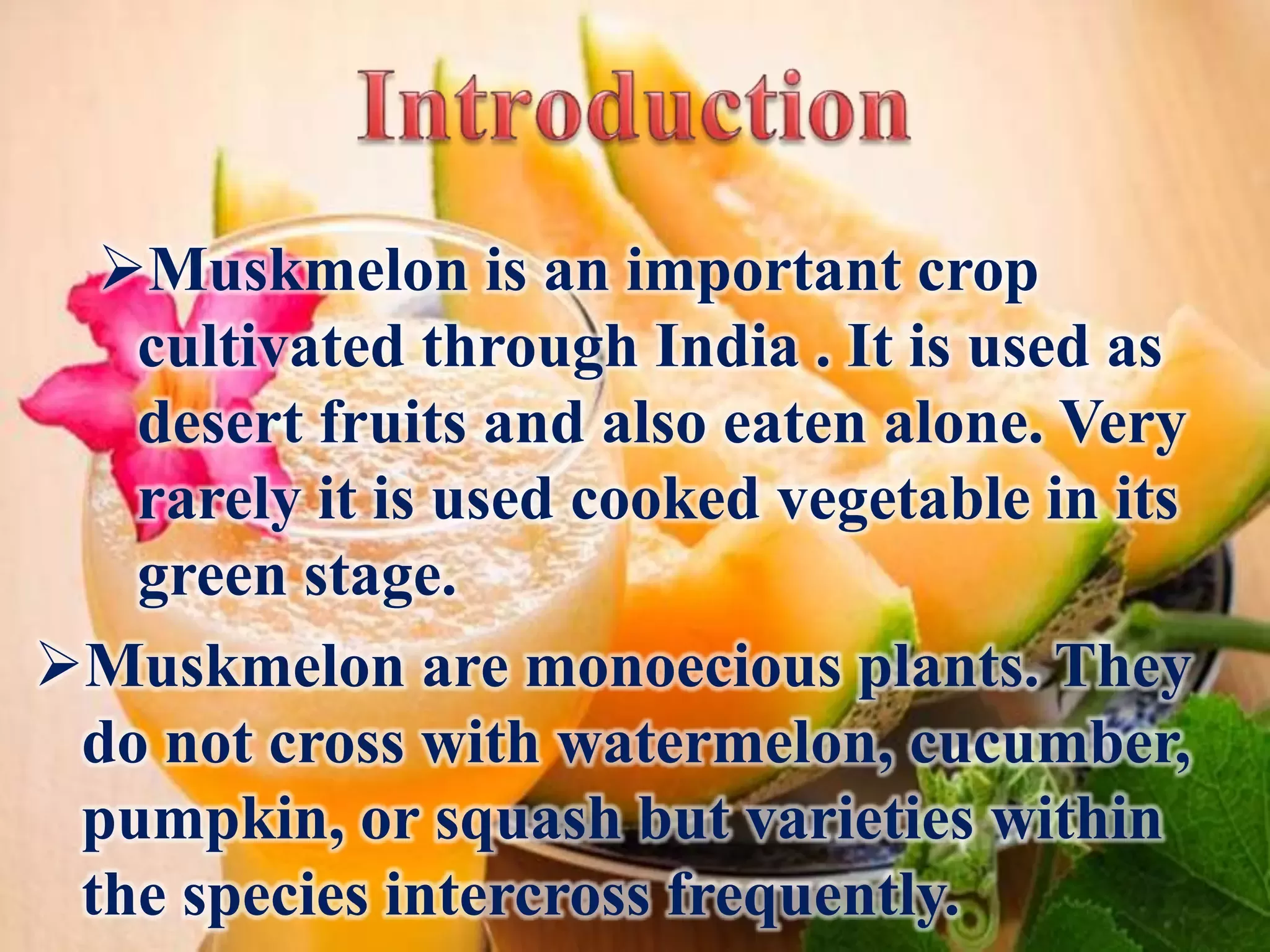
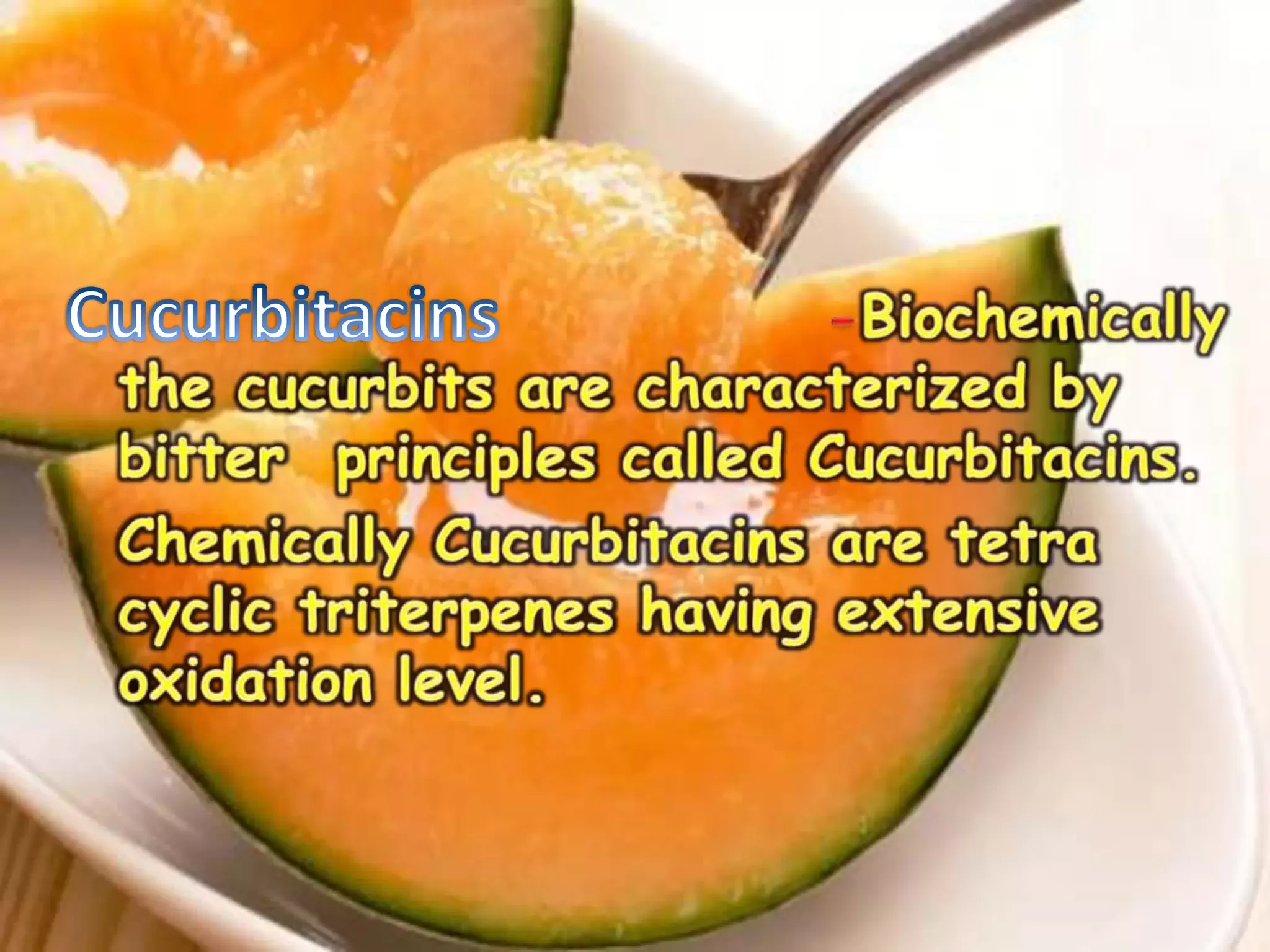
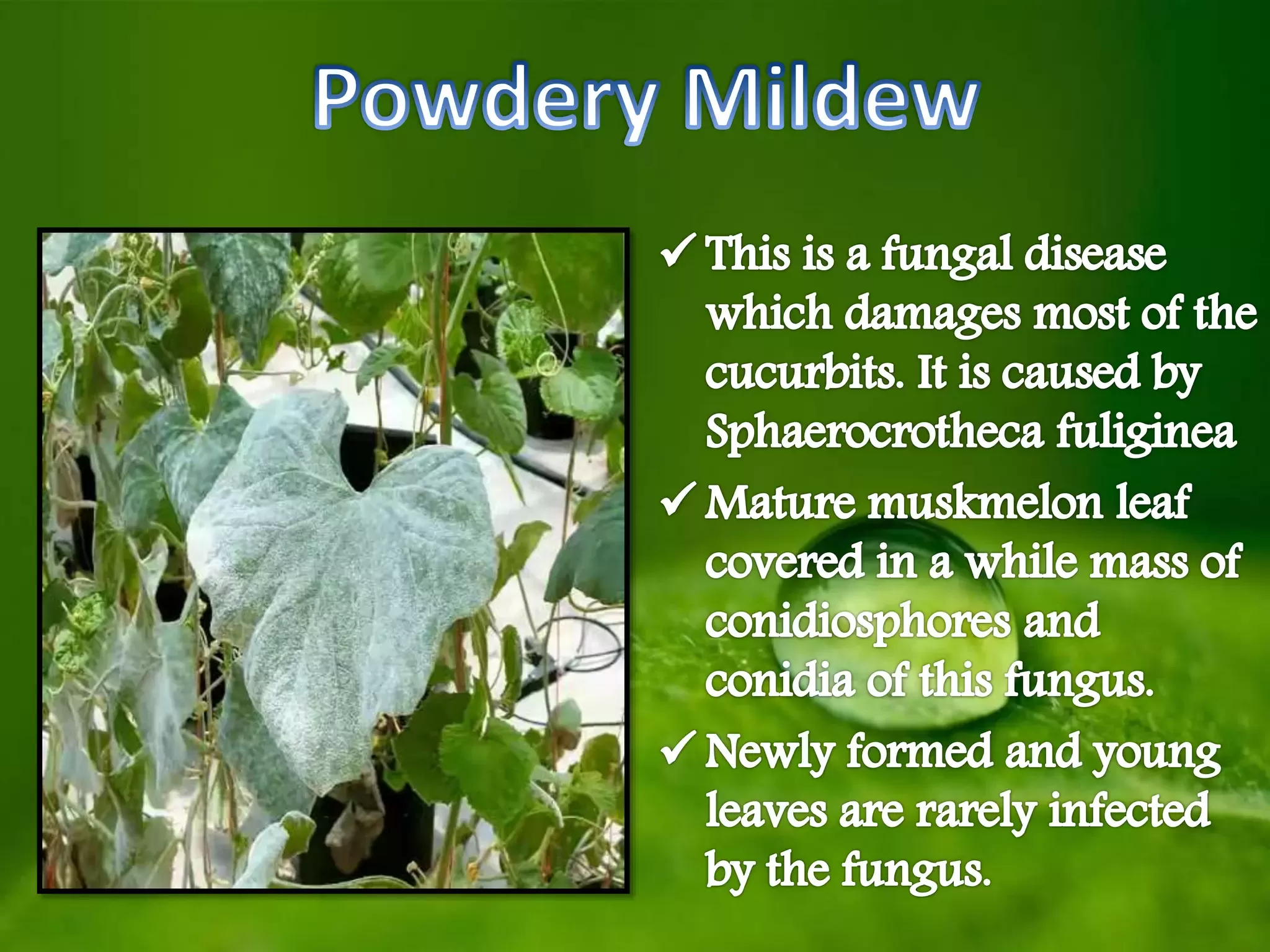
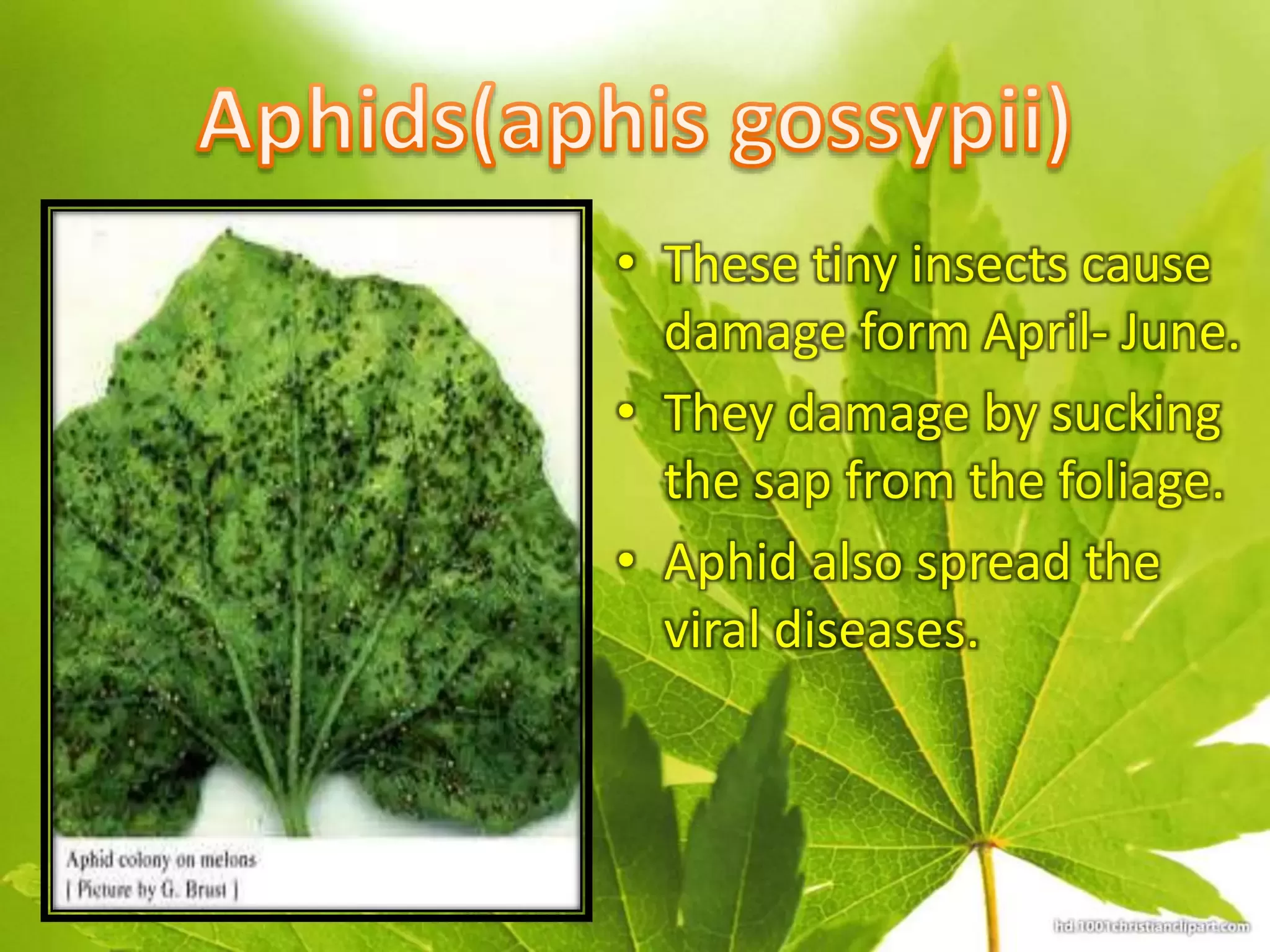
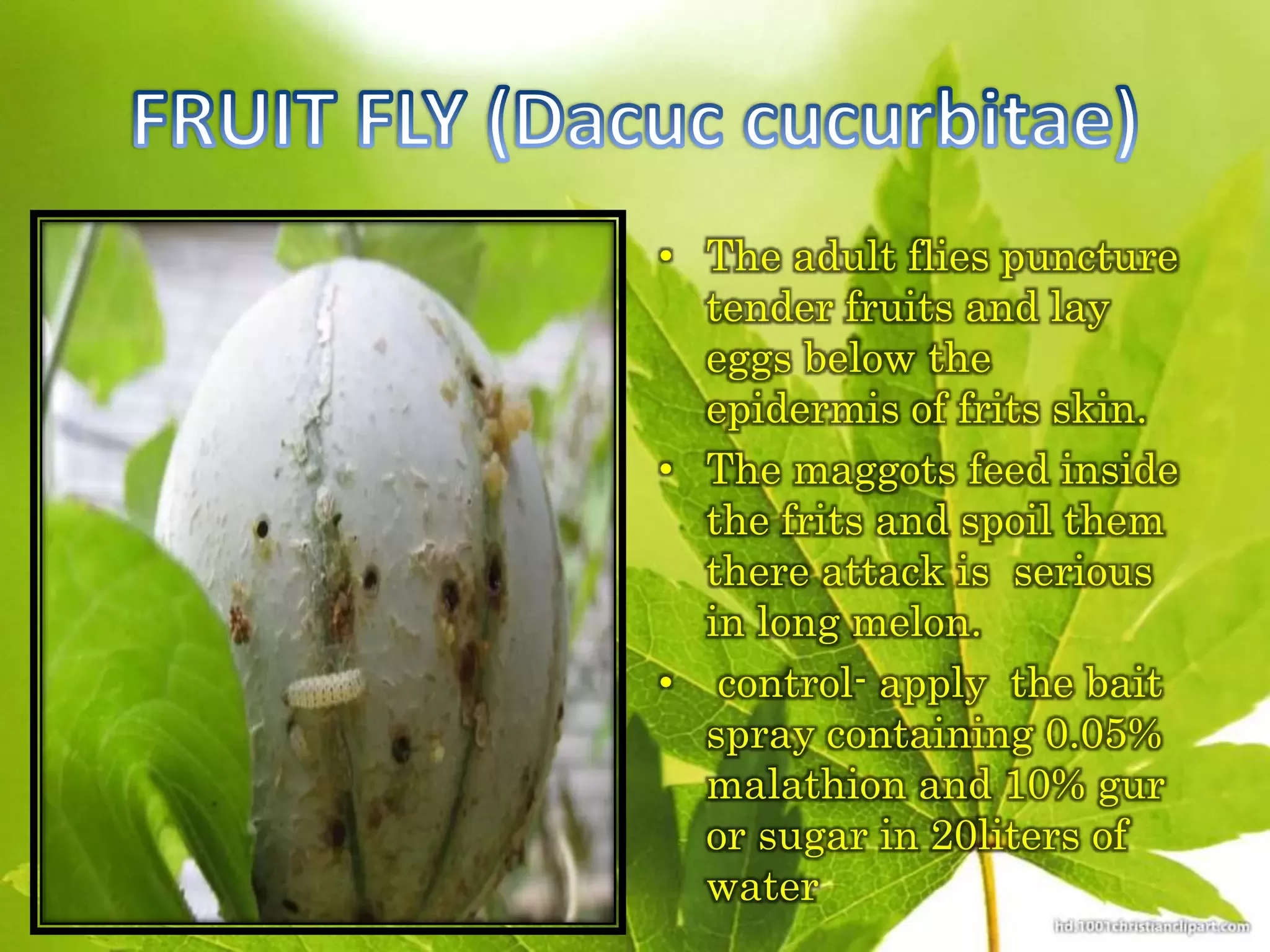
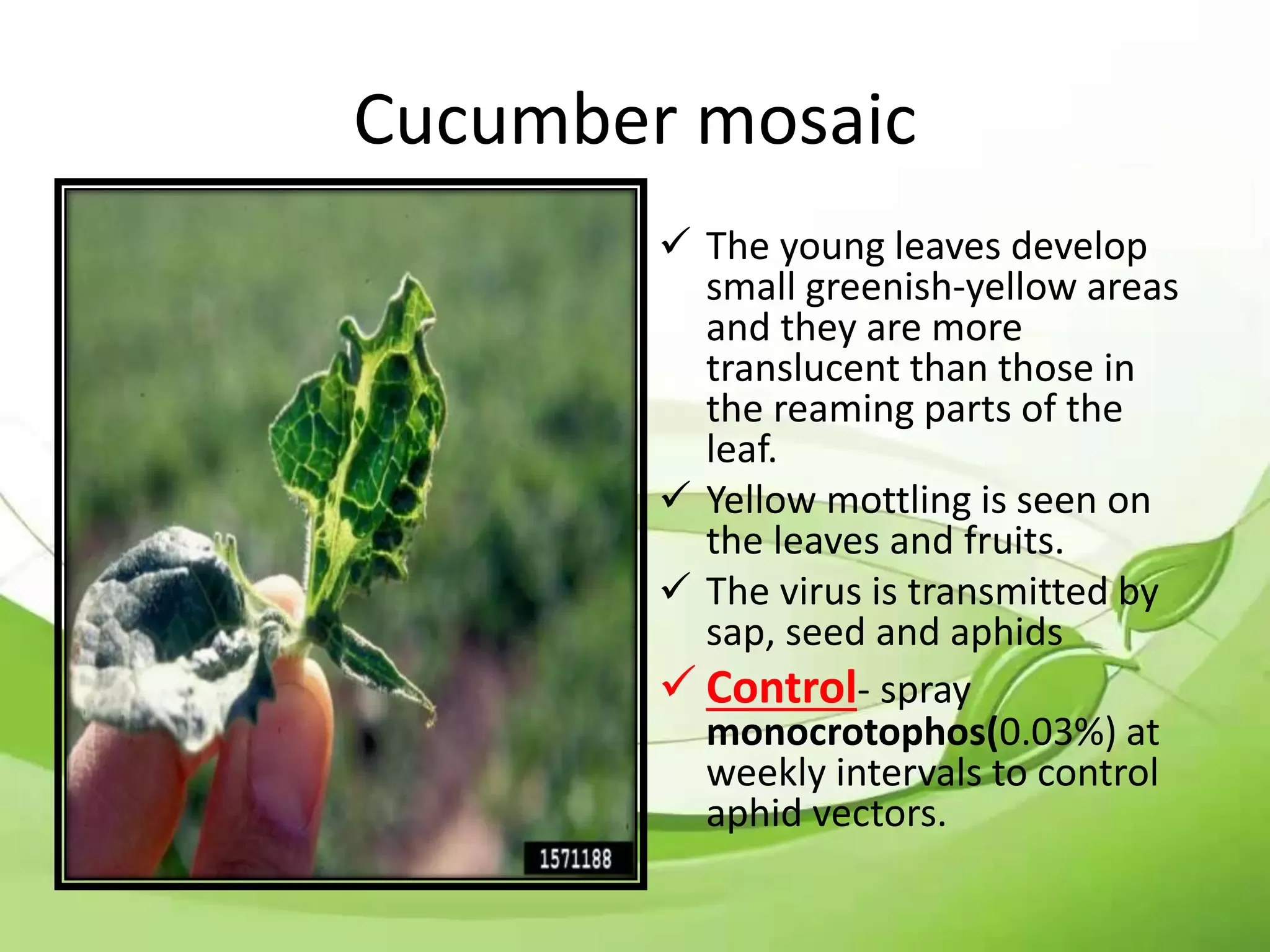
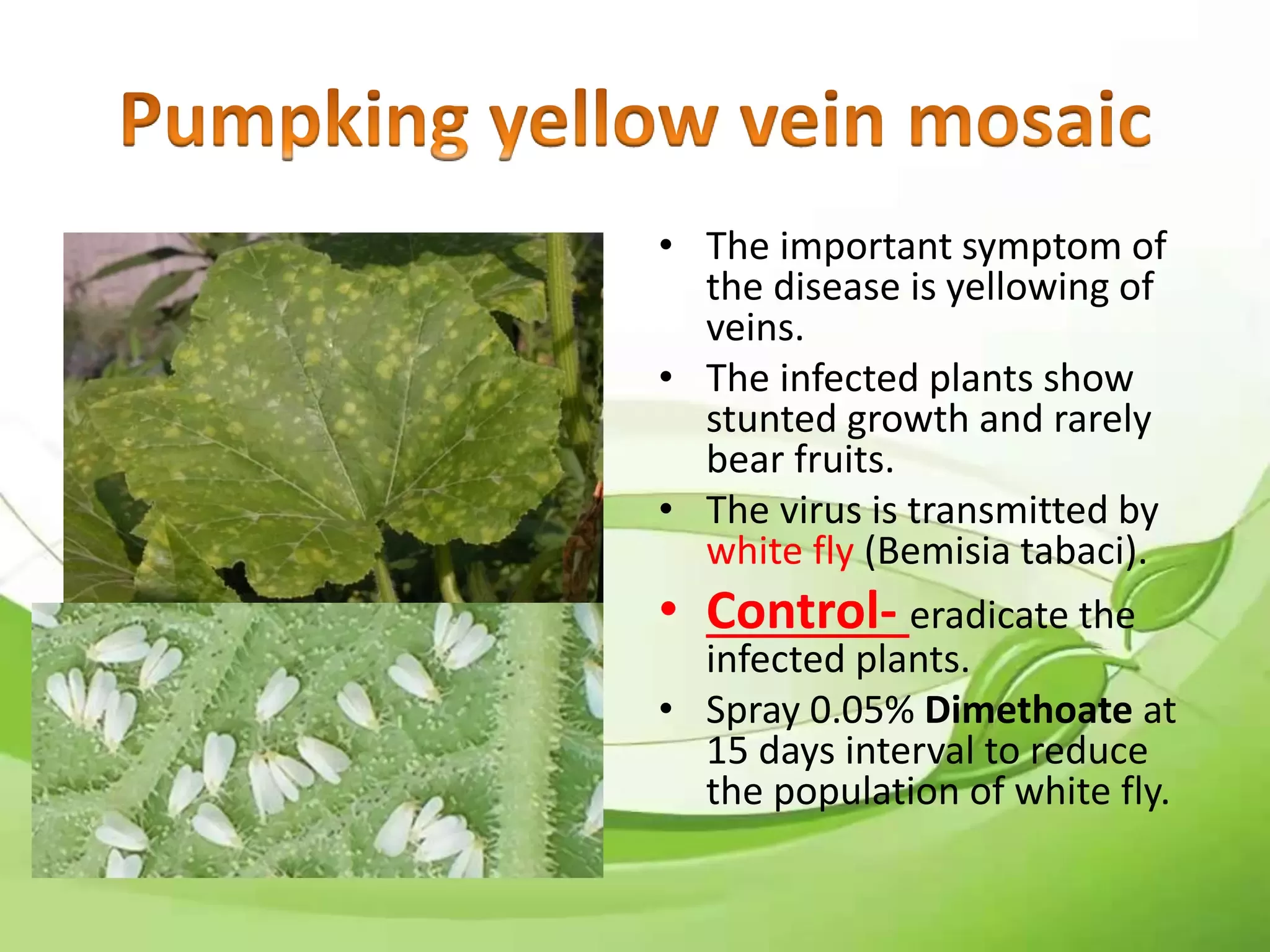
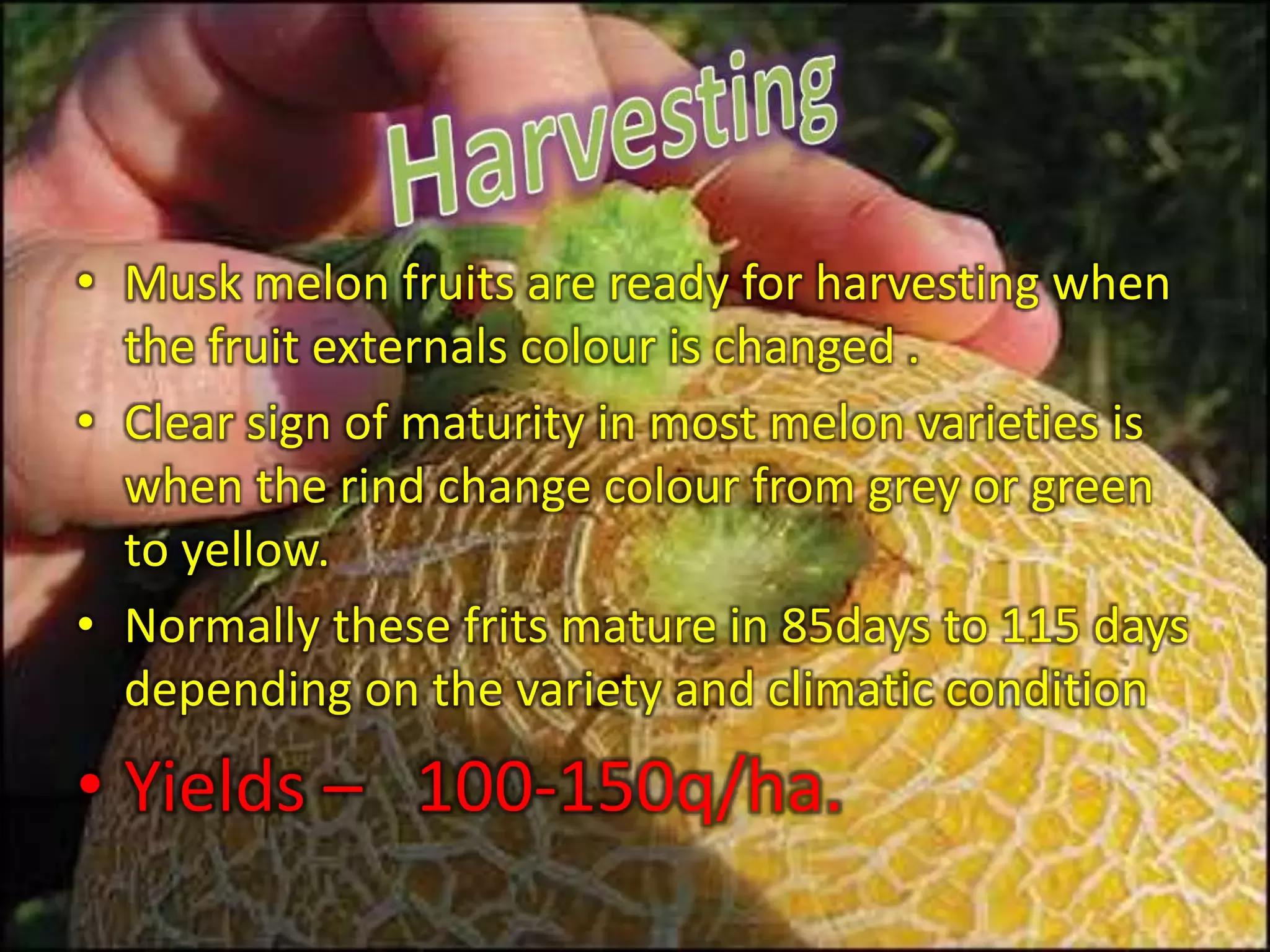
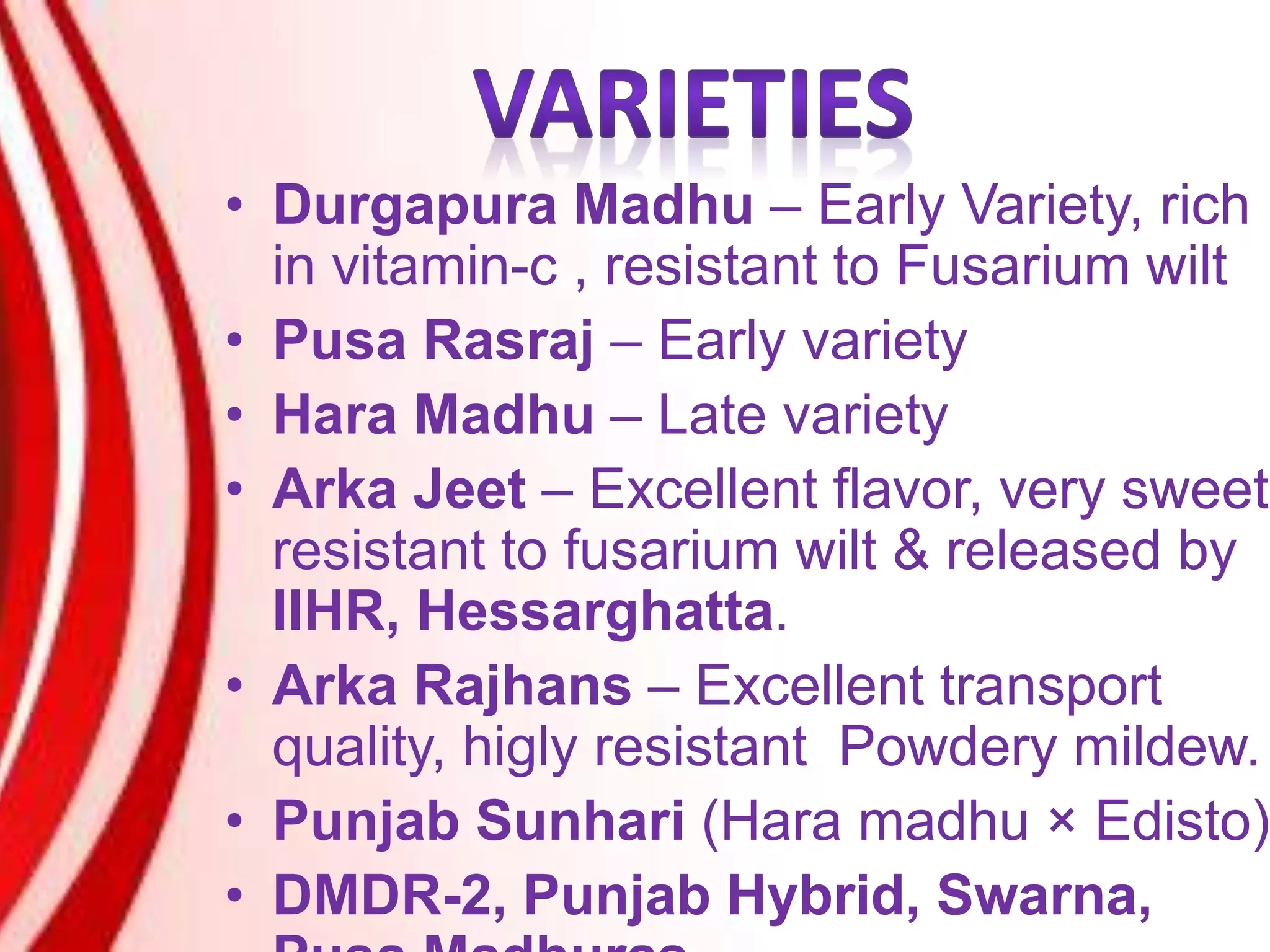
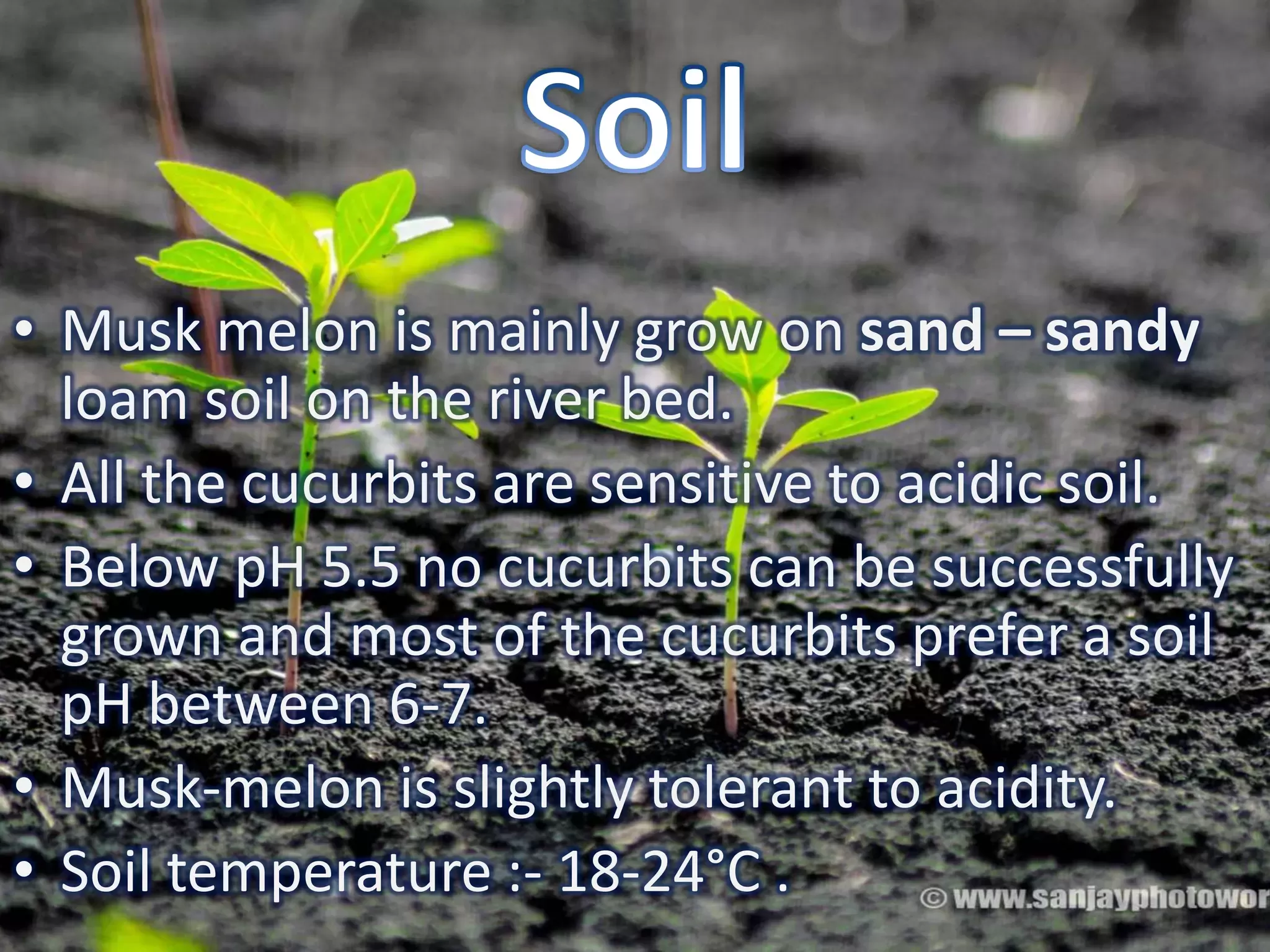
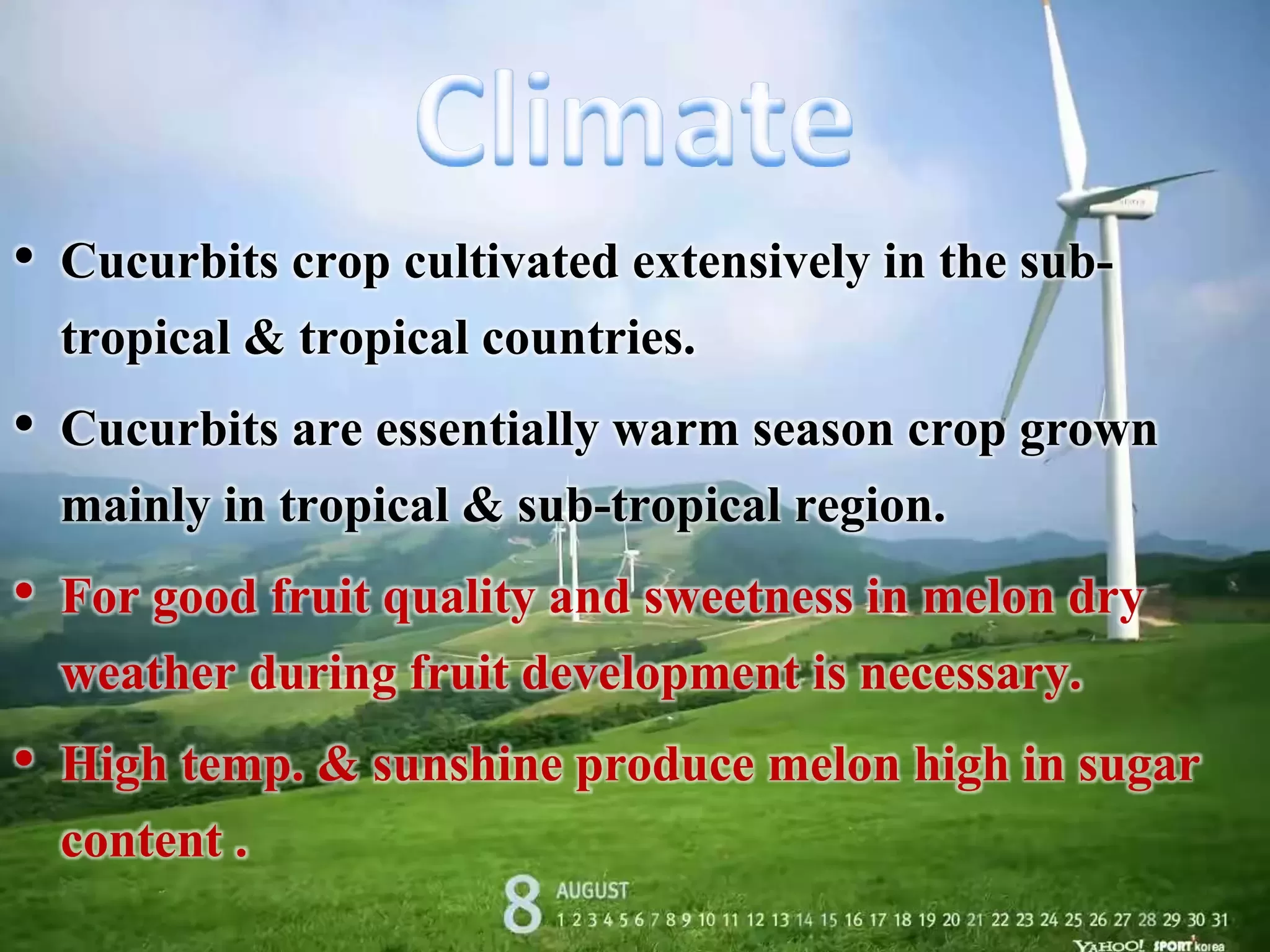
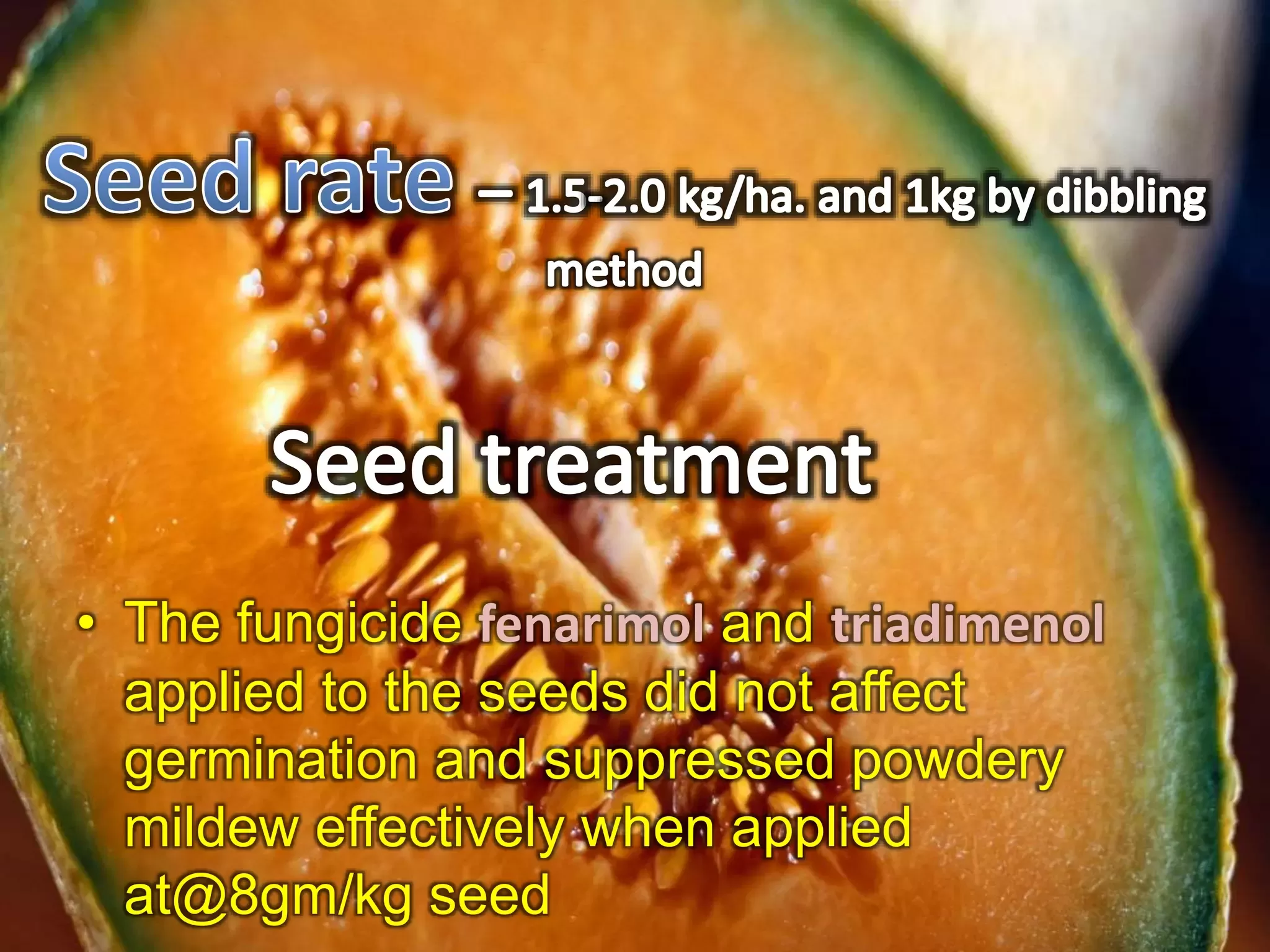
Muskmelon, also known as cantaloupe, is a significant agricultural crop widely cultivated across India, primarily cherished as a dessert fruit. While it is occasionally consumed in its raw state, its use as a cooked vegetable is rare. Muskmelon plants are monoecious, meaning they possess both male and female flowers on the same plant, which aids in their pollination. Notably, these plants do not hybridize with other cucurbits like watermelon and pumpkin but allow for intercrossing among different muskmelon varieties. This genetic diversity often leads to improved fruit characteristics, particularly through a process known as metaxenia, where pollen grains from one variety can affect the taste and quality of the resulting fruit. Among the various cultivars, early varieties like Durgapura Madhu are noted for their vitamin C content and their resistance to Fusarium wilt, while Arka Jeet is recognized for its exceptional sweetness and flavor. Other notable cultivars include Pusa Rasraj, Hara Madhu, Arka Rajhans, and various hybrids like Punjab Sunhari and DMDR-2. This diversity allows for cultivation adaptability across different climatic conditions and market demands. Muskmelon thrives best in well-drained sandy and sandy-loam soils typically found in river valleys. The optimal soil pH for cucurbits ranges between 6 and 7, with muskmelons showing slight tolerance to acidity. Soil temperature plays a crucial role, with an ideal range of 18-24°C for growth. Conditions of warm weather are imperative for achieving high sweetness levels in the fruit, and drought during fruit development can contribute positively to fruit quality. Pest and disease management is essential in muskmelon cultivation. Fungal diseases like powdery mildew can significantly affect yield and quality, but effective management can be achieved through the use of seed treatment fungicides such as fenarimol and triadimenol. Additionally, proper agronomic practices such as mulching can help conserve moisture and suppress weed growth. Researchers have found that black plastic mulch can enhance yield by preventing soil salinity from affecting seedling growth. However, muskmelon crops face threats from various pests, including the red pumpkin beetle and aphids that can damage seedlings and transmit viral diseases. Strategies such as crop rotation, proper timing for sowing, and specific insecticides like Malathion can mitigate these risks. Viruses such as cucumber mosaic and the yellowing disease, caused by whiteflies, may necessitate routine pesticide applications to control vector populations effectively. The harvest timing for muskmelon usually ranges from 85 to 115 days post-planting, with the best indicator of ripeness being a change in the external color of the fruit from green to yellow. Optimal yields of muskmelon can reach between 100-150 quintals per hectare, depending on variety and environmental conditions. In summary, successful muskmelon cultivation requires an understanding of its unique floral characteristics, regional soil and climatic conditions, diligent pest management, and proper harvesting techniques to maximize yield and fruit quality.

Slide 1

Slide 1

Slide 2

Slide 2

Slide 3

Slide 3

Slide 4

Slide 4

Slide 5

Slide 5

Slide 6

Slide 6

Slide 7

Slide 7

Slide 8

Slide 8

Slide 9

Slide 9

Slide 10

Slide 10

Slide 11

Slide 11

Slide 12

Slide 12

Slide 13

Slide 13

Slide 14

Slide 14

Slide 15

Slide 15

Slide 16

Slide 16

Slide 17

Slide 17

Slide 18

Slide 18

Slide 19
Slide 19

Slide 20

Slide 20

Slide 21

Slide 21

Slide 22

Slide 22

Slide 23

Slide 23

Slide 24

Slide 24

Slide 25

Slide 25

Slide 26

Slide 26

Slide 27

Slide 27

Slide 28

Slide 28

Slide 29

Slide 29

Slide 30

Slide 30

Slide 31

Slide 31

Slide 32

Slide 32

Slide 33

Slide 33
1 / 33

Ppt on Brinjal breeding

Summary:

Discover the fascinating world of brinjal breeding through this informative PowerPoint presentation. Explore the history, cultivation, and breeding methods of eggplant, a significant vegetable crop in various countries. Dive into the different botanical varieties, traits, and challenges faced in breeding for high yield and quality. Whether you are a researcher, farmer, or vegetable enthusiast, this presentation offers valuable insights into enhancing brinjal production and sustainability.

Summary

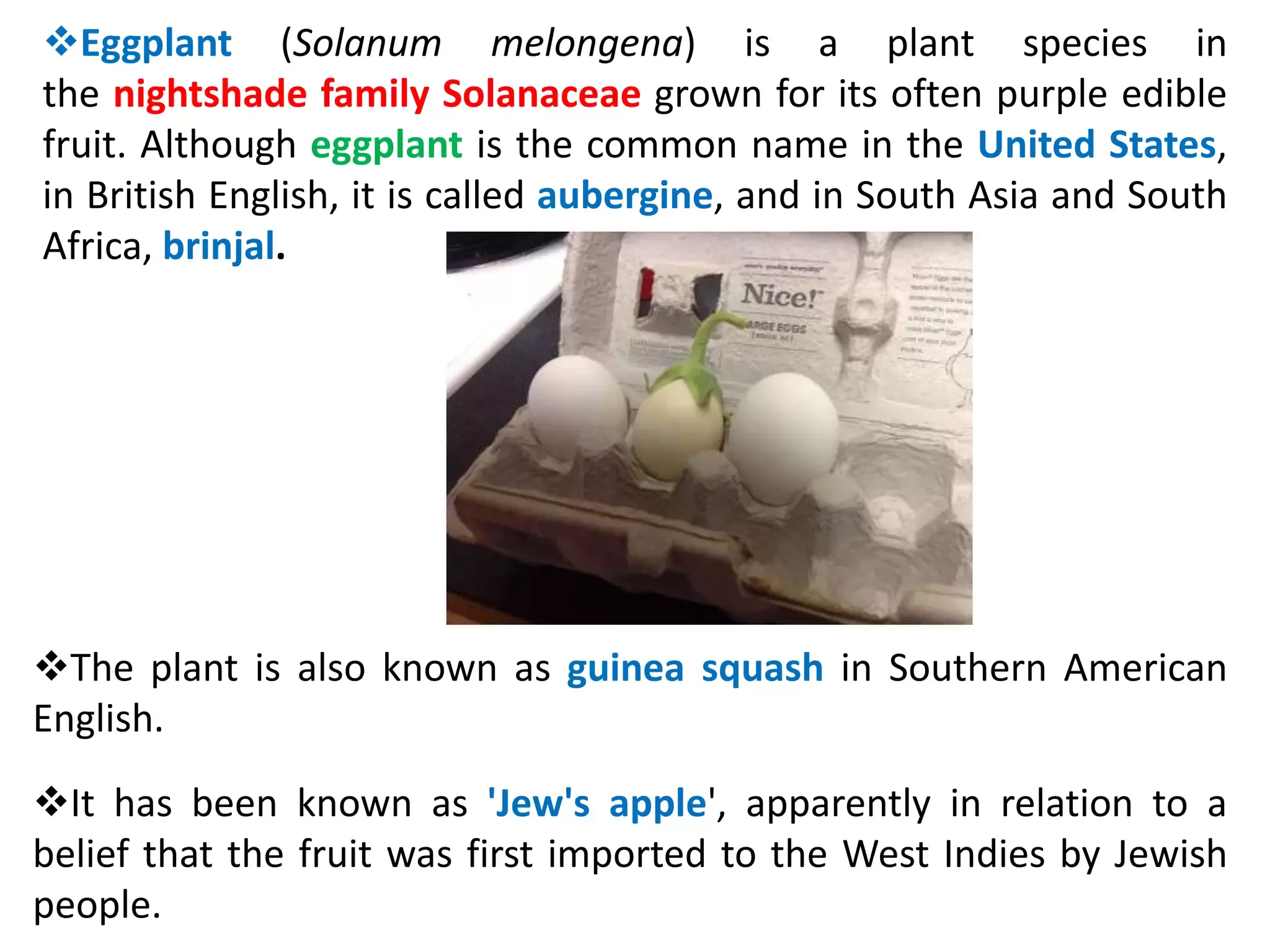
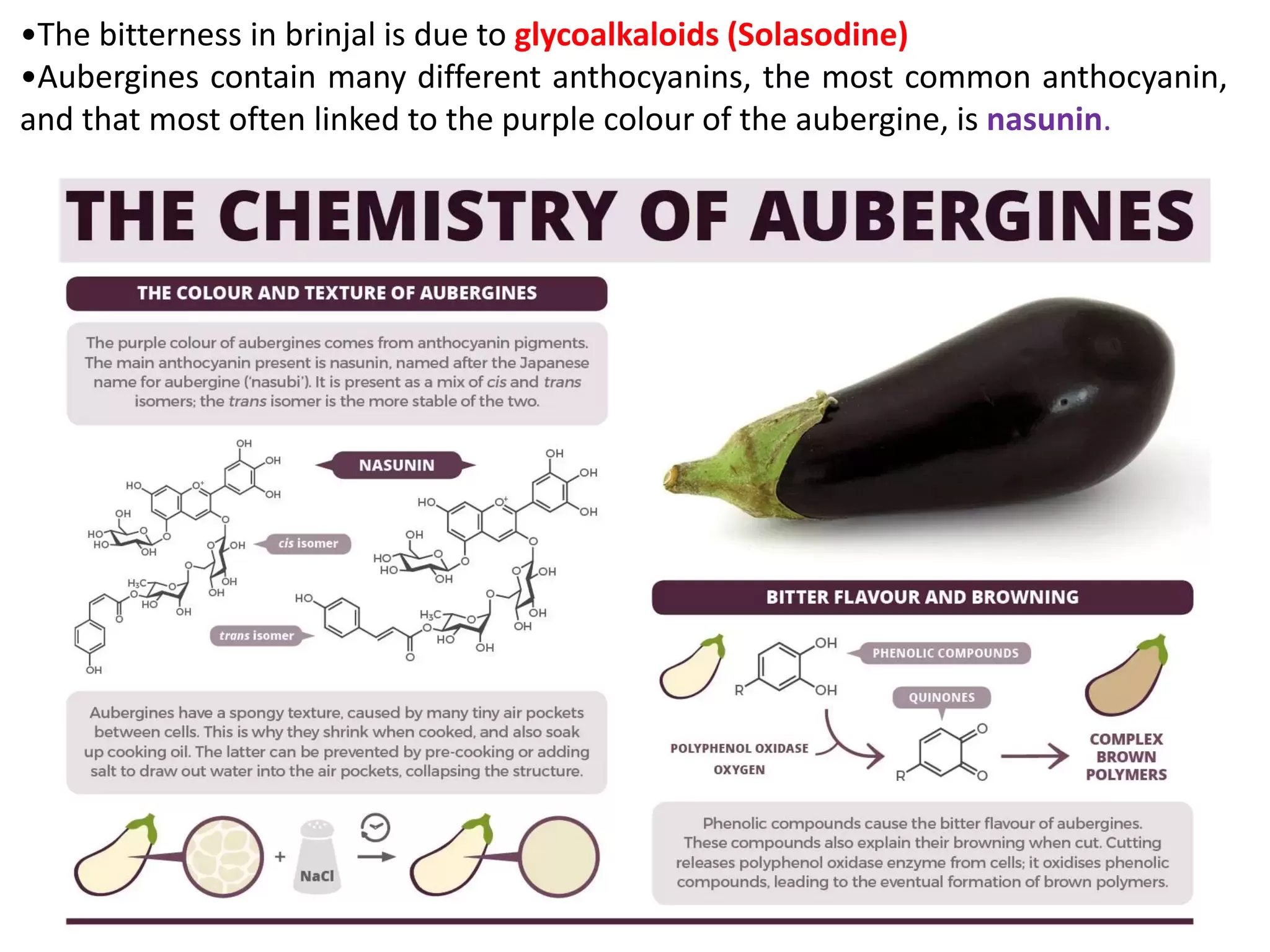
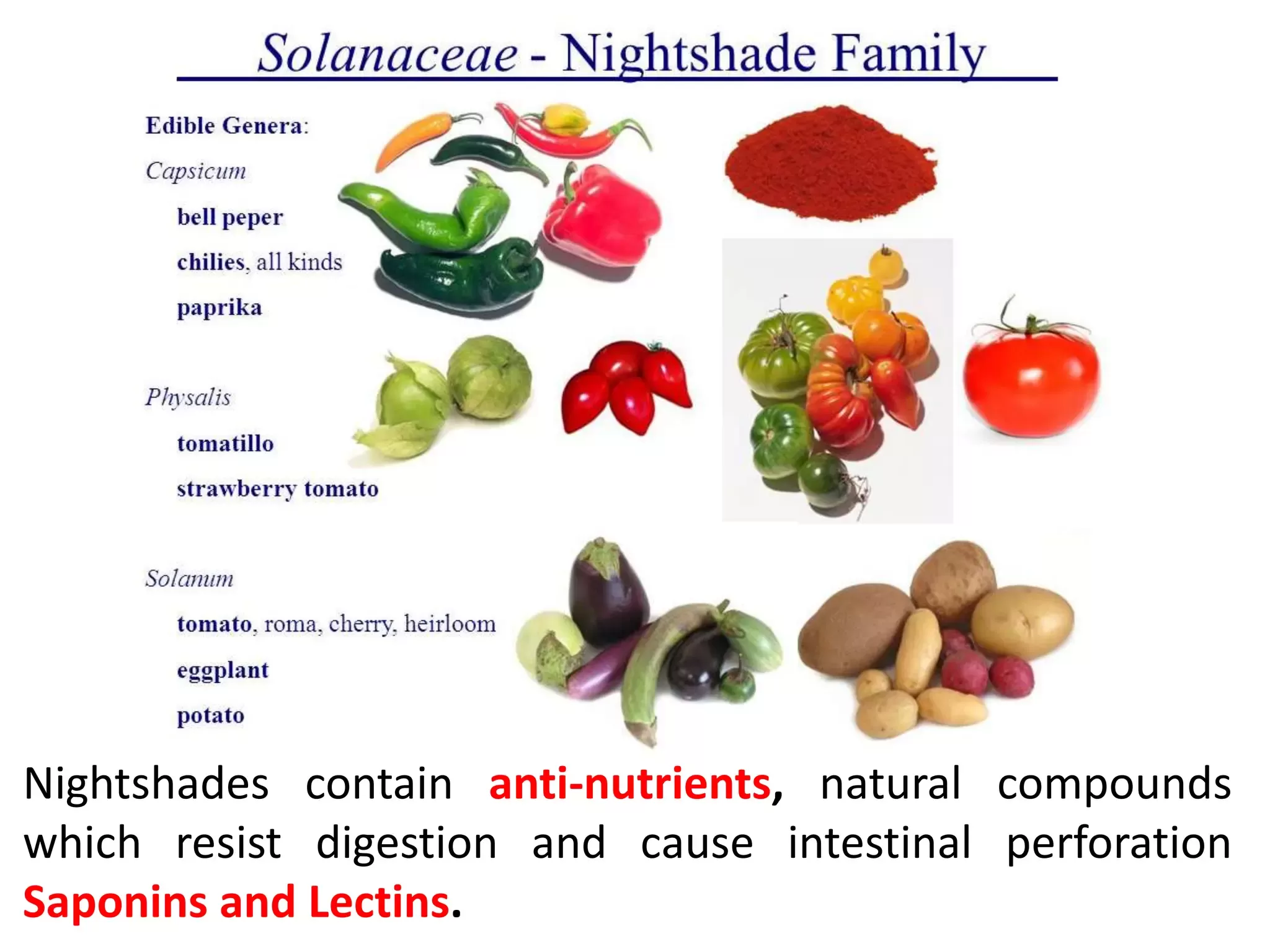
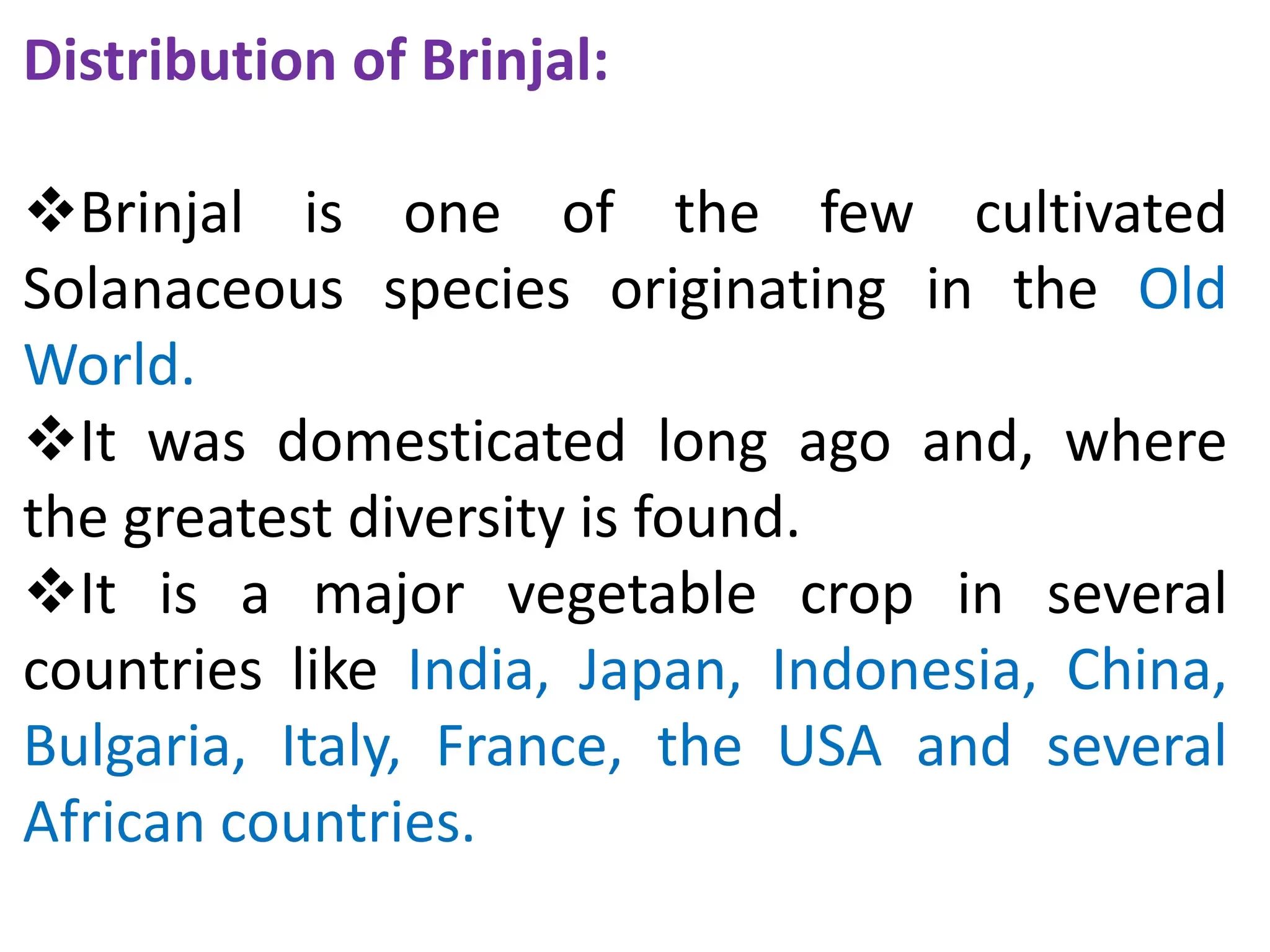
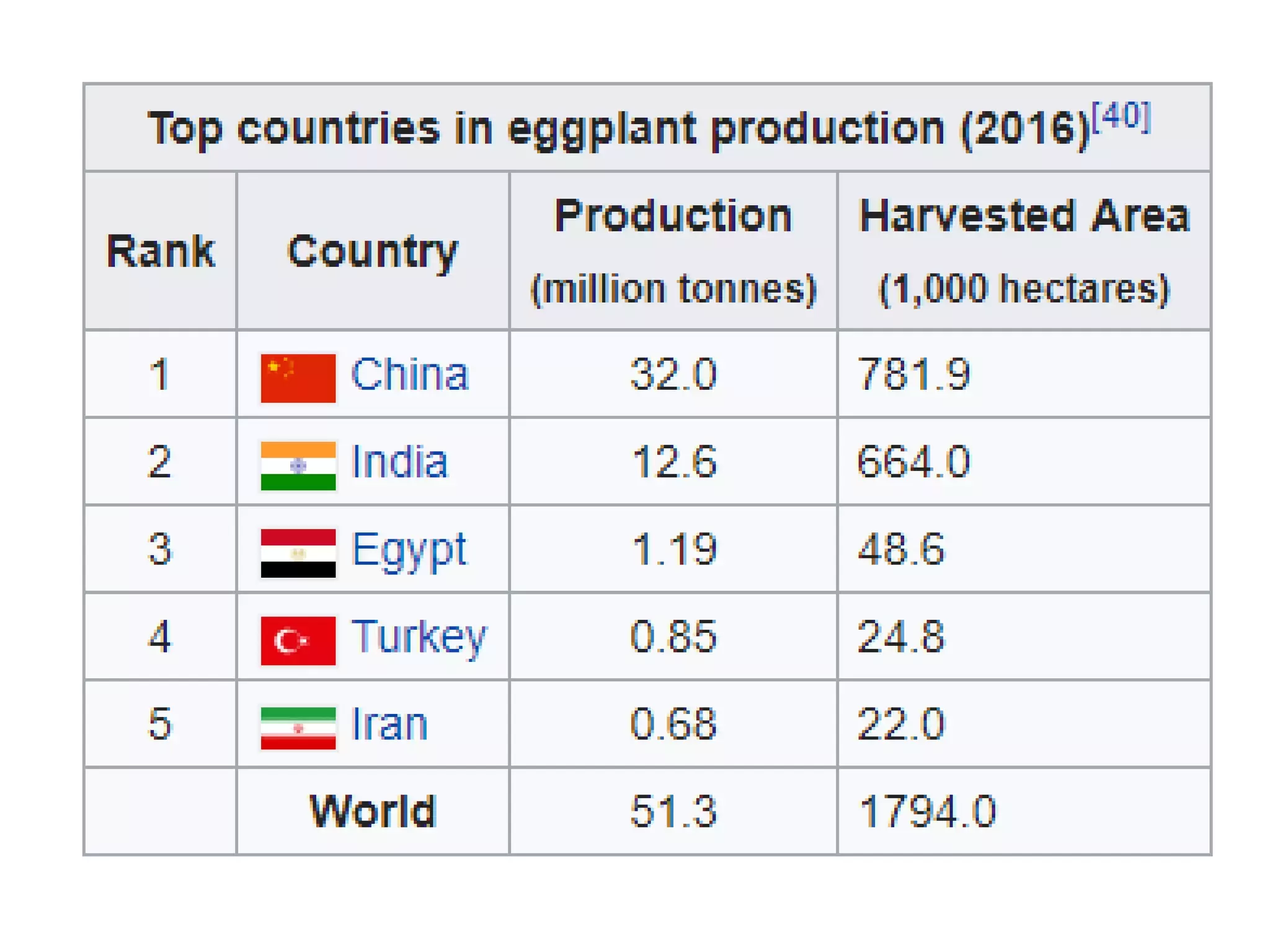
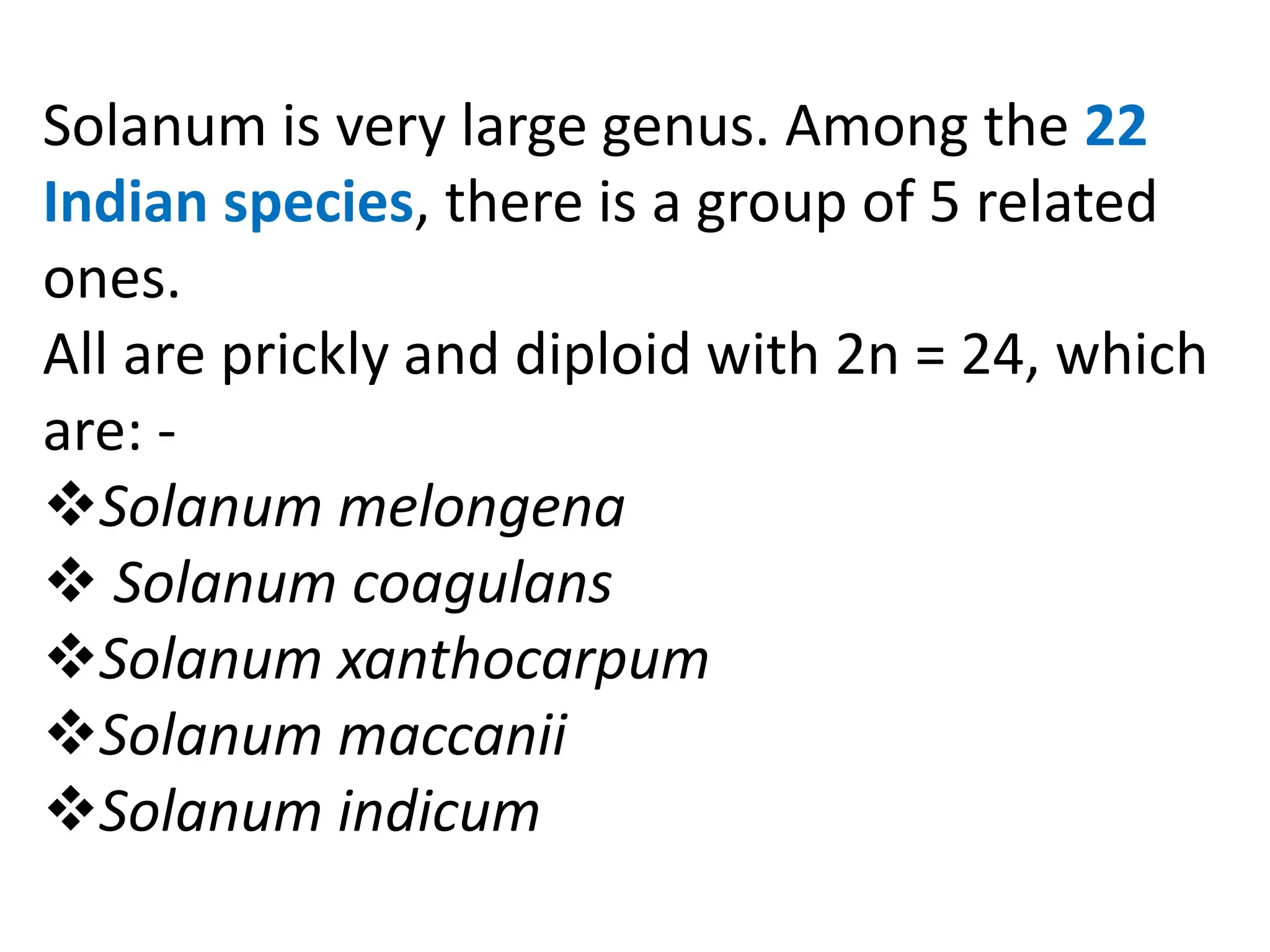
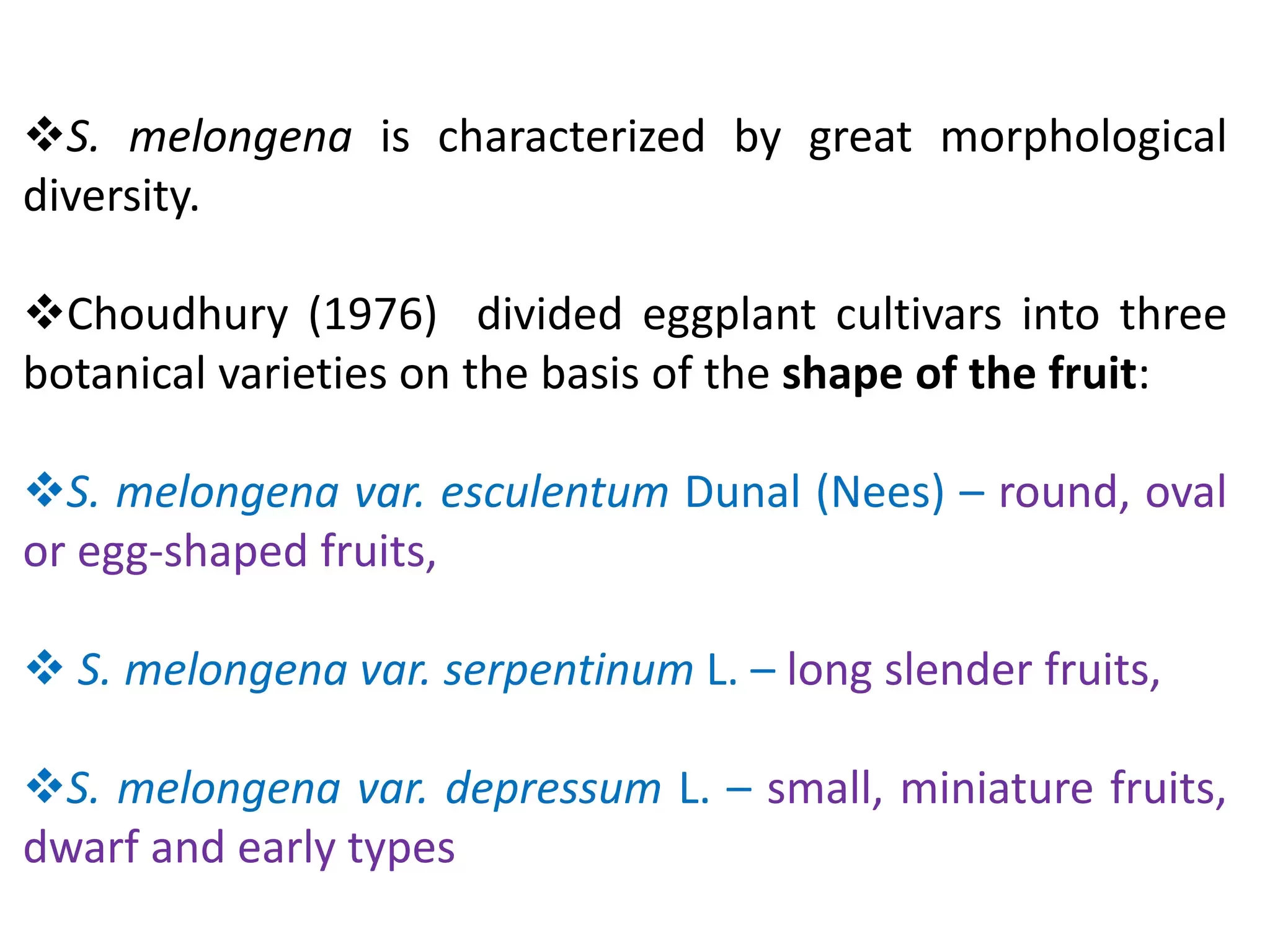
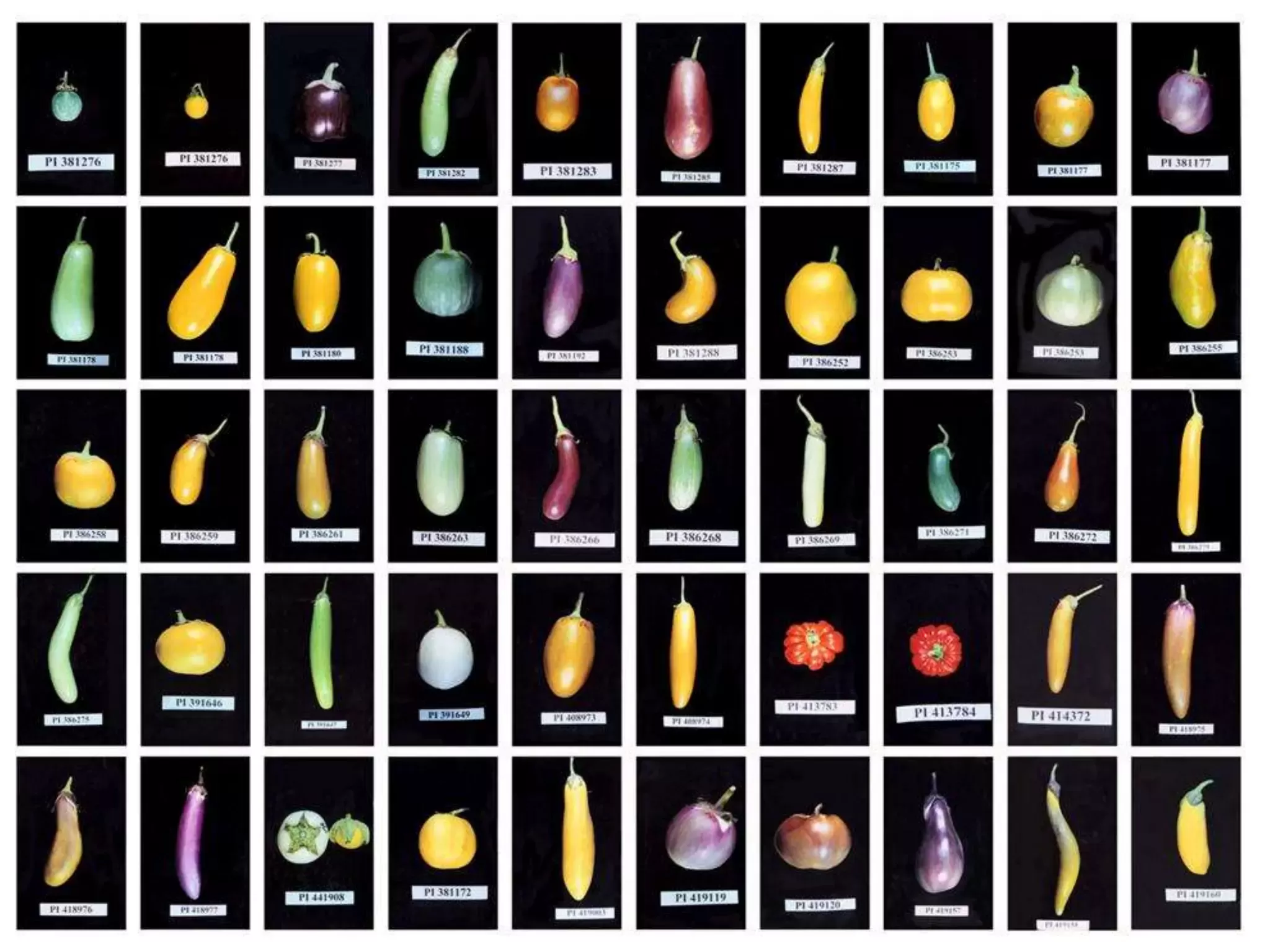
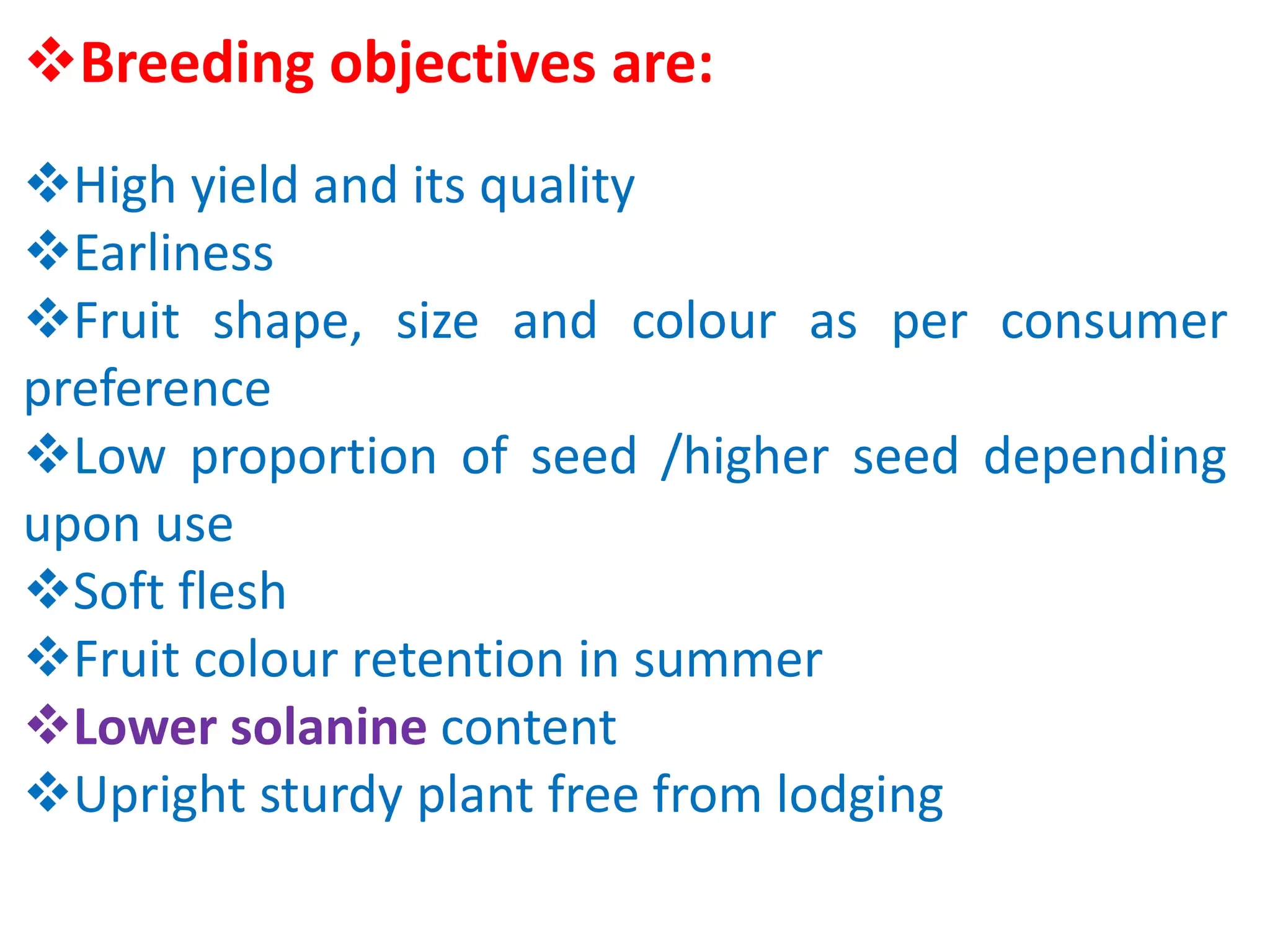
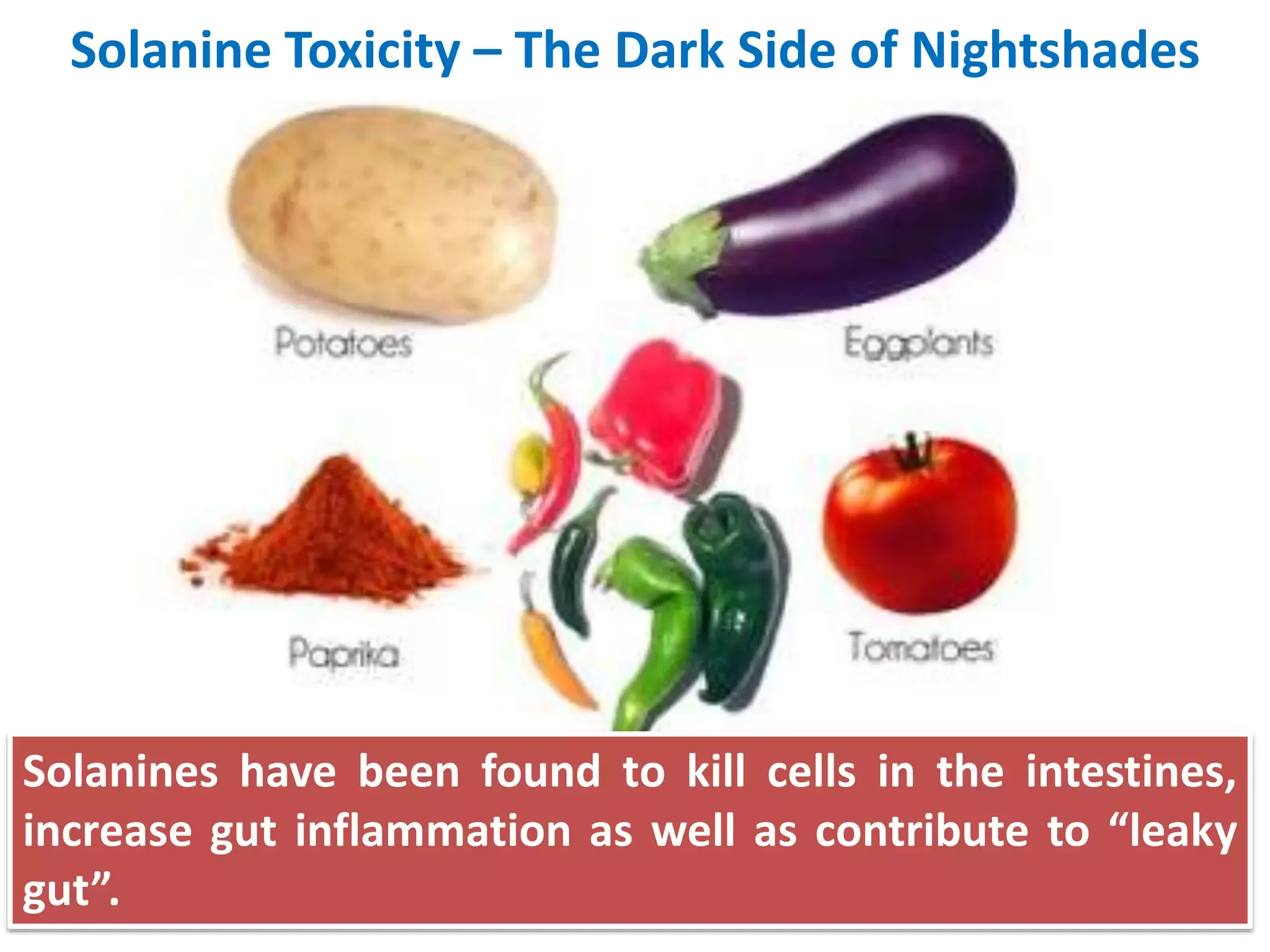
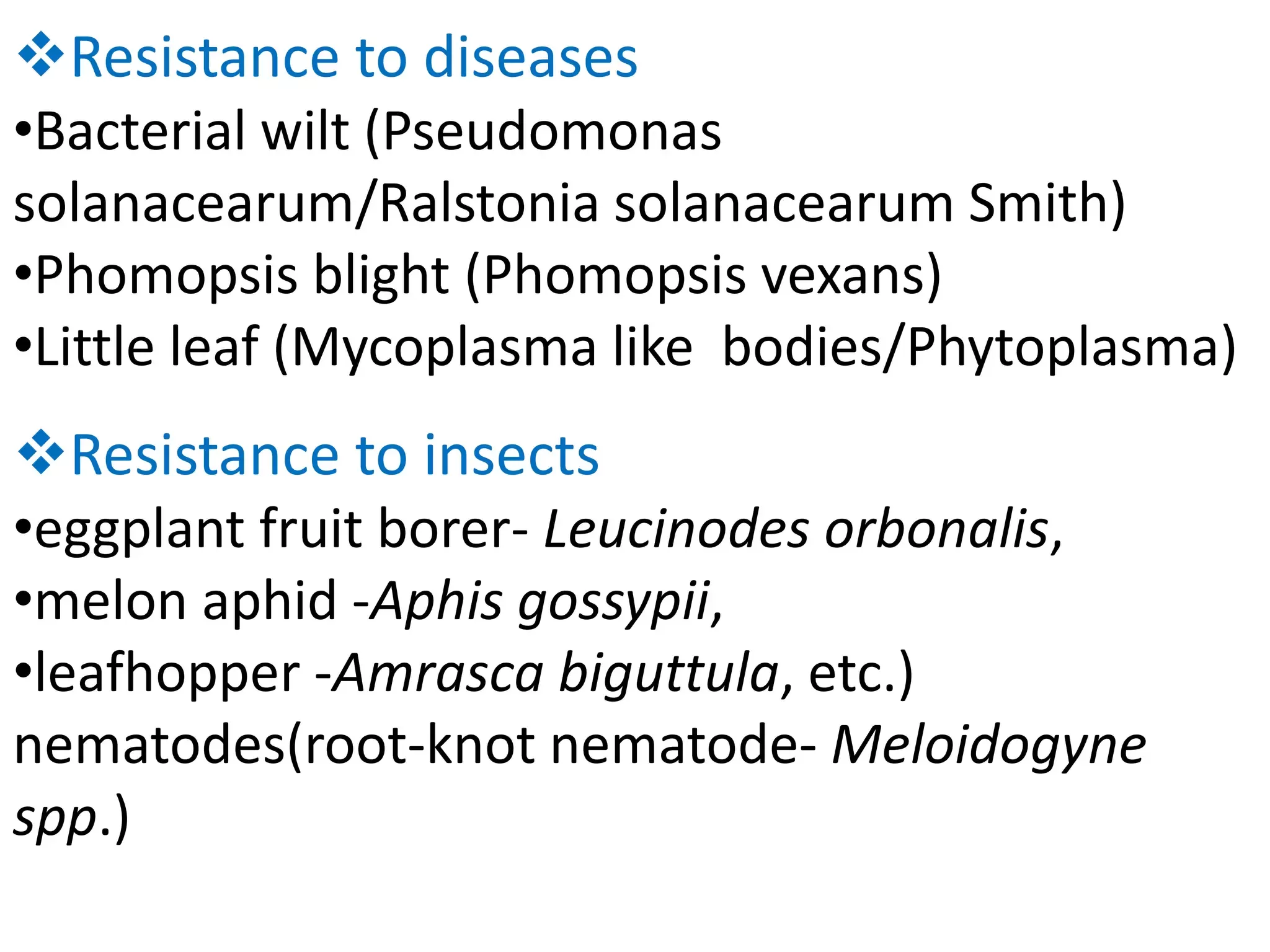
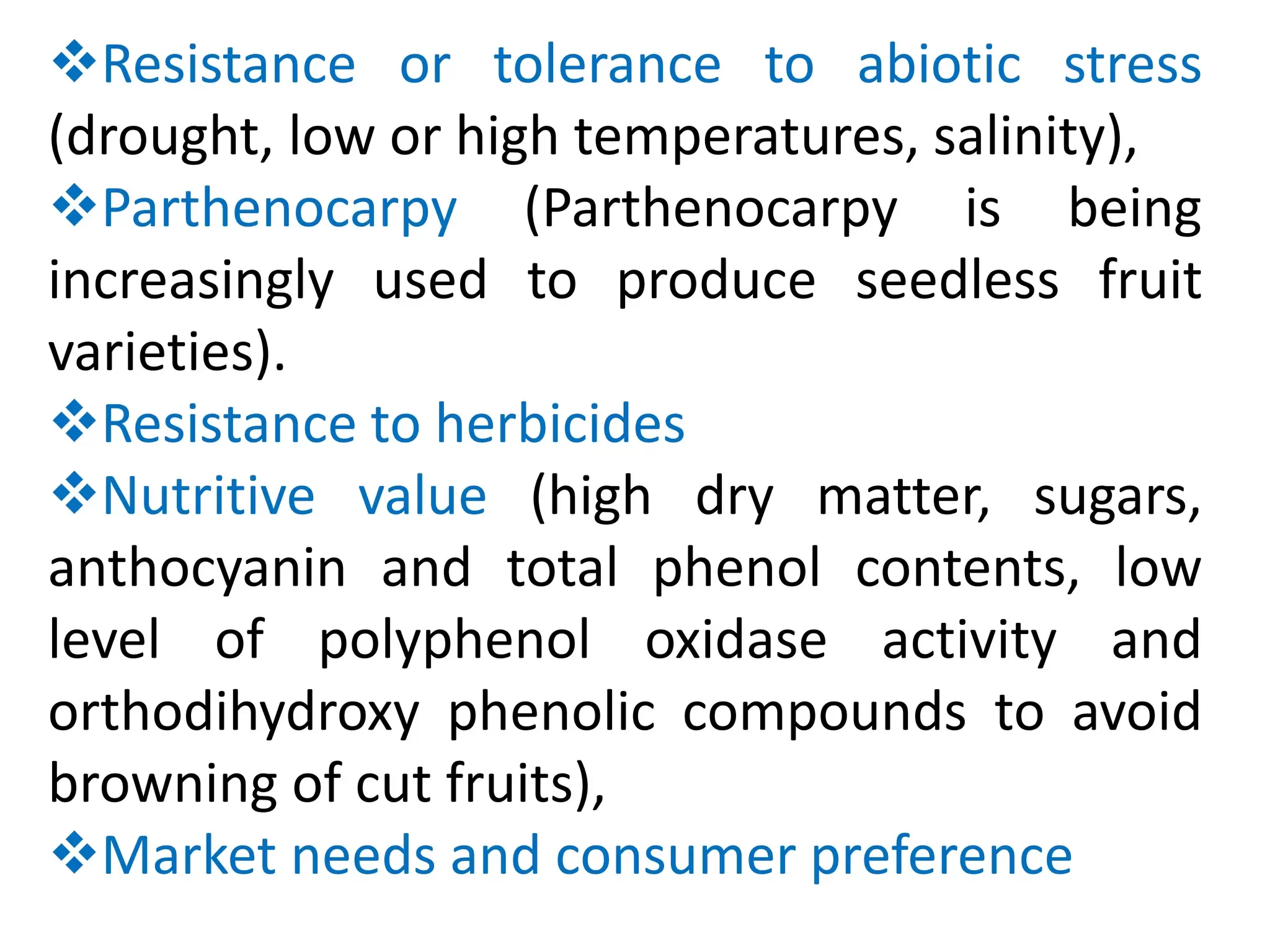
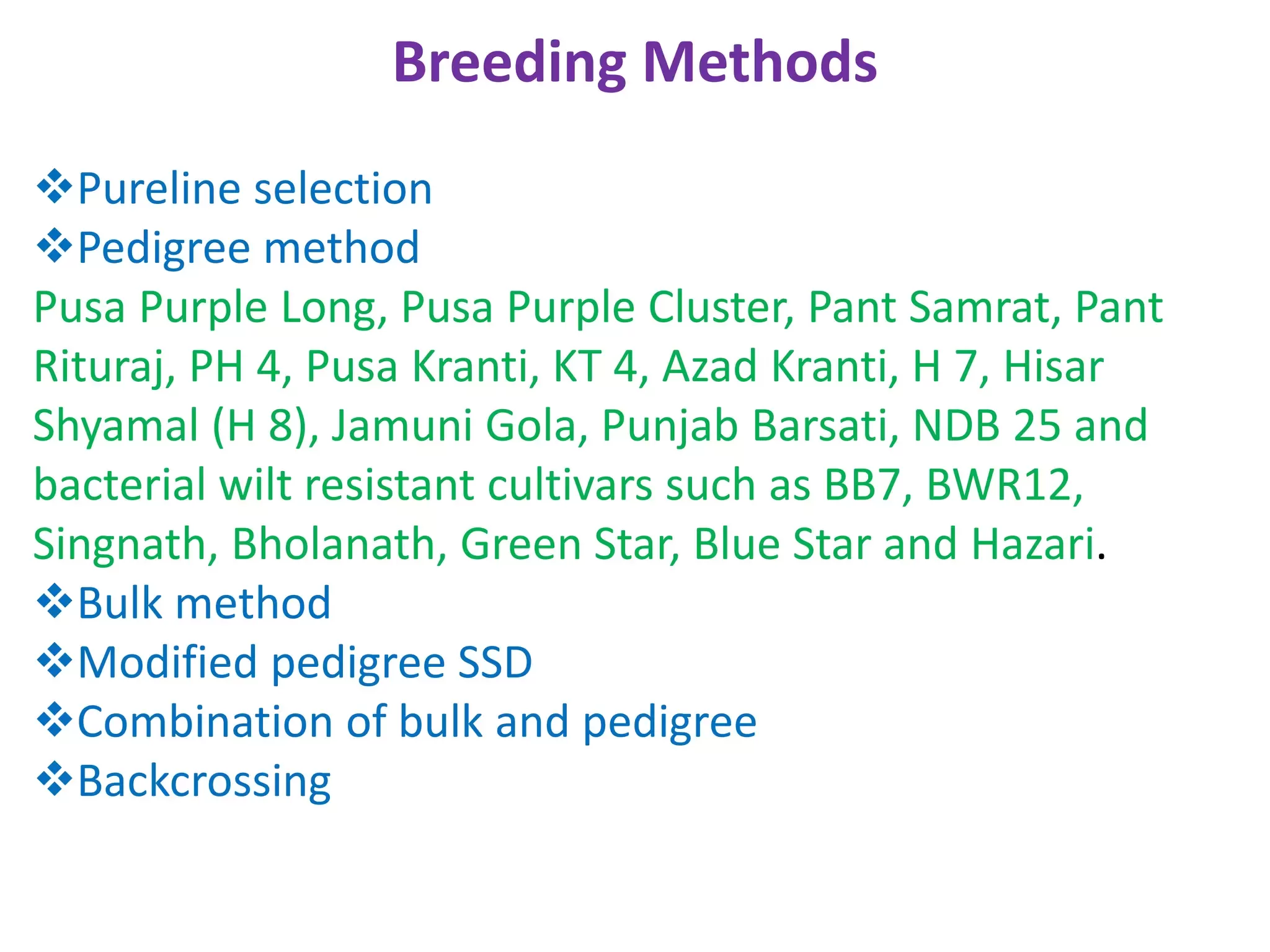
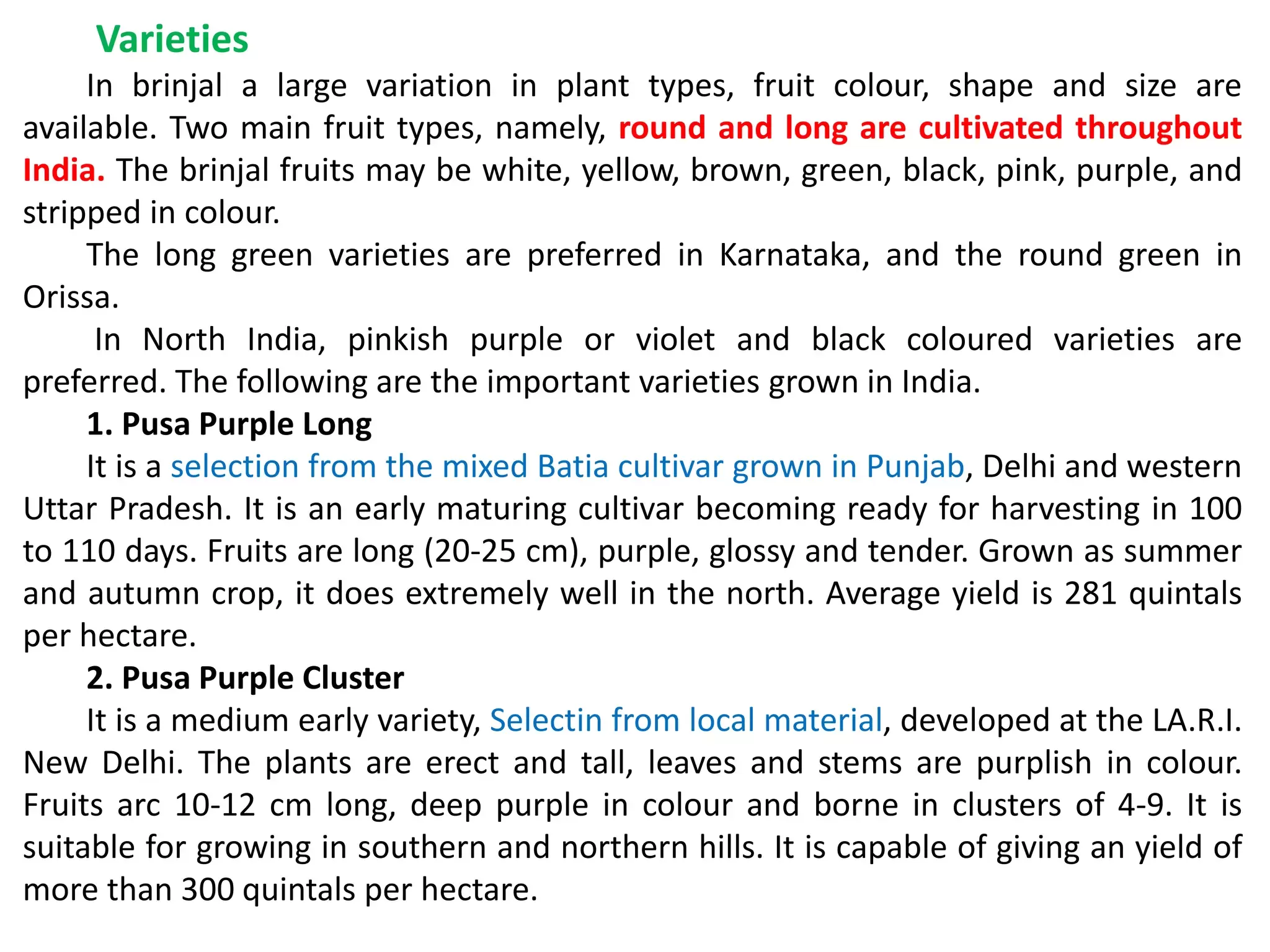
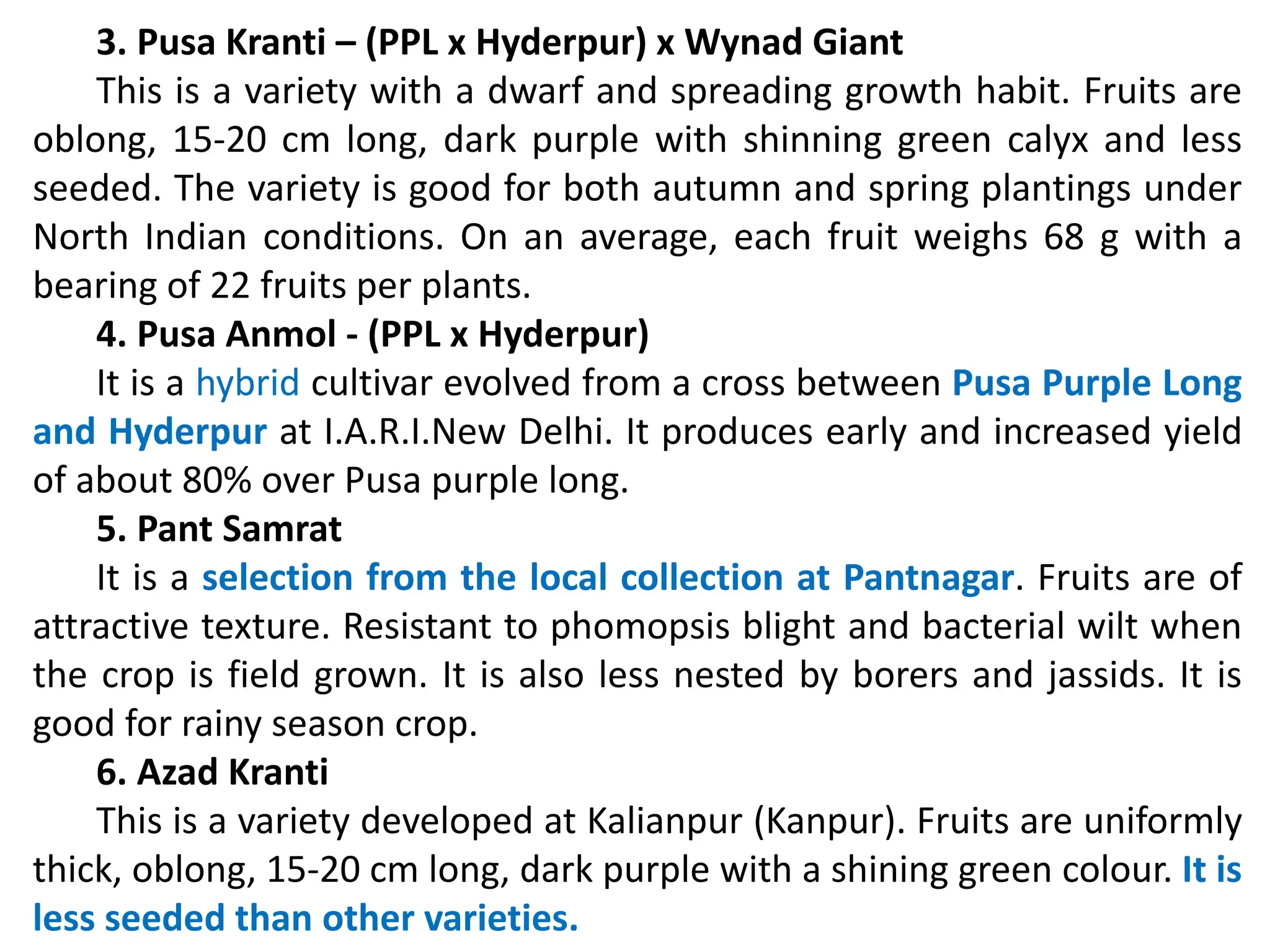
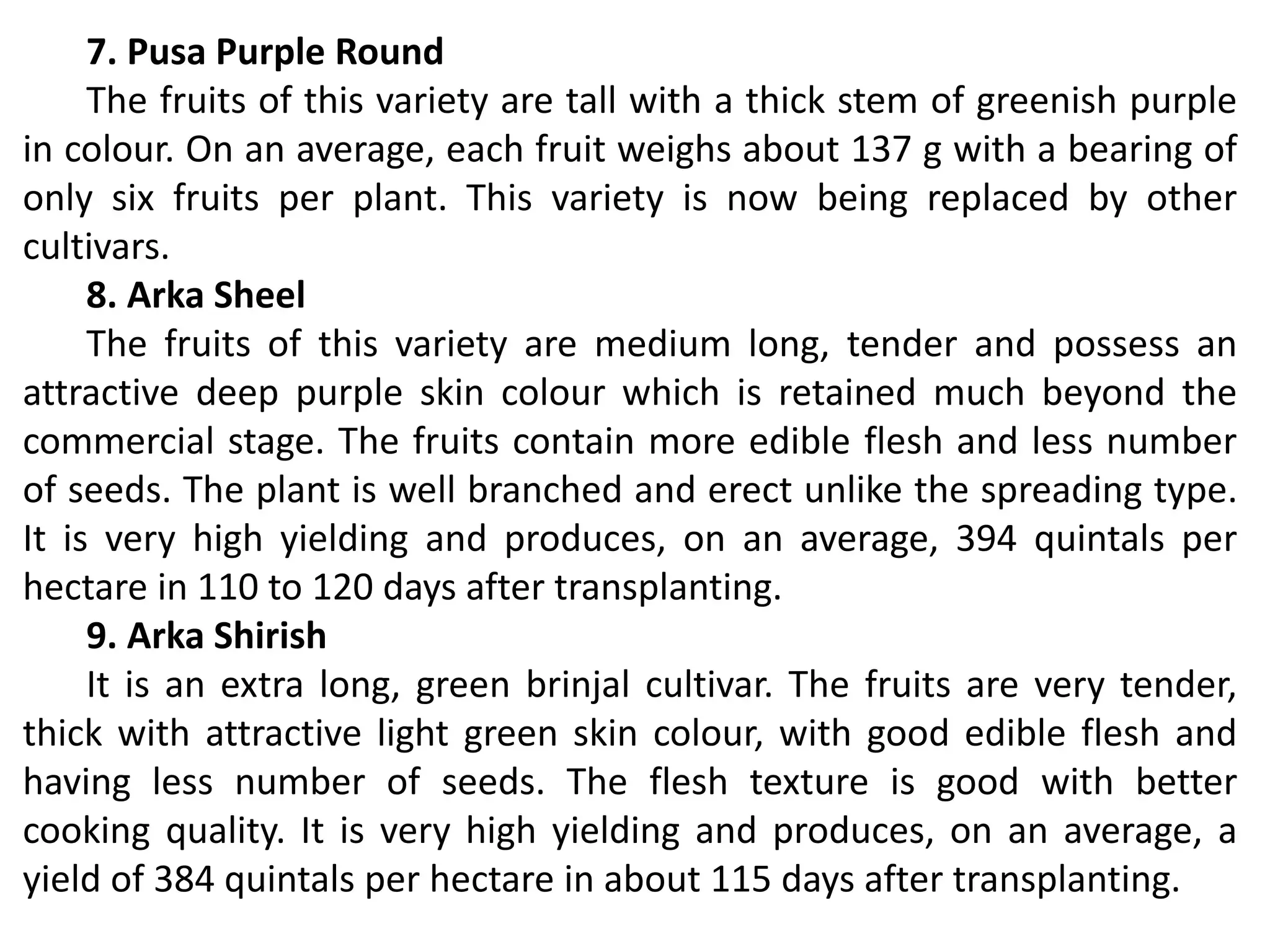
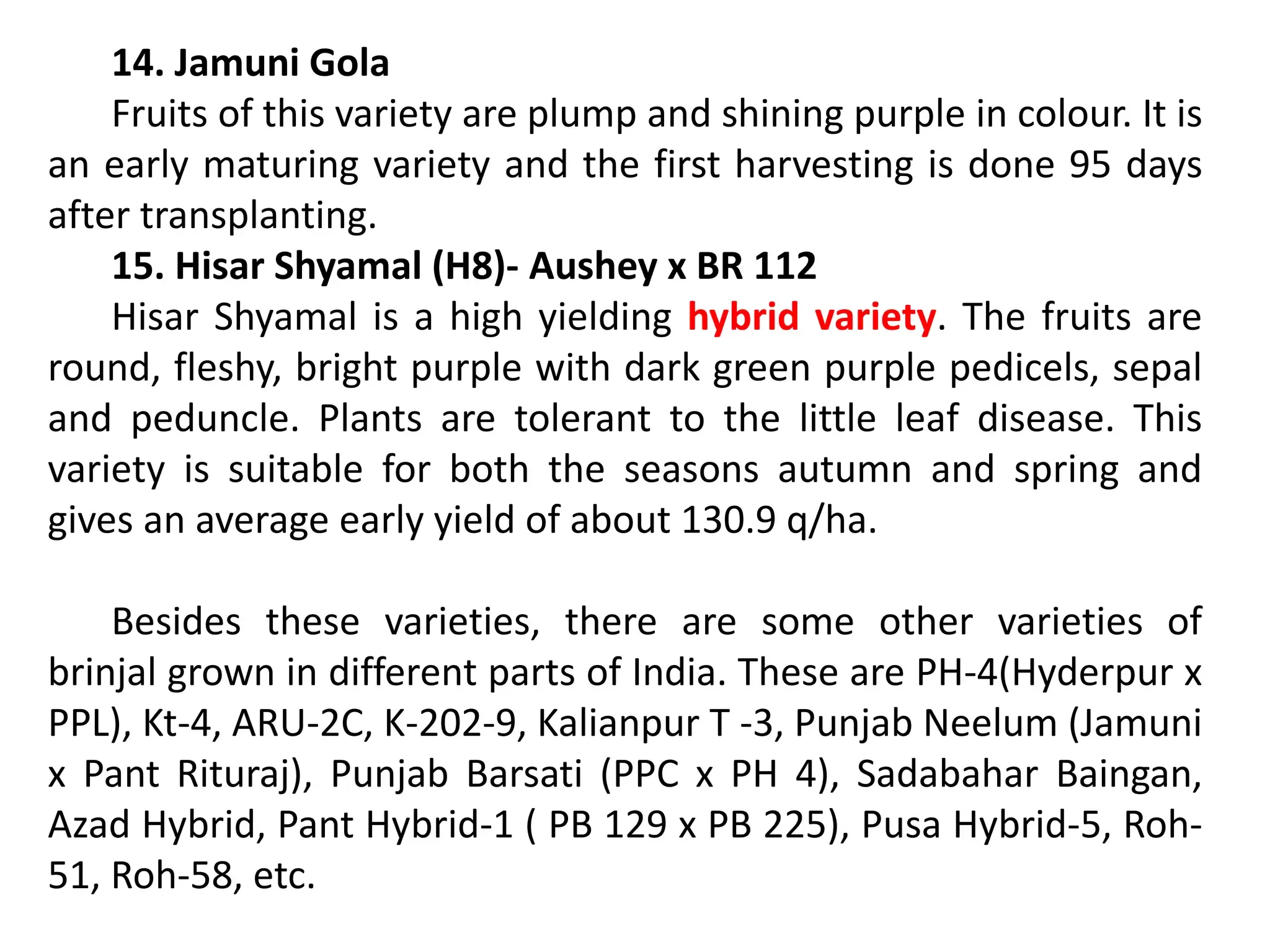
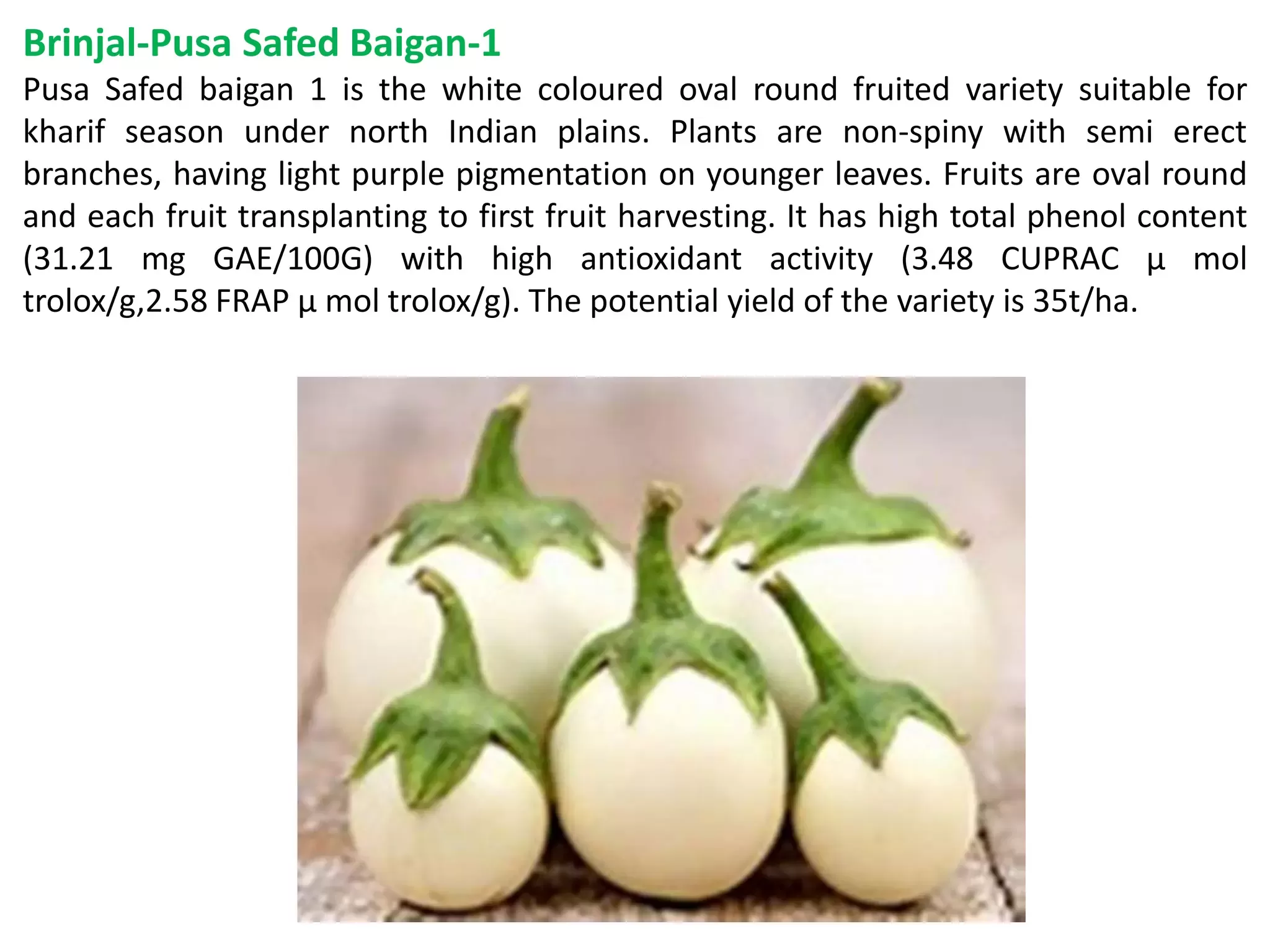
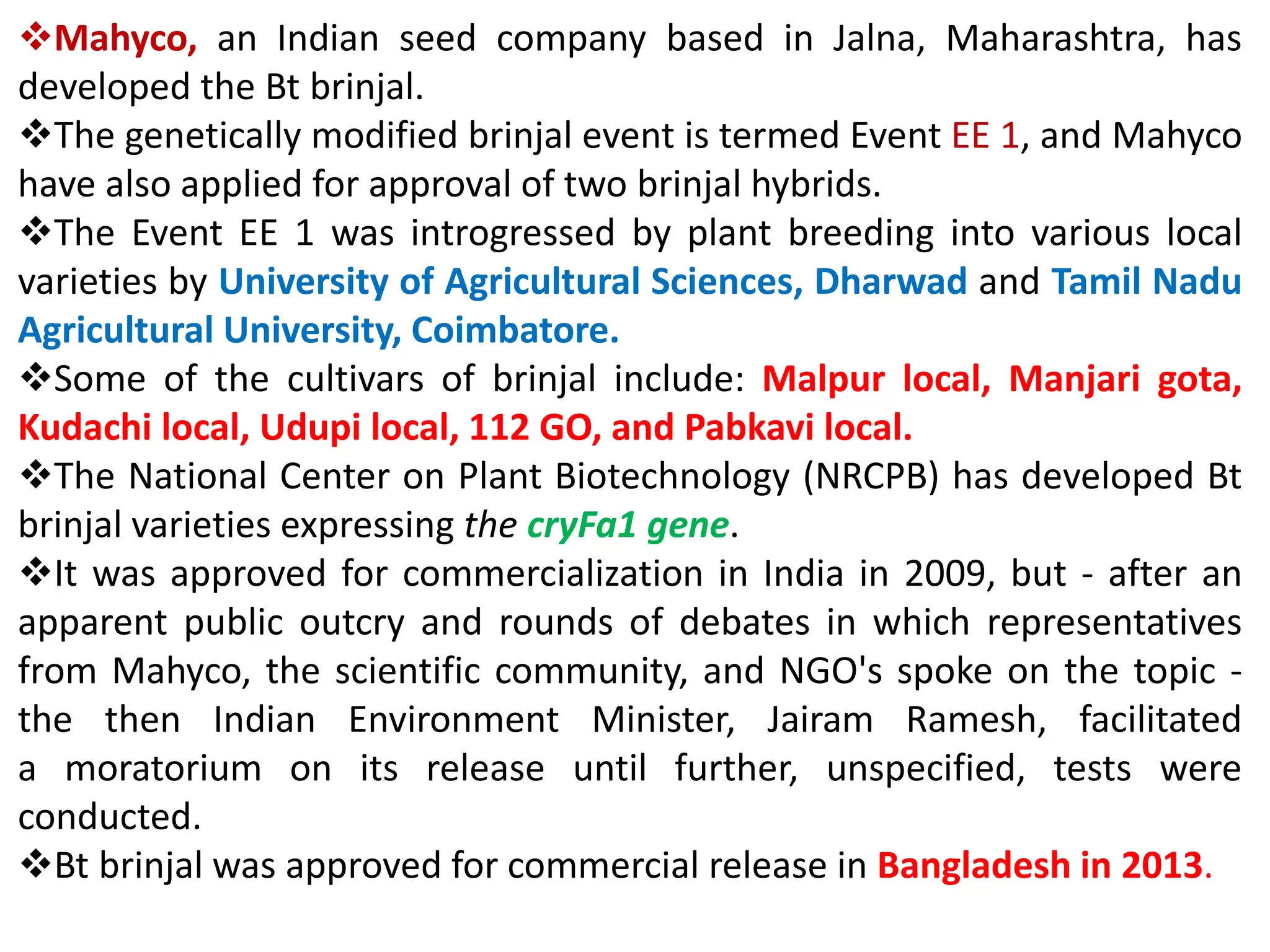
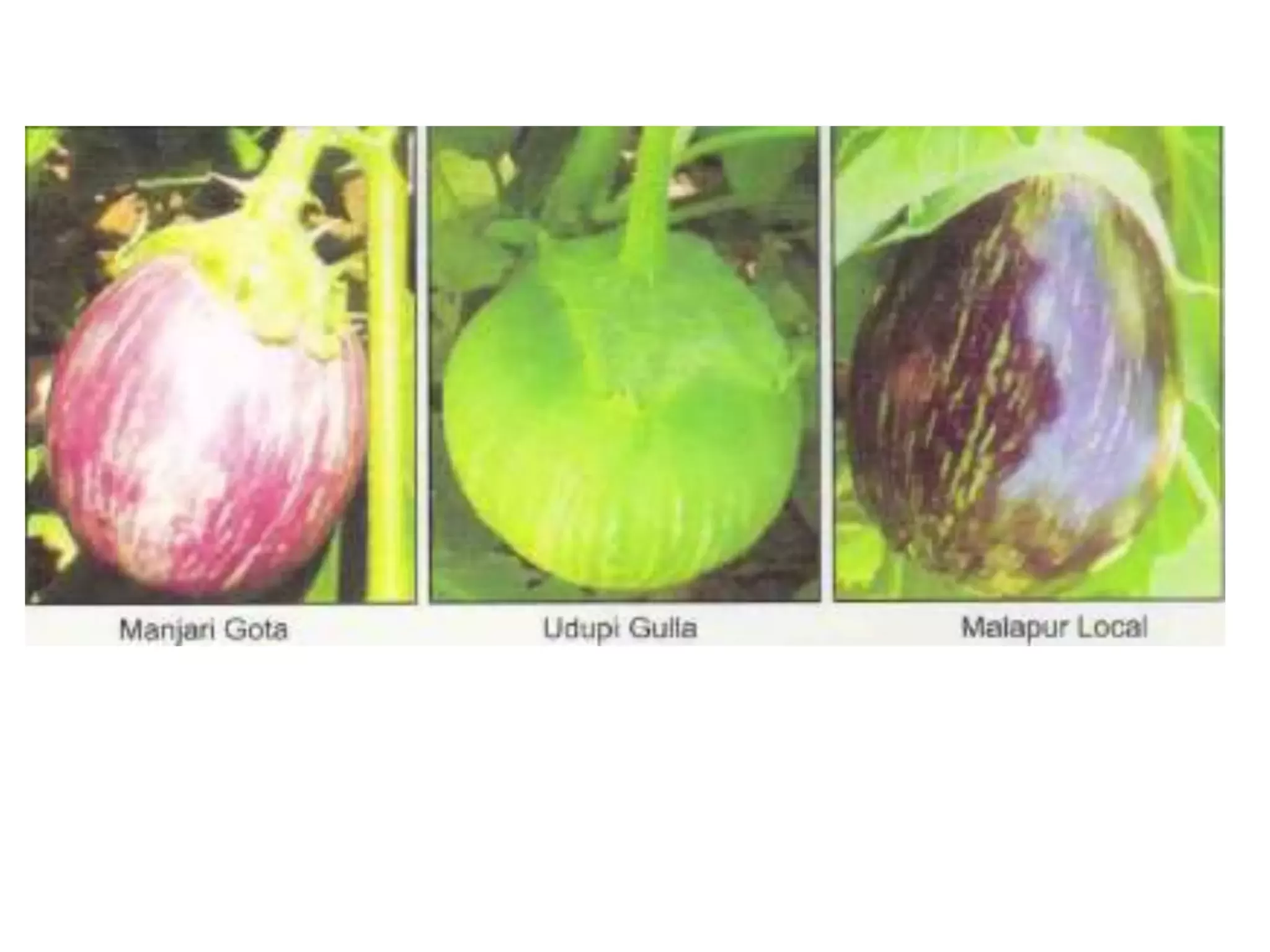
Eggplant (Solanum melongena), commonly known as aubergine in British English and brinjal in South Asia, is a member of the nightshade family Solanaceae, cultivated for its edible fruit, which is often purple. This plant species has a rich history of domestication, primarily in the Old World, and is a significant vegetable crop in countries like India, Japan, and the USA. Eggplant exhibits great morphological diversity and is categorized into three botanical varieties based on fruit shape: round, long slender, and small miniature types. Cultivation focuses on breeding for high yield, quality, disease resistance, and consumer-preferred traits, while also addressing issues like solanine toxicity and pest resistance. Notable pests include the eggplant fruit borer, and breeding methods include pureline selection and

Slide 1

Slide 1

Slide 2

Slide 2

Slide 3

Slide 3

Slide 4

Slide 4

Slide 5

Slide 5

Slide 6

Slide 6

Slide 7

Slide 7

Slide 8

Slide 8

Slide 9

Slide 9

Slide 10

Slide 10

Slide 11

Slide 11

Slide 12

Slide 12

Slide 13

Slide 13

Slide 14

Slide 14

Slide 15

Slide 15

Slide 16

Slide 16

Slide 17

Slide 17

Slide 18

Slide 18

Slide 19
Slide 19

Slide 20

Slide 20

Slide 21

Slide 21

Slide 22

Slide 22

Slide 23

Slide 23

Slide 24

Slide 24

Slide 25

Slide 25

Slide 26

Slide 26

Slide 27

Slide 27

Slide 28

Slide 28
1 / 28

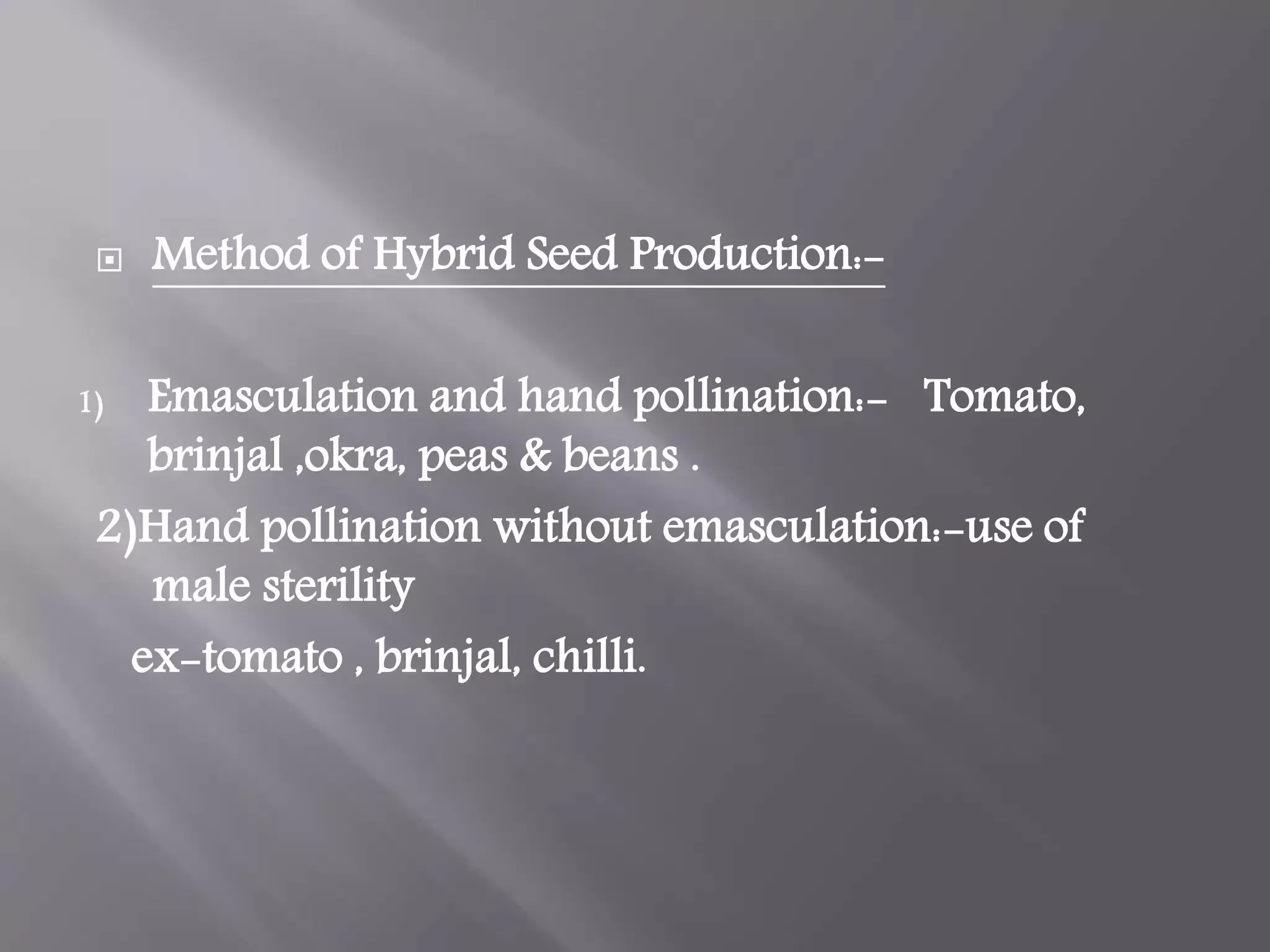
Ppt on Breeding methods for vegetables

Summary

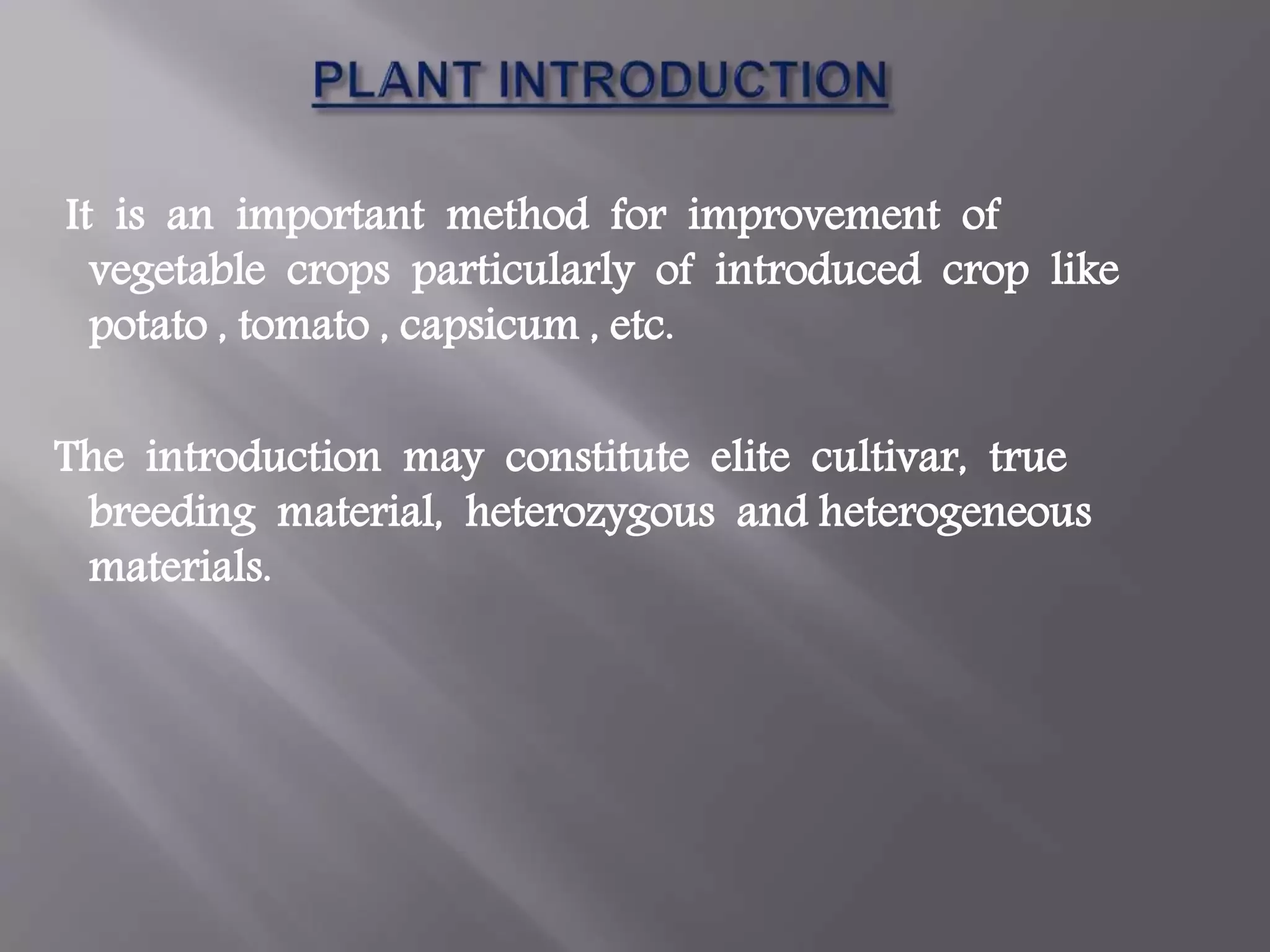
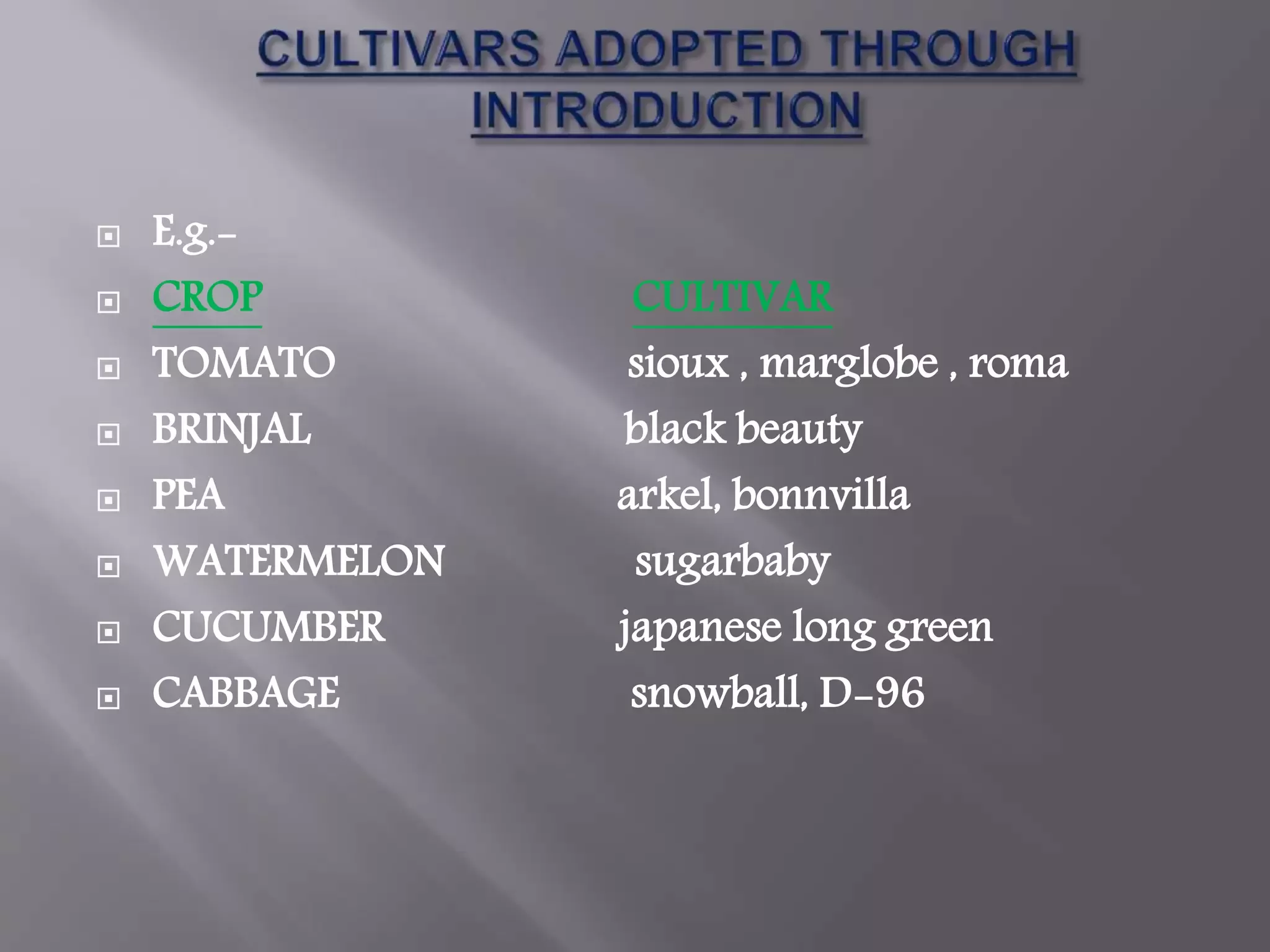
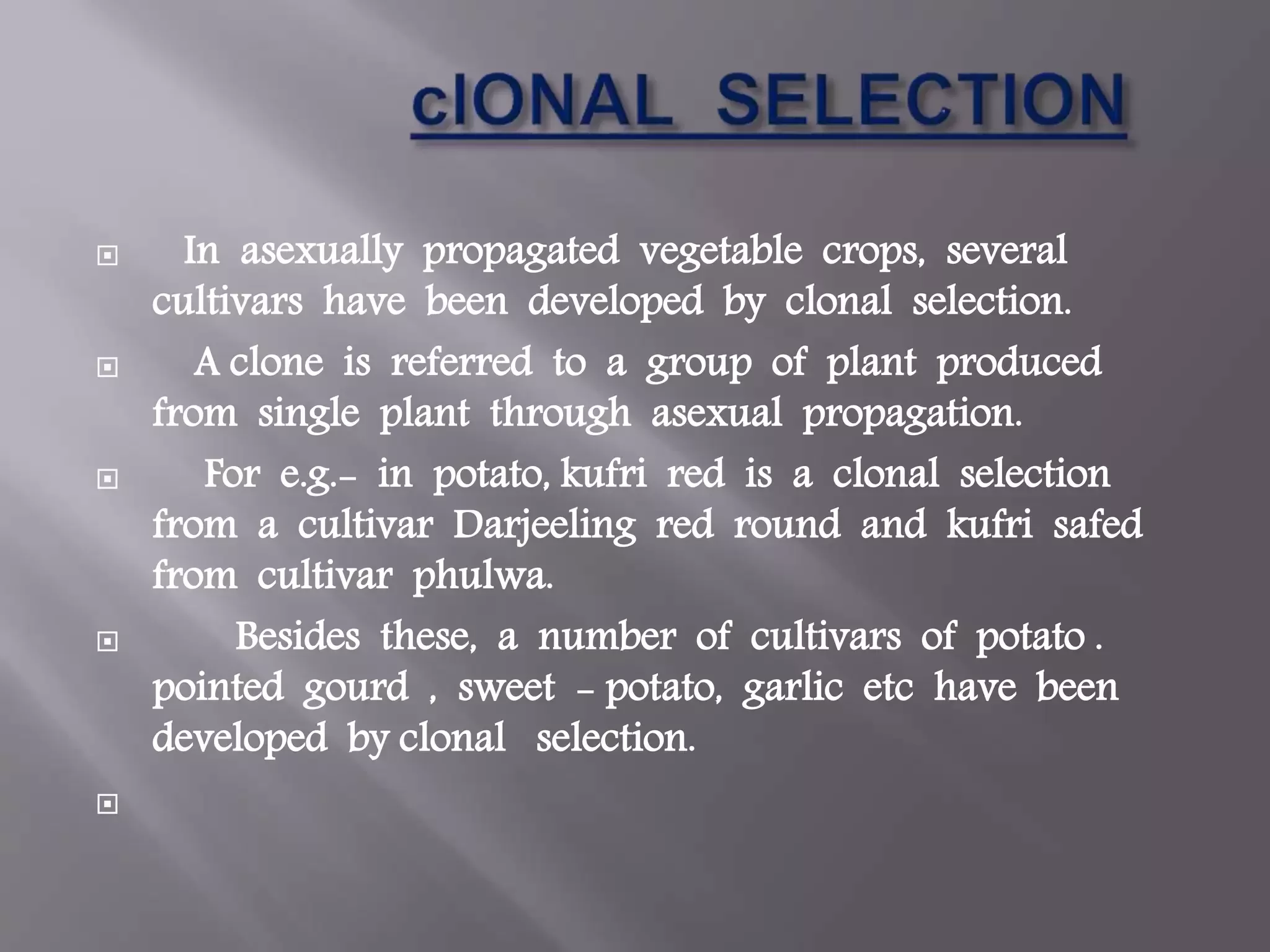
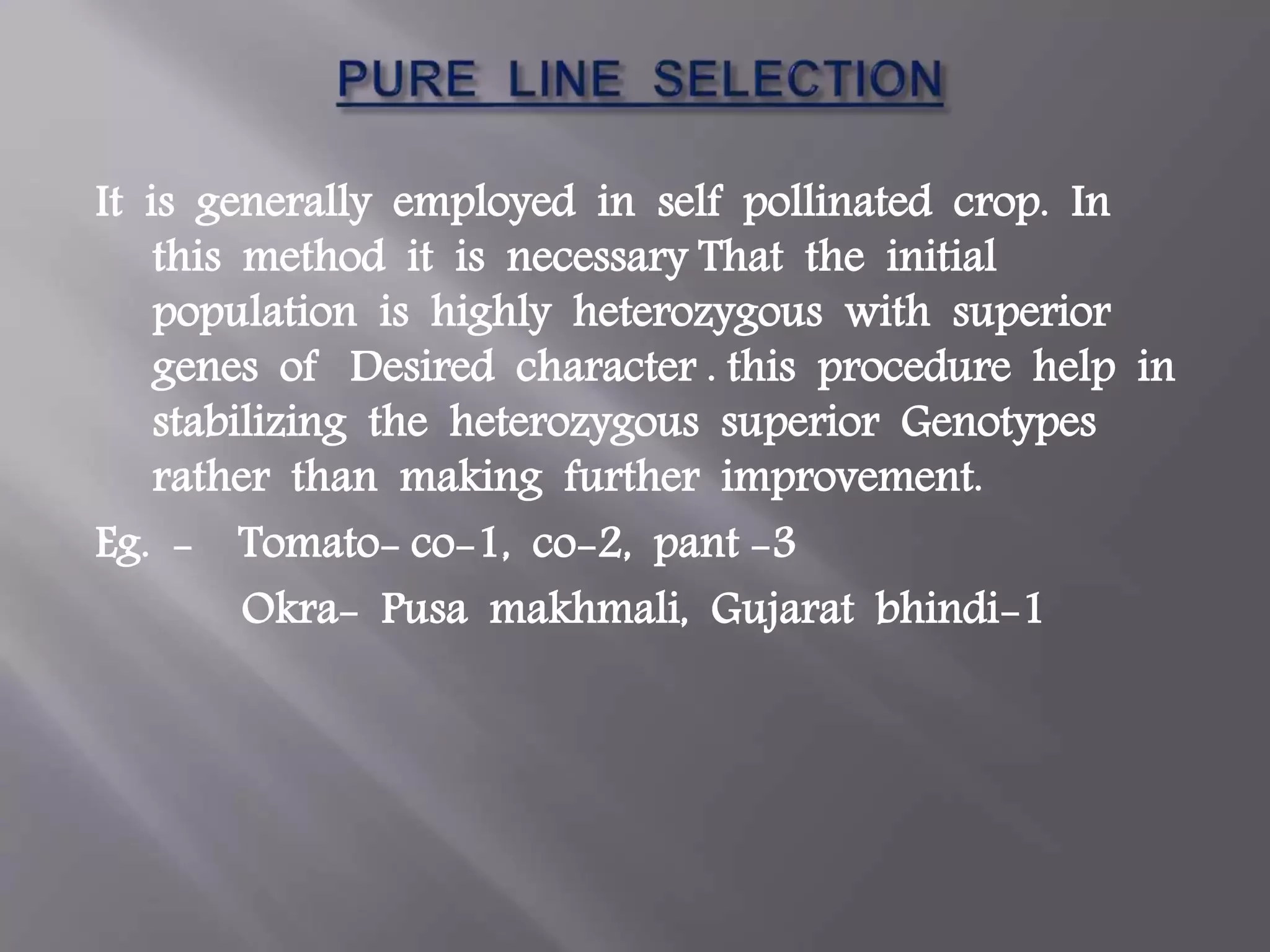
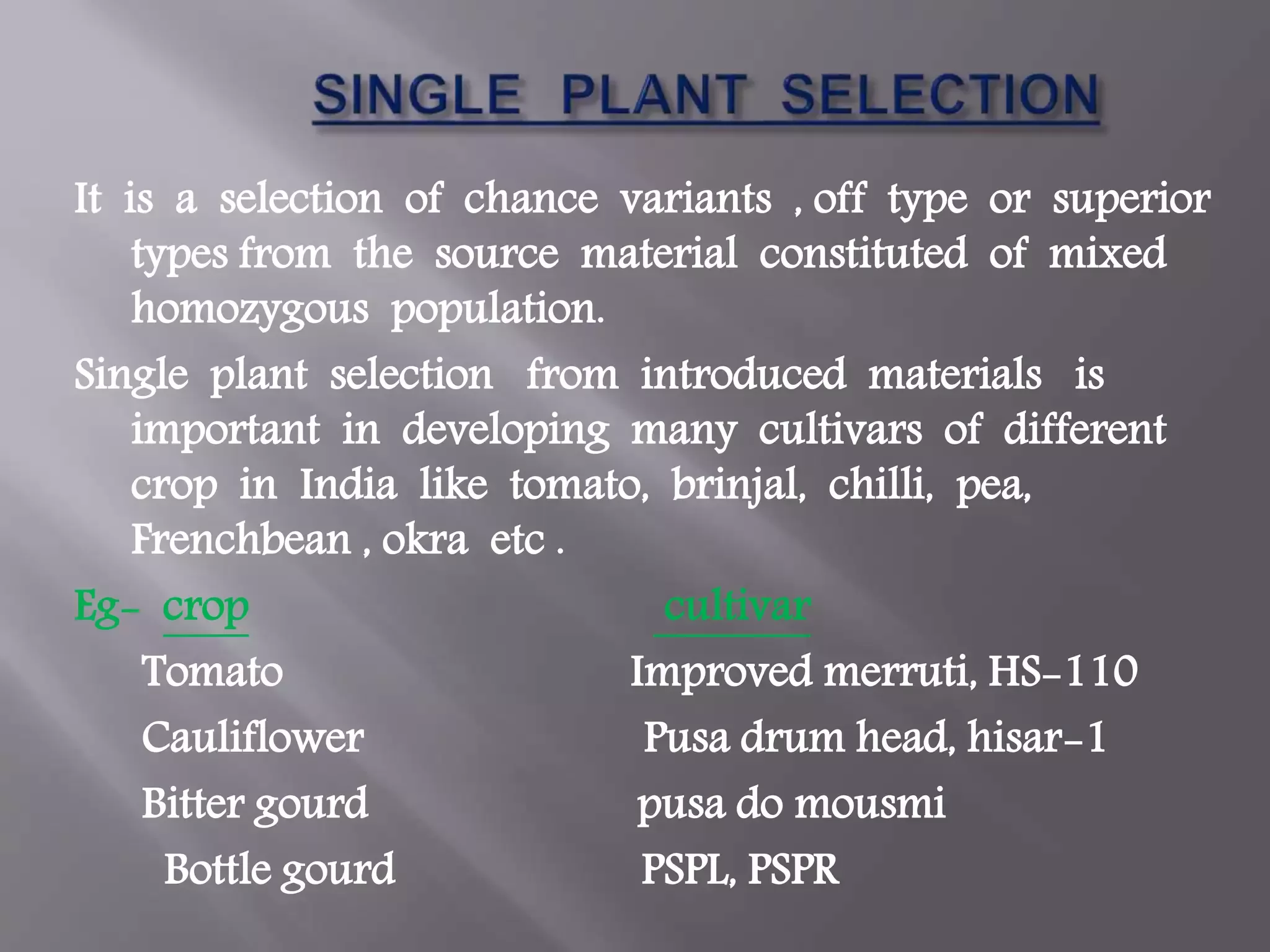
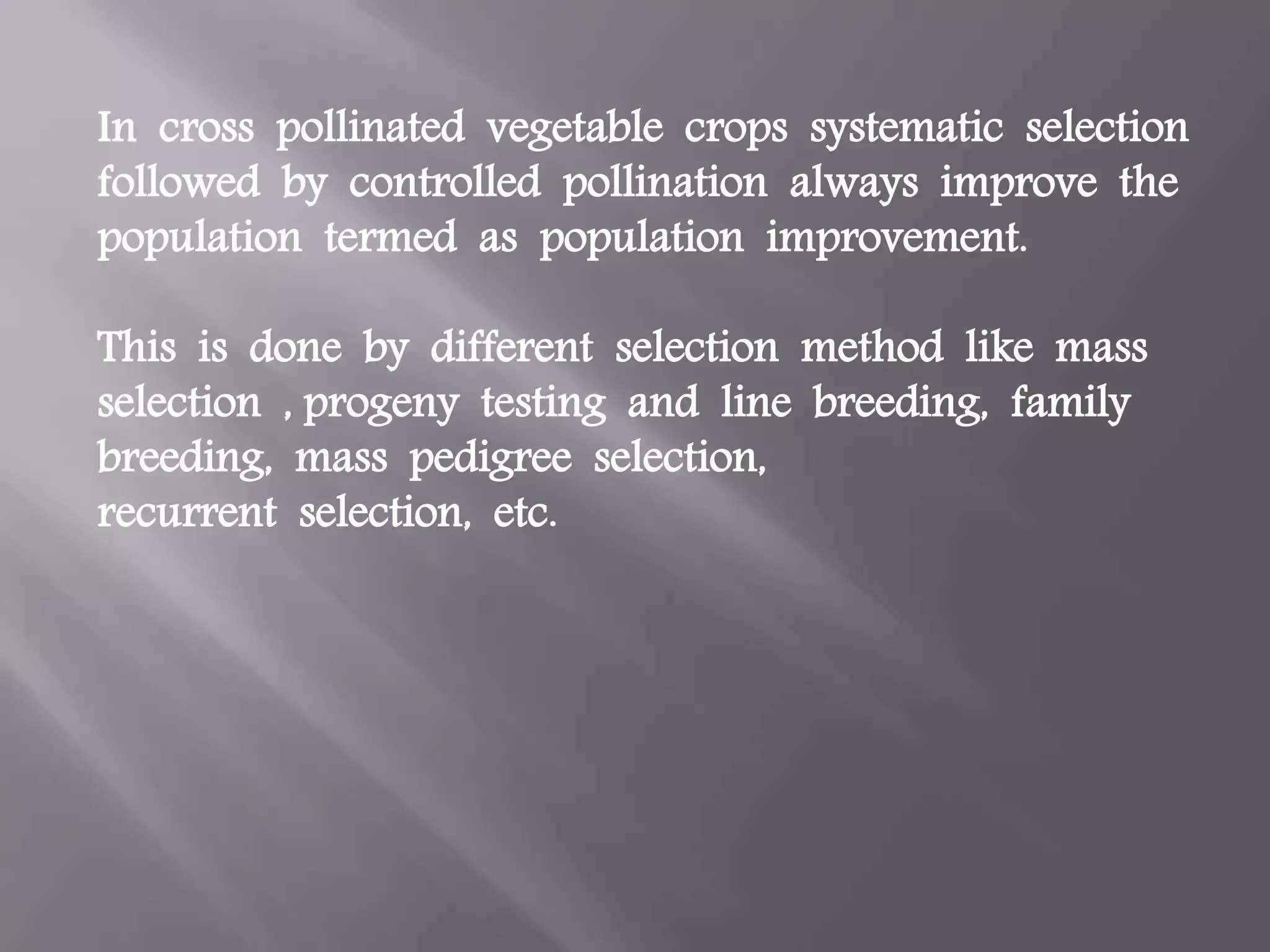
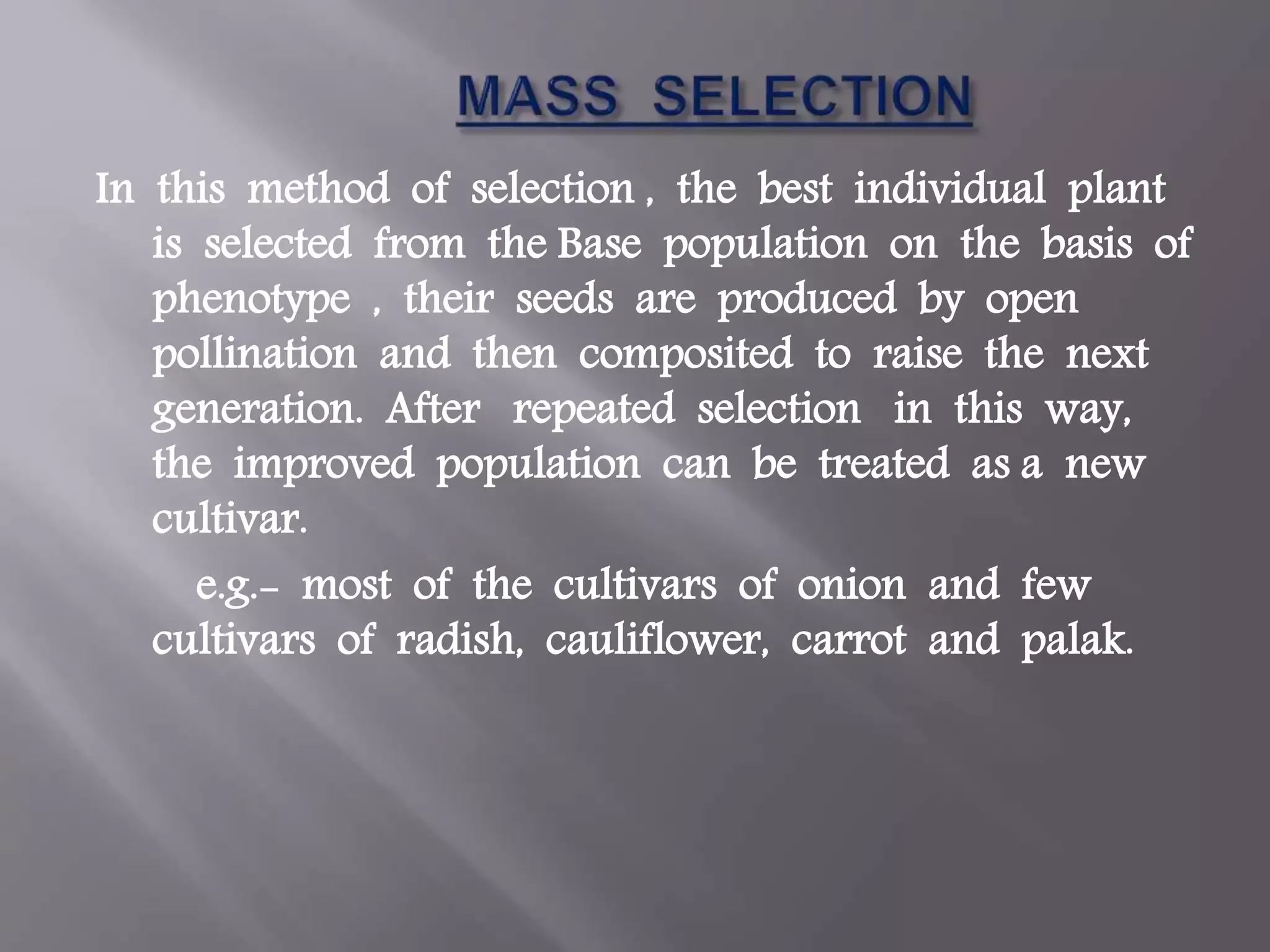
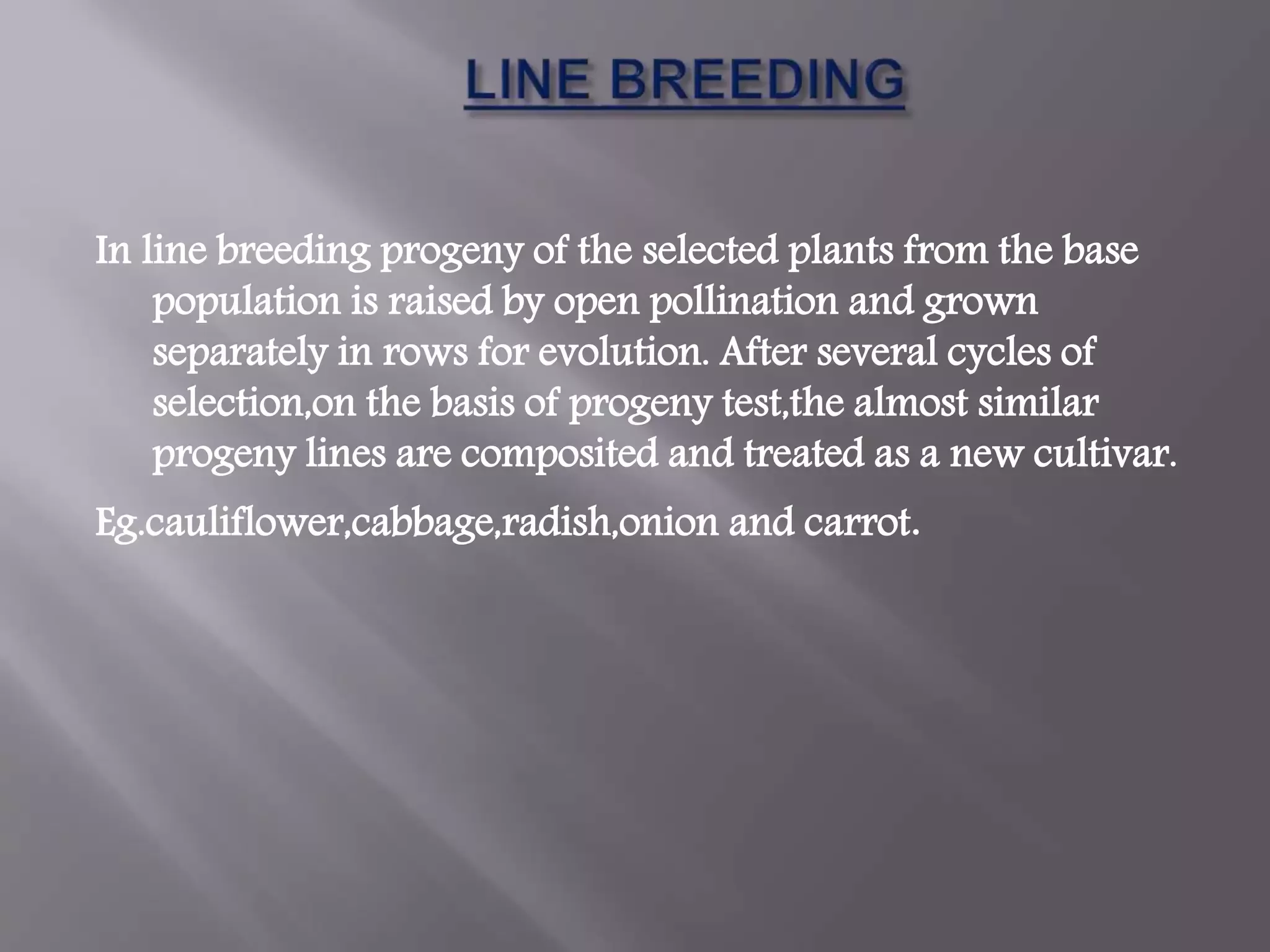
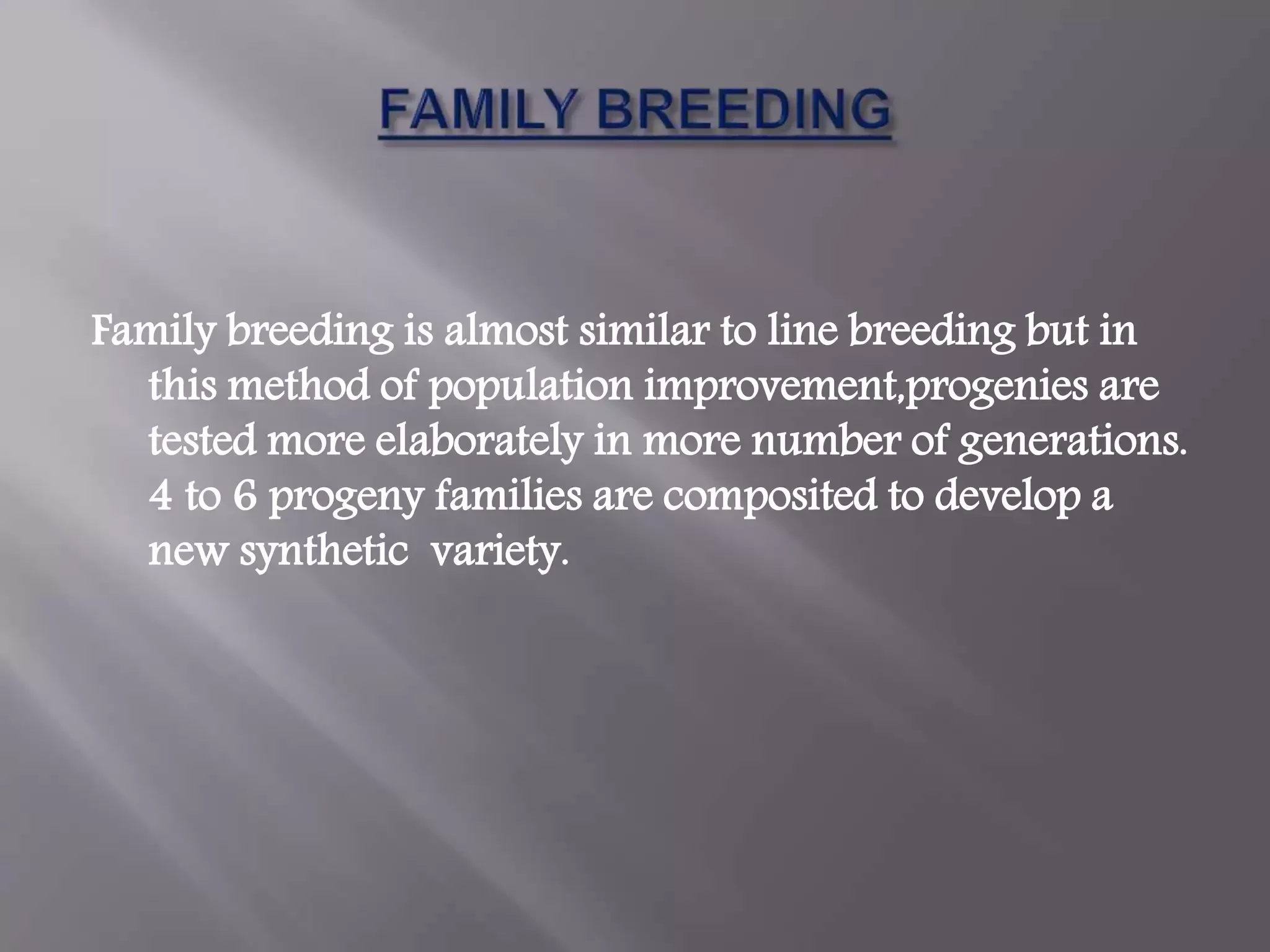
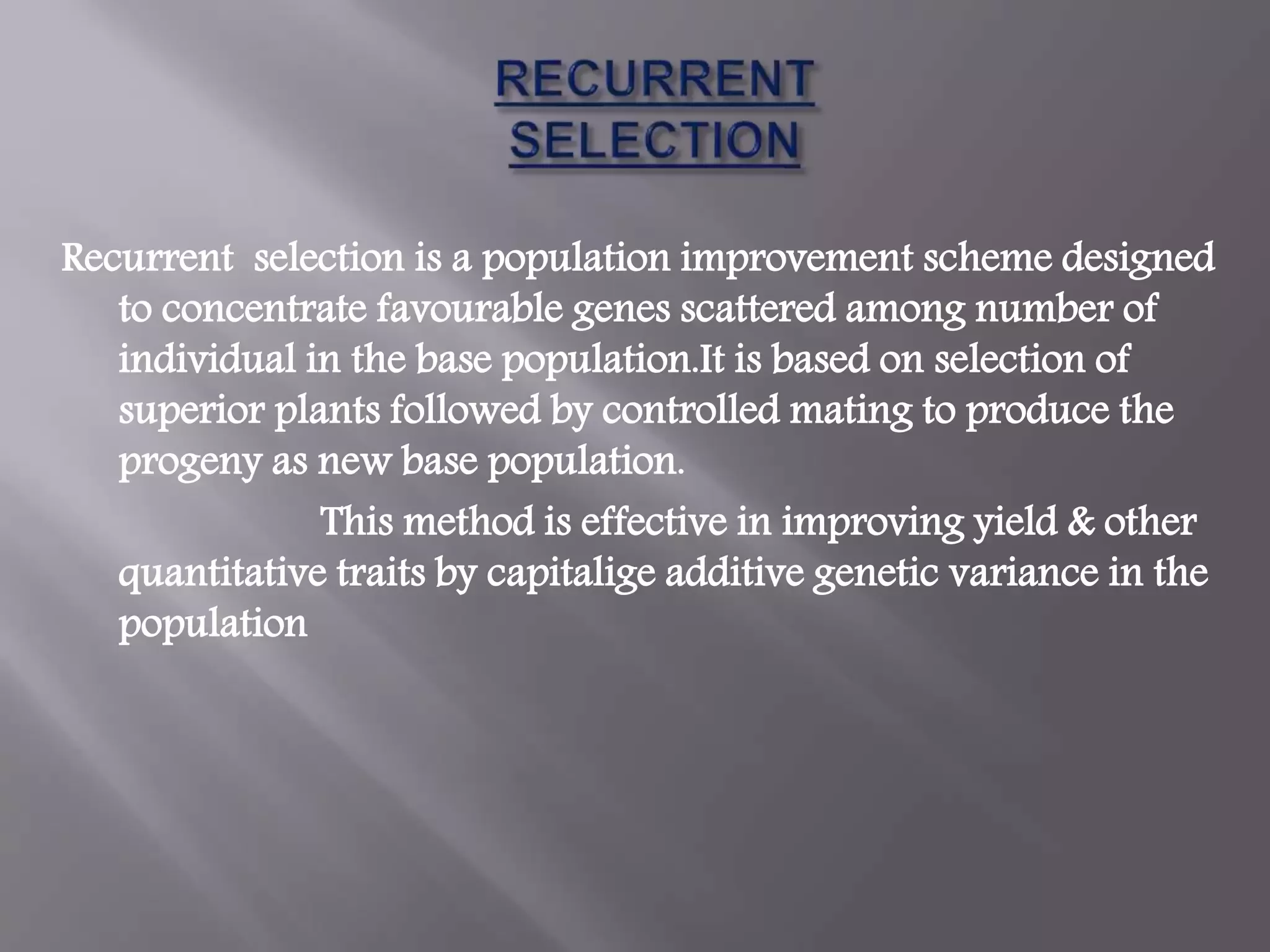
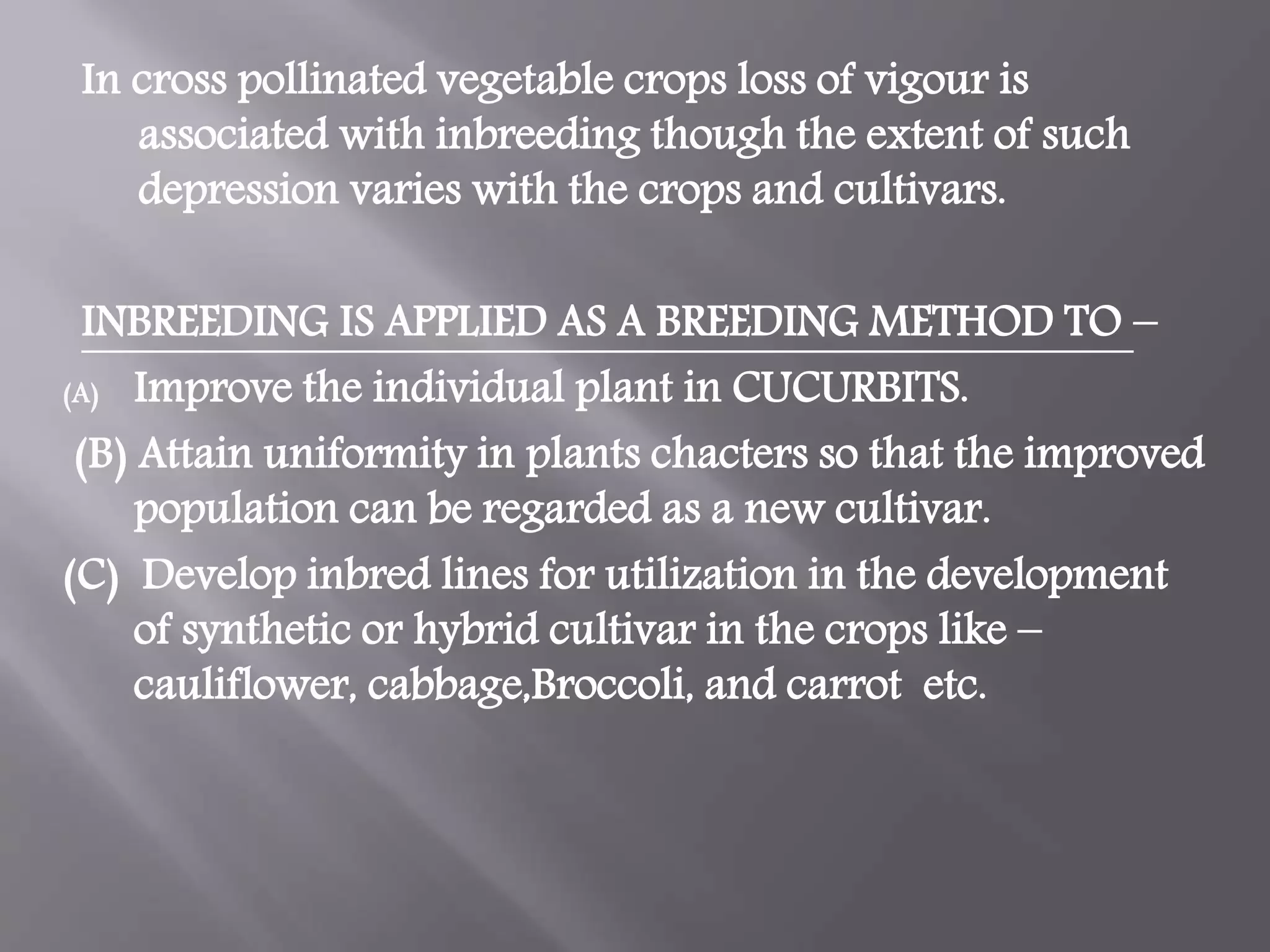
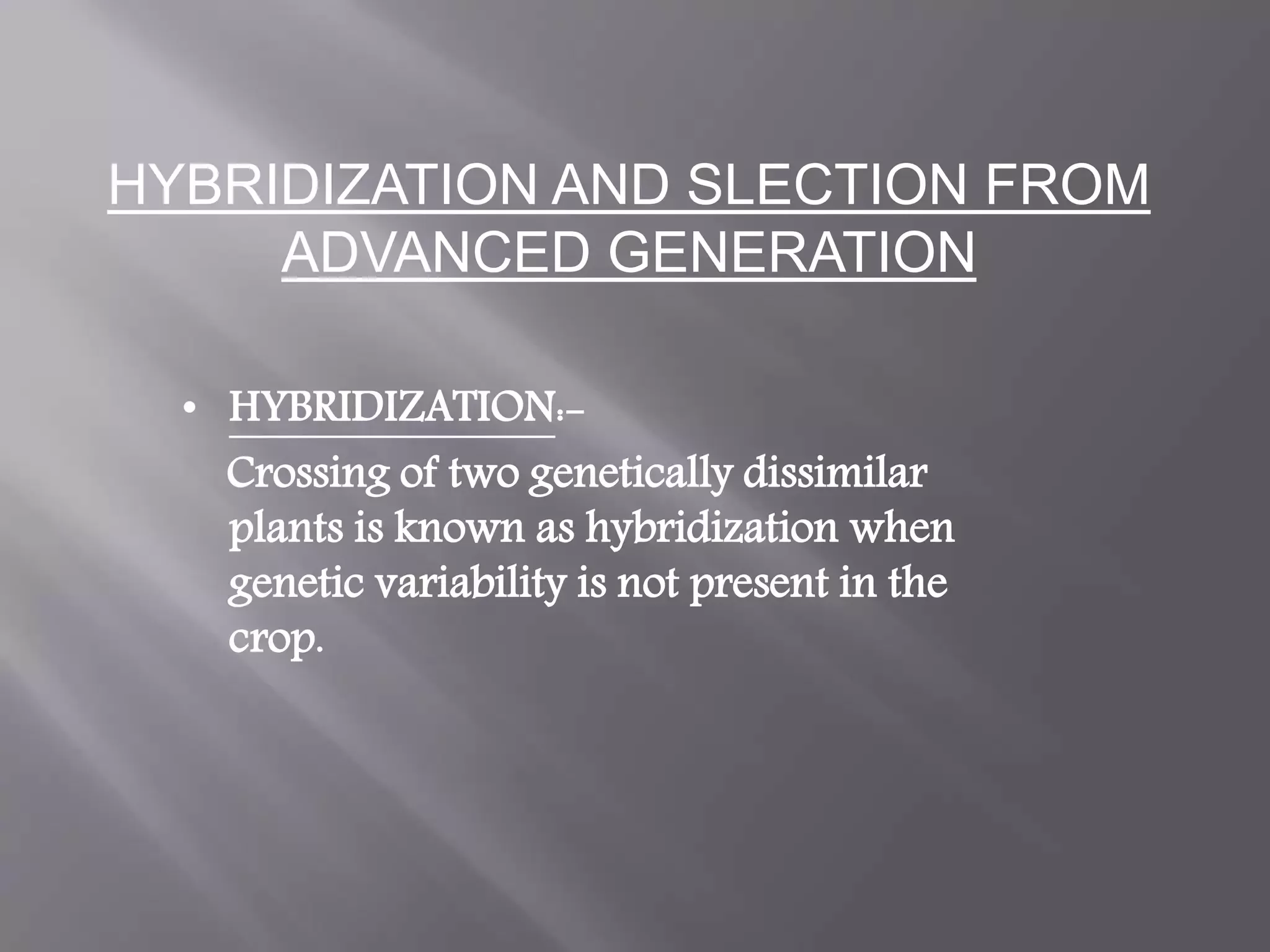
The cultivation of vegetable crops involves various selection methods to improve introduced species such as potatoes, tomatoes, and capsicum. Asexual propagation through clonal selection is common, producing cultivars like Kufri Red potato and Black Beauty brinjal. Self-pollinated crops utilize pure line and single plant selection to stabilize superior genotypes, exemplified by cultivars like CO-1 tomato and Pusa Makhmali okra. Cross-pollinated crops benefit from systematic selection methods, including mass selection and line breeding, to enhance populations, leading to new cultivars like onion and cauliflower. Recurrent selection focuses on concentrating favorable genes, while hybridization generates genetic variability for improved traits. The development of hybrid varieties involves selecting parents, testing their combining ability, and producing F1 hybrids through methods like emasculation and hand

Slide 1

Slide 1

Slide 2

Slide 2

Slide 3

Slide 3

Slide 4

Slide 4

Slide 5

Slide 5

Slide 6

Slide 6

Slide 7

Slide 7

Slide 8

Slide 8

Slide 9

Slide 9

Slide 10

Slide 10

Slide 11

Slide 11

Slide 12

Slide 12

Slide 13

Slide 13

Slide 14

Slide 14

Slide 15

Slide 15

Slide 16

Slide 16

Slide 17

Slide 17

Slide 18

Slide 18

Slide 19
Slide 19

Slide 20

Slide 20

Slide 21

Slide 21

Slide 22

Slide 22

Slide 23

Slide 23
1 / 23

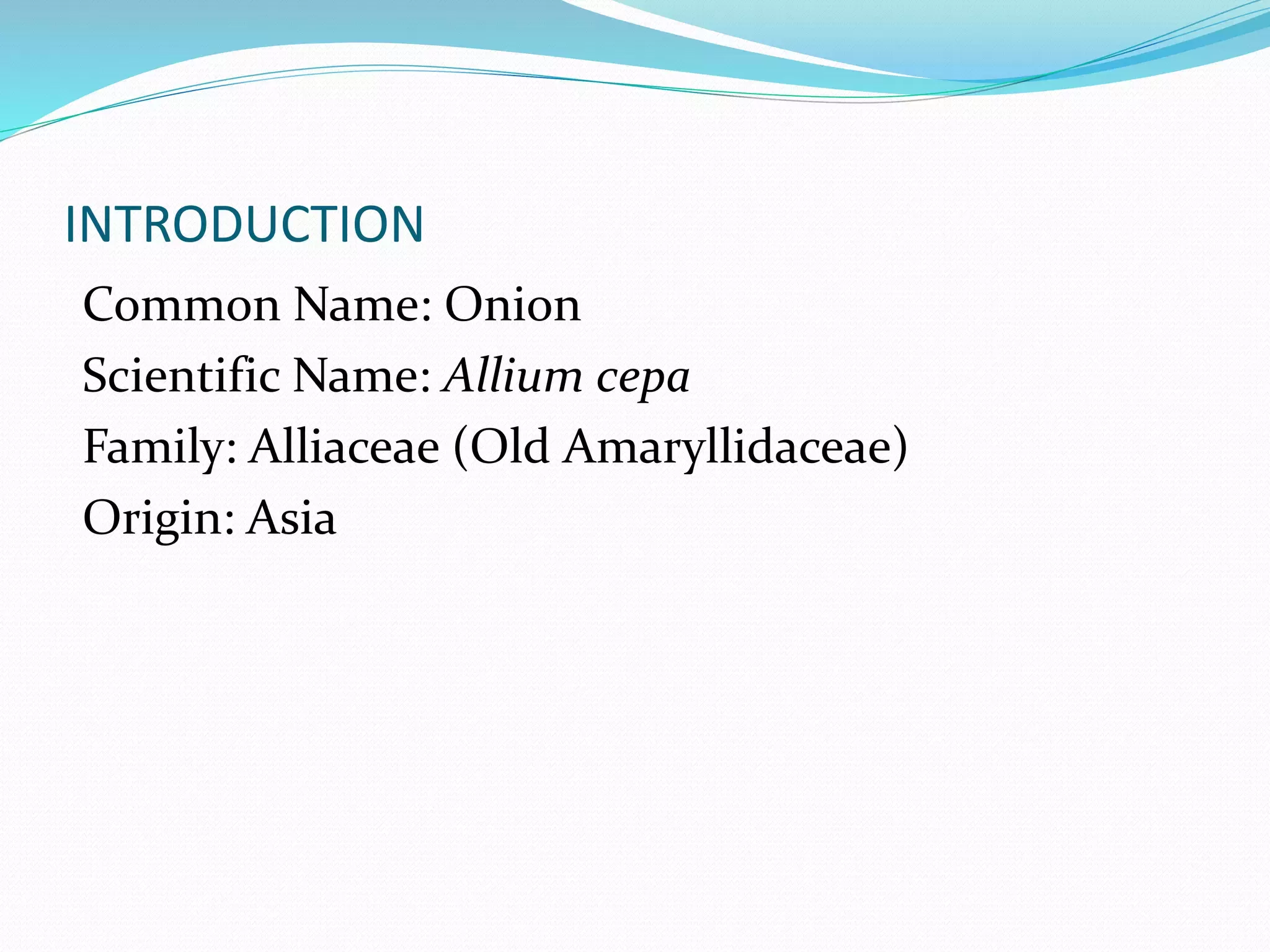
Ppt on CROP IMPROVEMENT IN ONION (Allium cepa L.)

Summary:

Discover the world of onions, their cultivation, nutritional value, and significance in agriculture with this informative PowerPoint on crop improvement in onions (Allium cepa L.). Explore the different onion types, cultivation requirements, major producing countries, and more. Perfect for anyone interested in enhancing their knowledge of onion farming and its impact on the global market.

Summary

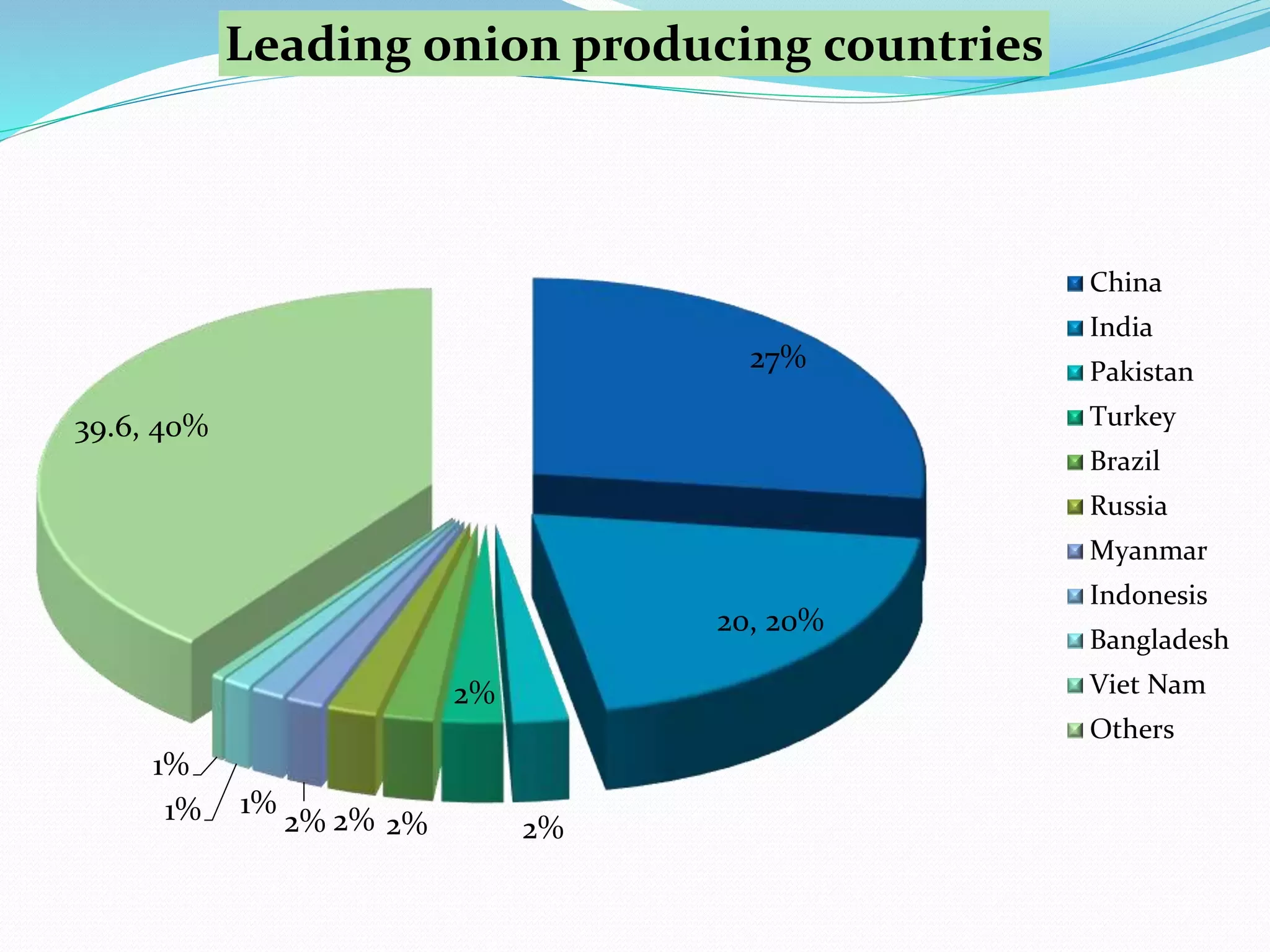
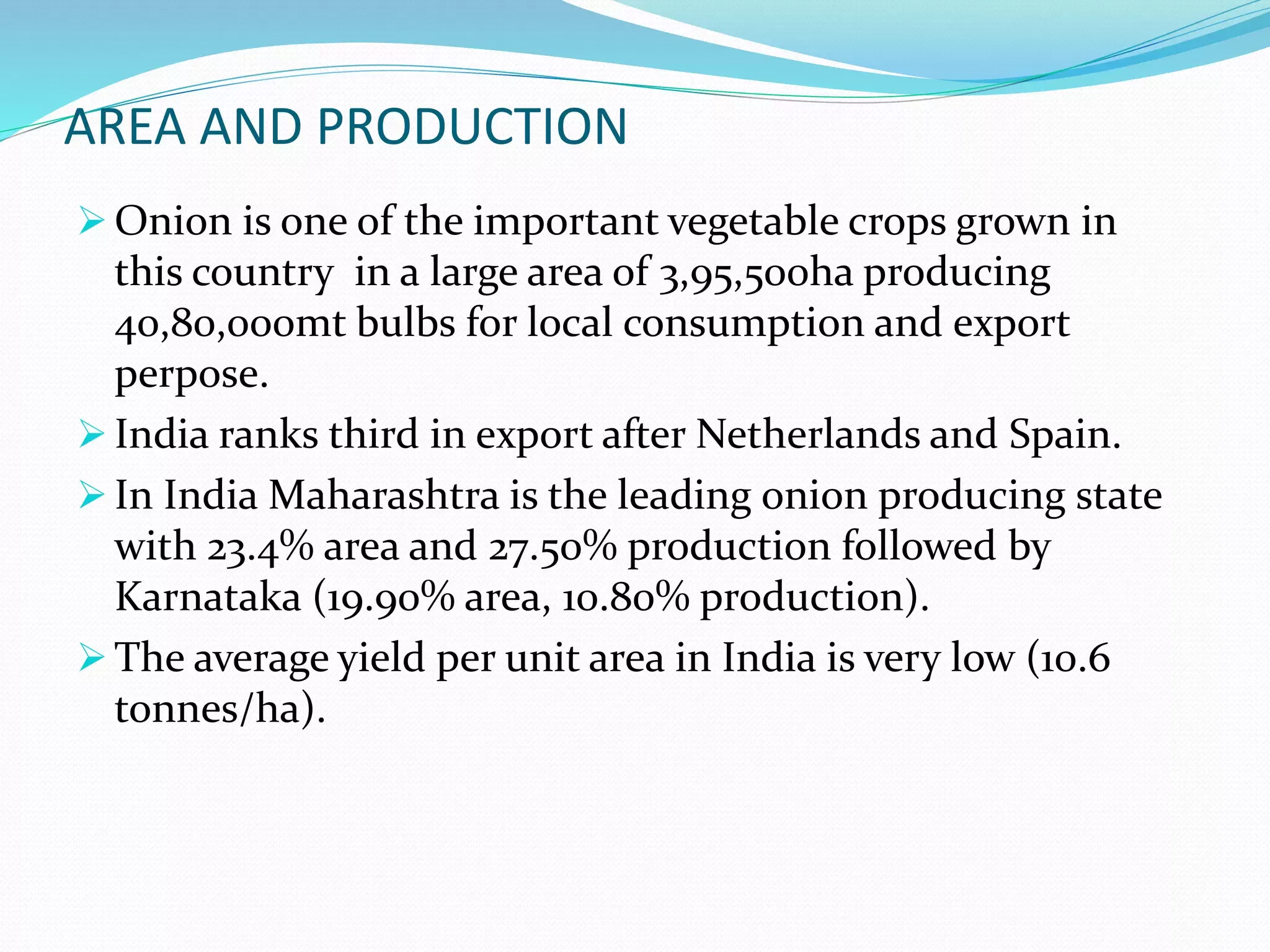
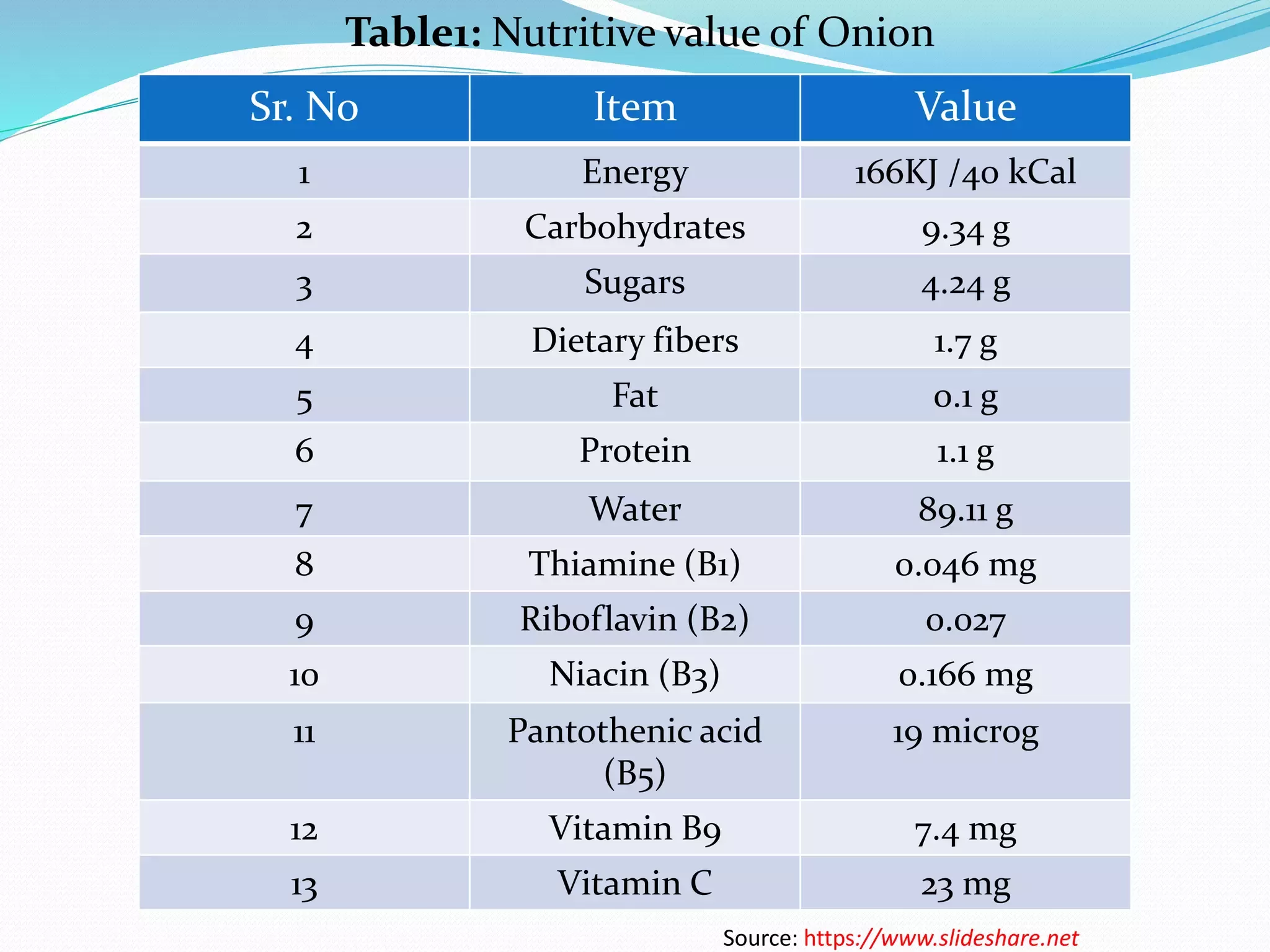
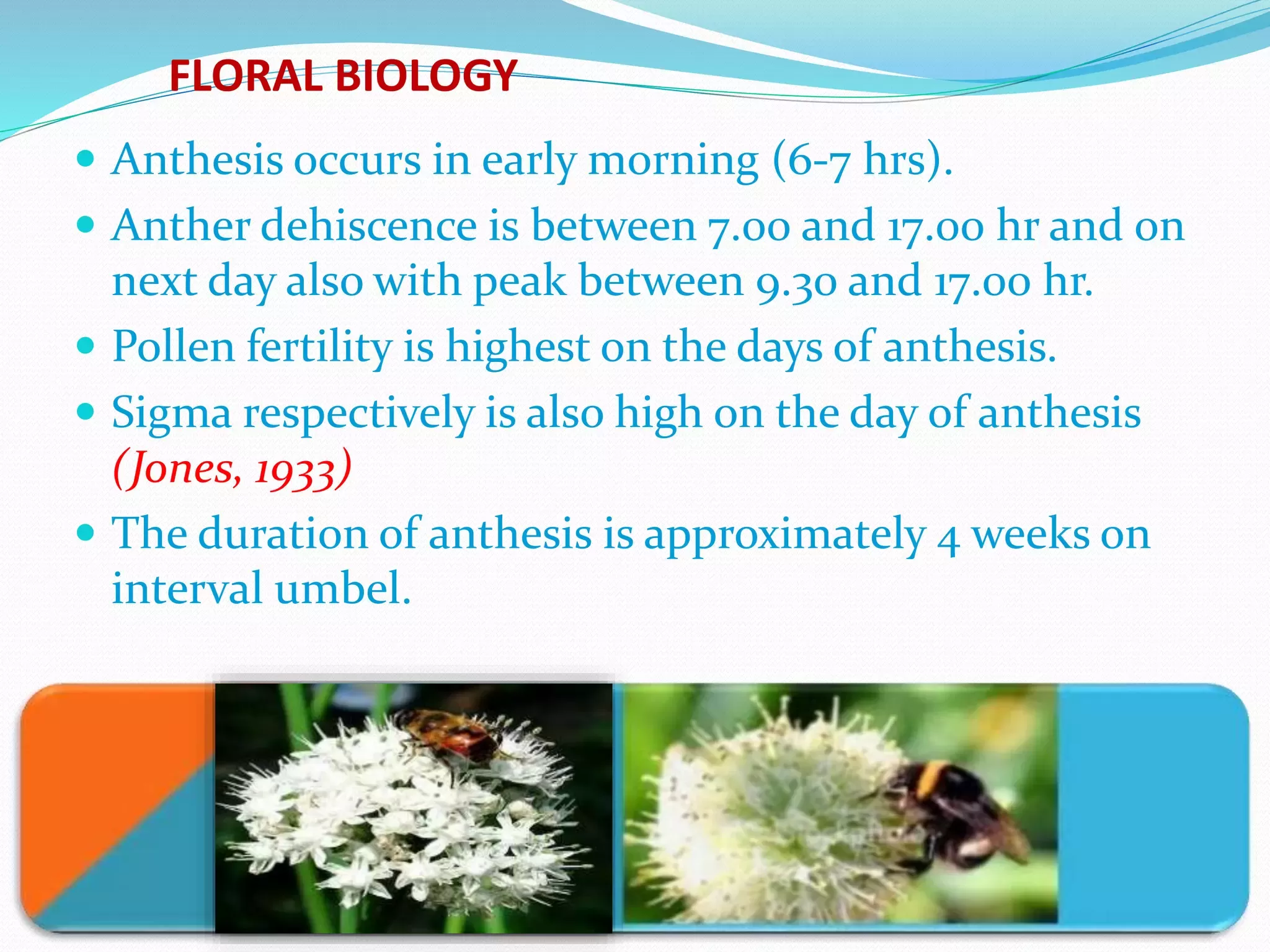
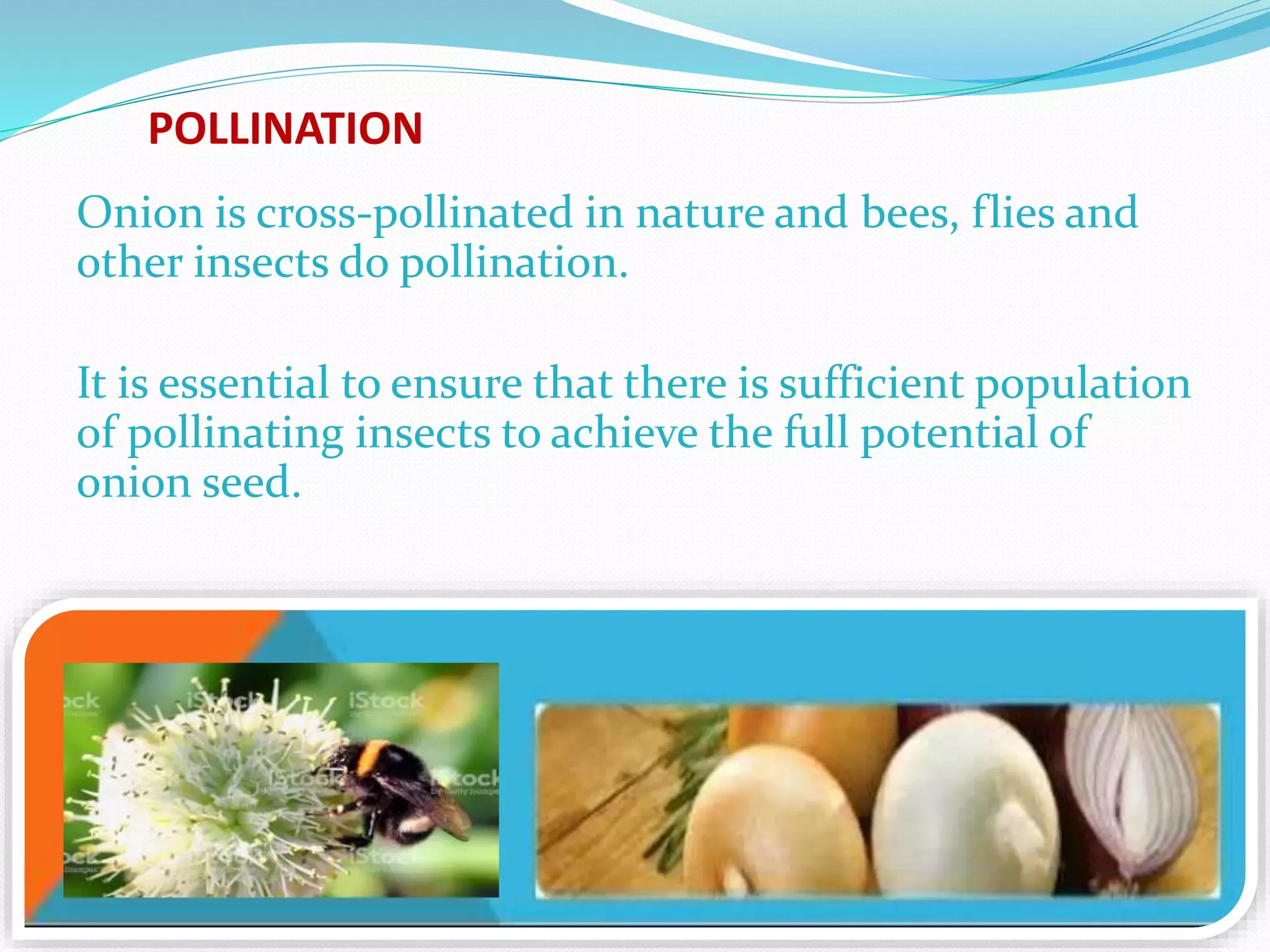
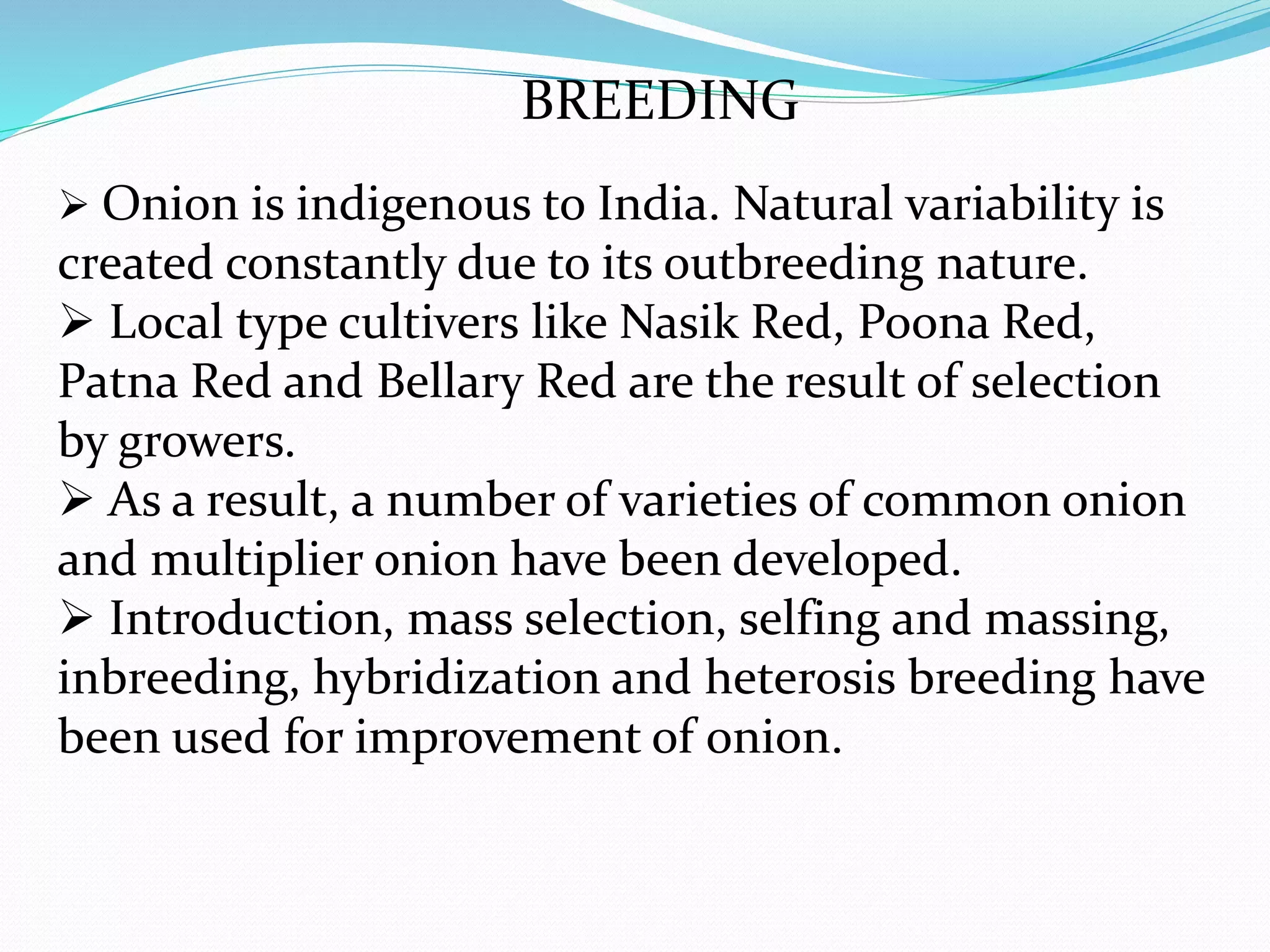
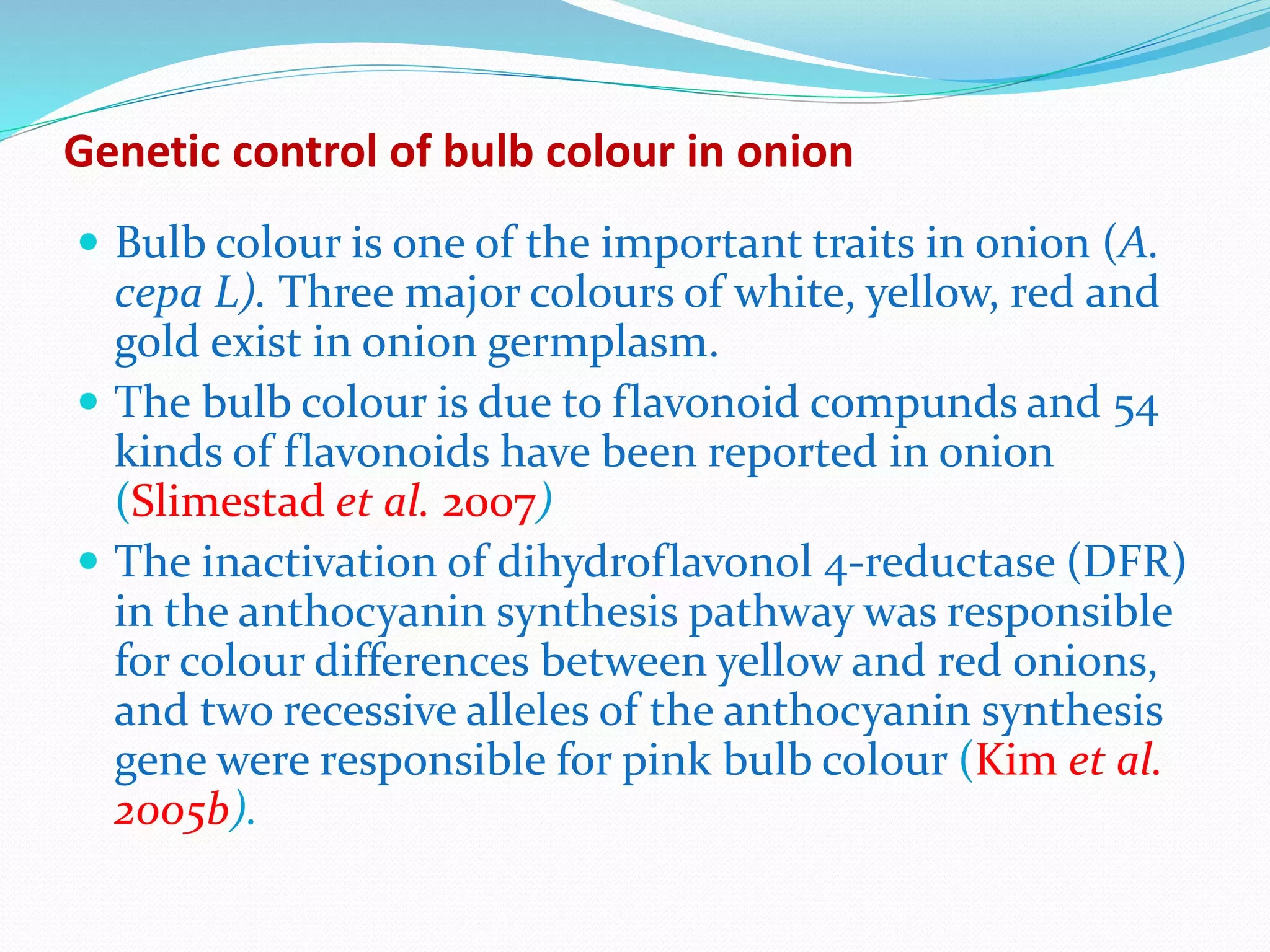
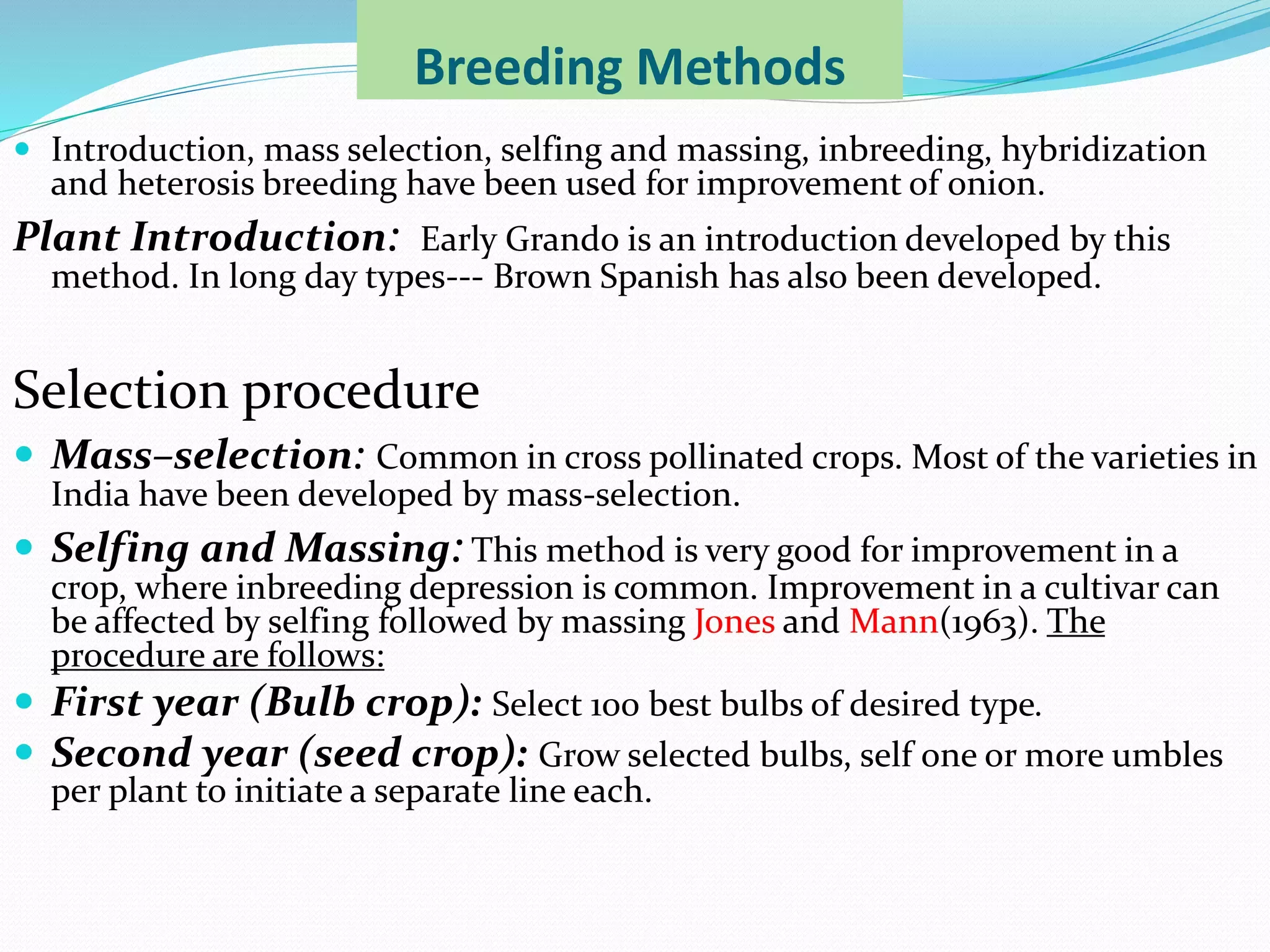
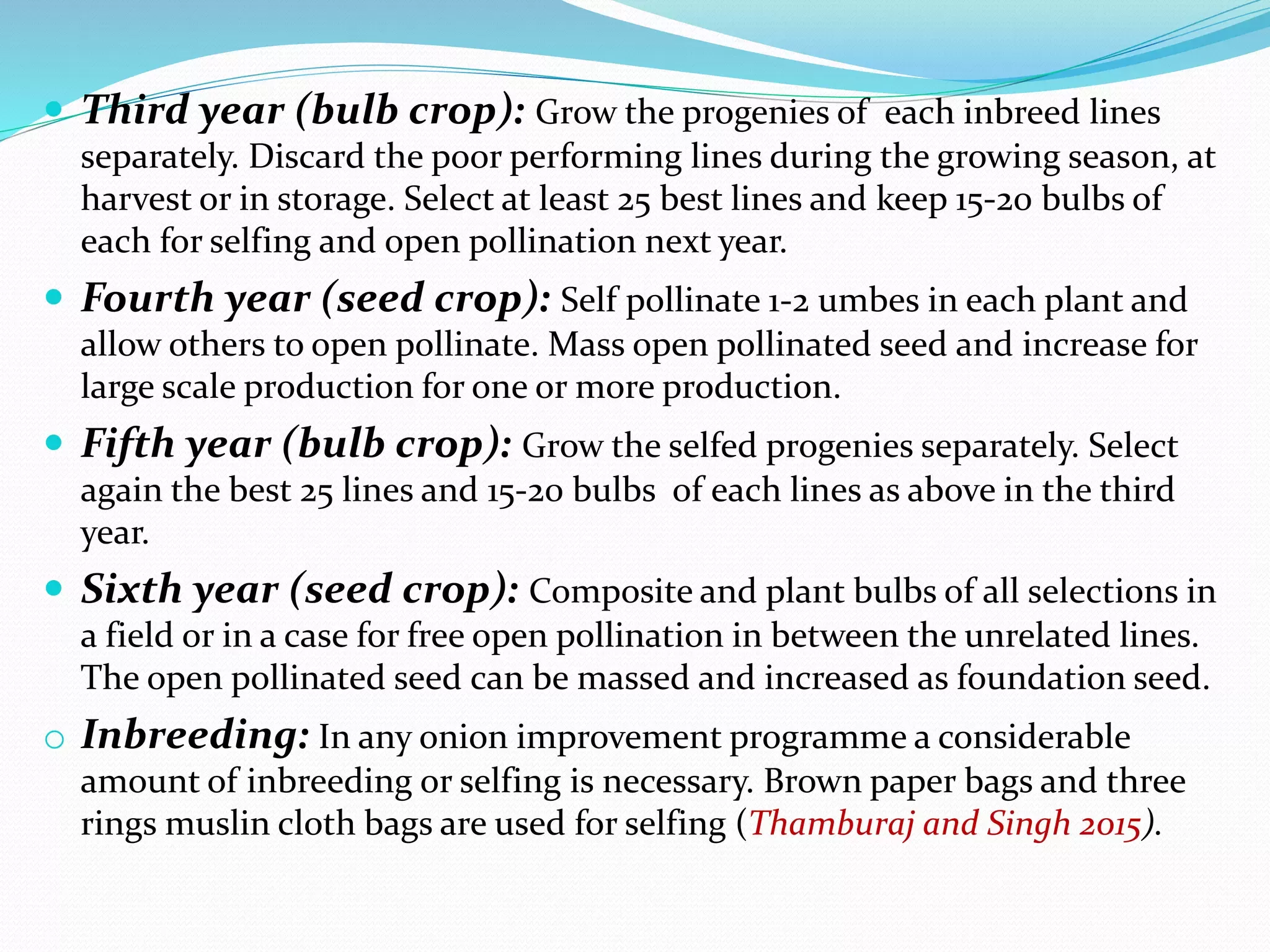
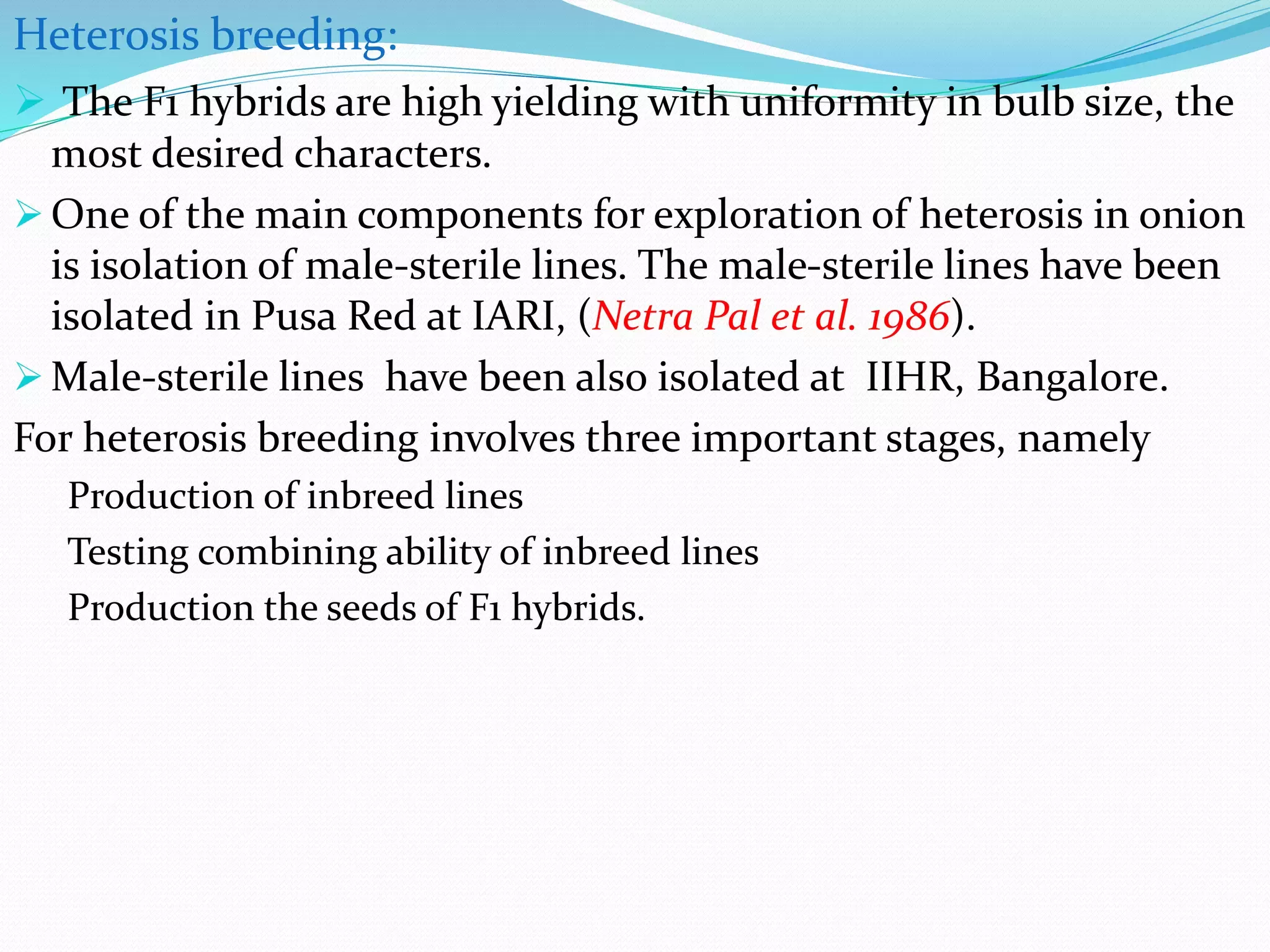
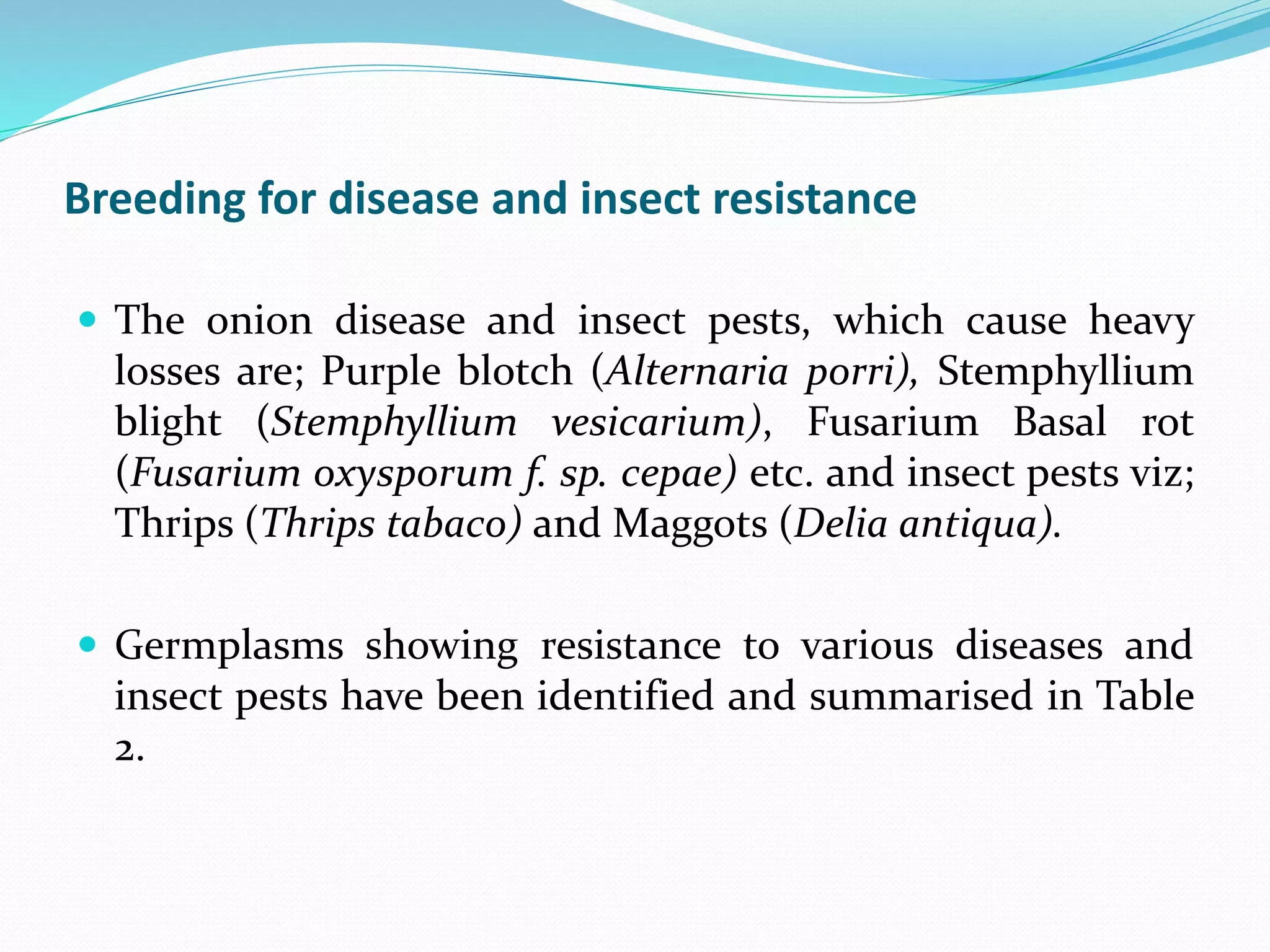
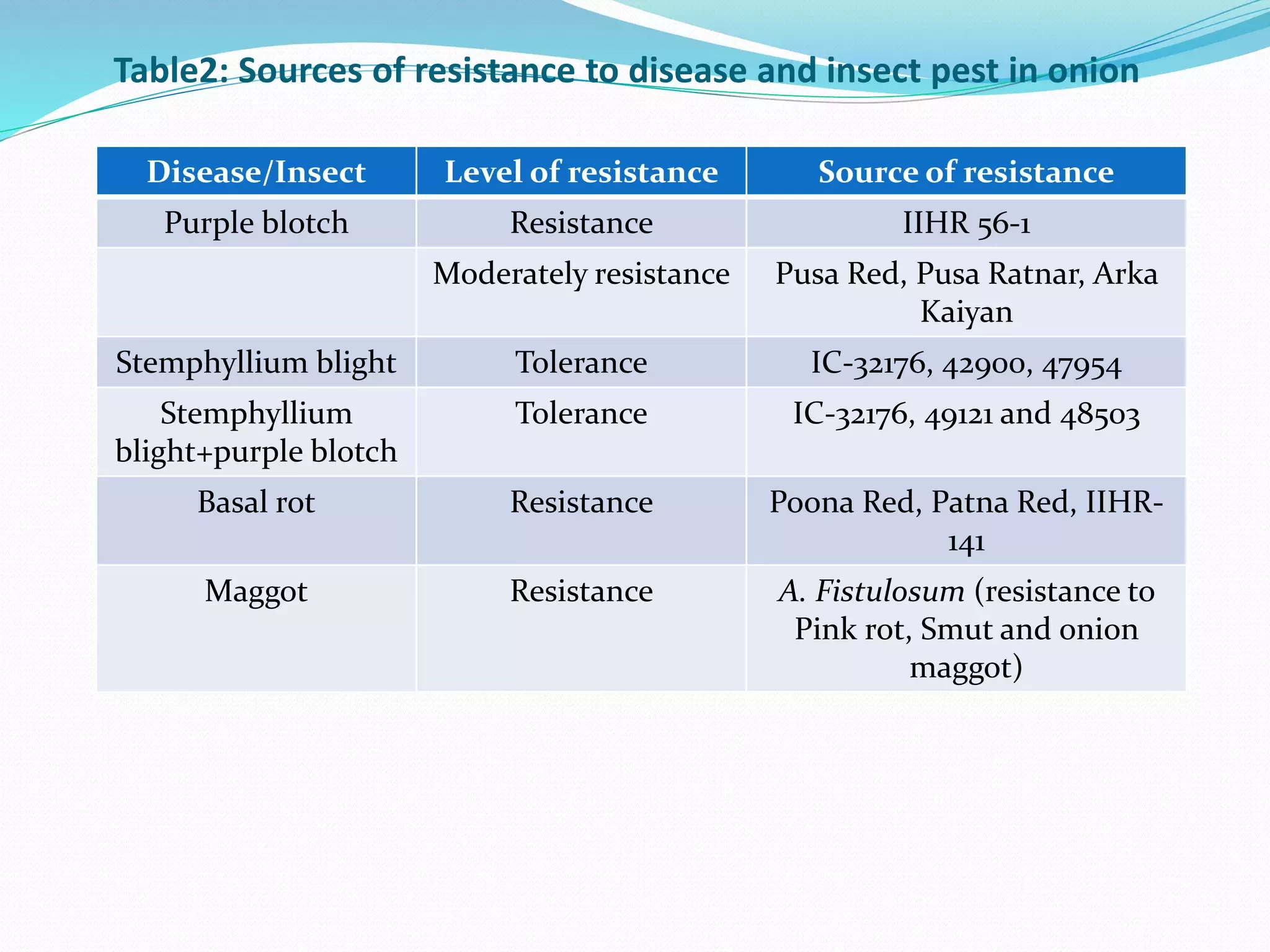
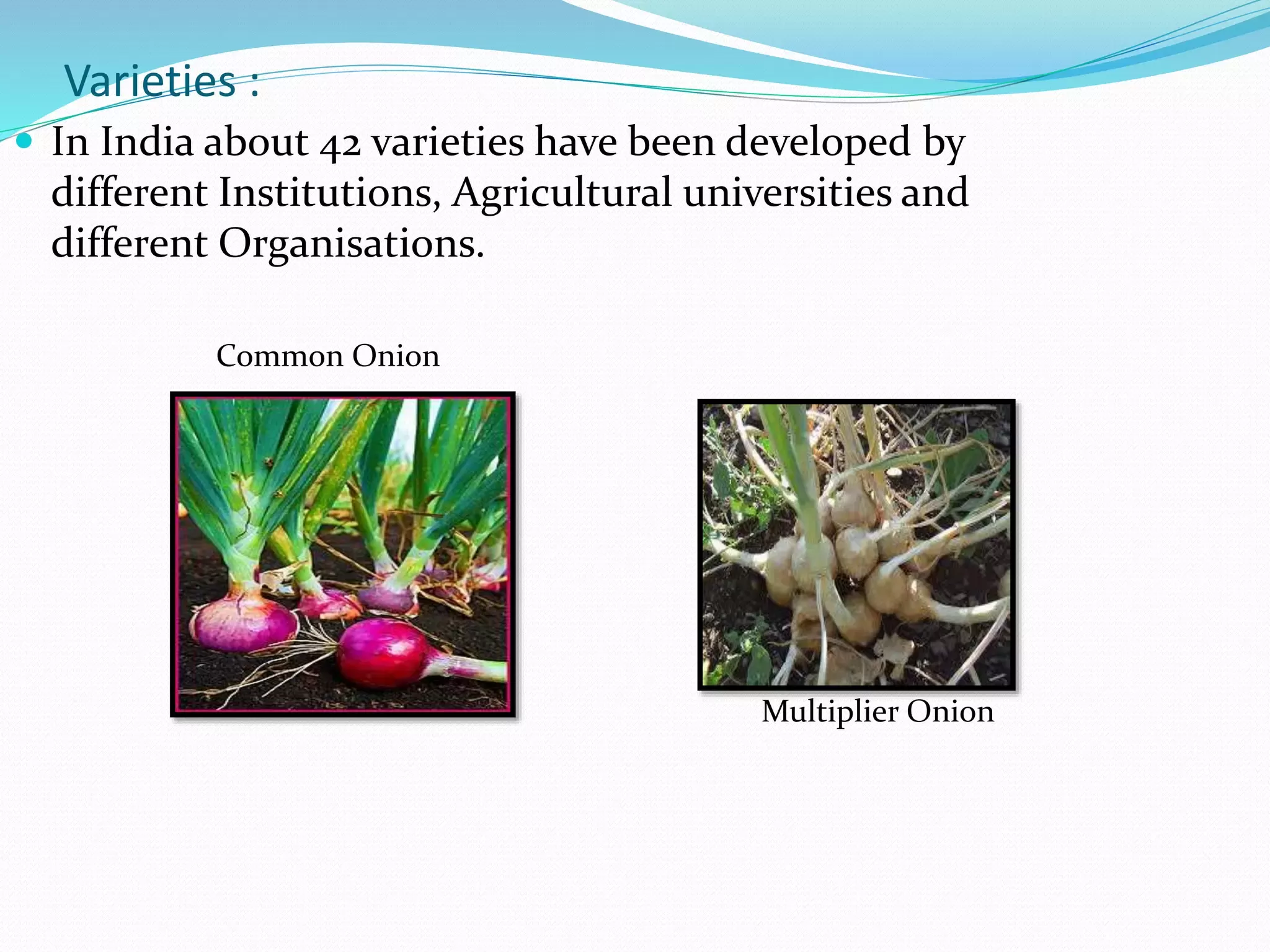
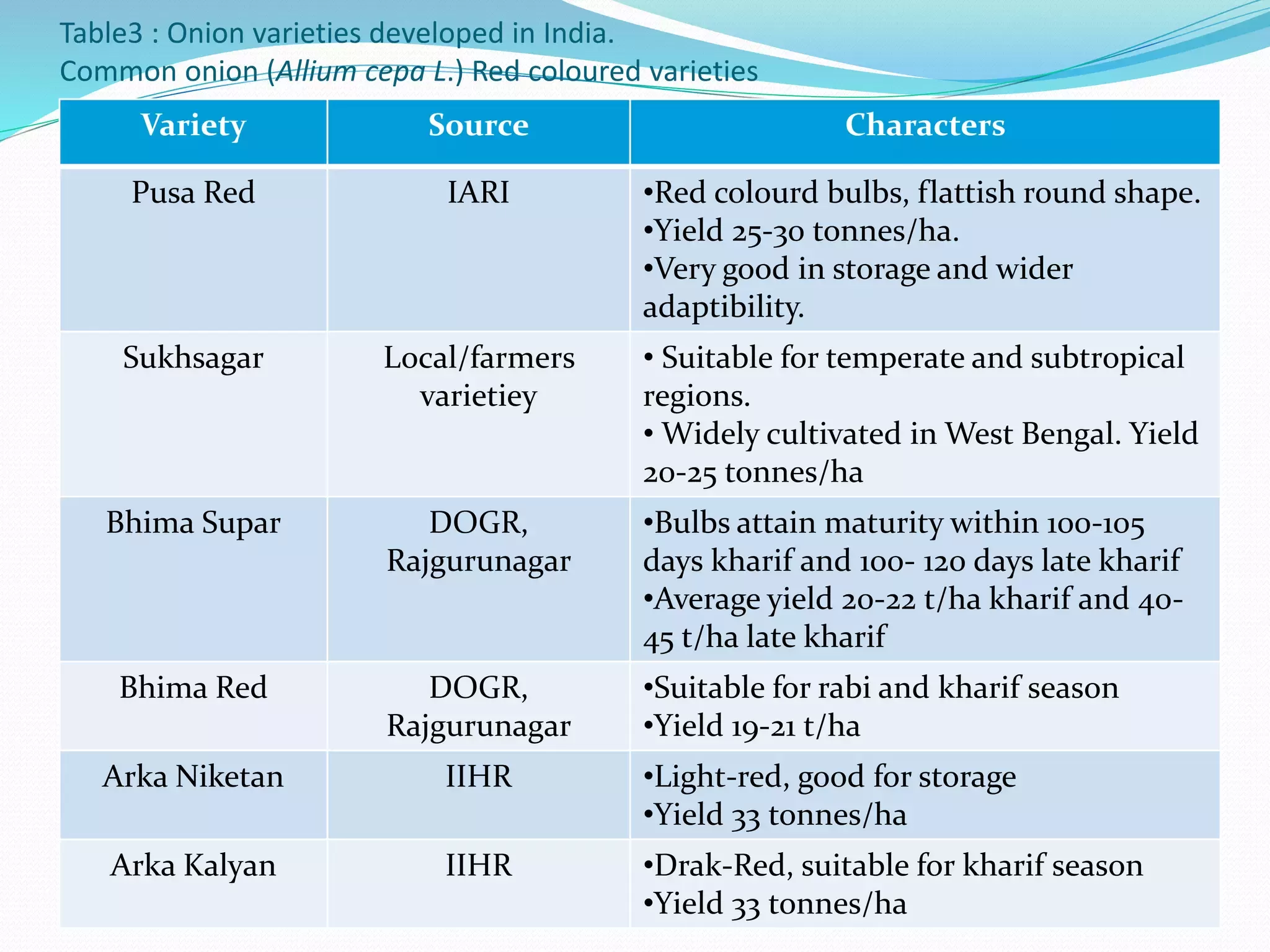
Onions, scientifically known as Allium cepa, belong to the Alliaceae family and originated in Asia. They are a biennial herb characterized by tubular leaves and bulbs formed from swollen leaf bases attached to the underground stem. Major onion-producing countries include China, India, and Pakistan, with India ranking third in exports, primarily from Maharashtra and Karnataka. Onions thrive in a variety of climates but require specific conditions for optimal growth, including well-drained soil and adequate pollination, primarily by insects. Cultivation highlights include the development of various onion types based on color, such as yellow, red, and white, each serving different culinary purposes. Onions are rich in nutrients, providing energy, carbohydrates, and vitamins. They are significant in agriculture for their high yield

Slide 1

Slide 1

Slide 2

Slide 2

Slide 3

Slide 3

Slide 4

Slide 4

Slide 5

Slide 5

Slide 6

Slide 6

Slide 7

Slide 7

Slide 8

Slide 8

Slide 9

Slide 9

Slide 10

Slide 10

Slide 11

Slide 11

Slide 12

Slide 12

Slide 13

Slide 13

Slide 14

Slide 14

Slide 15

Slide 15

Slide 16

Slide 16

Slide 17

Slide 17

Slide 18

Slide 18

Slide 19
Slide 19

Slide 20

Slide 20

Slide 21

Slide 21

Slide 22

Slide 22

Slide 23

Slide 23

Slide 24

Slide 24

Slide 25

Slide 25

Slide 26

Slide 26
1 / 26

Ppt on Litchi Breeding

Summary

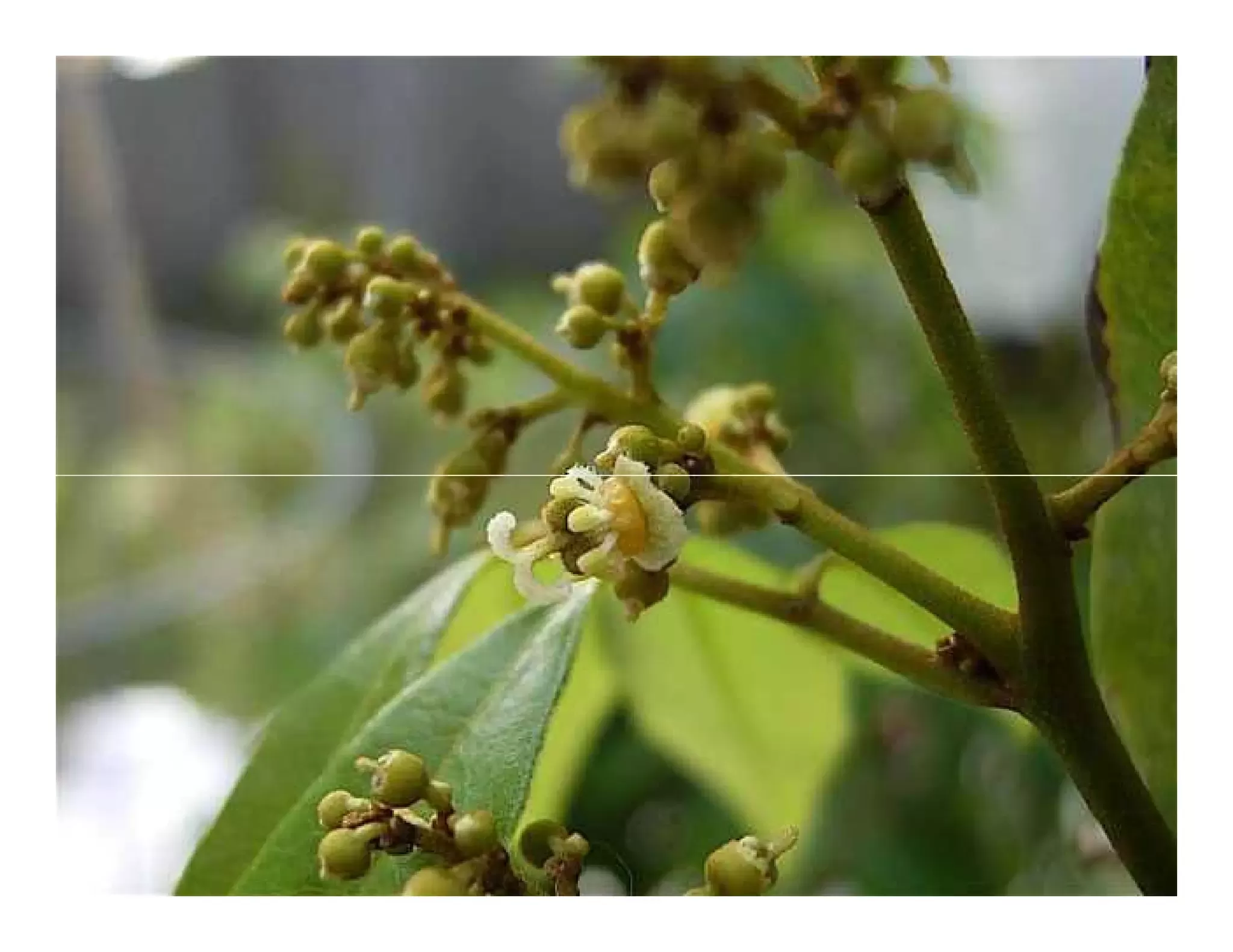
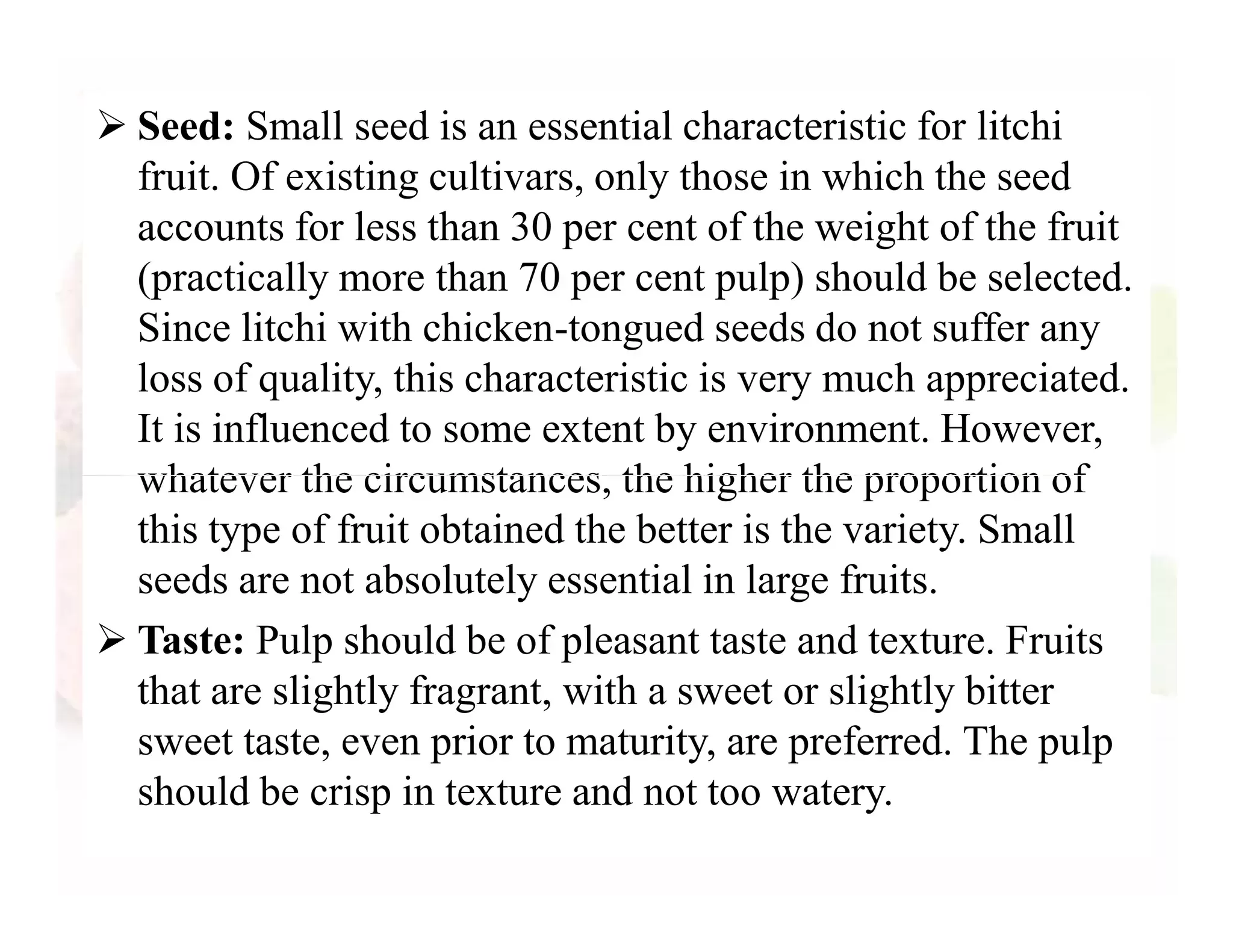
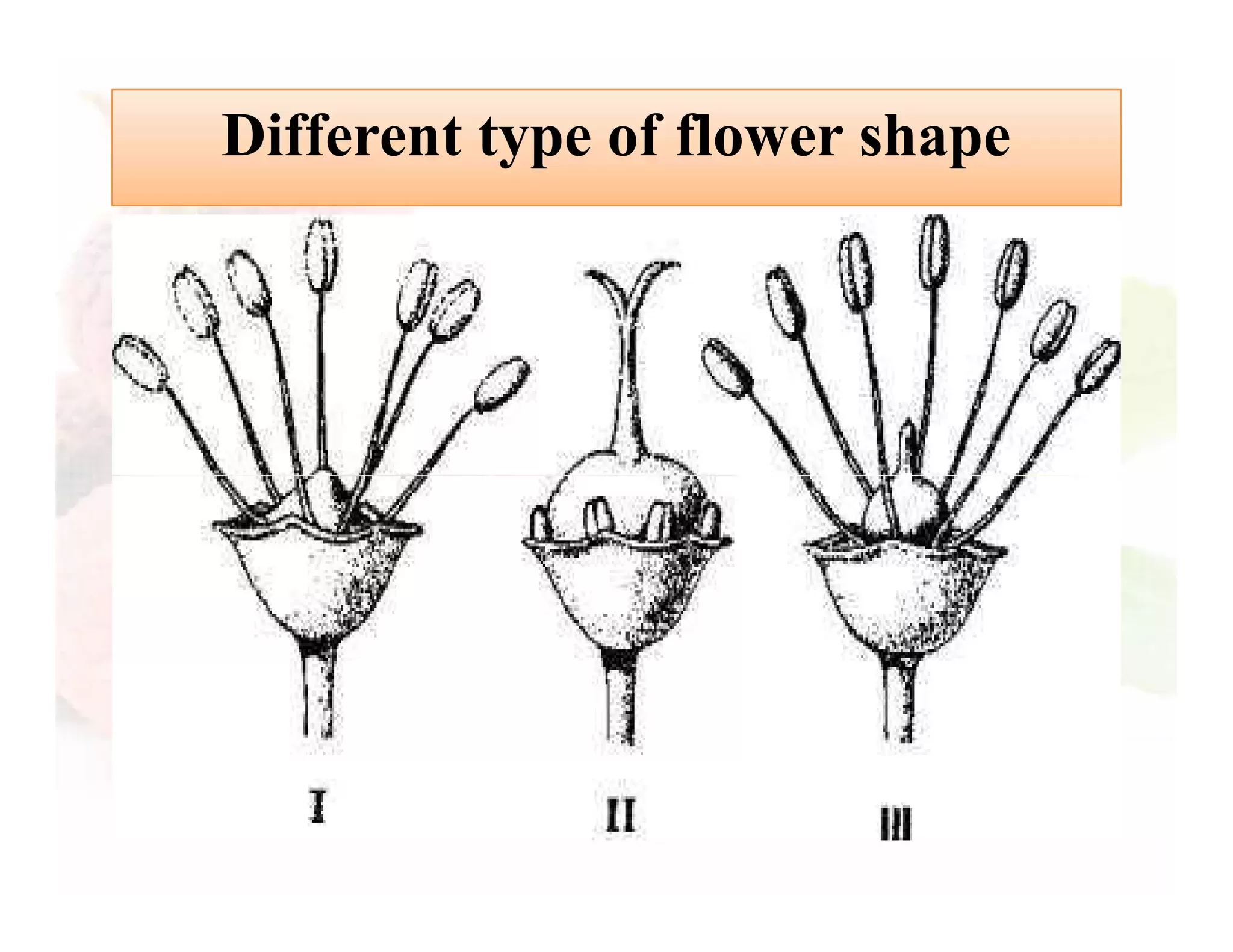
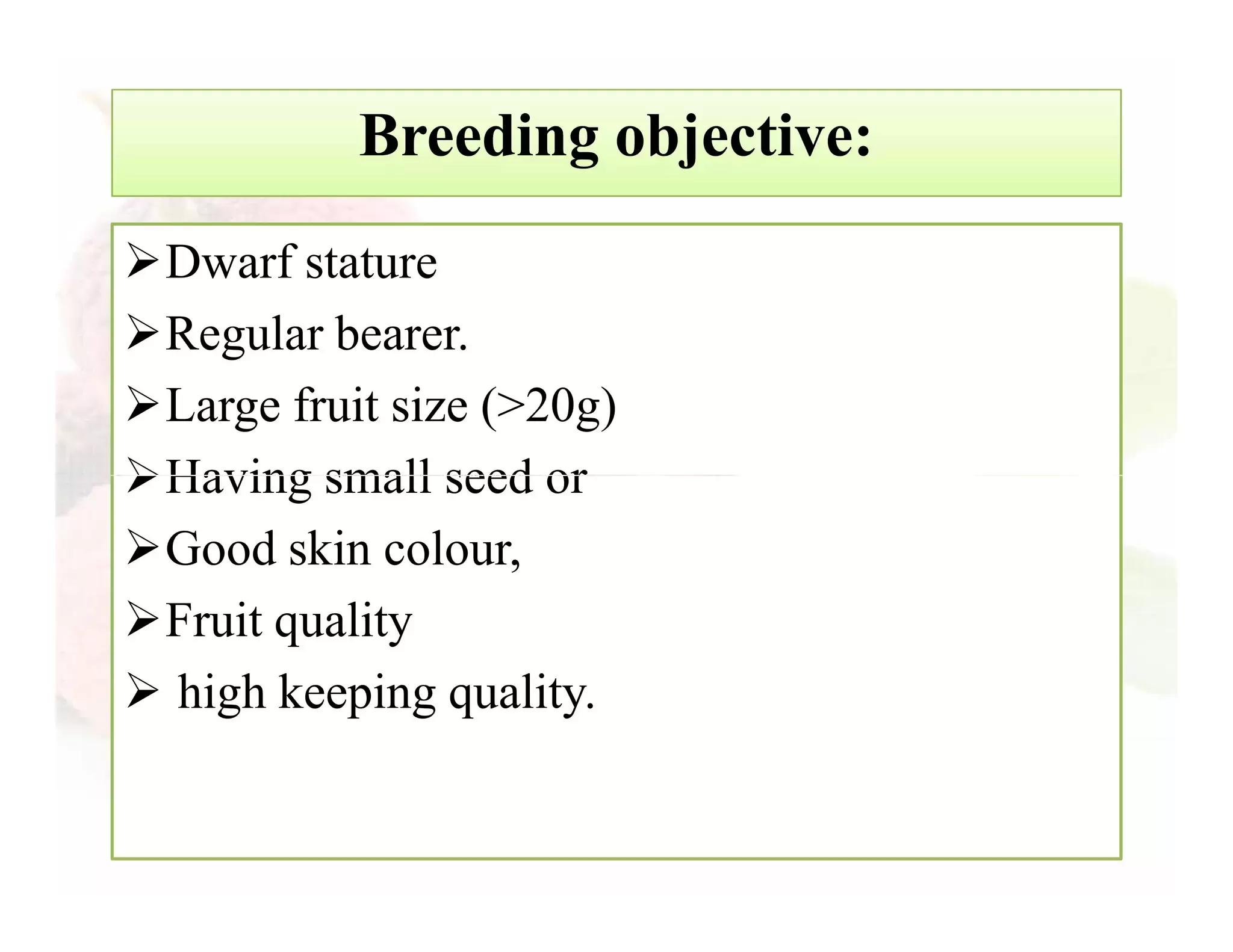
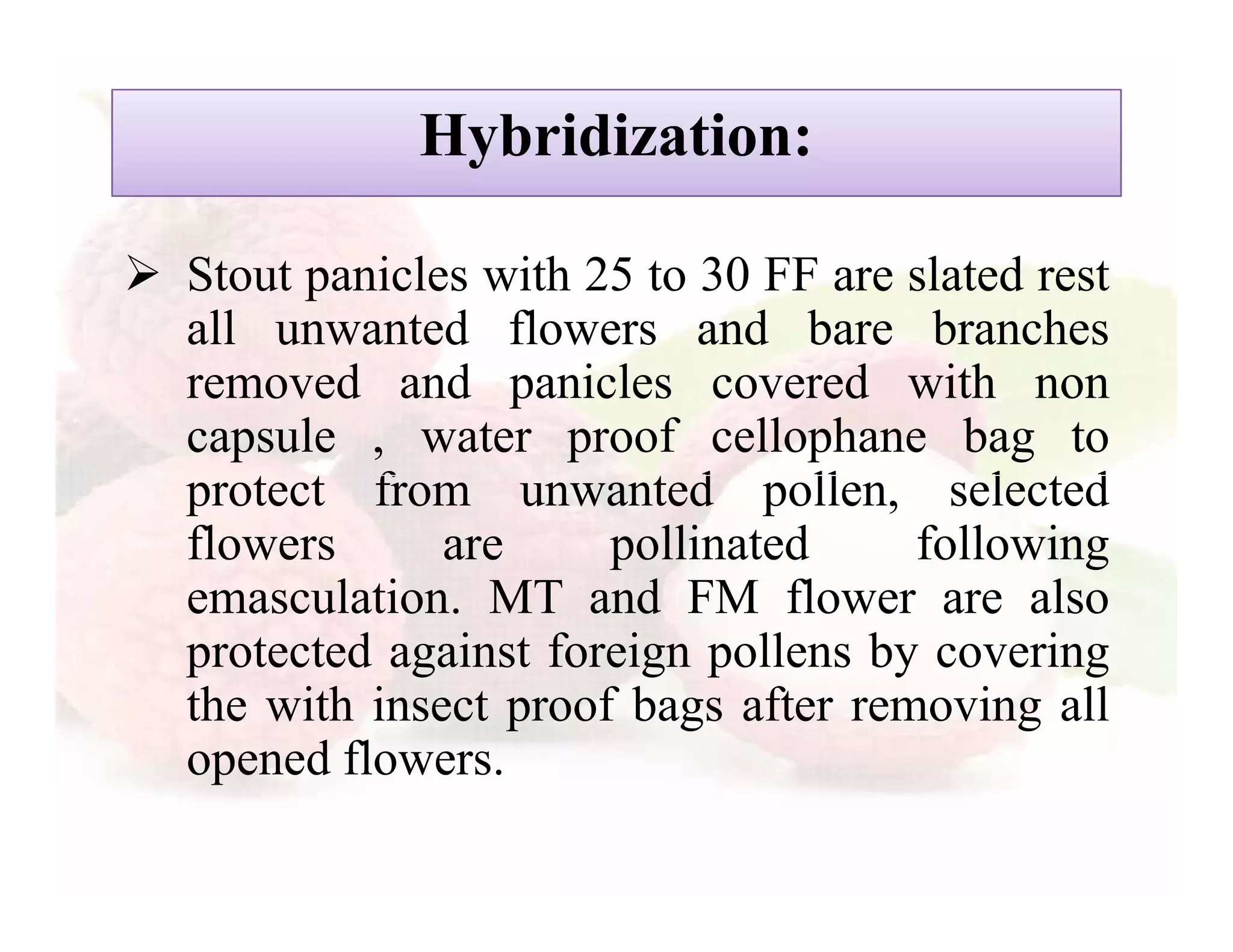
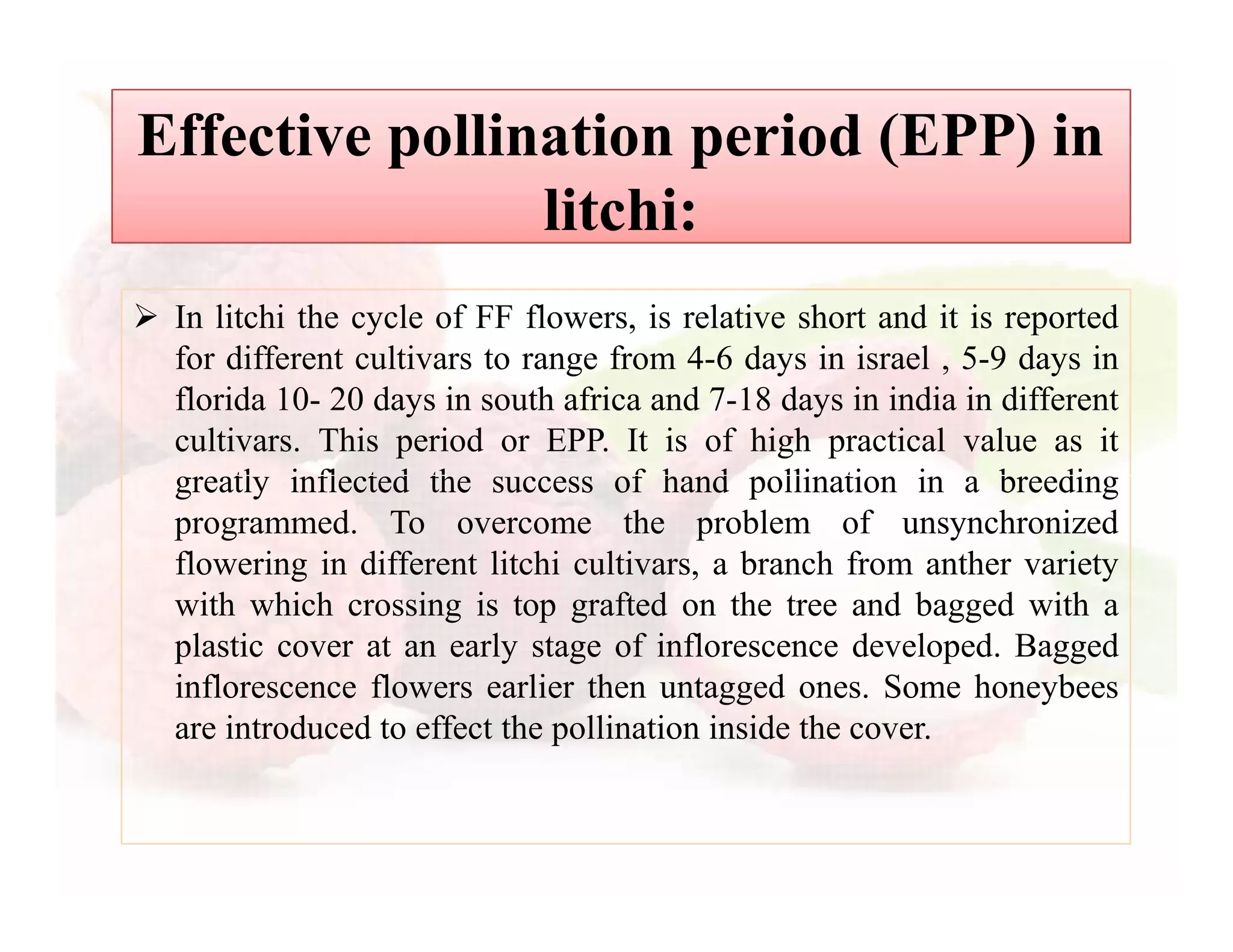
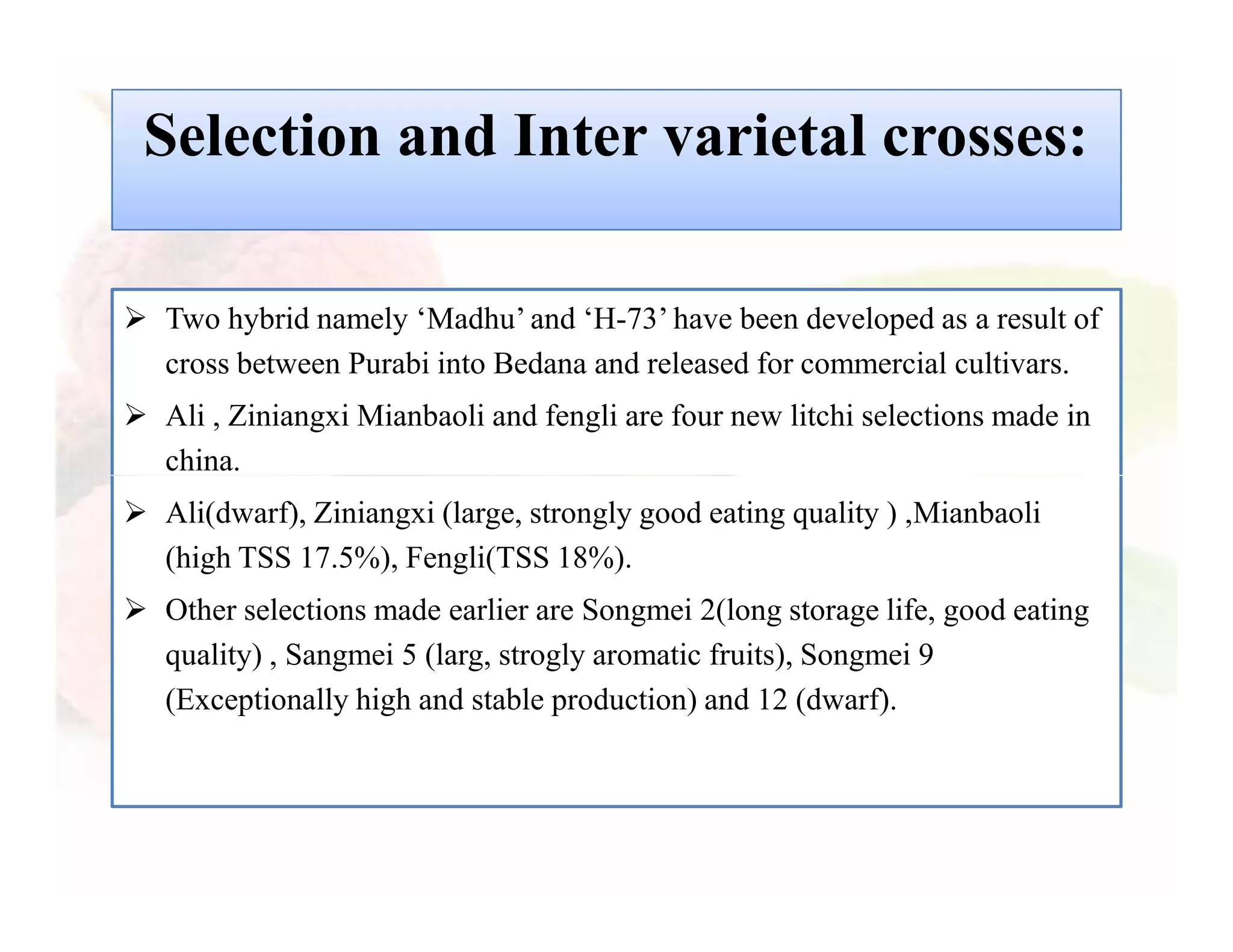
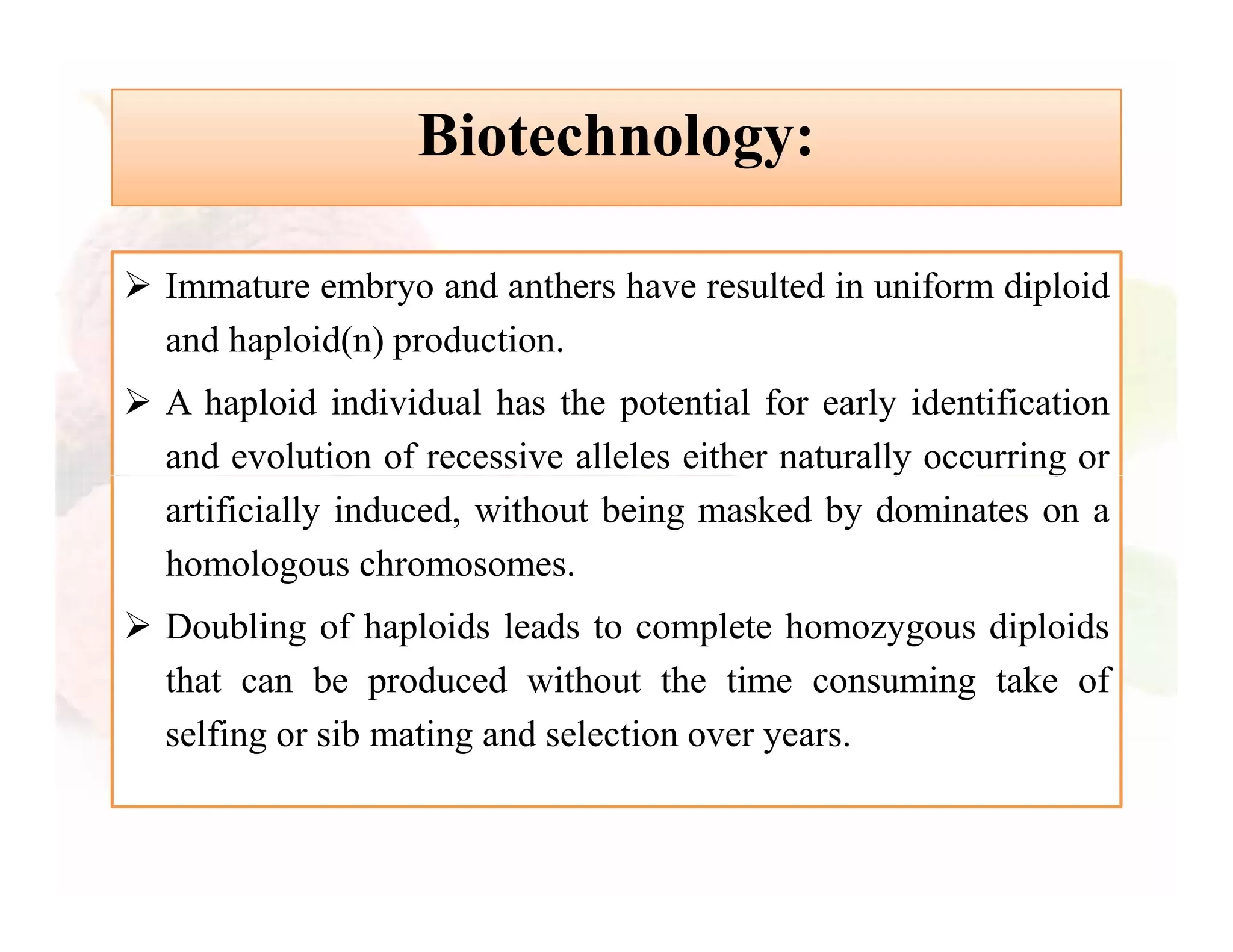
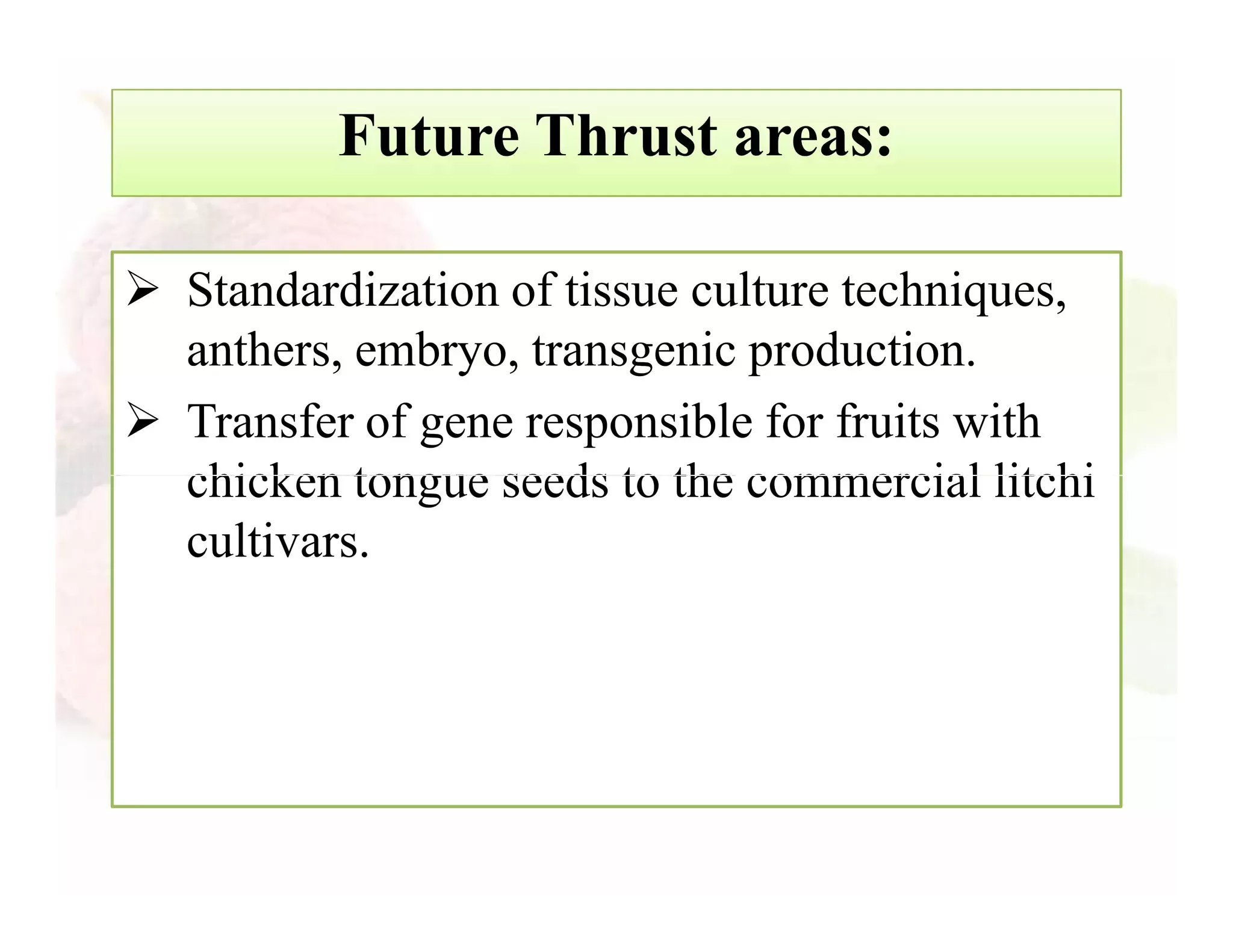
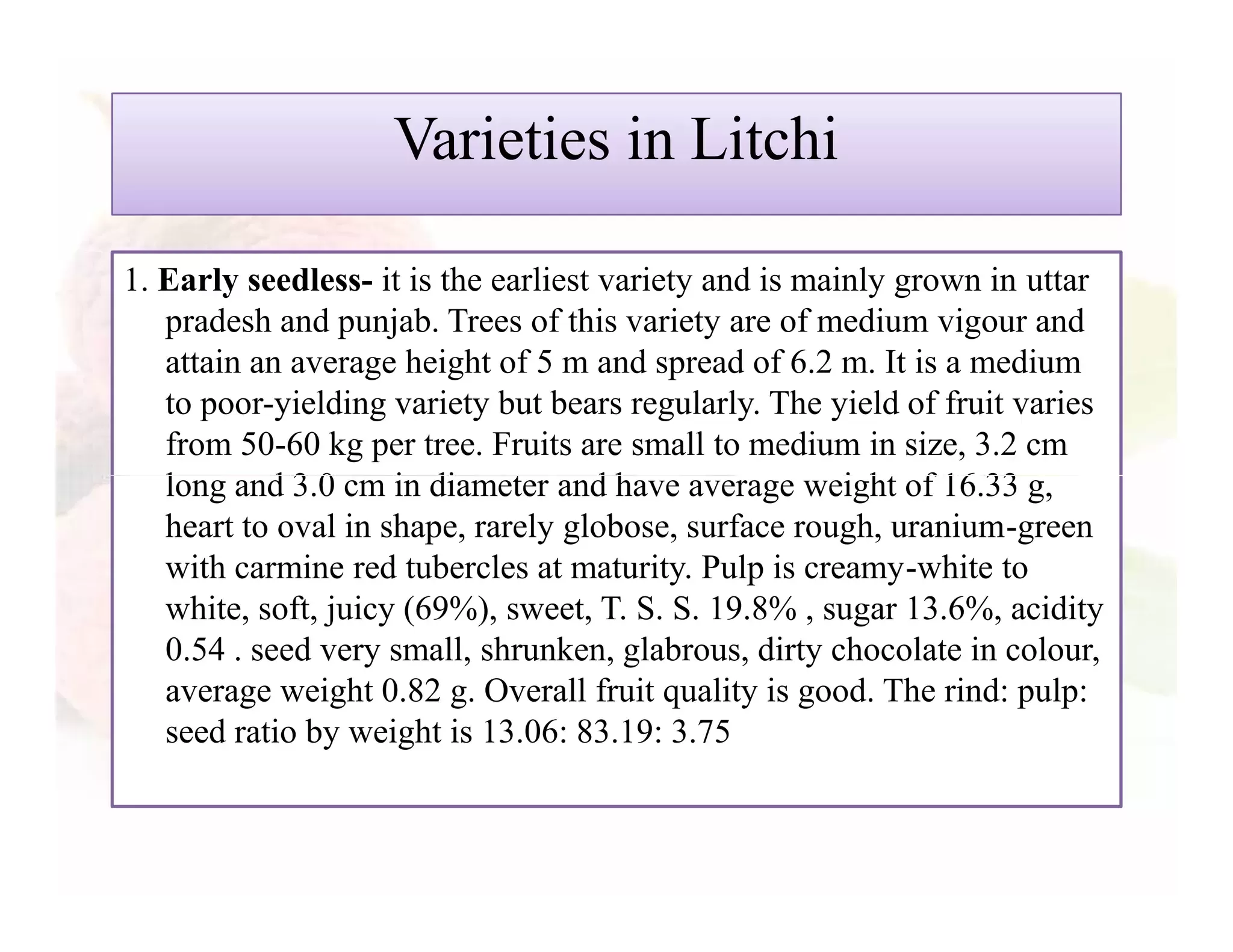
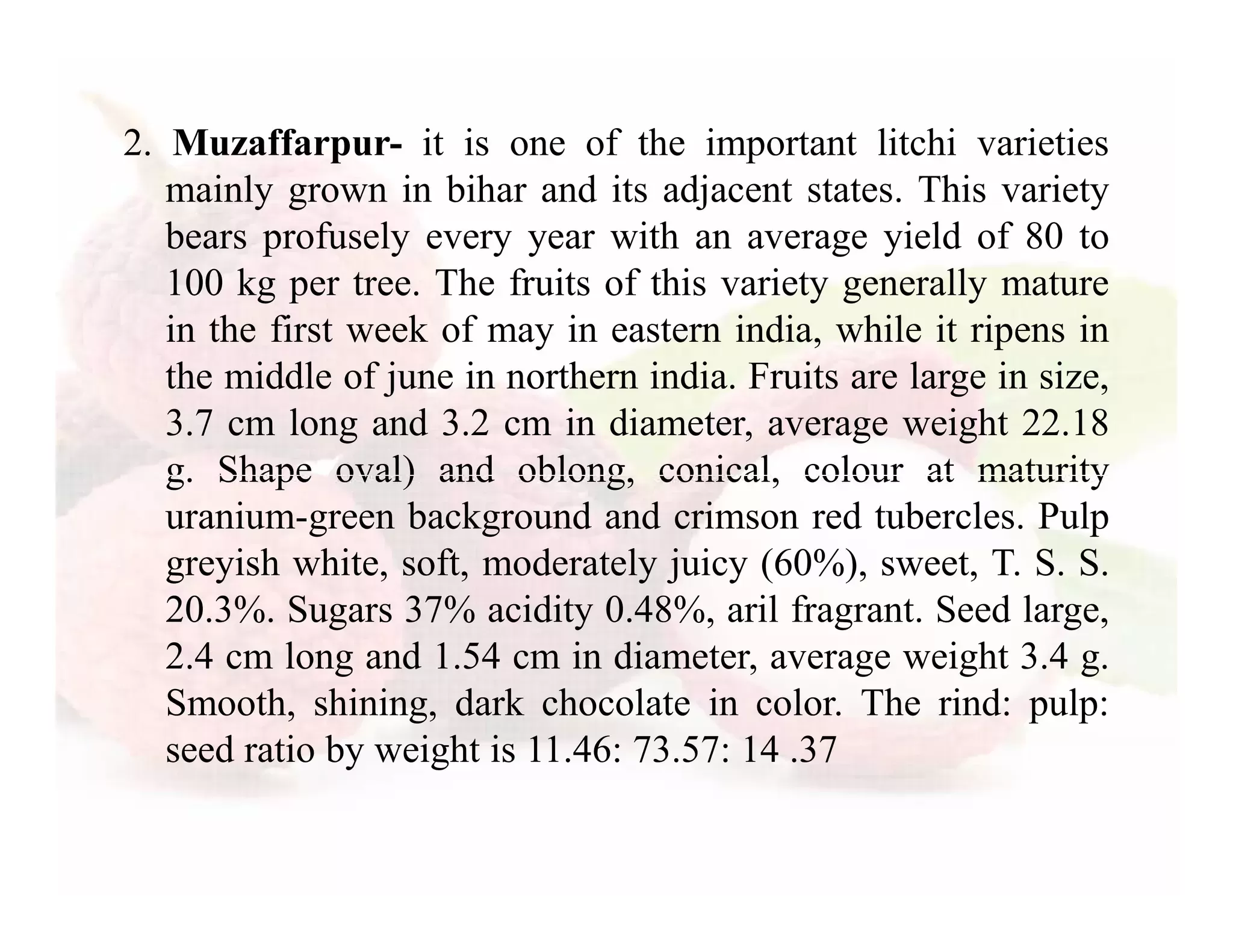
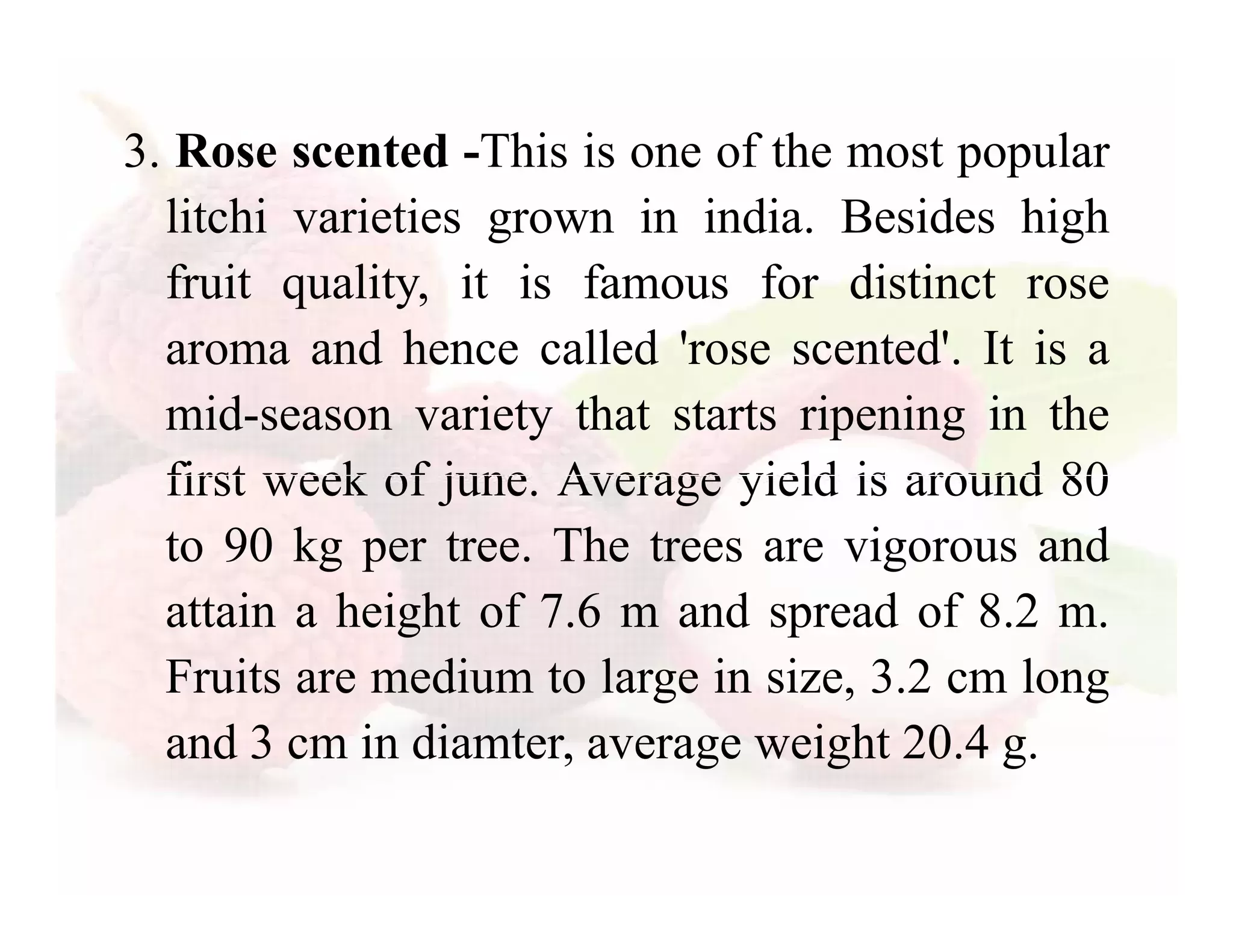
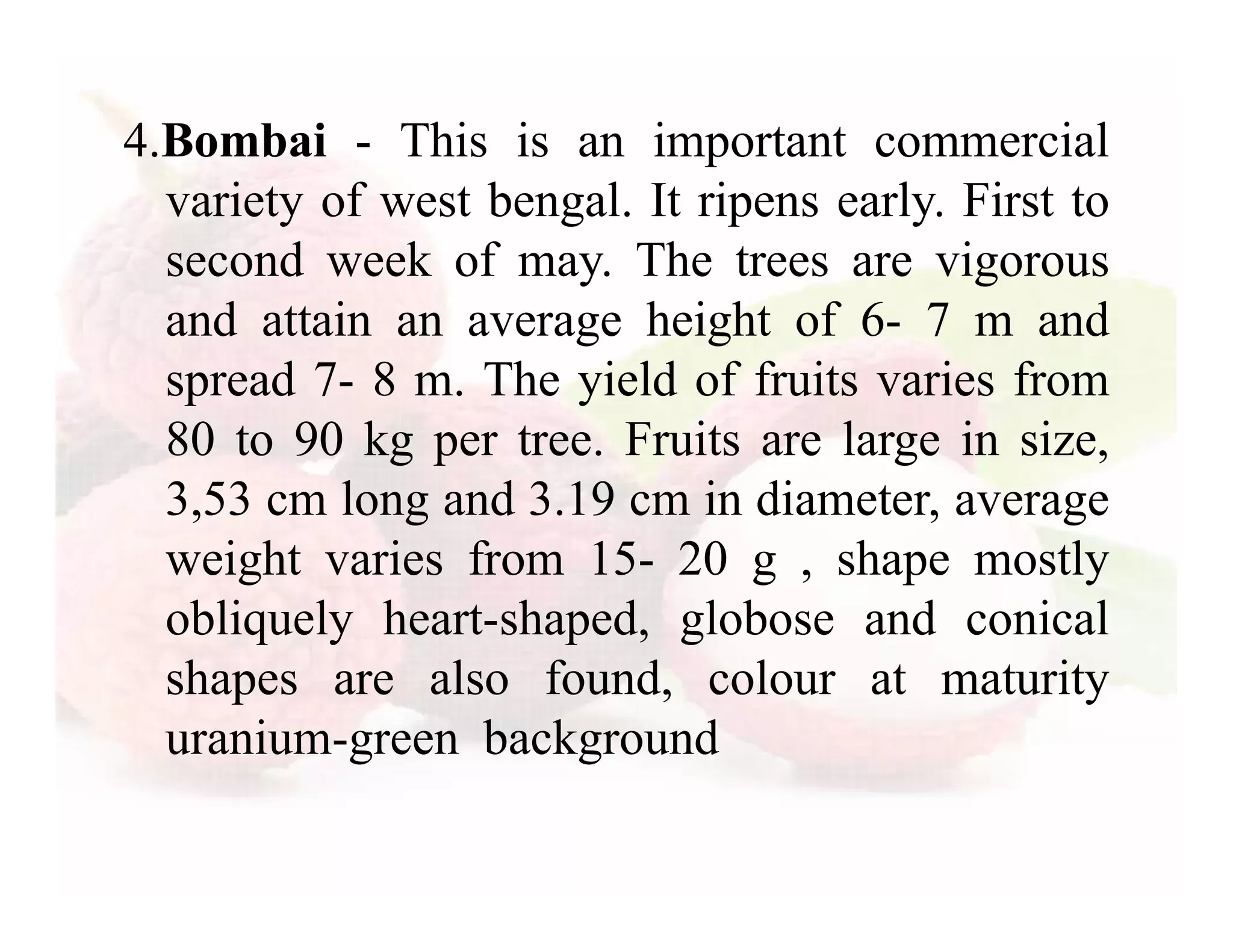
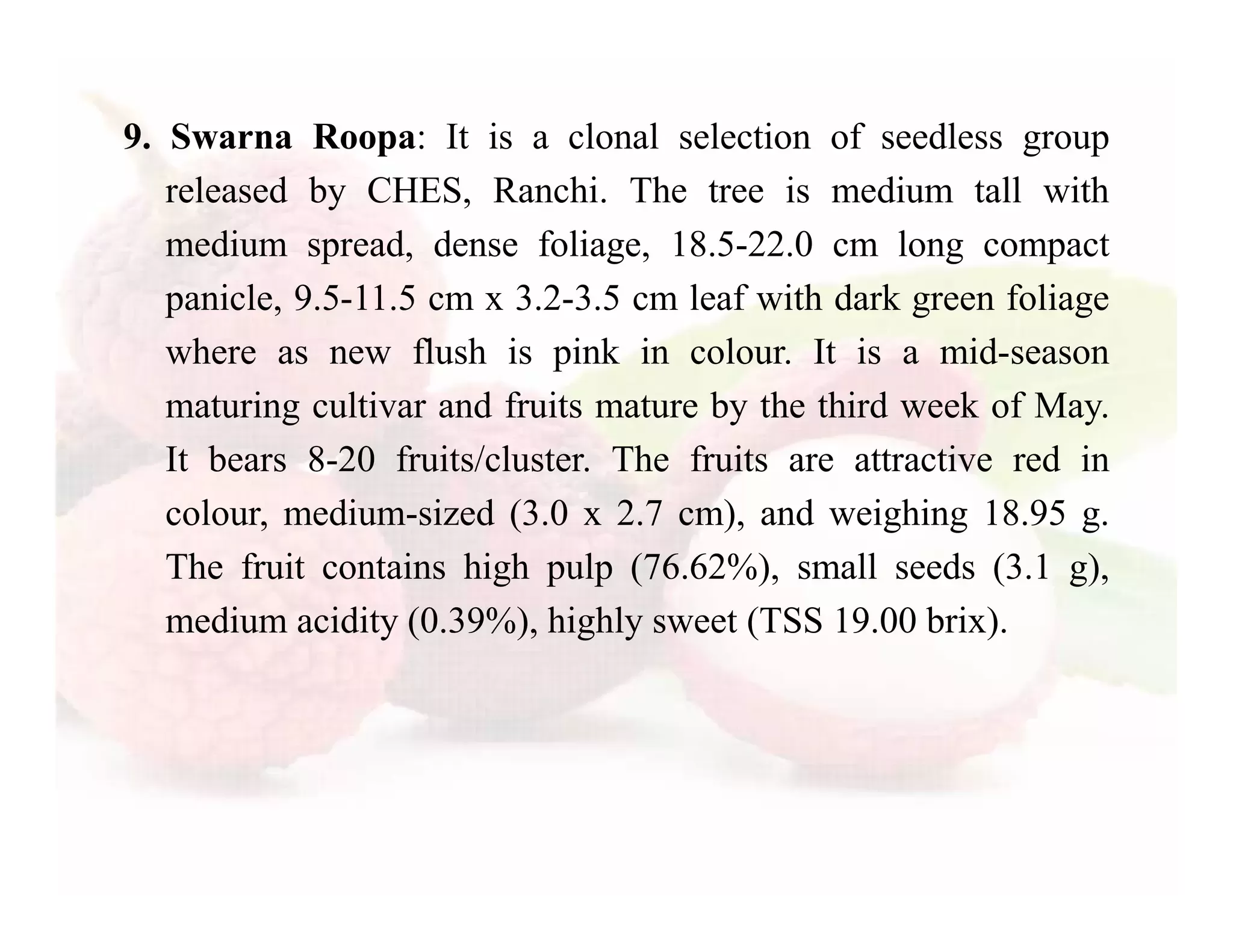
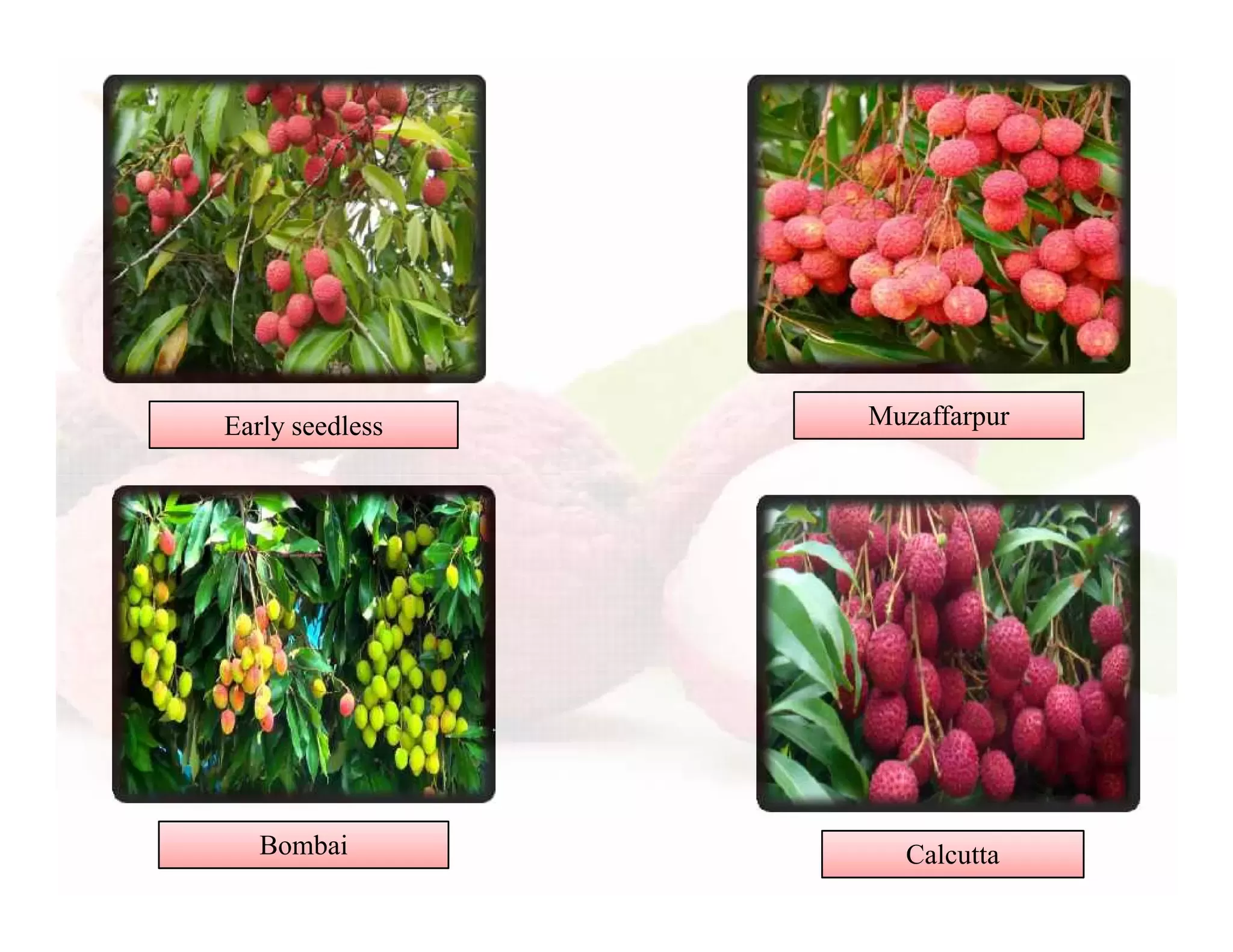
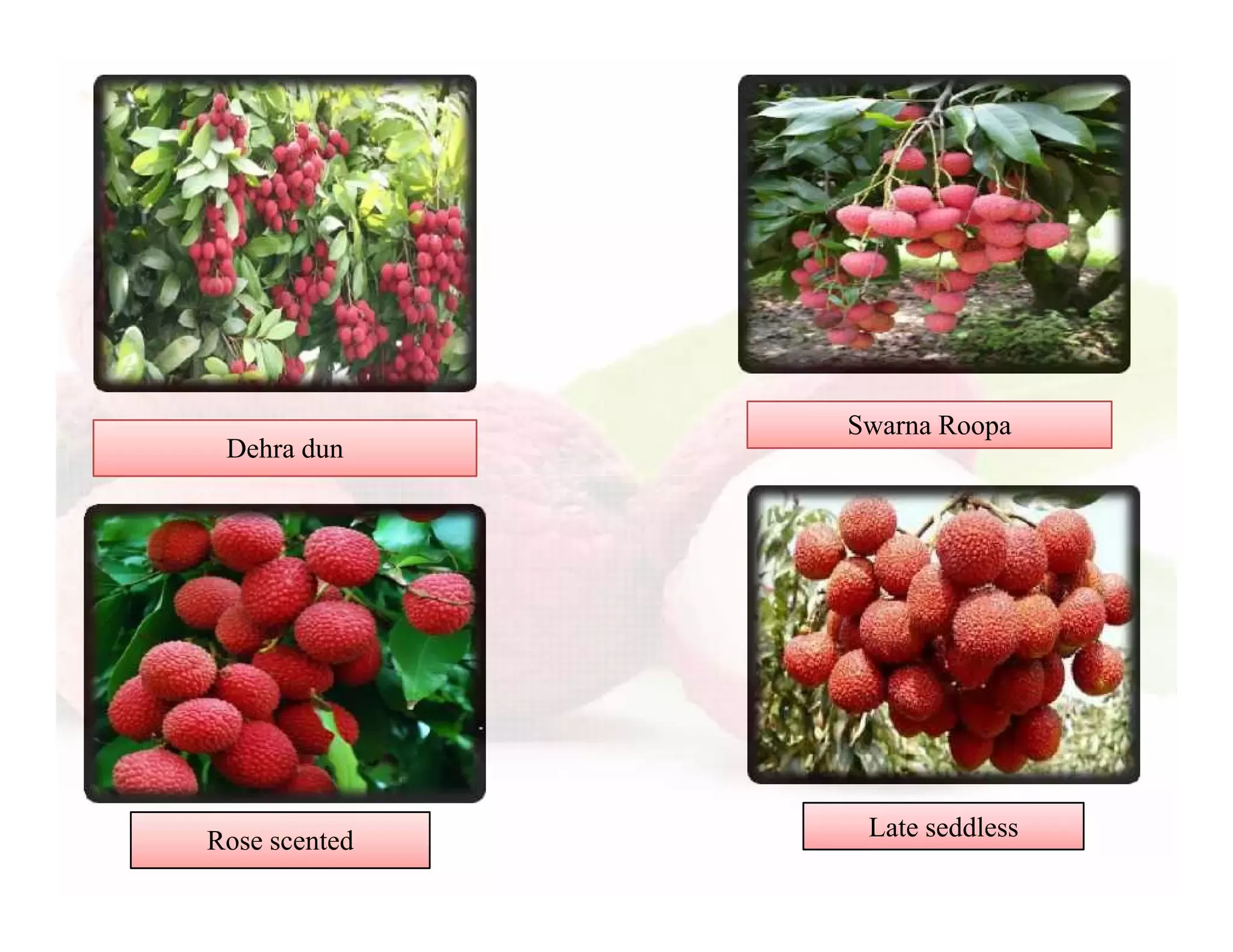
Litchi, originating from China where it has been cultivated for over 2200 years, has a narrow genetic base in India with only 7-8 commercially popular cultivars out of nearly 40 reported. The climatic variations can significantly affect yield, making the selection of the right variety crucial for specific regions. The litchi inflorescence consists of branched panicles with varying flower types, and the flowering period is influenced by environmental conditions. Desirable cultivar characteristics include large fruit size, good post-harvest quality, uniform ripening, and resistance to pests and diseases. Major litchi varieties include Early Seedless, Muzaffarpur, Rose Scented, Bombai, Calcutta, Late Seedless, Dehradun, Gulabi, and Swarna Roopa, each with unique traits and yield potentials. Breeding efforts focus on improving fruit quality, disease

Slide 1

Slide 1

Slide 2

Slide 2

Slide 3

Slide 3

Slide 4

Slide 4

Slide 5

Slide 5

Slide 6

Slide 6

Slide 7

Slide 7

Slide 8

Slide 8

Slide 9

Slide 9

Slide 10

Slide 10

Slide 11

Slide 11

Slide 12

Slide 12

Slide 13

Slide 13

Slide 14

Slide 14

Slide 15

Slide 15

Slide 16

Slide 16

Slide 17

Slide 17

Slide 18

Slide 18

Slide 19
Slide 19

Slide 20

Slide 20

Slide 21

Slide 21

Slide 22

Slide 22

Slide 23

Slide 23

Slide 24

Slide 24

Slide 25

Slide 25

Slide 26

Slide 26

Slide 27

Slide 27

Slide 28

Slide 28
1 / 28

Ppt on Fruit dropping

Summary

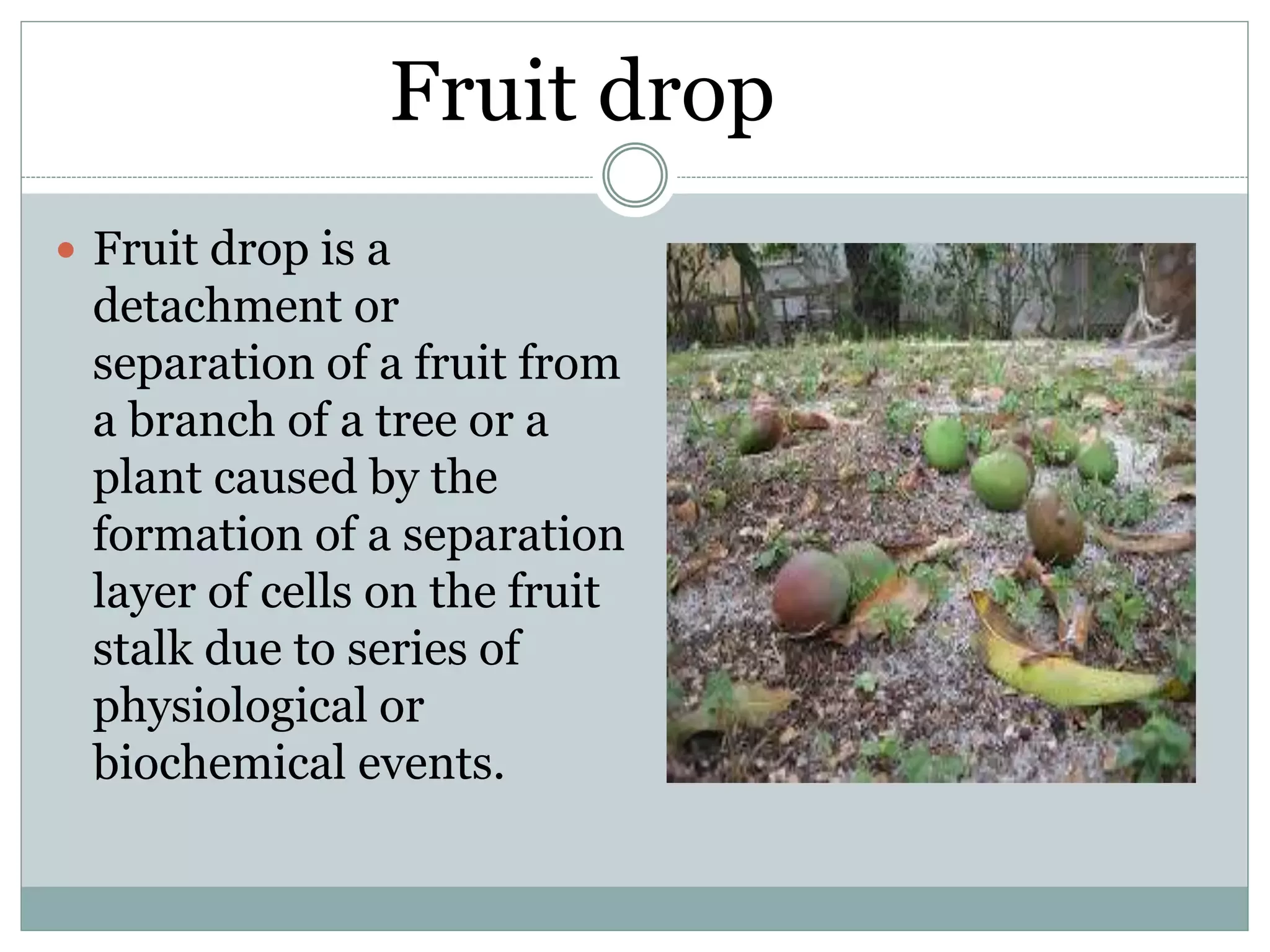
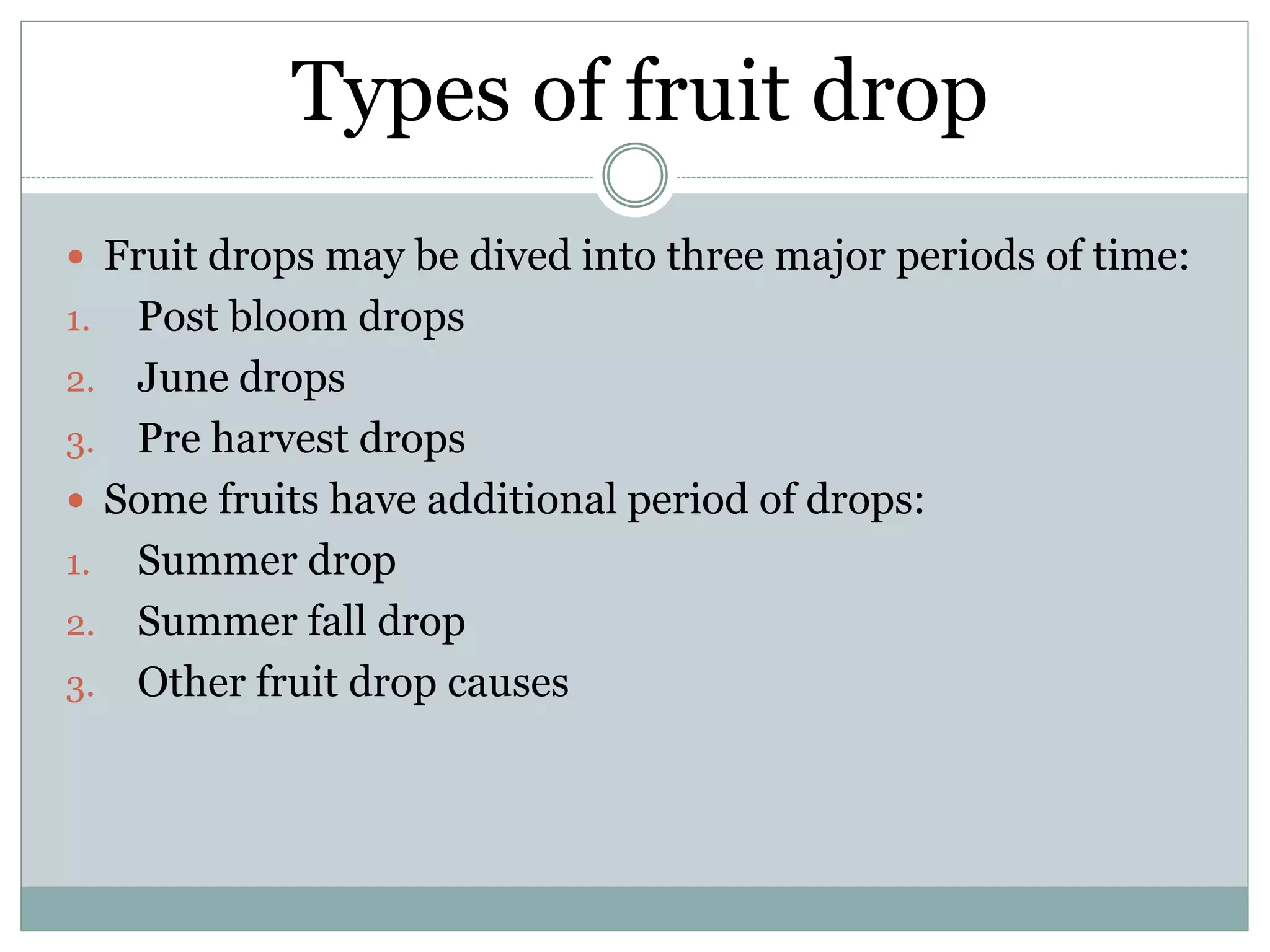
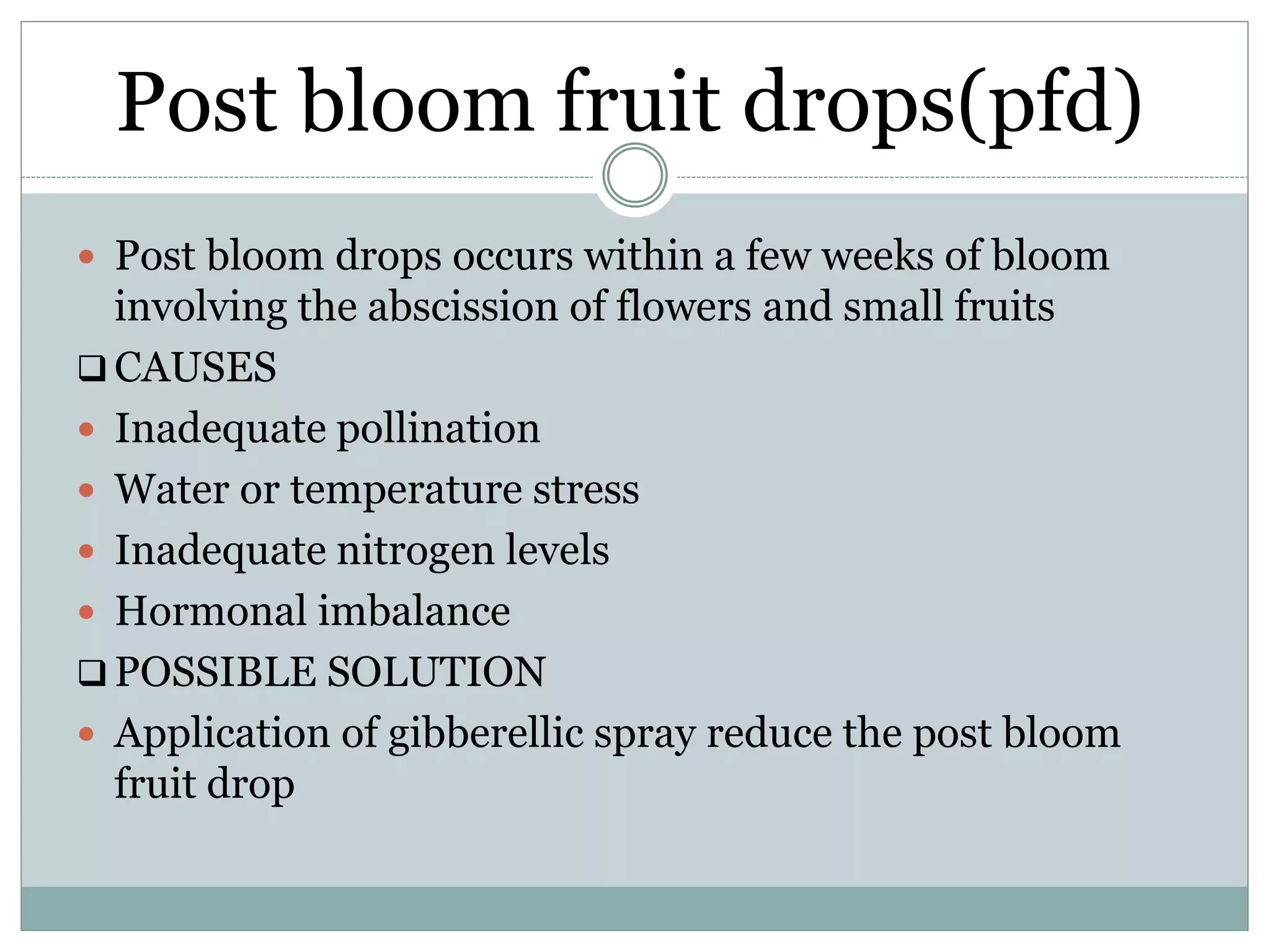
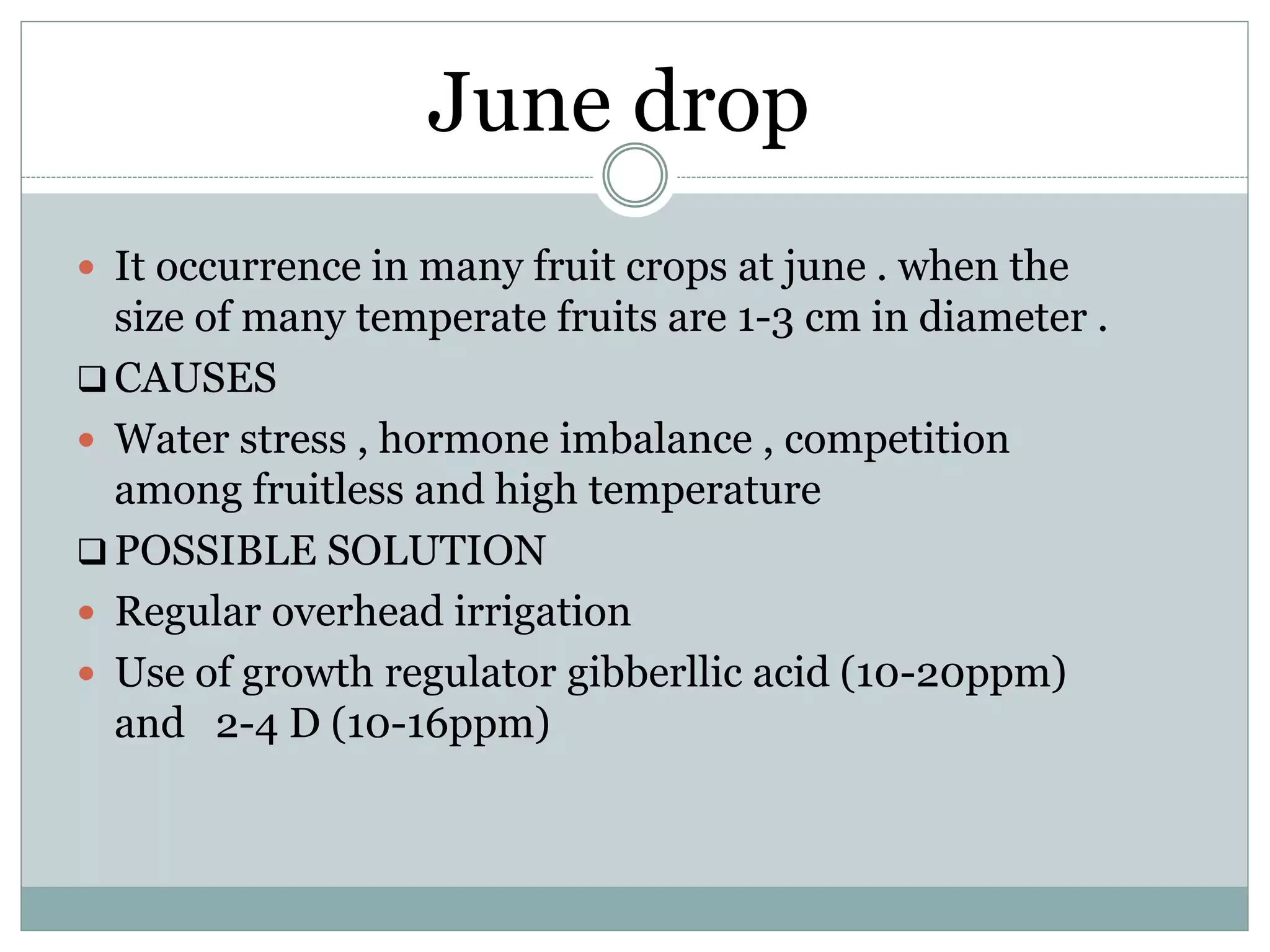
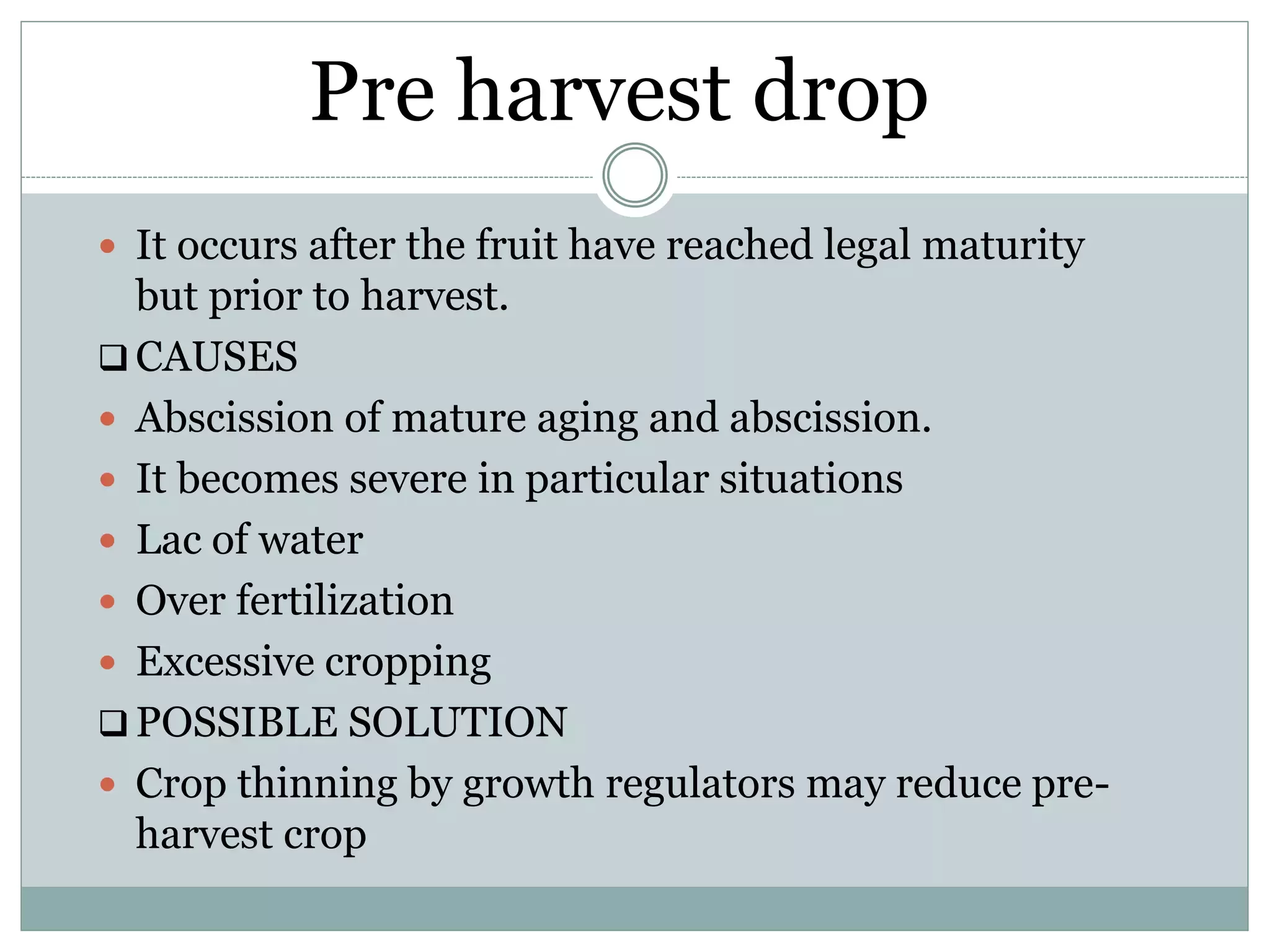
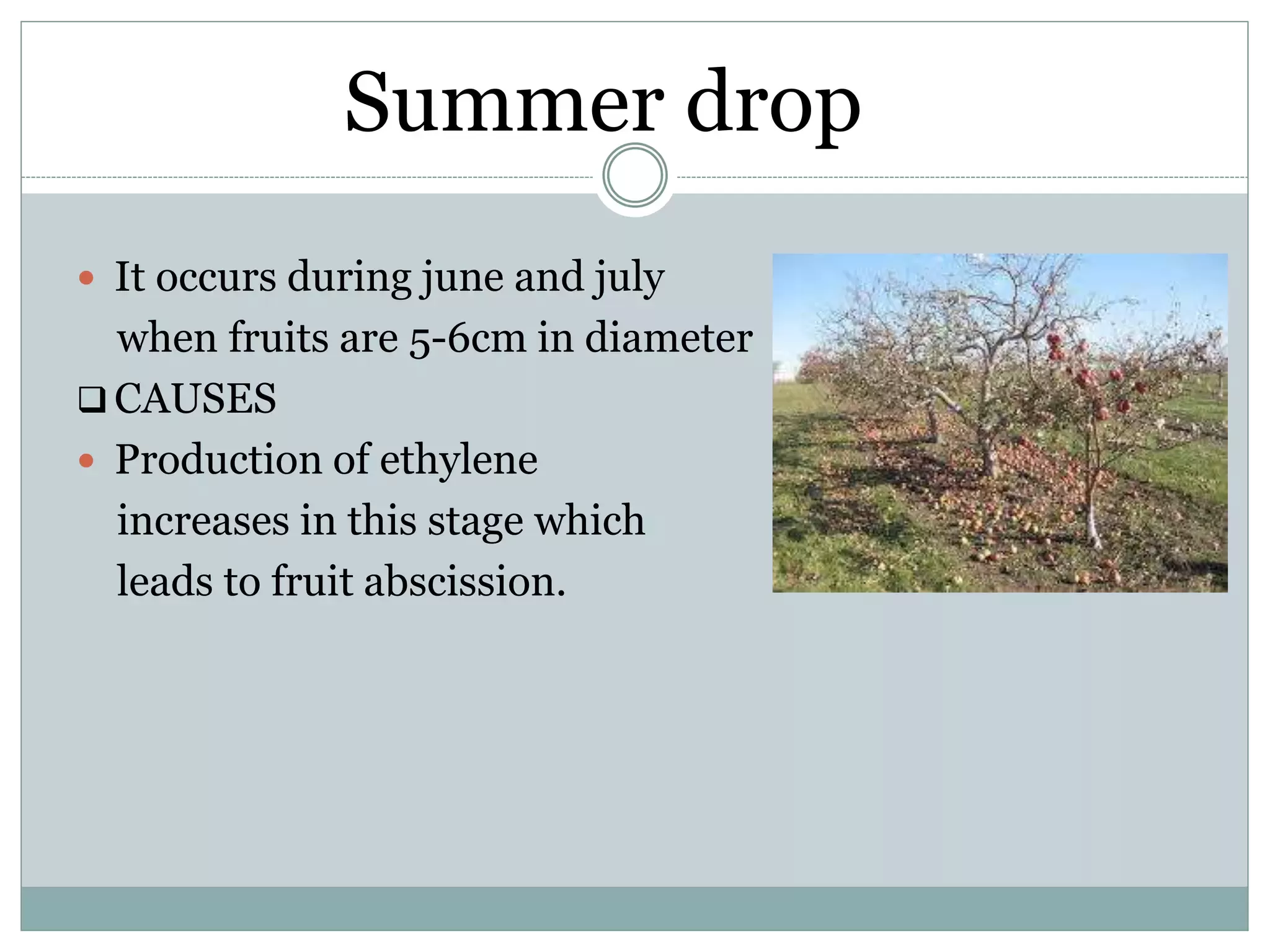
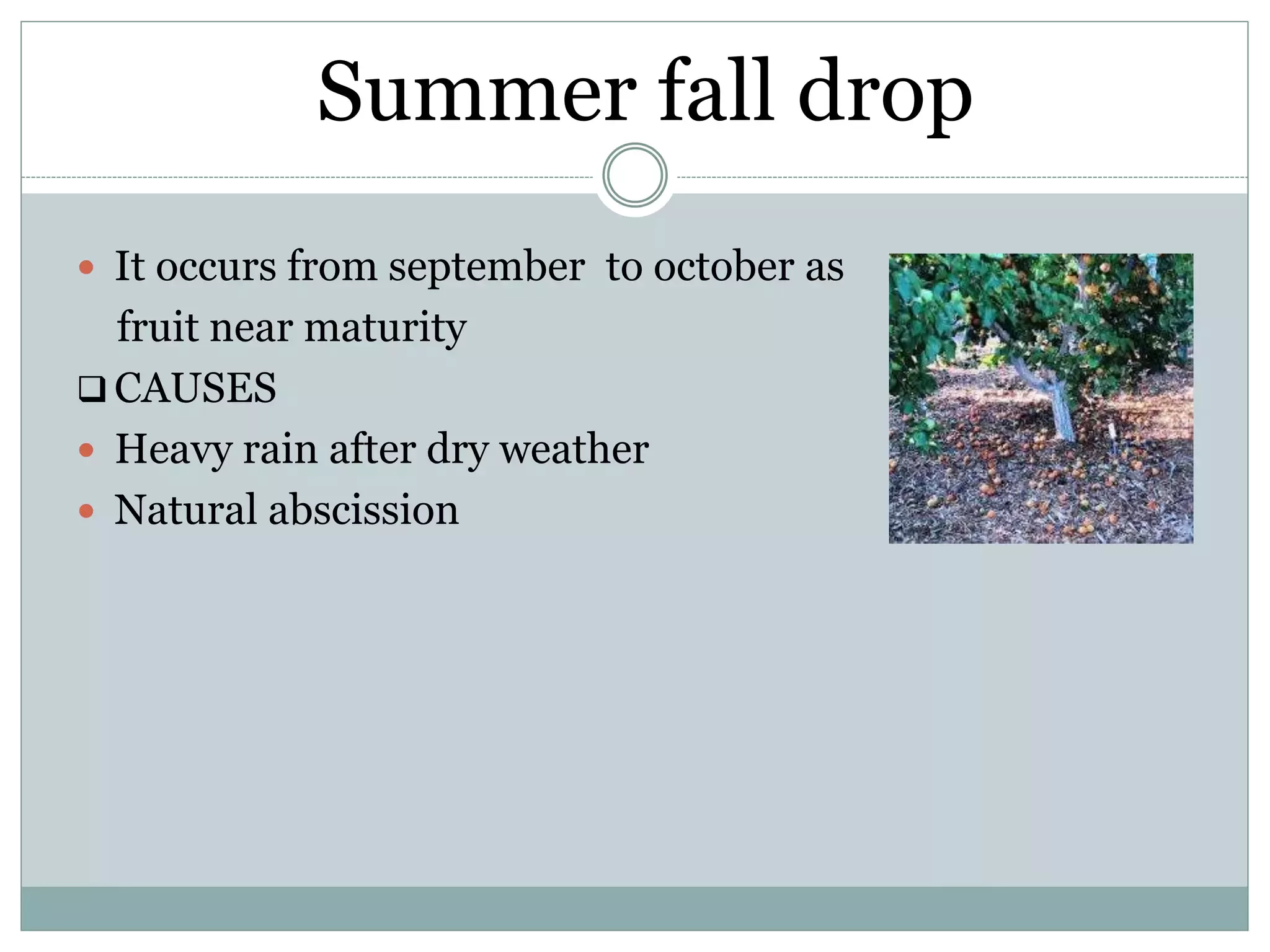
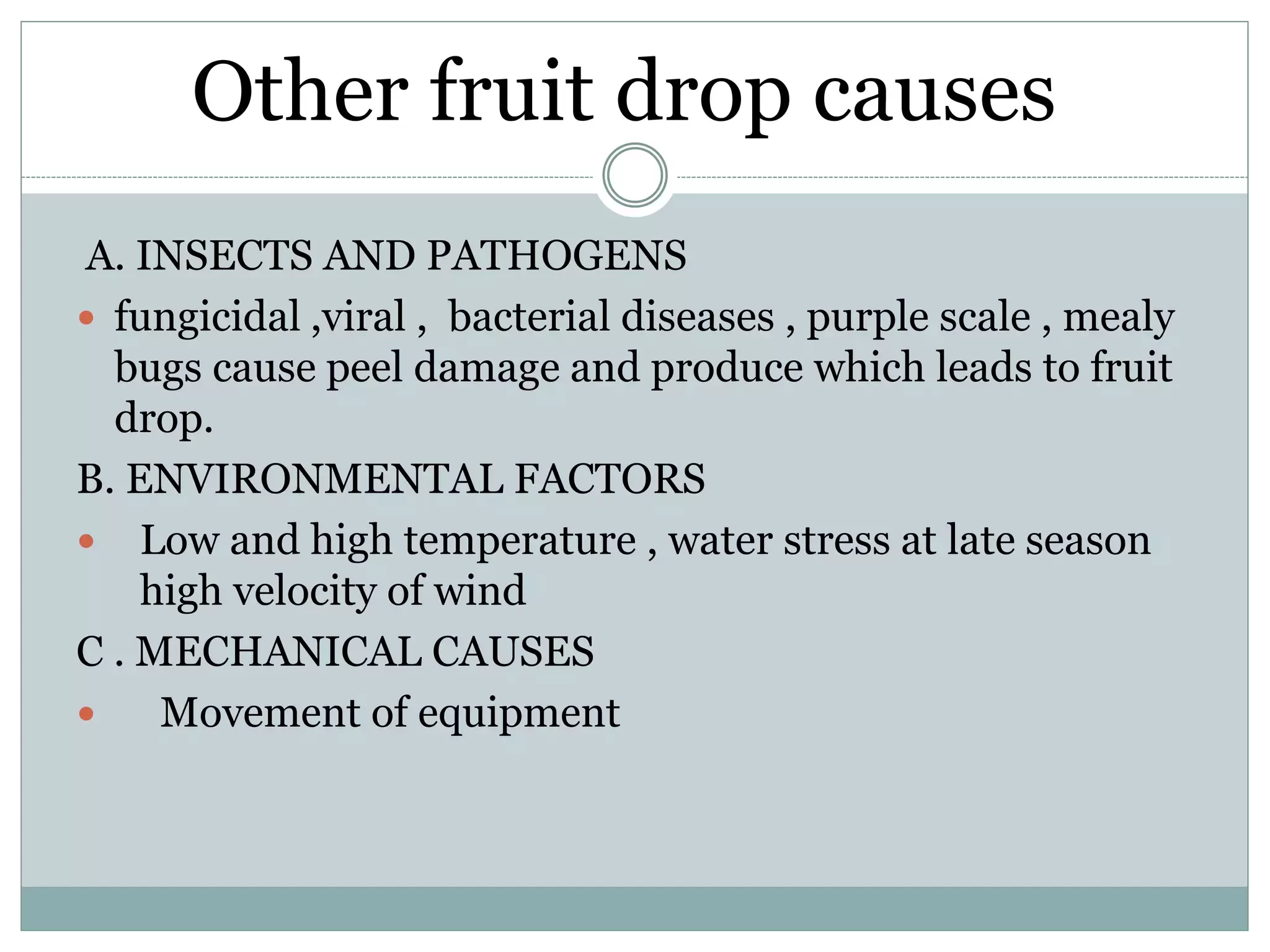
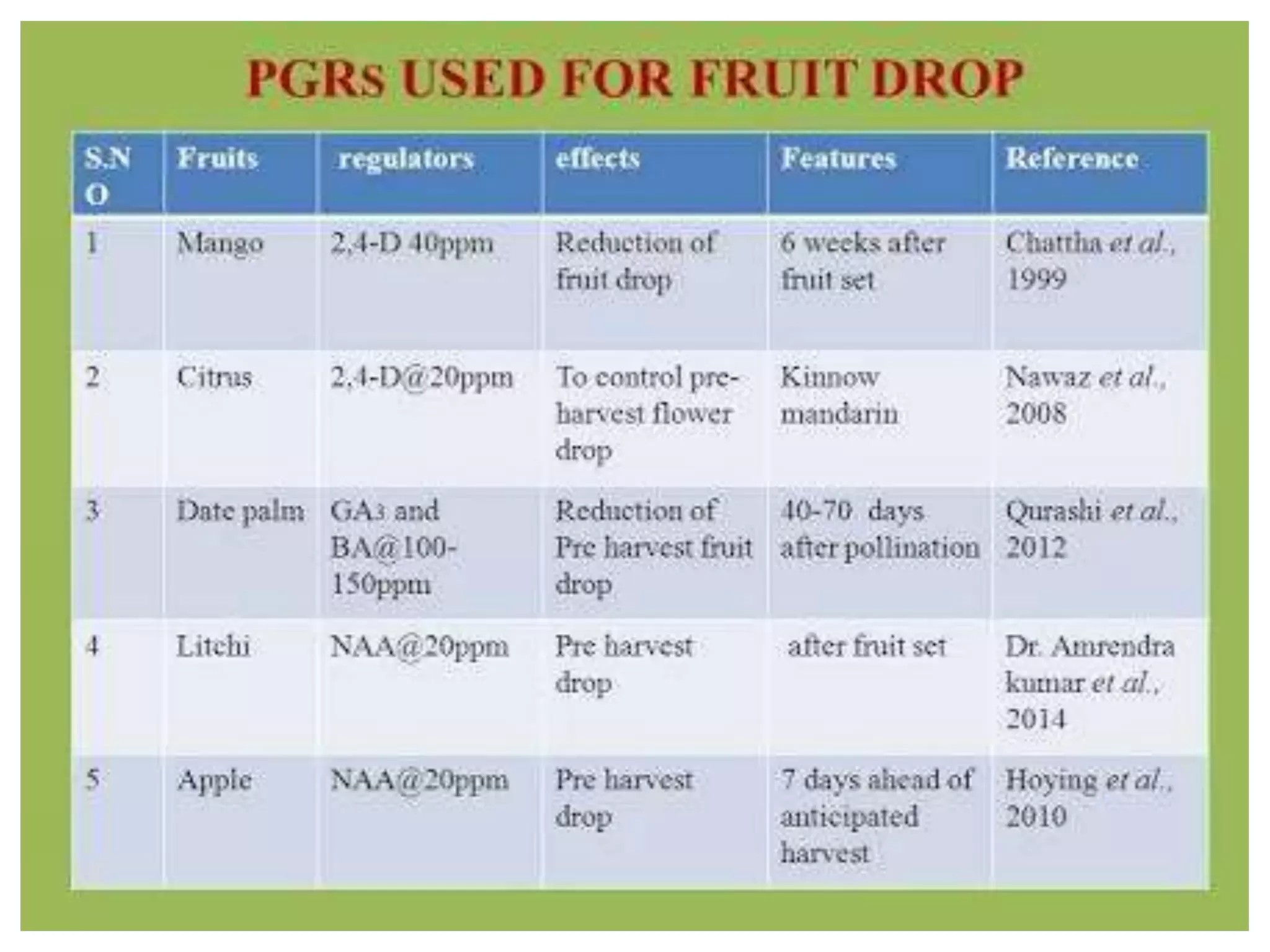
Fruit drop refers to the detachment of fruit from a tree or plant, caused by the formation of a separation layer of cells on the fruit stalk due to physiological or biochemical events. It can be categorized into three main periods: post bloom drops, June drops, and pre-harvest drops, with some fruits experiencing additional periods such as summer drop and summer fall drop. Post bloom drops occur shortly after flowering due to inadequate pollination, water or temperature stress, and hormonal imbalances, with gibberellic spray as a potential solution. June drops happen when fruits are 1-3 cm in diameter, often caused by water stress and competition among fruits, with solutions including regular irrigation and growth regulators. Pre-harvest drops occur after fruits

Slide 1

Slide 1

Slide 2

Slide 2

Slide 3

Slide 3

Slide 4

Slide 4

Slide 5

Slide 5

Slide 6

Slide 6

Slide 7

Slide 7

Slide 8

Slide 8

Slide 9

Slide 9

Slide 10

Slide 10
1 / 10

Ppt on Advances breeding of Peach

Summary:

Discover the latest advancements in peach breeding with this informative PPT presentation. Learn about the cultivation, genetic diversity, and growth requirements of this popular temperate fruit crop.

Summary

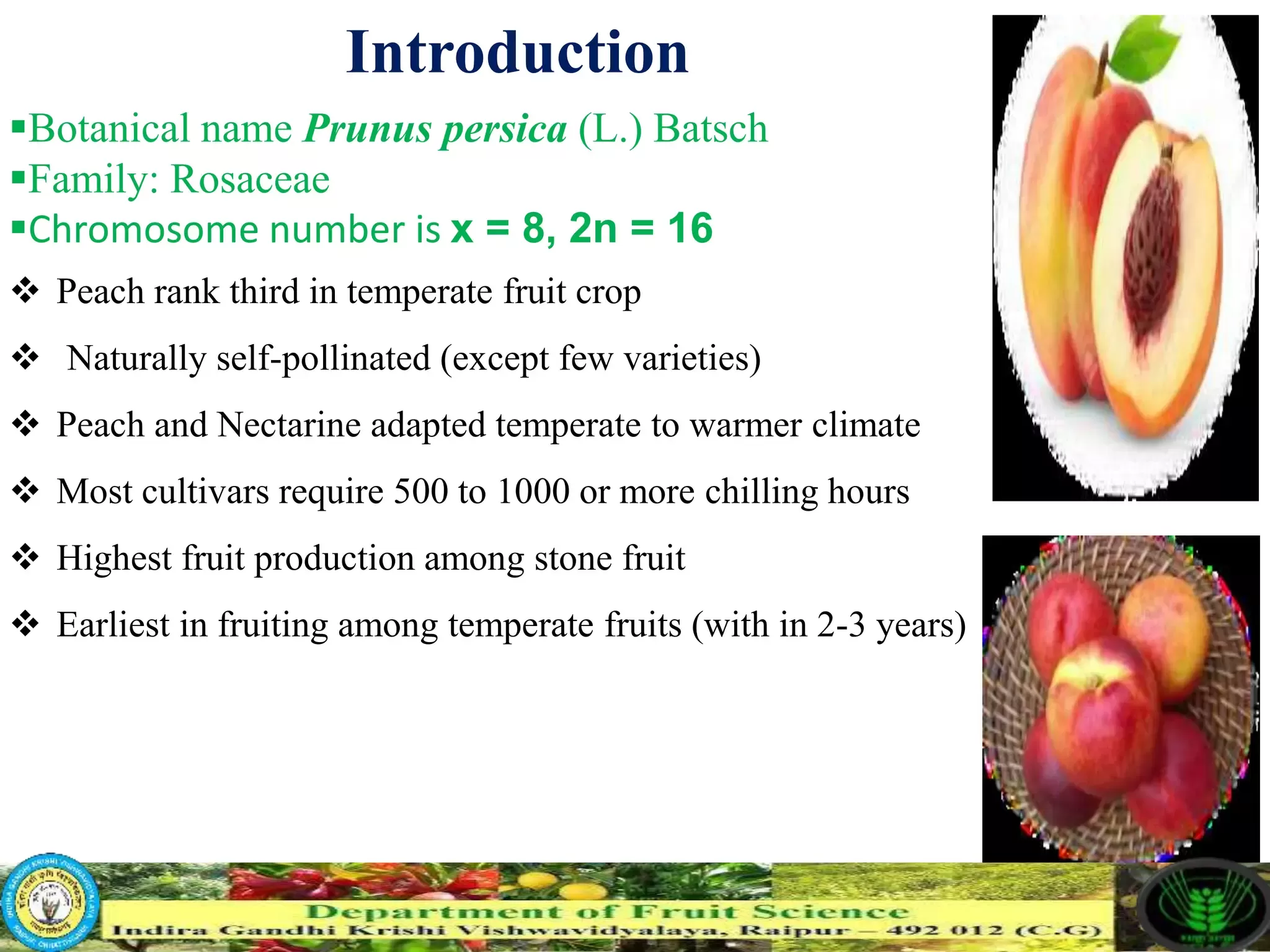
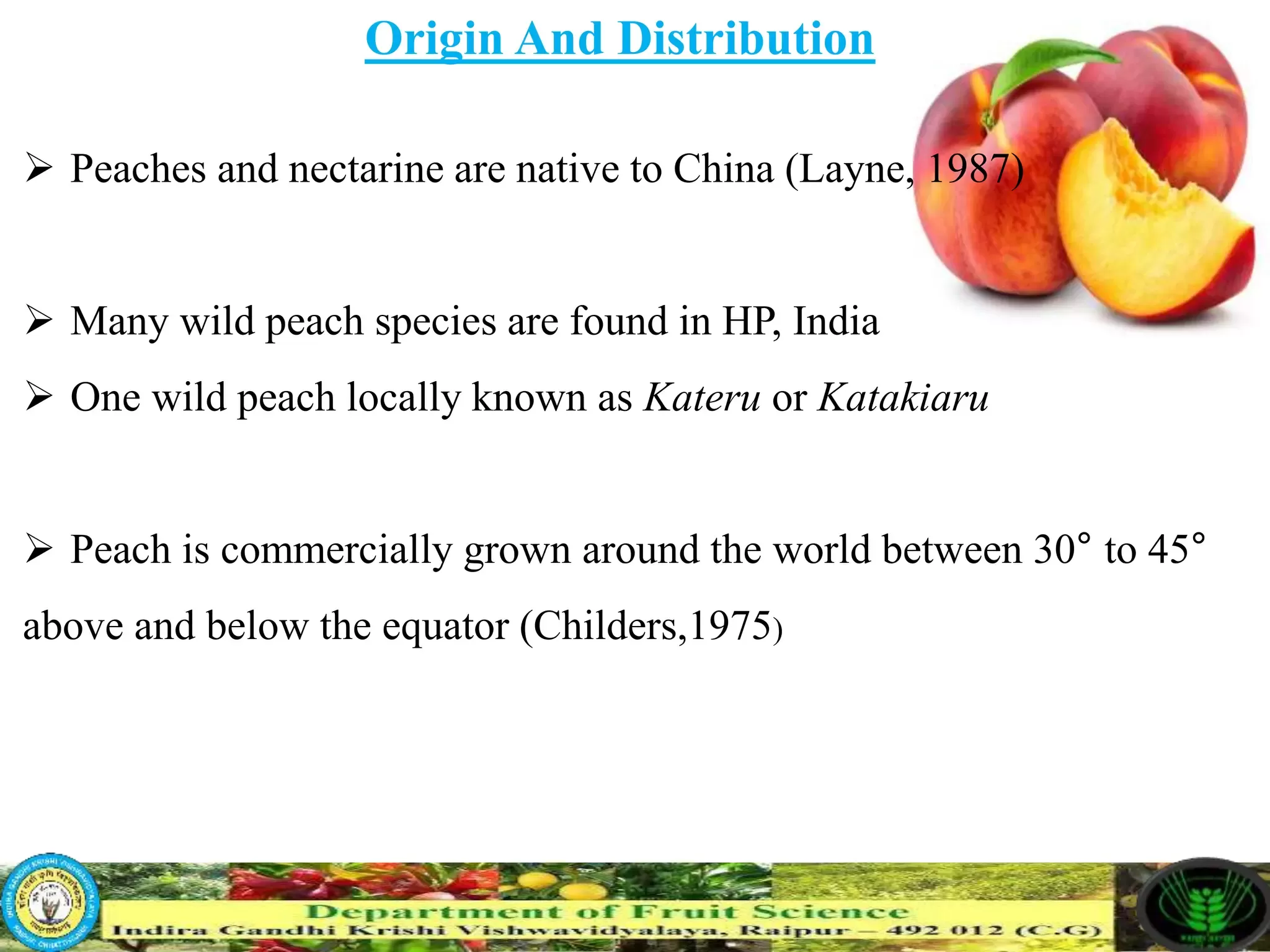
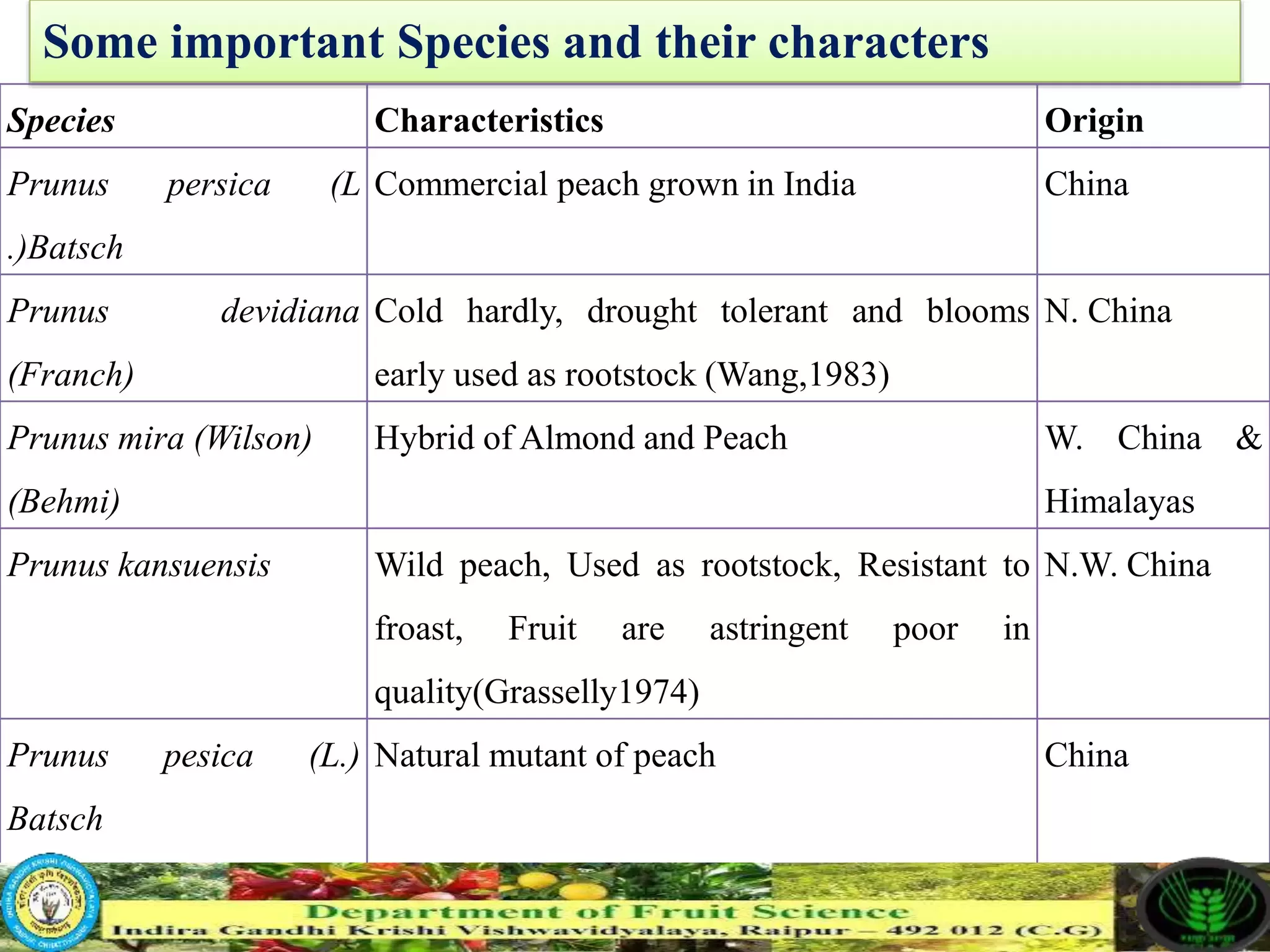
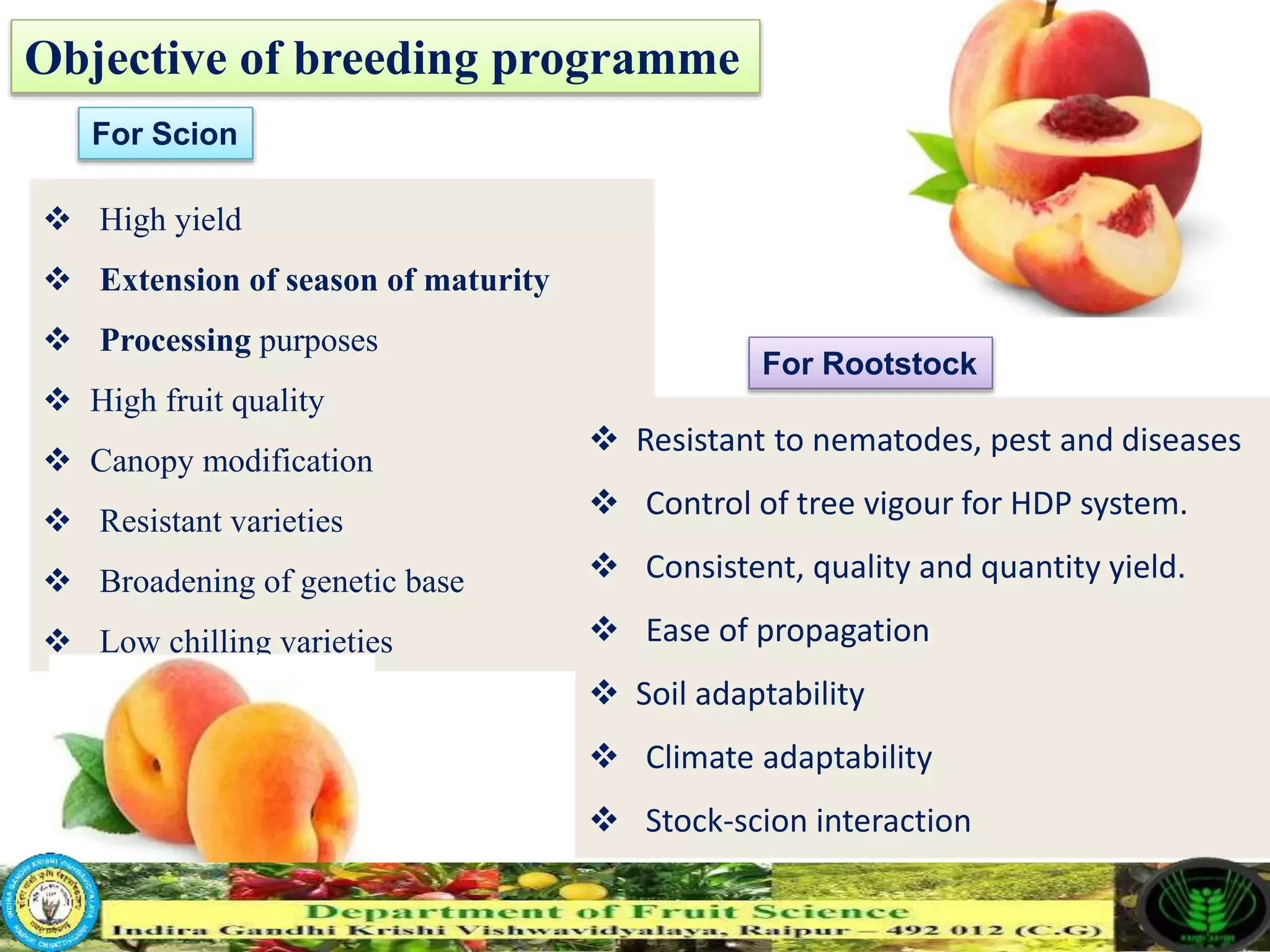
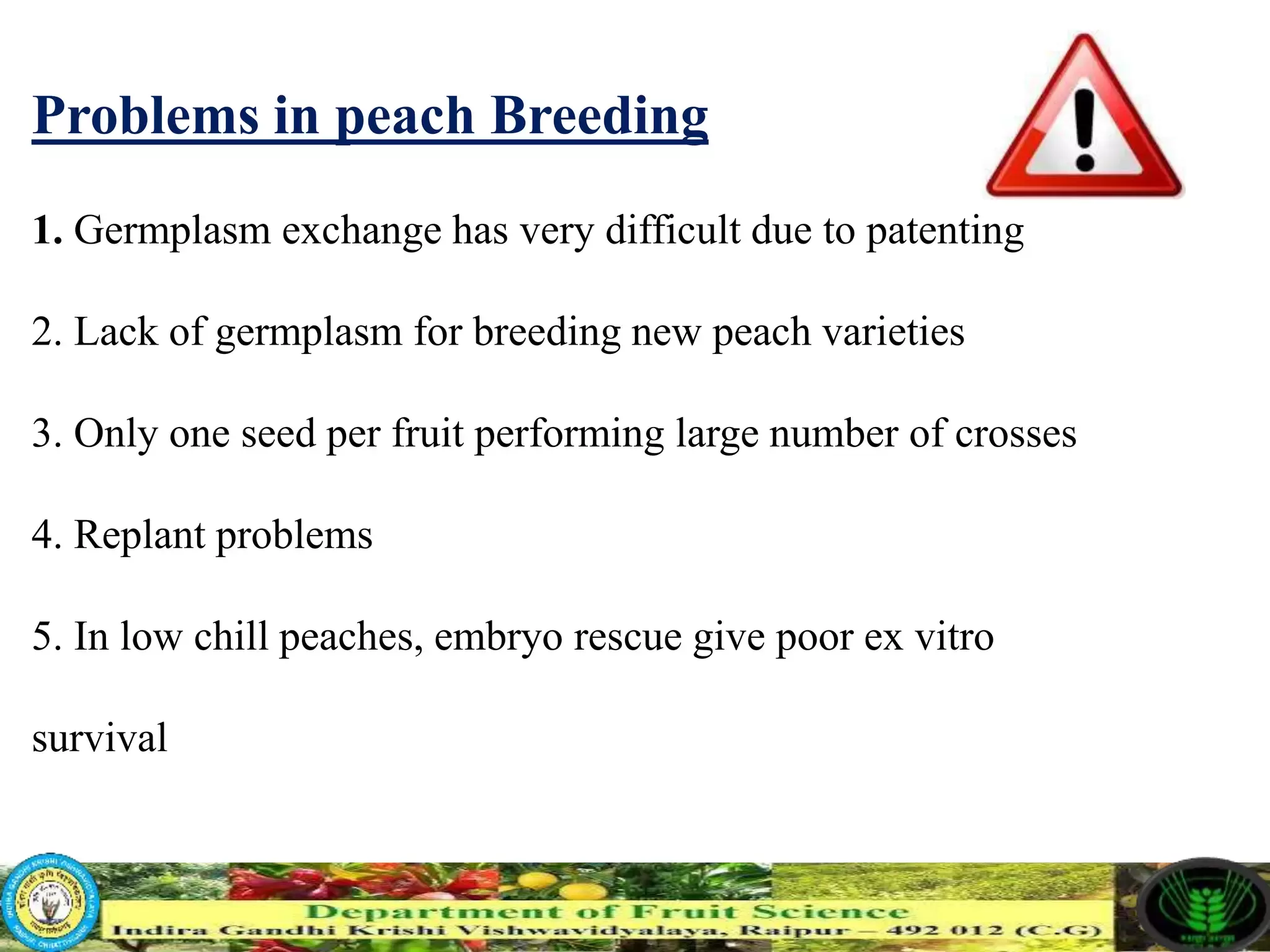
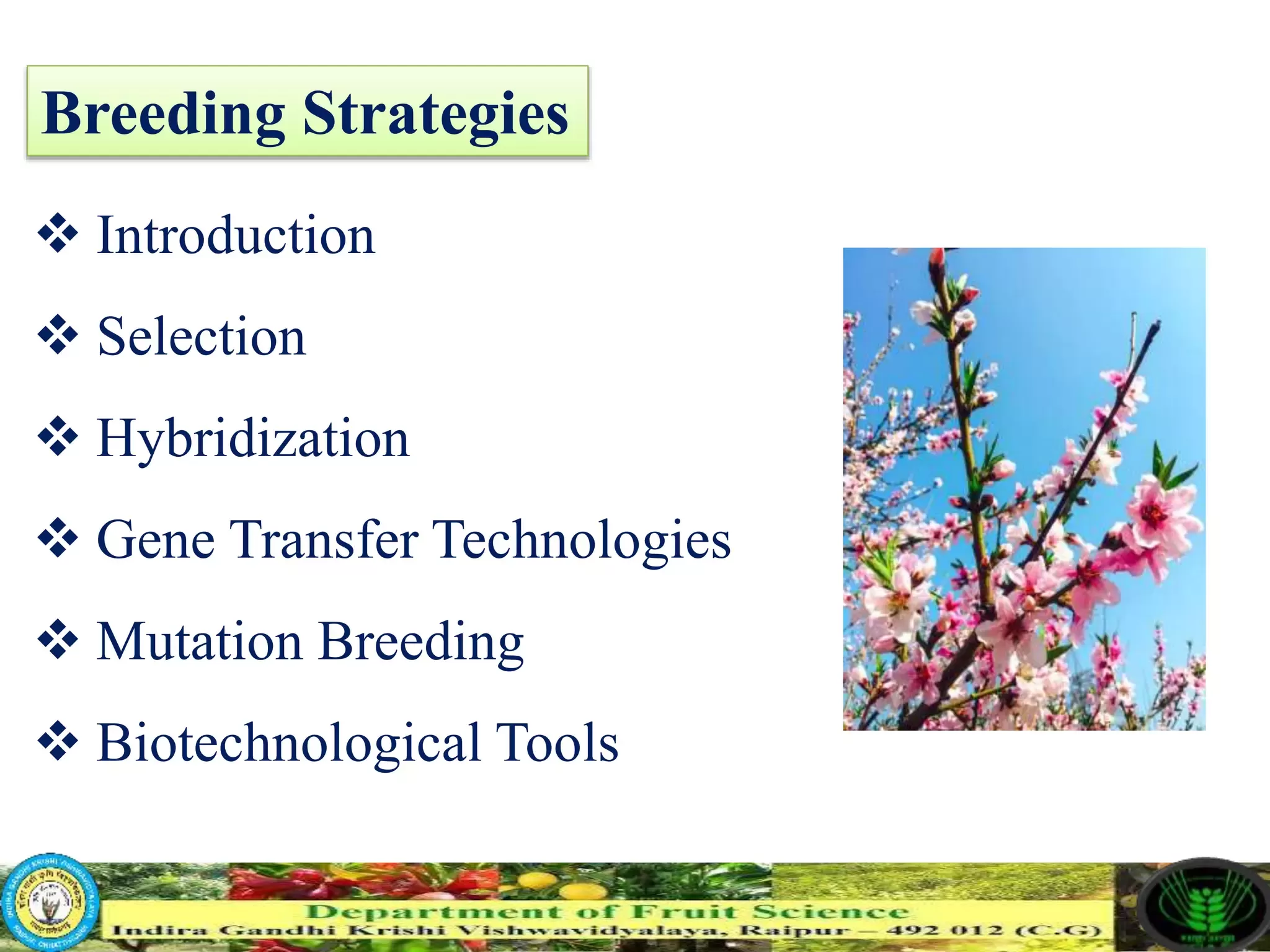
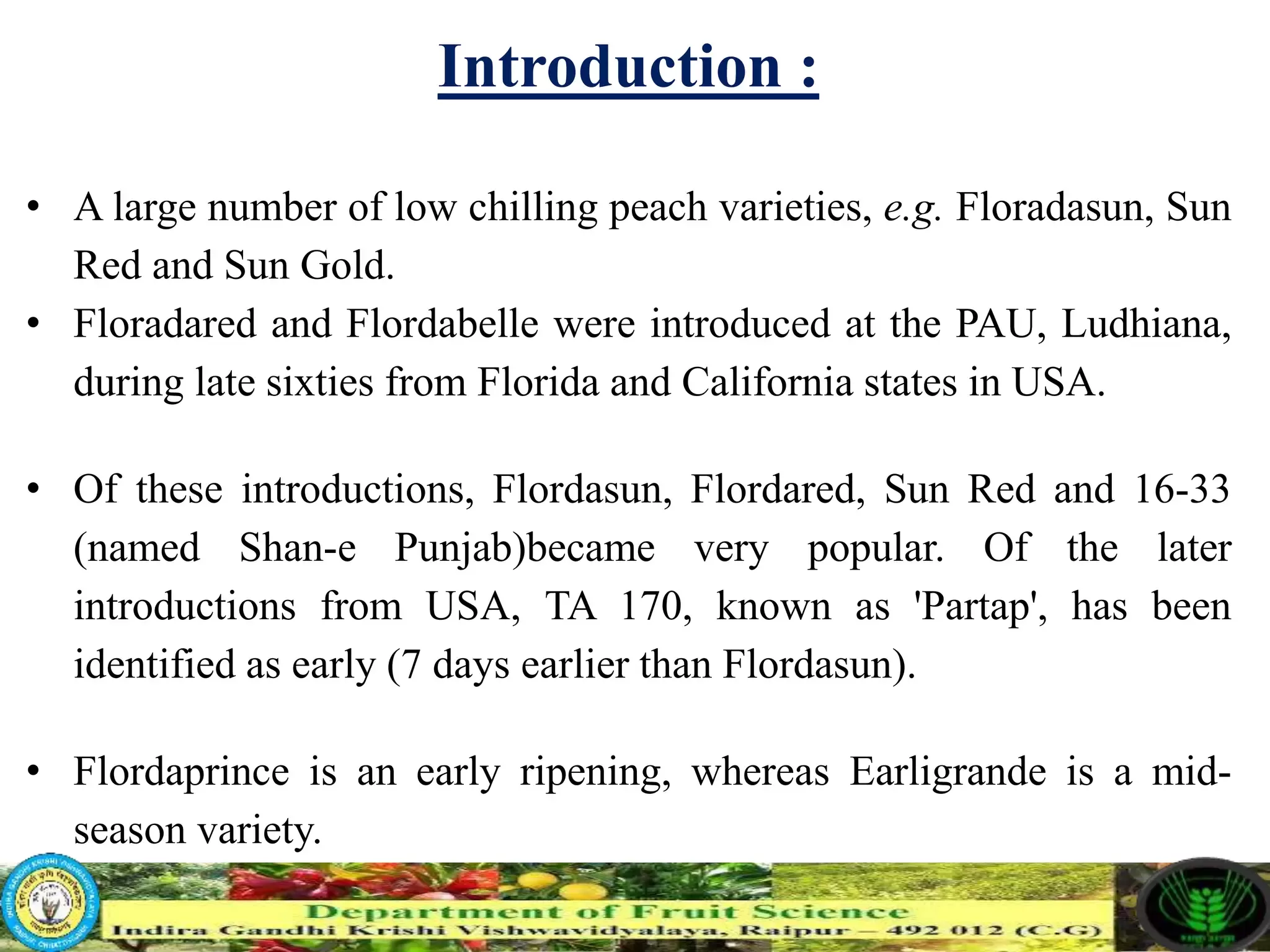
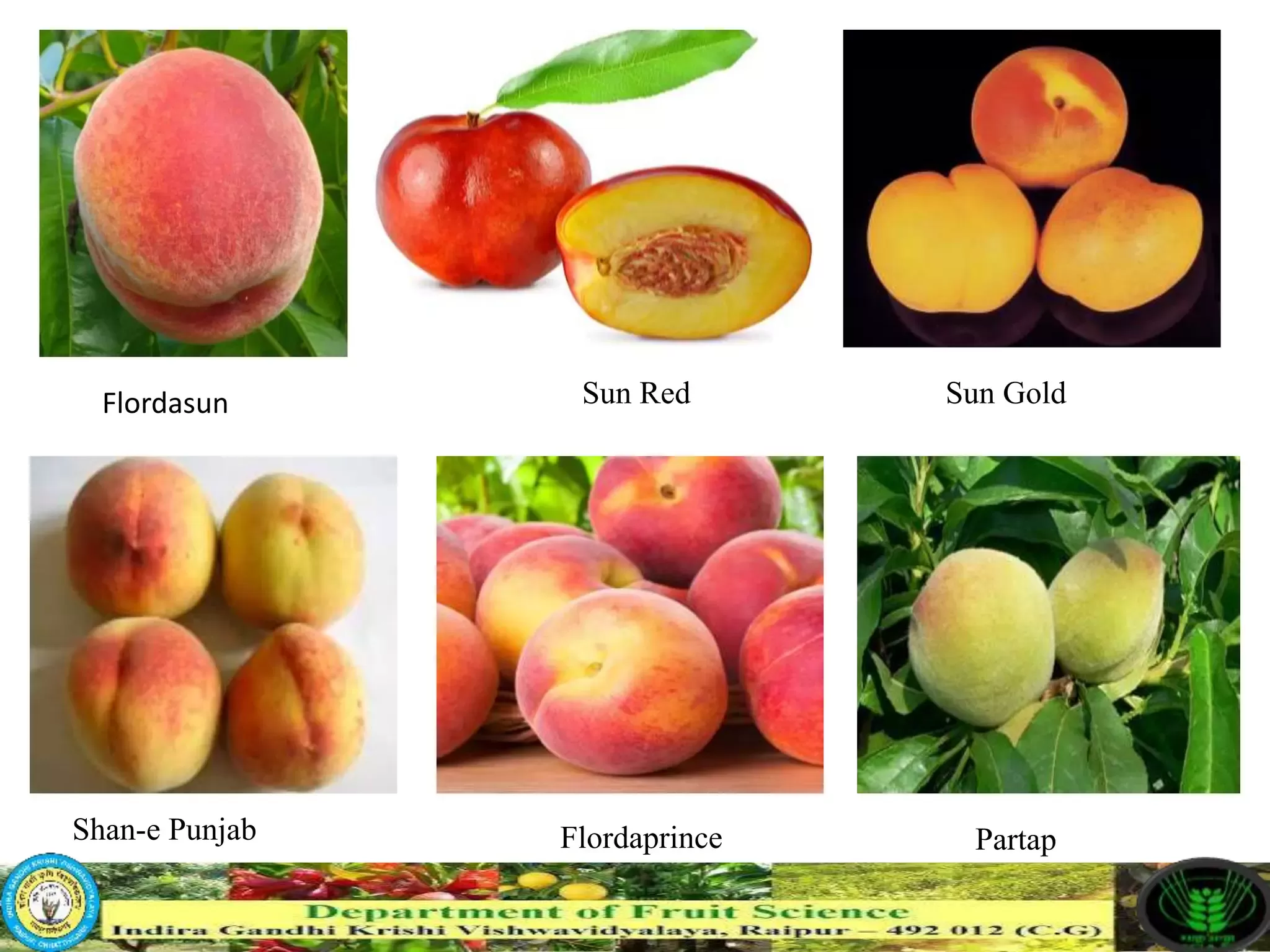
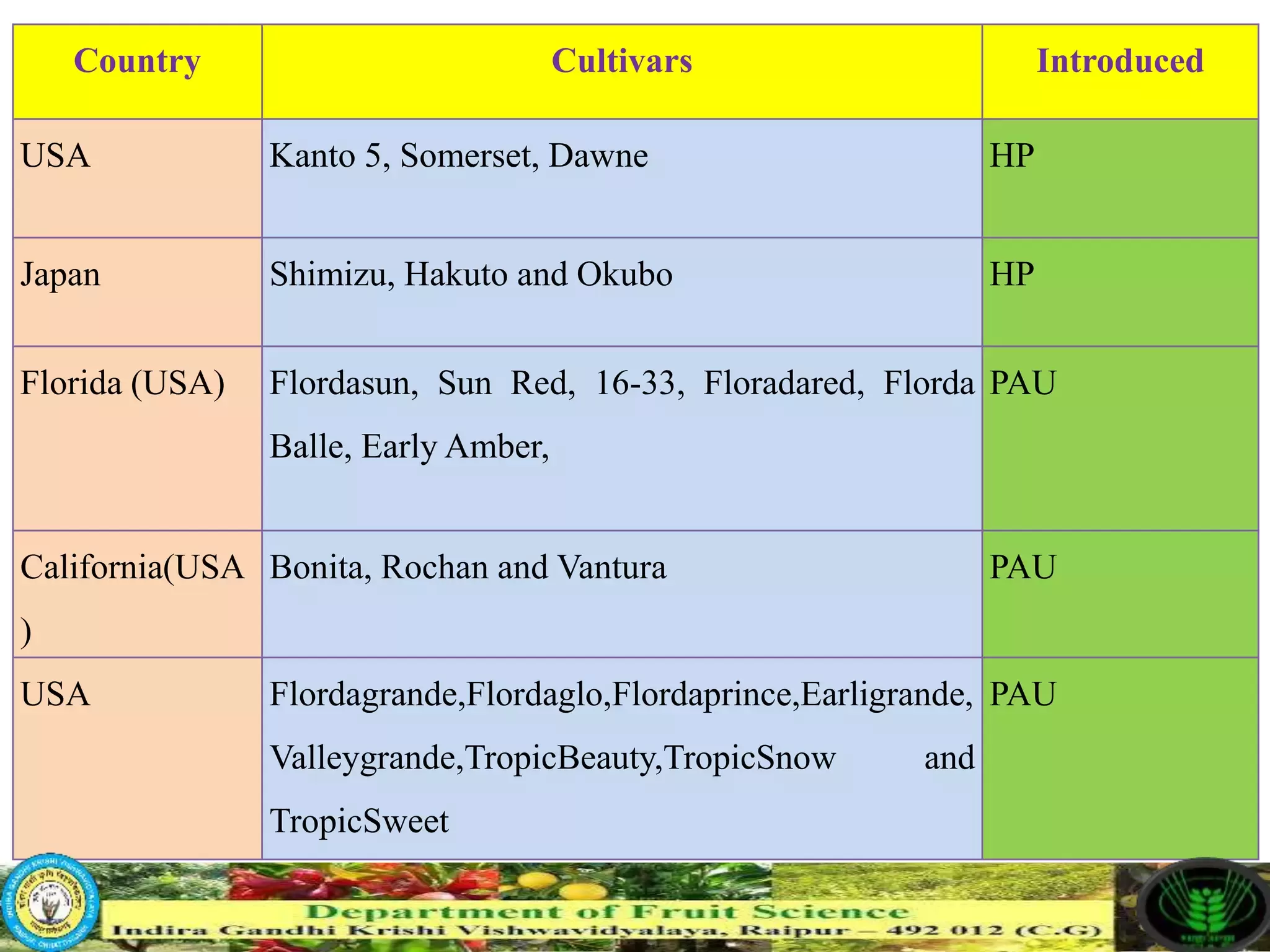
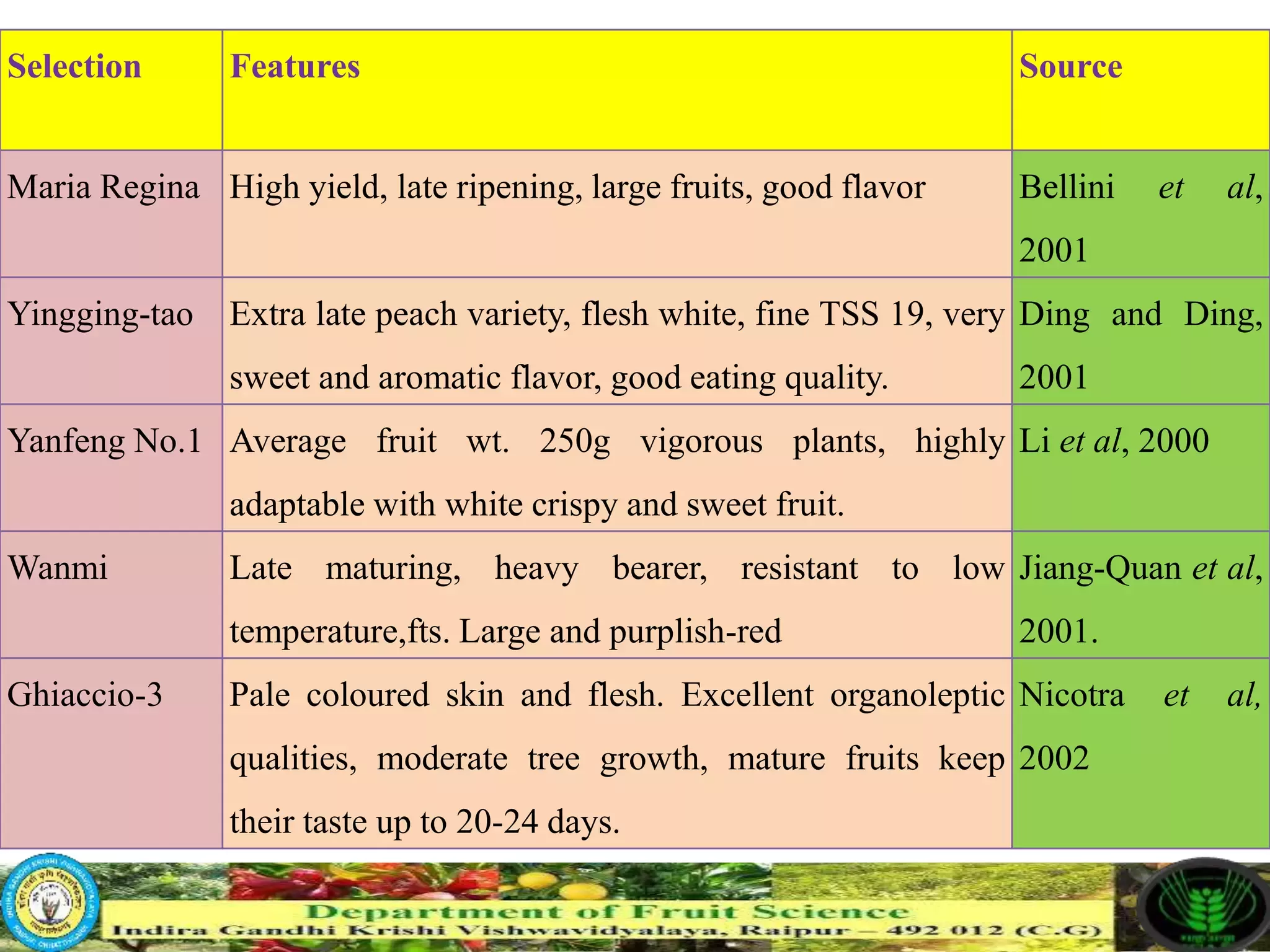
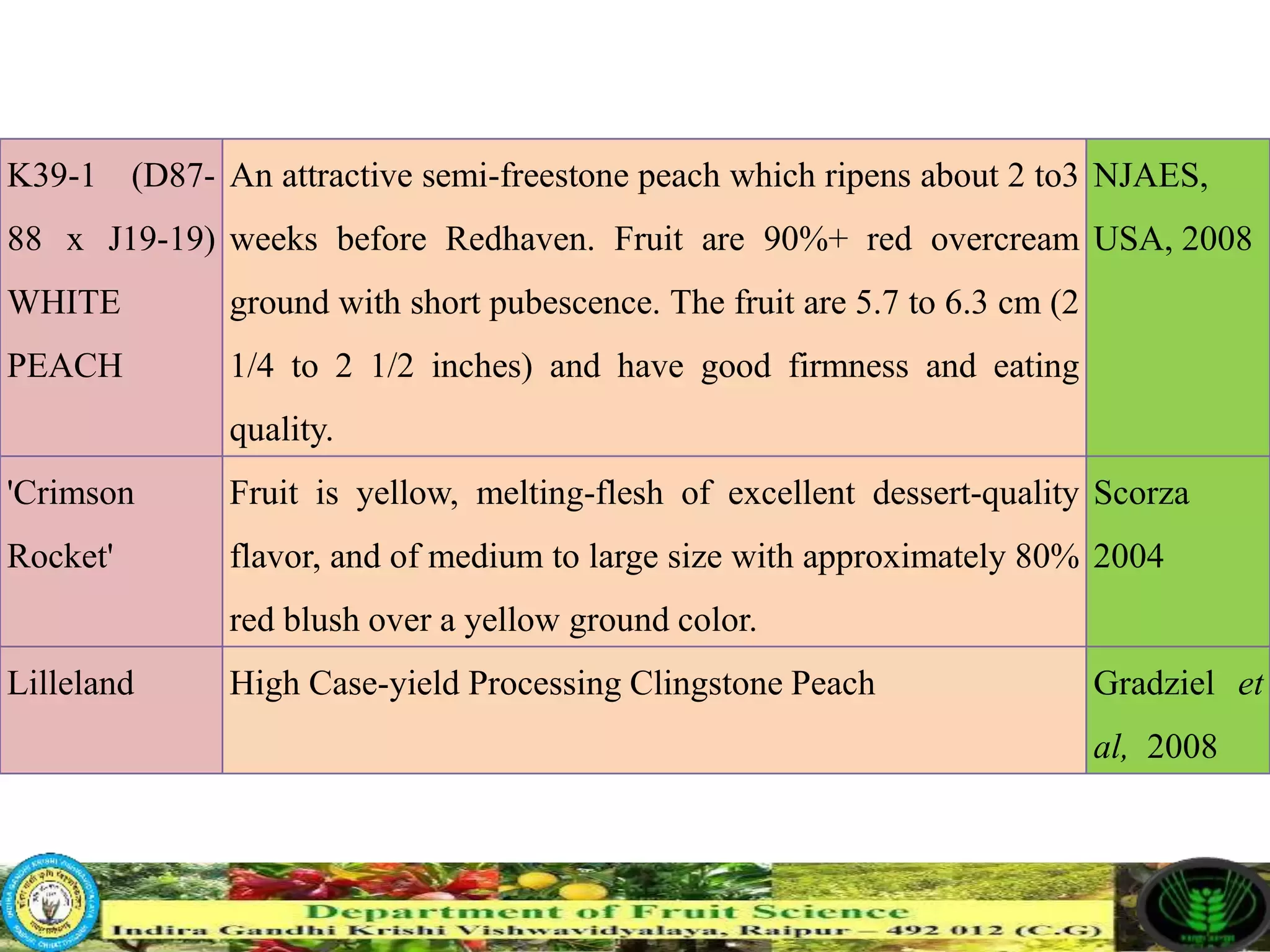
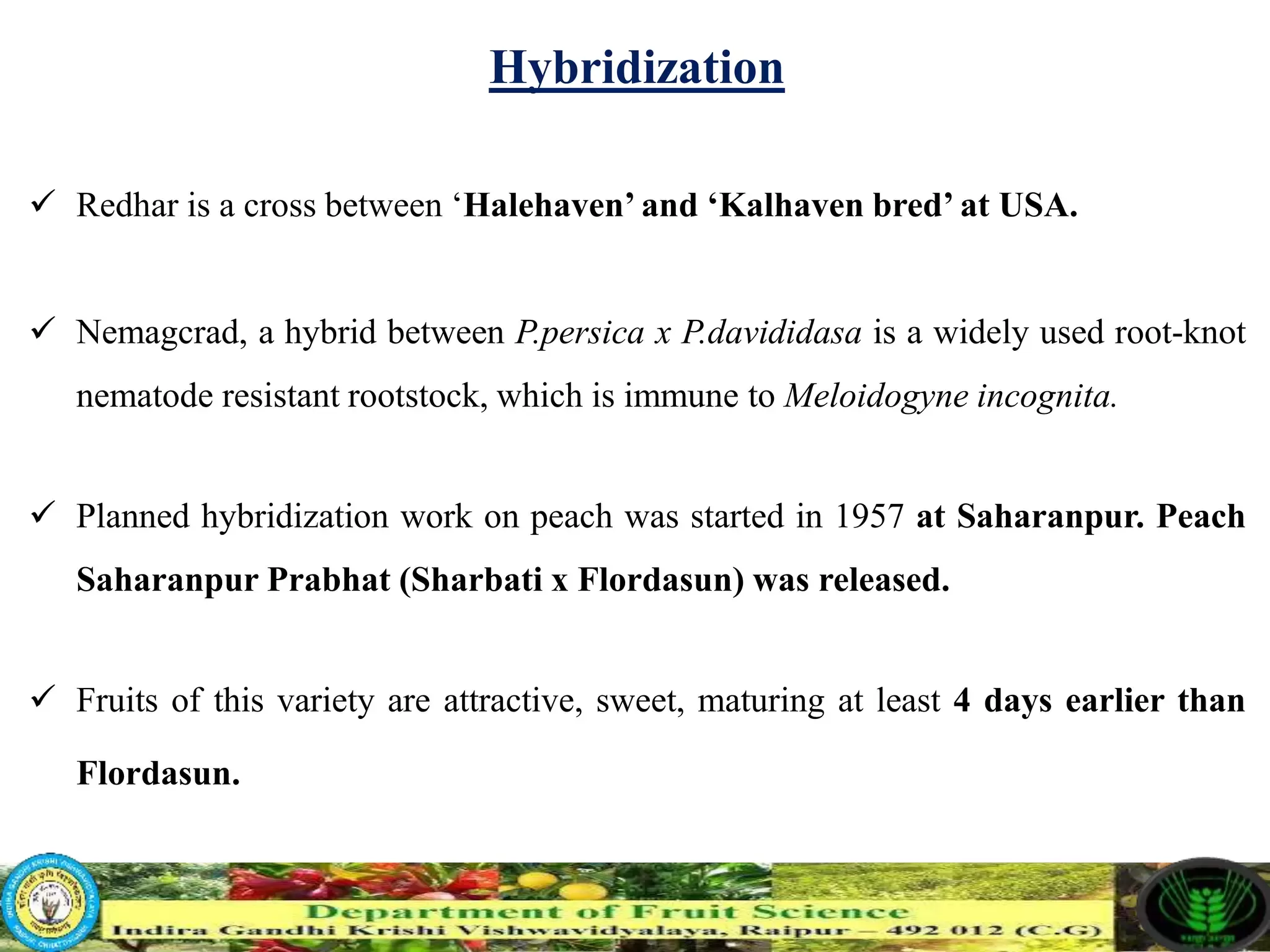
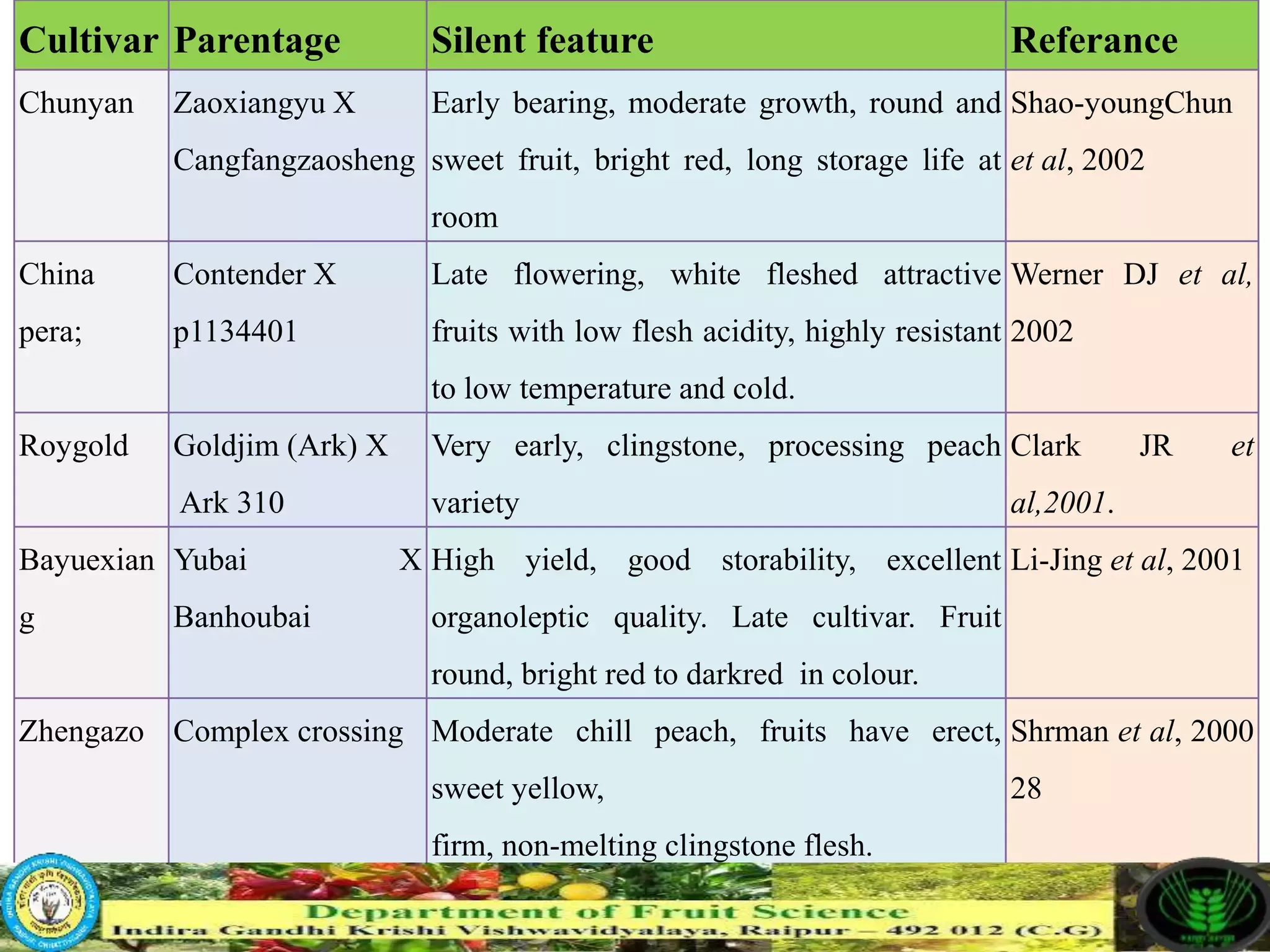
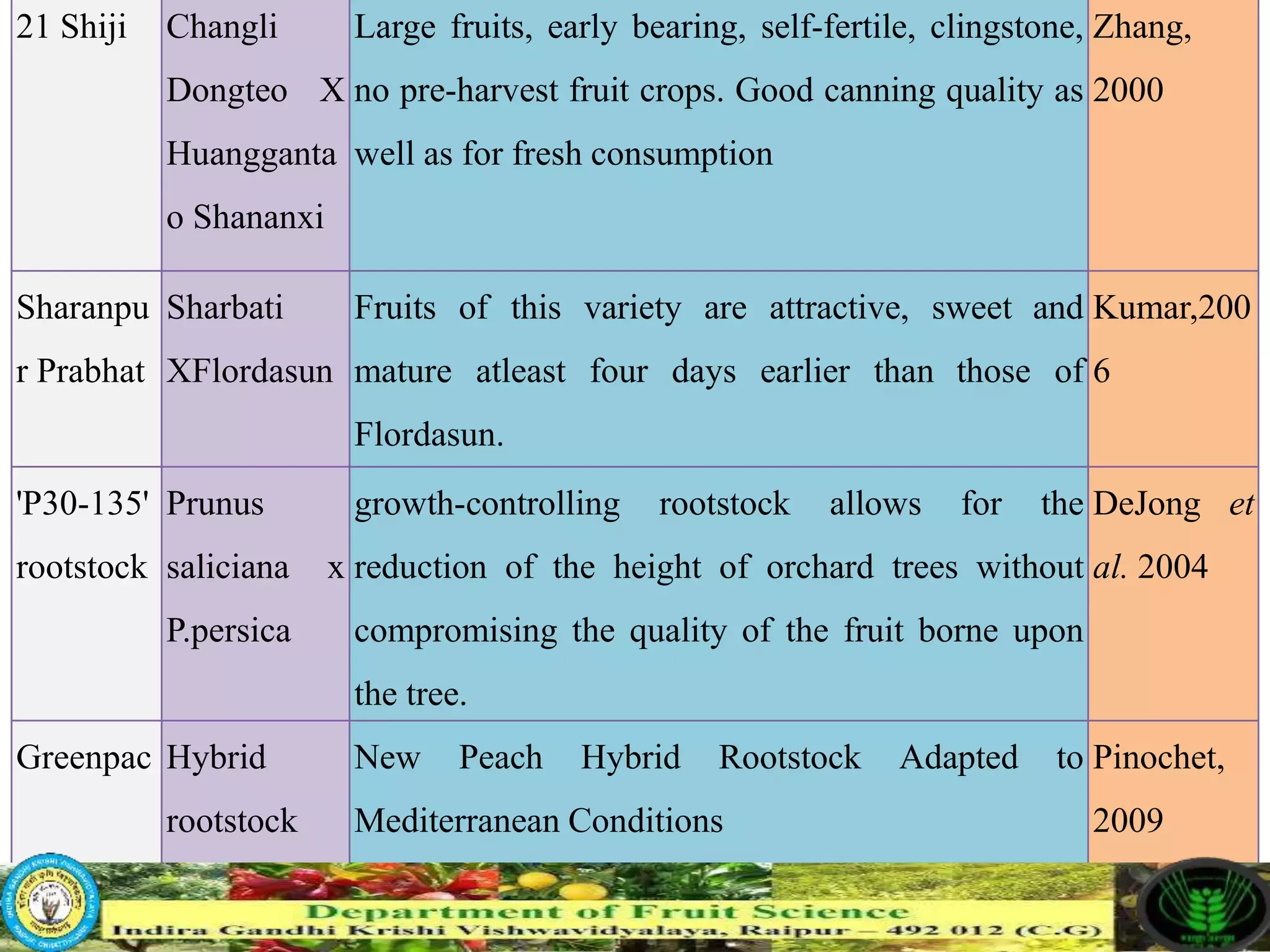
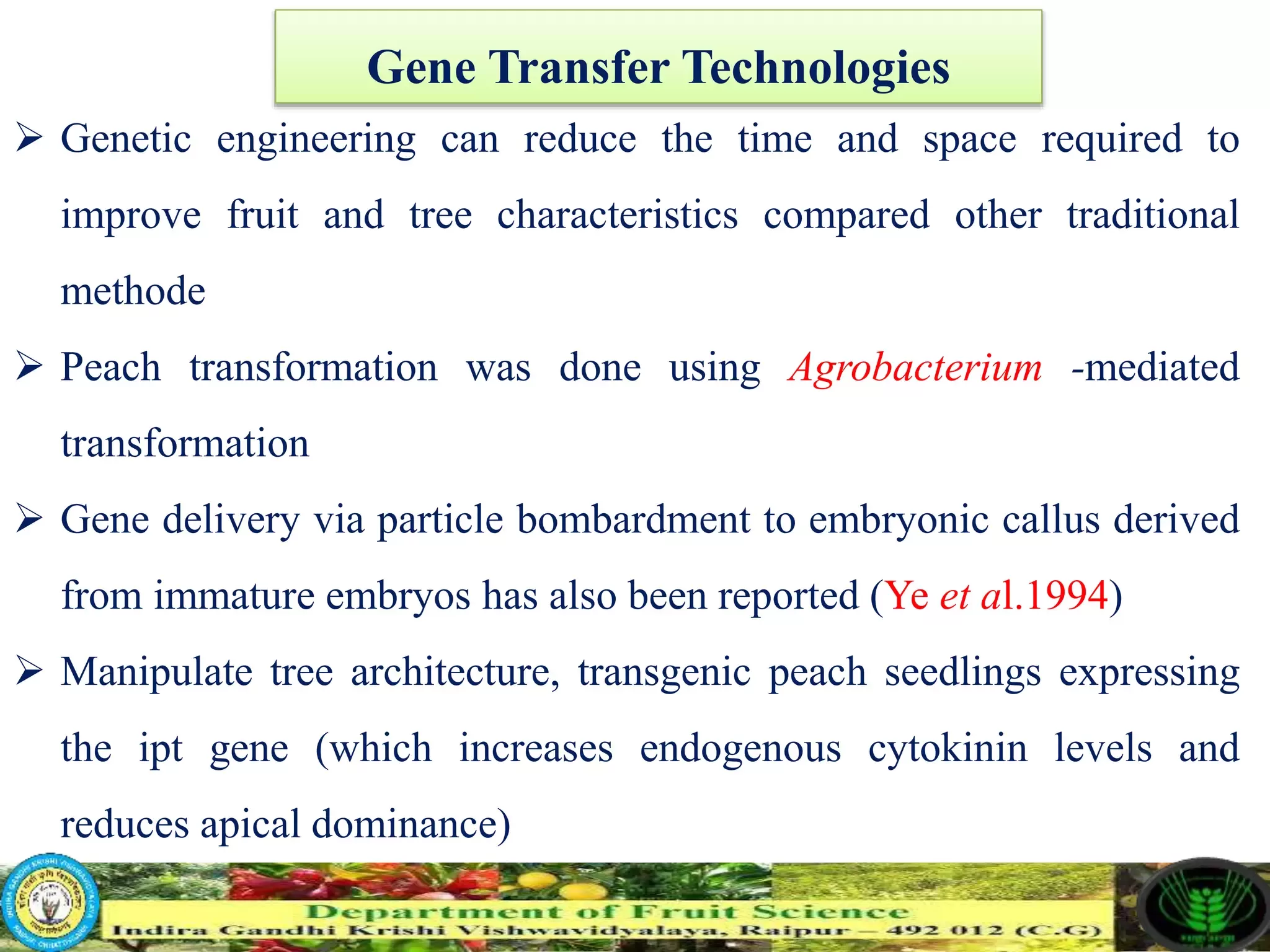
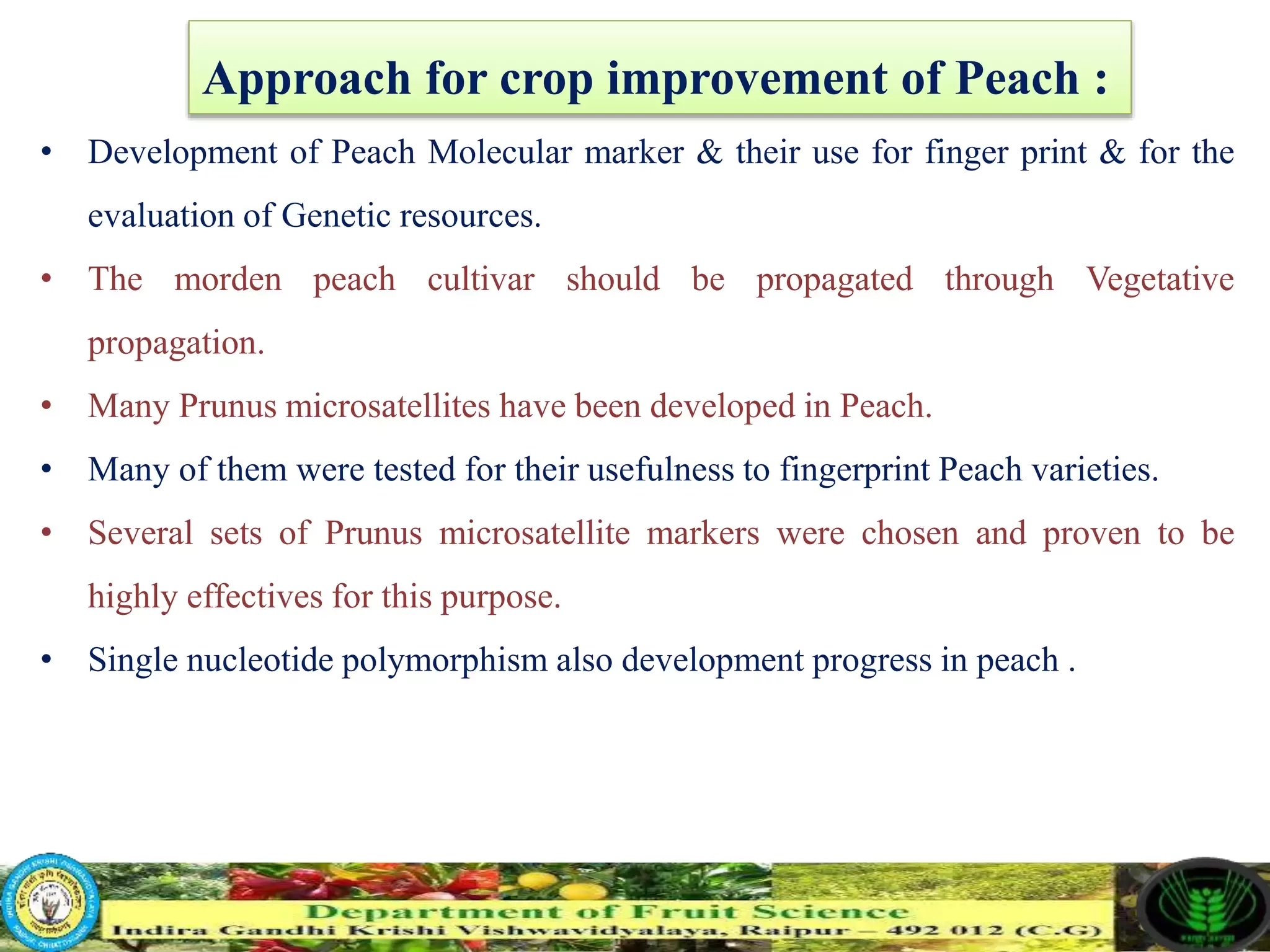
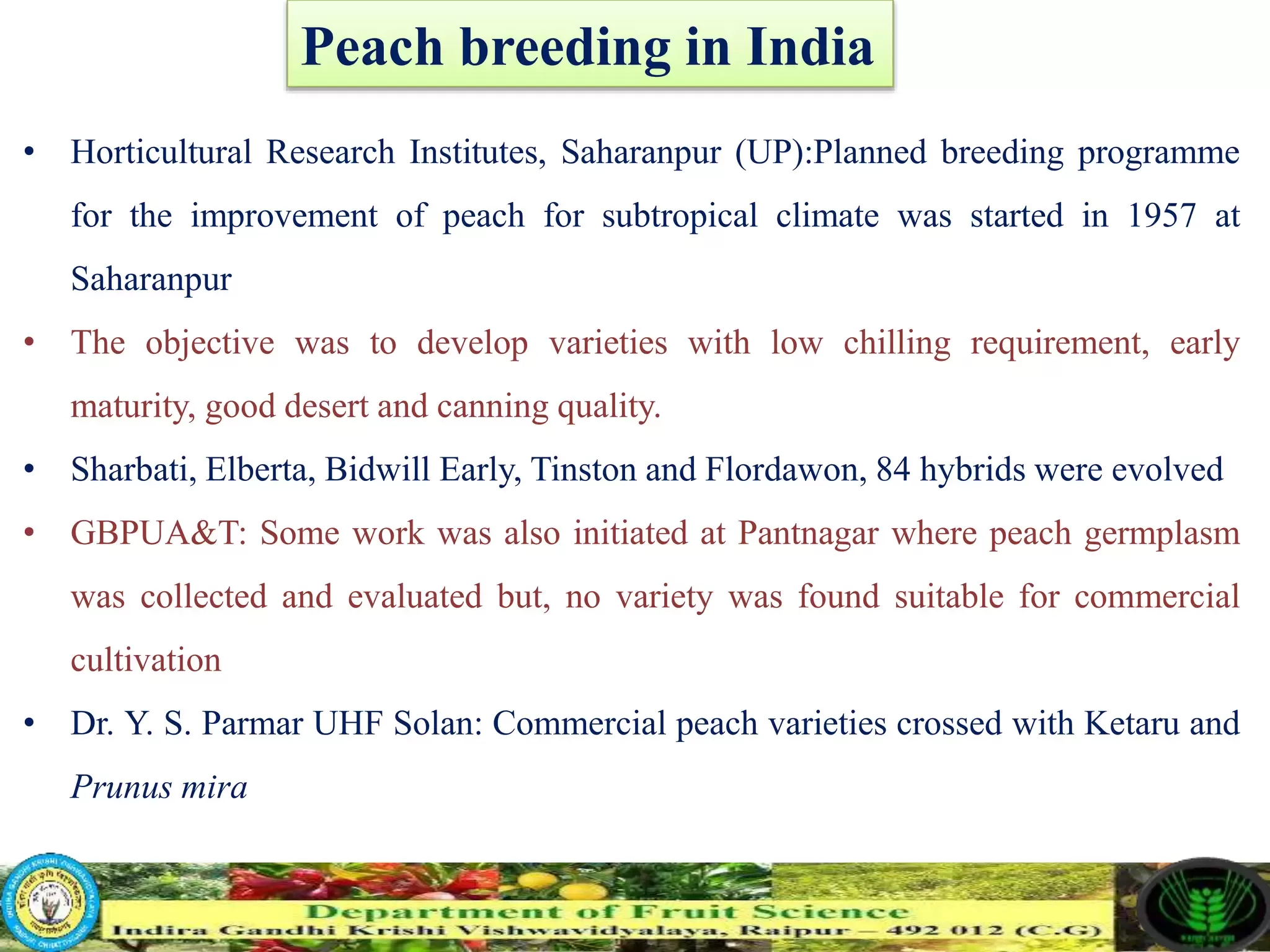
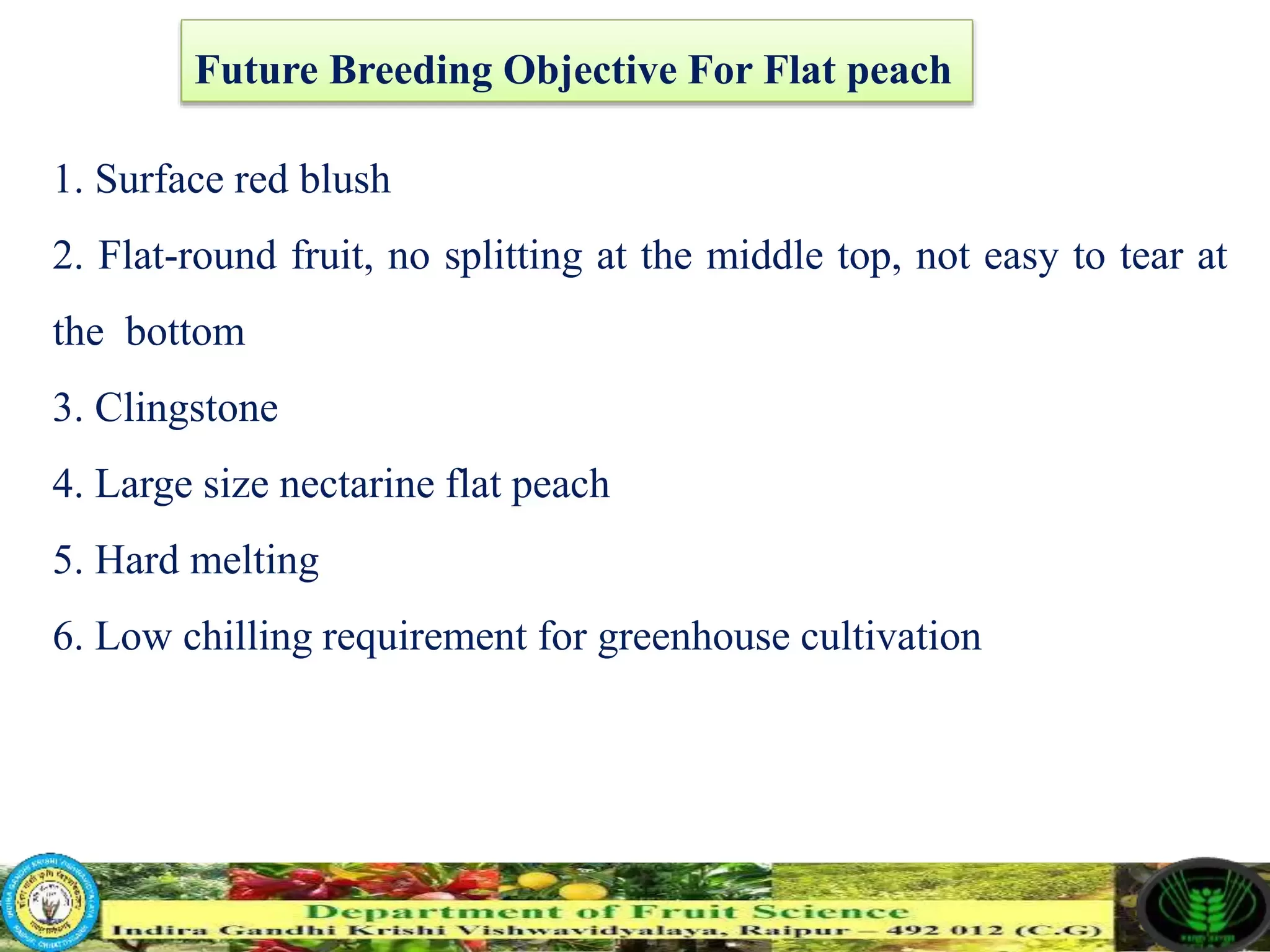
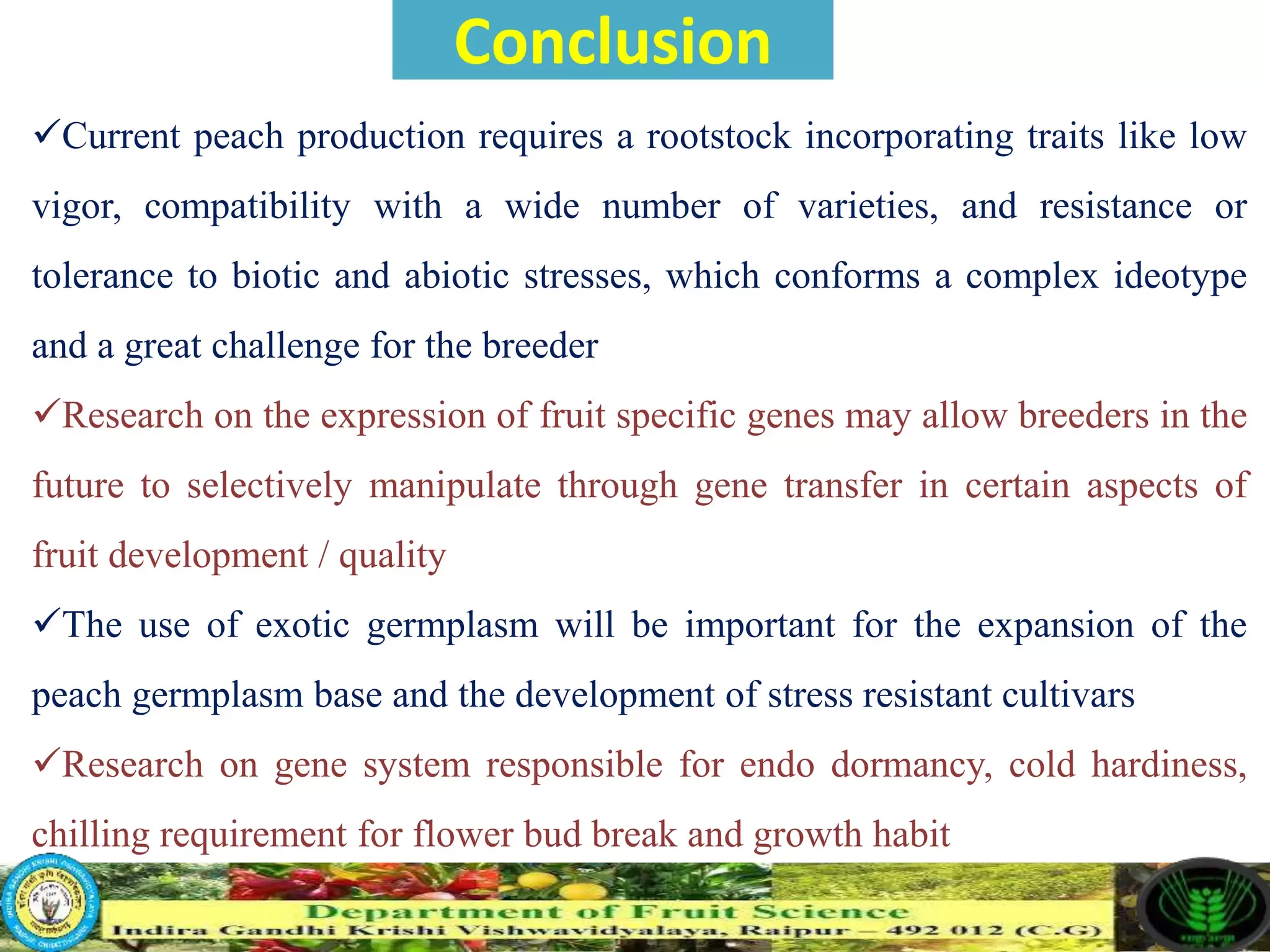
The peach, scientifically known as Prunus persica, belongs to the Rosaceae family and is a significant temperate fruit crop, ranking third in production. It is primarily self-pollinated, with most cultivars requiring between 500 to 1000 chilling hours for optimal growth. Peaches and nectarines are native to China, with various wild species found in India. The fruit is commercially cultivated in

Slide 1

Slide 1

Slide 2

Slide 2

Slide 3

Slide 3

Slide 4

Slide 4

Slide 5

Slide 5

Slide 6

Slide 6

Slide 7

Slide 7

Slide 8

Slide 8

Slide 9

Slide 9

Slide 10

Slide 10

Slide 11

Slide 11

Slide 12

Slide 12

Slide 13

Slide 13

Slide 14

Slide 14

Slide 15

Slide 15

Slide 16

Slide 16

Slide 17

Slide 17

Slide 18

Slide 18

Slide 19
Slide 19

Slide 20

Slide 20

Slide 21

Slide 21

Slide 22

Slide 22

Slide 23

Slide 23
1 / 23

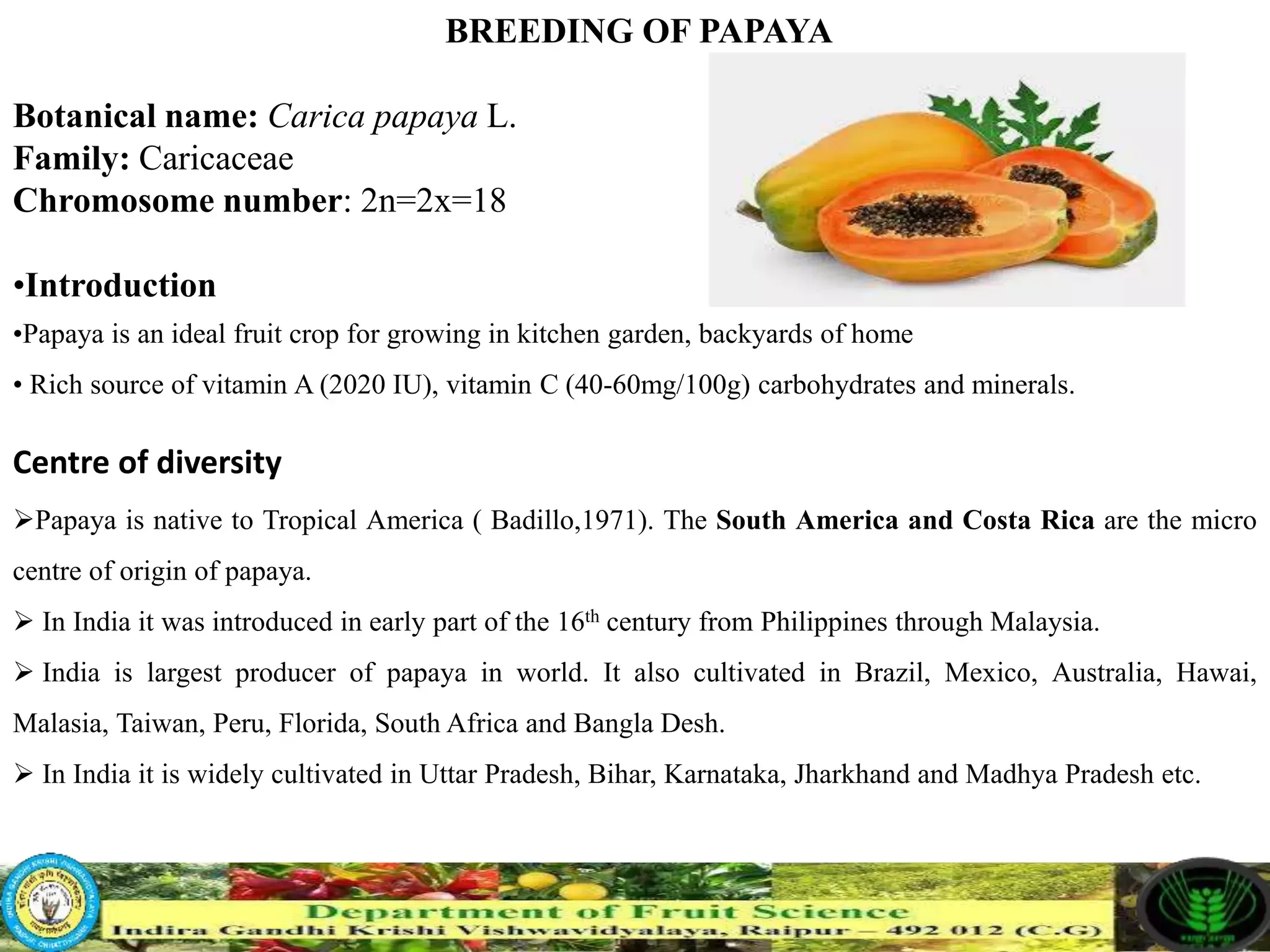
Ppt on Advances breeding of Papaya

Summary:

Explore the latest developments in papaya breeding focusing on high-yield and disease-resistant varieties. Discover how biotechnology is enhancing fruit quality in this nutrient-rich tropical fruit crop.

Summary

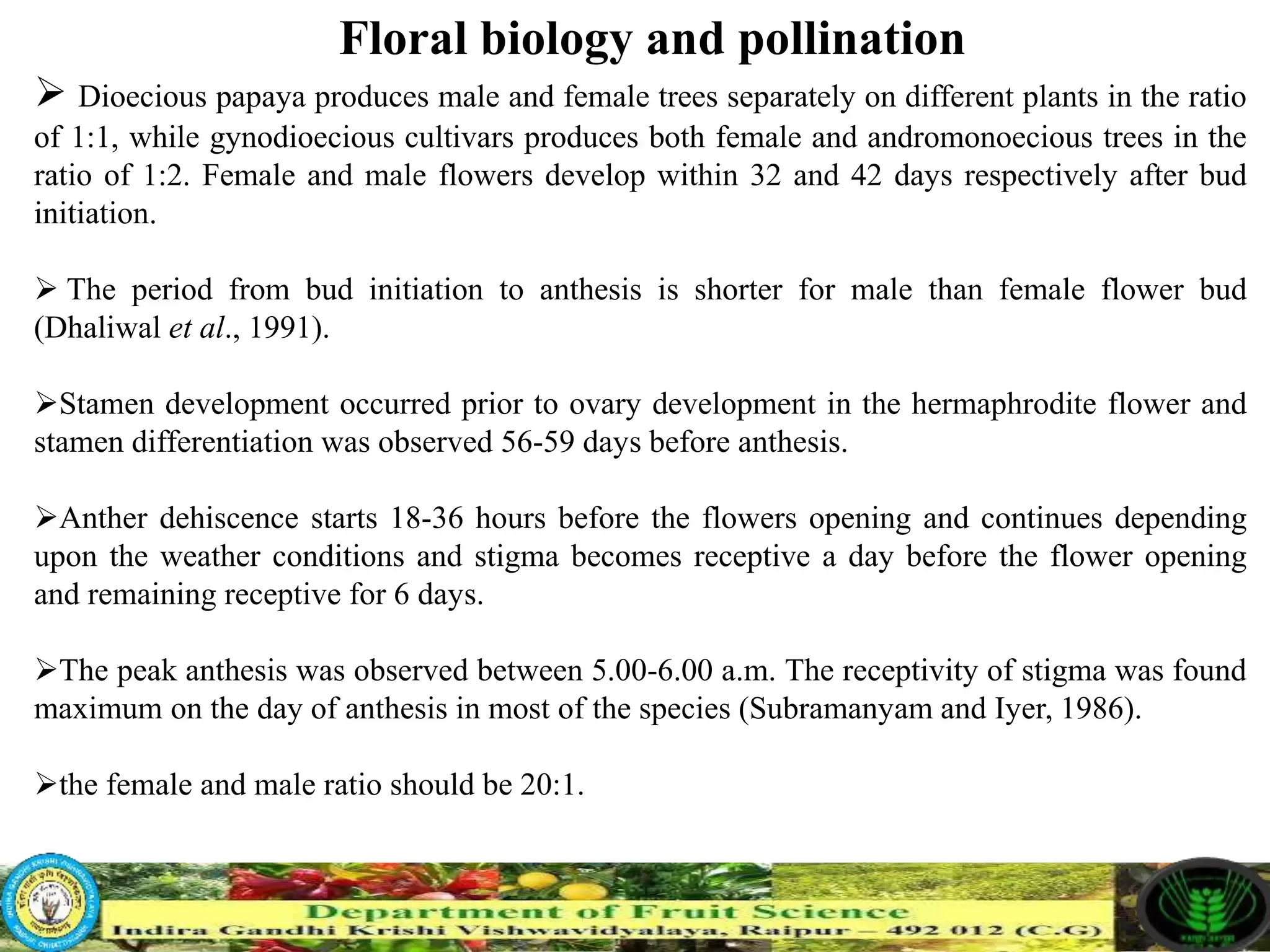
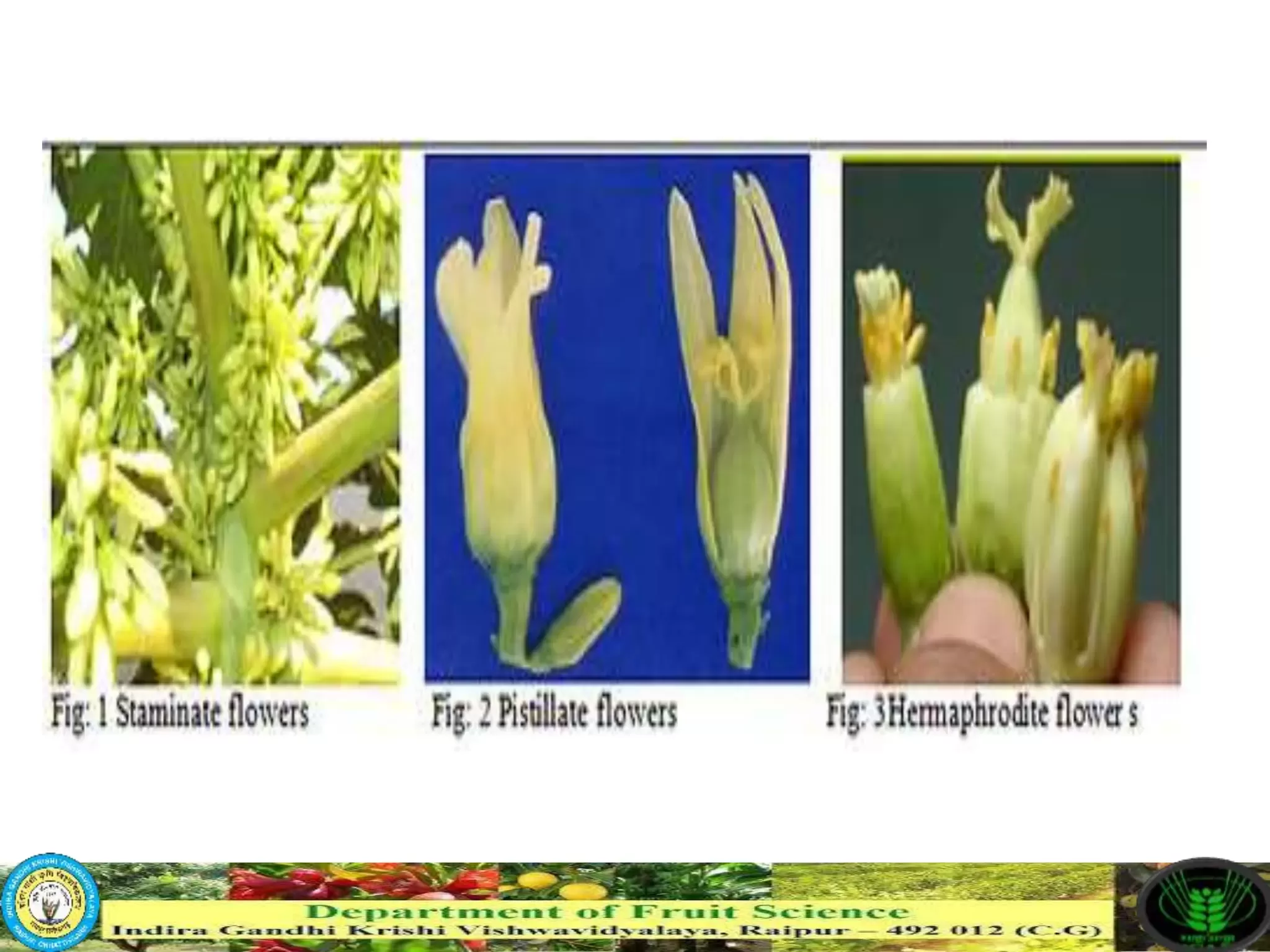
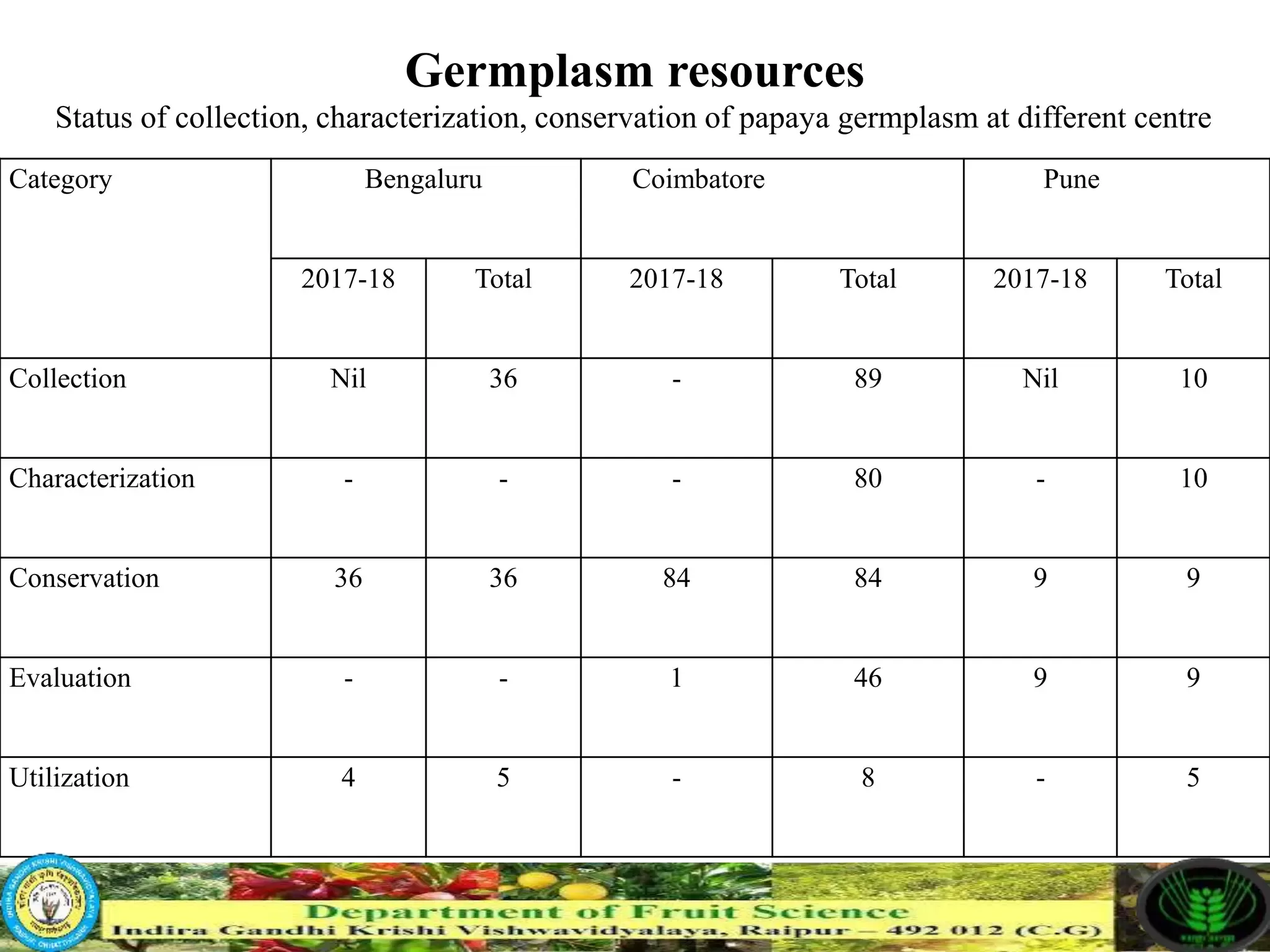
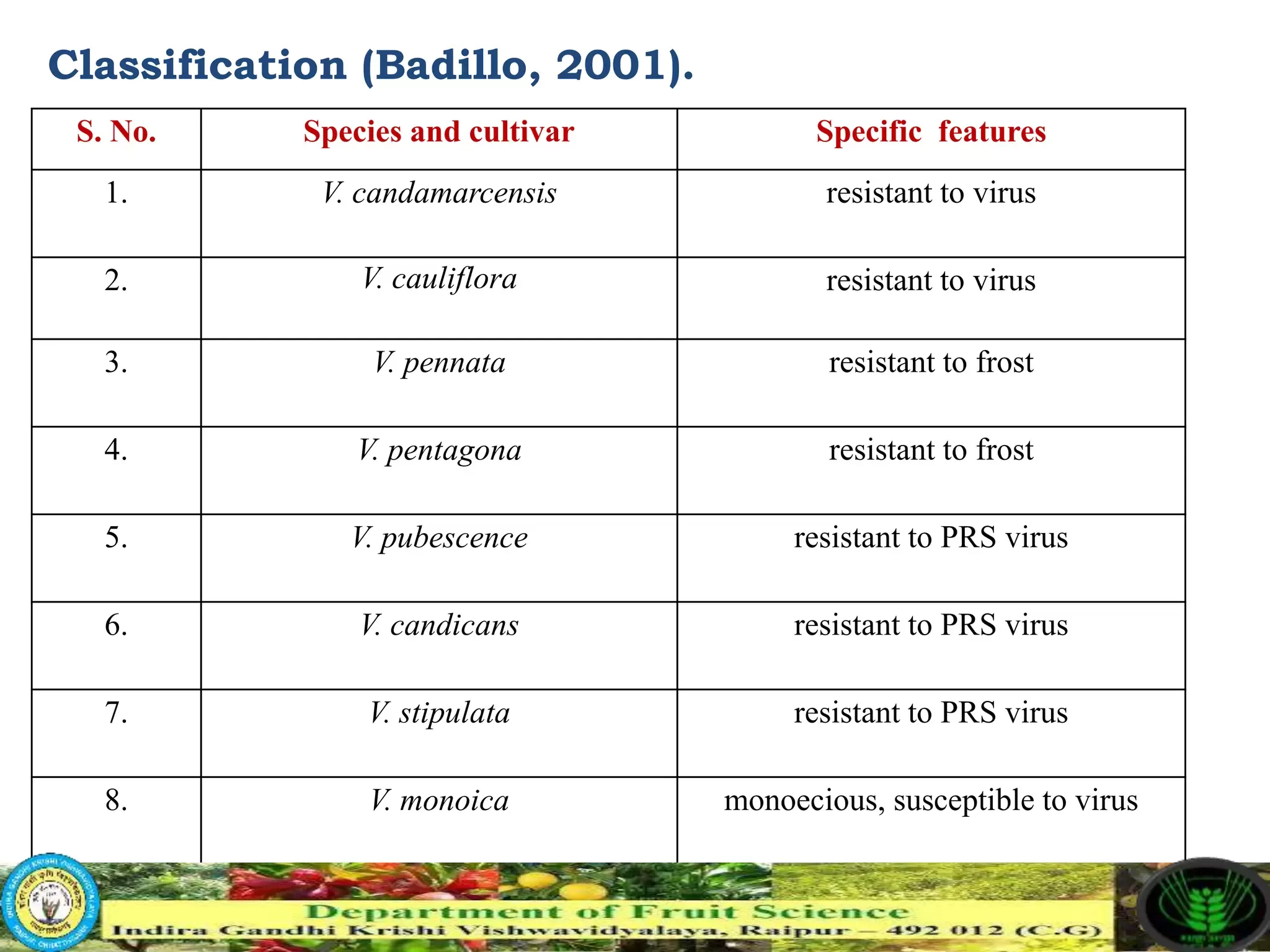
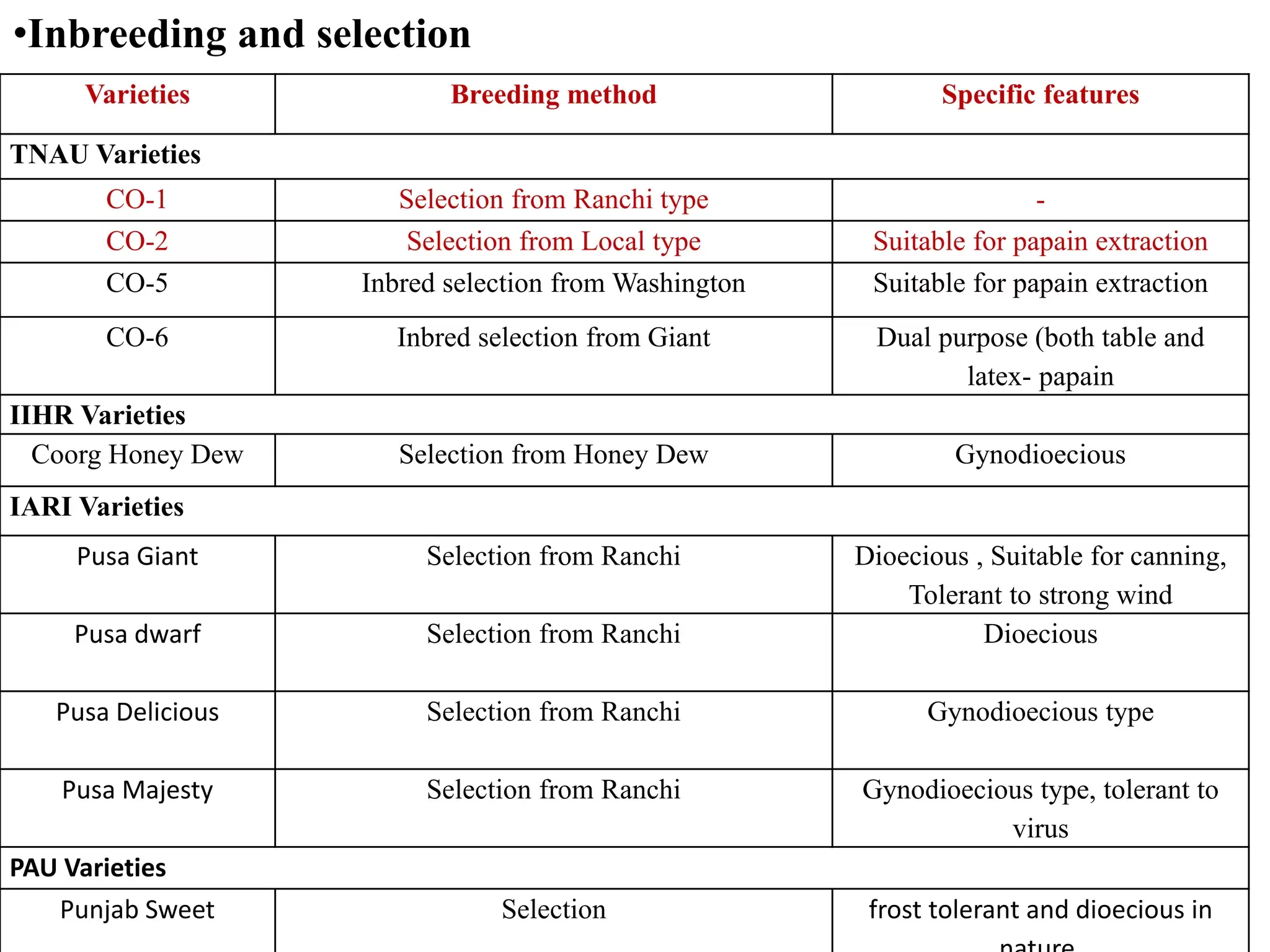
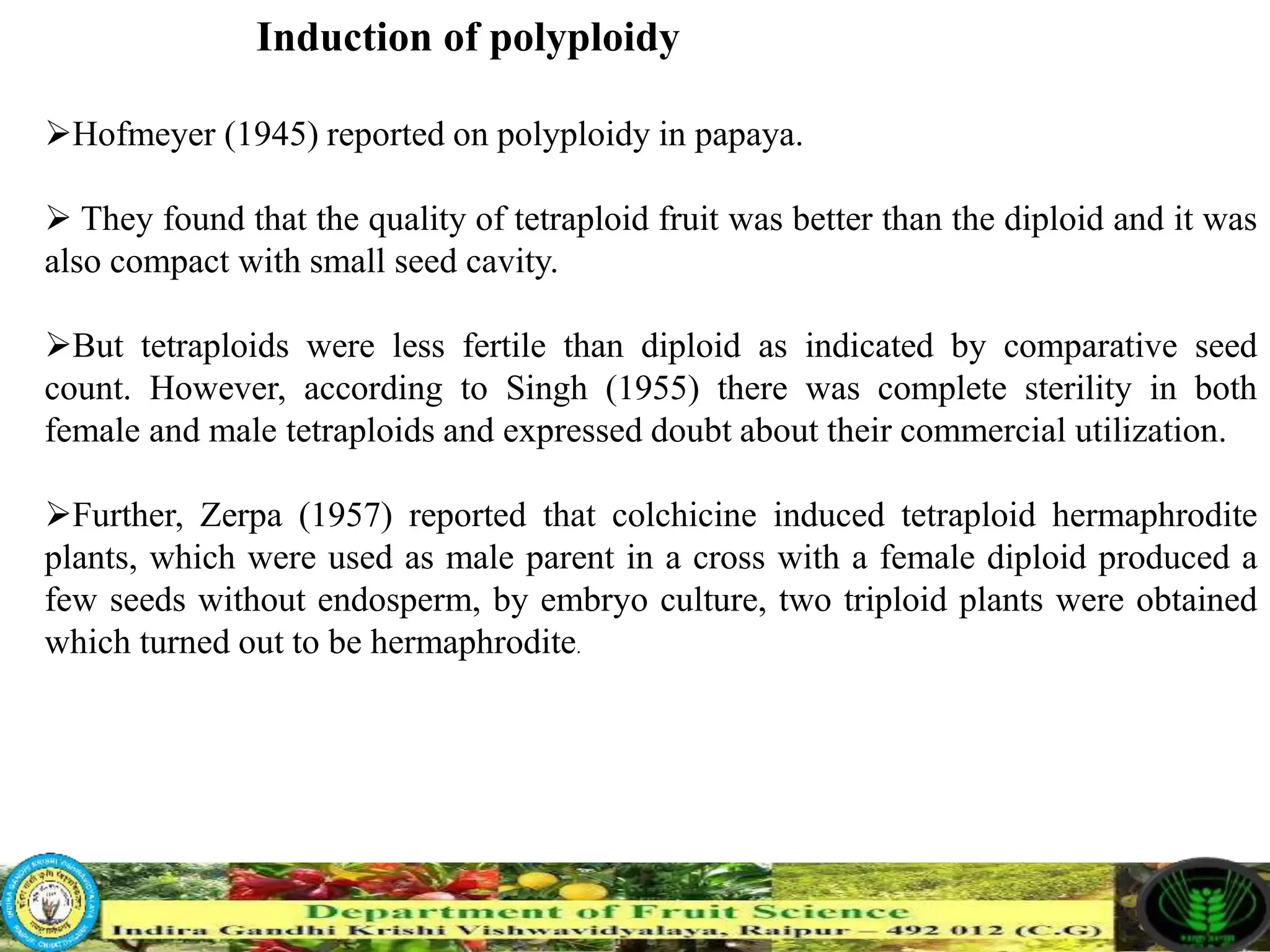
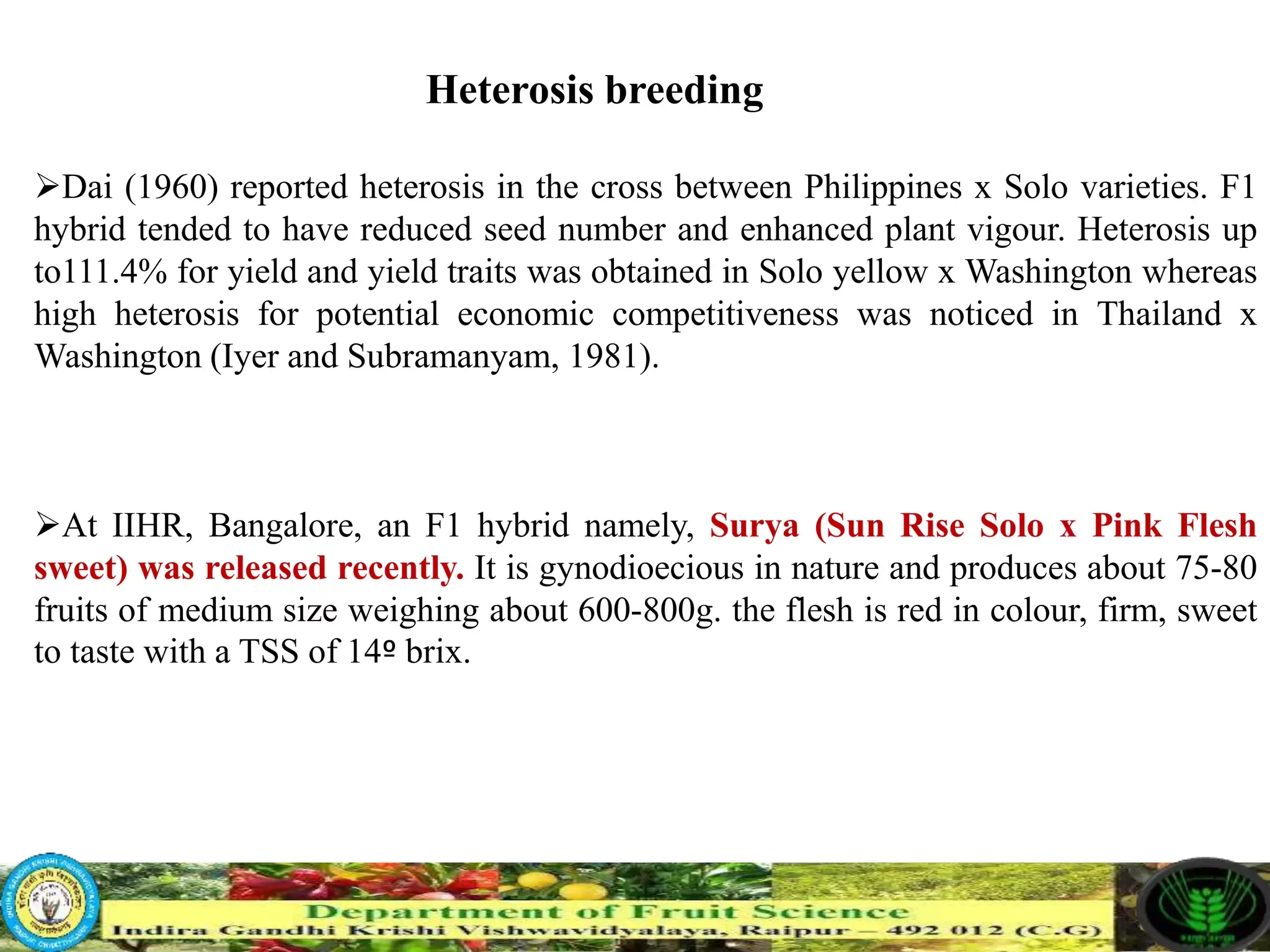
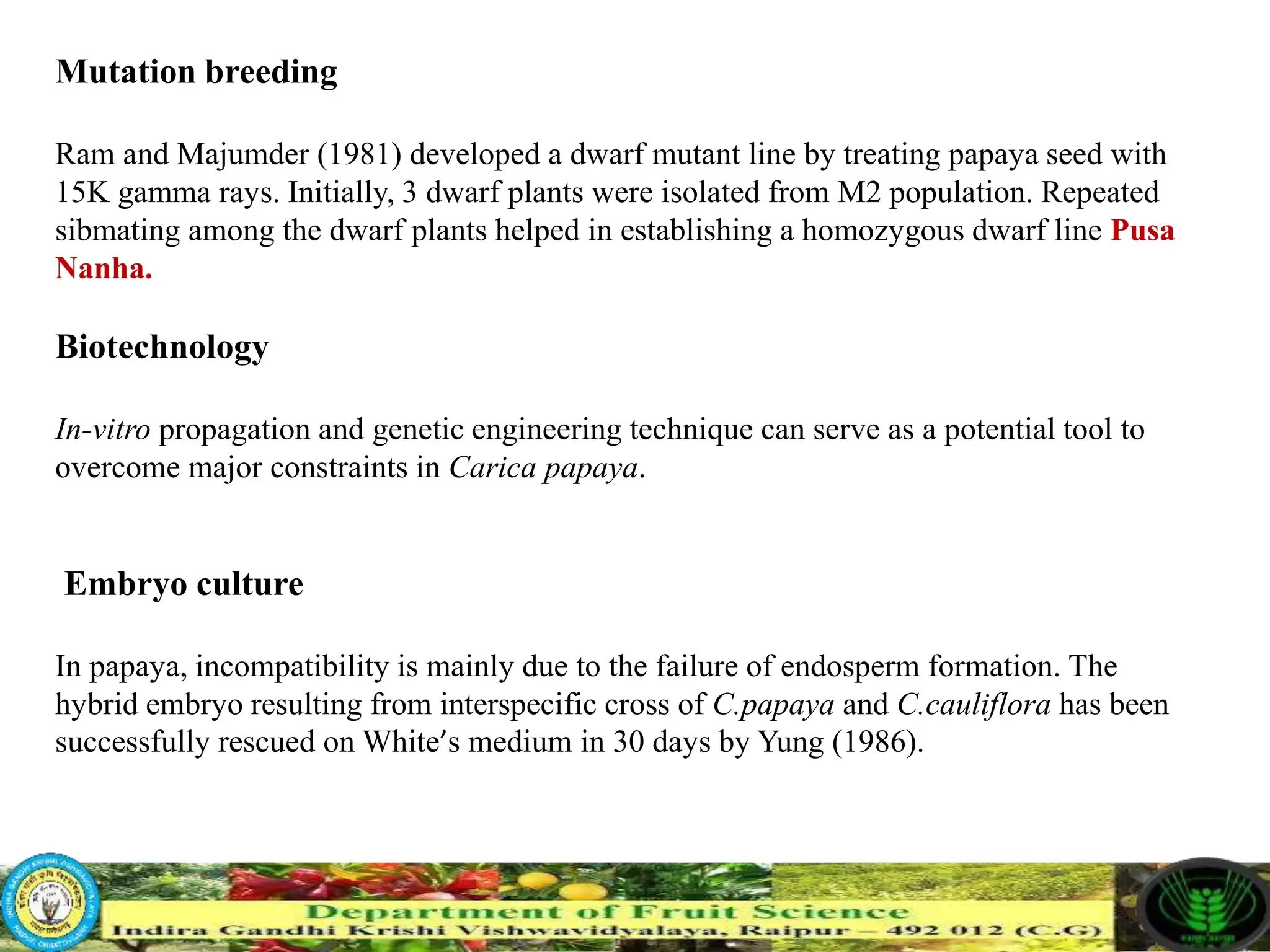
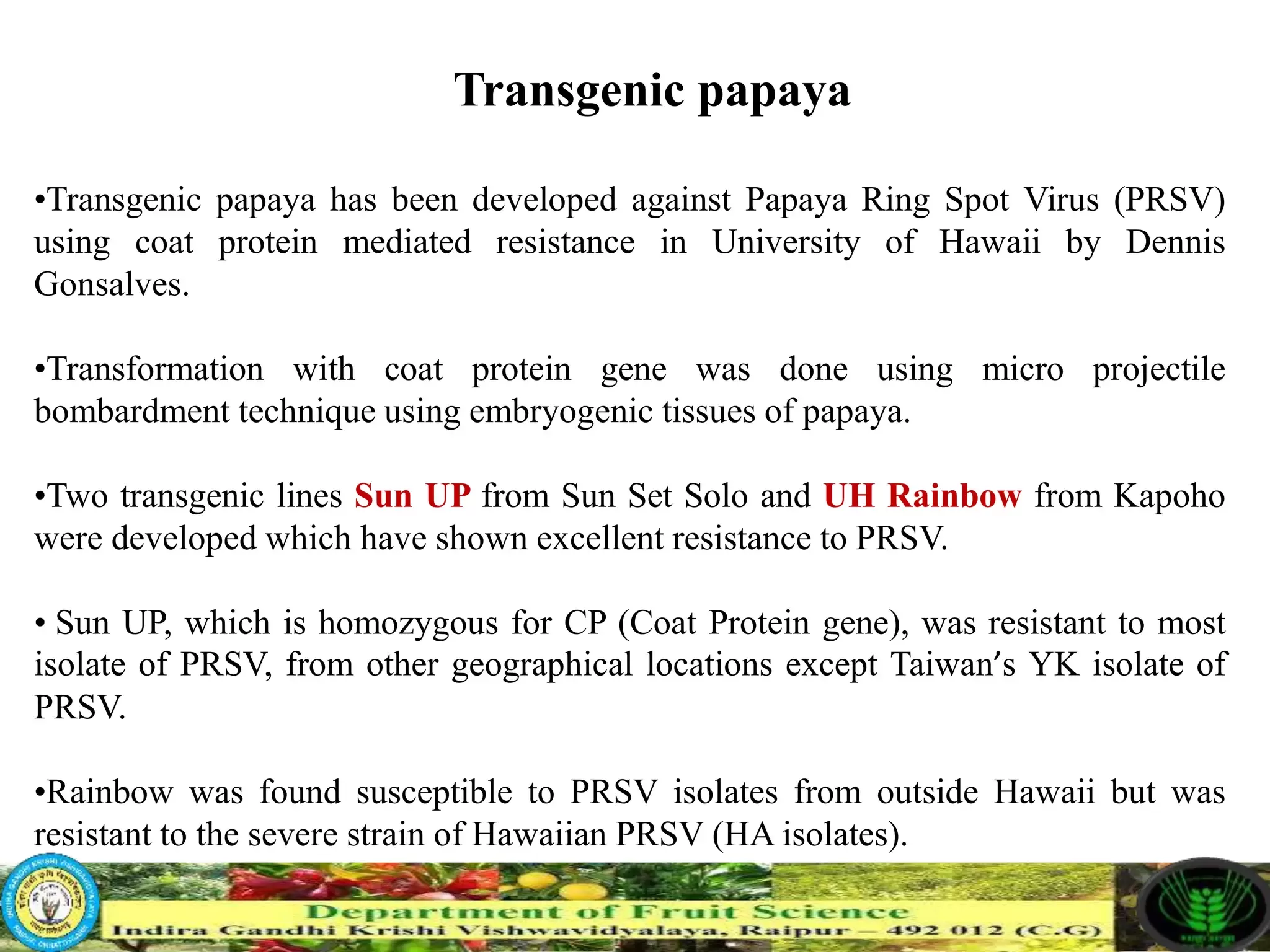
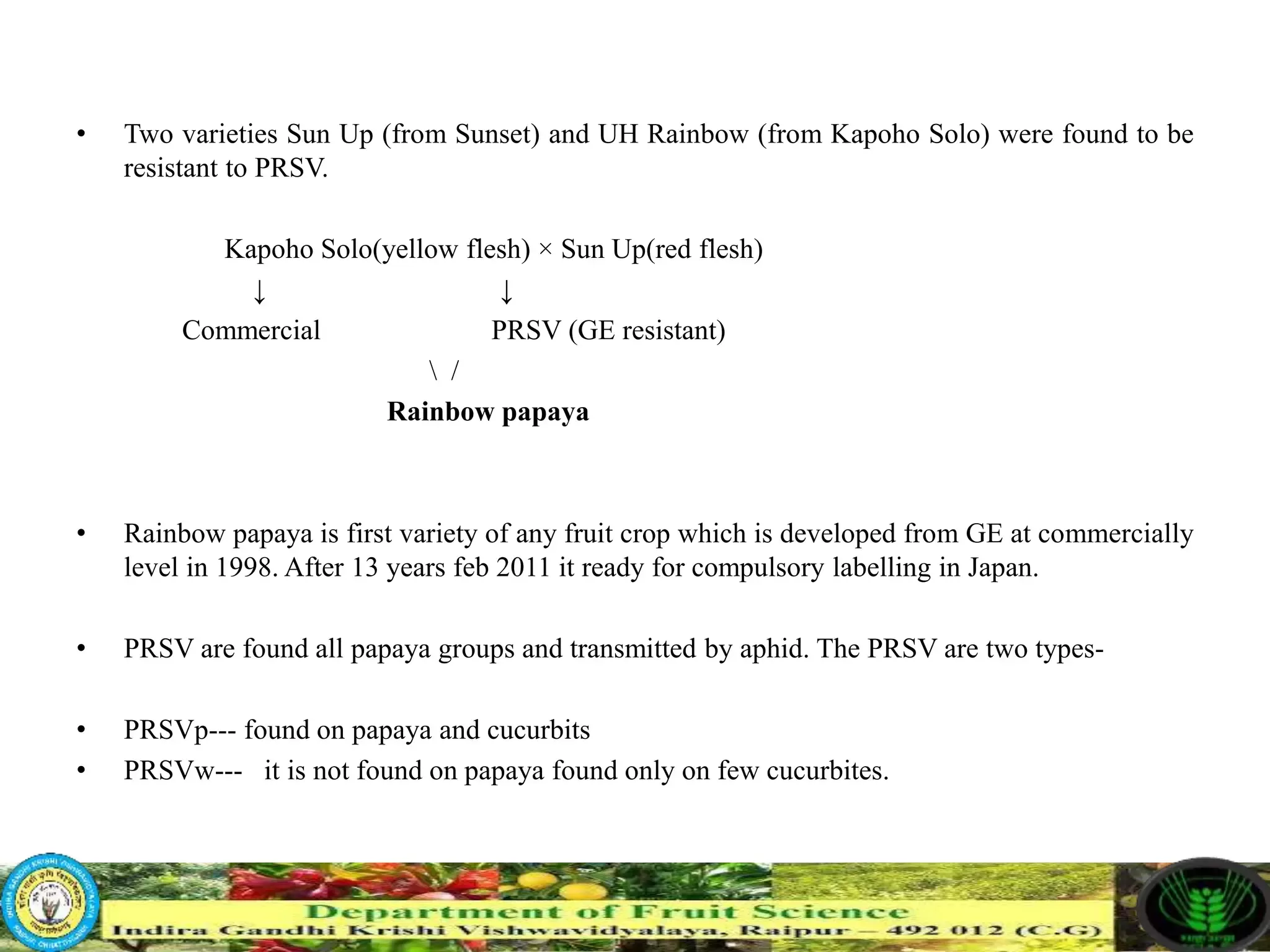
Papaya (Carica papaya L.) is a nutrient-rich fruit crop ideal for home gardens, native to Tropical America. India is the largest producer, with significant cultivation in states like Uttar Pradesh and Karnataka. The plant exhibits dioecious and gynodioecious traits, influencing its breeding and pollination. Key breeding objectives include developing high-yield, disease-resistant varieties and enhancing fruit quality. Advances in biotechnology, such

Slide 1

Slide 1

Slide 2

Slide 2

Slide 3

Slide 3

Slide 4

Slide 4

Slide 5

Slide 5

Slide 6

Slide 6

Slide 7

Slide 7

Slide 8

Slide 8

Slide 9

Slide 9

Slide 10

Slide 10

Slide 11

Slide 11

Slide 12

Slide 12

Slide 13

Slide 13

Slide 14

Slide 14

Slide 15

Slide 15

Slide 16

Slide 16

Slide 17

Slide 17

Slide 18

Slide 18

Slide 19
Slide 19
1 / 19