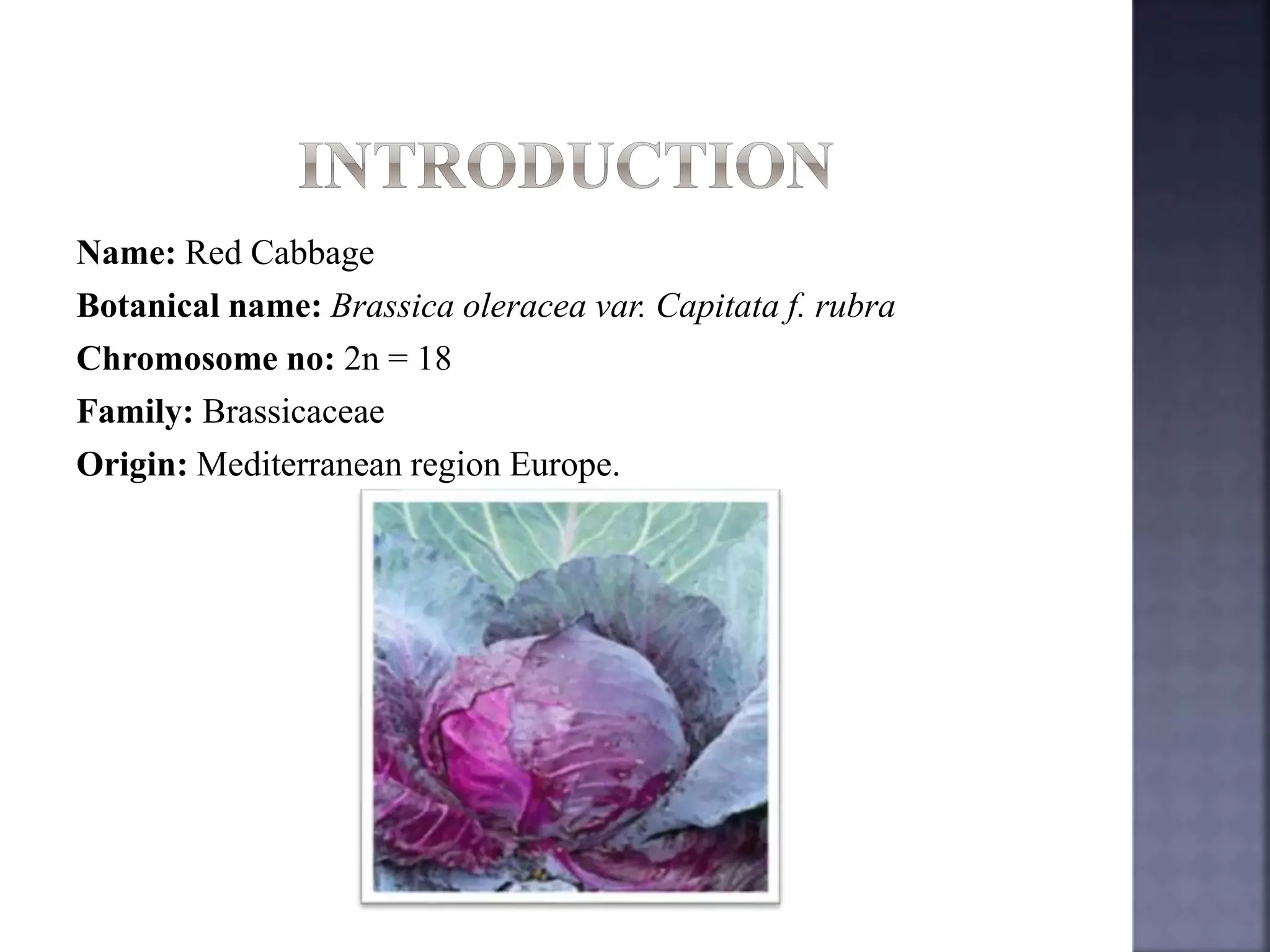
This presentation covers major fungal diseases affecting cabbage, detailing their pathogens, symptoms, disease cycles, and management strategies. Emphasis is placed on identification, prevention, and integrated management practices for effective disease control. Key concepts include pathogen identification, symptomatology, disease cycle, management strategies, and integrated disease management.
Introduction to Fungal Diseases of Cabbage
- Cabbage is susceptible to several economically important fungal diseases.
- Fungal pathogens affect yield and quality.
- Early identification and management are crucial for disease control.
- Integrated approaches are recommended for sustainable management.
Wirestem (Rhizoctonia solani)
- Pathogen: Rhizoctonia solani.
- Symptoms: Stem constriction at base, stunted growth, seedlings may break at ground level.
- Favored by mechanical injury and wet conditions.
- Management: Use certified disease-free transplants, avoid injury, ensure good drainage.
Fusarium Yellows (Fusarium oxysporum f. sp. conglutinans)
- Pathogen: Fusarium oxysporum f. sp. conglutinans.
- Symptoms: Leaf yellowing, wilting, stunted growth, twisted stems, unilateral midrib curvature.
- Soil-borne and persists for years.
- Management: Grow resistant varieties, crop rotation, use disease-free seed.
Blackleg (Leptosphaeria maculans / Phoma lingam)
- Pathogen: Leptosphaeria maculans (Phoma lingam).
- Symptoms: Light brown stem lesions with purplish margins, black dots (pycnidia), cankering at base.
- Seed and residue-borne.
- Management: Use disease-free seed, hot water seed treatment, crop rotation, sanitation.
Alternaria Leaf Spot / Target Spot (Alternaria brassicae & A. brassicicola)
- Pathogen: Alternaria brassicae, A. brassicicola.
- Symptoms: Circular brown to black spots with concentric rings and yellow halos.
- Seedborne and airborne spread.
- Management: Remove crop debris, seed treatment, crop rotation, fungicide application.
Clubroot (Plasmodiophora brassicae)
- Pathogen: Plasmodiophora brassicae (plasmodiophoromycete, not true fungus).
- Symptoms: Root galls, wilting, stunted and yellow leaves, premature bolting.
- Favored by acidic, moist soils.
- Management: Use clean seedbeds, long crop rotations, lime soil to raise pH, resistant varieties.
Damping Off (Fusarium spp., Pythium spp., Rhizoctonia solani)
- Pathogens: Fusarium spp., Pythium spp., Rhizoctonia solani.
- Symptoms: Seedling collapse, wet rot at stem base, missing or wilted seedlings.
- Favored by high moisture and poor drainage.
- Management: Use sterilized soil, raised beds, good drainage, biocontrol agents.
Downy Mildew (Hyaloperonospora brassicae / Peronospora parasitica)
- Pathogen: Hyaloperonospora brassicae (formerly Peronospora parasitica).
- Symptoms: Yellow patches on upper leaf surface, white fluffy growth below, leaf drop, black spots on curds.
- Favored by cool, moist conditions.
- Management: Resistant varieties, crop rotation, debris removal, avoid leaf wetting, fungicides.
Powdery Mildew (Erysiphe cruciferarum)
- Pathogen: Erysiphe cruciferarum.
- Symptoms: White powdery growth on upper leaf surfaces, reduced vigor.
- Favored by dry, warm conditions.
- Management: Resistant varieties, fungicides, avoid excess nitrogen, reduce drought stress.
White Blister (Albugo candida)
- Pathogen: Albugo candida (oomycete, not true fungus).
- Symptoms: White blisters on leaf undersides, yellow patches above, stem distortion, leaf galls.
- Favored by cool, moist weather.
- Management: Resistant varieties, crop rotation, fungicides.
Ring Spot (Mycosphaerella brassicicola)
- Pathogen: Mycosphaerella brassicicola.
- Symptoms: Grey leaf lesions with black dots in concentric rings, reduced growth, delayed harvest.
- Spread by seed and debris.
- Management: Hot water seed treatment, fungicides, remove infected plants and debris.
White Mould / Sclerotinia Rot (Sclerotinia sclerotiorum, S. minor)
- Pathogens: Sclerotinia sclerotiorum, S. minor.
- Symptoms: Water-soaked lesions, fluffy white mycelium, black sclerotia inside stems.
- Favored by high humidity and dense canopy.
- Management: Improve air circulation, avoid injury, crop rotation, remove infected debris.
Bottom Rot (Rhizoctonia solani)
- Pathogen: Rhizoctonia solani.
- Symptoms: Tan or brown lesions on outer leaves, rapid head rot.
- Favored by wet, poorly drained soils.
- Management: Raised beds, proper fertilization, maintain plant health.
Phytophthora Root Rot (Phytophthora megasperma)
- Pathogen: Phytophthora megasperma.
- Symptoms: Leaf margin discoloration (red/purple), root and stem rot, plant wilting and death.
- Favored by poorly drained soils.
- Management: Improve drainage, crop rotation, soil treatments, fungicides.
Summary: Integrated Disease Management in Cabbage
- Use disease-free seed and resistant varieties.
- Practice crop rotation and field sanitation.
- Maintain proper drainage and avoid plant injury.
- Apply fungicides judiciously as needed.
- Monitor regularly for early detection and control.