This presentation covers major diseases of cucurbits, including their symptoms, etiology, disease cycles, and management strategies. Emphasis is placed on accurate identification and integrated management of fungal, bacterial, and viral pathogens affecting cucurbit crops. Key concepts include disease diagnosis, pathogen biology, epidemiology, and control measures. Important academic keywords: pathogen, symptoms, disease cycle, management, cucurbits.
Introduction to Diseases of Cucurbits
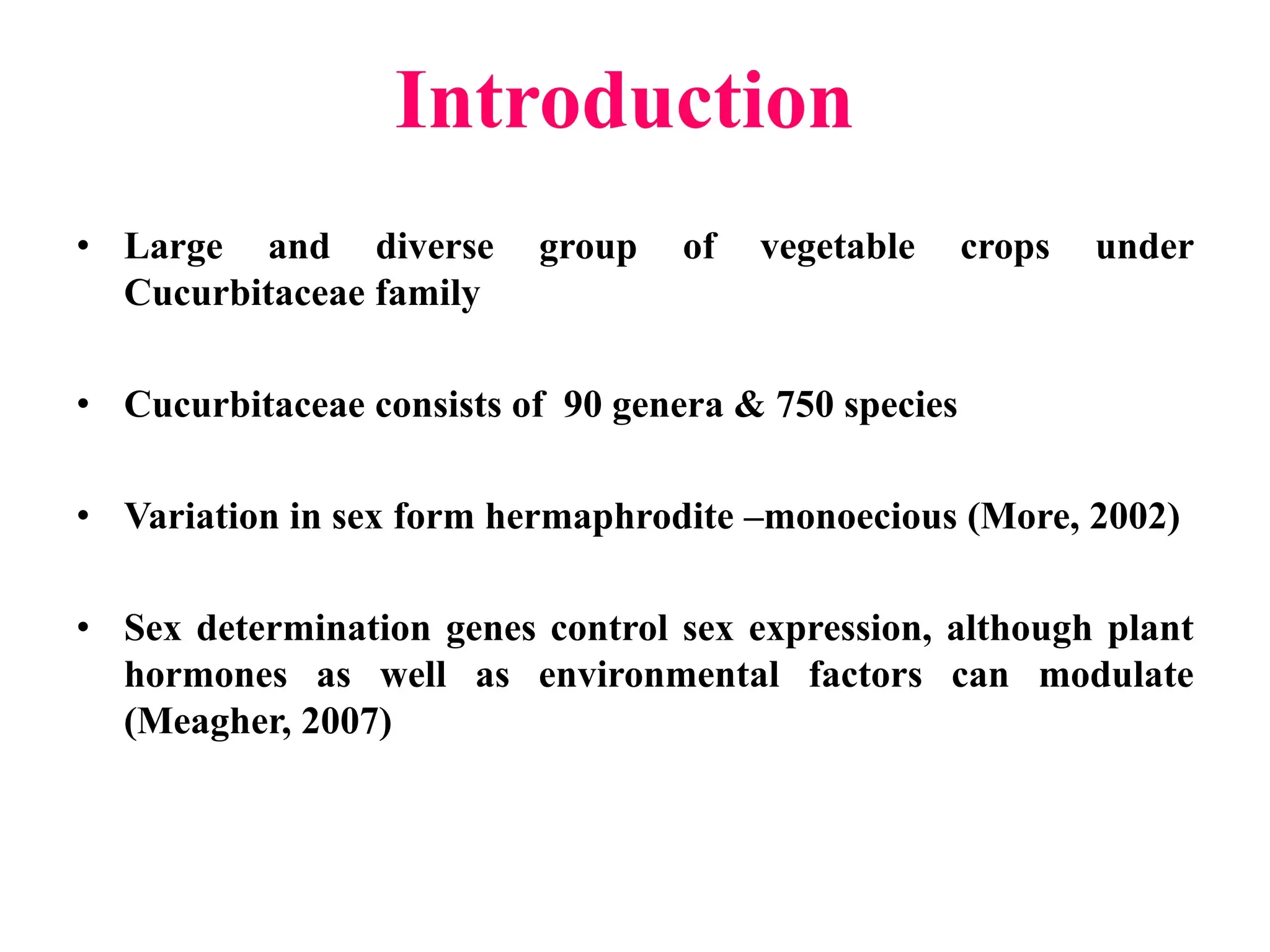
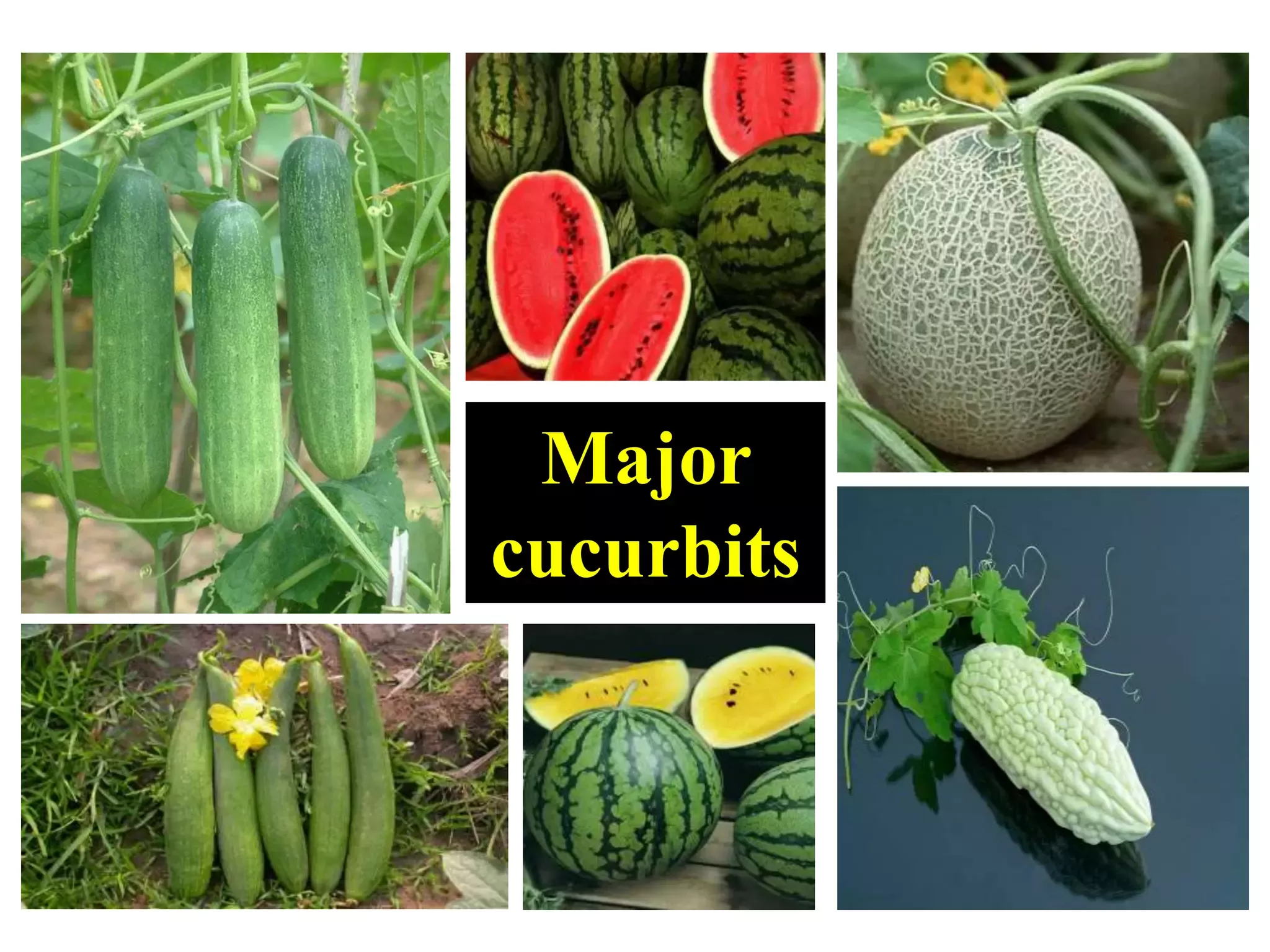
- Cucurbits include cucumber, melon, watermelon, pumpkin, squash, and gourds.
- Major diseases: Downy mildew, Powdery mildew, Fusarium wilt, Angular leaf spot, Cucumber mosaic, and Tospovirus.
- Diseases caused by fungi, bacteria, and viruses.
- Effective management requires accurate diagnosis and integrated control strategies.
Downy Mildew – Pathogen and Symptoms
- Pathogen: Pseudoperonospora cubensis (oomycete fungus).
- Hosts: All major cucurbits.
- Symptoms: Small yellow, water-soaked lesions on upper leaf surface; lesions turn brown and necrotic.
- Severe infection causes leaf curling, death, and reduced fruit quality.
Downy Mildew – Disease Cycle and Management
- Survives on collateral hosts and plant debris.
- Spread by wind-borne sporangia and rain splash.
- Management: Remove weeds, avoid overhead irrigation, use resistant varieties.
- Fungicide sprays: Metalaxyl, chlorothalonil, or zineb at recommended intervals.
Powdery Mildew – Pathogen and Symptoms
- Pathogens: Erysiphe cichoracearum and Sphaerotheca fuliginea.
- Symptoms: White, powdery mycelium on both leaf surfaces, stems, and petioles.
- Leads to leaf yellowing, drying, premature defoliation, and fruit deformation.
Powdery Mildew – Disease Cycle and Management
- Overwinters as cleistothecia or on collateral hosts.
- Spread by wind-borne conidia.
- Management: Use resistant varieties, ensure good air circulation, apply fungicides (e.g., Calixin, Karathane).
Fusarium Wilt – Pathogen and Symptoms
- Pathogen: Fusarium oxysporum f.sp. niveum.
- Symptoms: Seedling damping-off, yellowing and wilting of leaves, vascular discoloration, stem lesions.
- Older plants may collapse suddenly, especially under stress.
Fusarium Wilt – Disease Cycle and Management
- Survives in soil as chlamydospores for years.
- Primary infection from soil; secondary spread by water and wind.
- Management: Seed treatment (Carboxin/Carbendazim), crop rotation, use resistant varieties, balanced fertilization, maintain soil pH 6.5–7.0.
Angular Leaf Spot – Pathogen and Symptoms
- Pathogen: Pseudomonas syringae pv. lachrymans (bacterium).
- Symptoms: Small, angular, water-soaked leaf spots; milky exudate under moist conditions.
- Lesions dry to form shot-holes; fruit spots cause internal decay and deformation.
Angular Leaf Spot – Disease Cycle and Management
- Seed-borne and survives in crop debris.
- Spread by irrigation water and handling wet plants.
- Management: Use pathogen-free seed, crop rotation, avoid overhead irrigation, apply bactericides (e.g., Streptomycin), destroy crop debris.
Cucumber Mosaic – Pathogen, Symptoms, and Spread
- Pathogen: Cucumber mosaic virus (CMV).
- Symptoms: Mosaic, leaf distortion, stunting, flower abnormalities, fruit deformation.
- Transmitted by aphids (non-persistent) and cucumber beetles; survives on weeds and alternate hosts.
Cucumber Mosaic – Management
- Rogue infected plants and eliminate weed hosts.
- Control aphid vectors with insecticides (e.g., monocrotophos, phosphamidon).
- Use resistant varieties where available.
Tospovirus (Tomato Spotted Wilt Virus) – Pathogen and Symptoms
- Pathogen: Tomato spotted wilt virus (TSWV), a tospovirus.
- Symptoms: Leaf bronzing, chlorotic spots, mosaic, die-back, stunting, fruit ring spots and necrosis.
- Transmitted by thrips (e.g., Frankliniella occidentalis, Thrips palmi).
Tospovirus – Management
- Use mesh screening and phytosanitary measures in nurseries.
- Avoid planting near thrips reservoirs (ornamentals, older crops).
- Control weeds and volunteer cucurbits.
- Implement early insecticide programs to manage thrips populations.
Summary: Integrated Disease Management in Cucurbits
- Combine cultural, chemical, and biological methods for effective disease control.
- Use resistant varieties and certified seeds.
- Practice crop rotation and field sanitation.
- Monitor regularly for early detection and timely intervention.