Home Quiz Old Paper PPT

Ppt on Breeding methods for vegetables

Summary

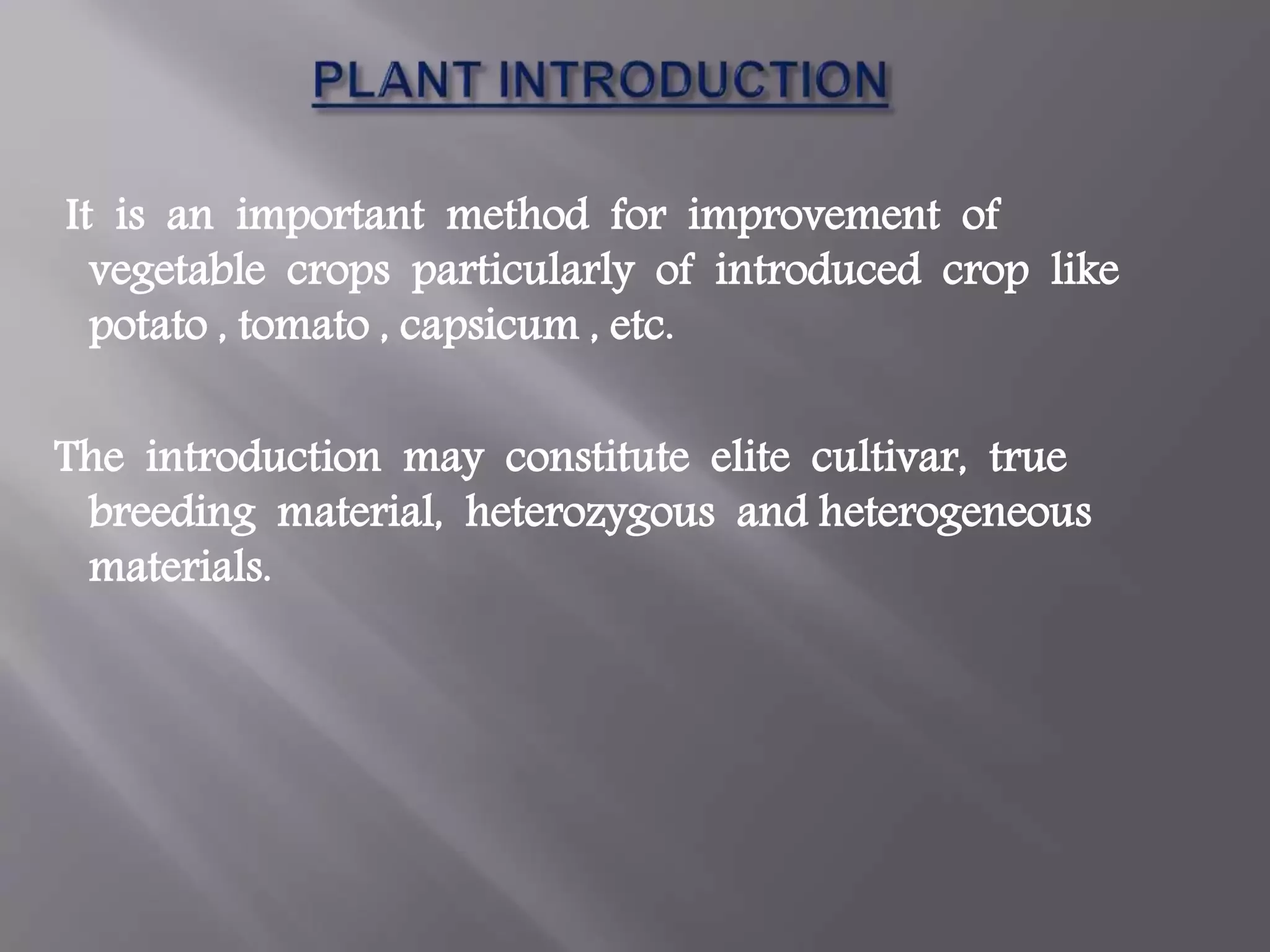
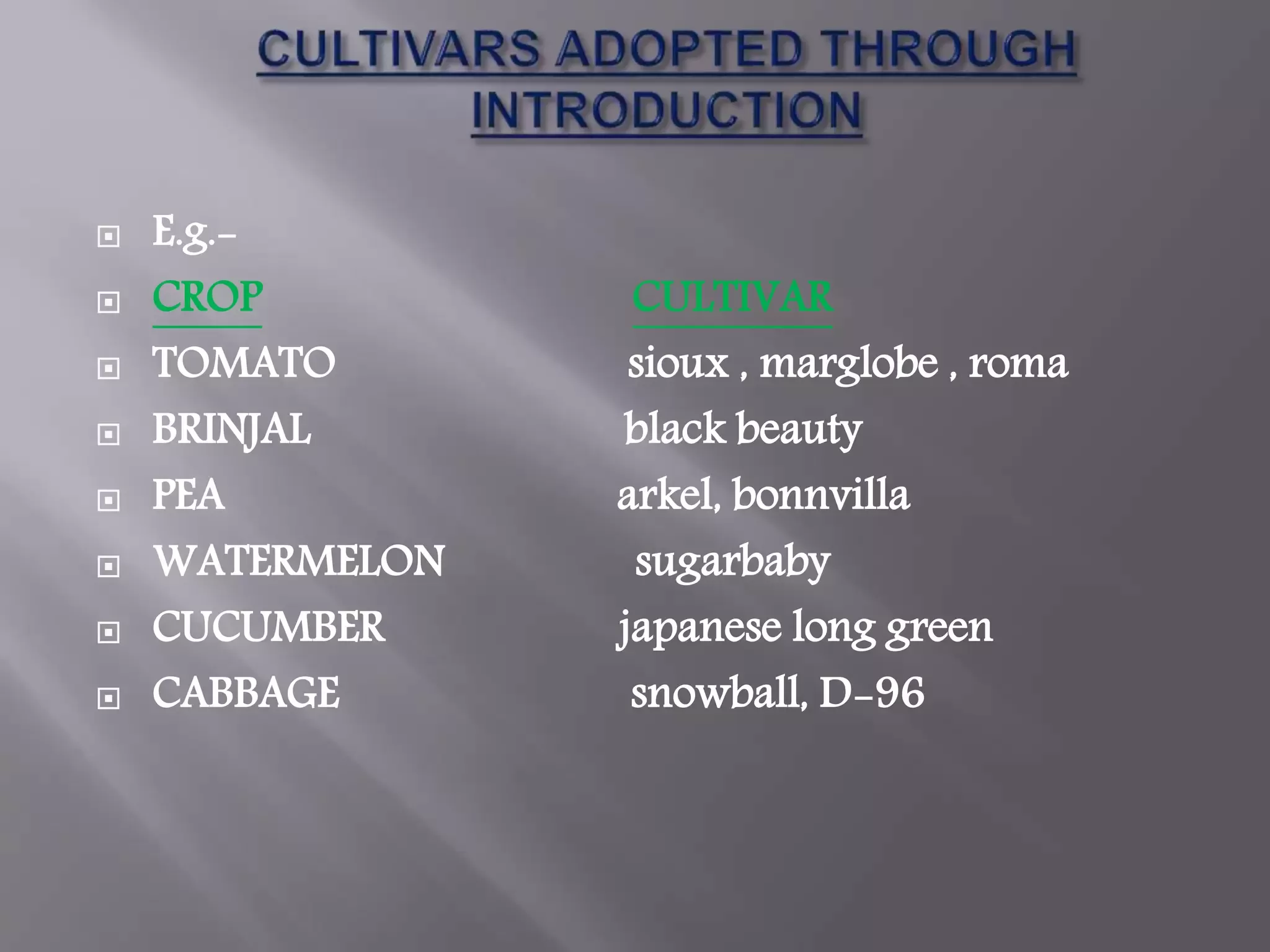
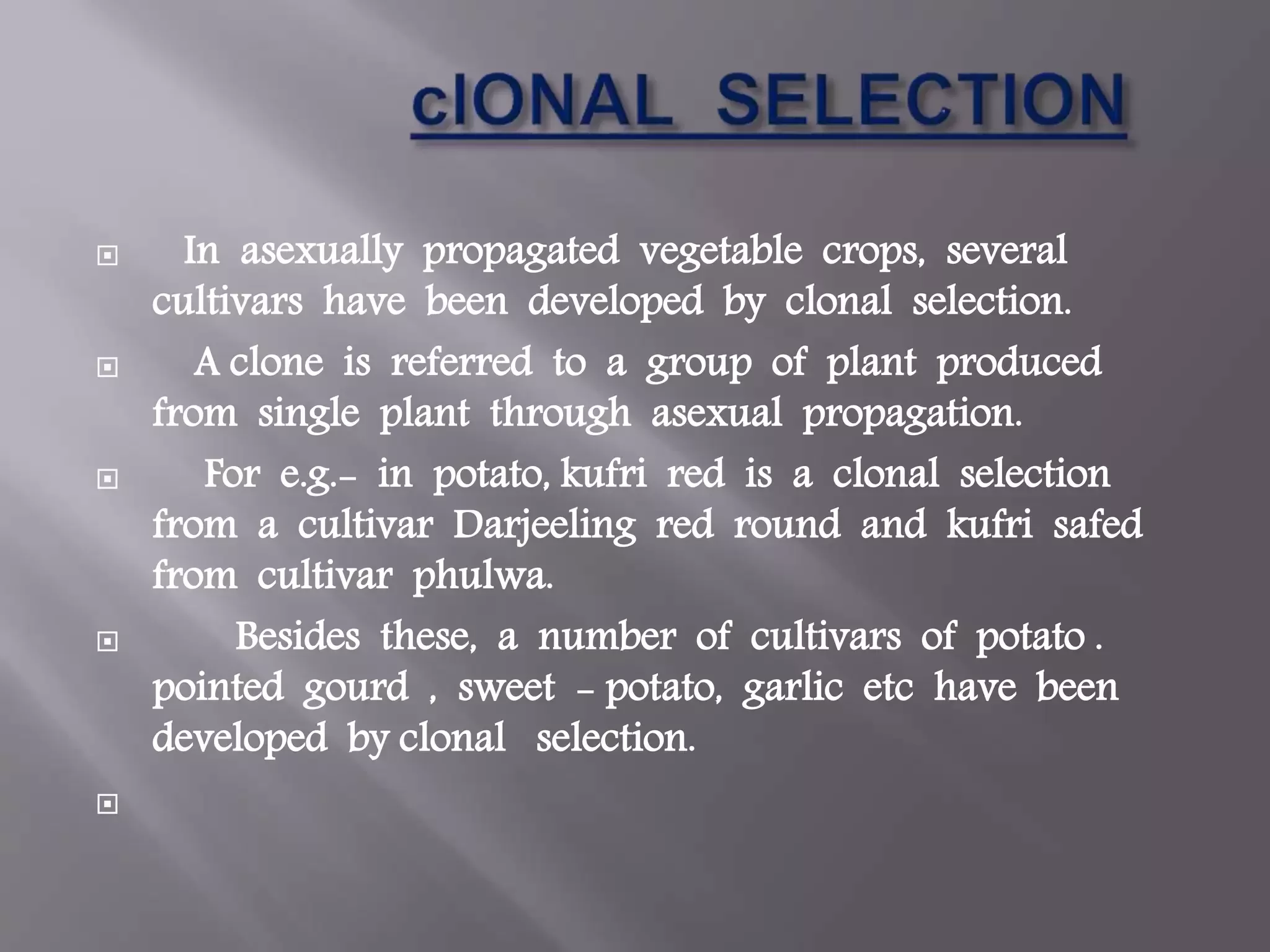
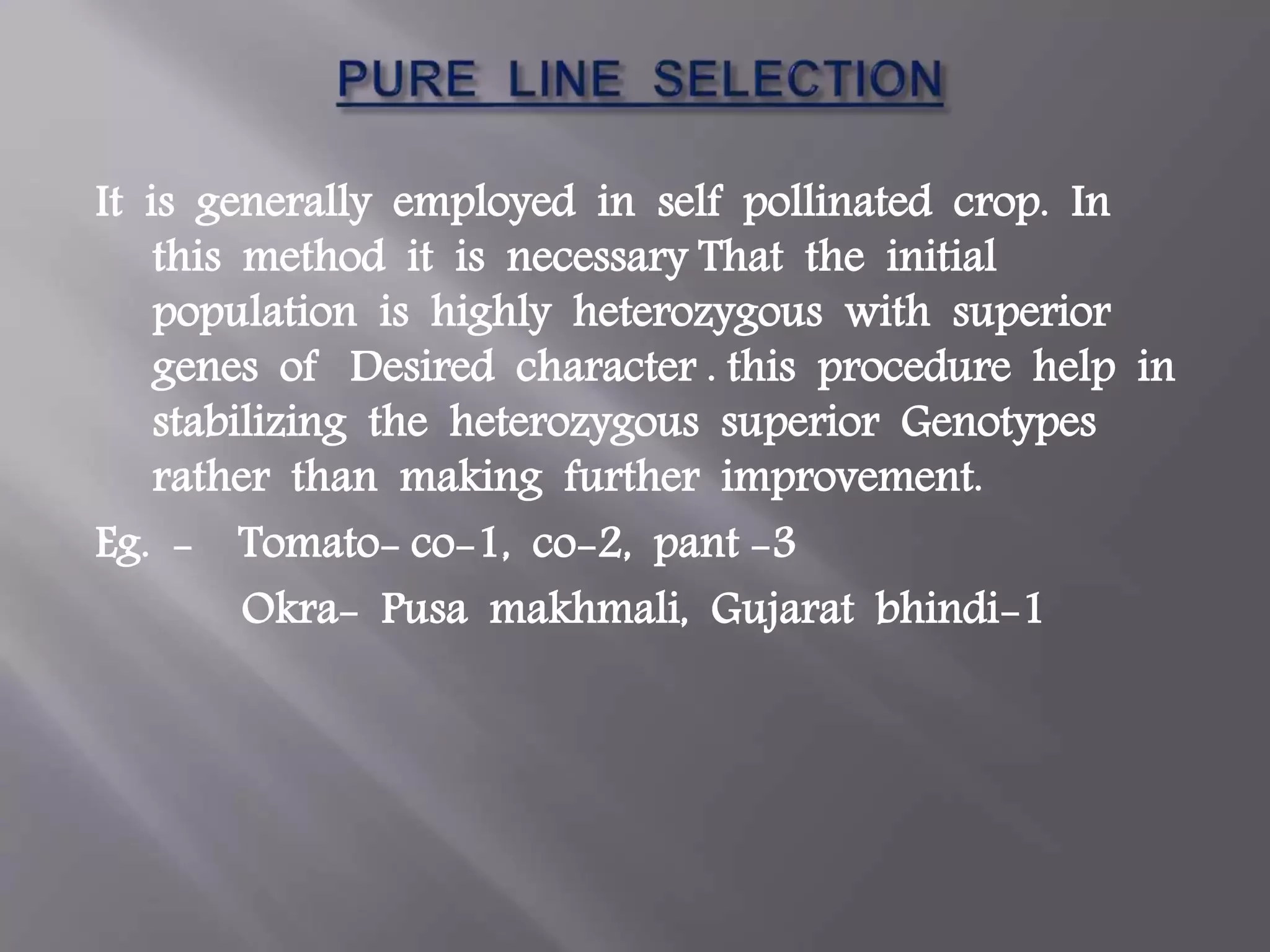
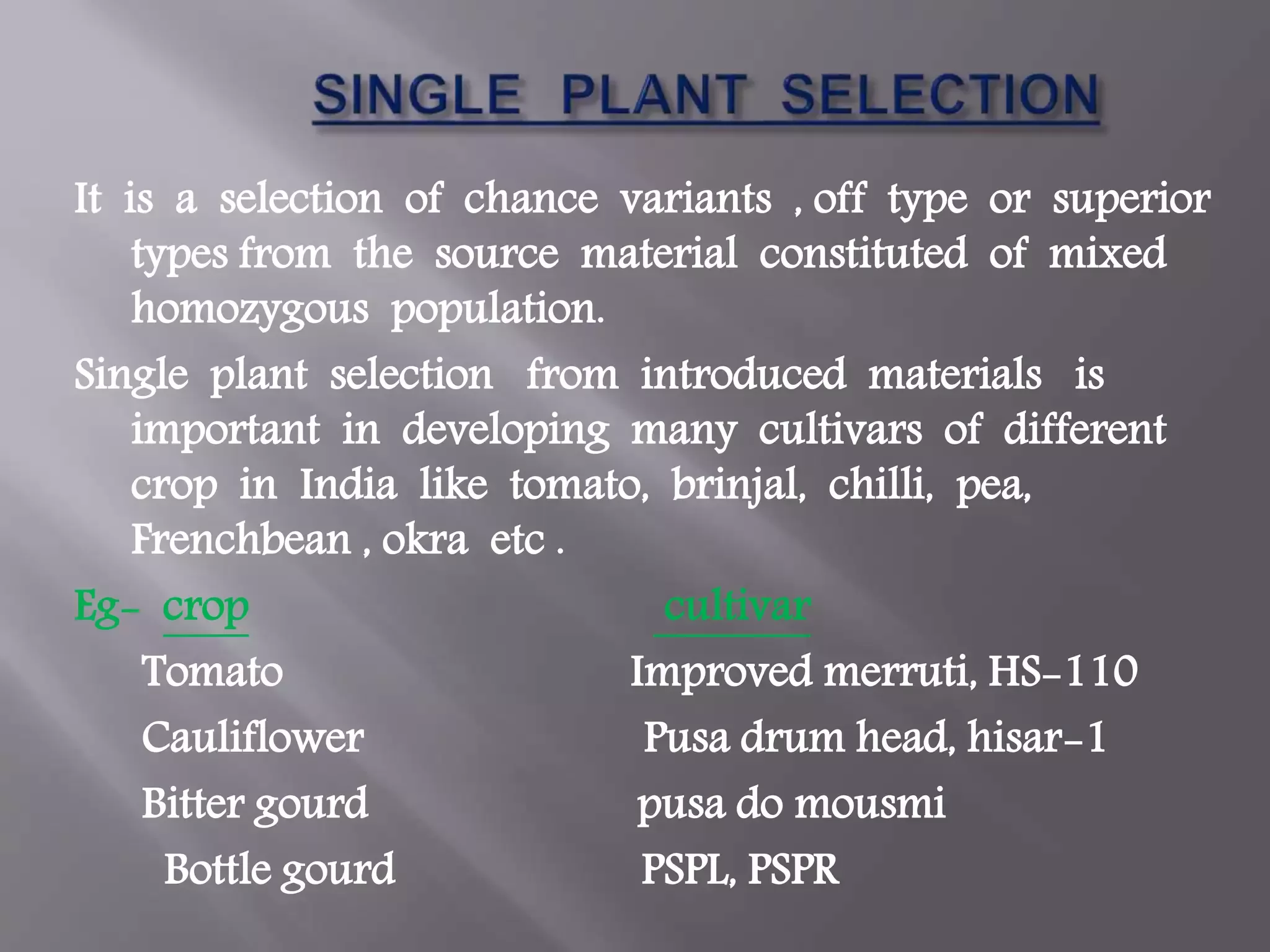
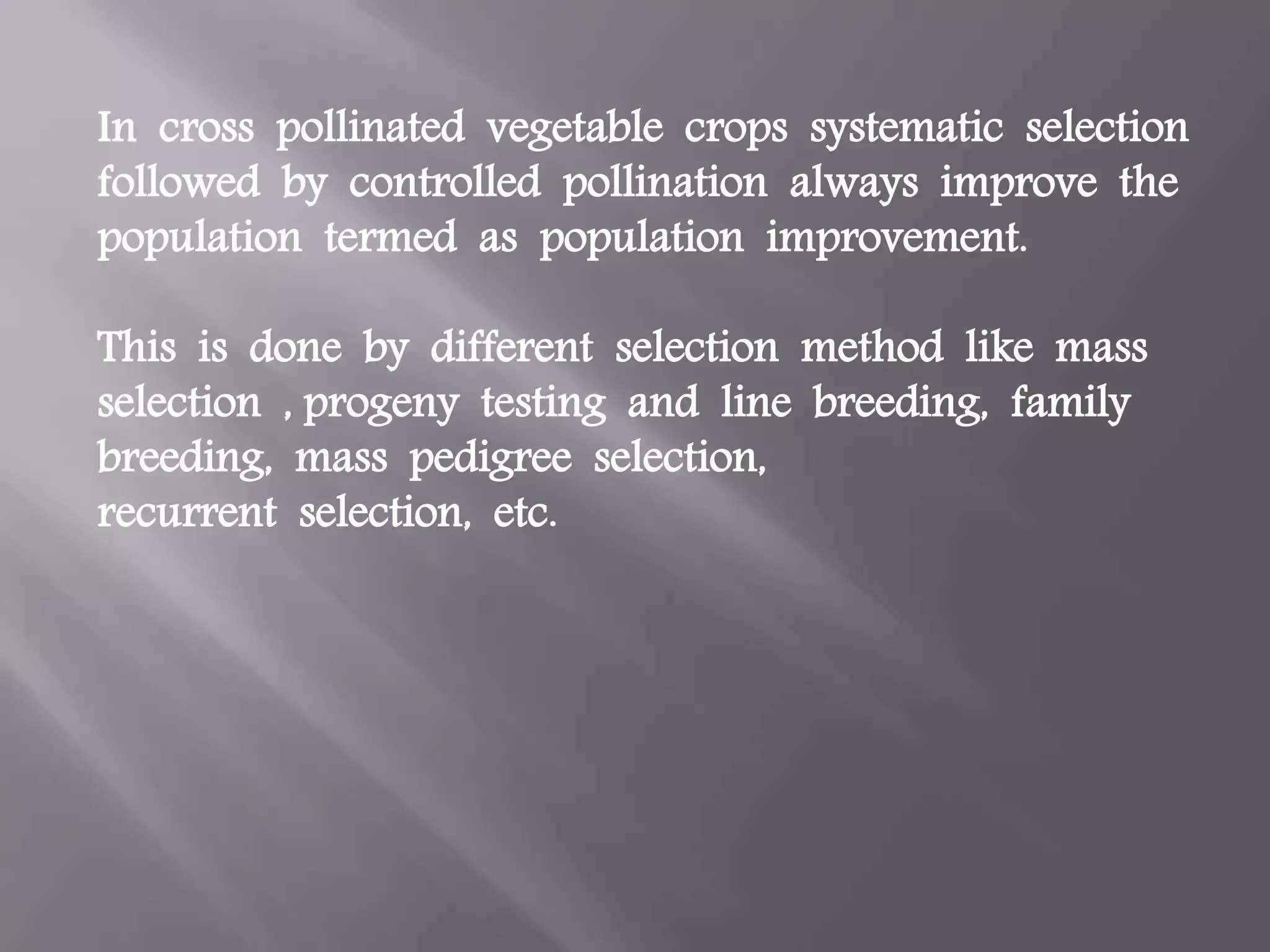
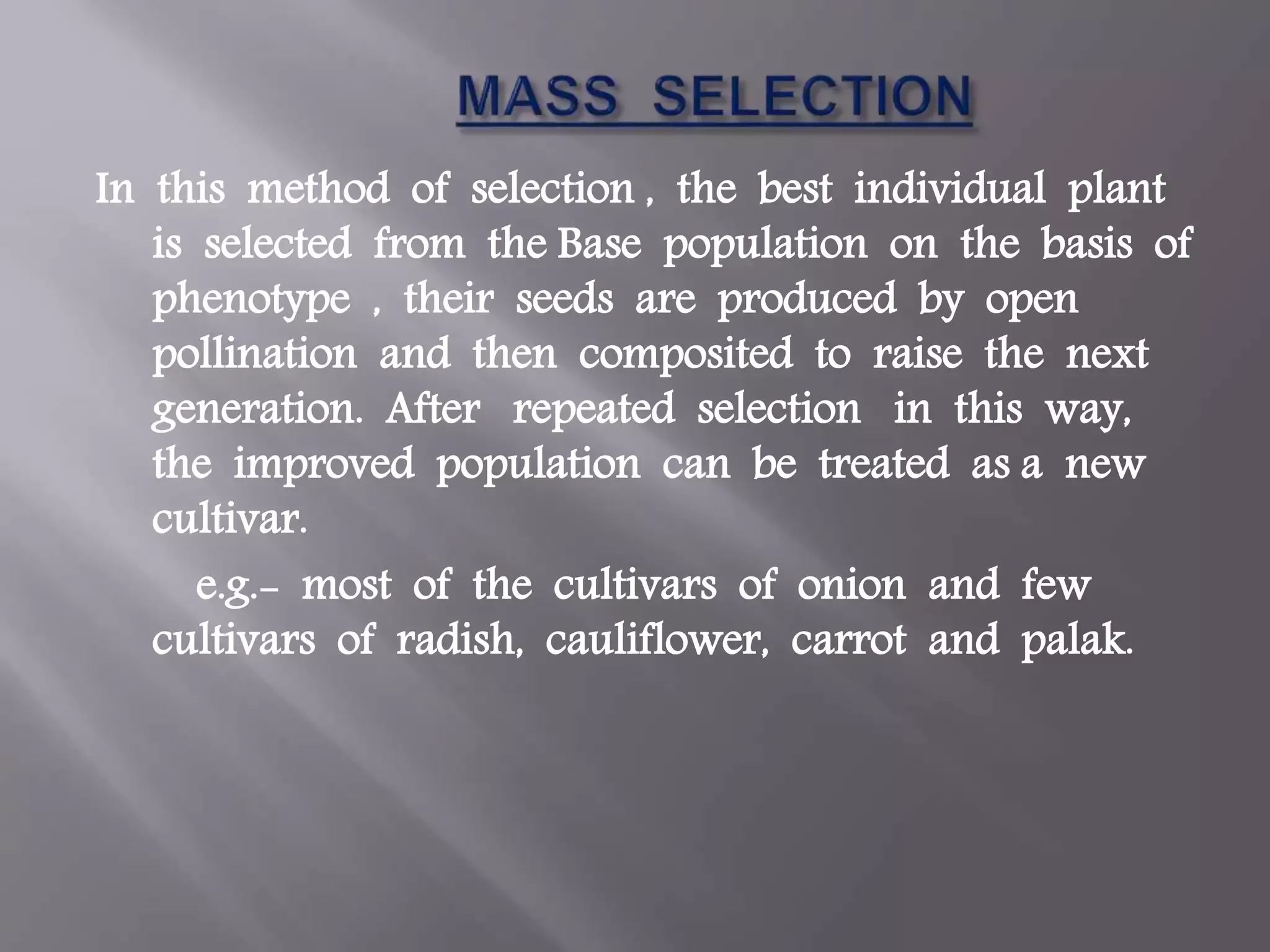
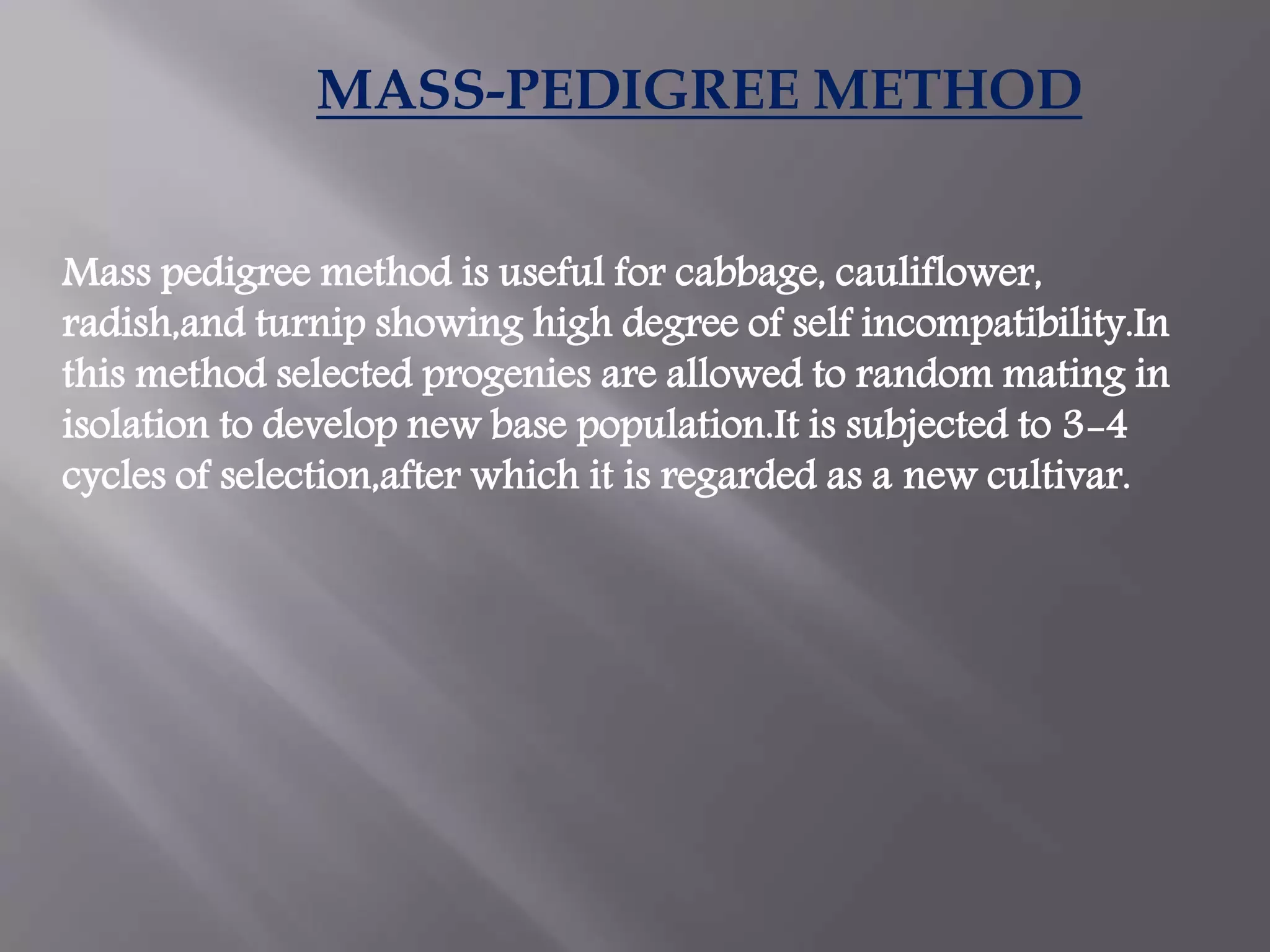
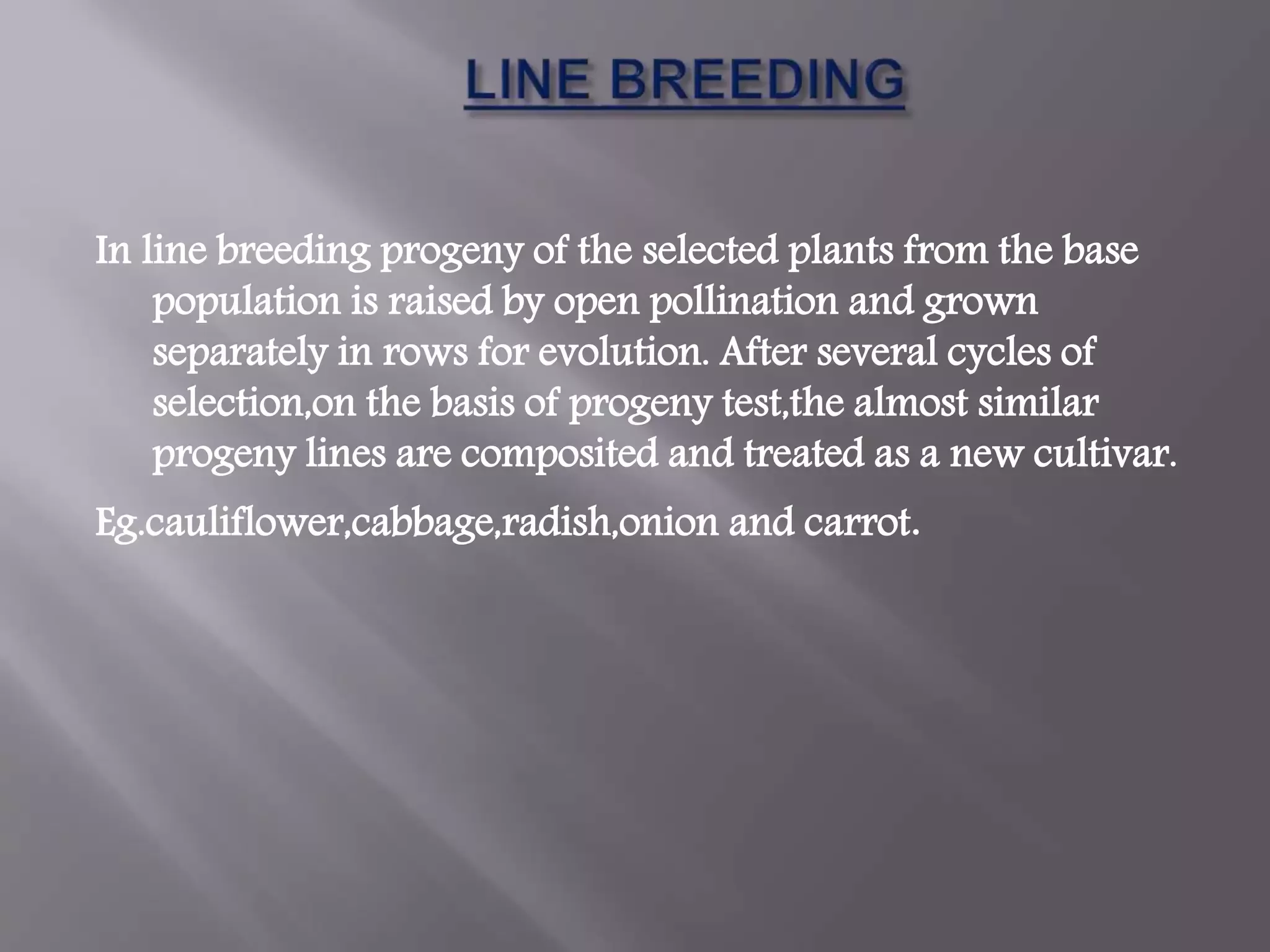
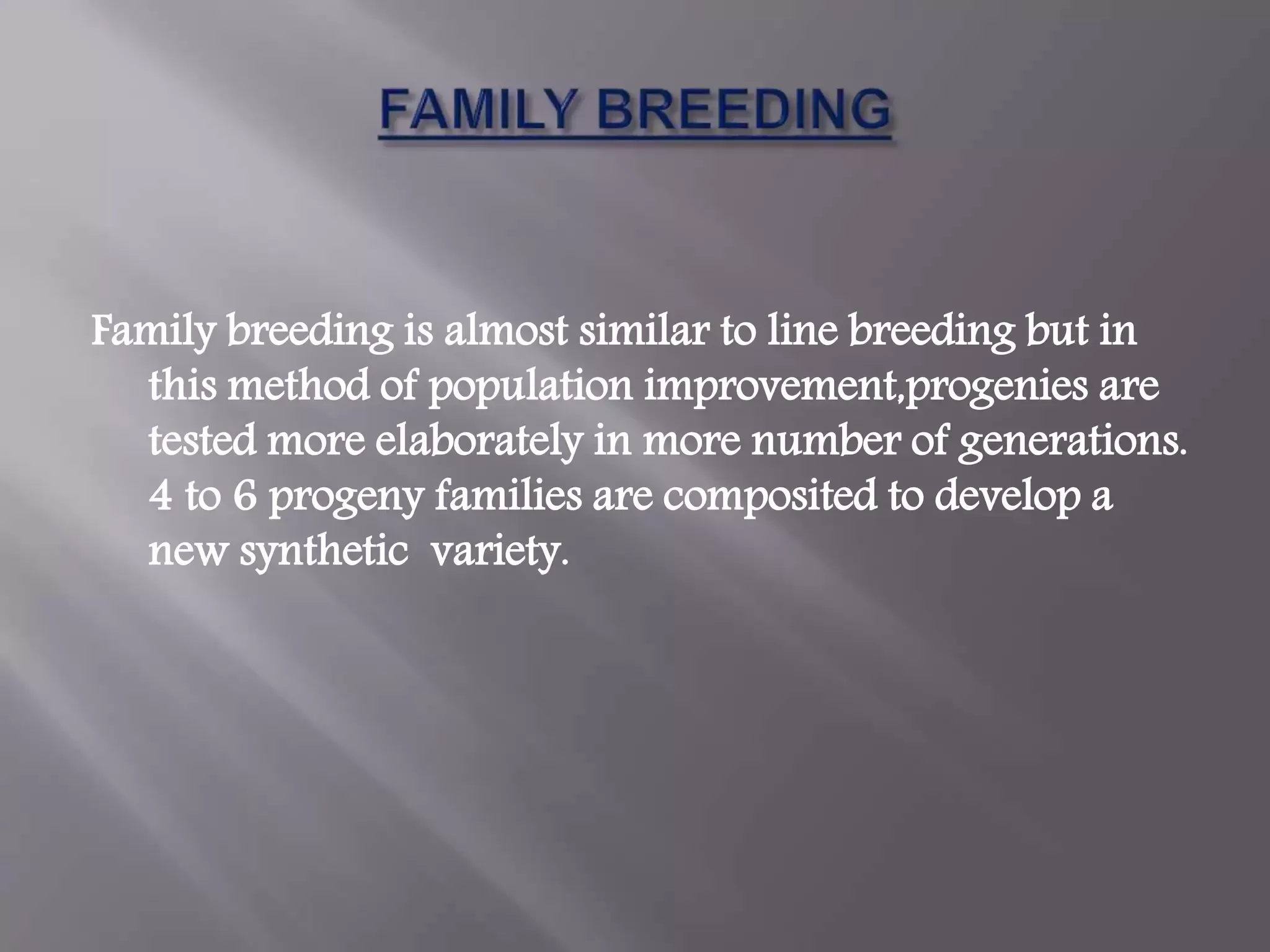
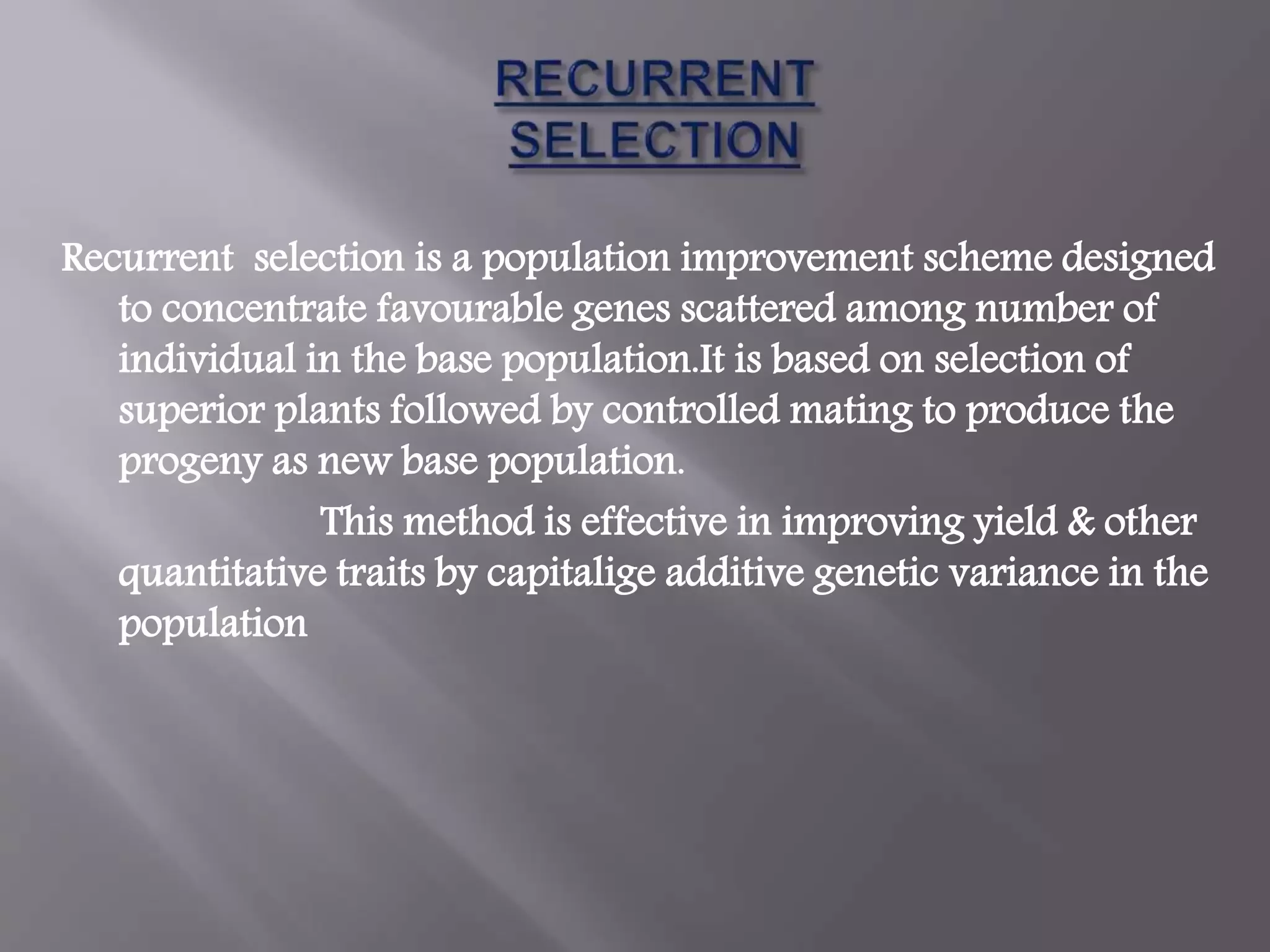
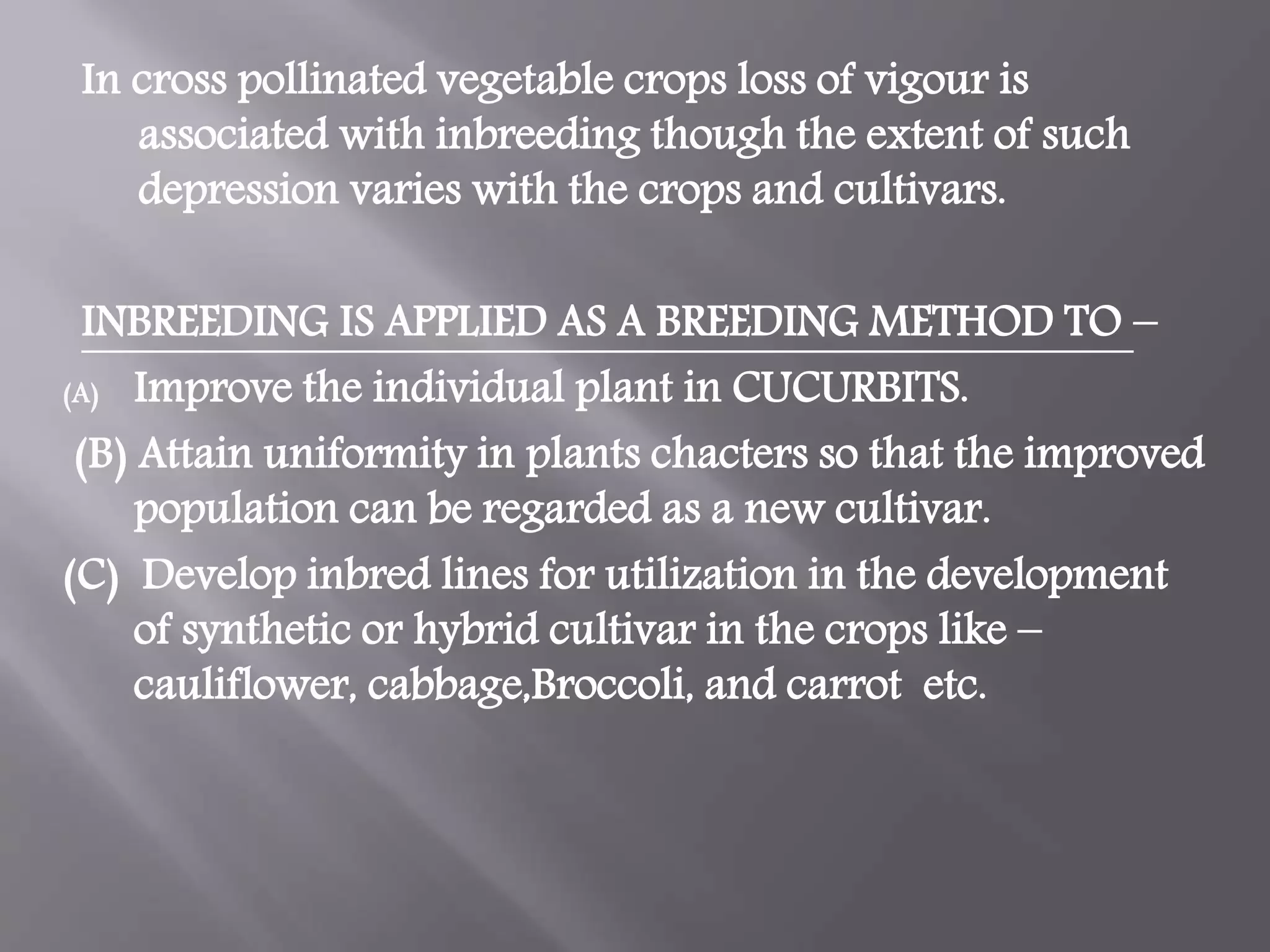
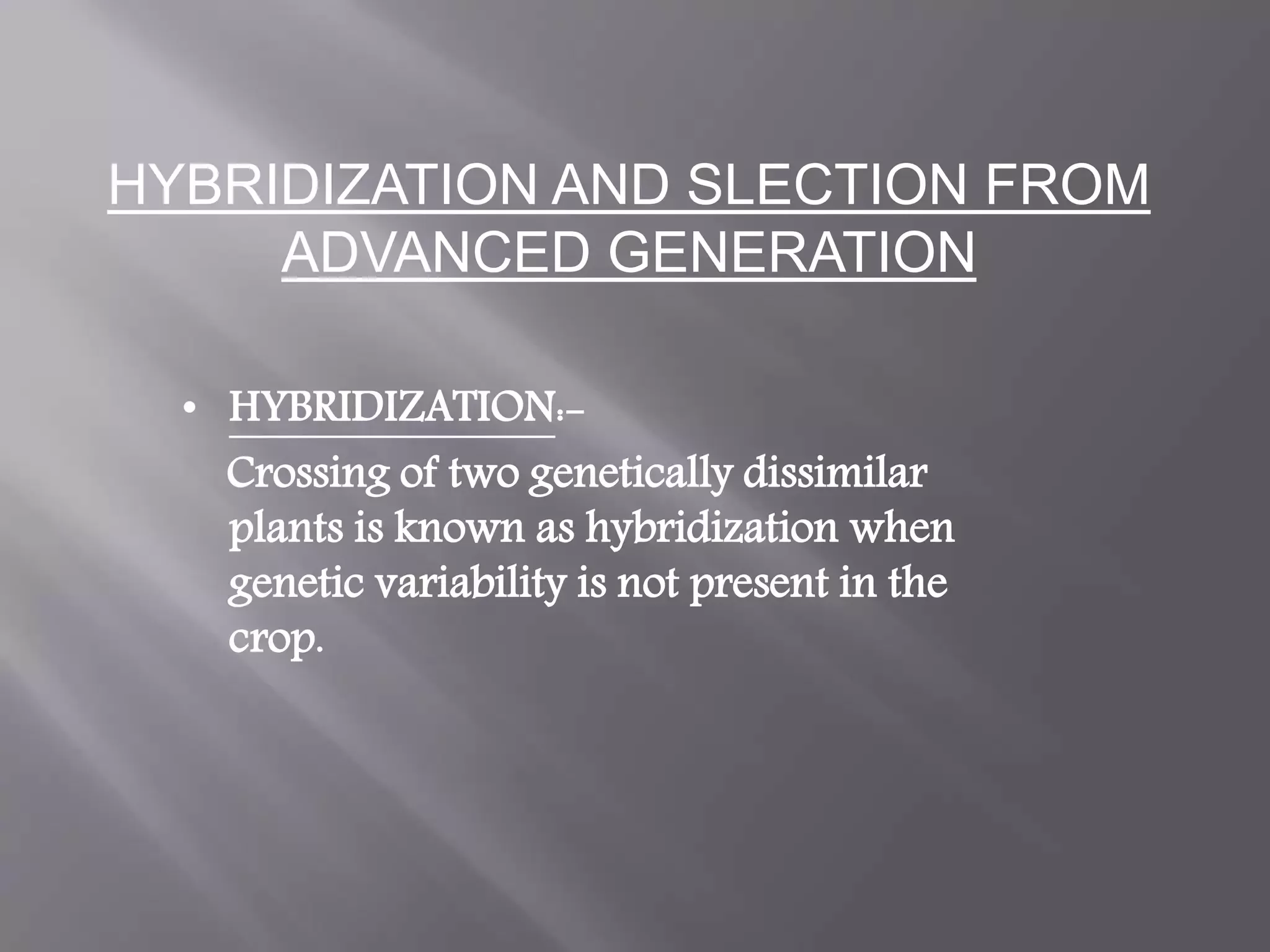
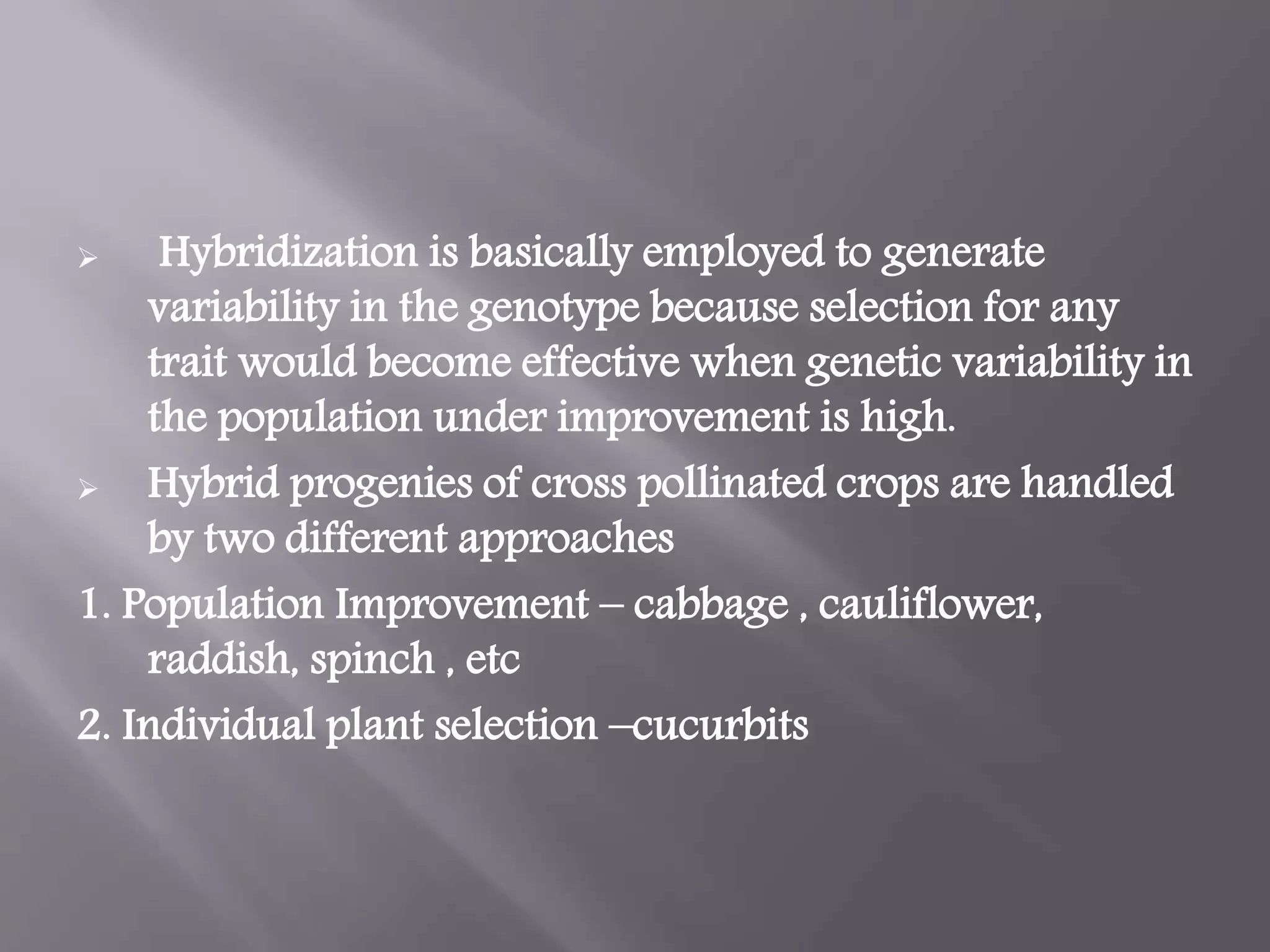
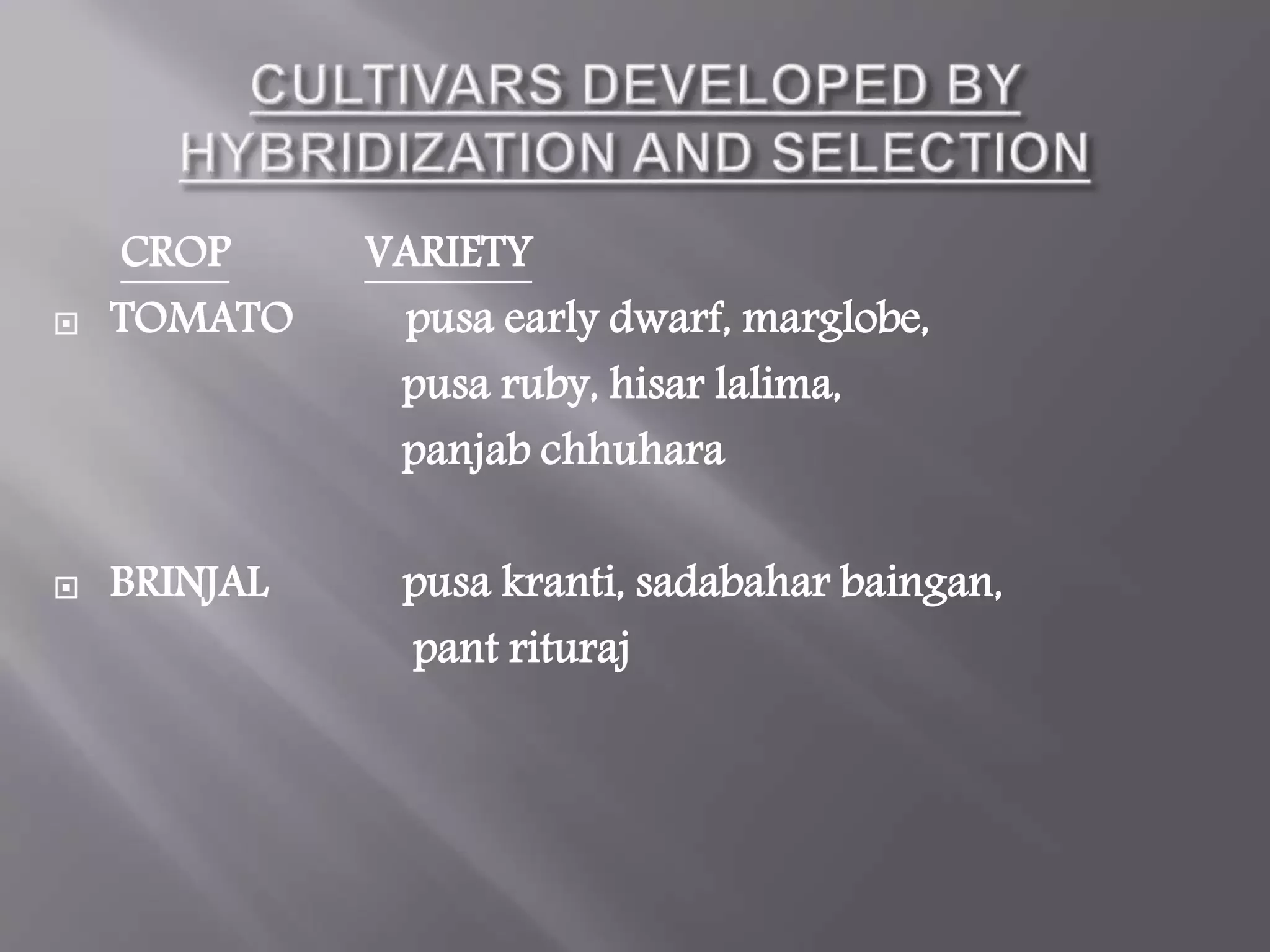
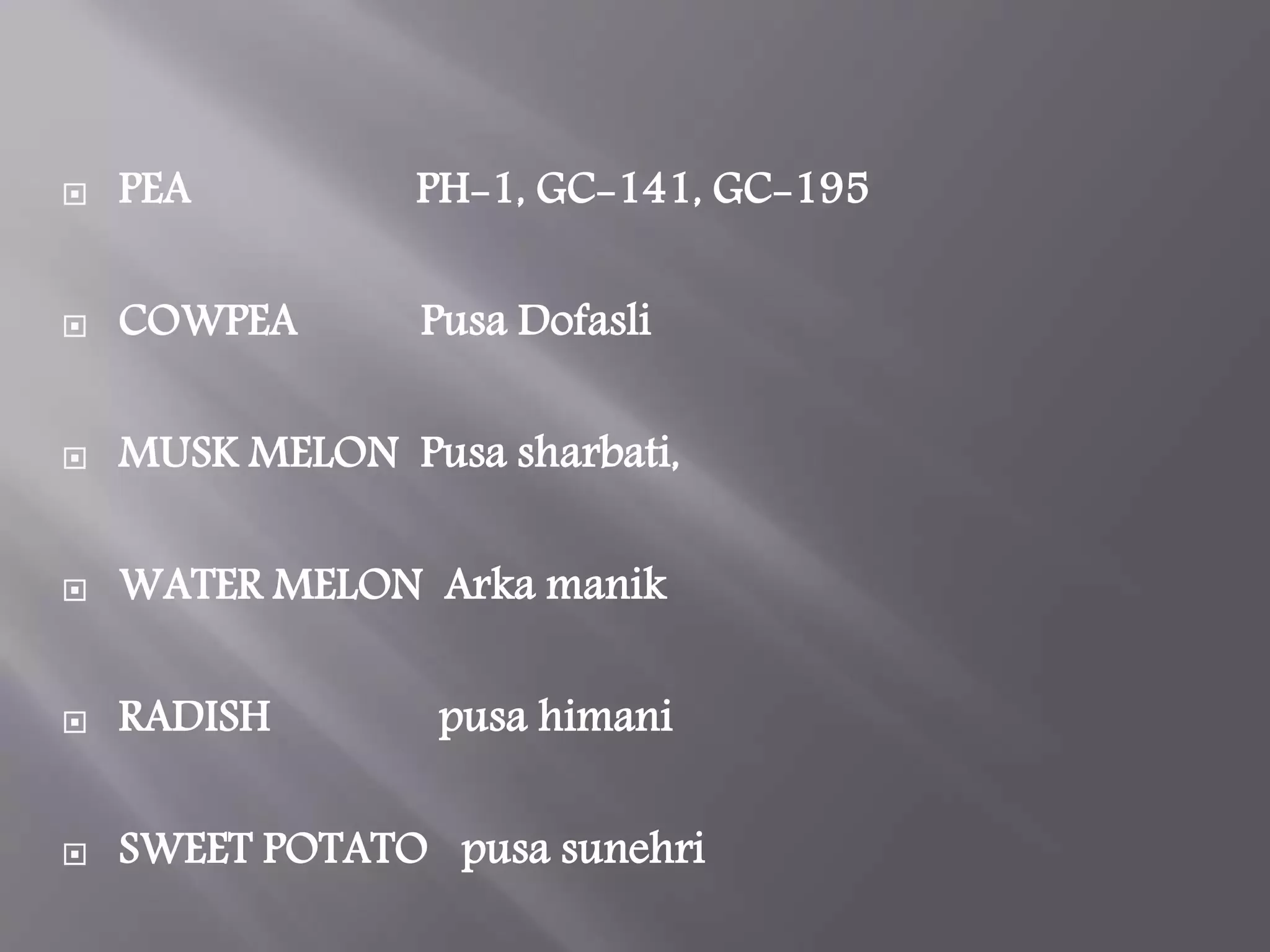
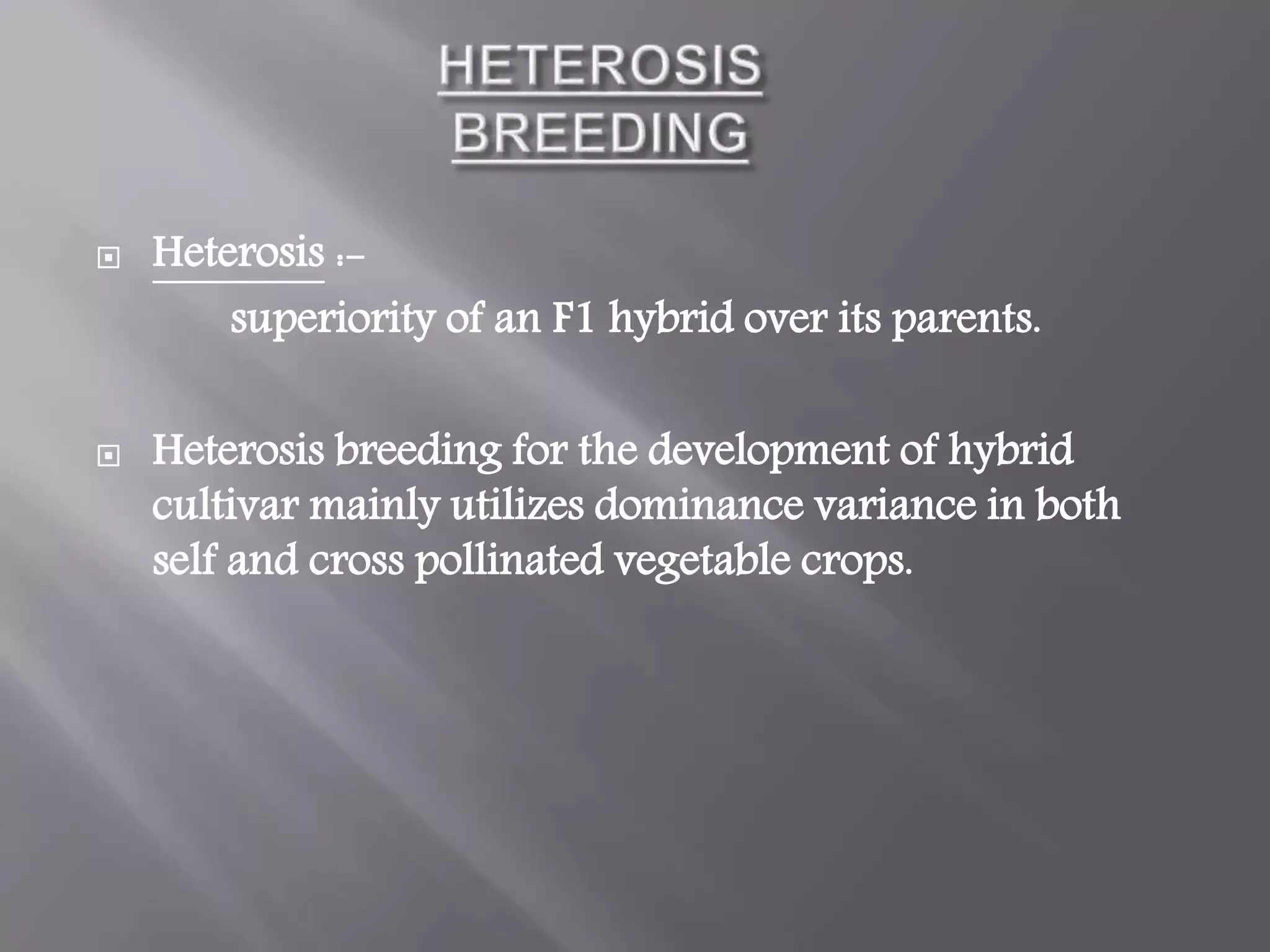
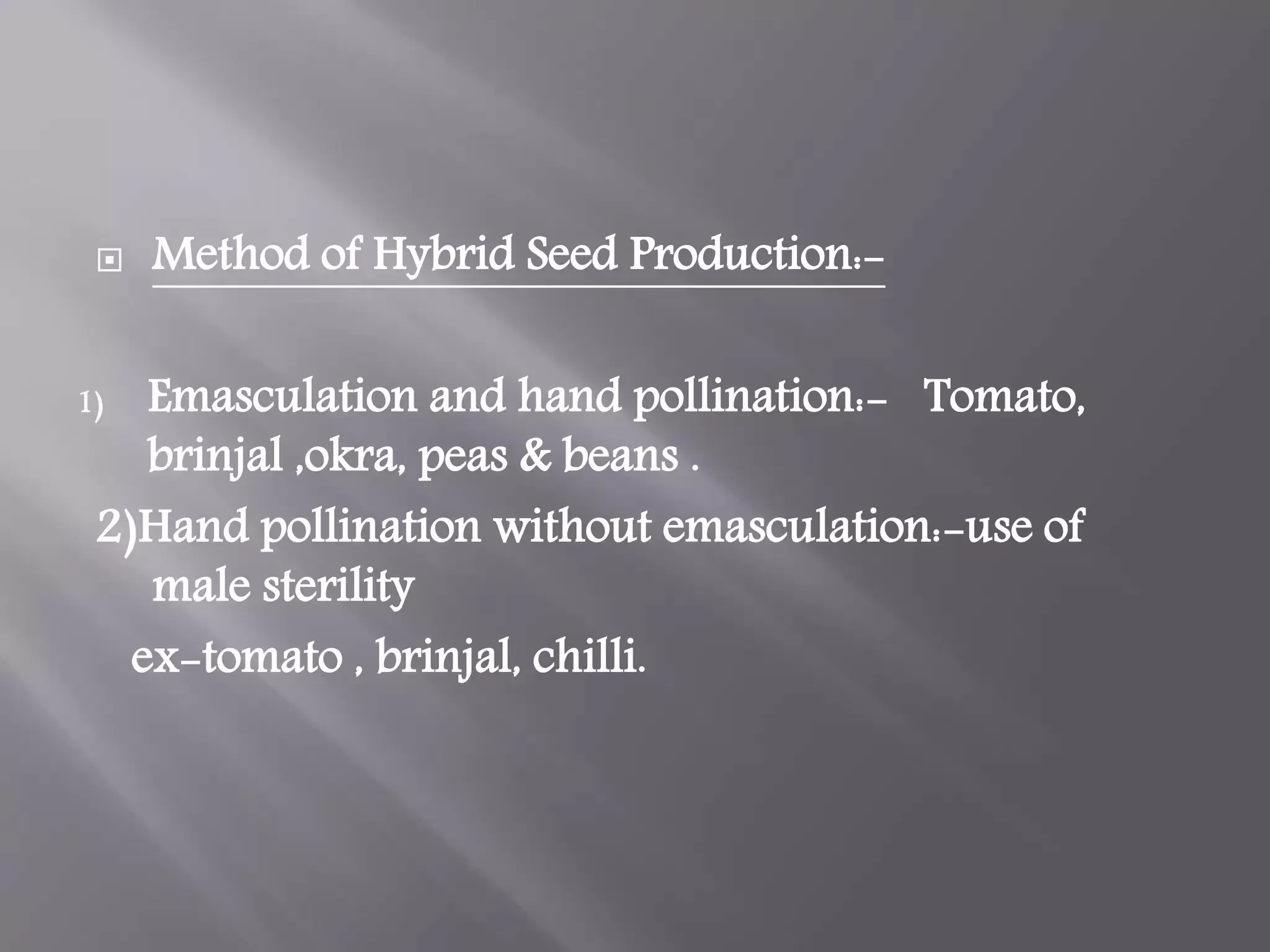
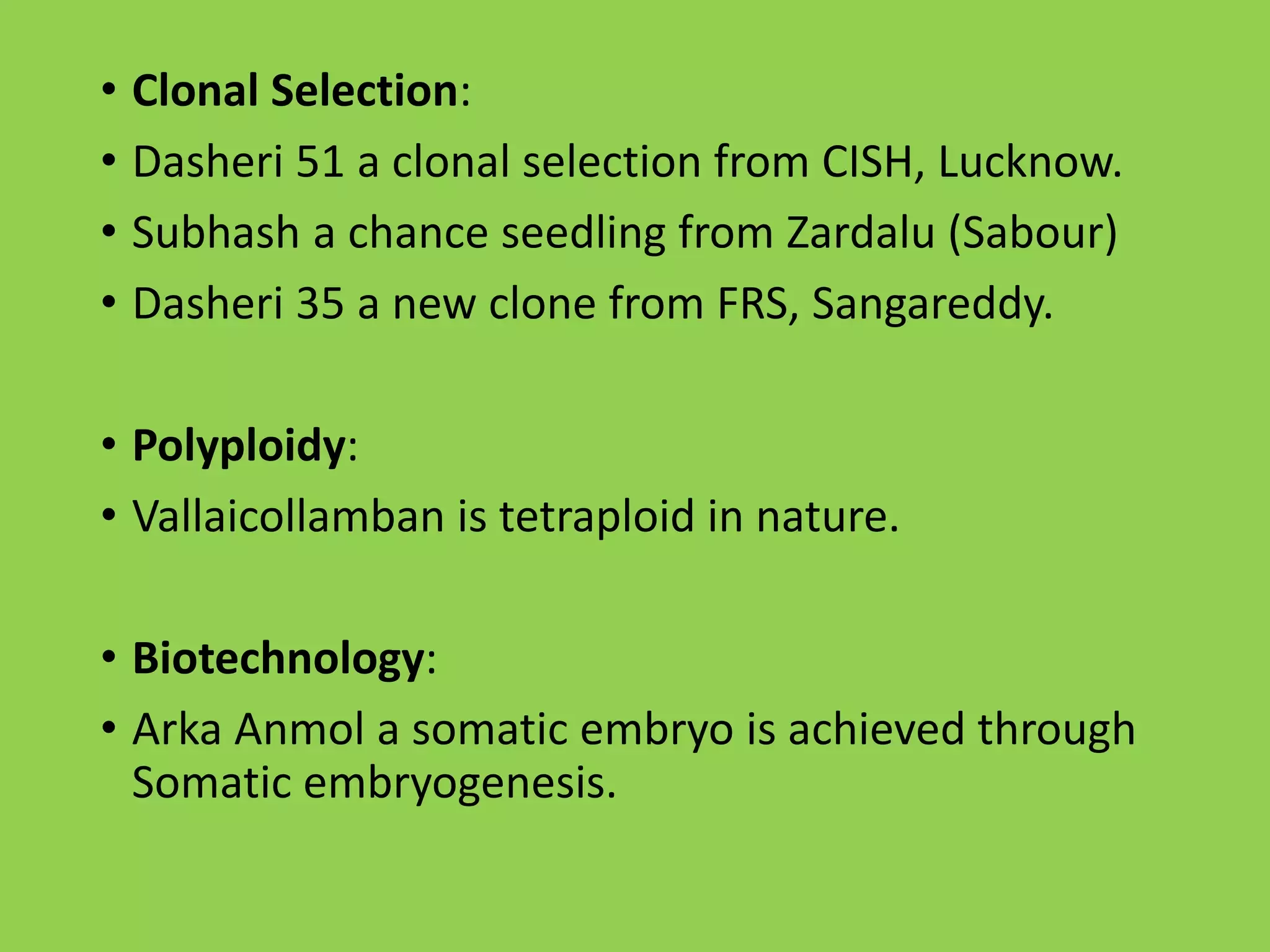
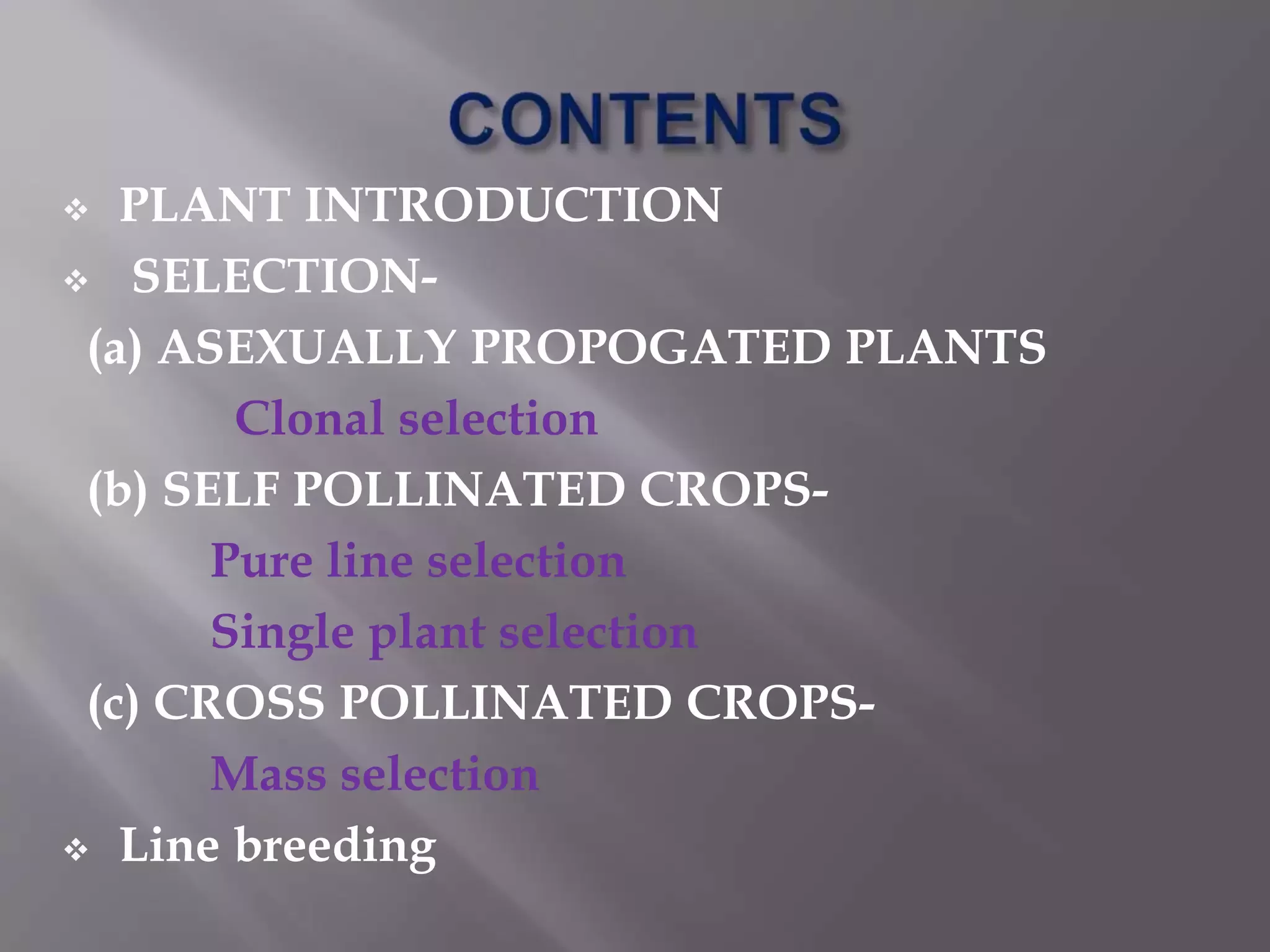
The cultivation of vegetable crops involves various selection methods to improve introduced species such as potatoes, tomatoes, and capsicum. Asexual propagation through clonal selection is common, producing cultivars like Kufri Red potato and Black Beauty brinjal. Self-pollinated crops utilize pure line and single plant selection to stabilize superior genotypes, exemplified by cultivars like CO-1 tomato and Pusa Makhmali okra. Cross-pollinated crops benefit from systematic selection methods, including mass selection and line breeding, to enhance populations, leading to new cultivars like onion and cauliflower. Recurrent selection focuses on concentrating favorable genes, while hybridization generates genetic variability for improved traits. The development of hybrid varieties involves selecting parents, testing their combining ability, and producing F1 hybrids through methods like emasculation and hand

Slide 1
Slide 1

Slide 2

Slide 2

Slide 3

Slide 3

Slide 4

Slide 4

Slide 5

Slide 5

Slide 6

Slide 6

Slide 7

Slide 7

Slide 8

Slide 8

Slide 9

Slide 9

Slide 10

Slide 10

Slide 11

Slide 11

Slide 12

Slide 12

Slide 13

Slide 13

Slide 14

Slide 14

Slide 15

Slide 15

Slide 16

Slide 16

Slide 17

Slide 17

Slide 18

Slide 18

Slide 19

Slide 19

Slide 20

Slide 20

Slide 21

Slide 21

Slide 22

Slide 22

Slide 23

Slide 23
1 / 23

Ppt on CROP IMPROVEMENT IN ONION (Allium cepa L.)

Summary:

Discover the world of onions, their cultivation, nutritional value, and significance in agriculture with this informative PowerPoint on crop improvement in onions (Allium cepa L.). Explore the different onion types, cultivation requirements, major producing countries, and more. Perfect for anyone interested in enhancing their knowledge of onion farming and its impact on the global market.

Summary

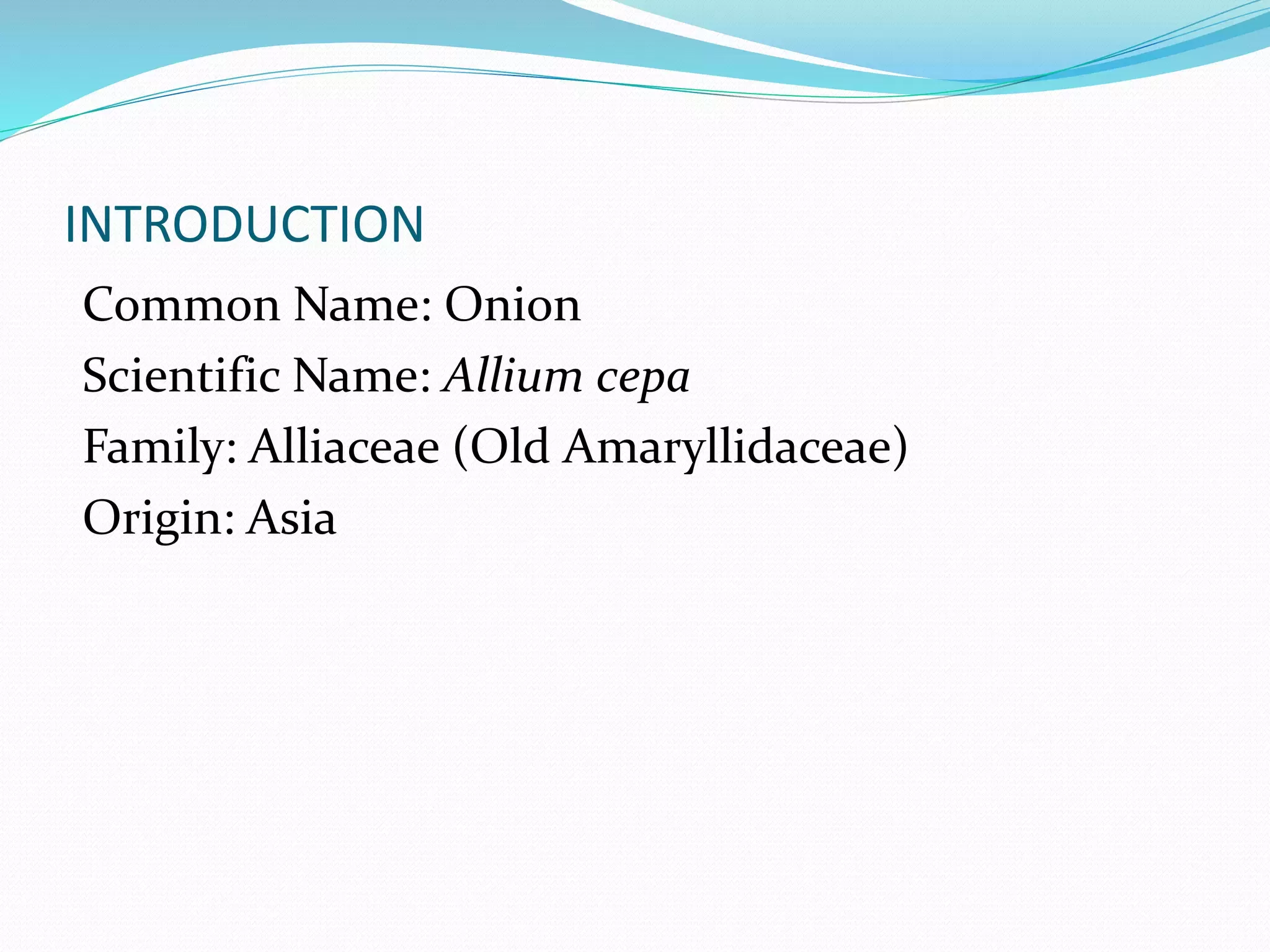
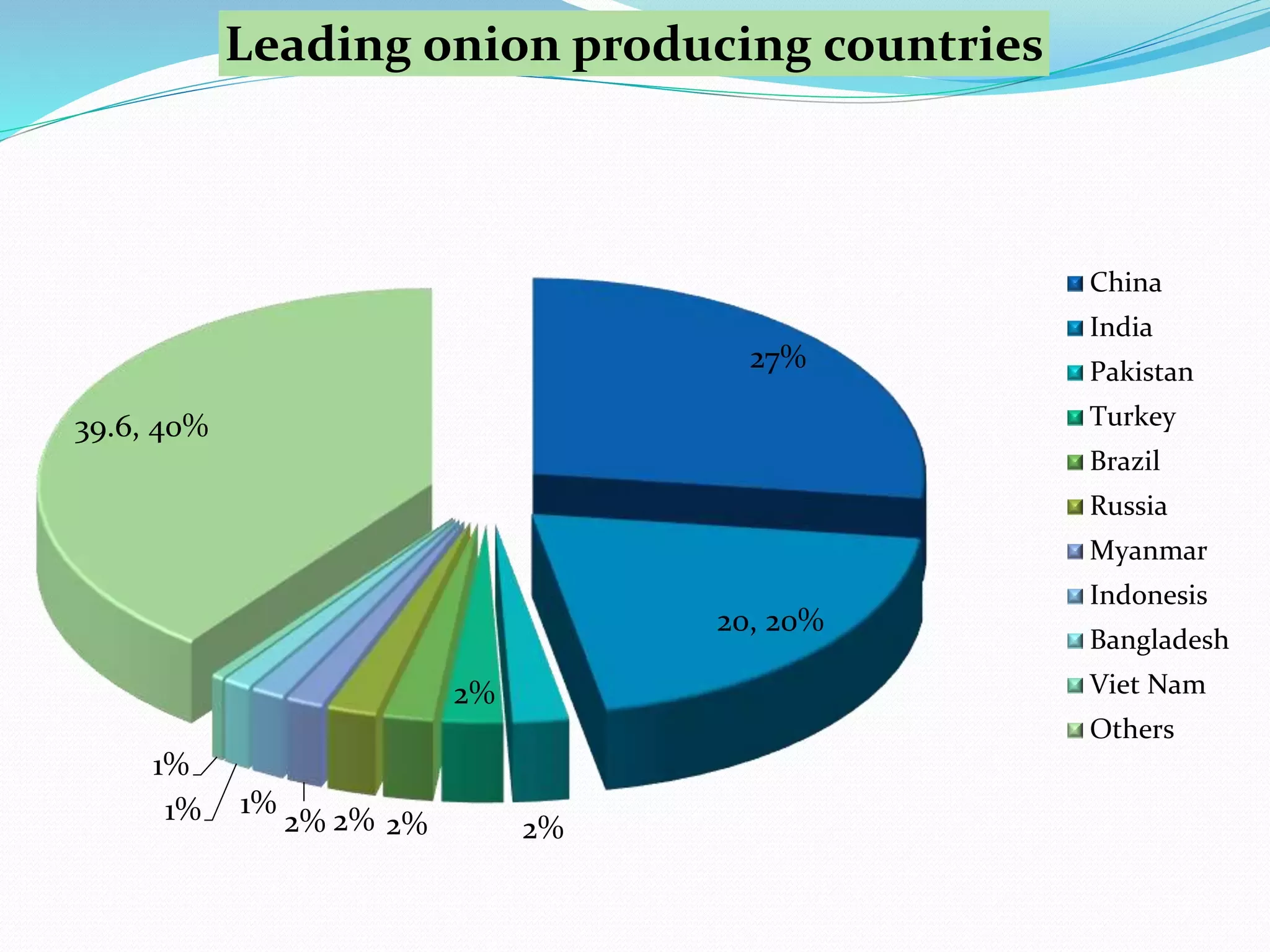
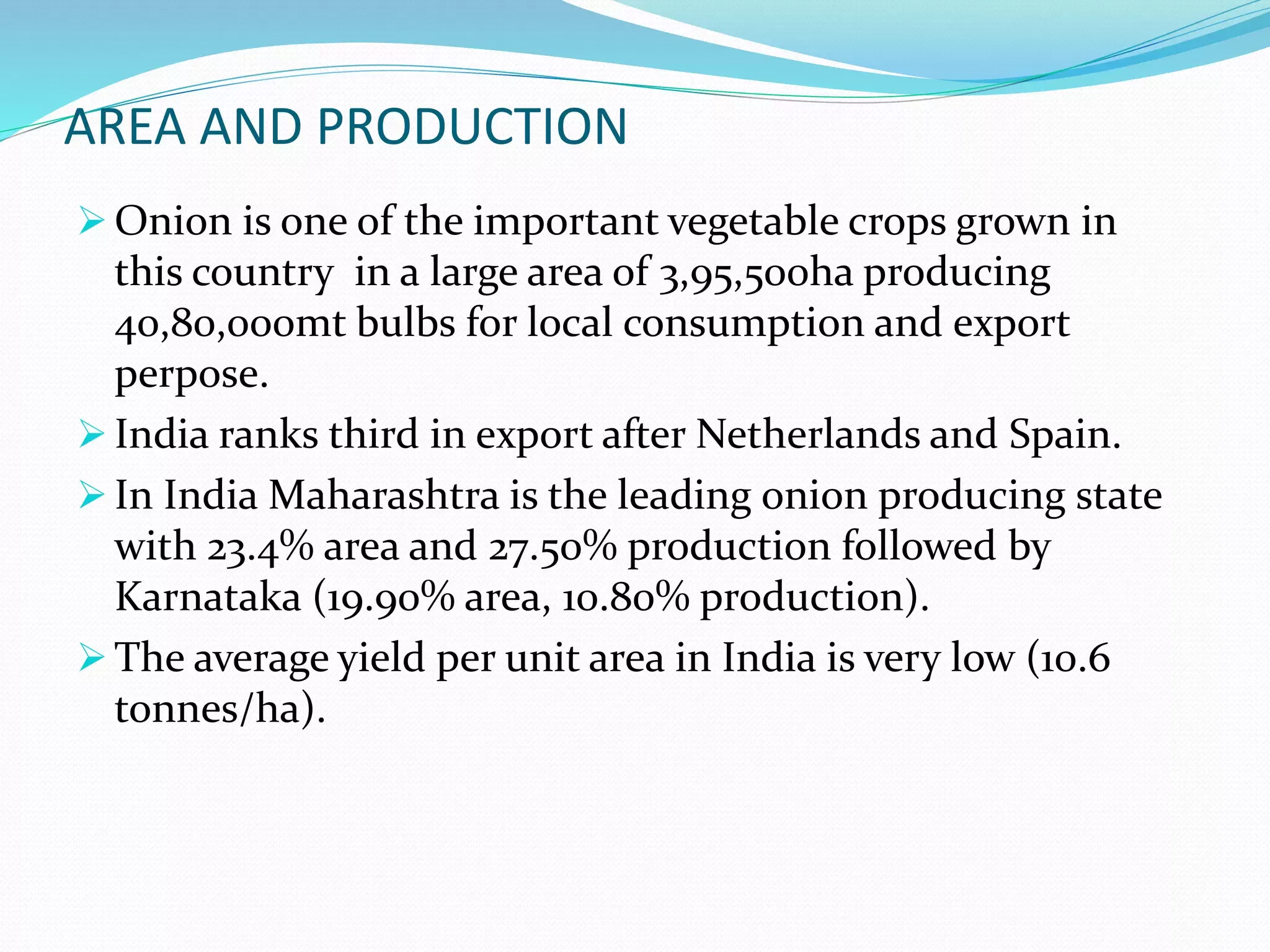
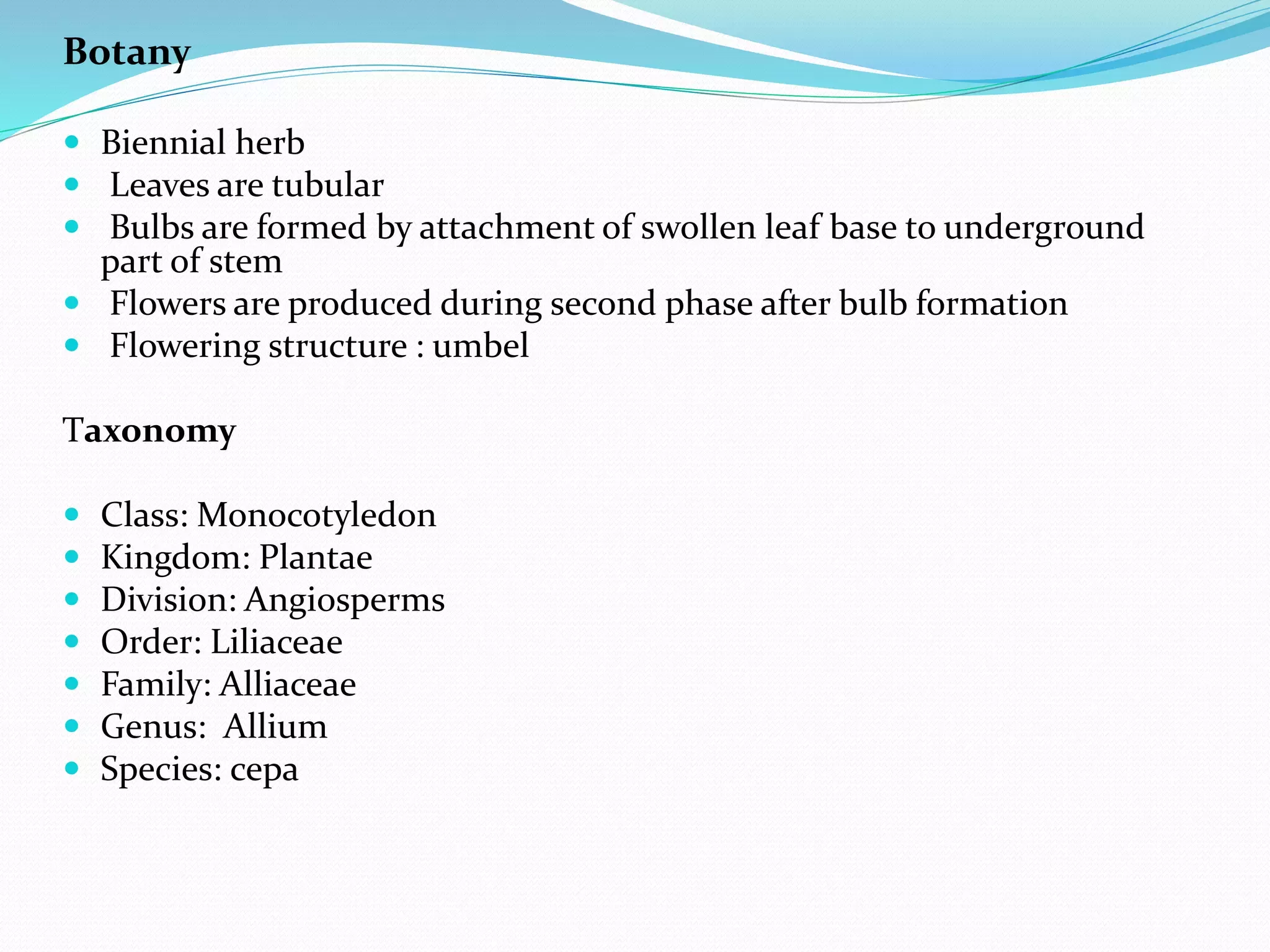
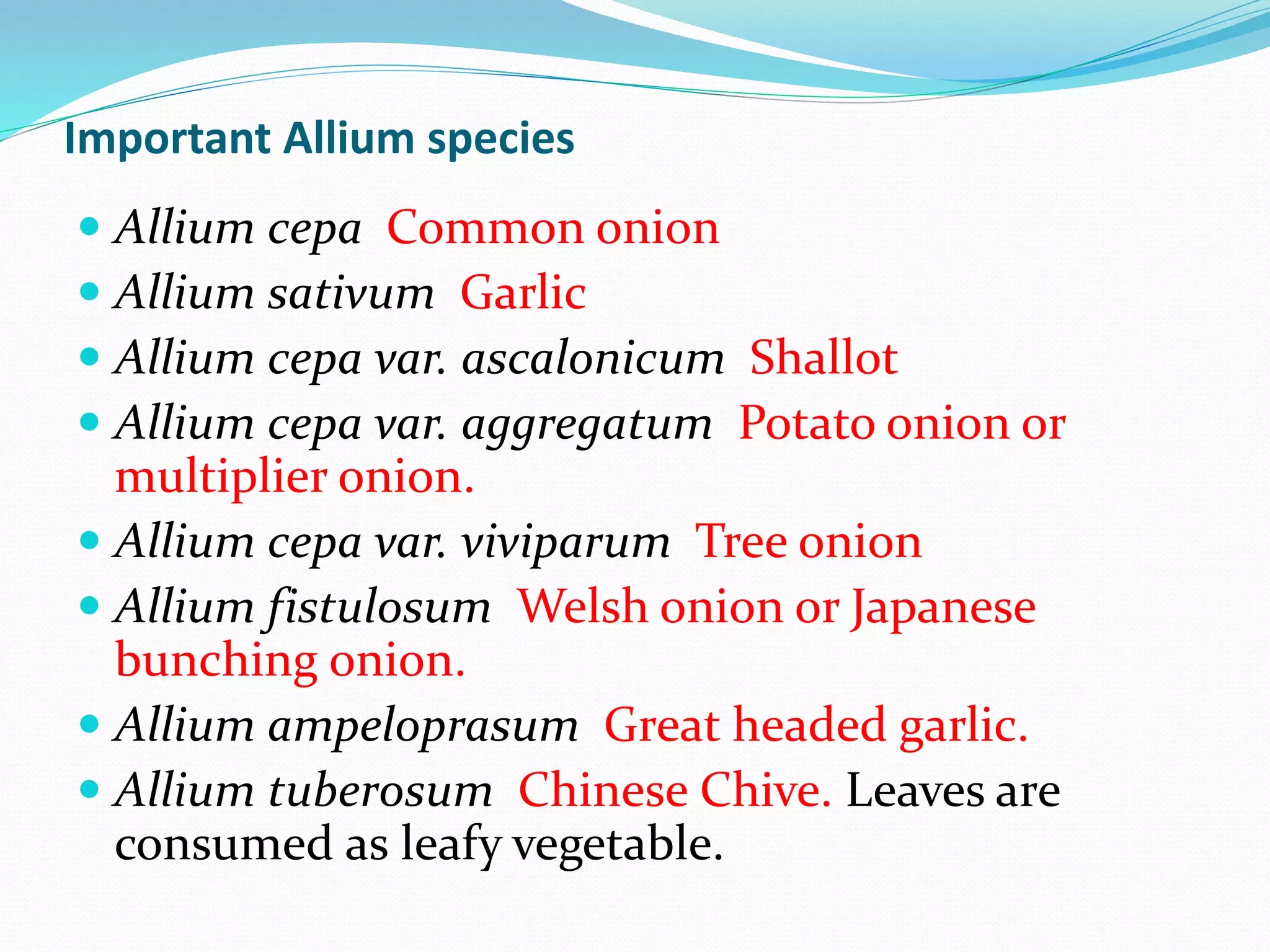
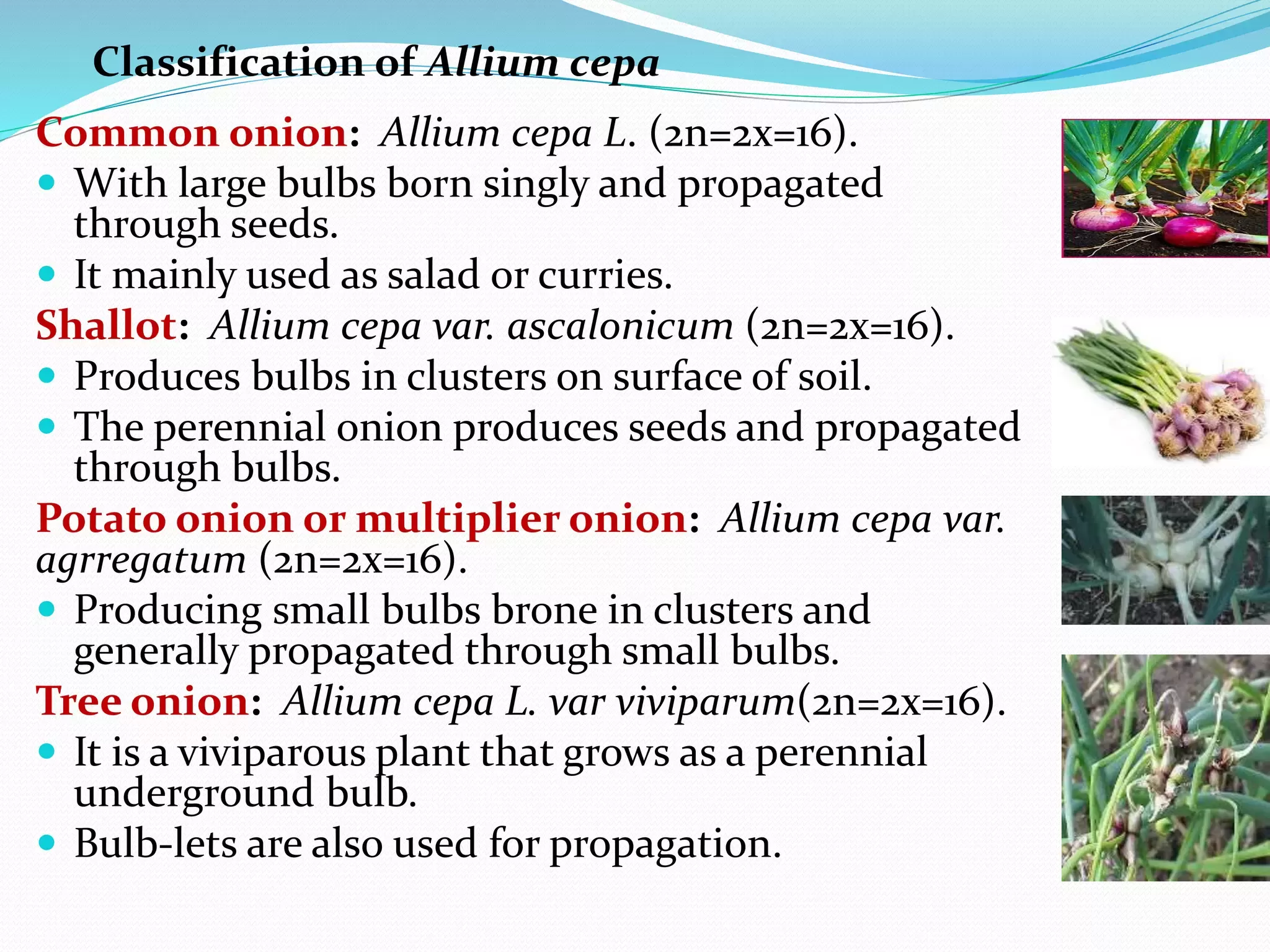
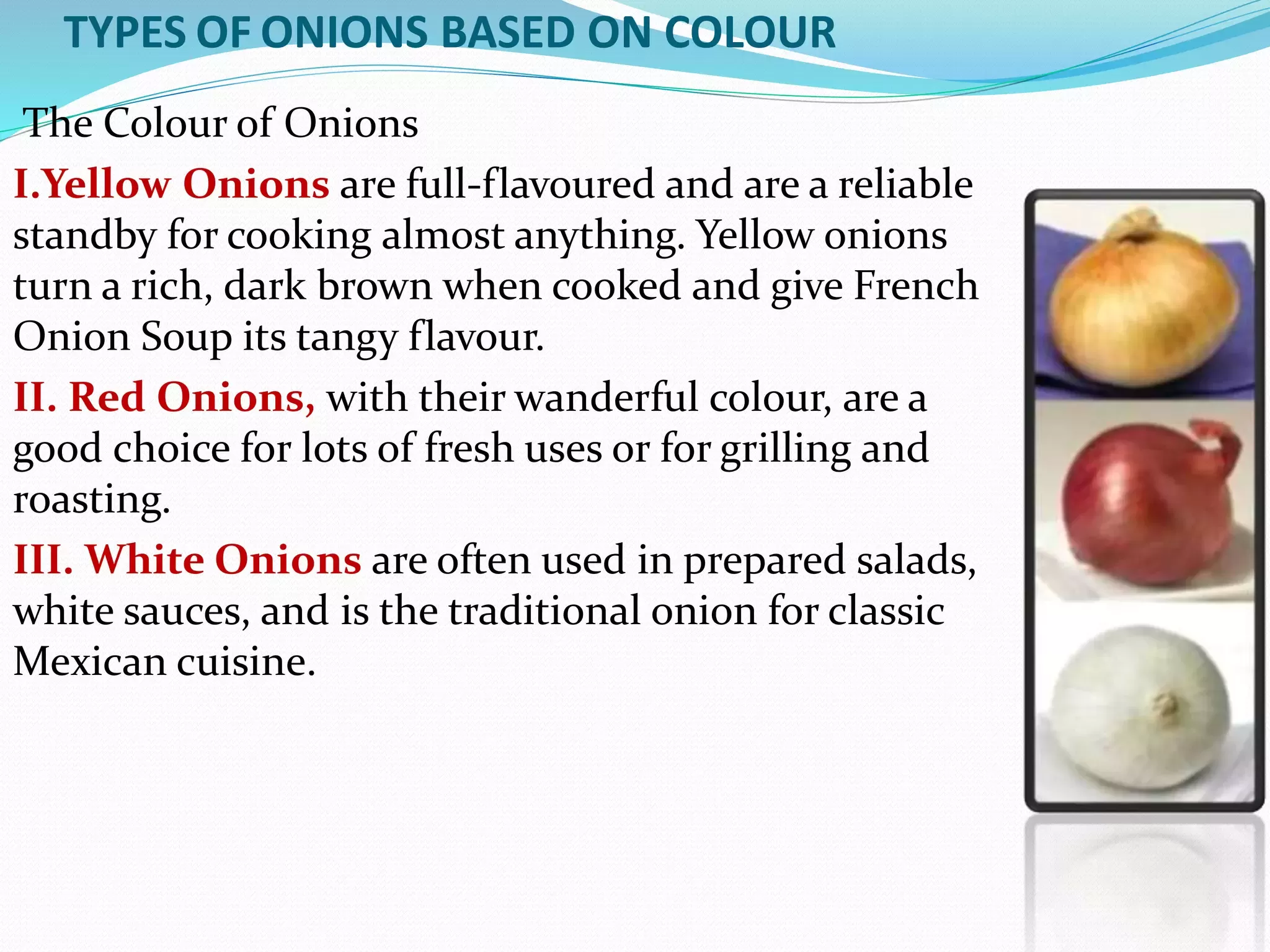
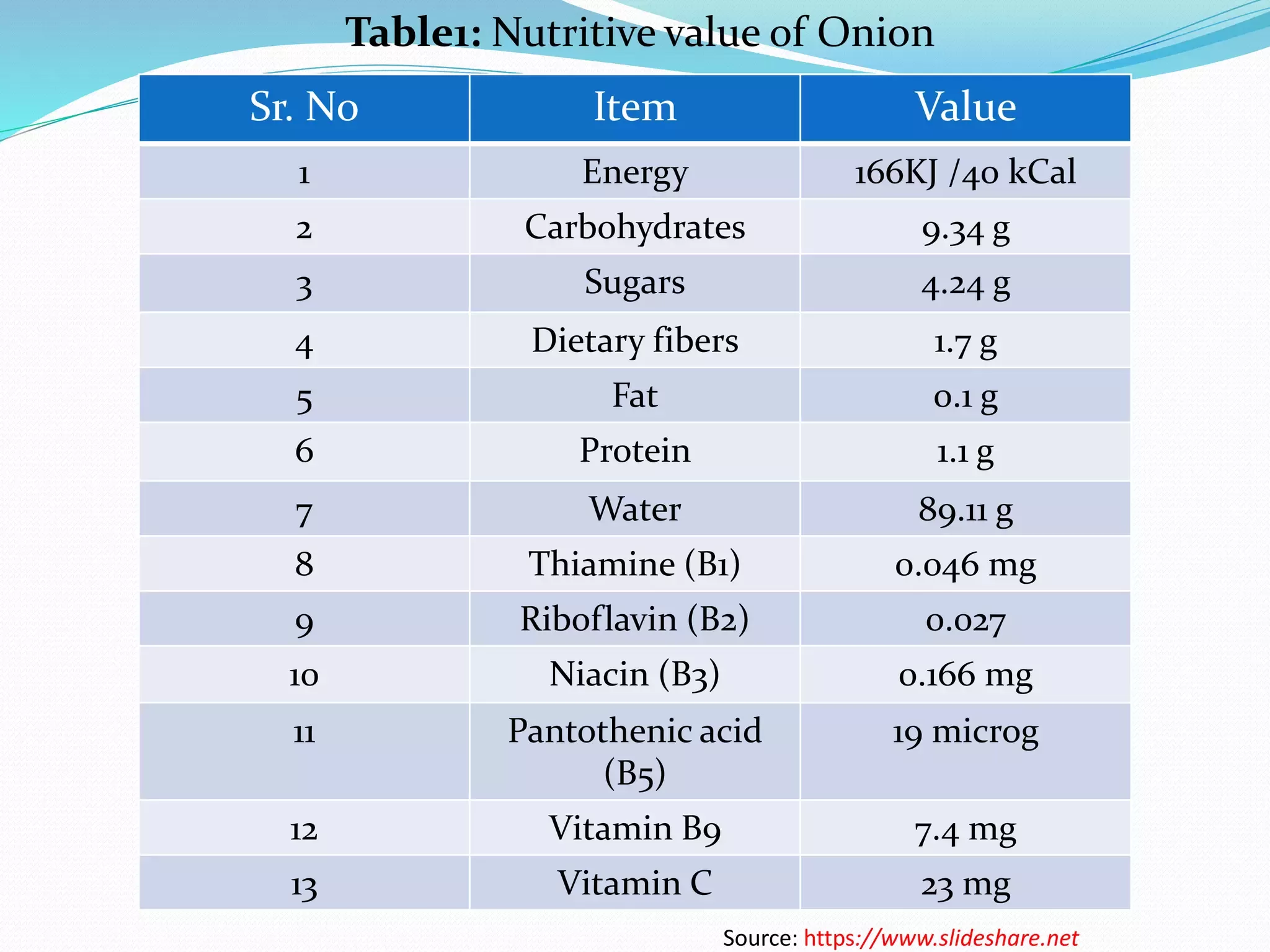
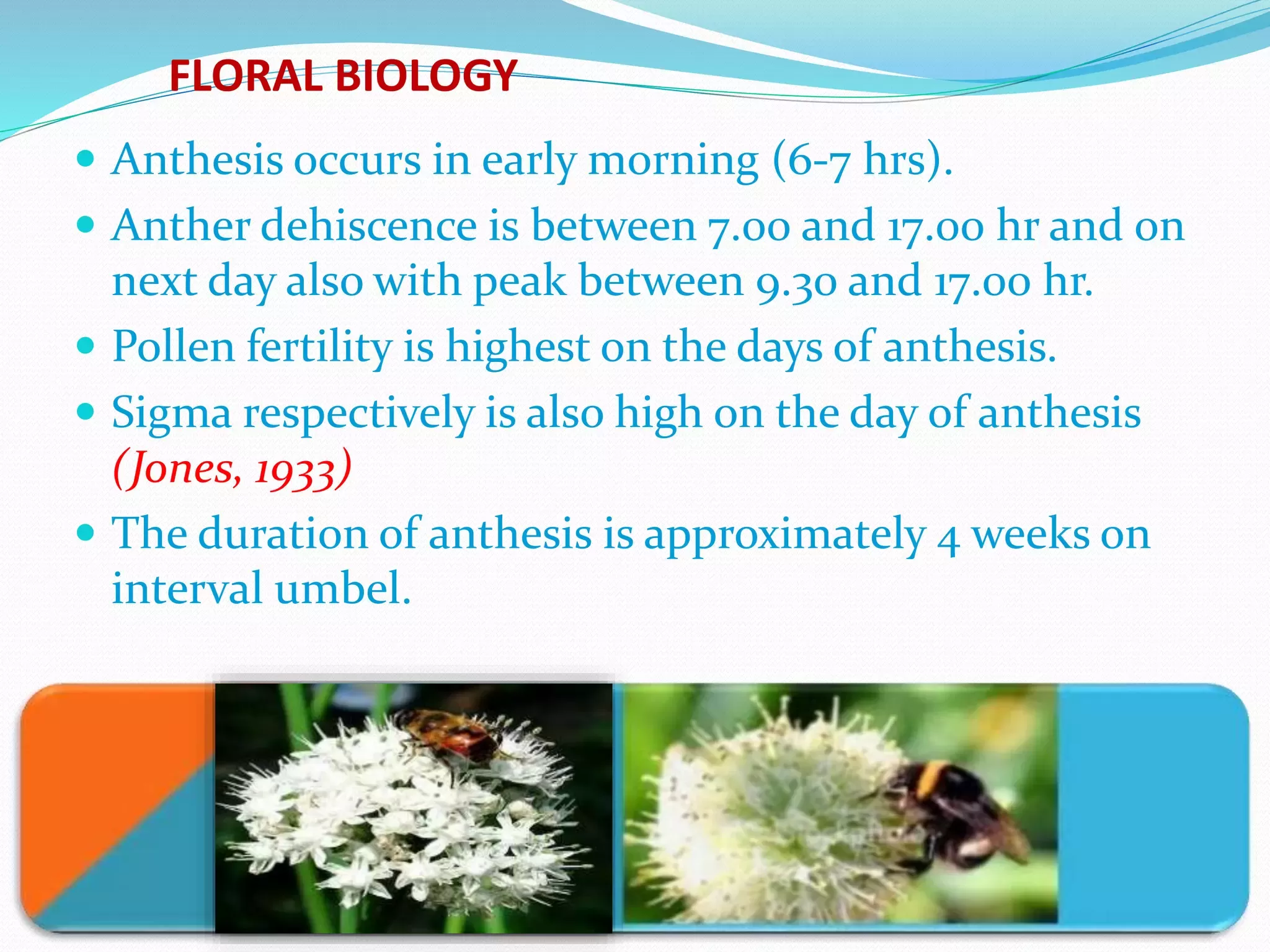
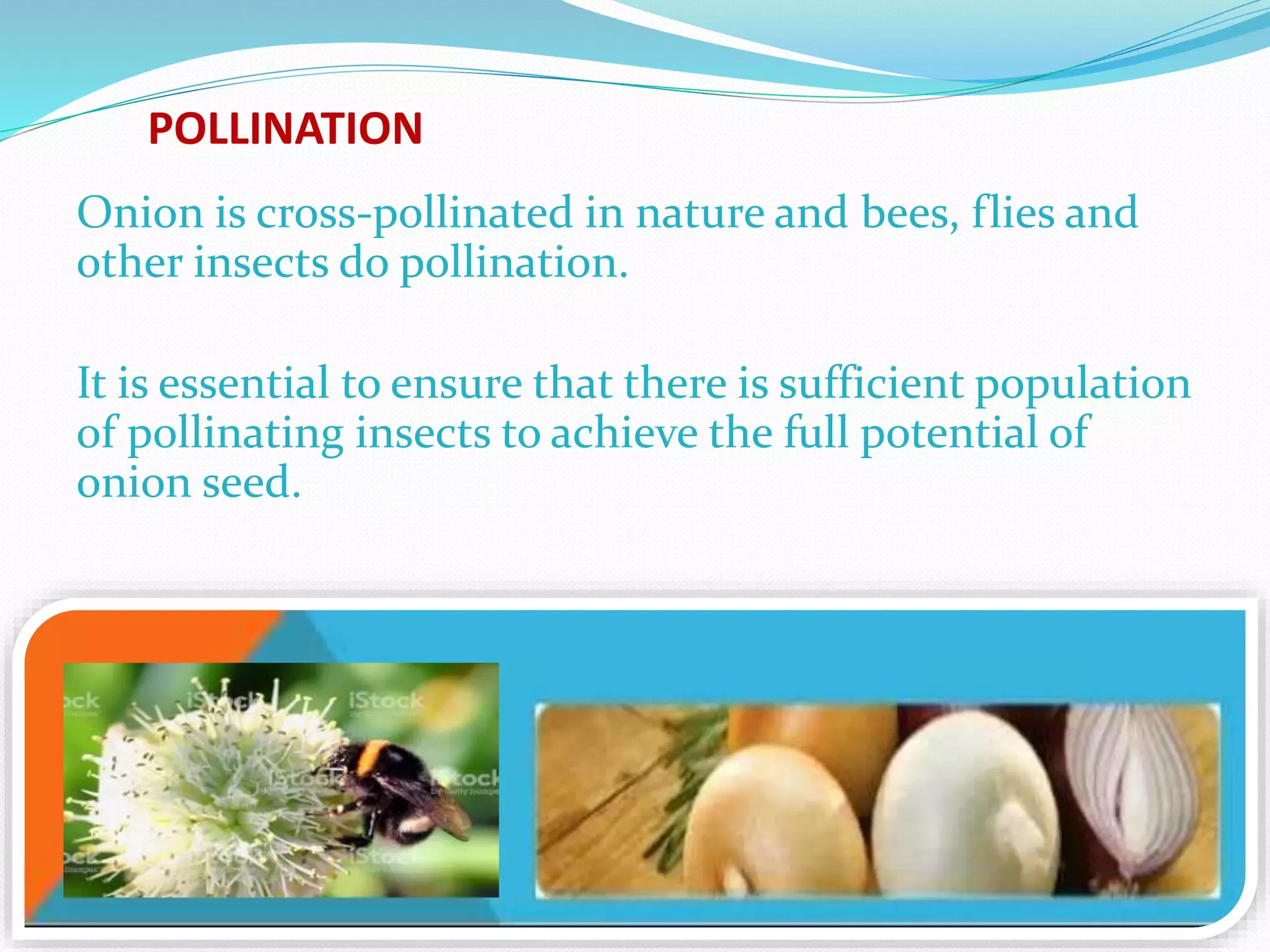
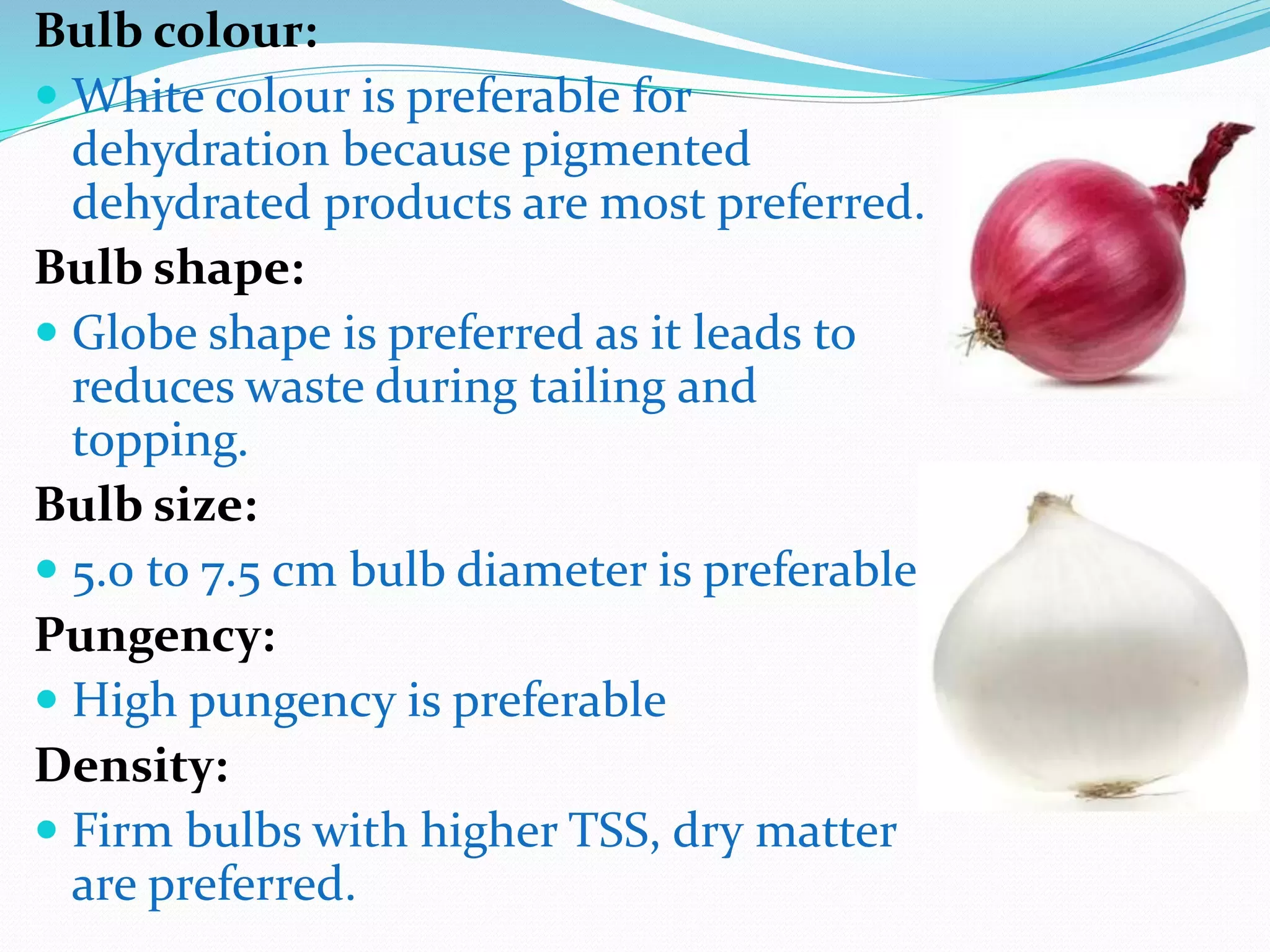
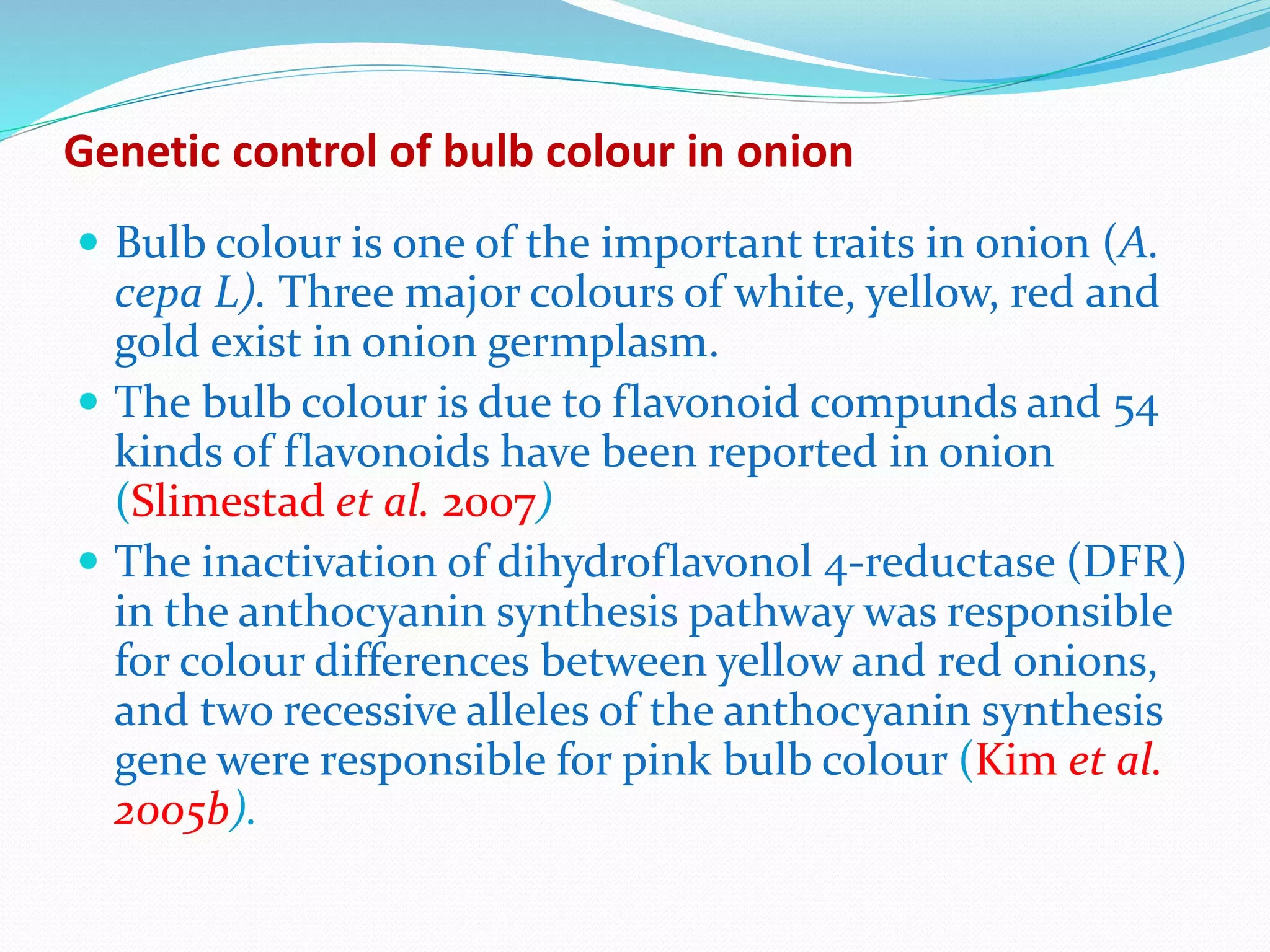
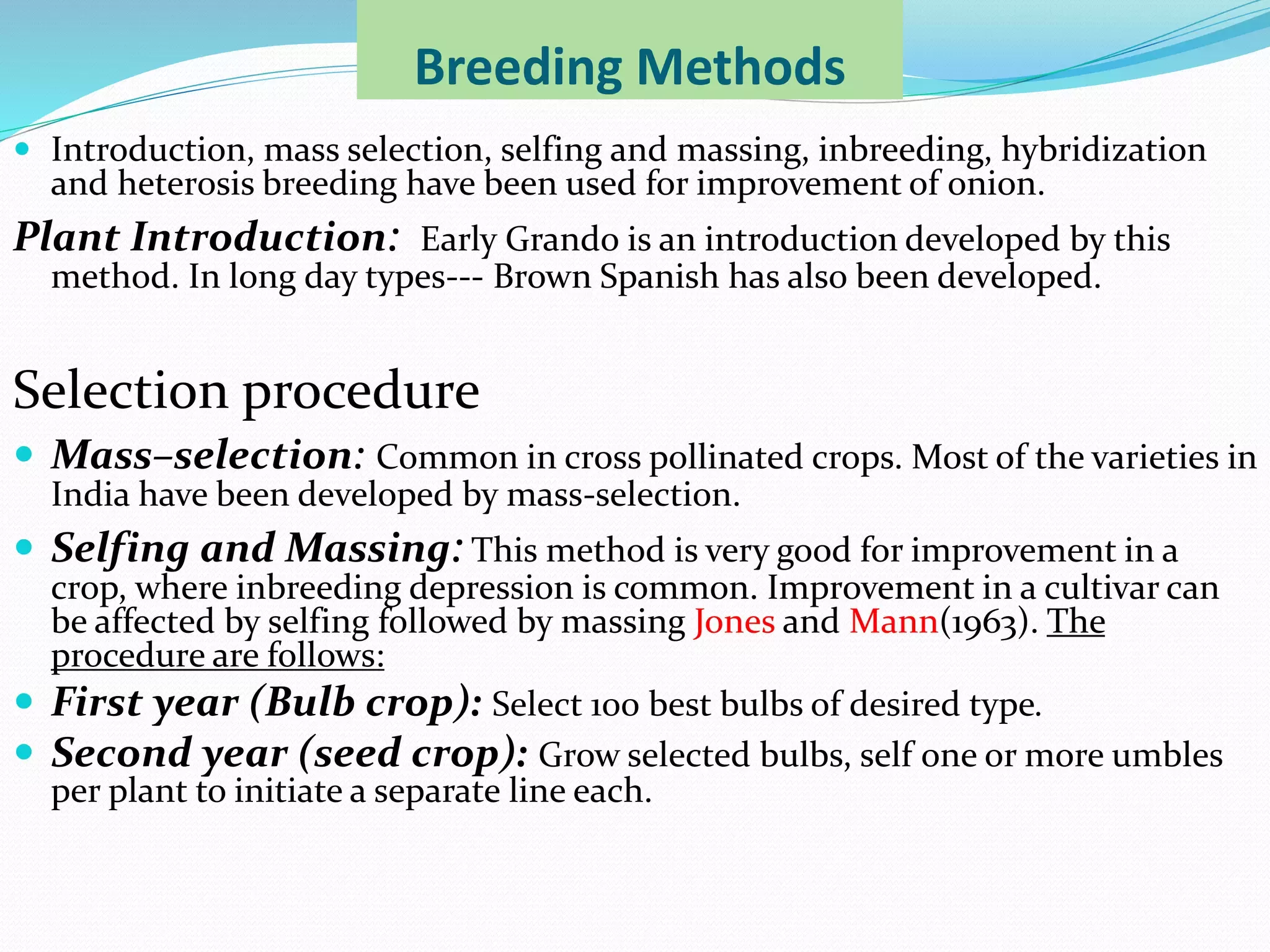
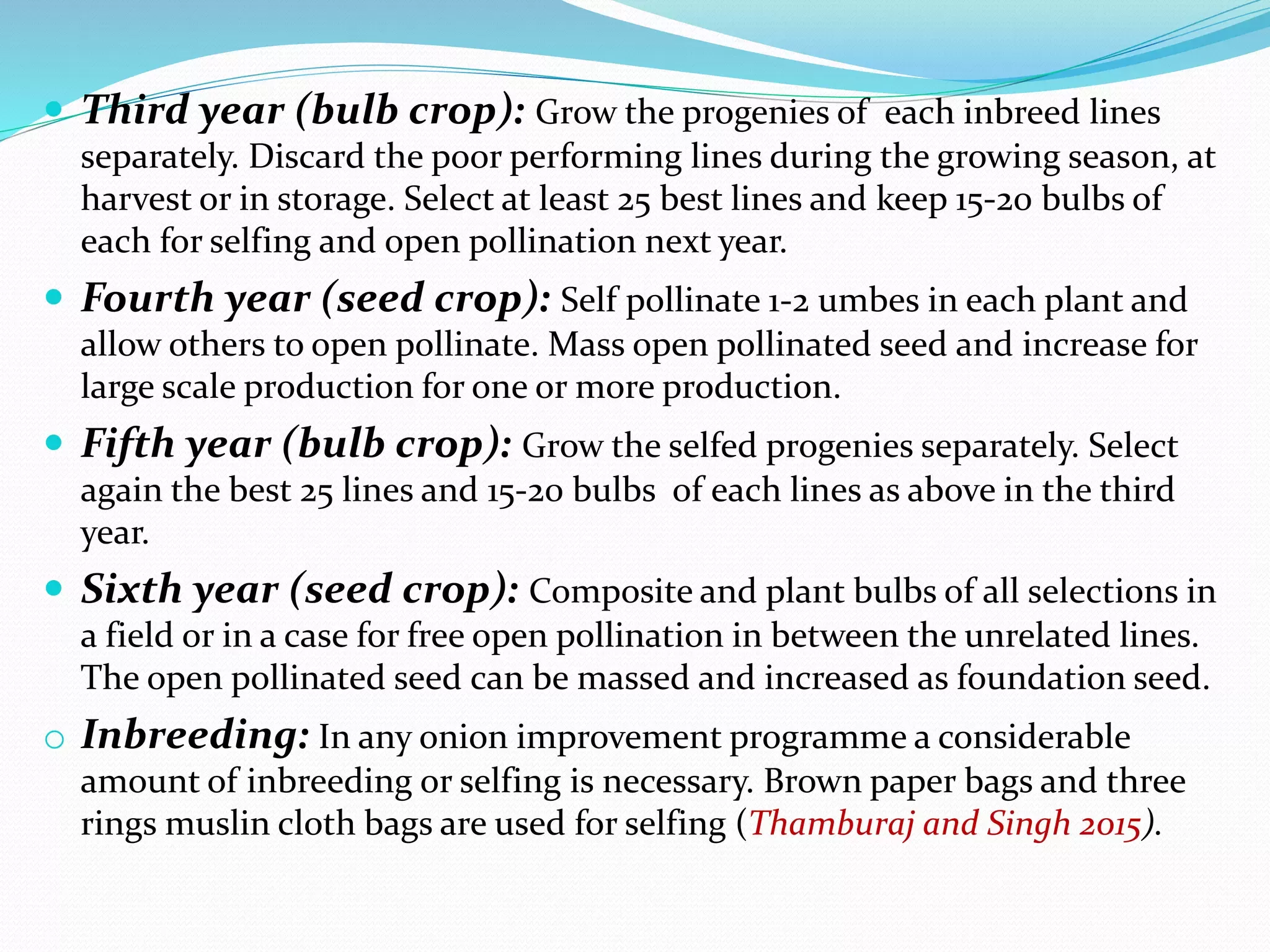
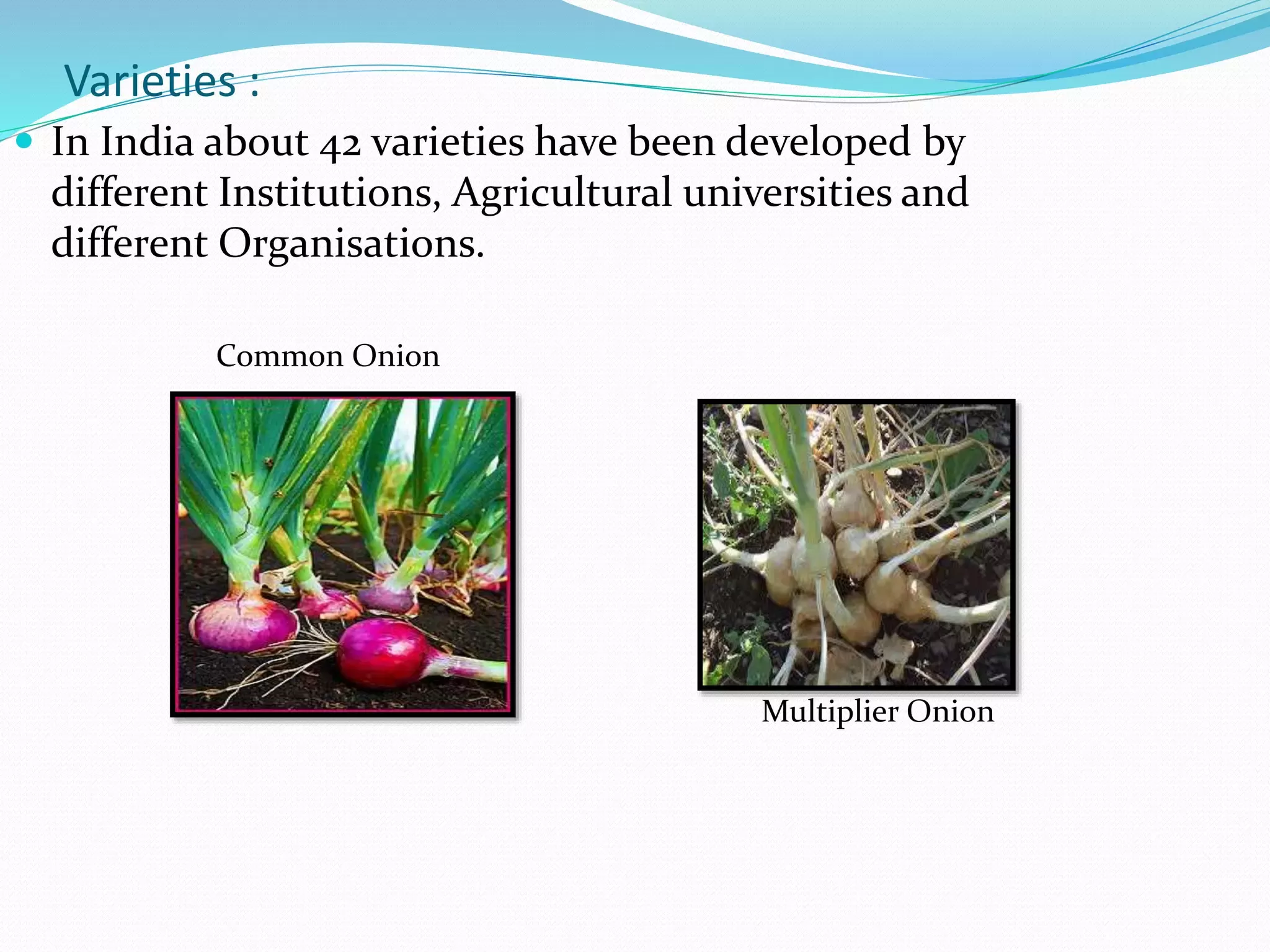
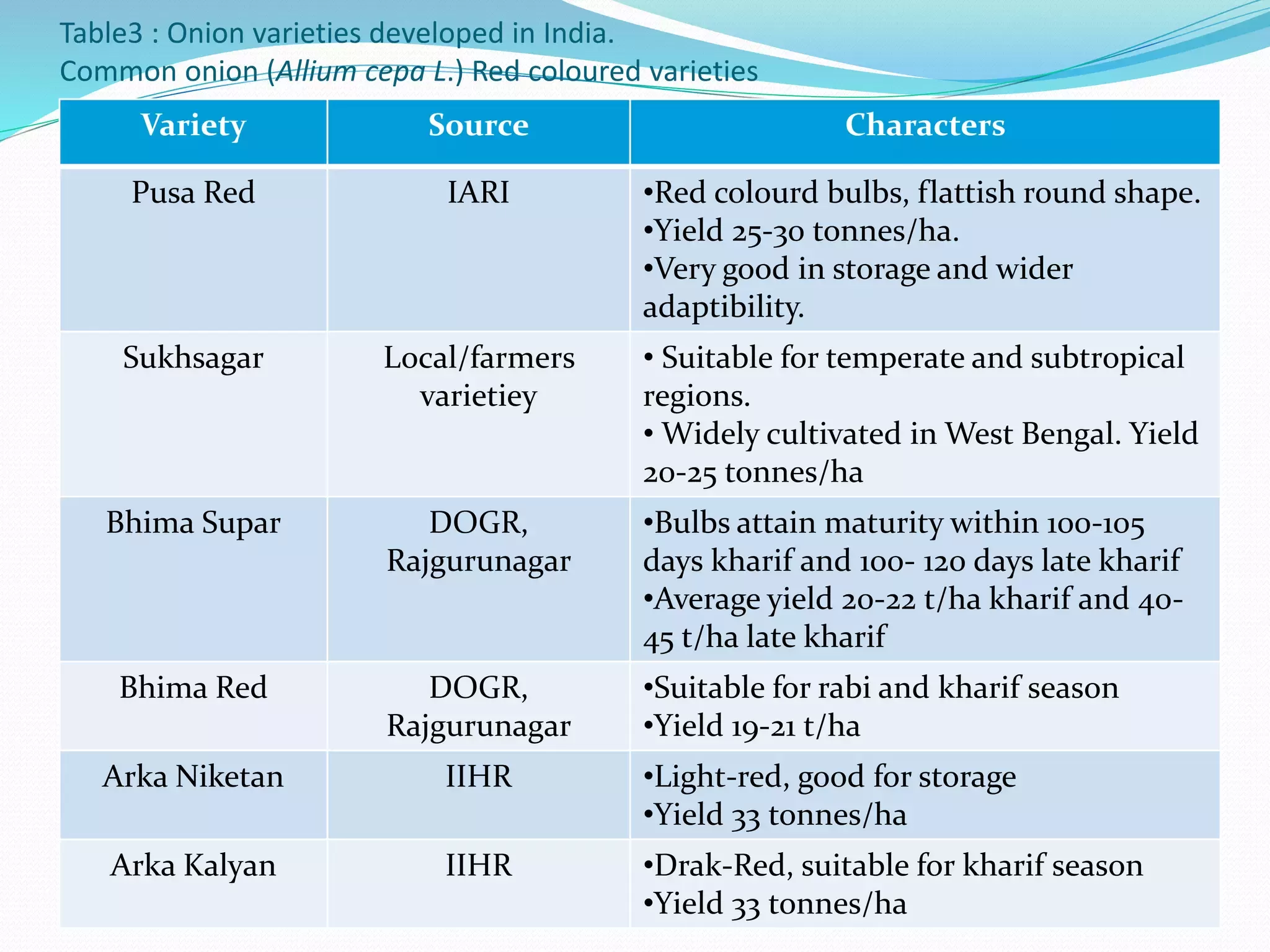
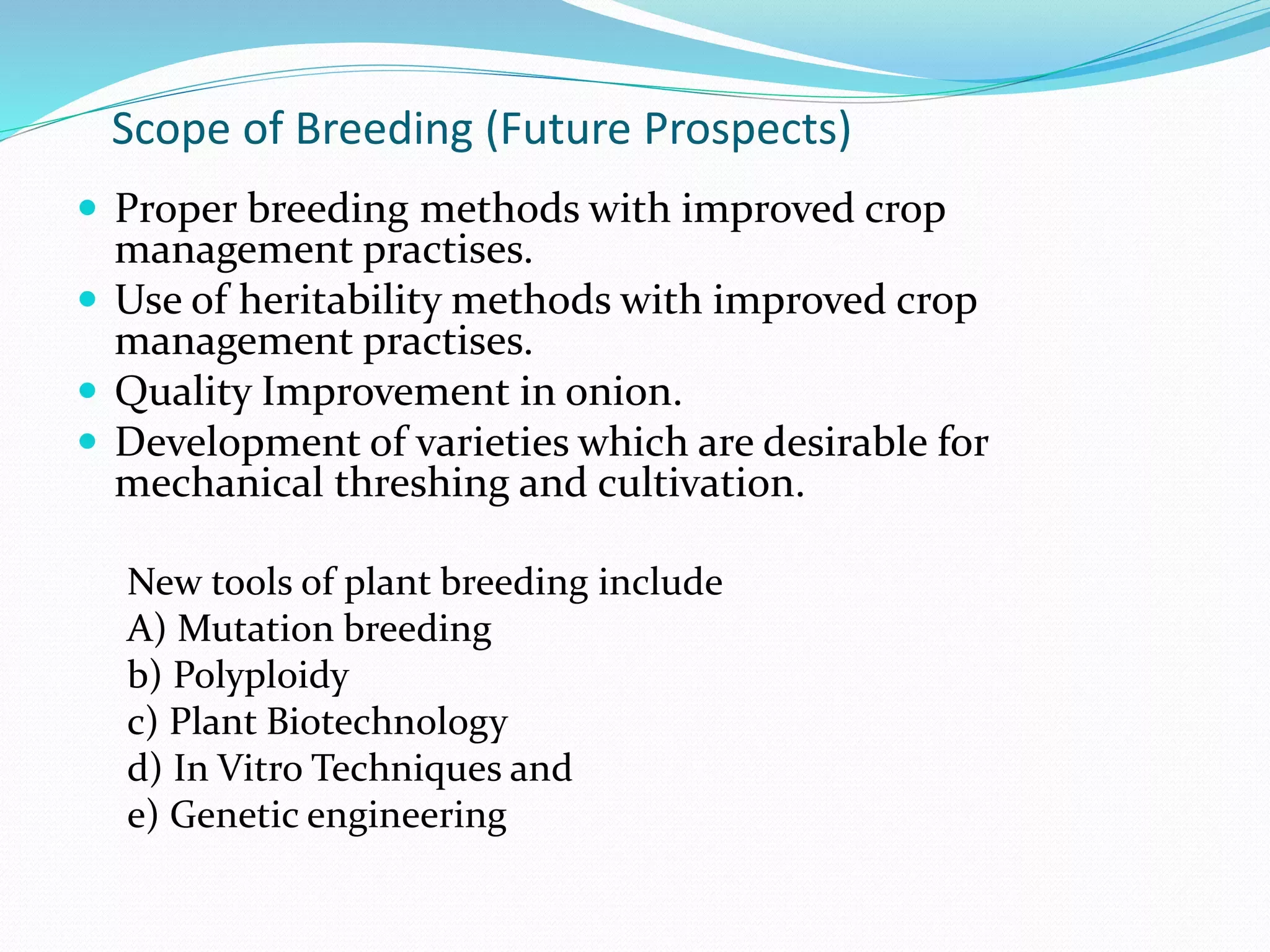
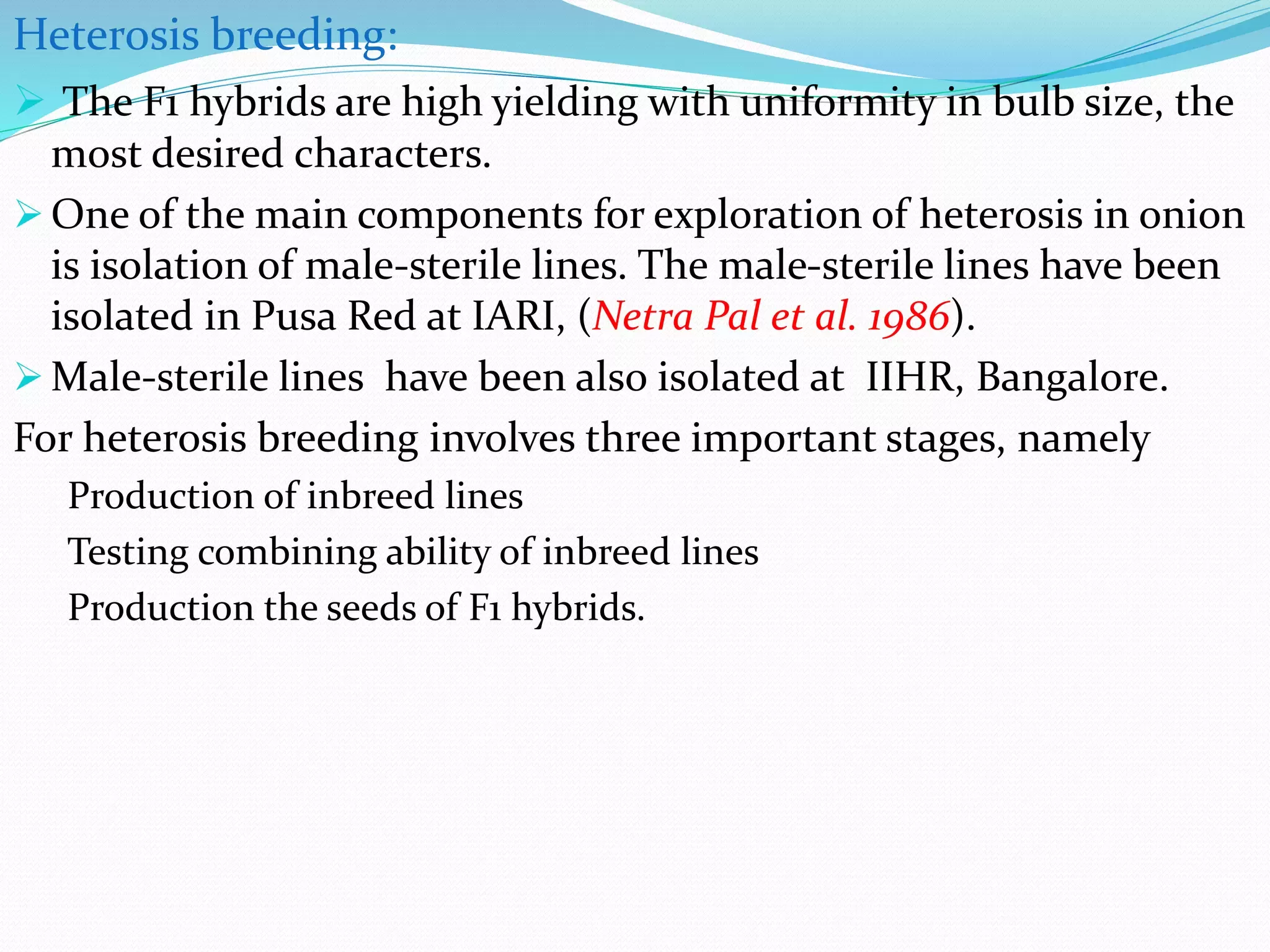
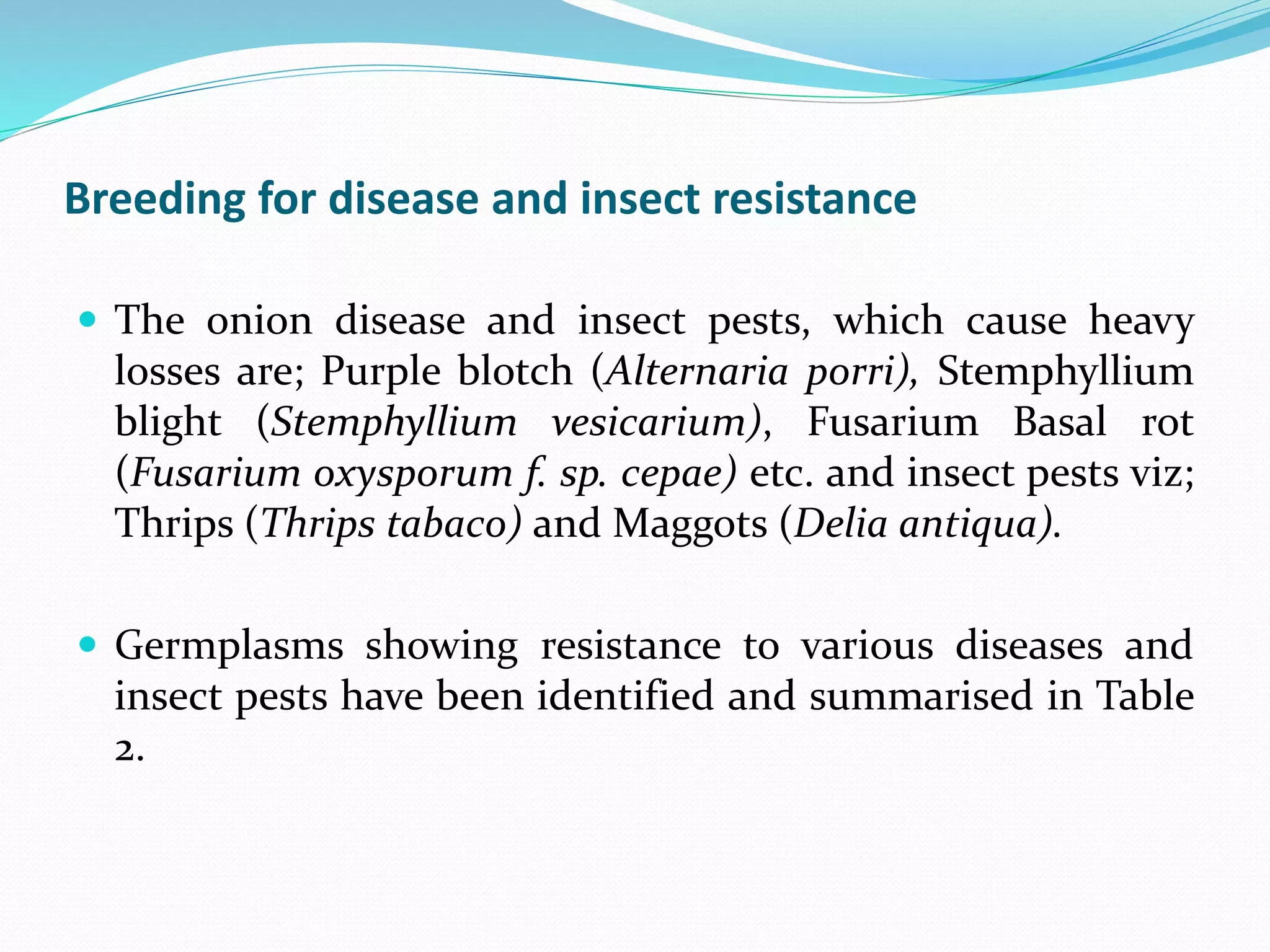
Onions, scientifically known as Allium cepa, belong to the Alliaceae family and originated in Asia. They are a biennial herb characterized by tubular leaves and bulbs formed from swollen leaf bases attached to the underground stem. Major onion-producing countries include China, India, and Pakistan, with India ranking third in exports, primarily from Maharashtra and Karnataka. Onions thrive in a variety of climates but require specific conditions for optimal growth, including well-drained soil and adequate pollination, primarily by insects. Cultivation highlights include the development of various onion types based on color, such as yellow, red, and white, each serving different culinary purposes. Onions are rich in nutrients, providing energy, carbohydrates, and vitamins. They are significant in agriculture for their high yield

Slide 1

Slide 1

Slide 2

Slide 2

Slide 3

Slide 3

Slide 4

Slide 4

Slide 5

Slide 5

Slide 6

Slide 6

Slide 7

Slide 7

Slide 8

Slide 8

Slide 9

Slide 9

Slide 10

Slide 10

Slide 11

Slide 11

Slide 12

Slide 12

Slide 13

Slide 13

Slide 14

Slide 14

Slide 15

Slide 15

Slide 16

Slide 16

Slide 17

Slide 17

Slide 18

Slide 18

Slide 19

Slide 19

Slide 20

Slide 20

Slide 21

Slide 21

Slide 22

Slide 22

Slide 23
Slide 23

Slide 24

Slide 24

Slide 25

Slide 25

Slide 26

Slide 26
1 / 26

Ppt on Litchi Breeding

Summary

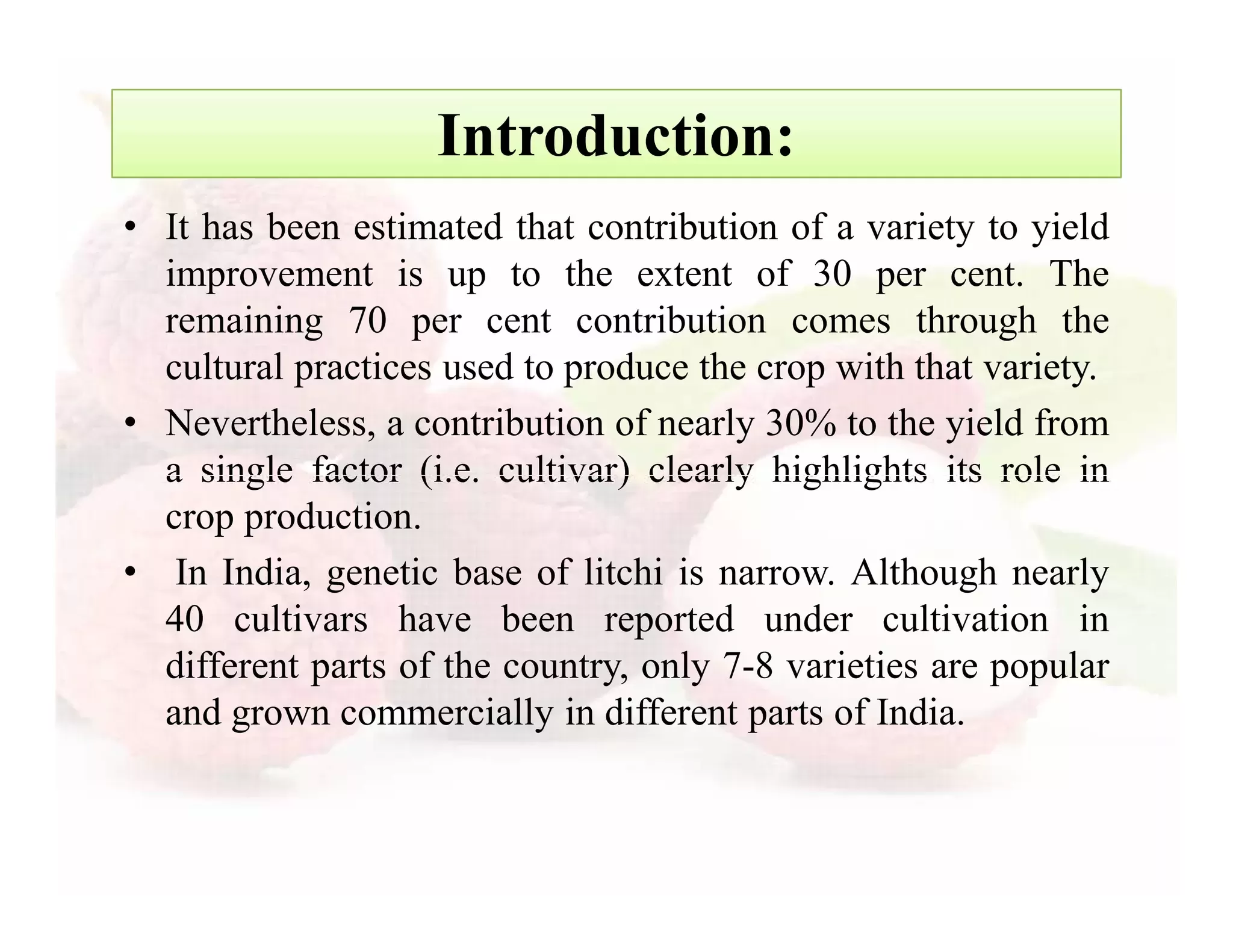
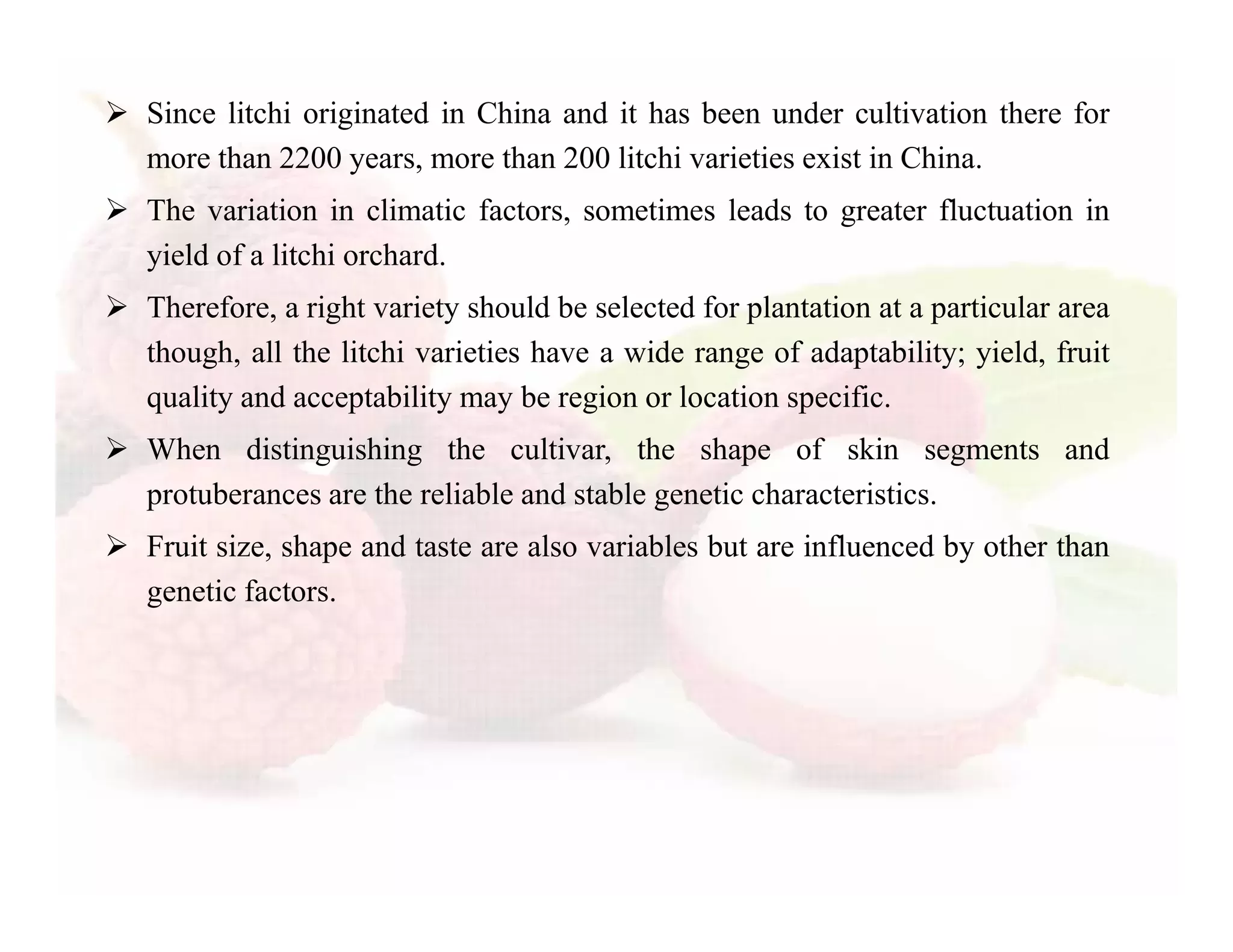
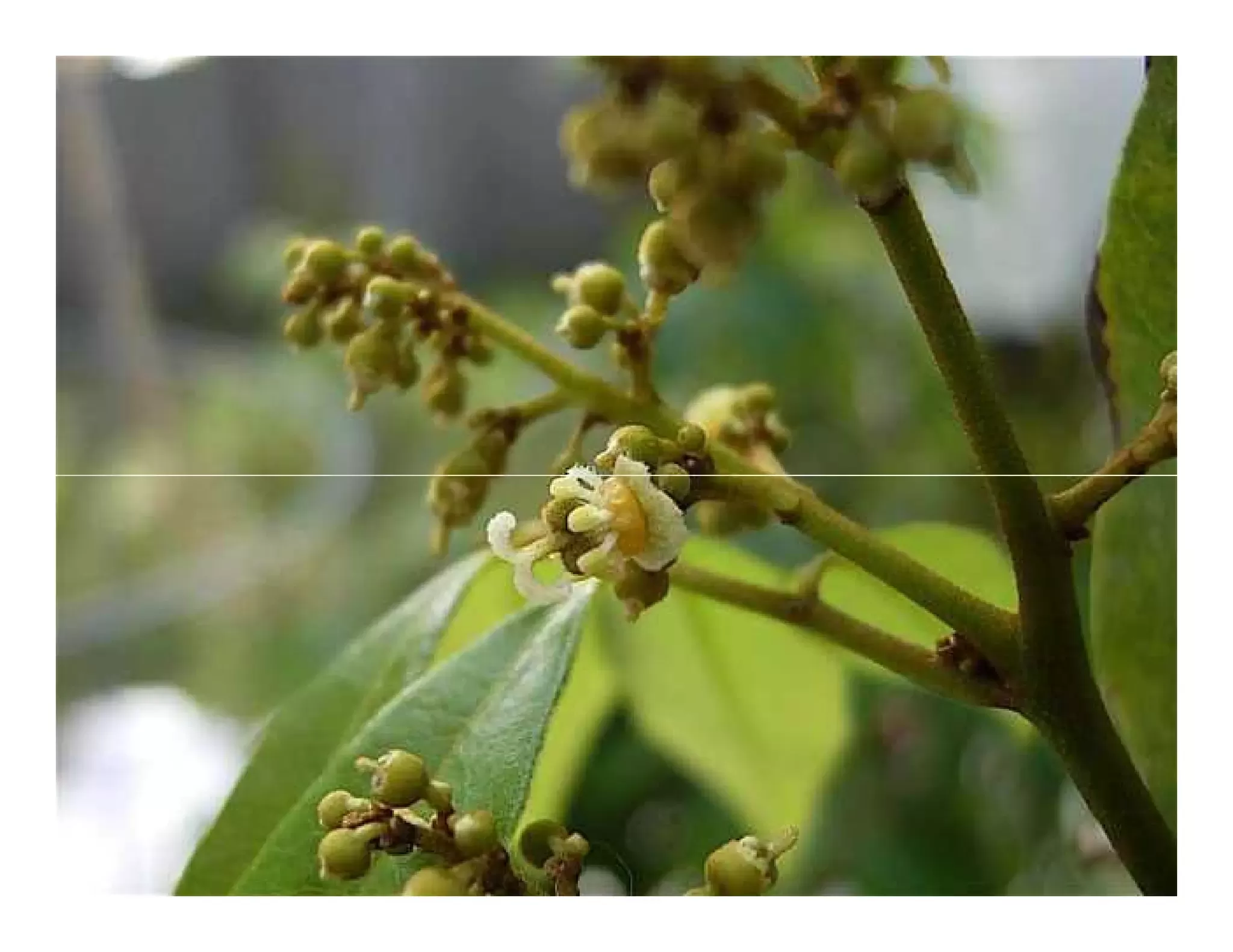
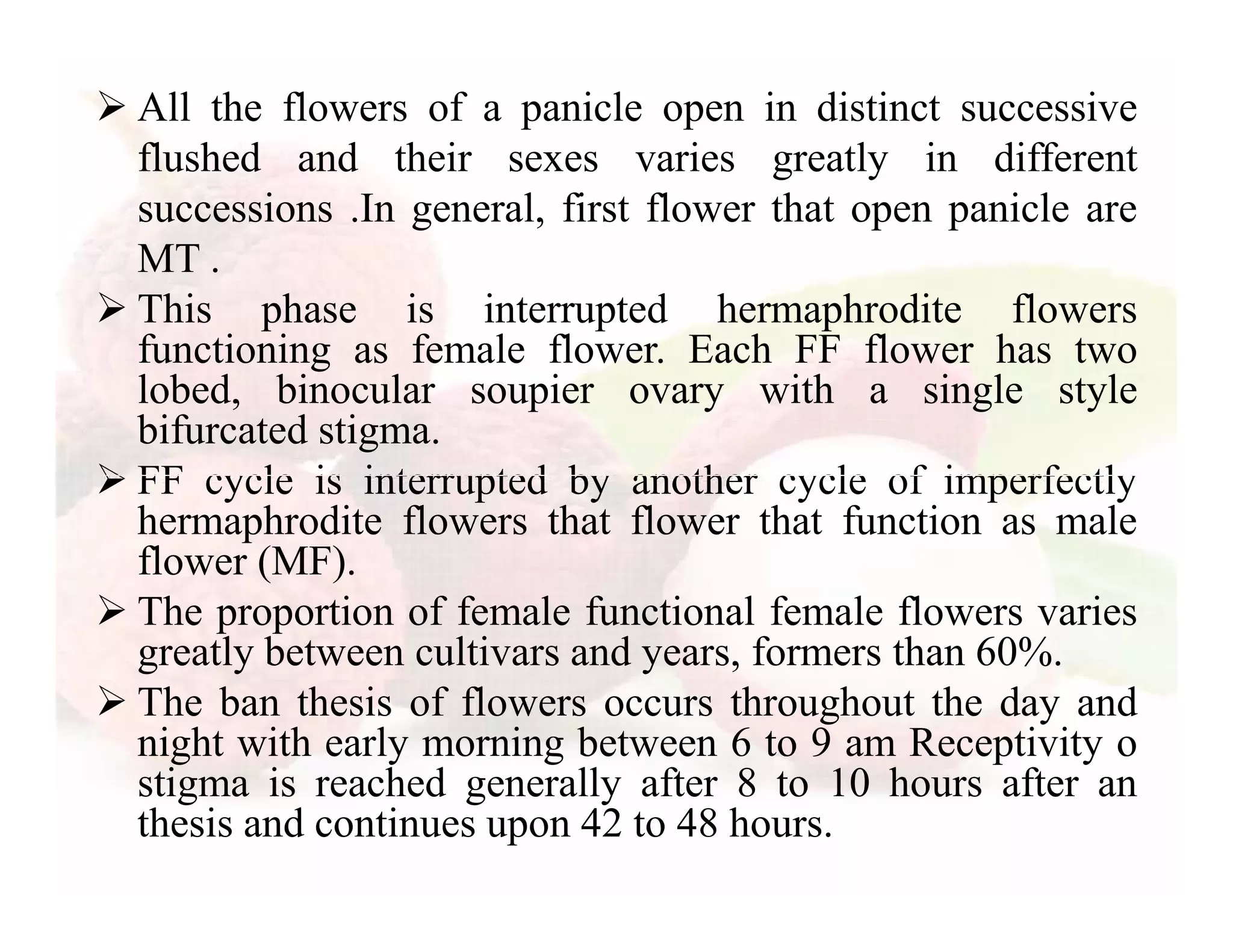
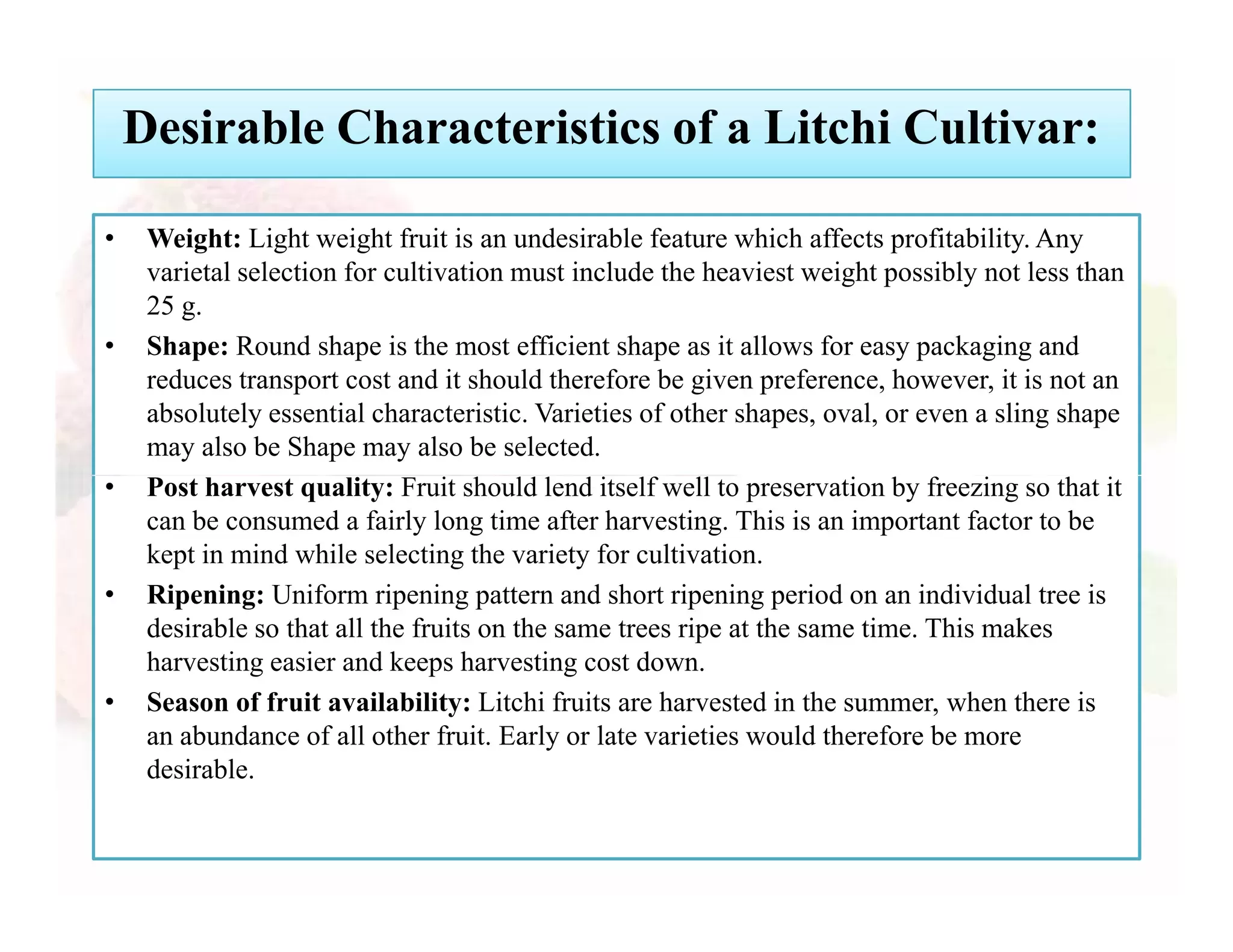
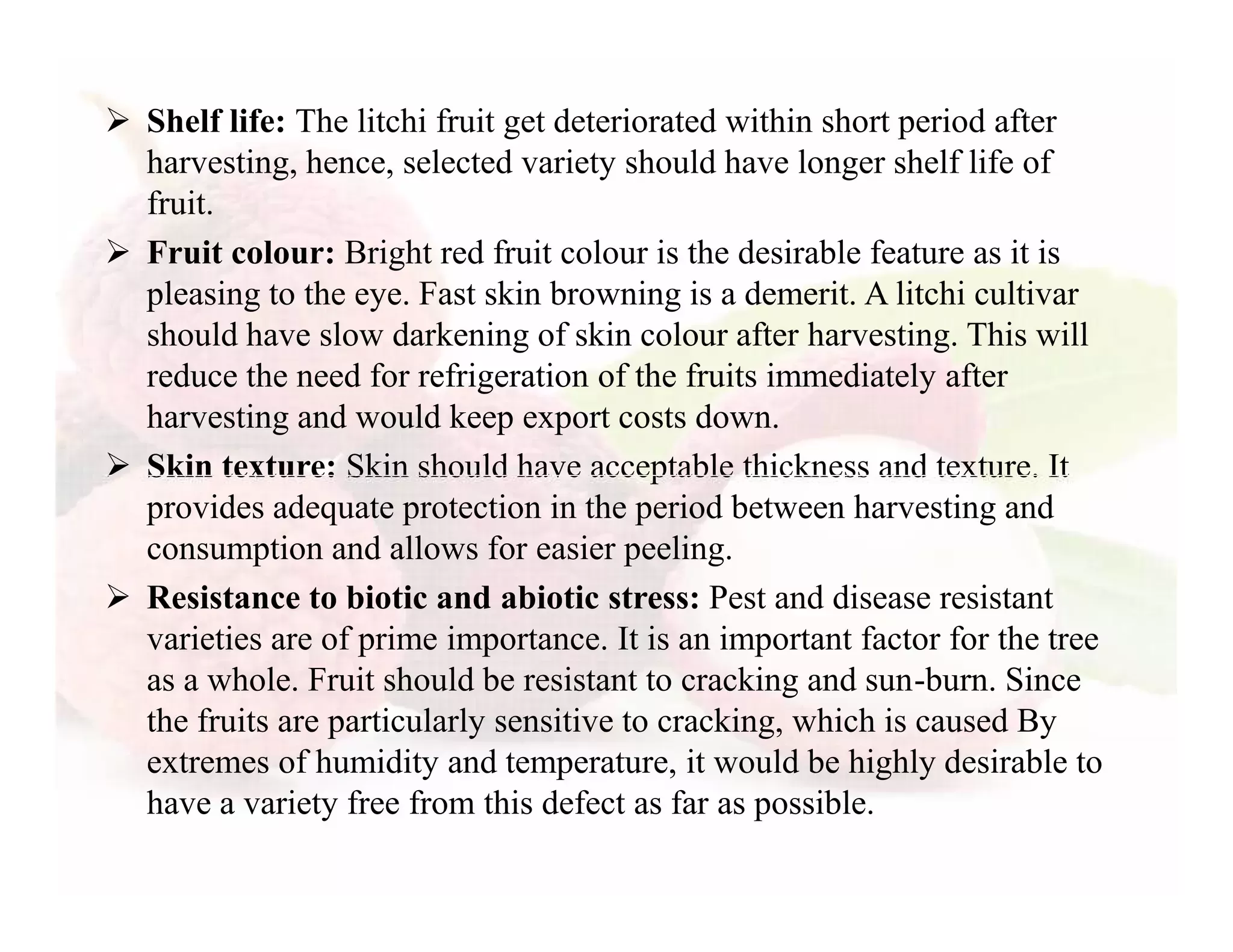
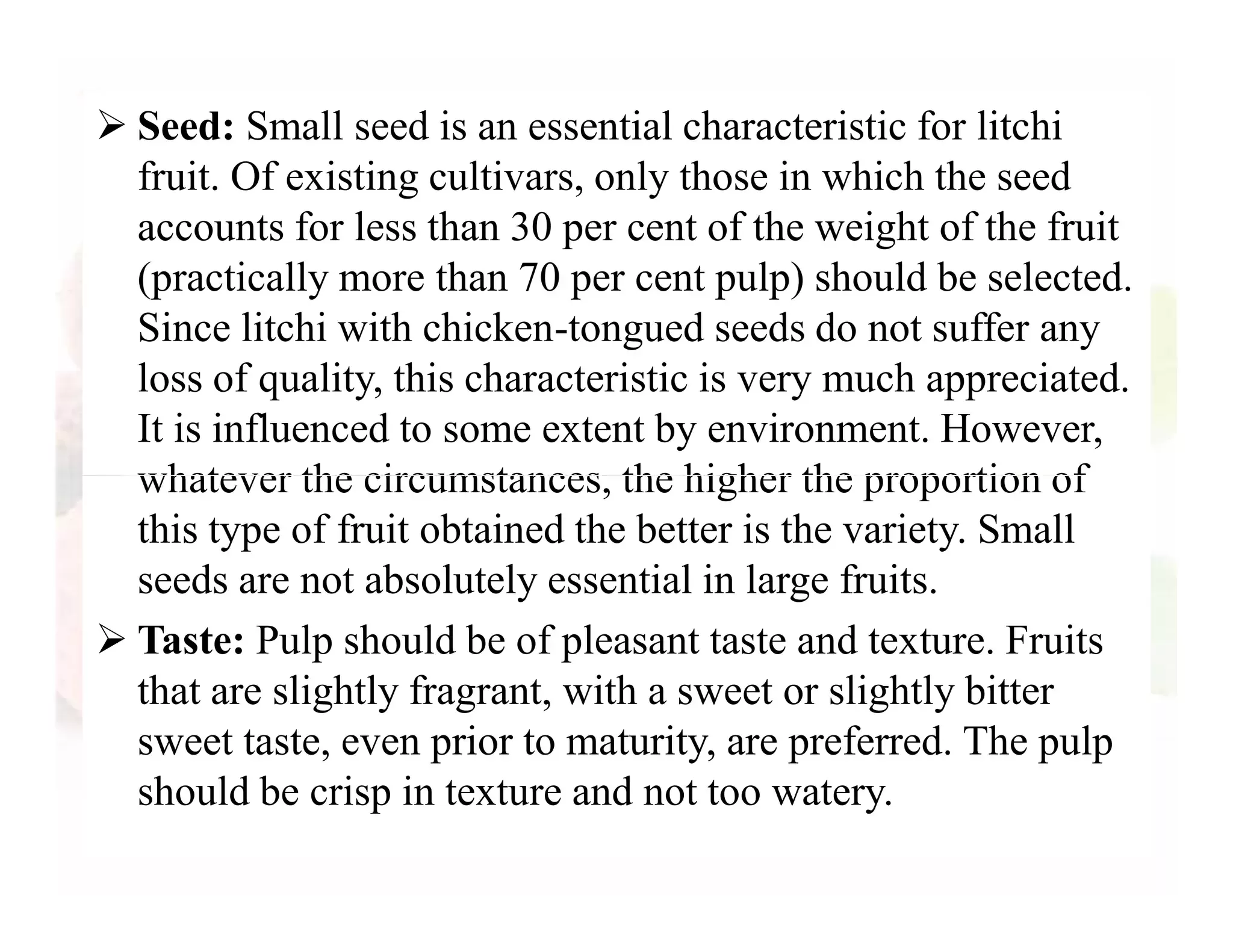
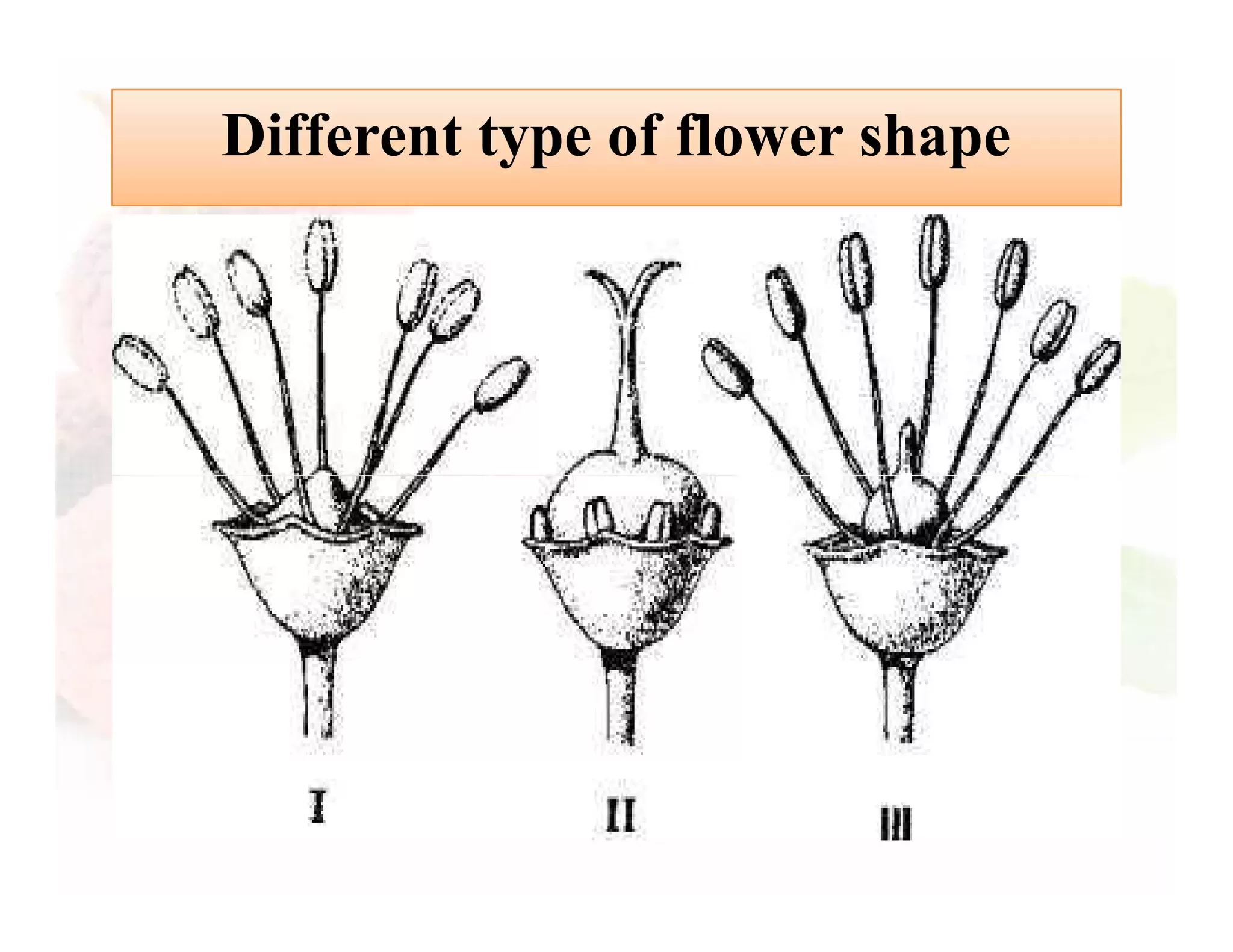
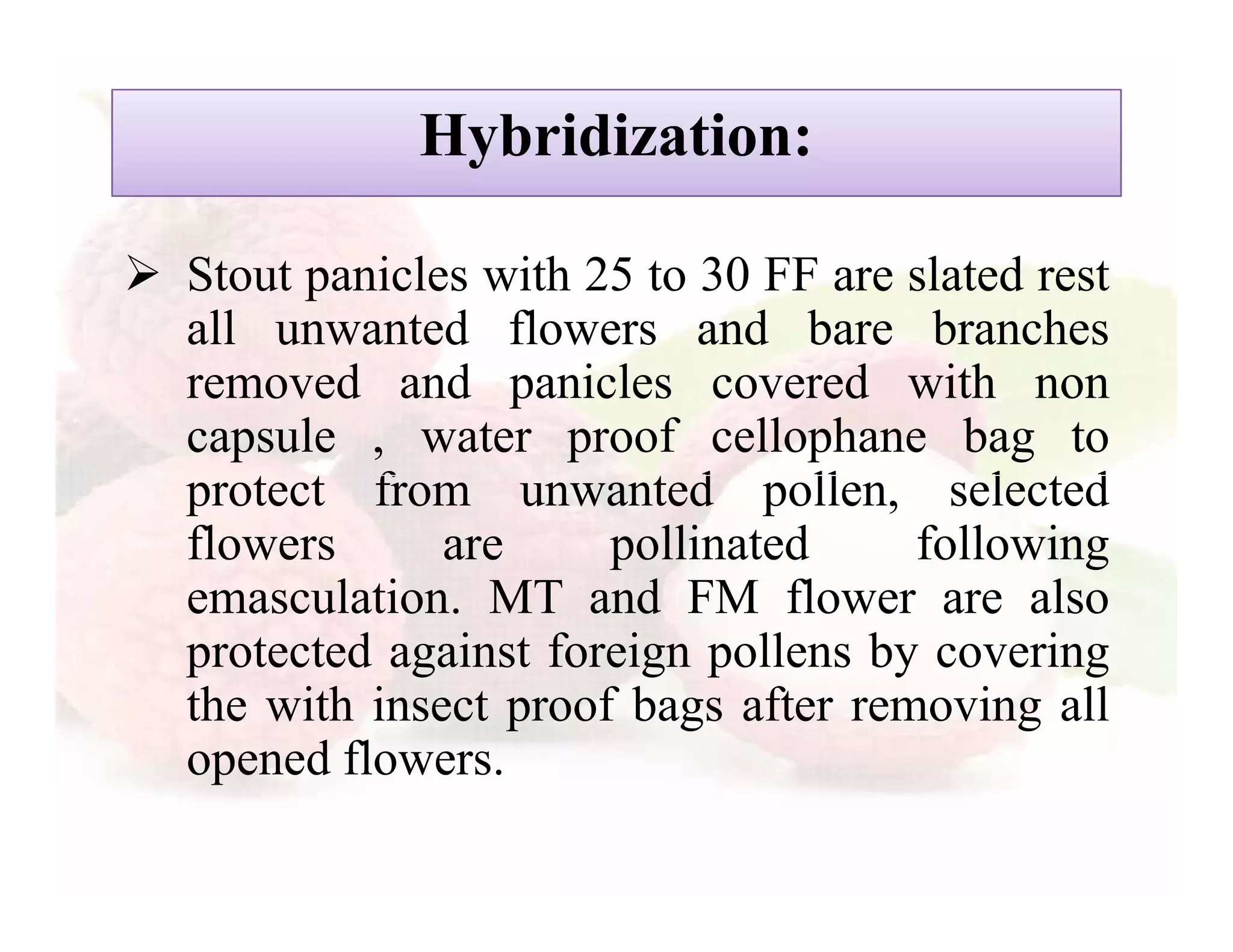
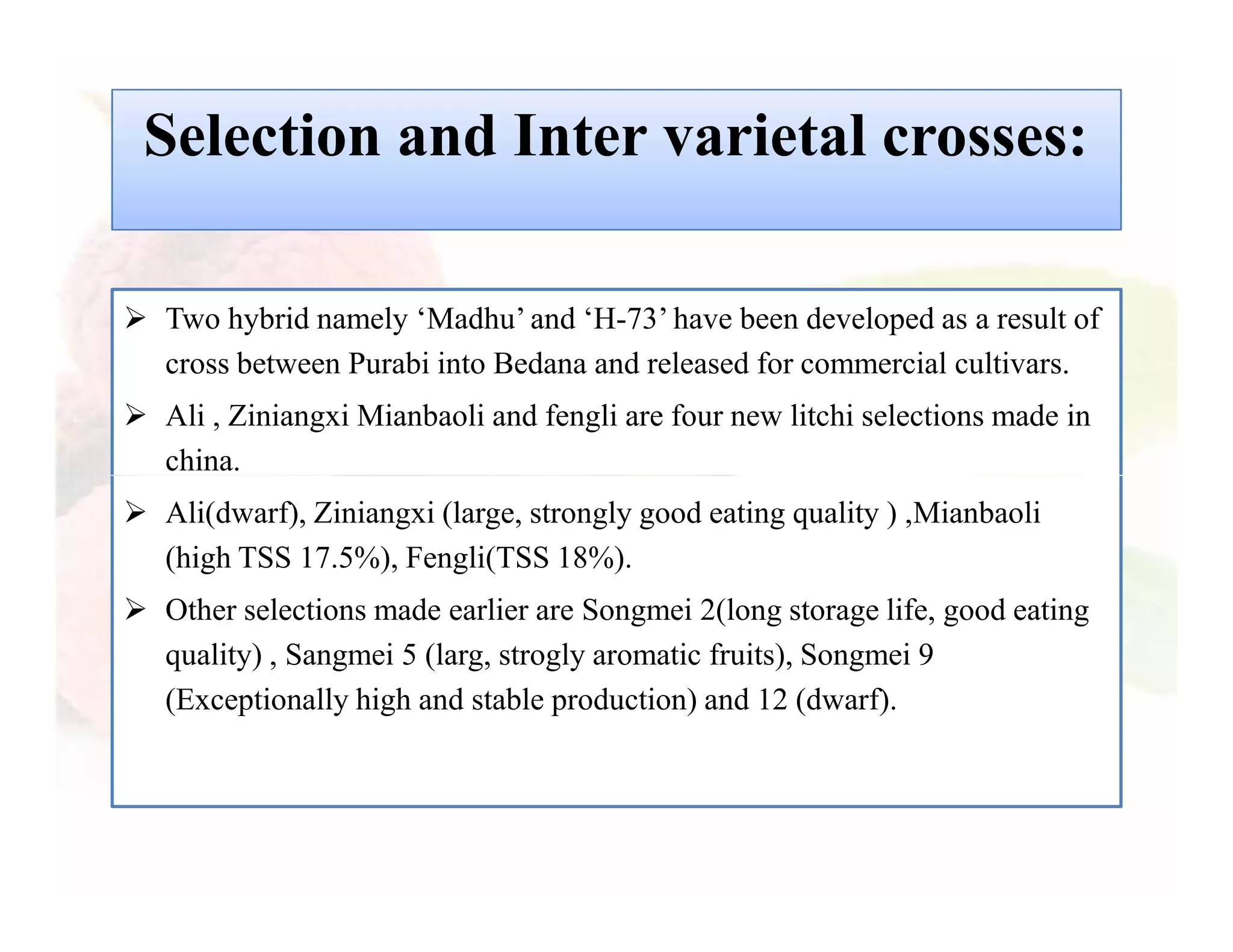
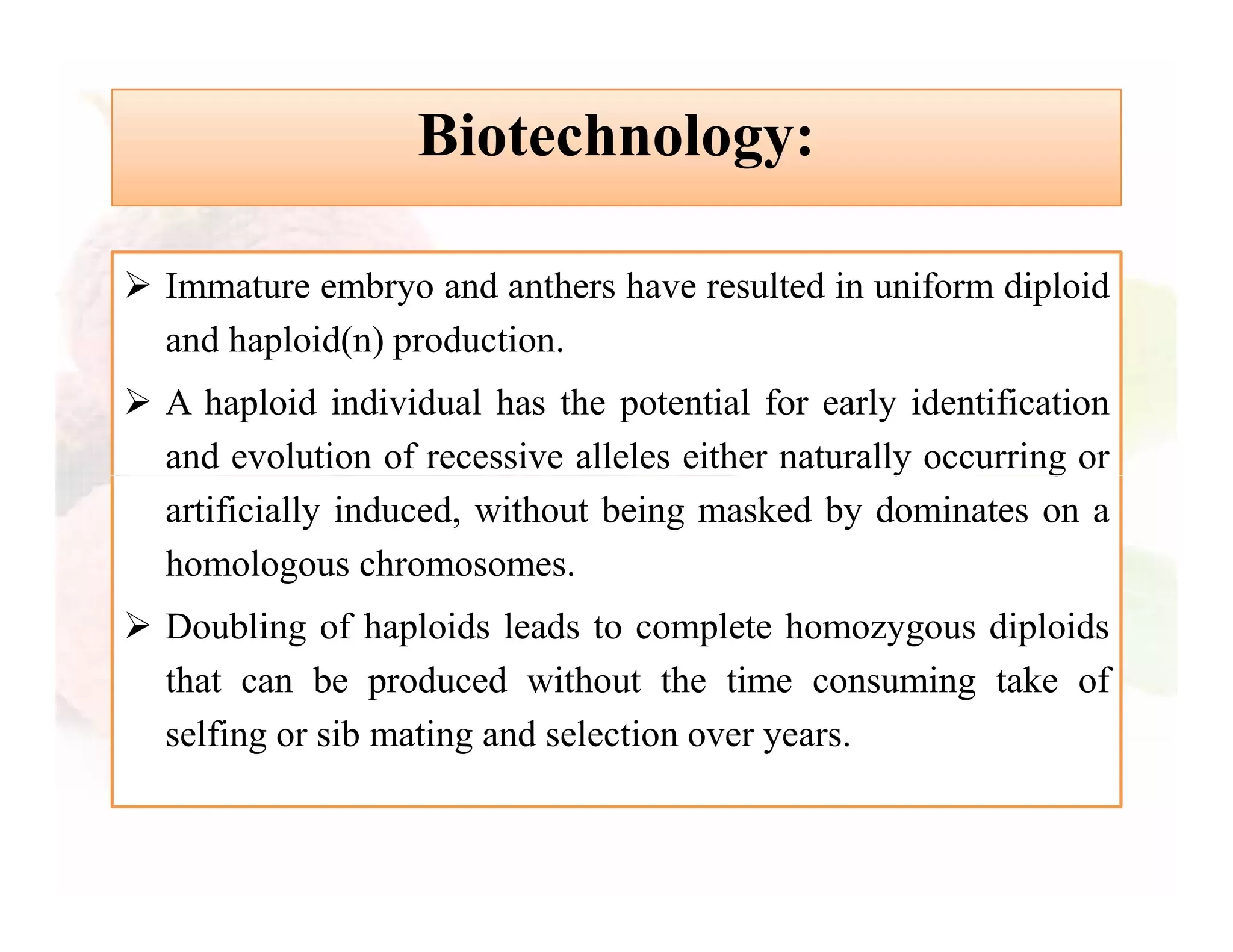
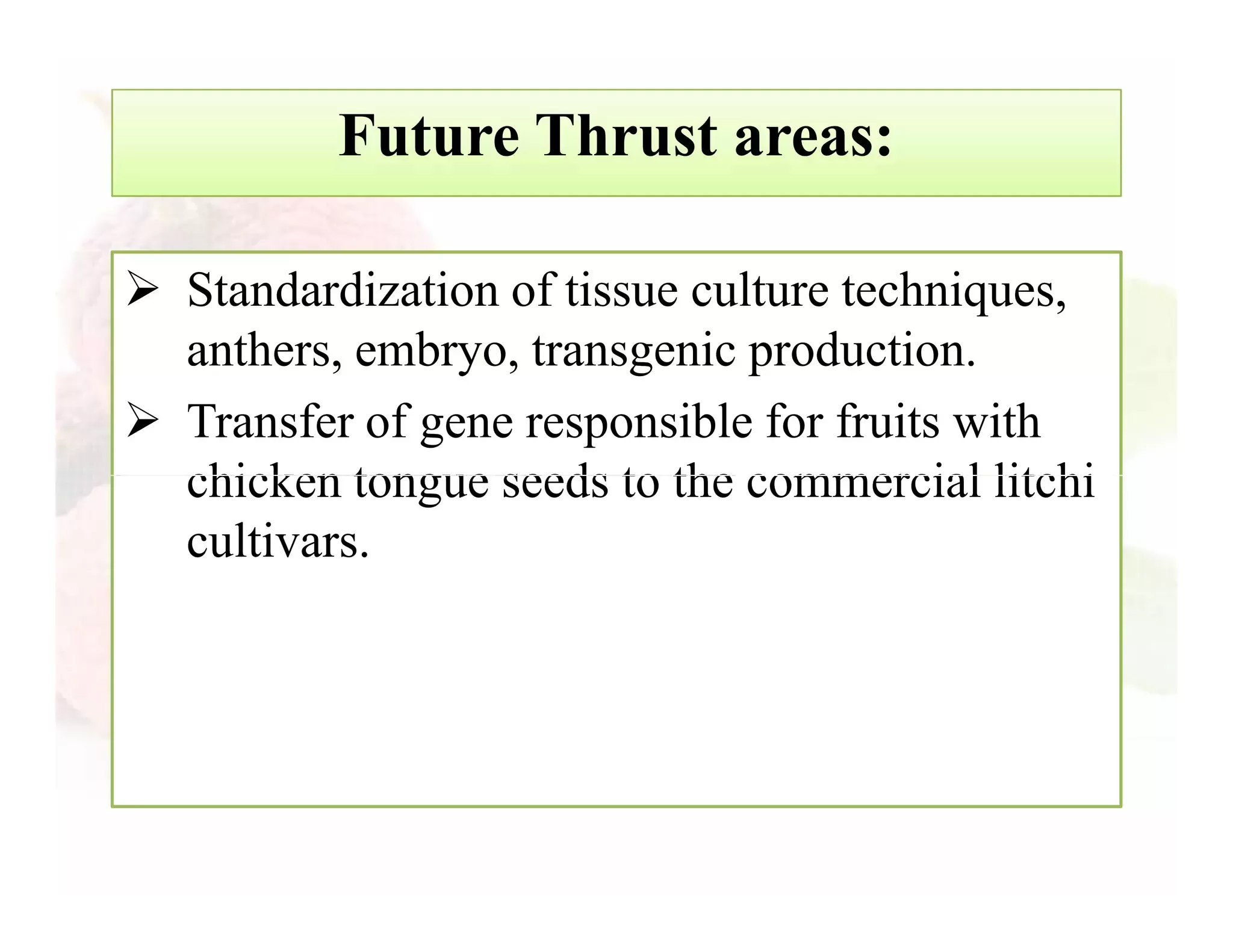
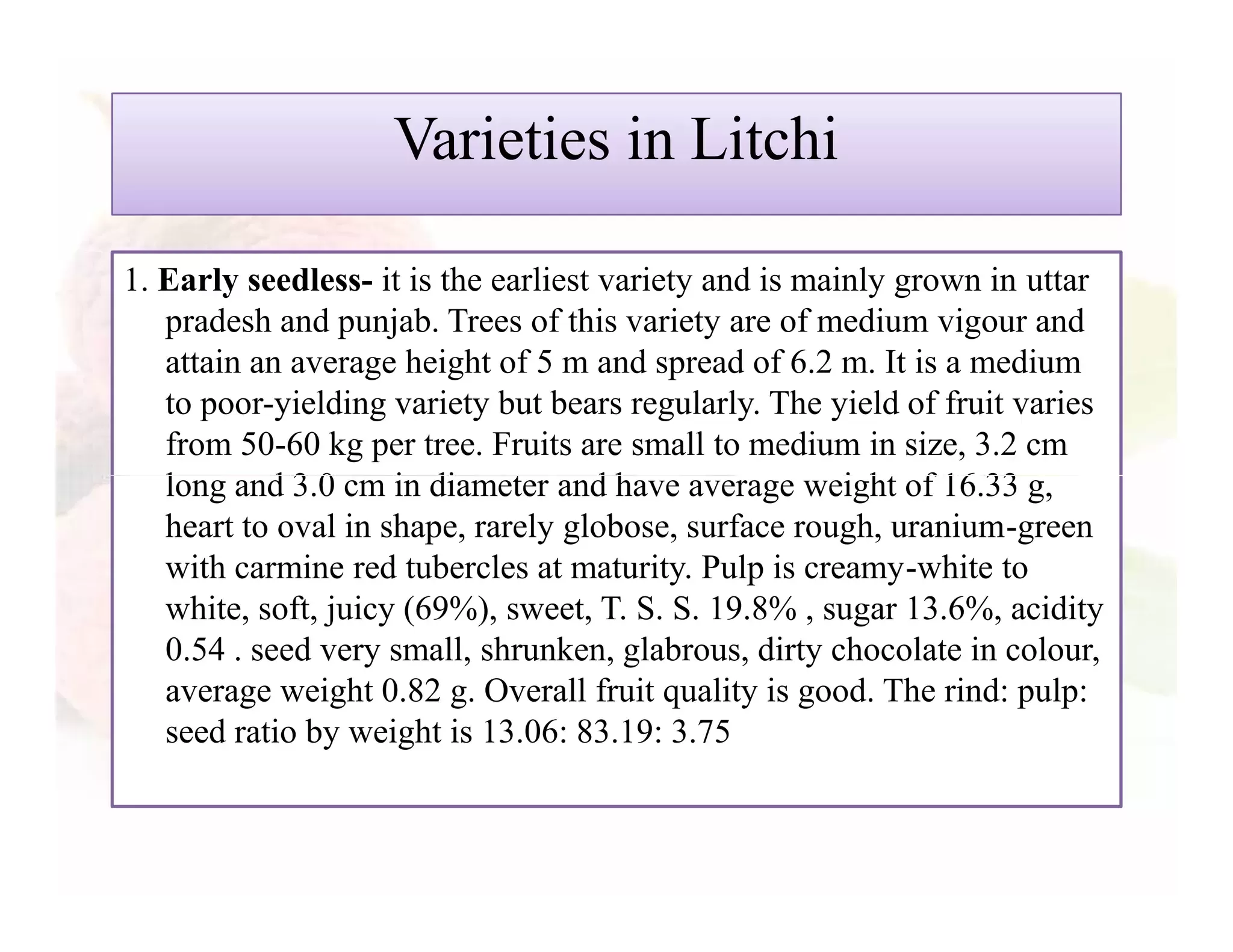
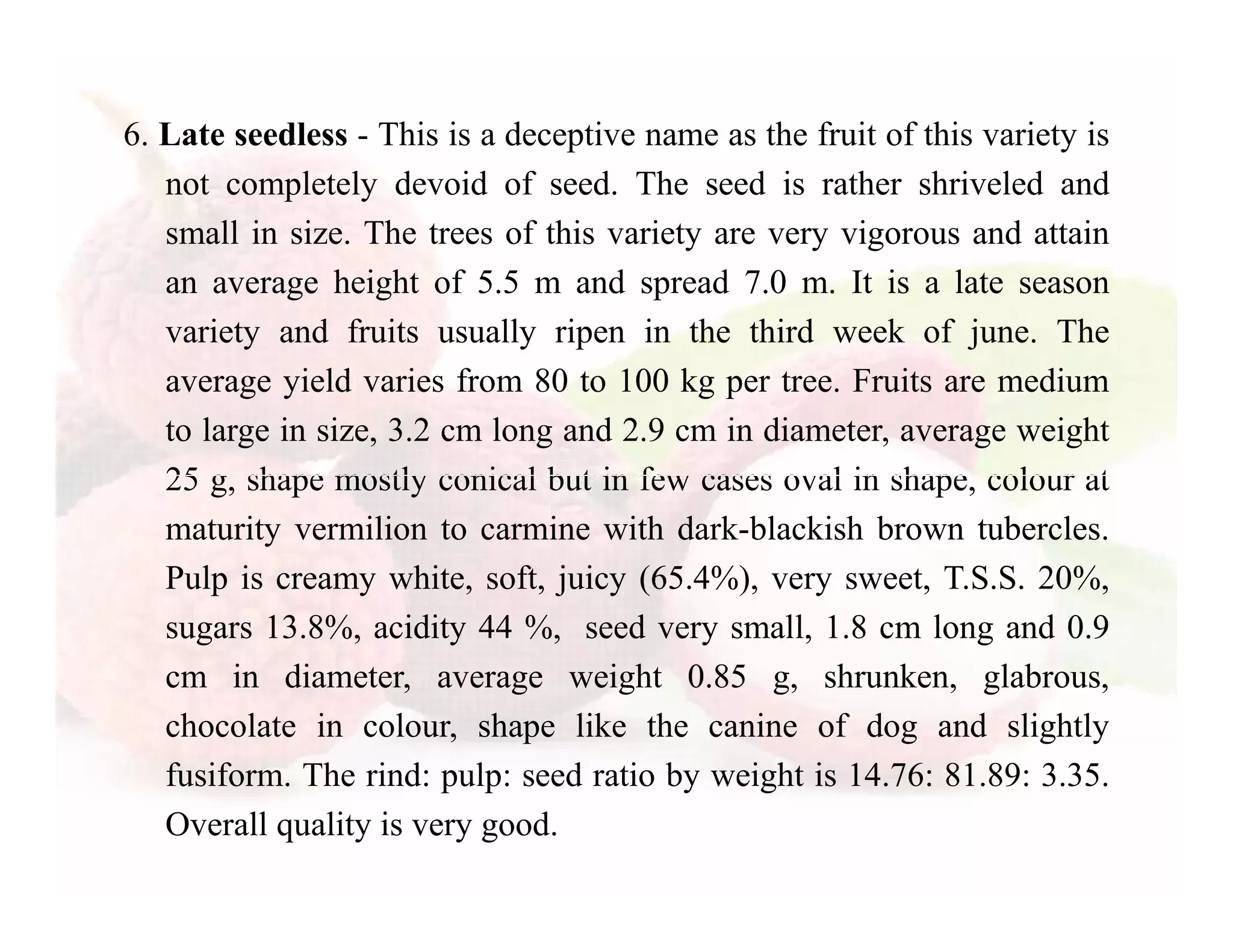
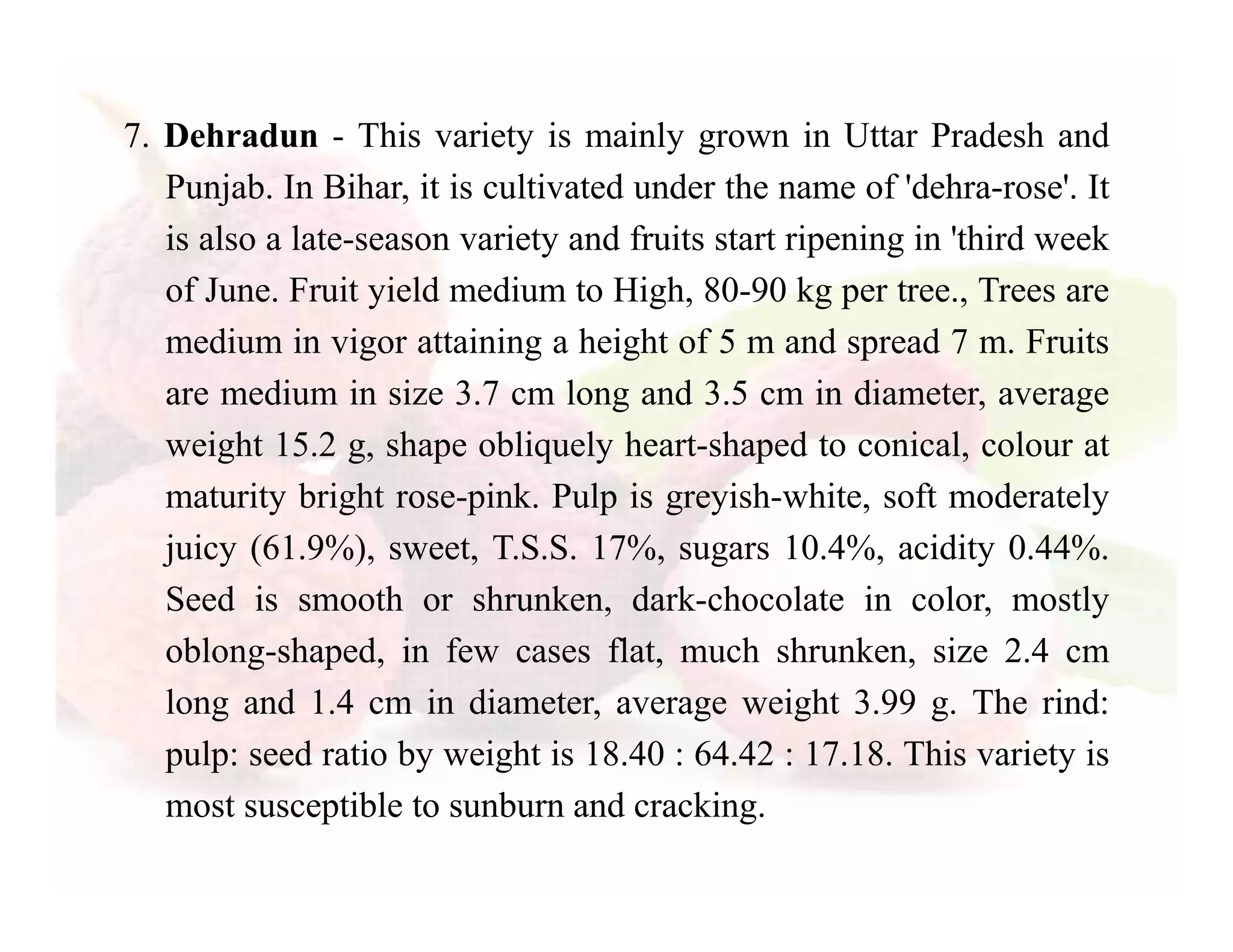
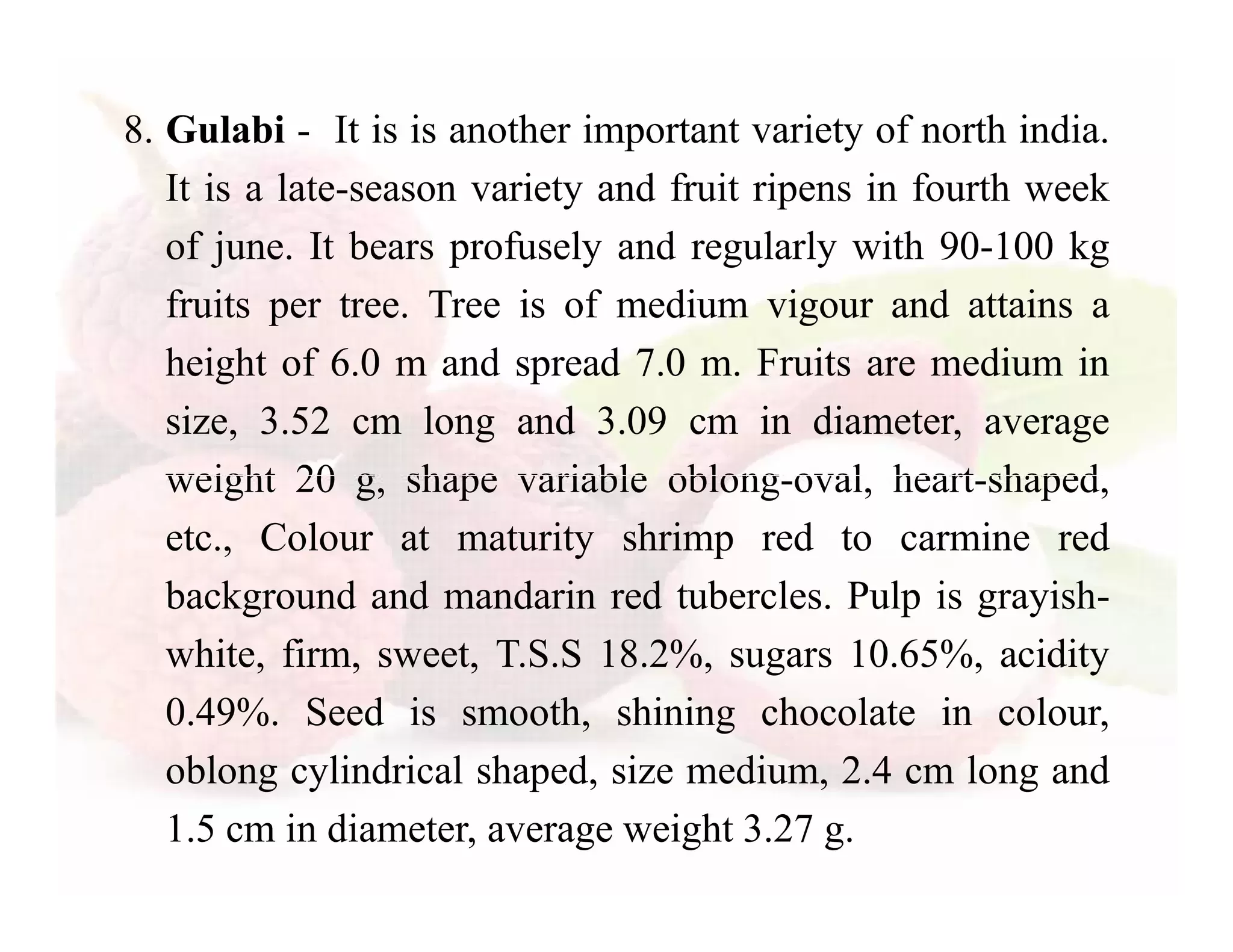
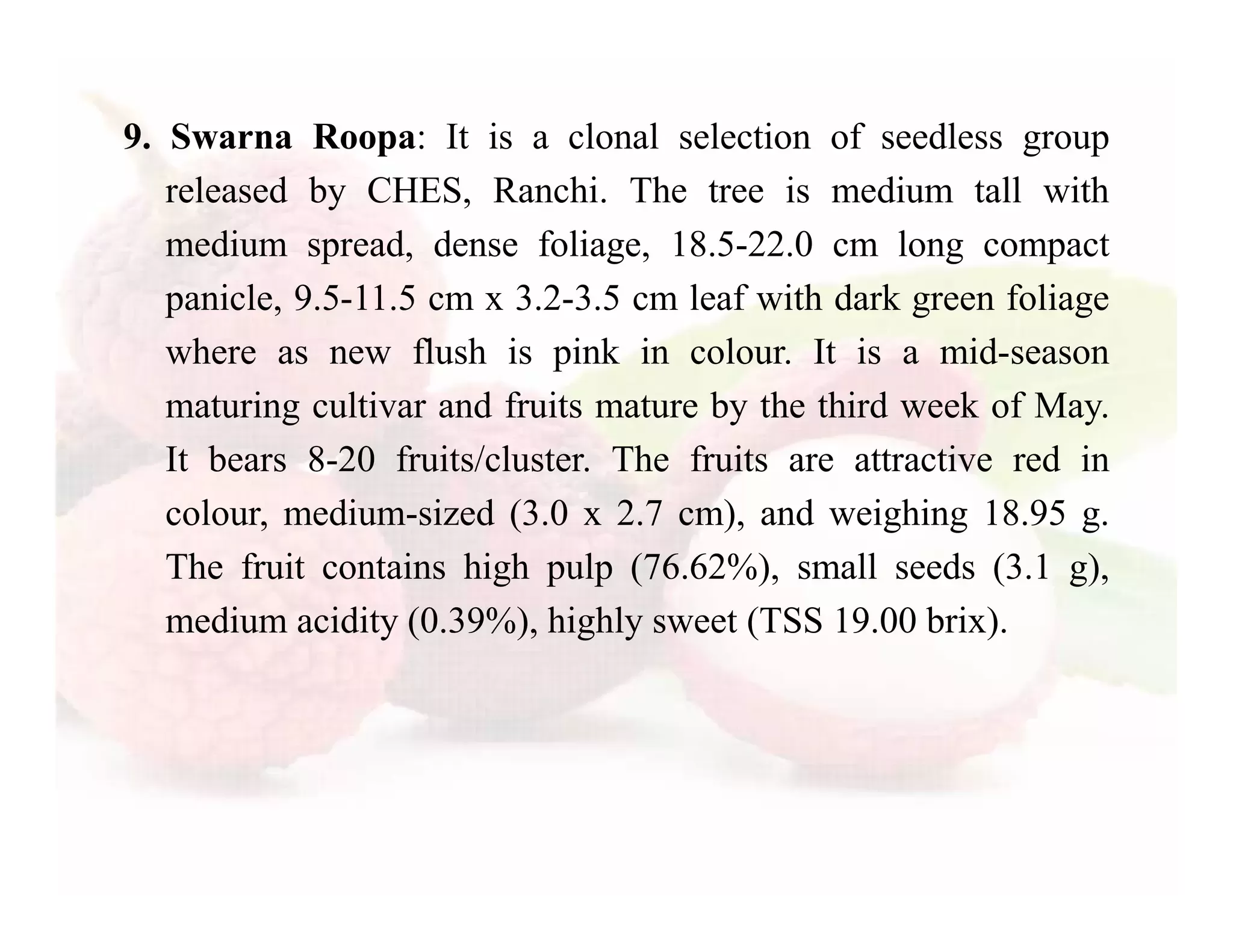
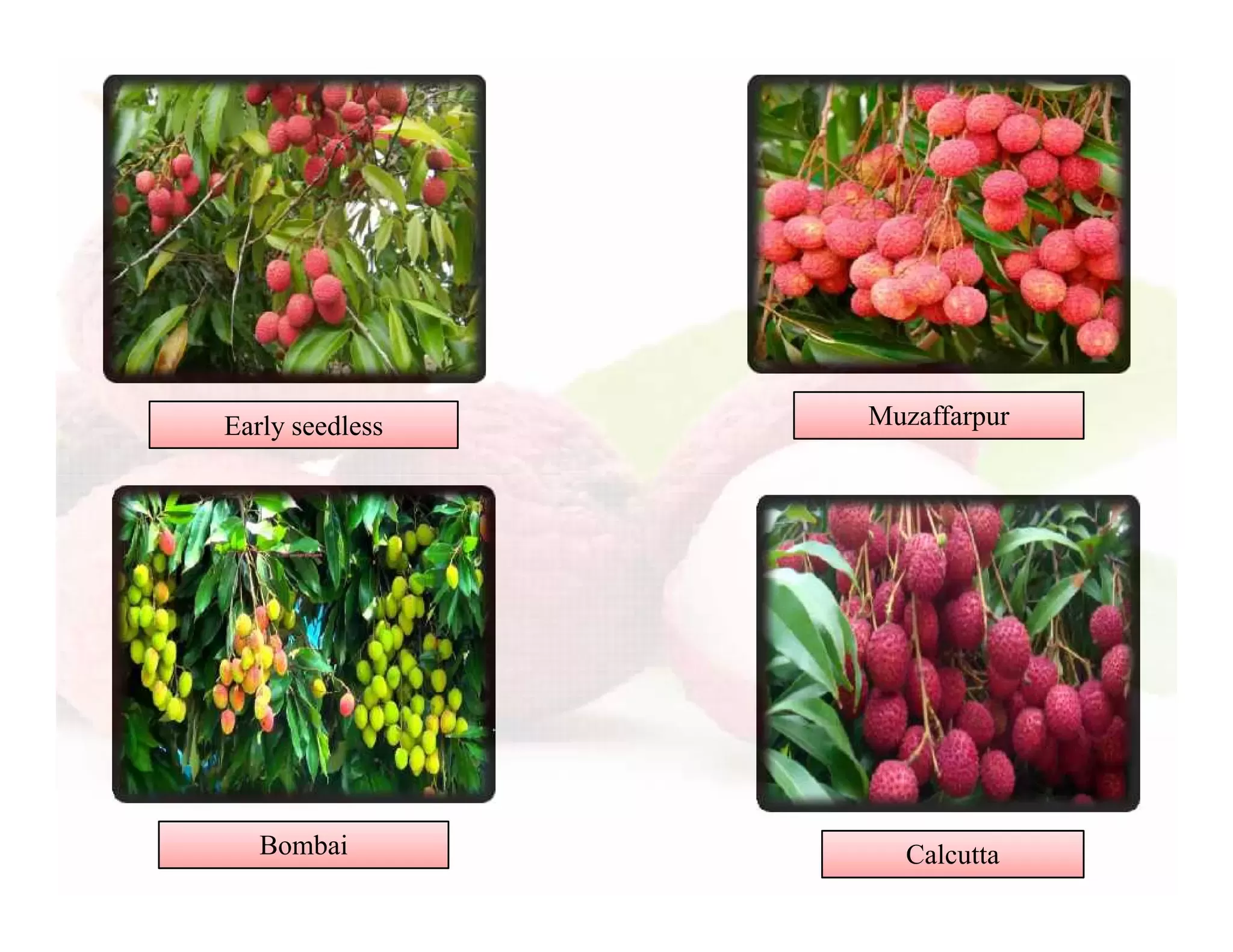
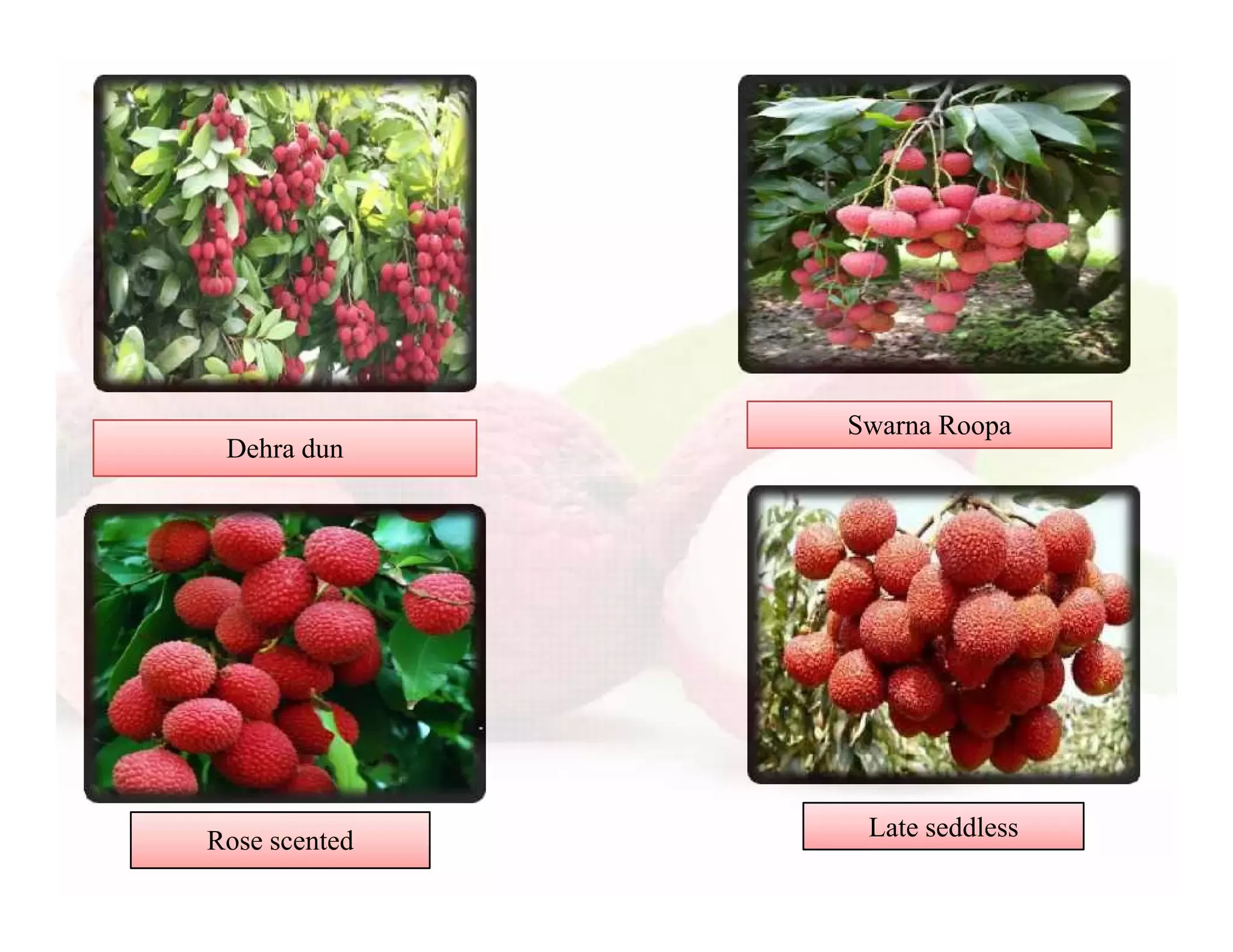
Litchi, originating from China where it has been cultivated for over 2200 years, has a narrow genetic base in India with only 7-8 commercially popular cultivars out of nearly 40 reported. The climatic variations can significantly affect yield, making the selection of the right variety crucial for specific regions. The litchi inflorescence consists of branched panicles with varying flower types, and the flowering period is influenced by environmental conditions. Desirable cultivar characteristics include large fruit size, good post-harvest quality, uniform ripening, and resistance to pests and diseases. Major litchi varieties include Early Seedless, Muzaffarpur, Rose Scented, Bombai, Calcutta, Late Seedless, Dehradun, Gulabi, and Swarna Roopa, each with unique traits and yield potentials. Breeding efforts focus on improving fruit quality, disease

Slide 1

Slide 1

Slide 2

Slide 2

Slide 3

Slide 3

Slide 4

Slide 4

Slide 5

Slide 5

Slide 6

Slide 6

Slide 7

Slide 7

Slide 8

Slide 8

Slide 9

Slide 9

Slide 10

Slide 10

Slide 11

Slide 11

Slide 12

Slide 12

Slide 13

Slide 13

Slide 14

Slide 14

Slide 15

Slide 15

Slide 16

Slide 16

Slide 17

Slide 17

Slide 18

Slide 18

Slide 19

Slide 19

Slide 20

Slide 20

Slide 21

Slide 21

Slide 22

Slide 22

Slide 23
Slide 23

Slide 24

Slide 24

Slide 25

Slide 25

Slide 26

Slide 26

Slide 27

Slide 27

Slide 28

Slide 28
1 / 28

Ppt on Fruit dropping

Summary

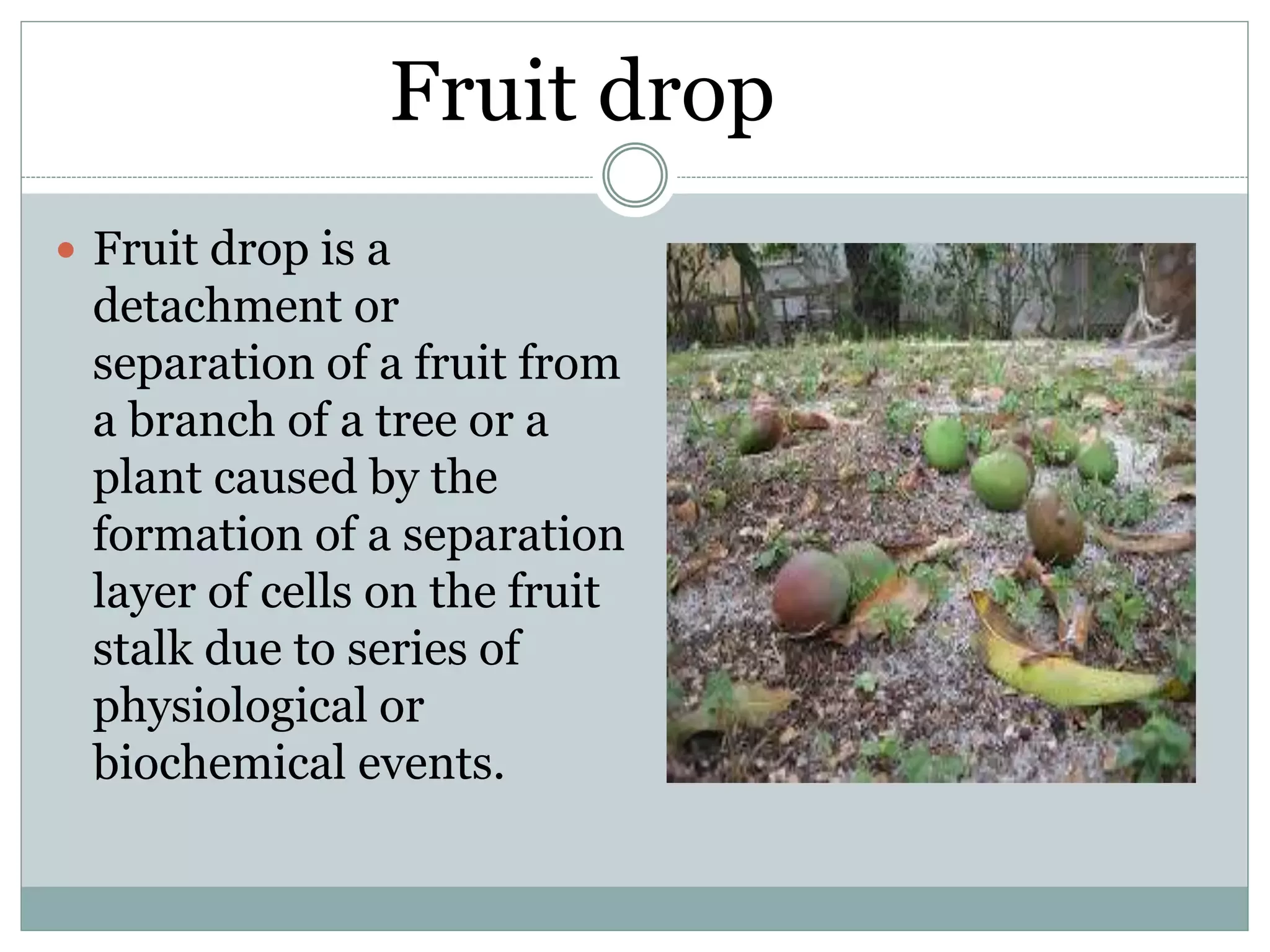
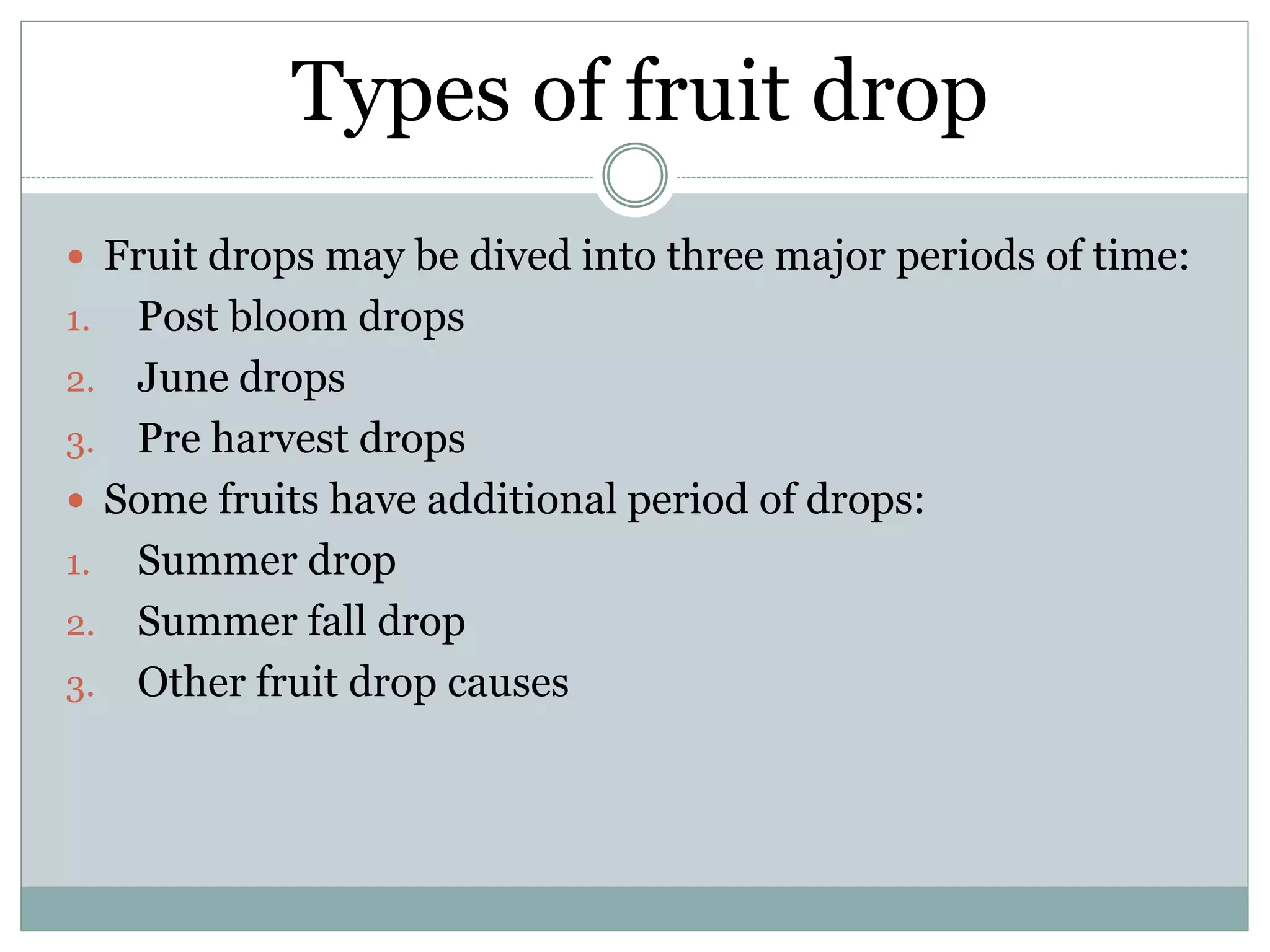
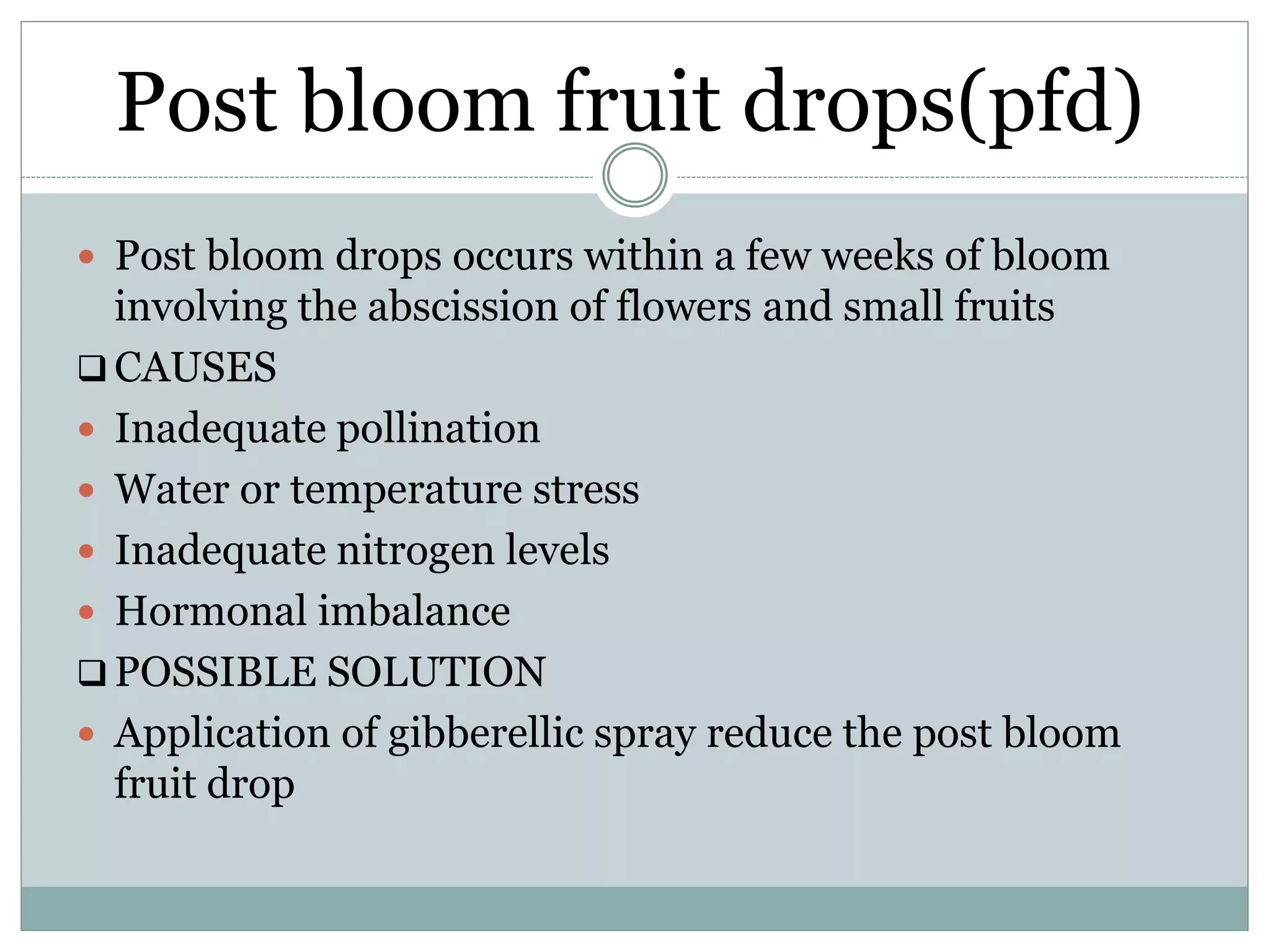
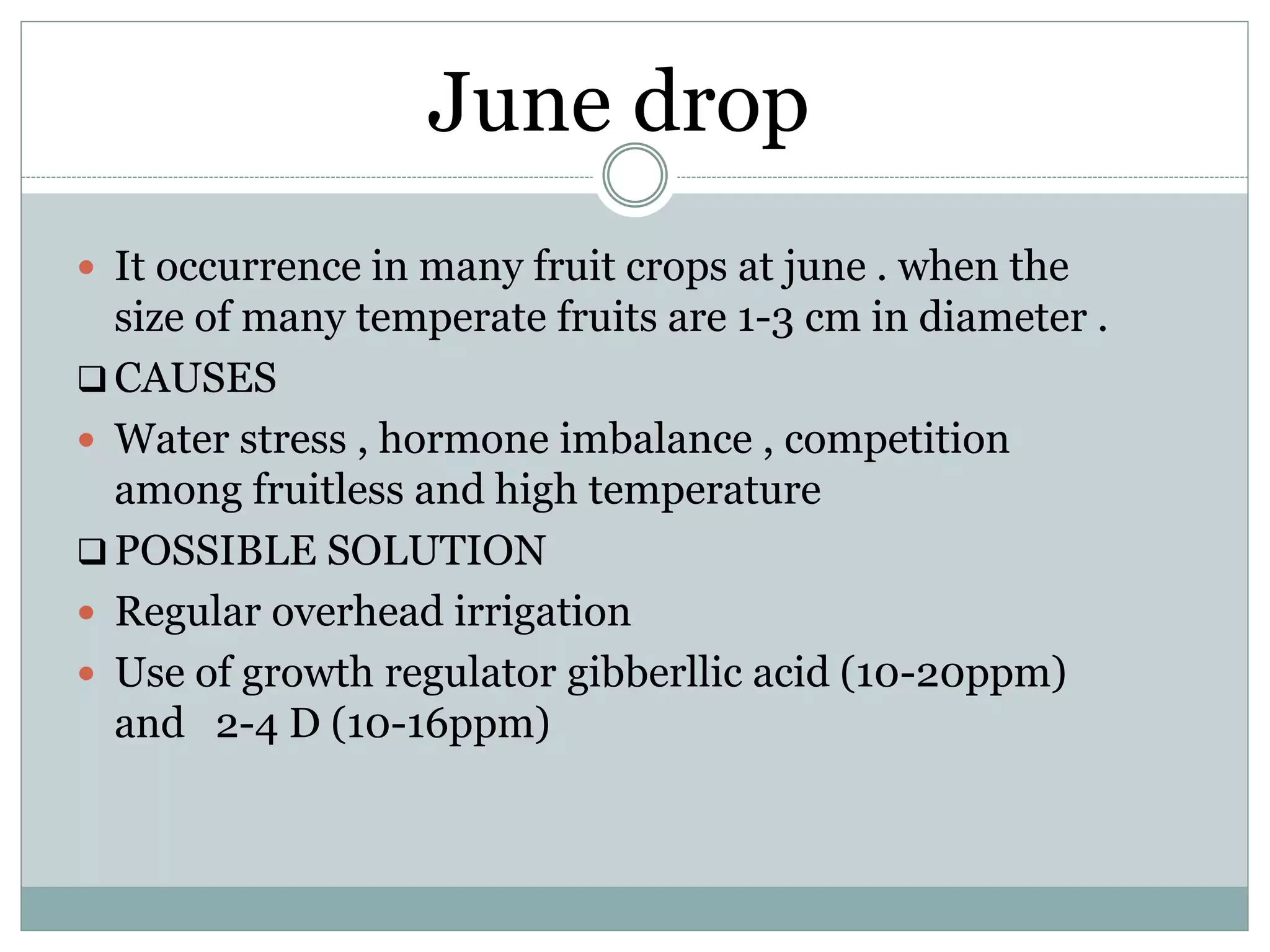
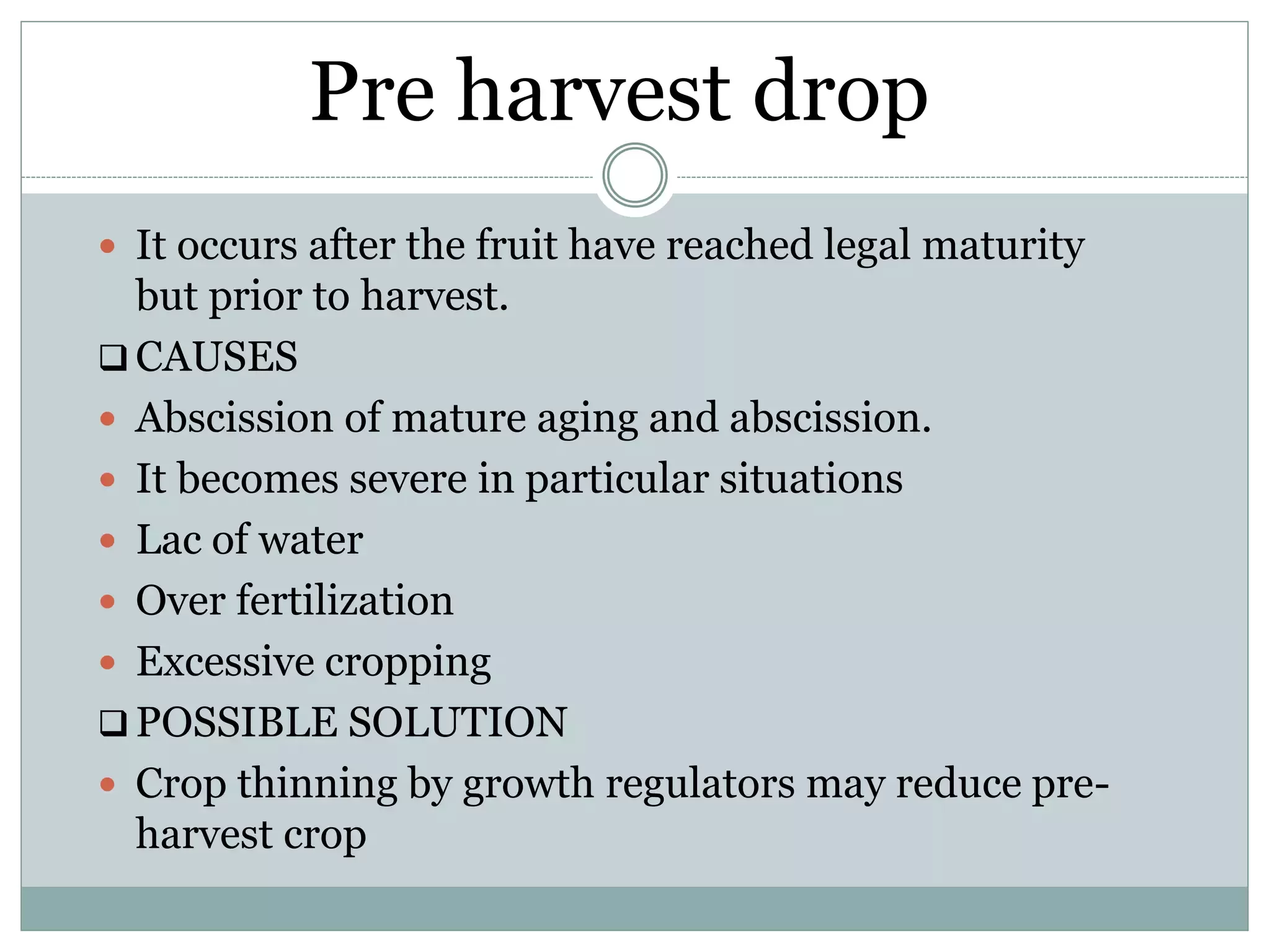
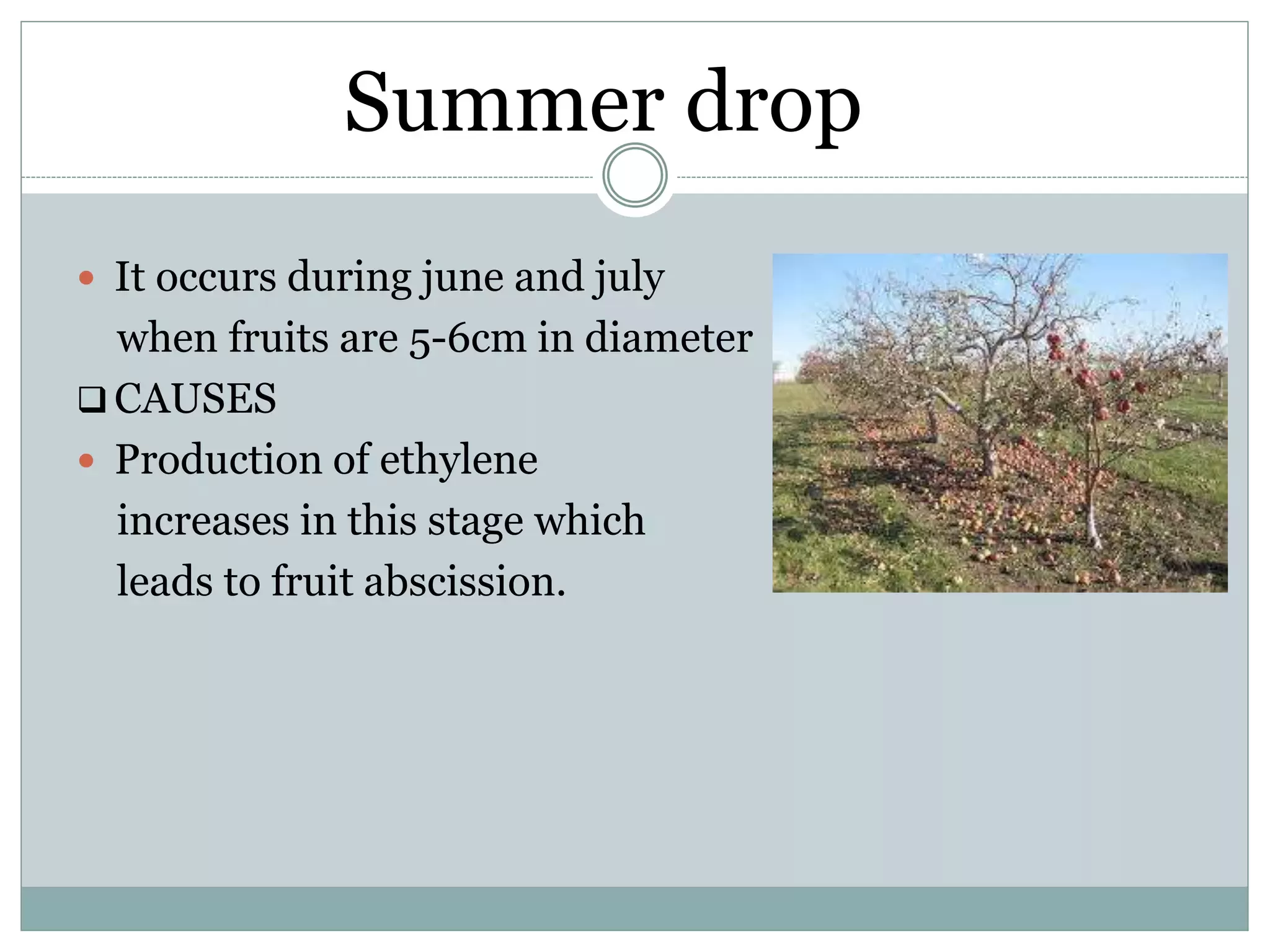
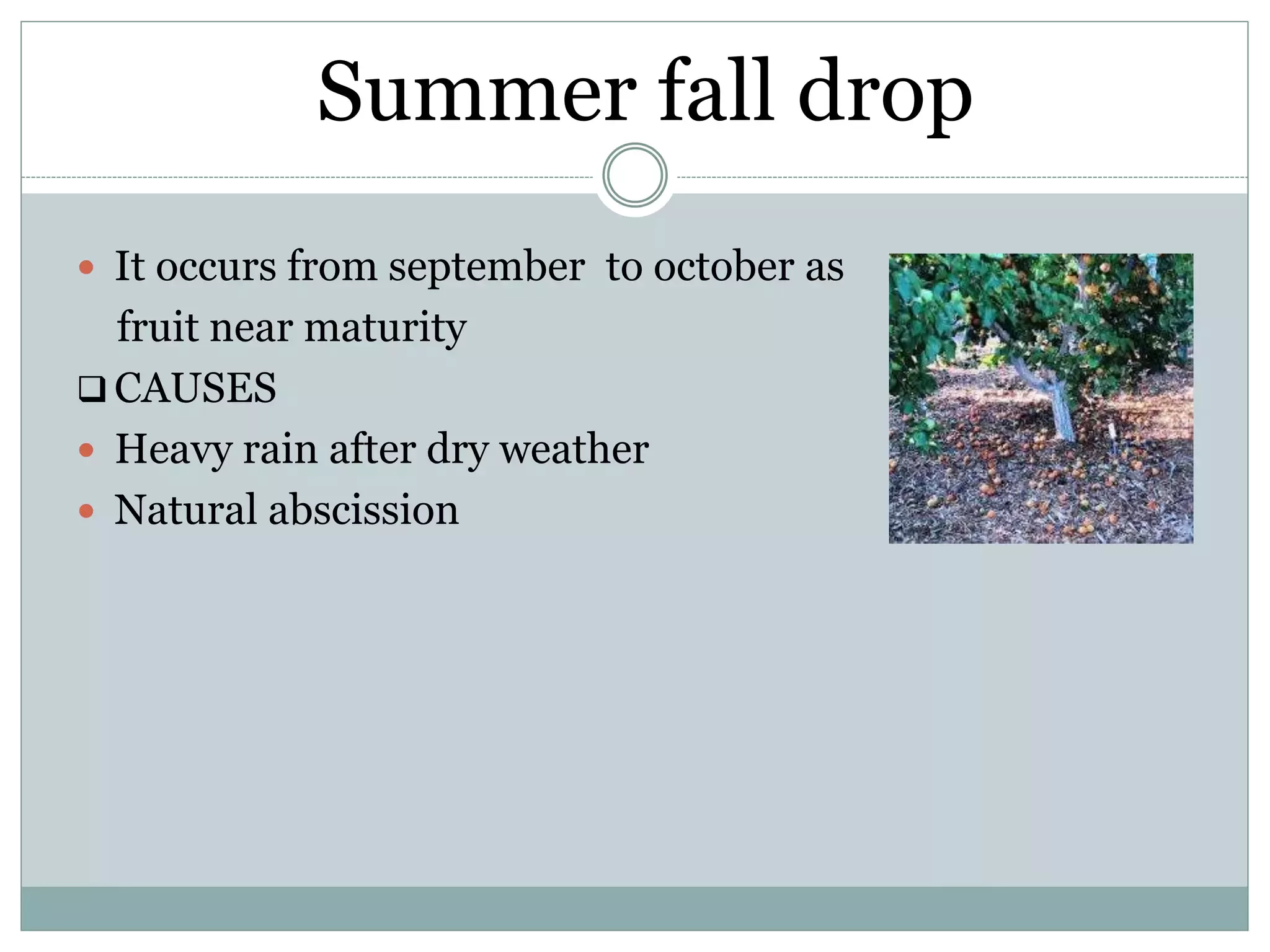
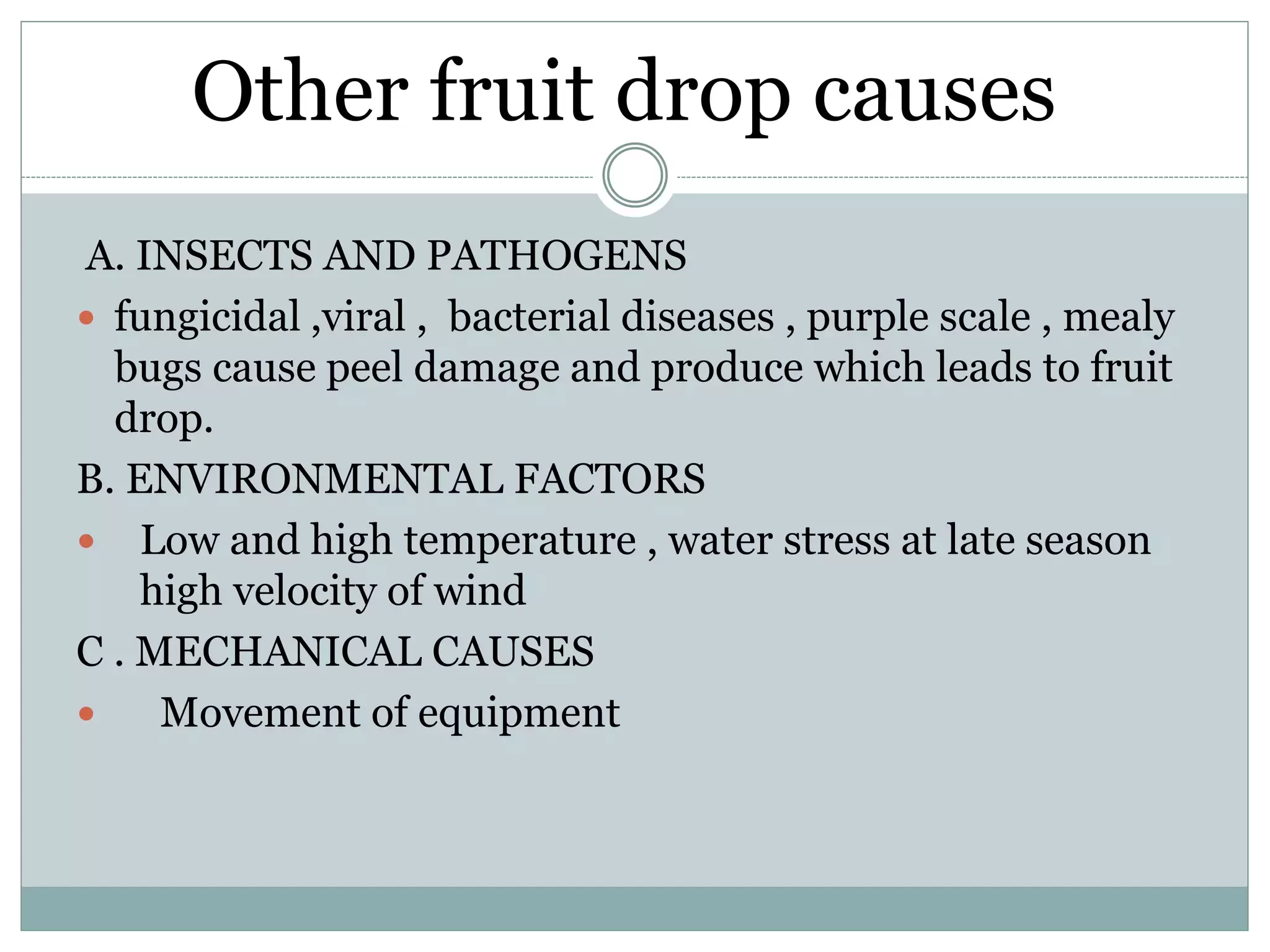
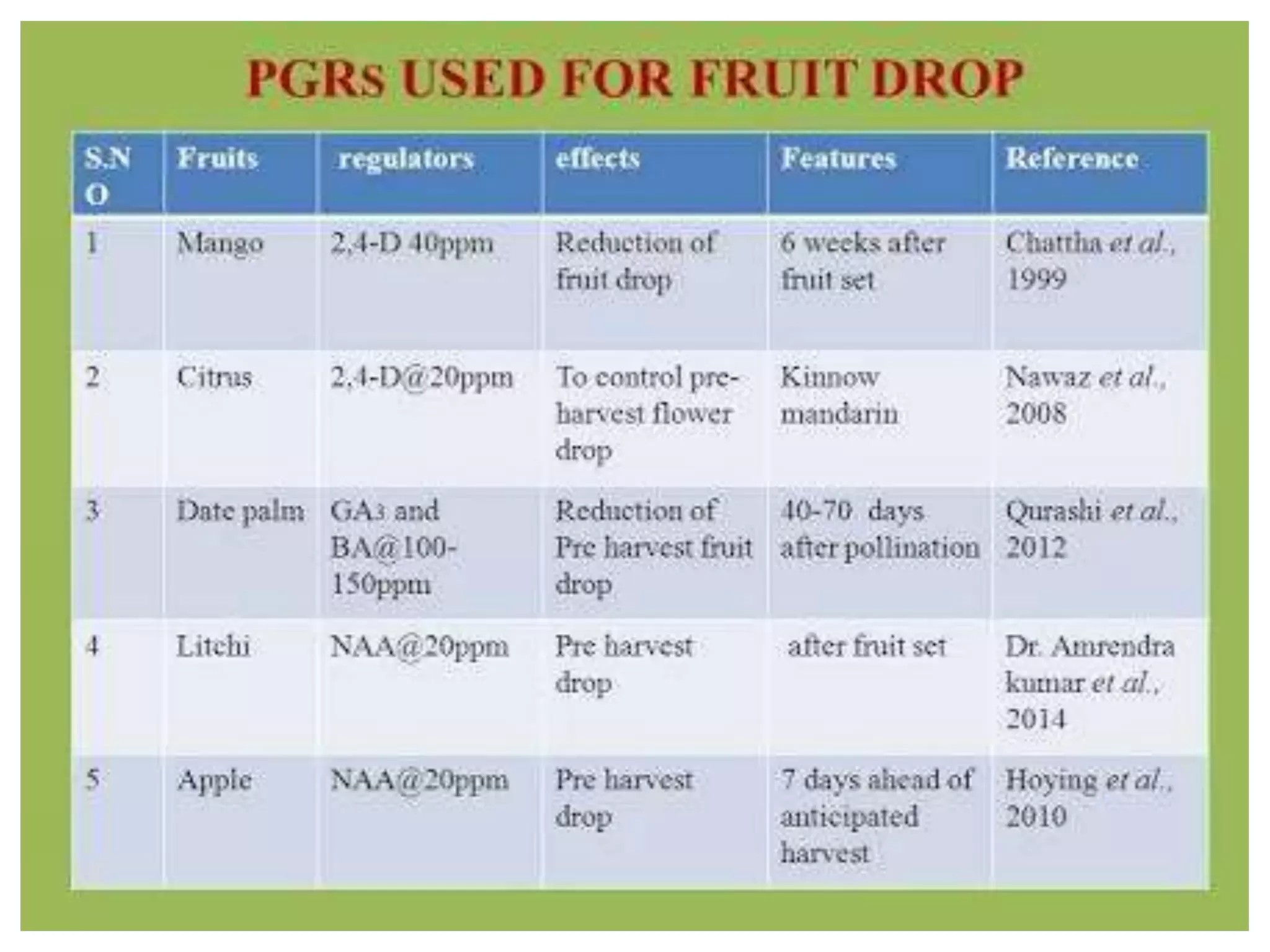
Fruit drop refers to the detachment of fruit from a tree or plant, caused by the formation of a separation layer of cells on the fruit stalk due to physiological or biochemical events. It can be categorized into three main periods: post bloom drops, June drops, and pre-harvest drops, with some fruits experiencing additional periods such as summer drop and summer fall drop. Post bloom drops occur shortly after flowering due to inadequate pollination, water or temperature stress, and hormonal imbalances, with gibberellic spray as a potential solution. June drops happen when fruits are 1-3 cm in diameter, often caused by water stress and competition among fruits, with solutions including regular irrigation and growth regulators. Pre-harvest drops occur after fruits

Slide 1

Slide 1

Slide 2

Slide 2

Slide 3

Slide 3

Slide 4

Slide 4

Slide 5

Slide 5

Slide 6

Slide 6

Slide 7

Slide 7

Slide 8

Slide 8

Slide 9

Slide 9

Slide 10

Slide 10
1 / 10

Ppt on Advances breeding of Peach

Summary:

Discover the latest advancements in peach breeding with this informative PPT presentation. Learn about the cultivation, genetic diversity, and growth requirements of this popular temperate fruit crop.

Summary

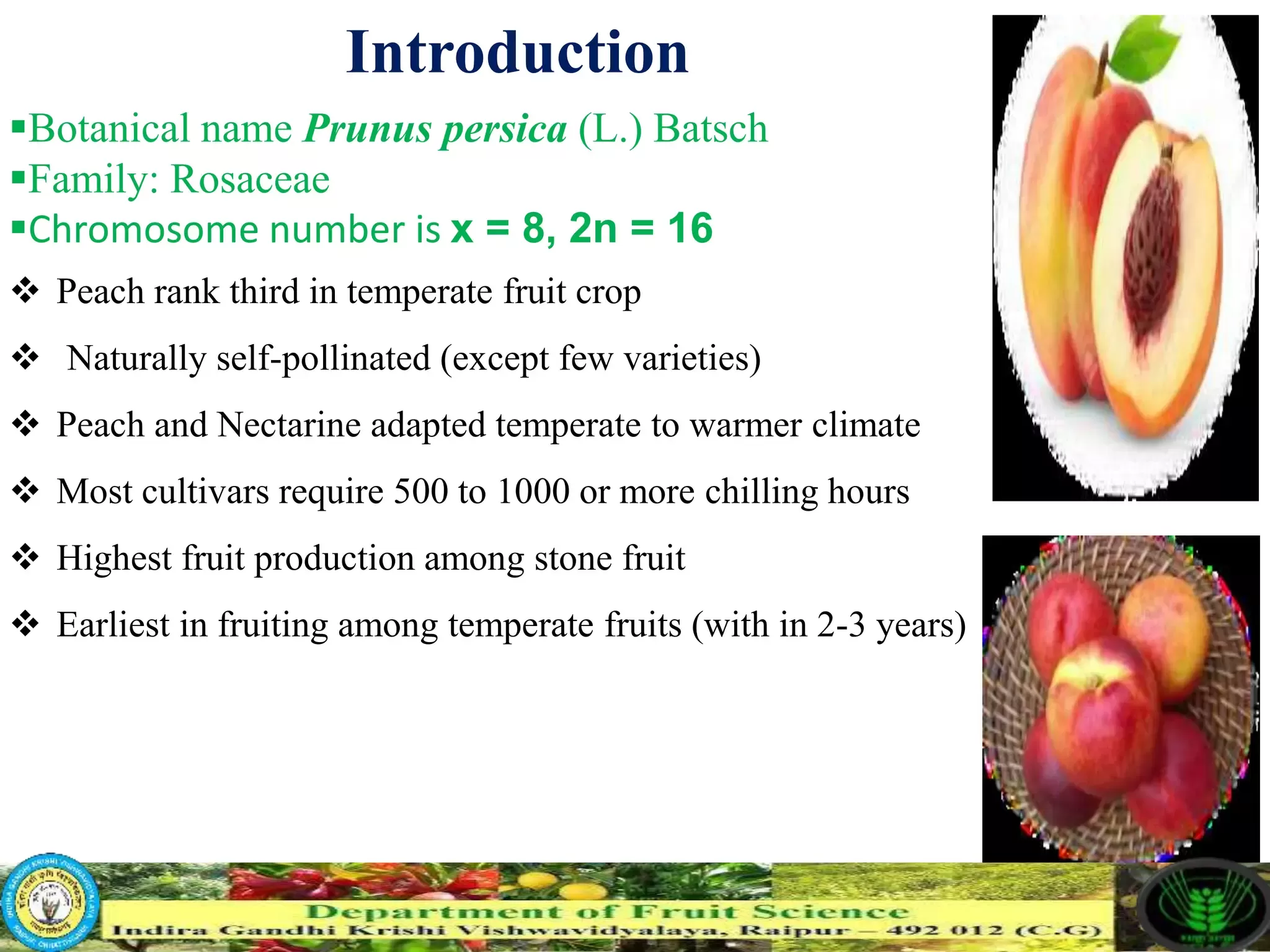
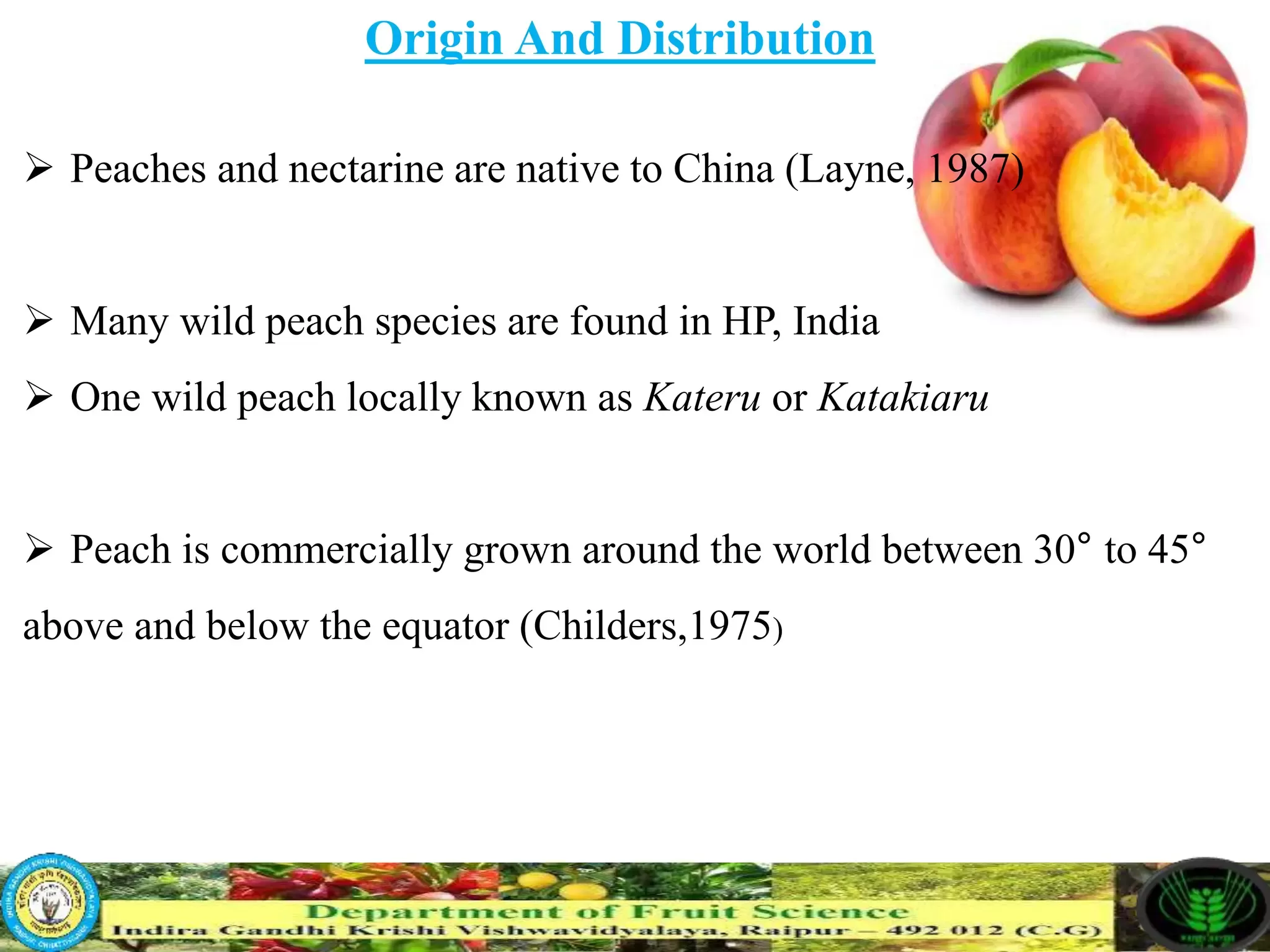
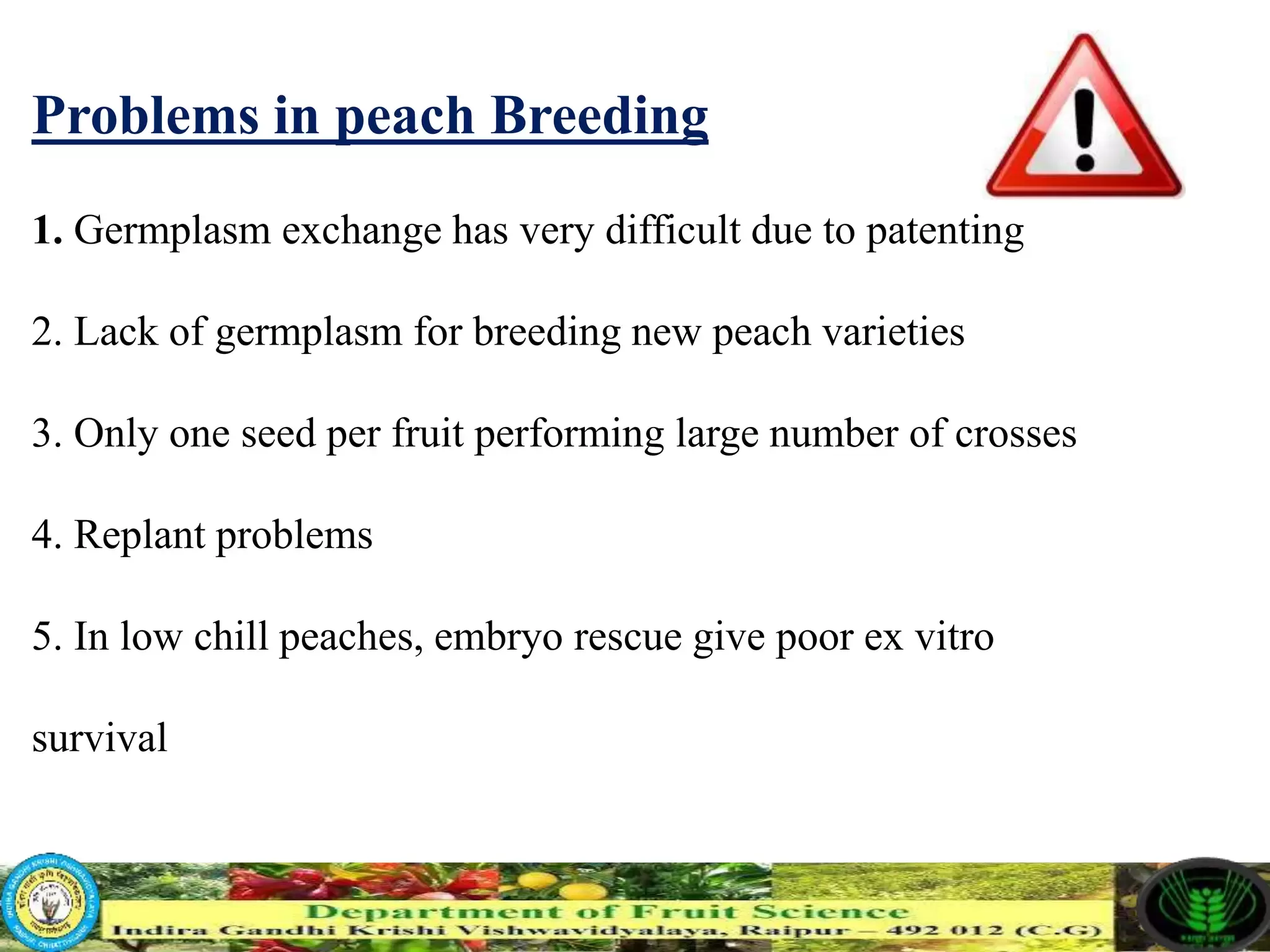
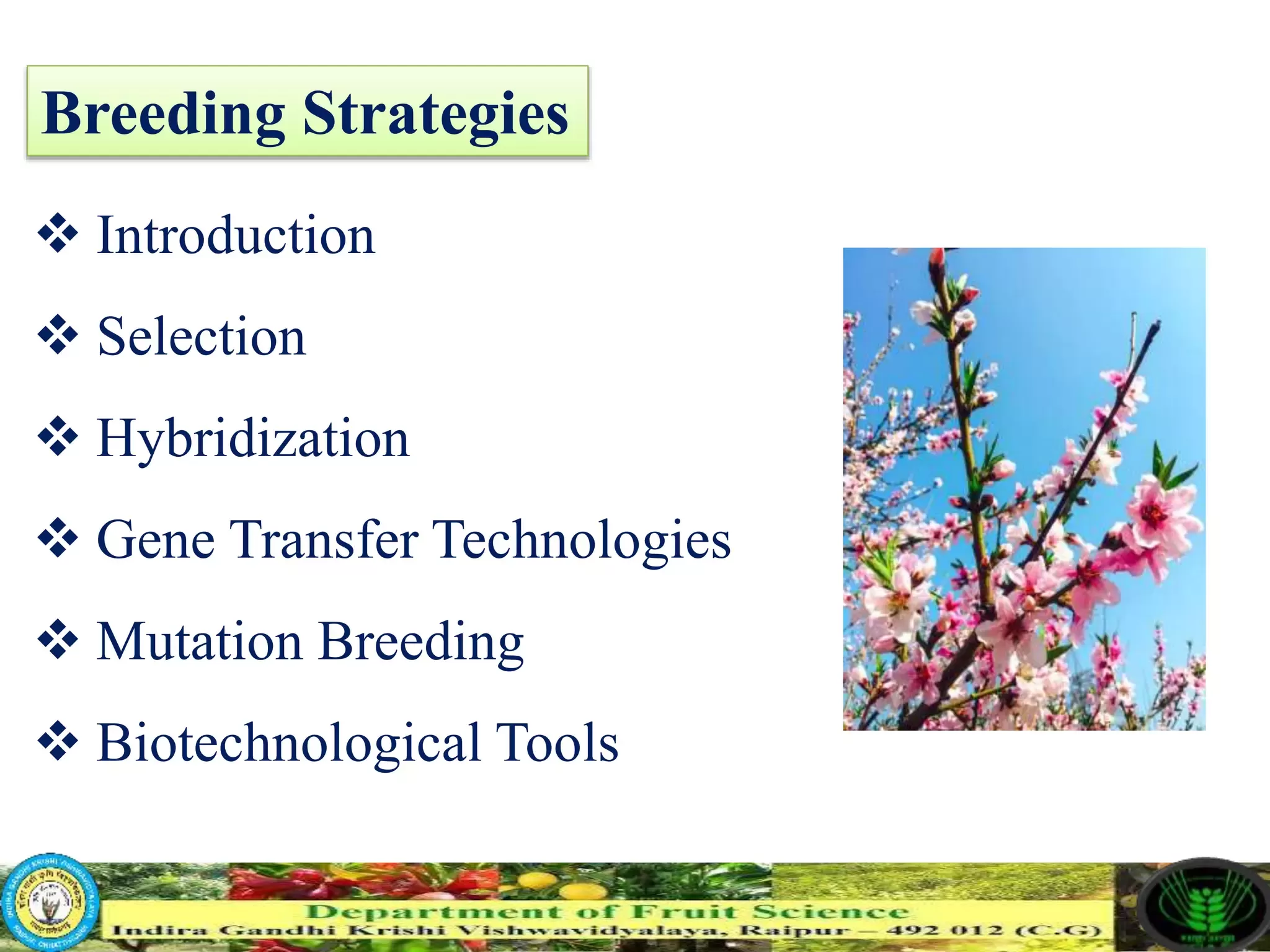
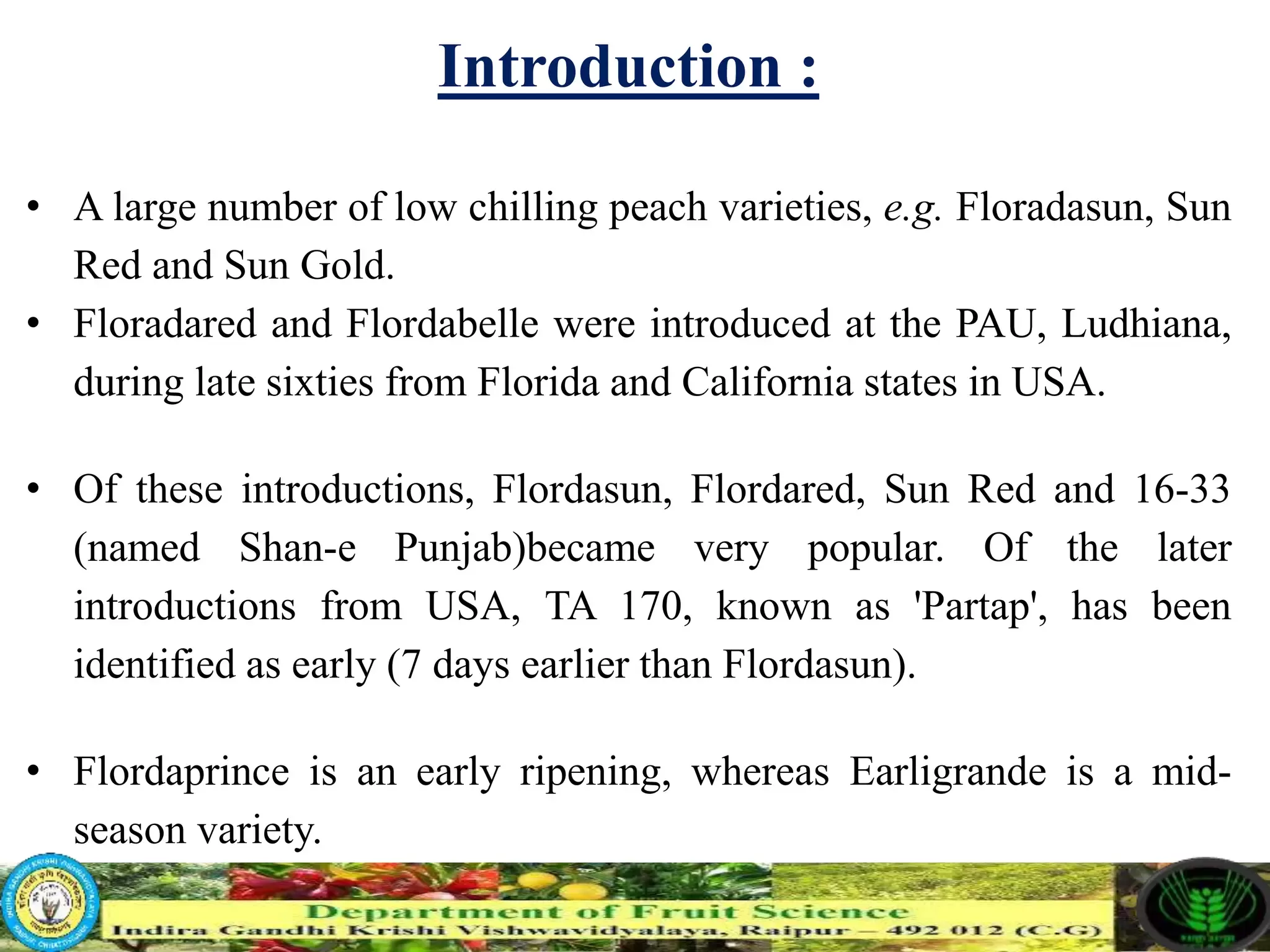
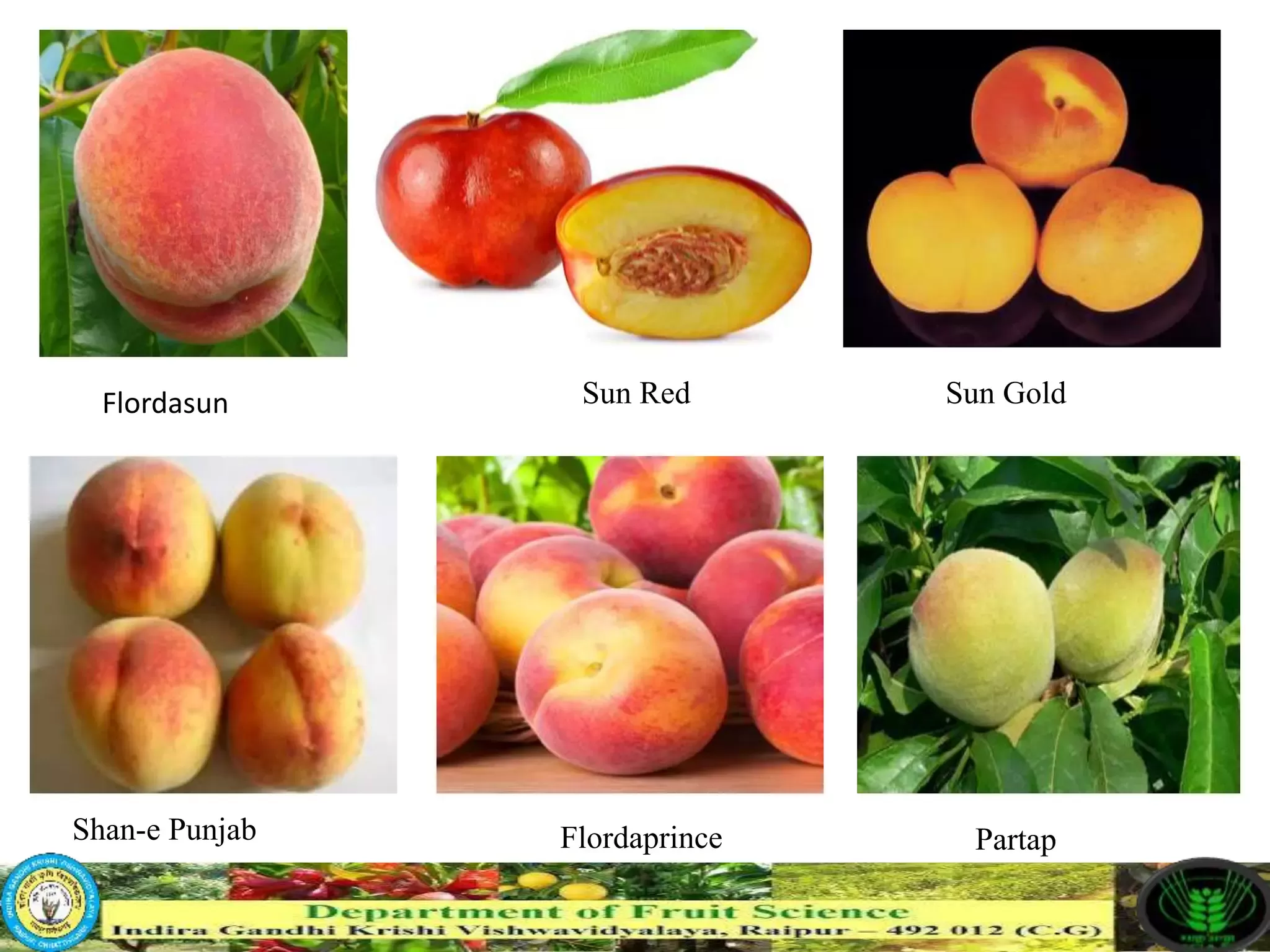
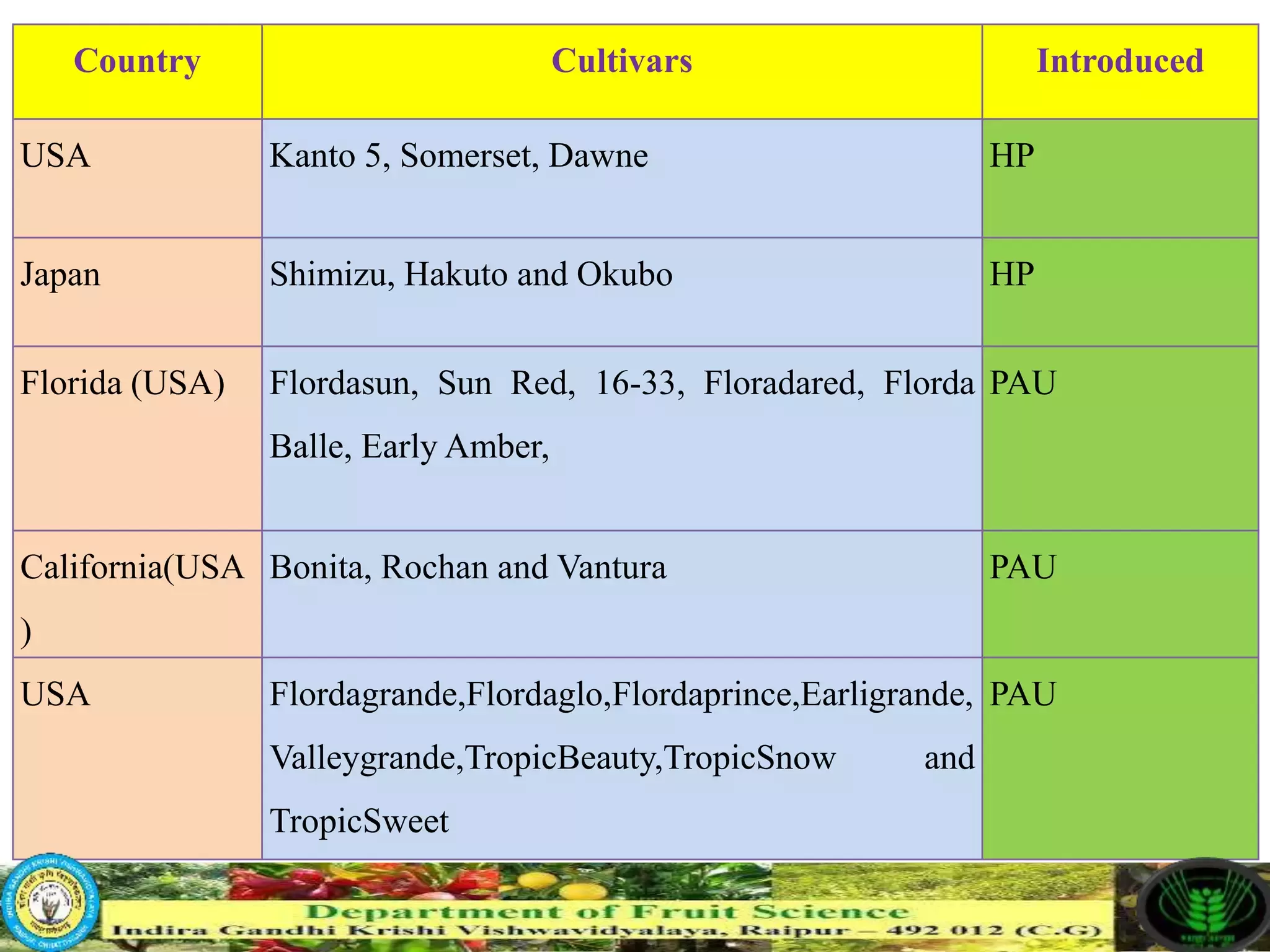
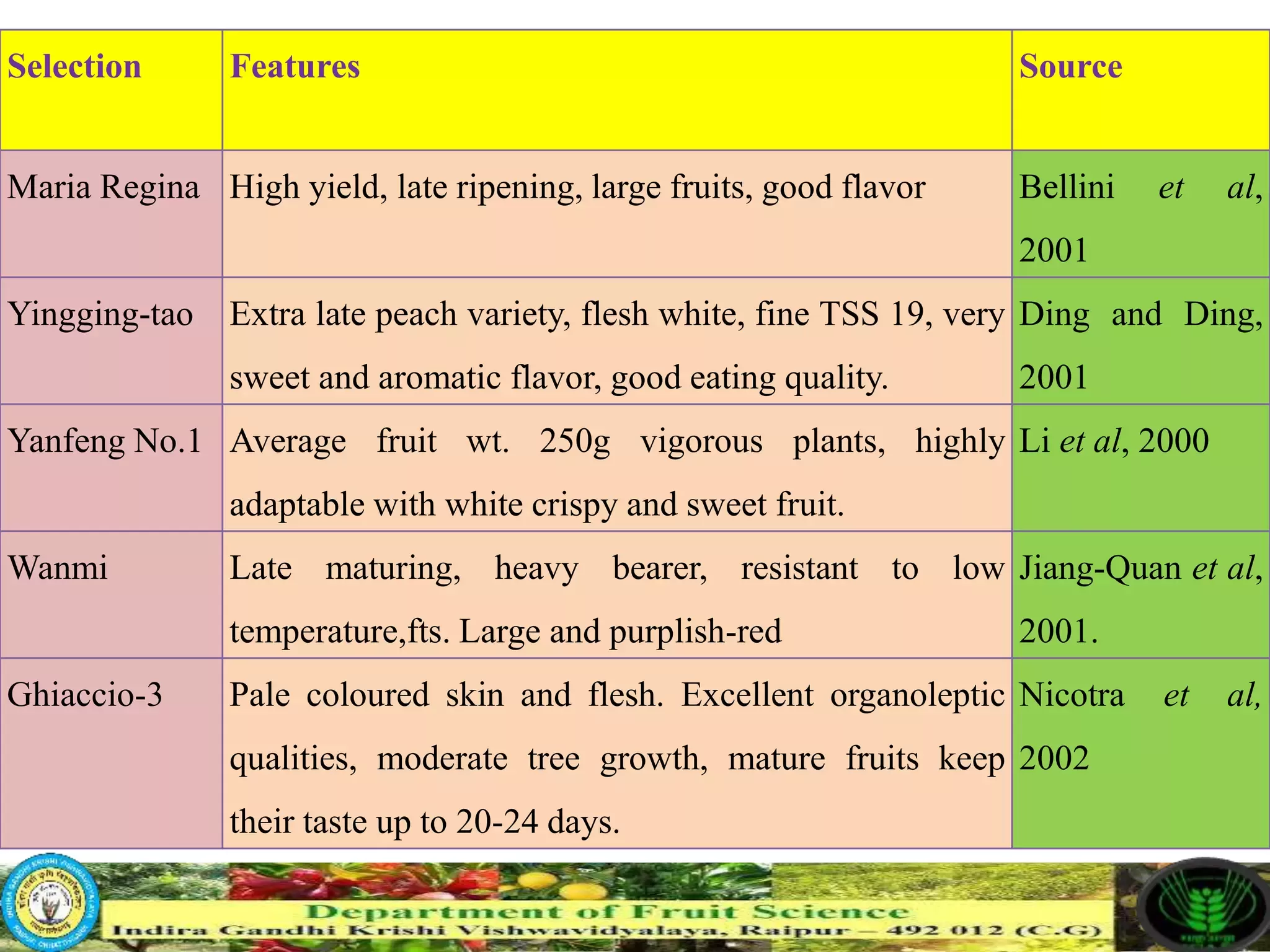
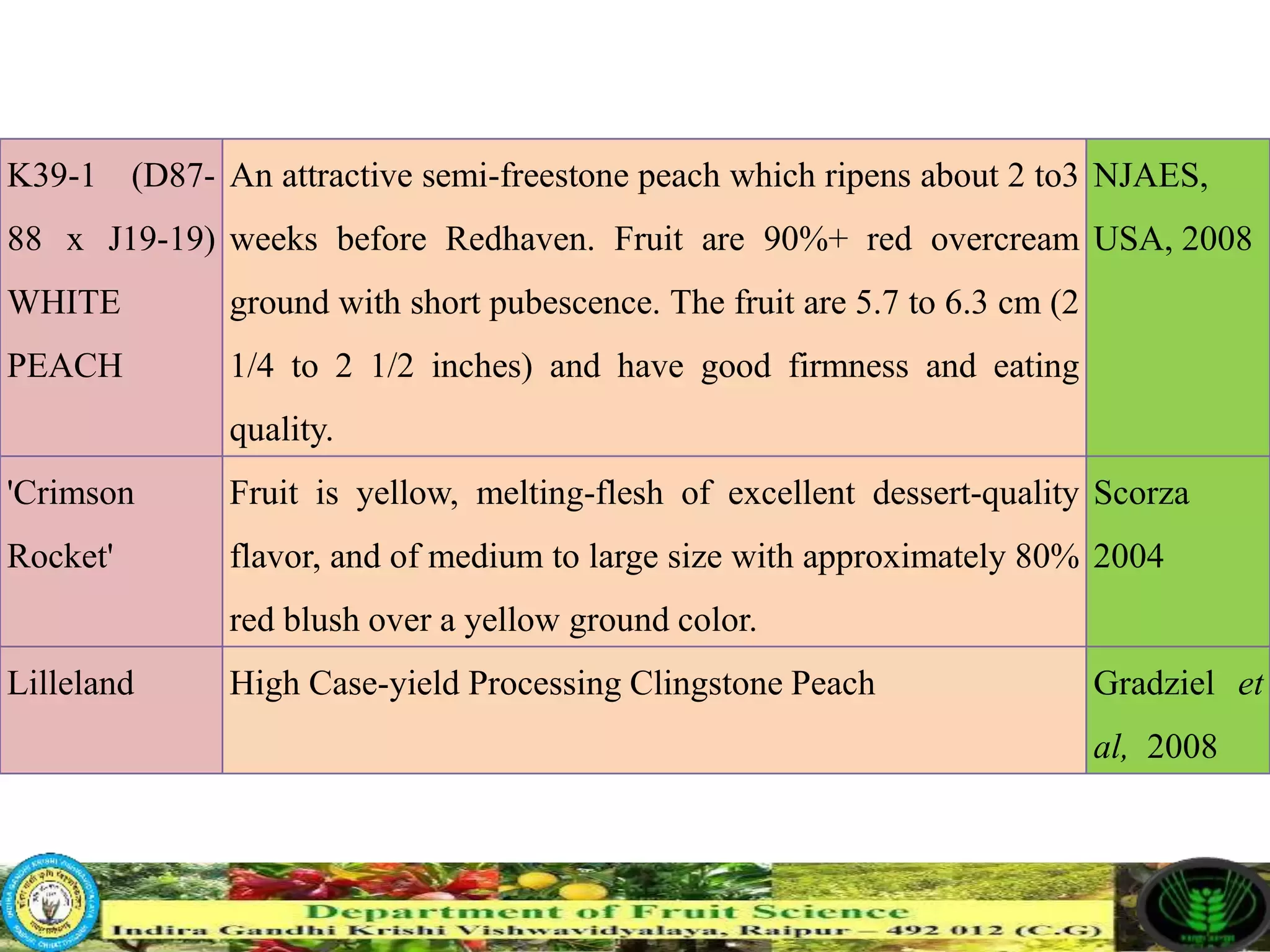
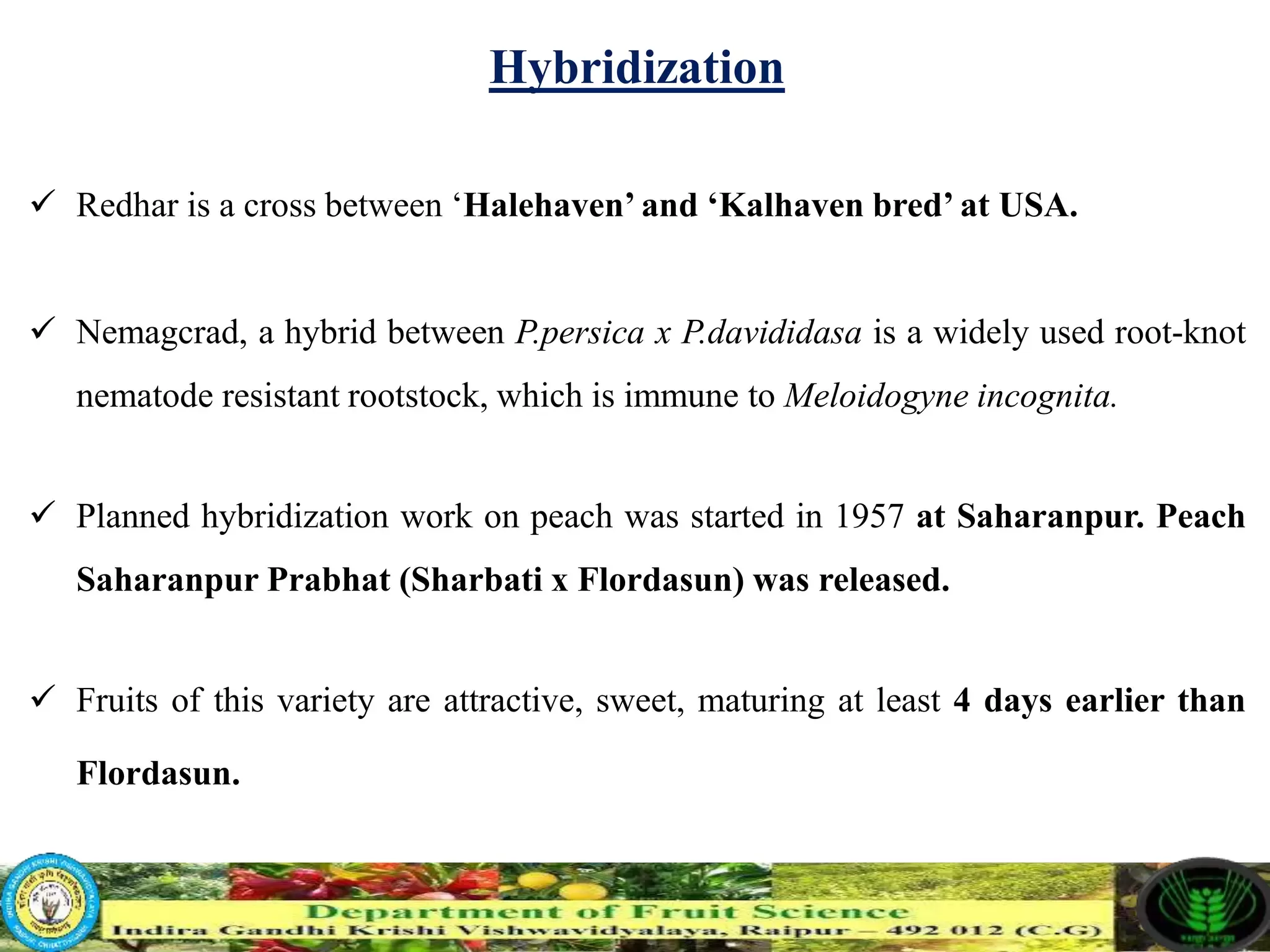
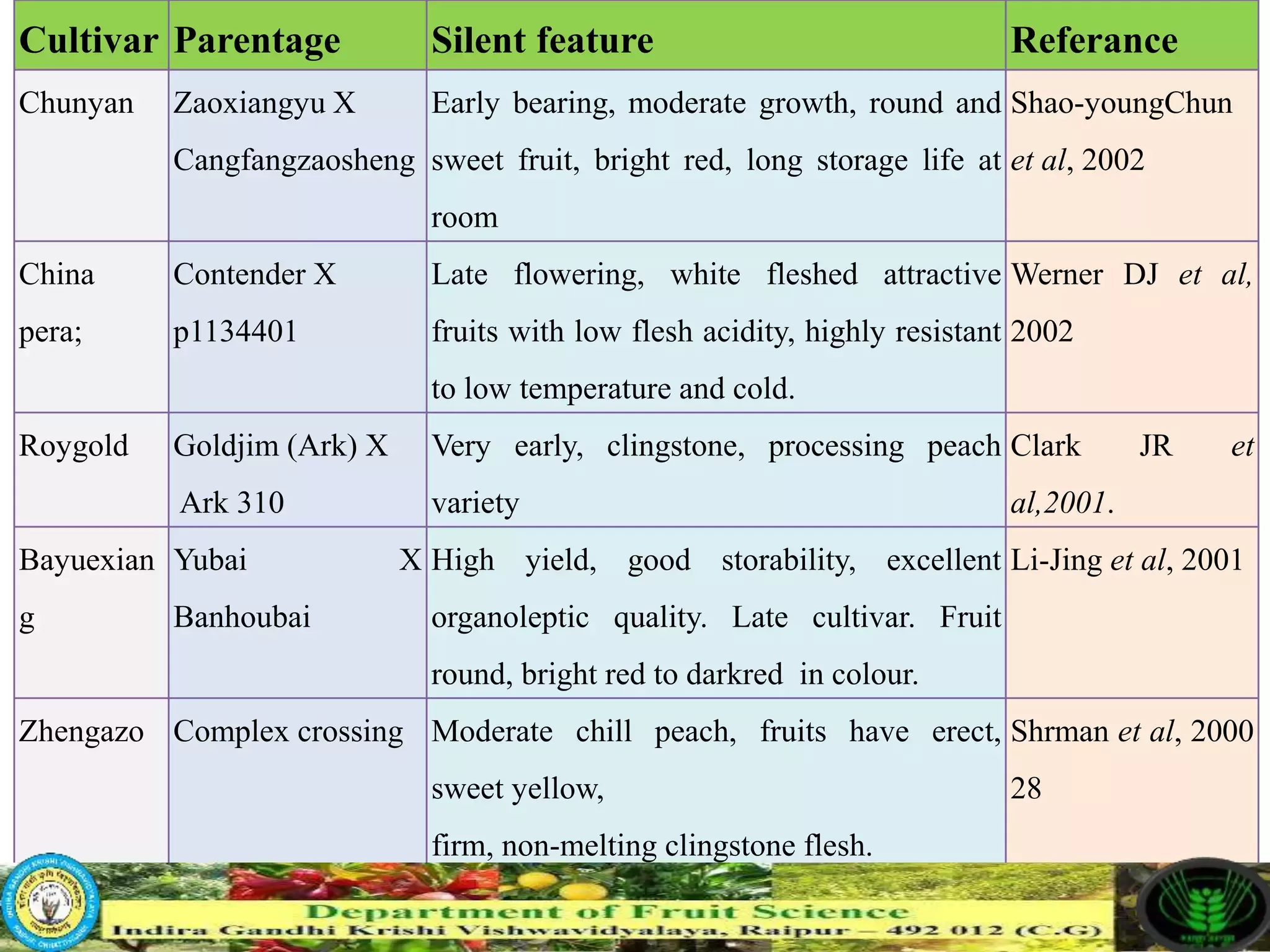
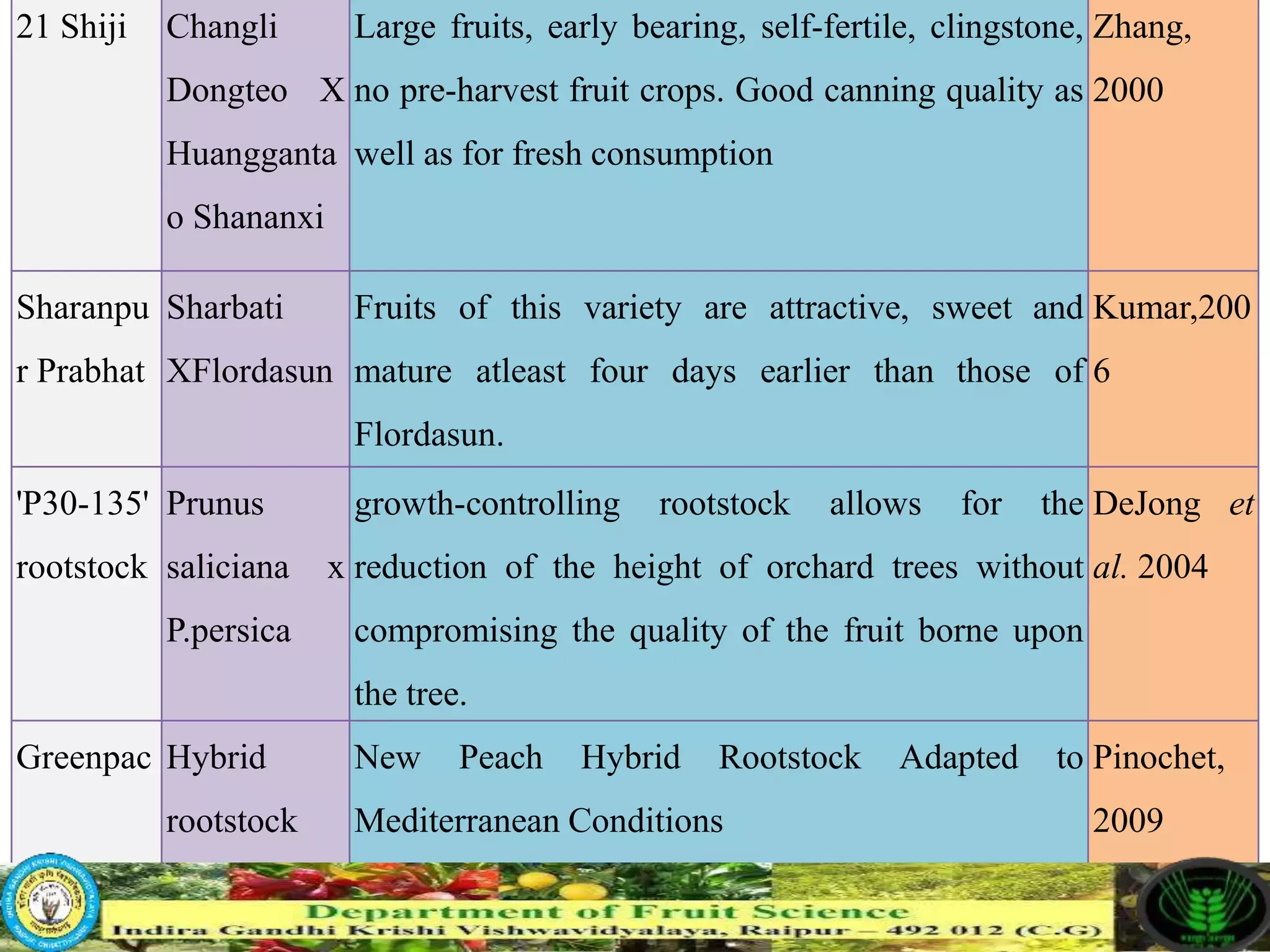
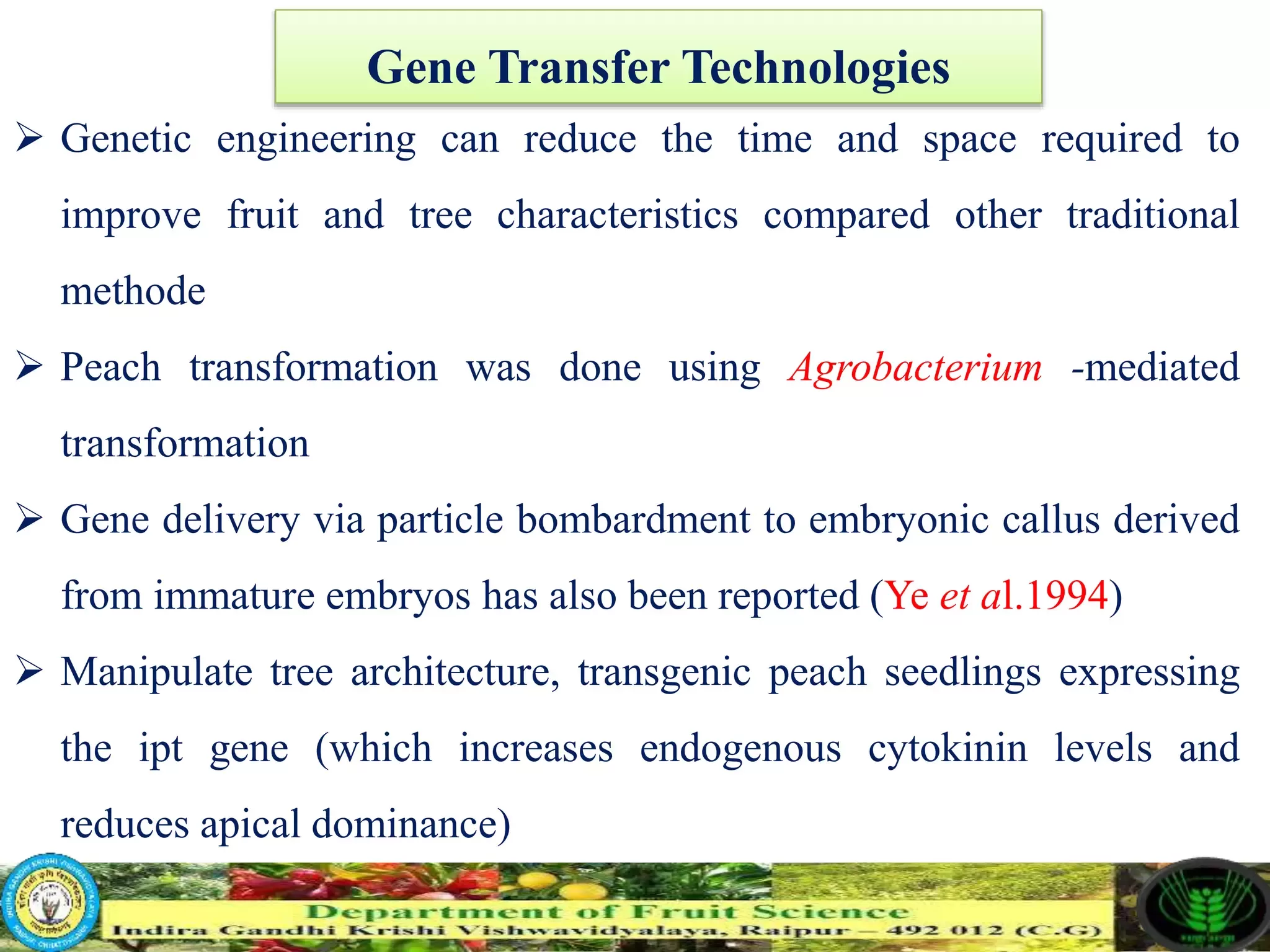
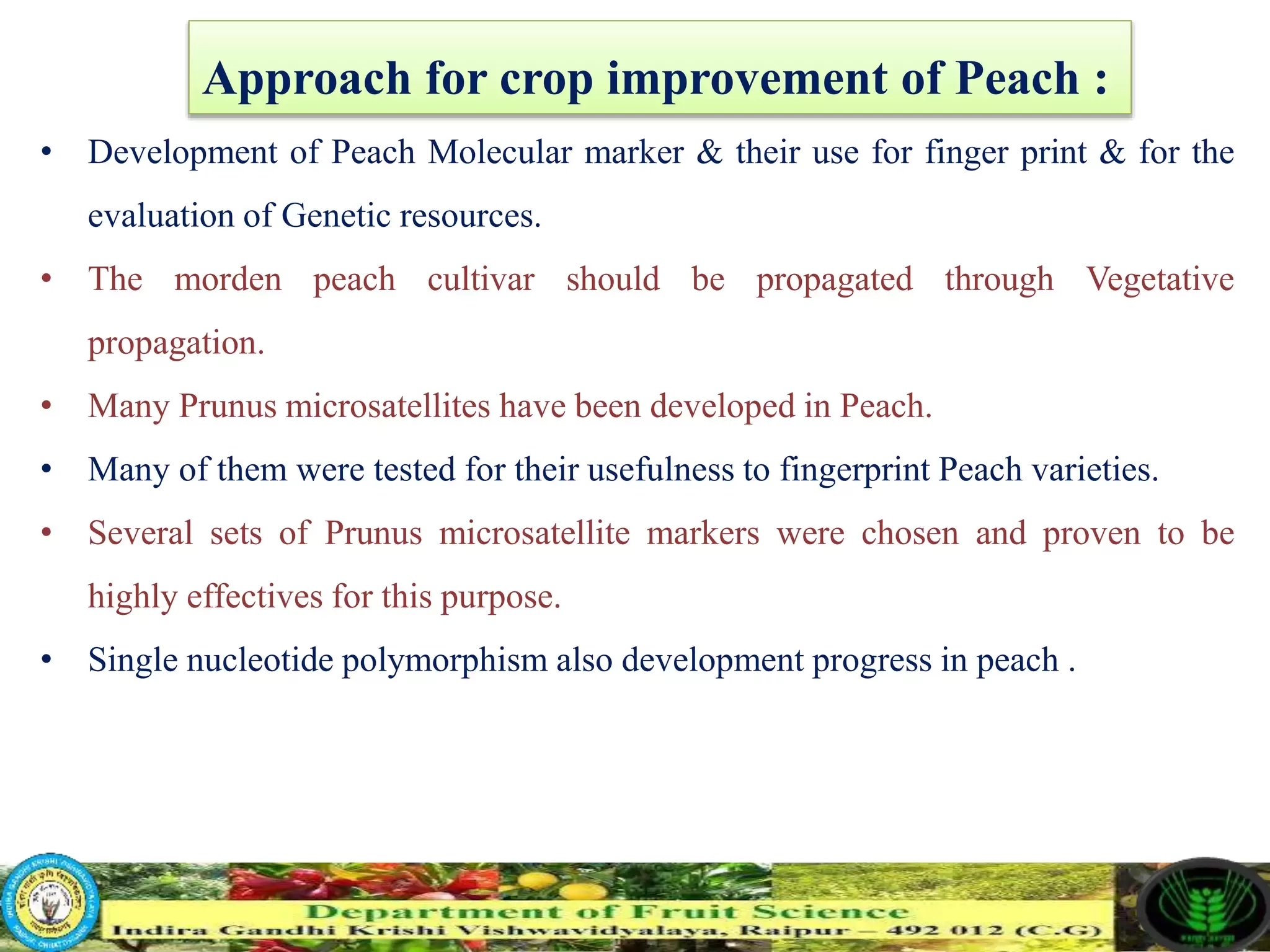
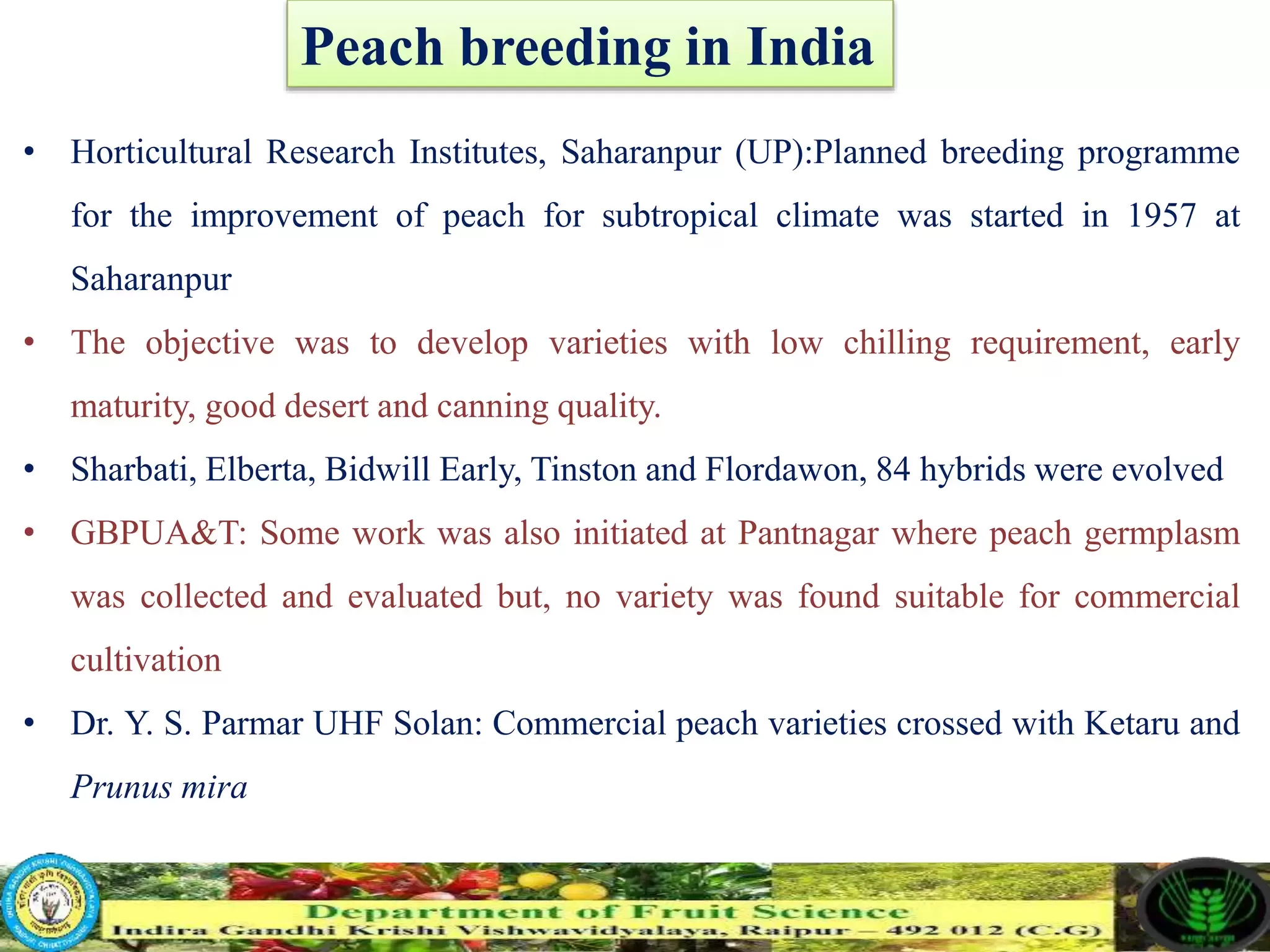
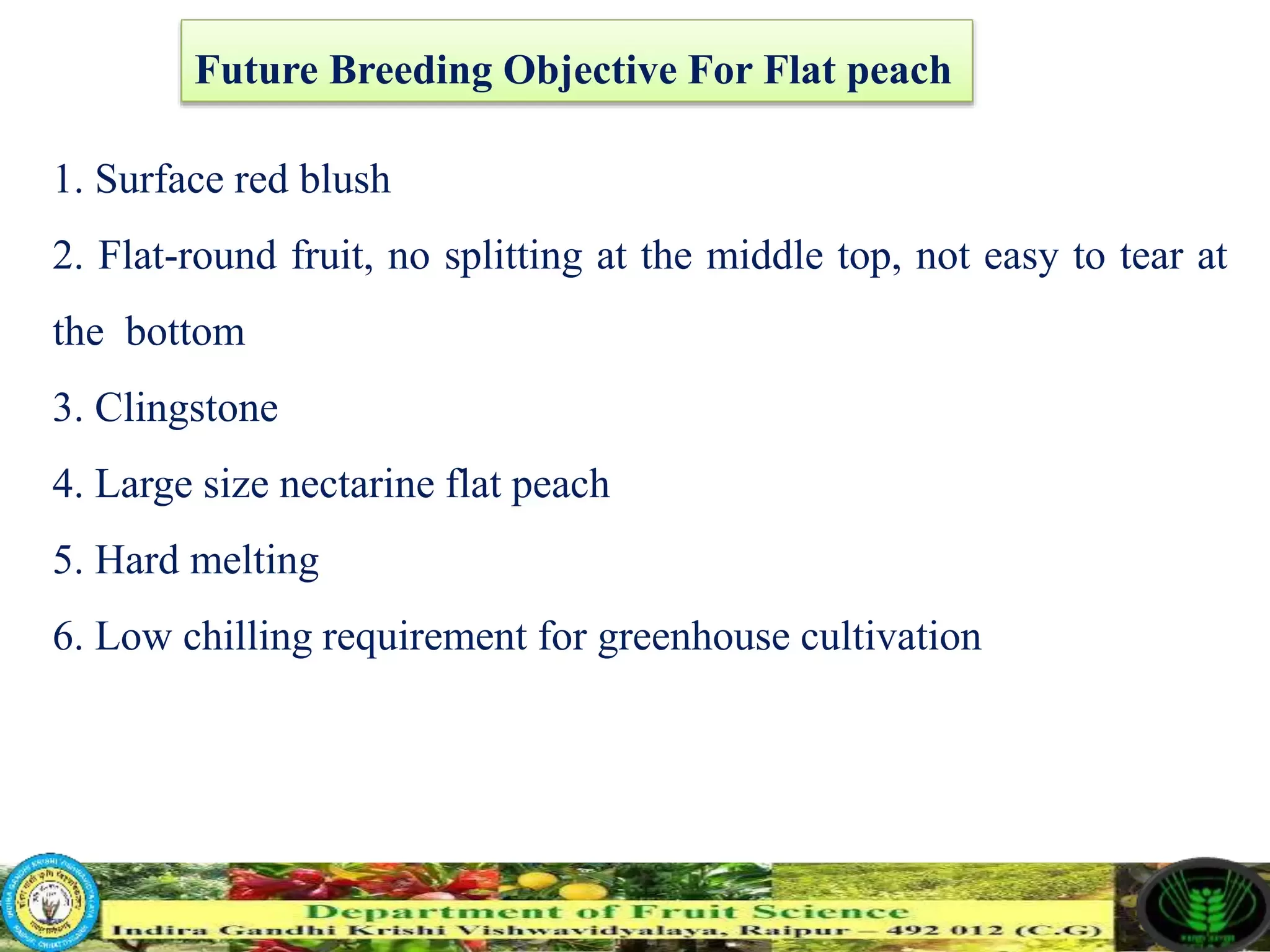
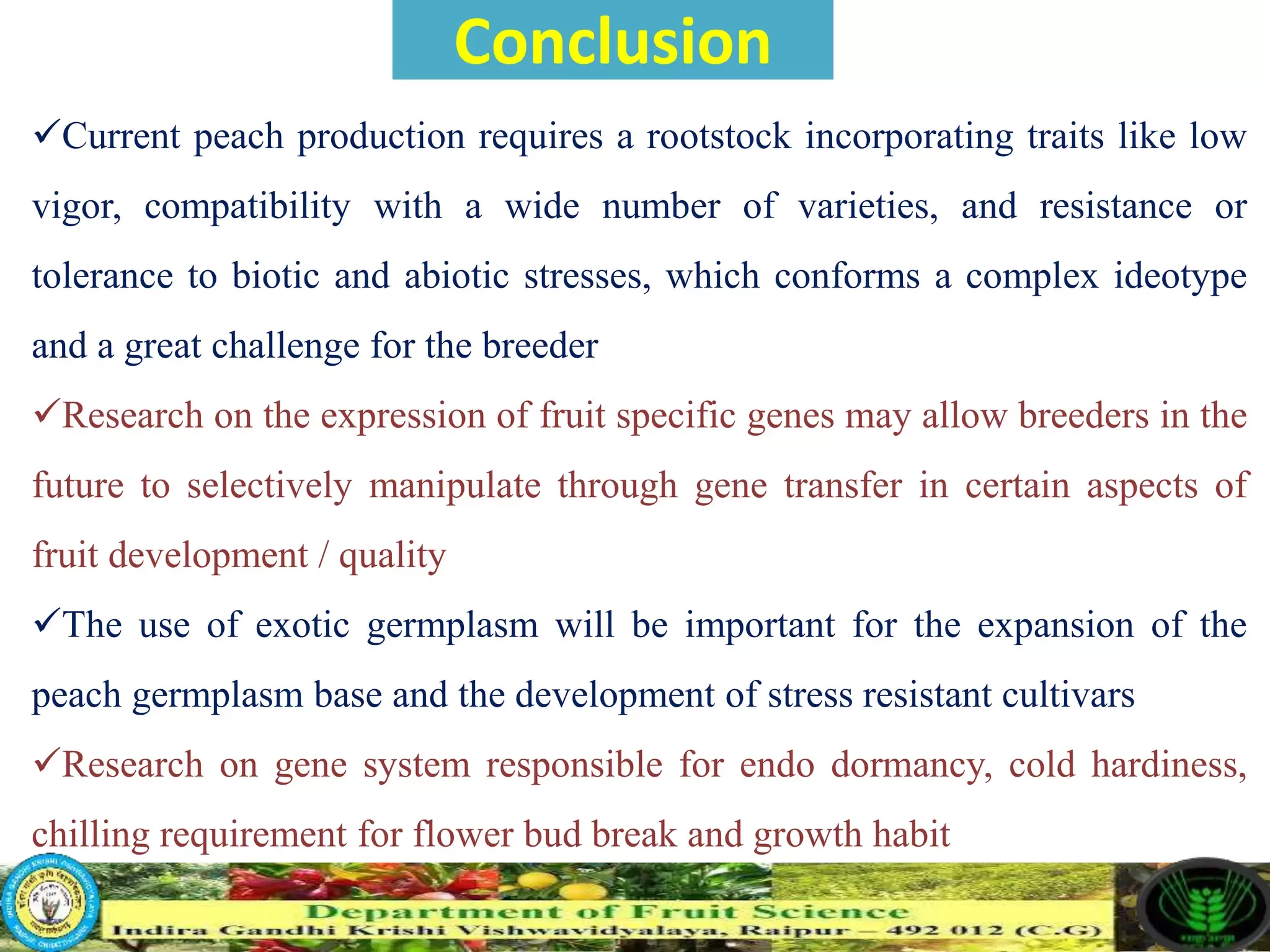
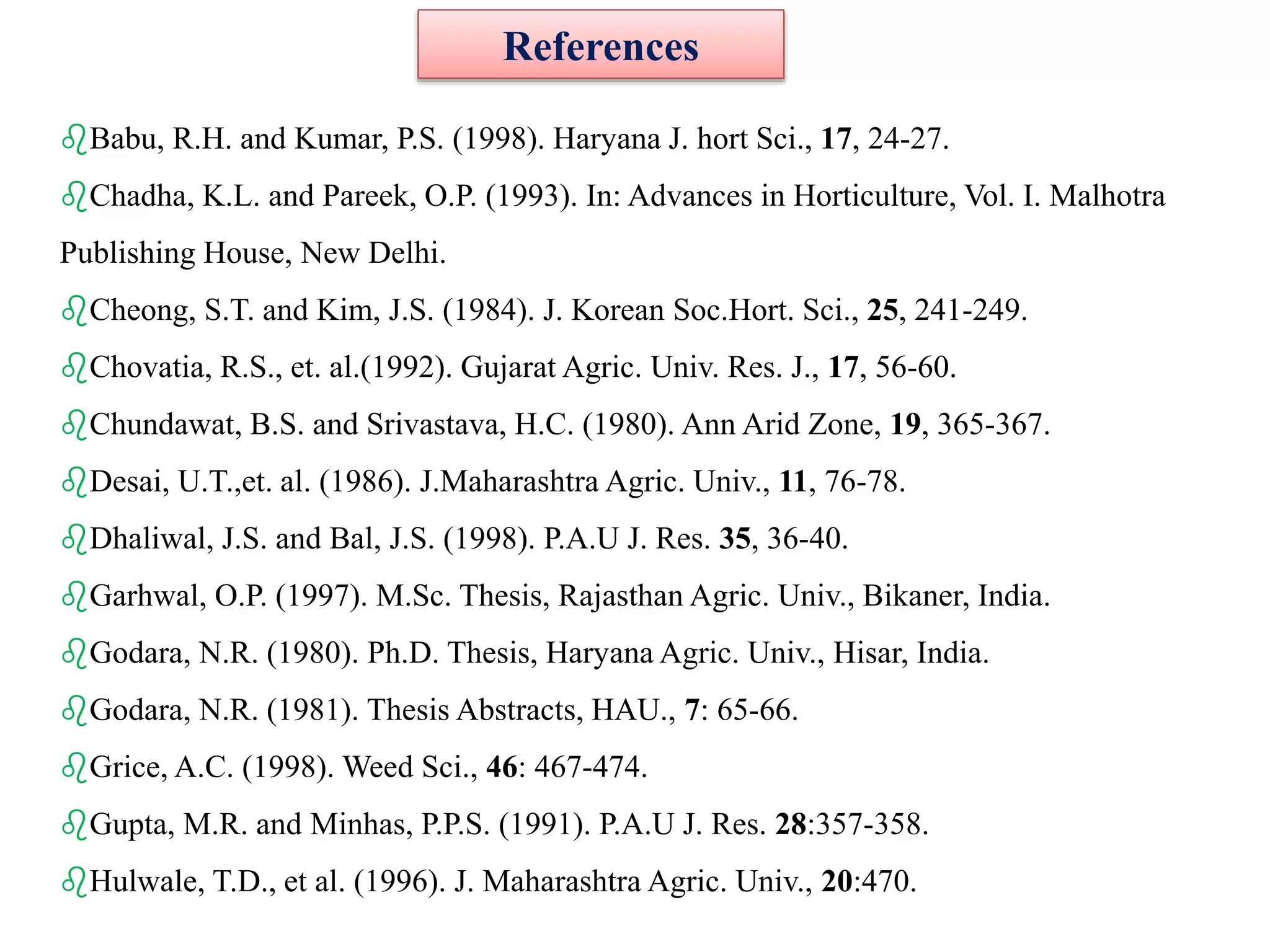
The peach, scientifically known as Prunus persica, belongs to the Rosaceae family and is a significant temperate fruit crop, ranking third in production. It is primarily self-pollinated, with most cultivars requiring between 500 to 1000 chilling hours for optimal growth. Peaches and nectarines are native to China, with various wild species found in India. The fruit is commercially cultivated in

Slide 1

Slide 1

Slide 2

Slide 2

Slide 3

Slide 3

Slide 4

Slide 4

Slide 5

Slide 5

Slide 6

Slide 6

Slide 7

Slide 7

Slide 8

Slide 8

Slide 9

Slide 9

Slide 10

Slide 10

Slide 11

Slide 11

Slide 12

Slide 12

Slide 13

Slide 13

Slide 14

Slide 14

Slide 15

Slide 15

Slide 16

Slide 16

Slide 17

Slide 17

Slide 18

Slide 18

Slide 19

Slide 19

Slide 20

Slide 20

Slide 21

Slide 21

Slide 22

Slide 22

Slide 23
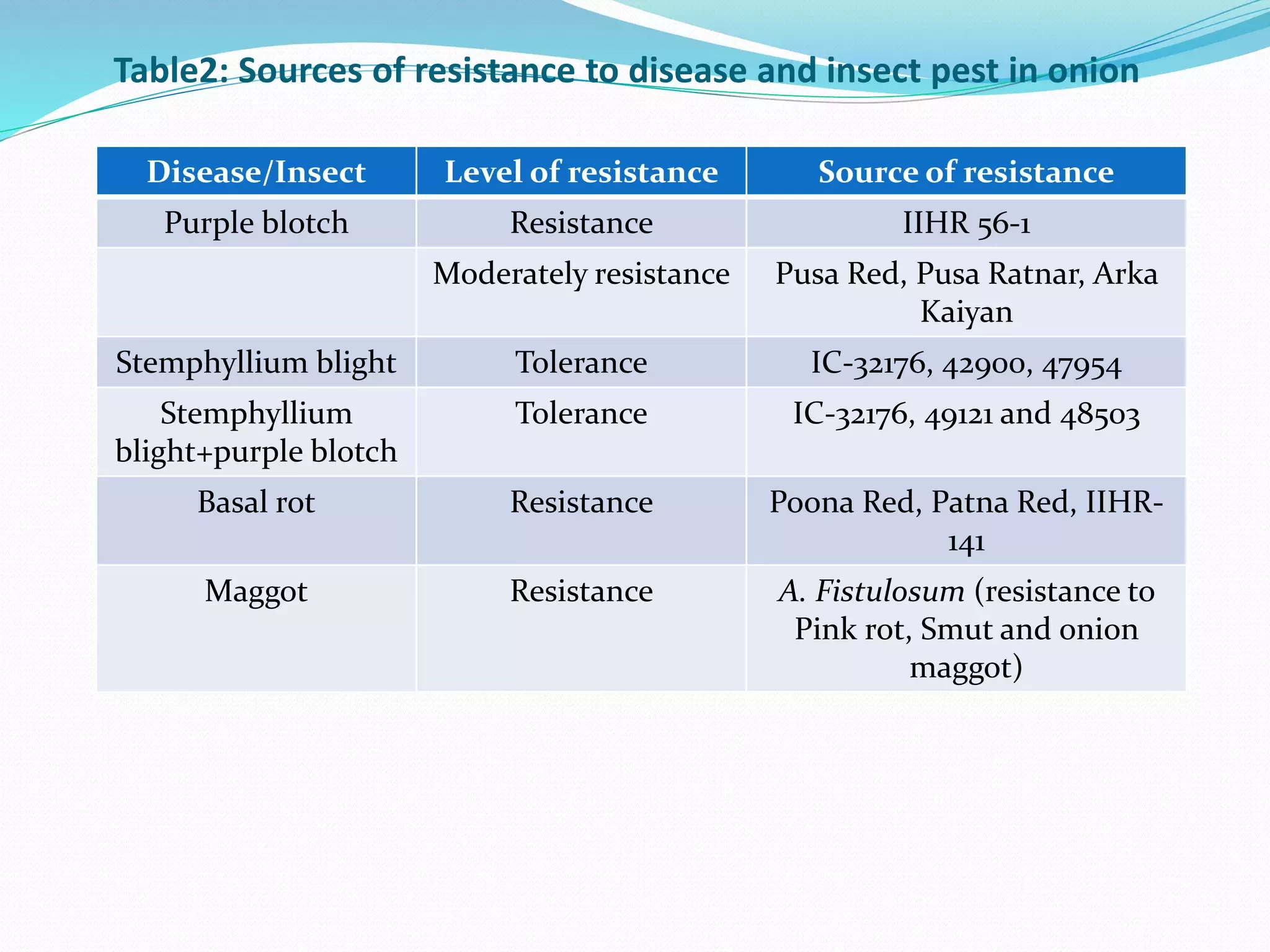
Slide 23
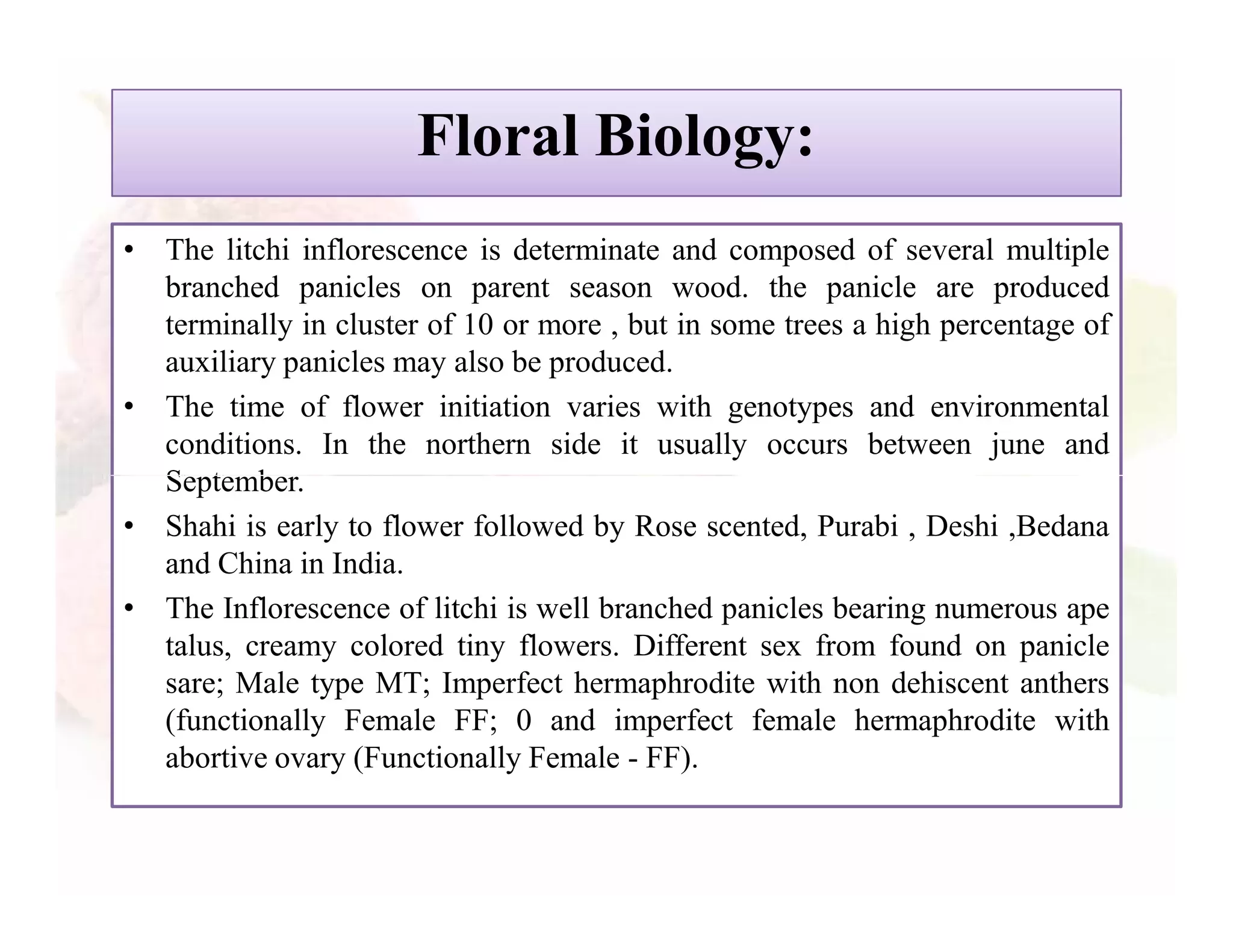
1 / 23
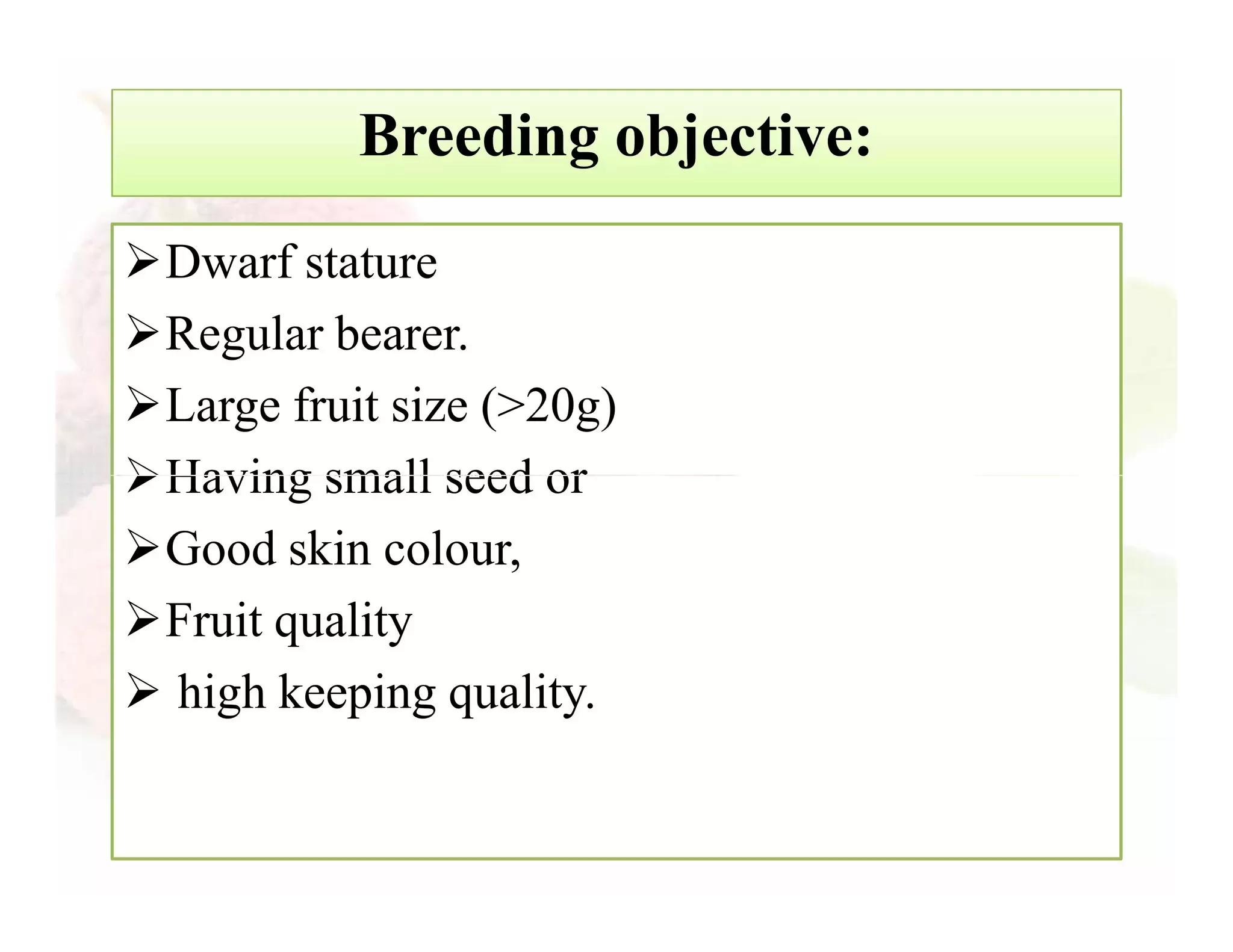
Ppt on Advances breeding of Papaya

Summary:

Explore the latest developments in papaya breeding focusing on high-yield and disease-resistant varieties. Discover how biotechnology is enhancing fruit quality in this nutrient-rich tropical fruit crop.

Summary

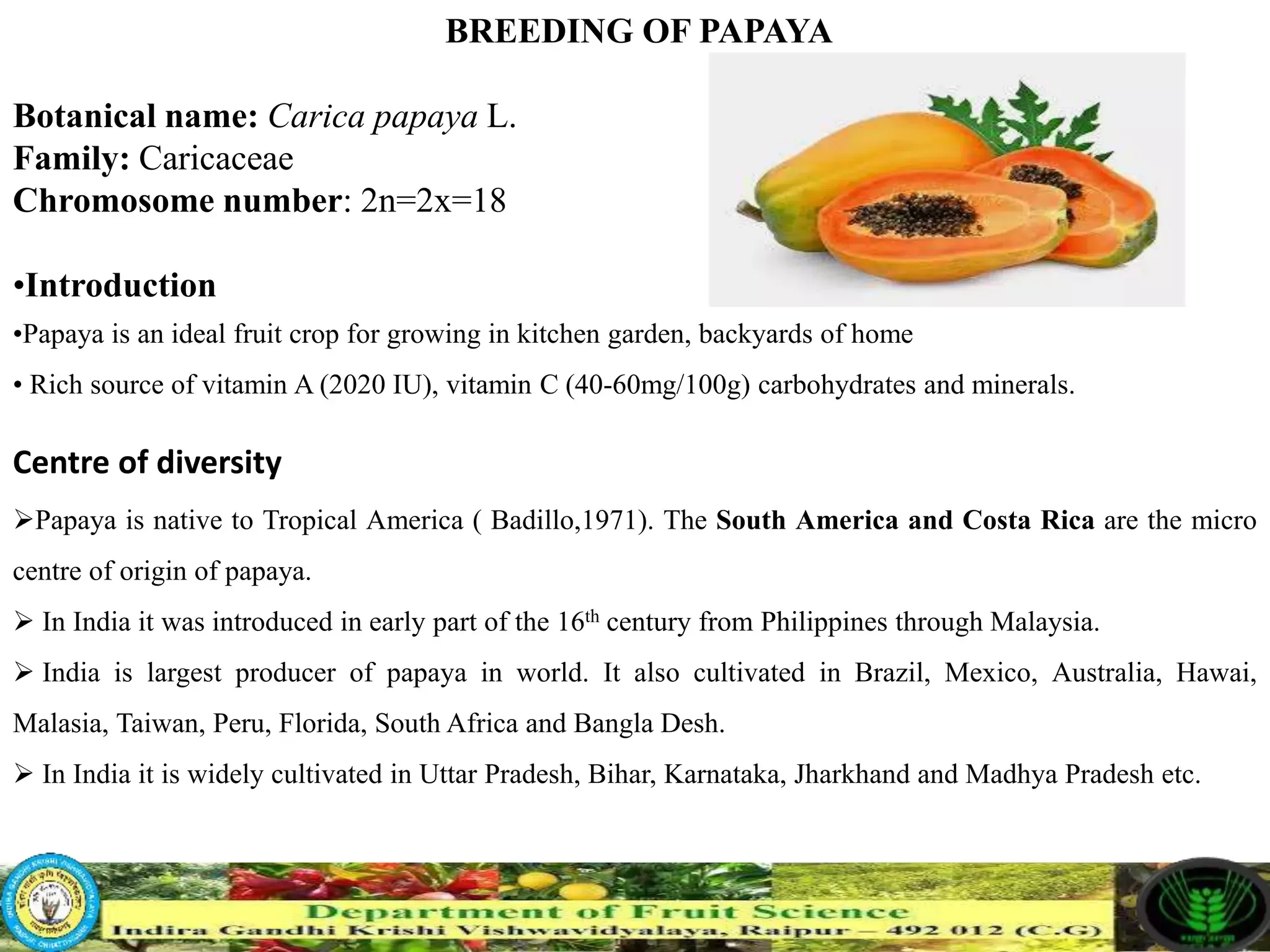
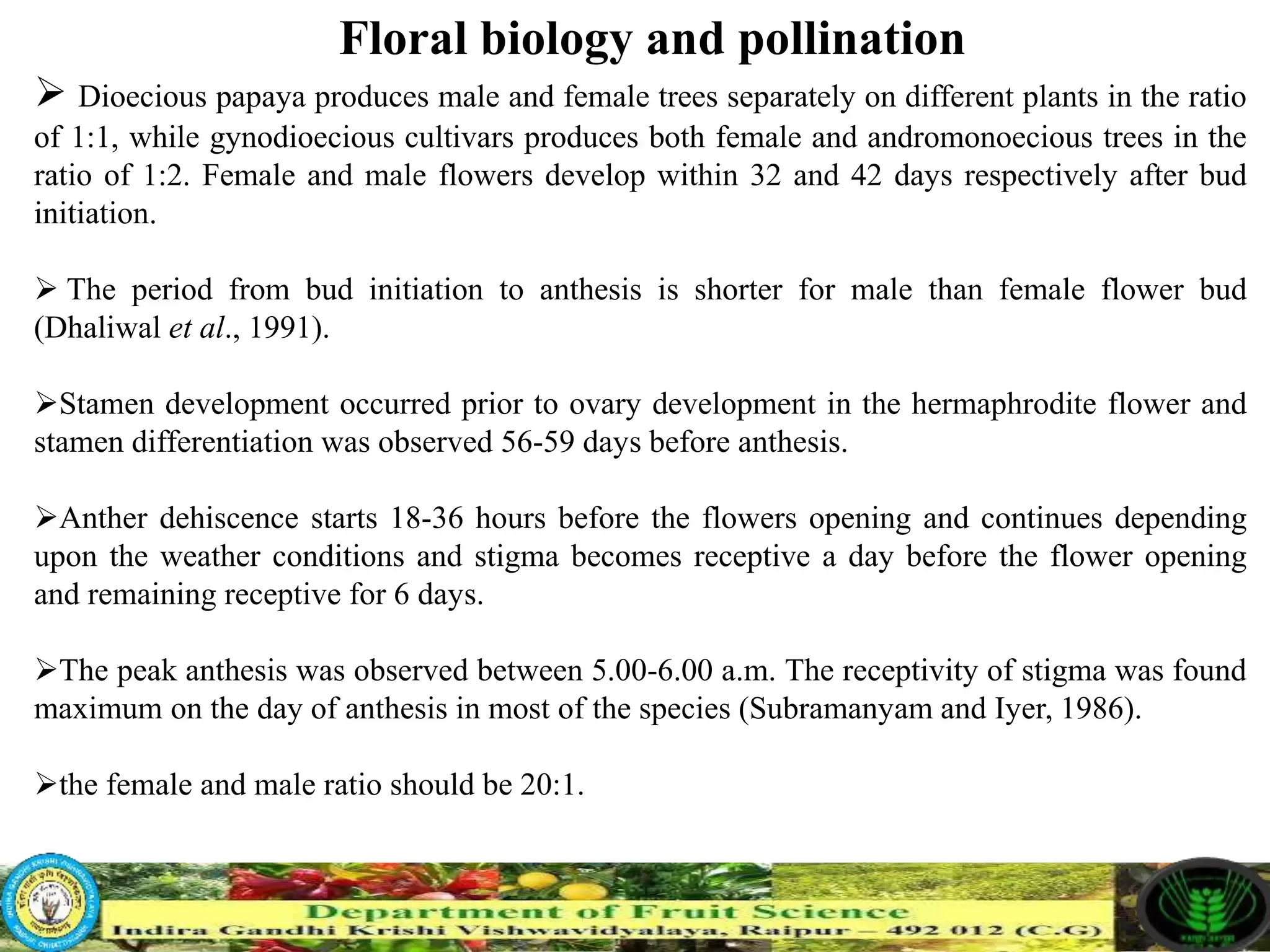
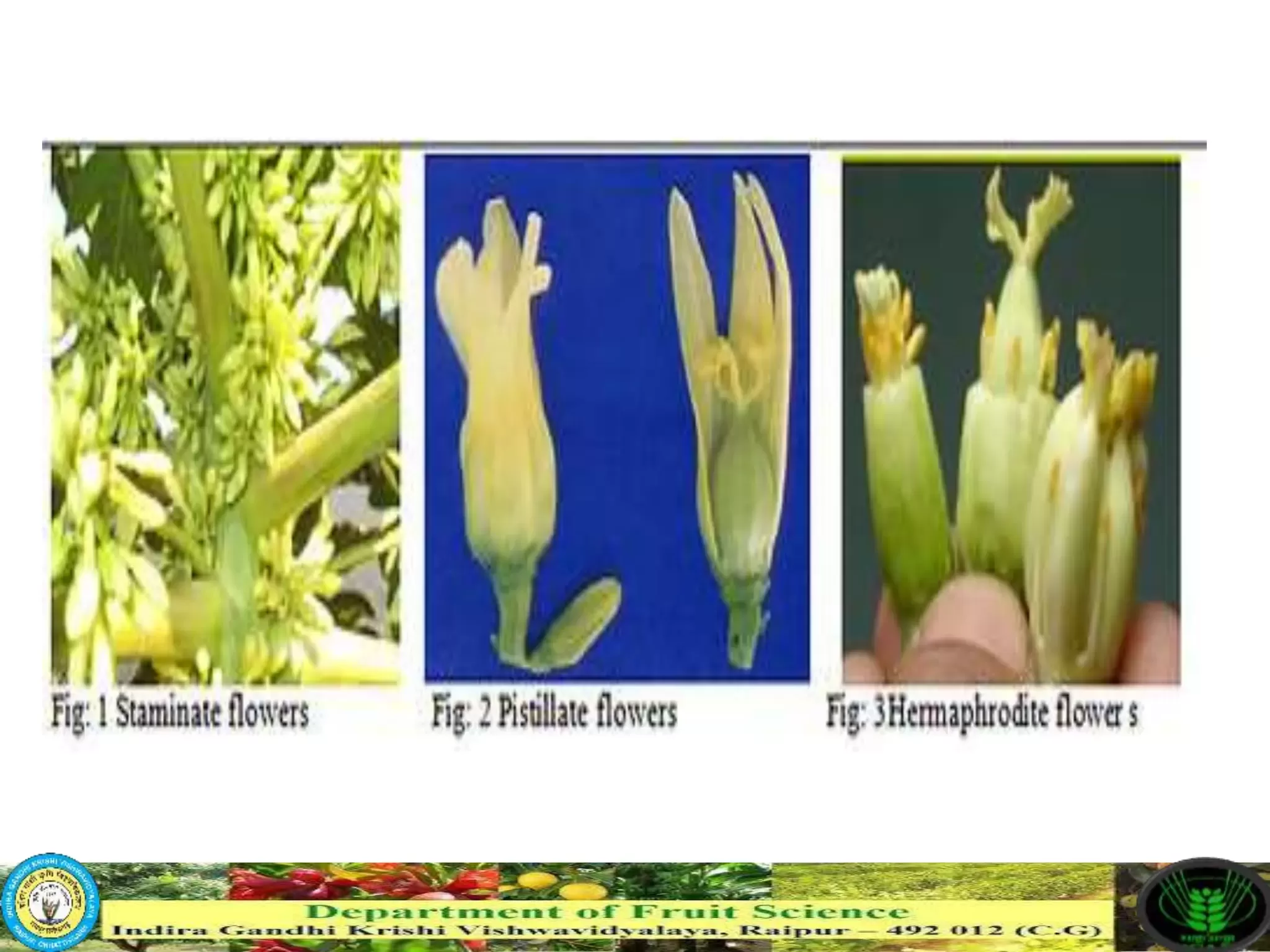
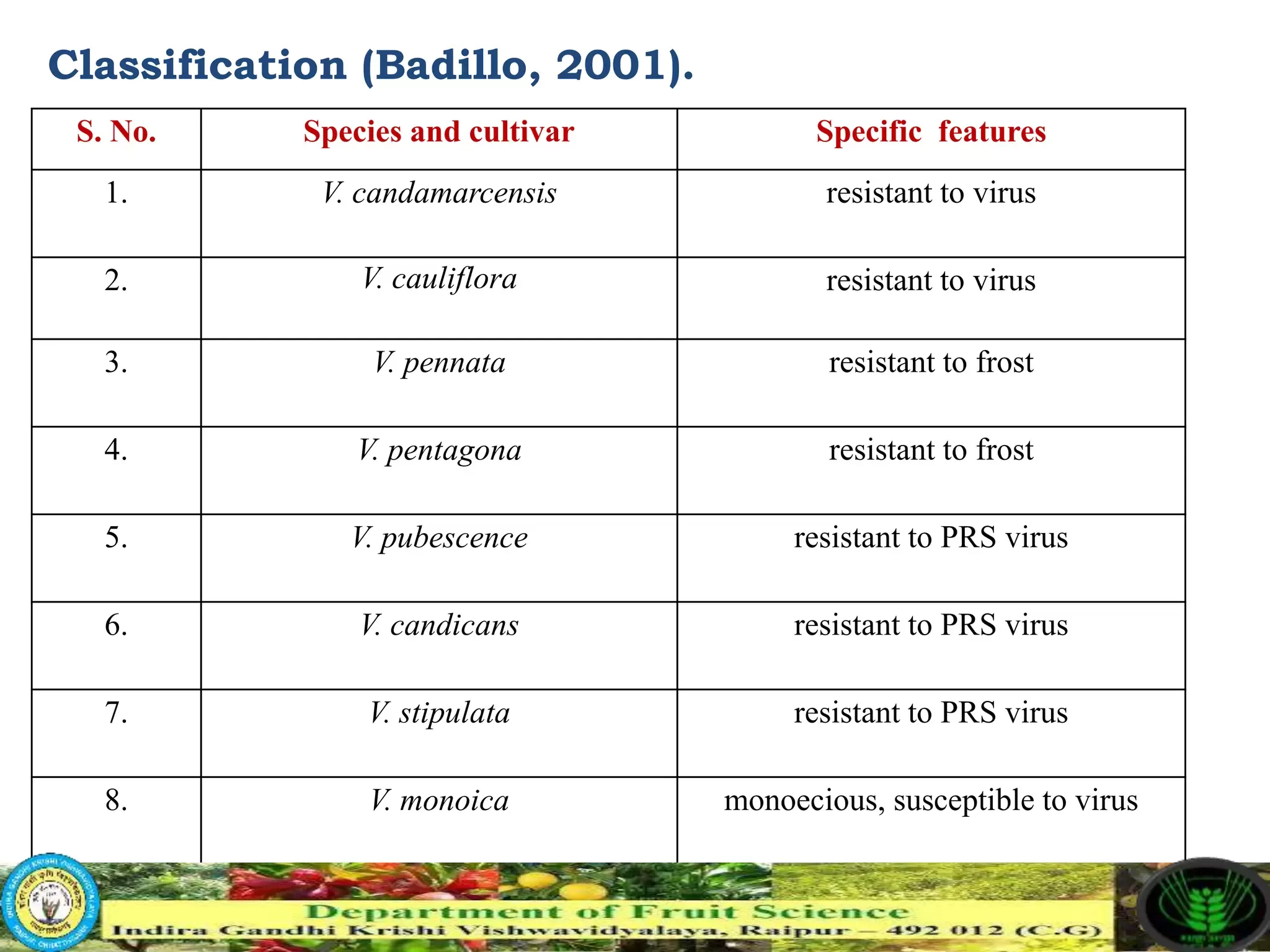
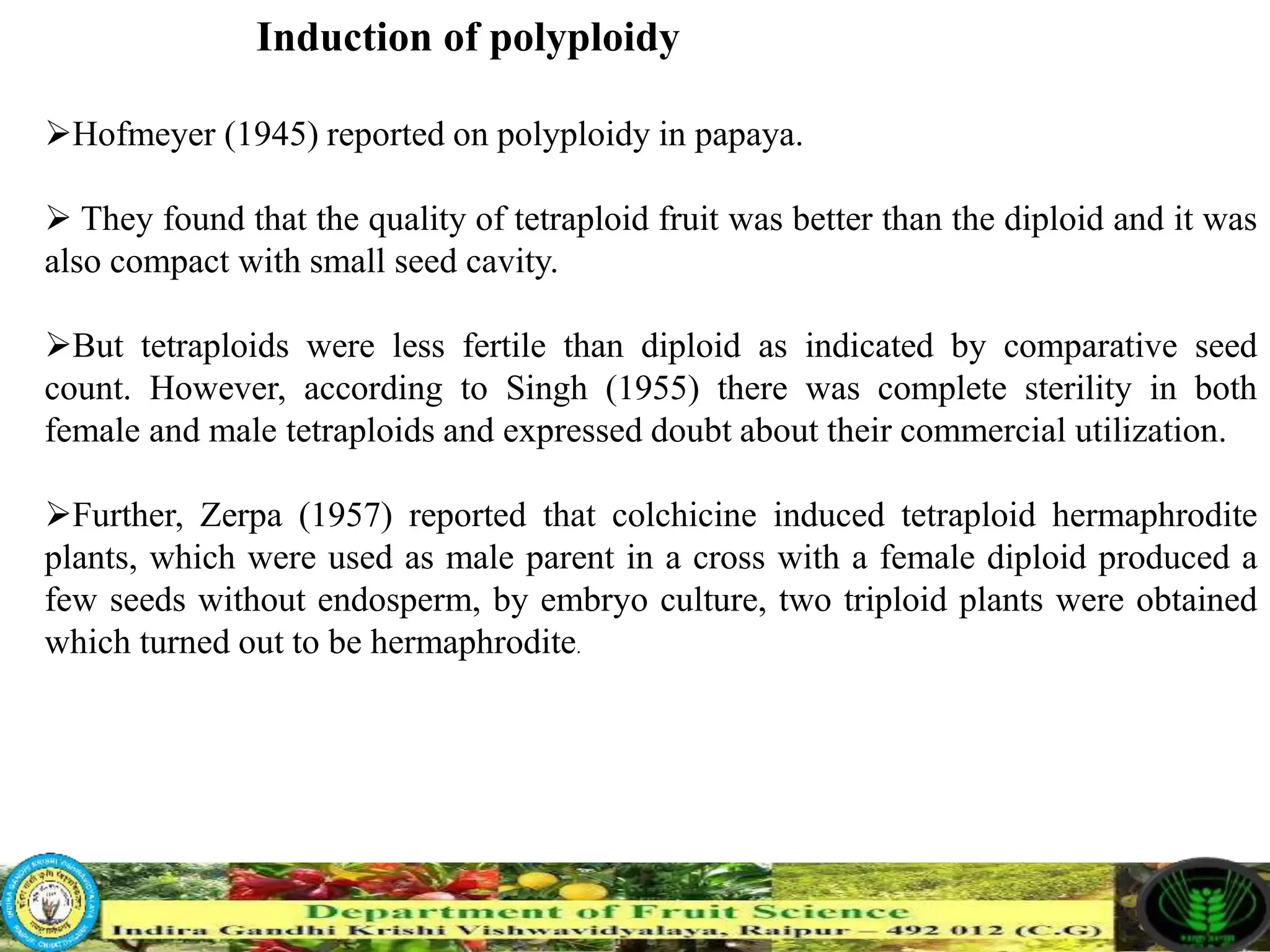
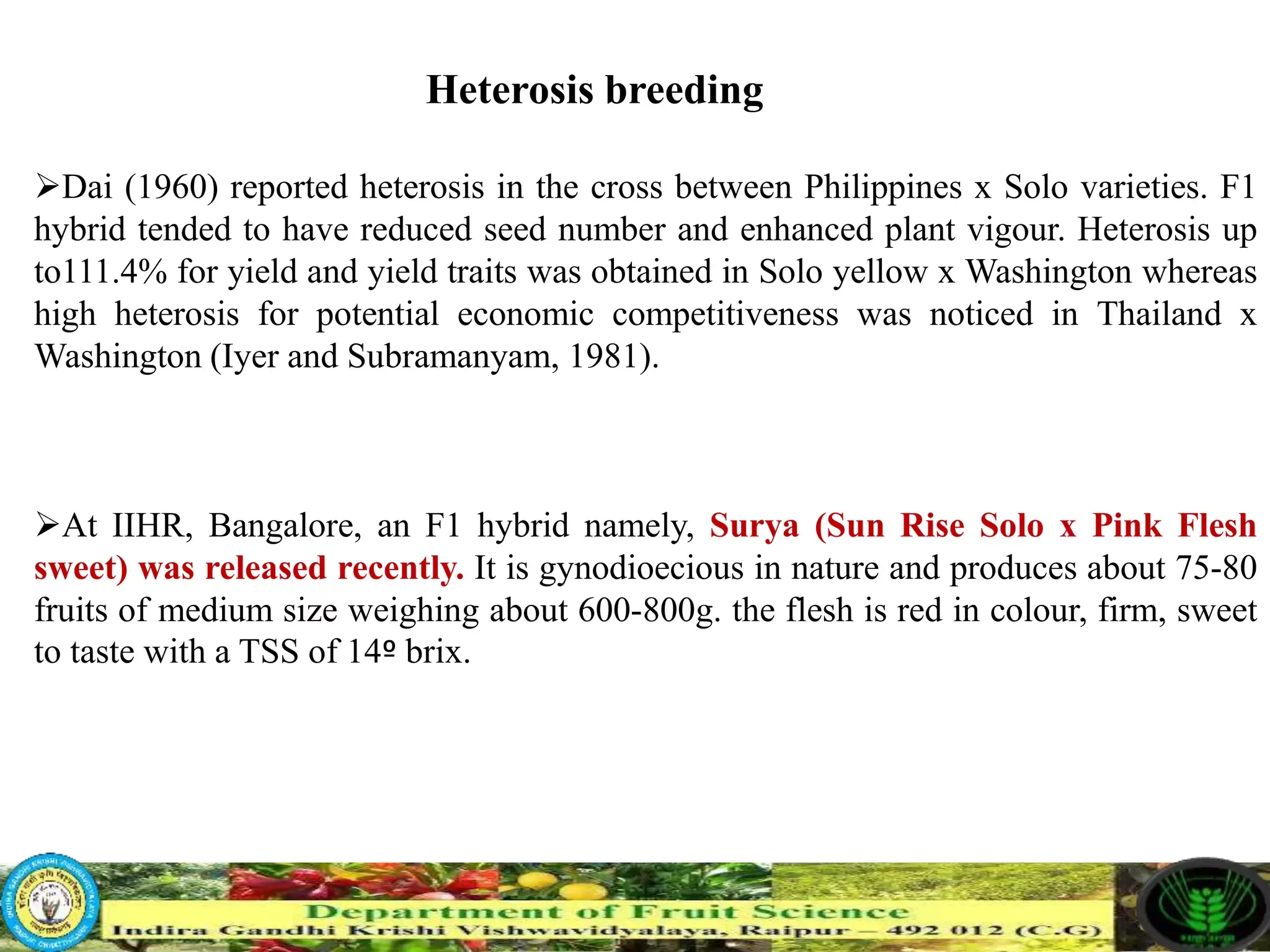
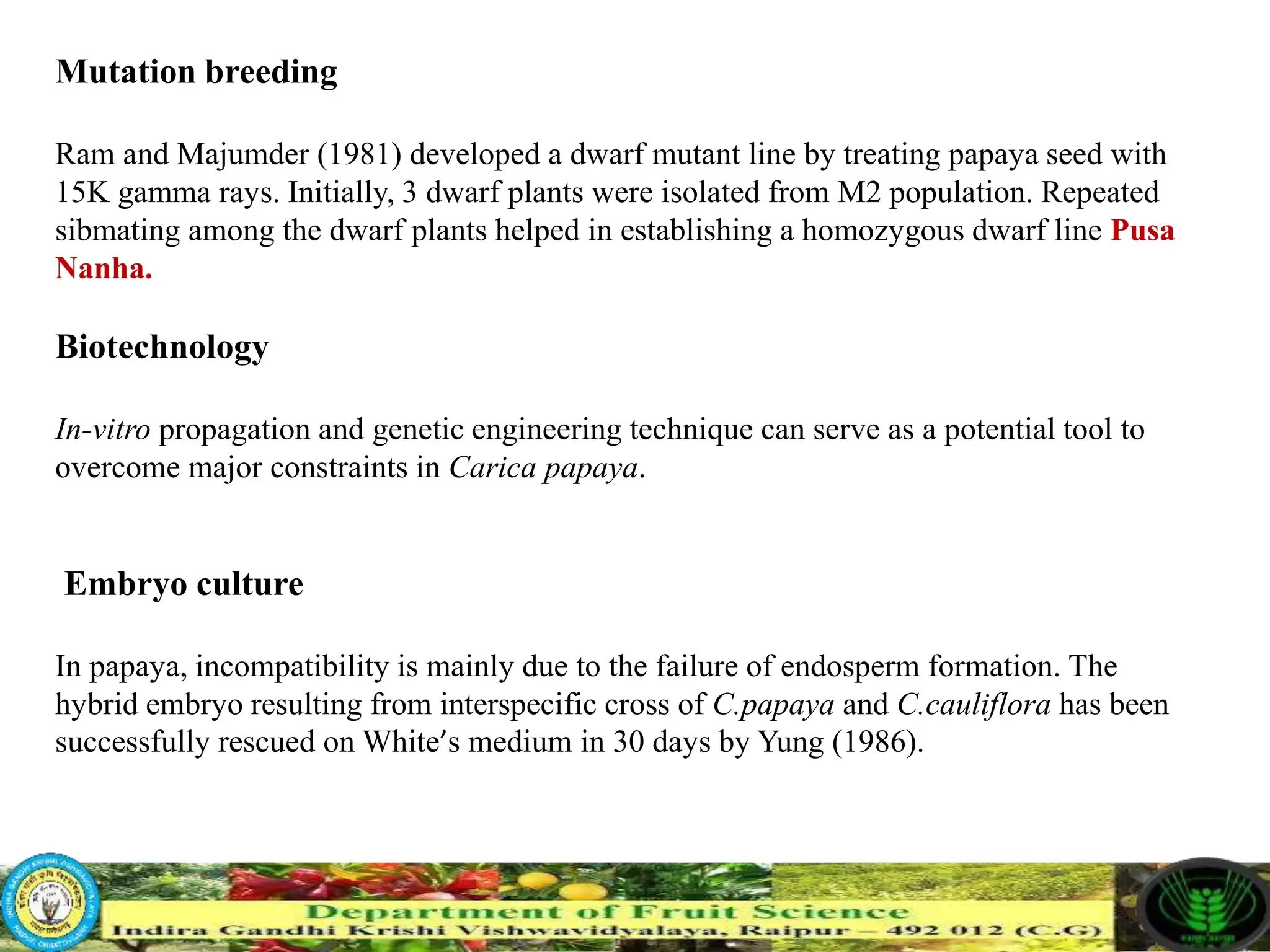
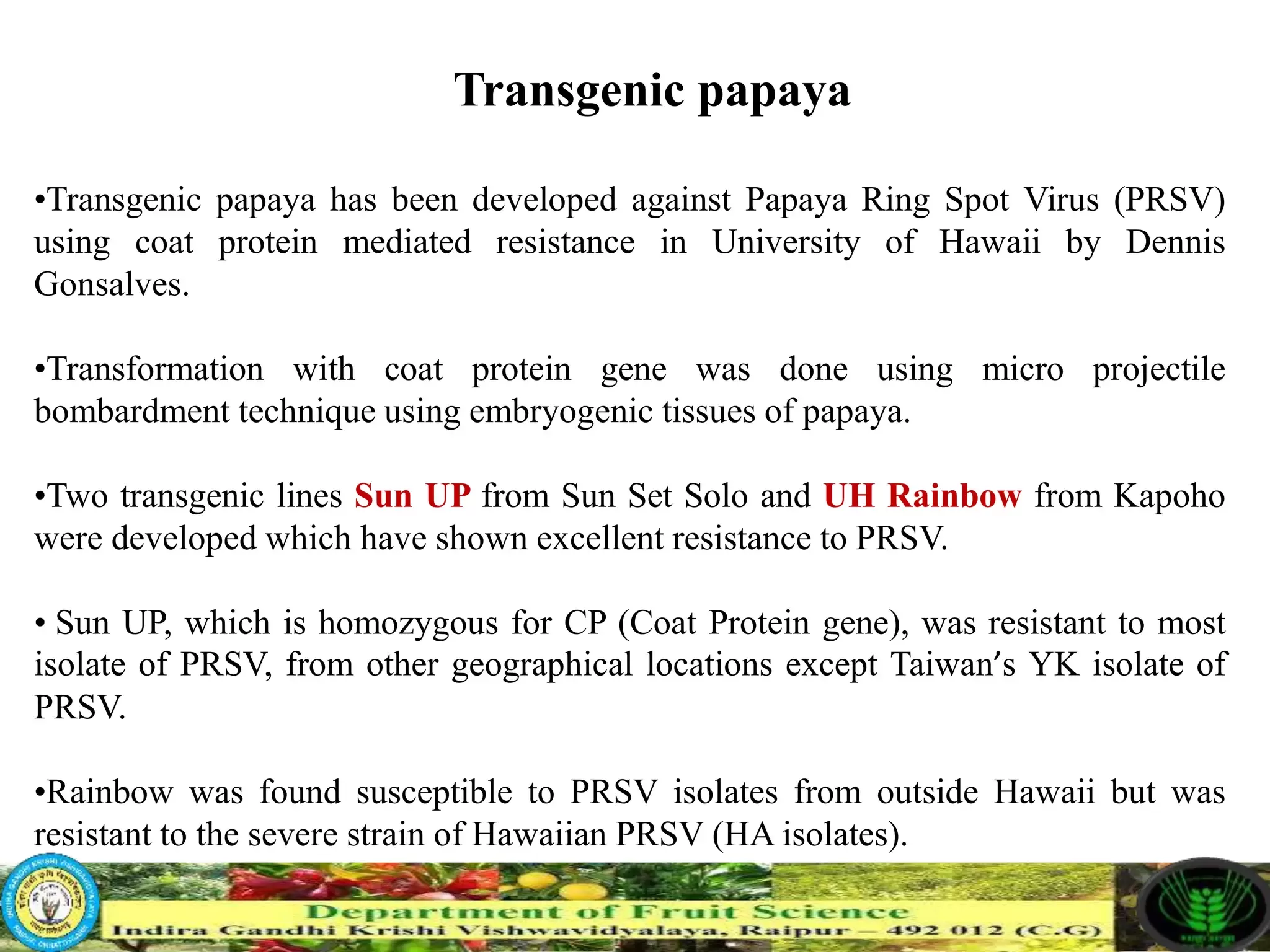
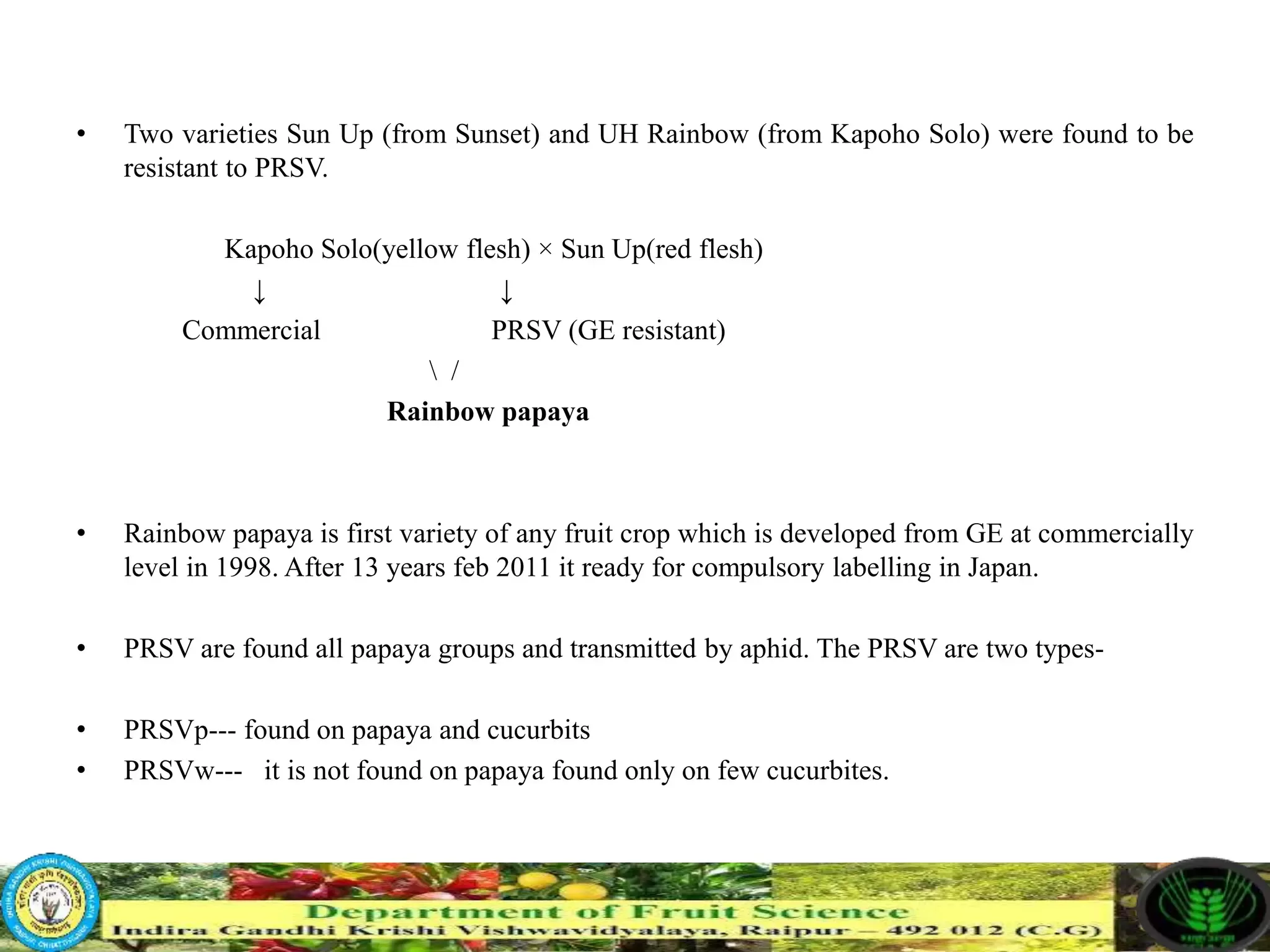
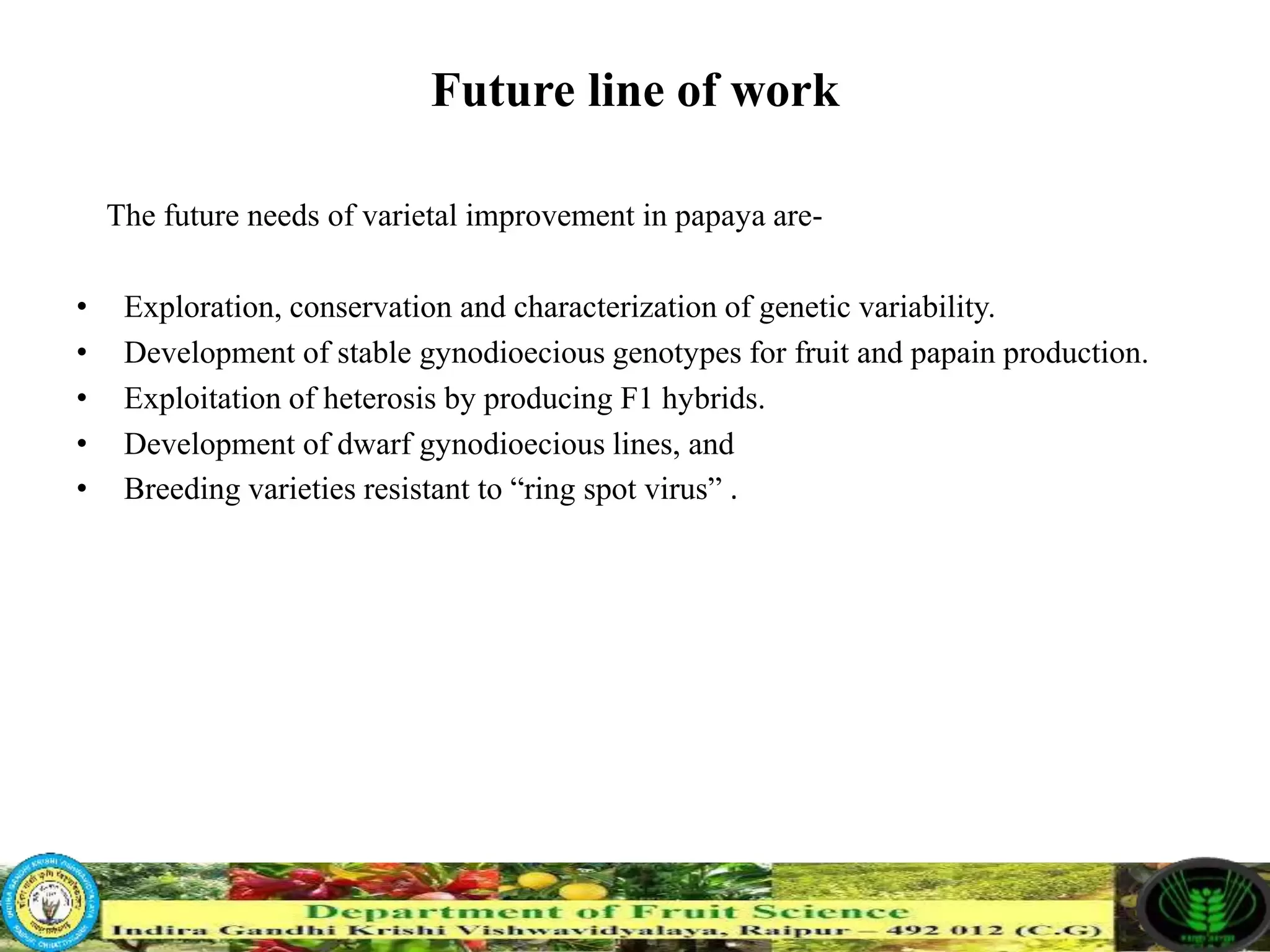
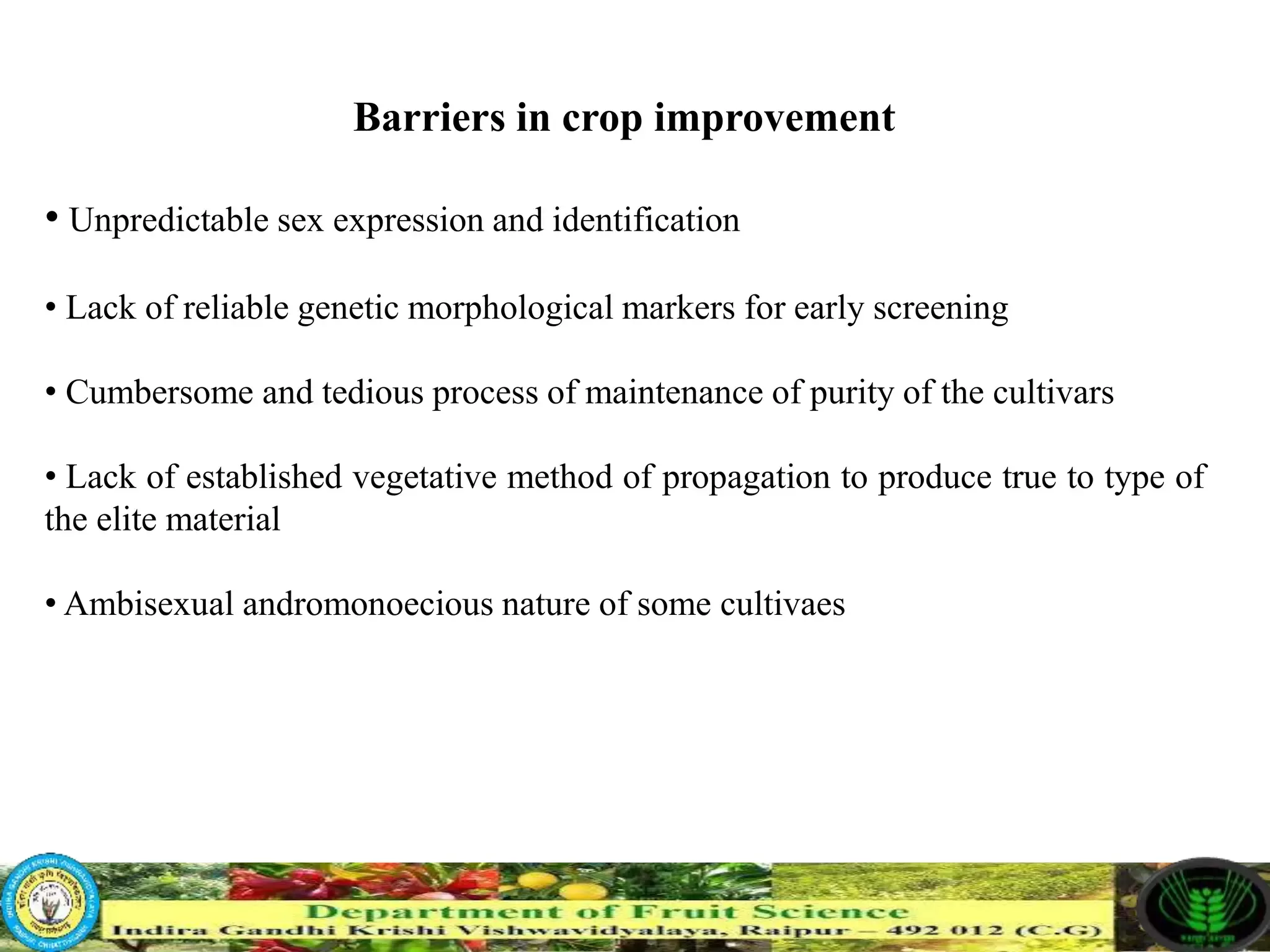
Papaya (Carica papaya L.) is a nutrient-rich fruit crop ideal for home gardens, native to Tropical America. India is the largest producer, with significant cultivation in states like Uttar Pradesh and Karnataka. The plant exhibits dioecious and gynodioecious traits, influencing its breeding and pollination. Key breeding objectives include developing high-yield, disease-resistant varieties and enhancing fruit quality. Advances in biotechnology, such

Slide 1

Slide 1

Slide 2

Slide 2

Slide 3
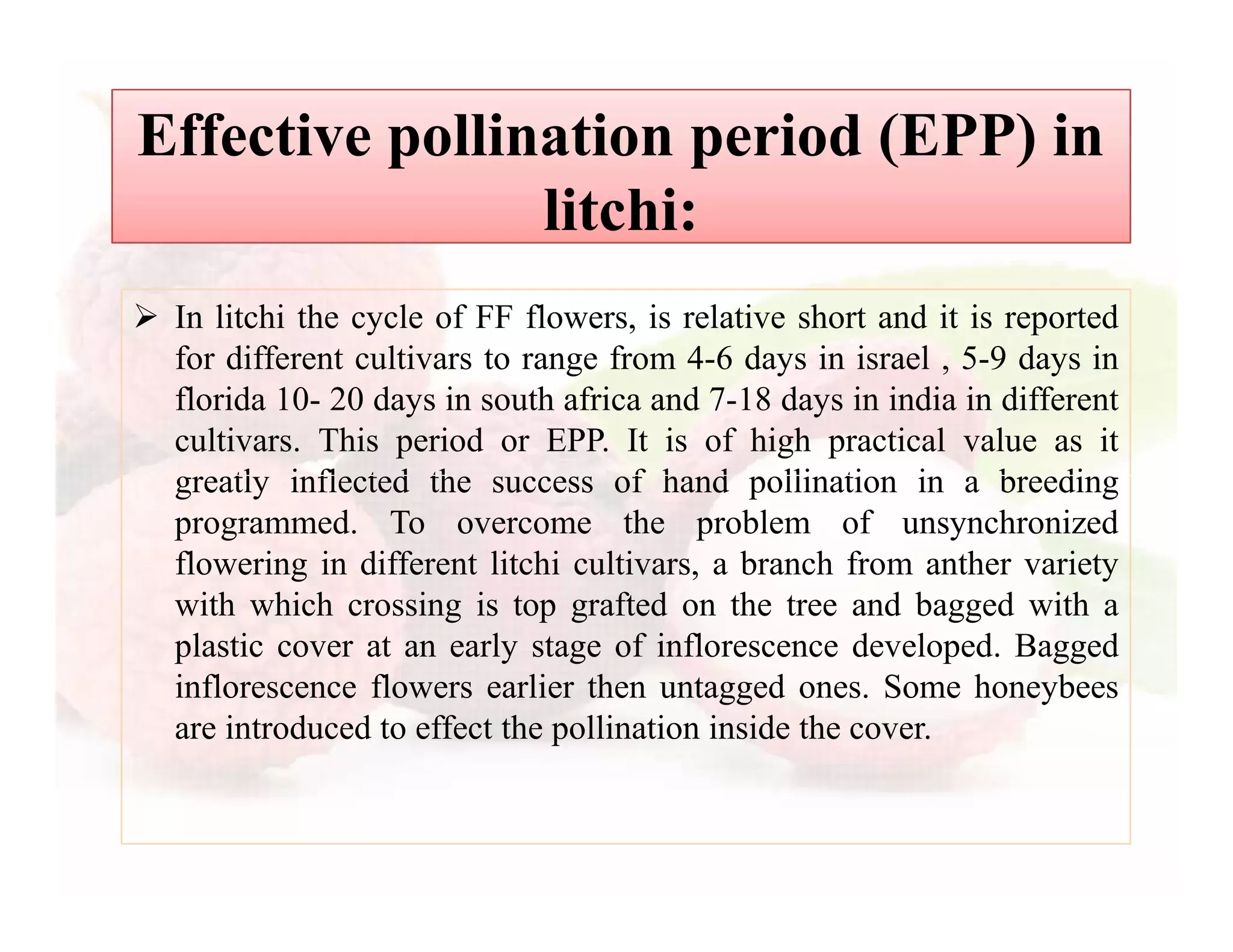
Slide 3
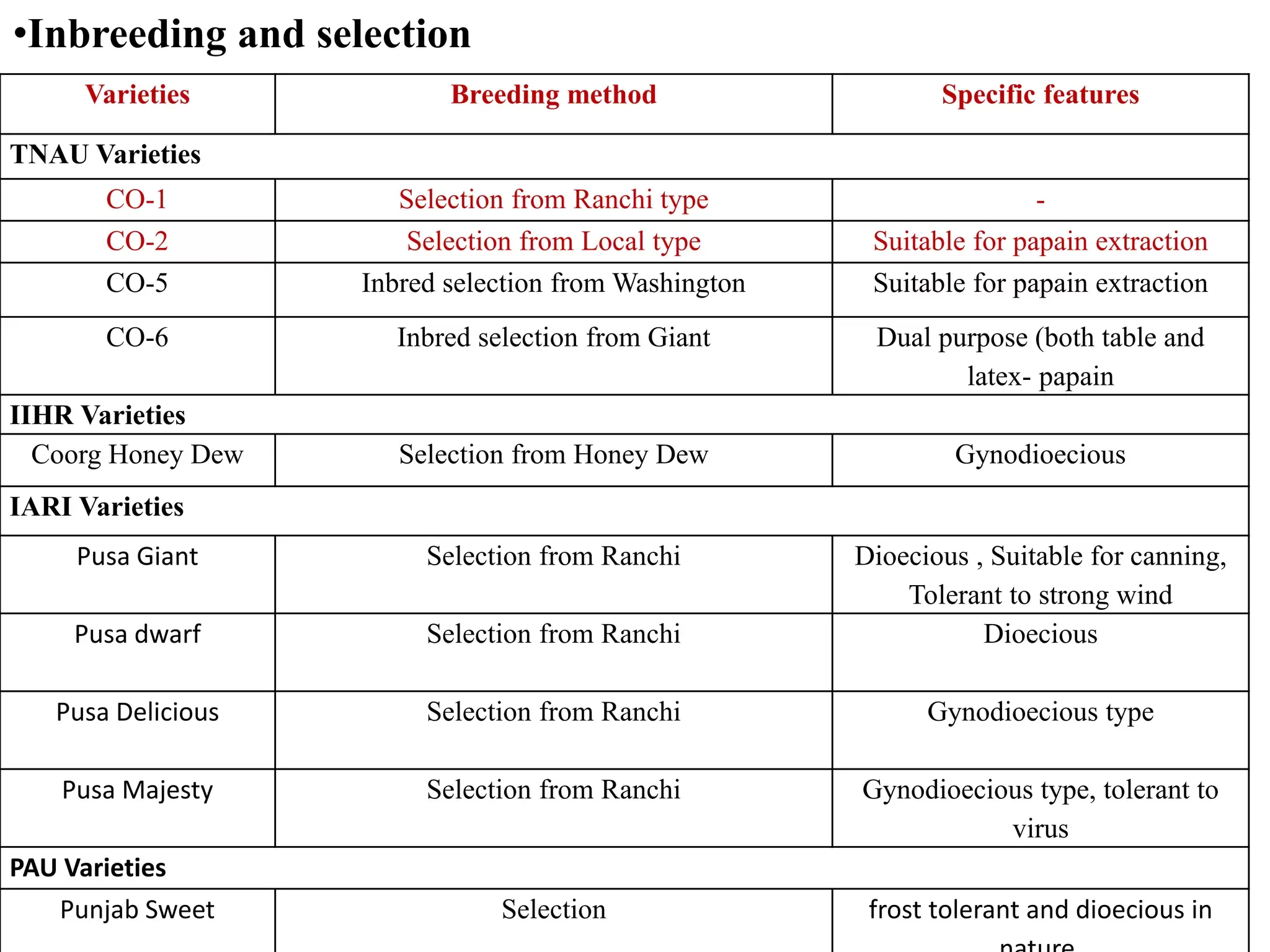
Slide 4

Slide 4

Slide 5

Slide 5

Slide 6

Slide 6

Slide 7

Slide 7

Slide 8

Slide 8

Slide 9

Slide 9

Slide 10

Slide 10

Slide 11

Slide 11

Slide 12

Slide 12

Slide 13

Slide 13

Slide 14

Slide 14

Slide 15

Slide 15

Slide 16

Slide 16

Slide 17

Slide 17

Slide 18

Slide 18

Slide 19

Slide 19
1 / 19

Ppt on Mango breeding

Summary:

Delve into the world of mango breeding with this informative PowerPoint presentation. Discover the rich diversity of mango varieties in India and the breeding objectives aimed at enhancing disease resistance and fruit quality. Uncover the secrets behind the ‘King of Fruits’ and the efforts to overcome breeding challenges.

Summary

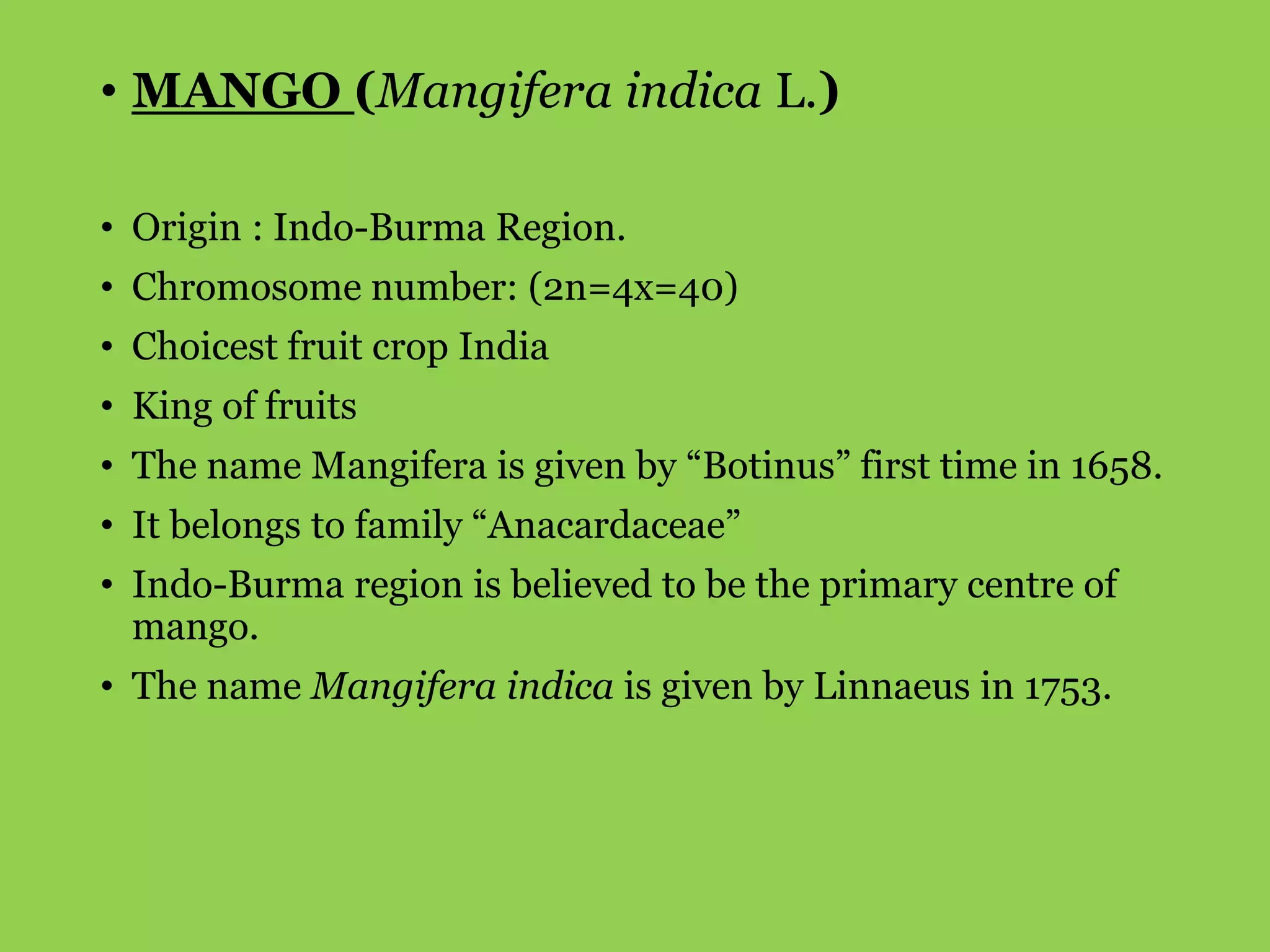
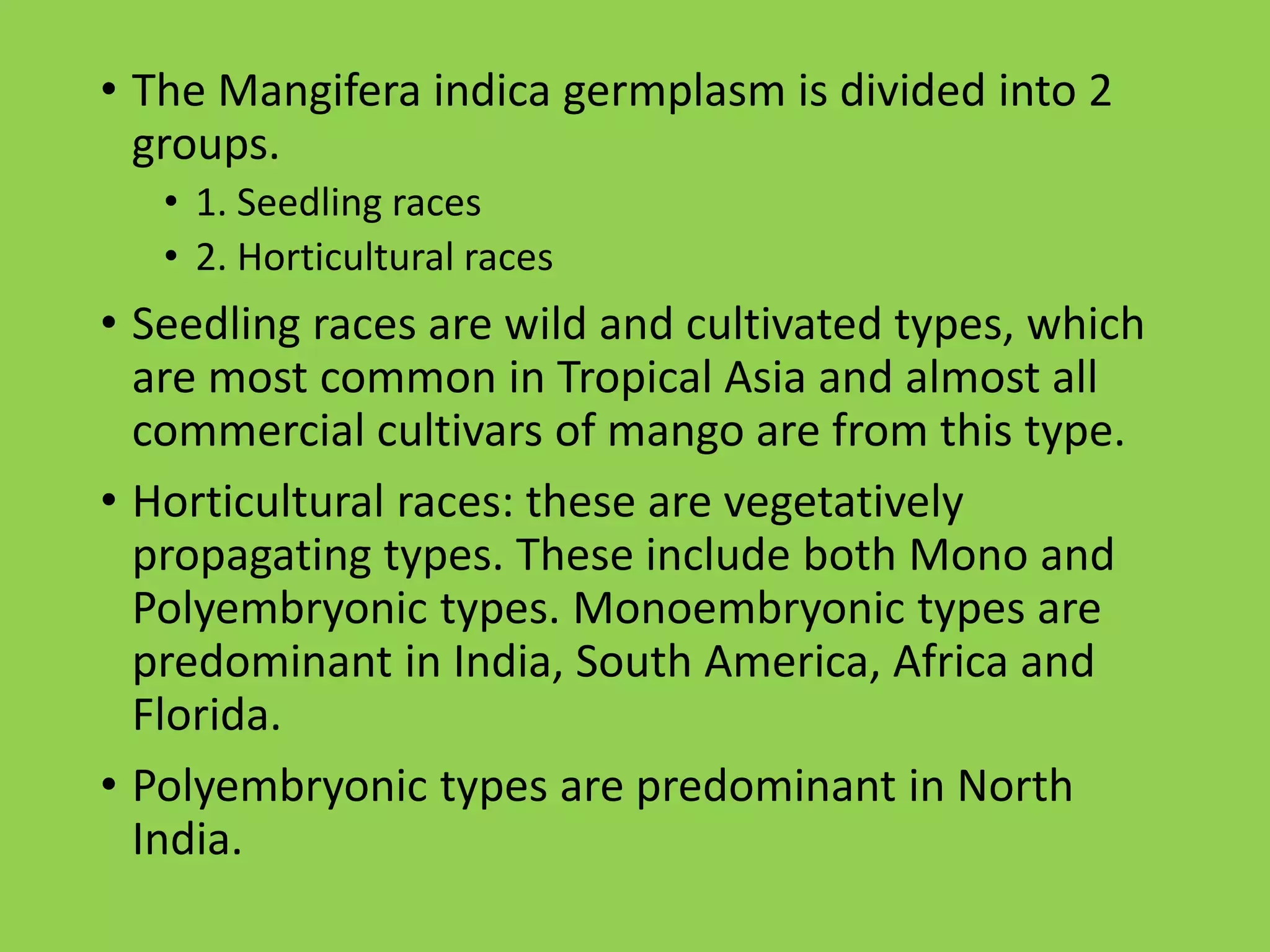
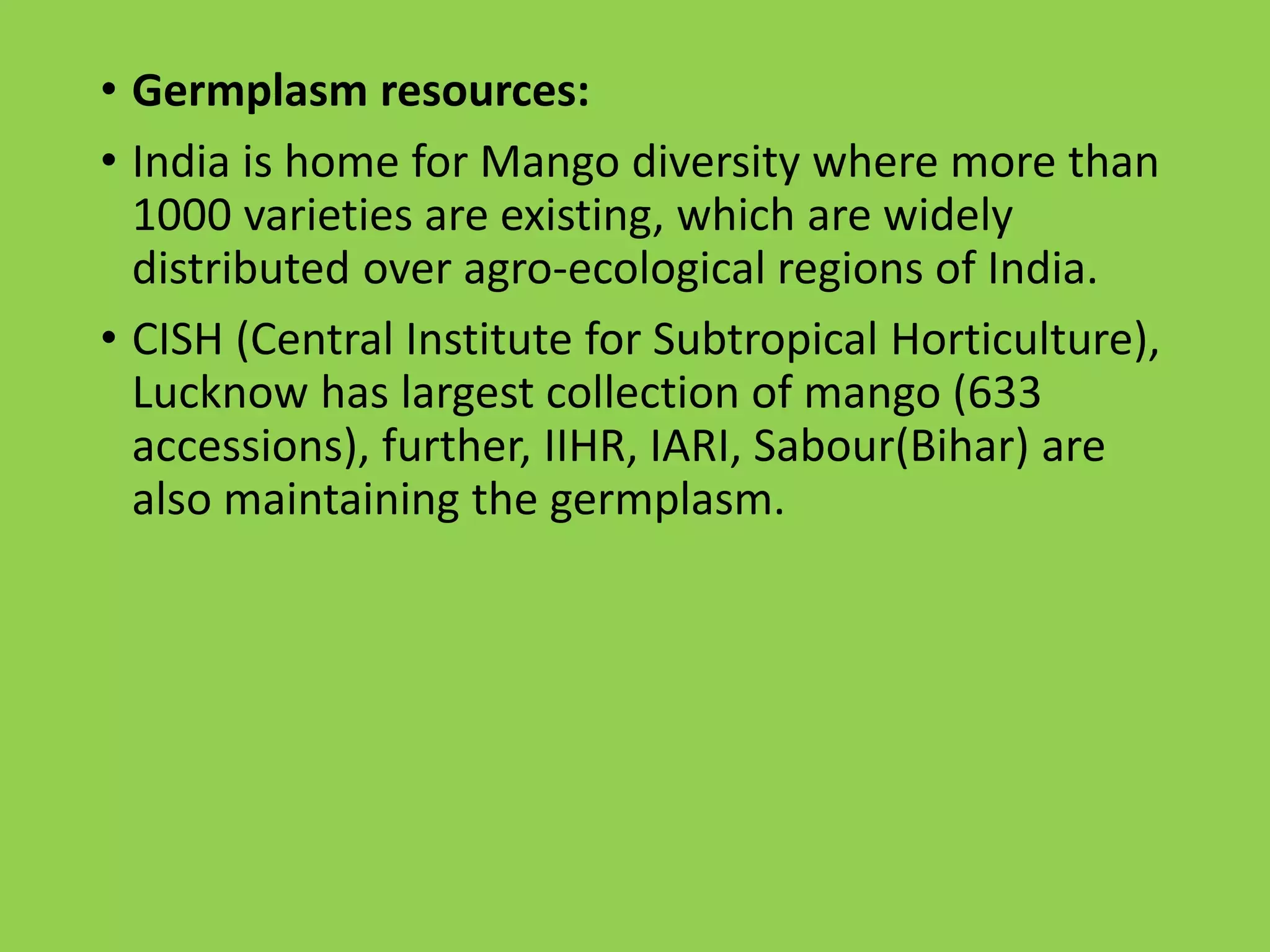
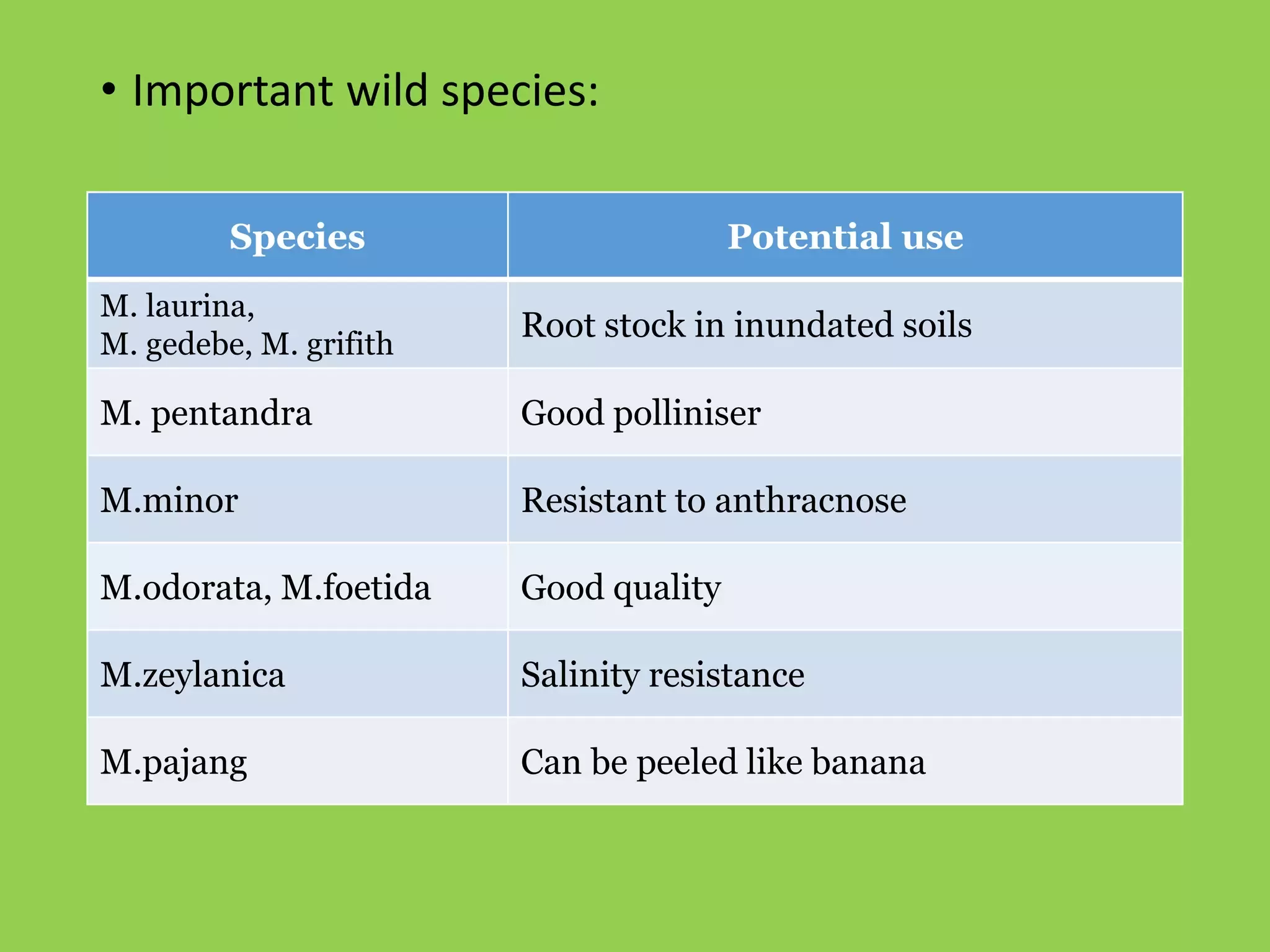
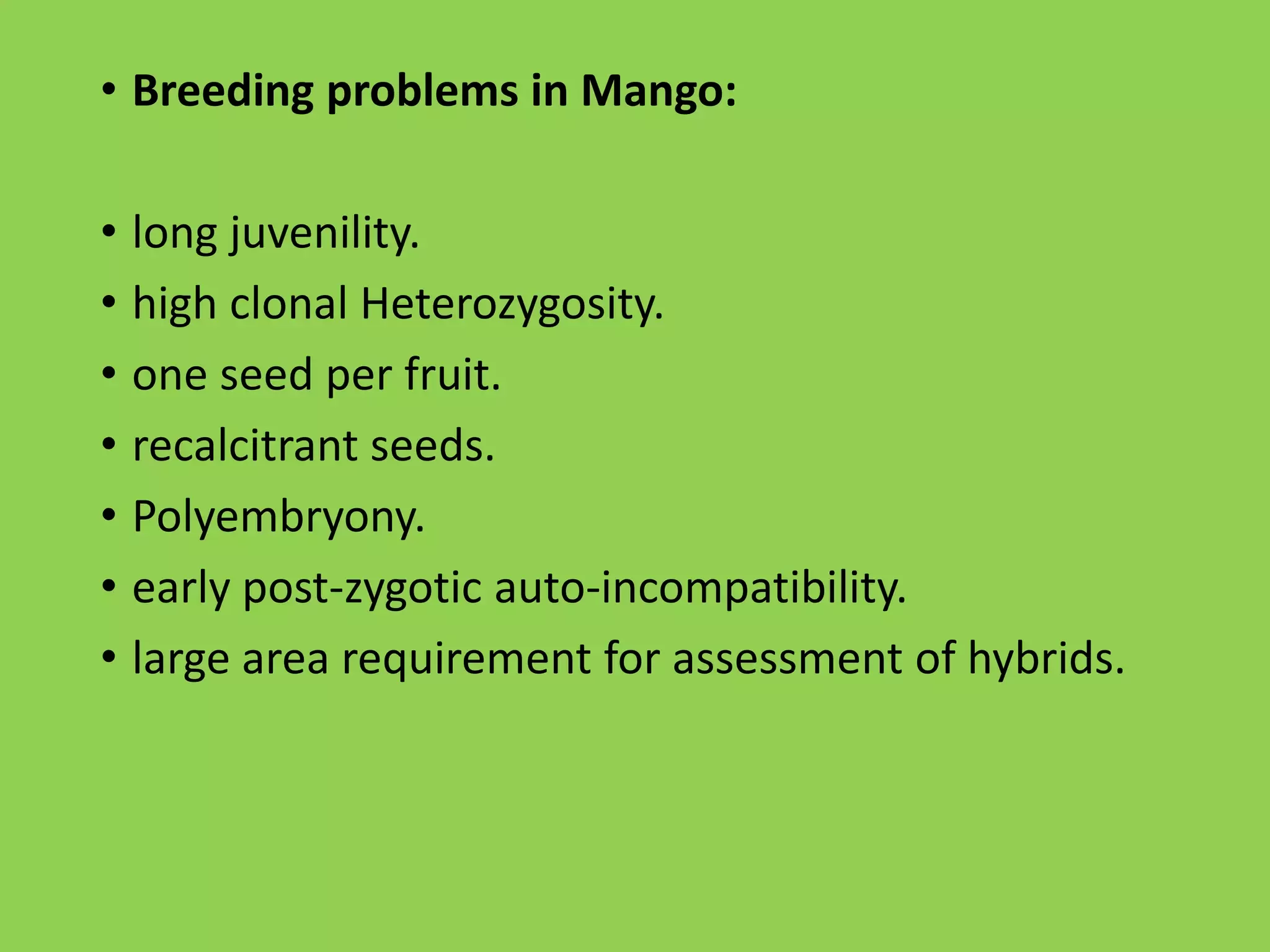
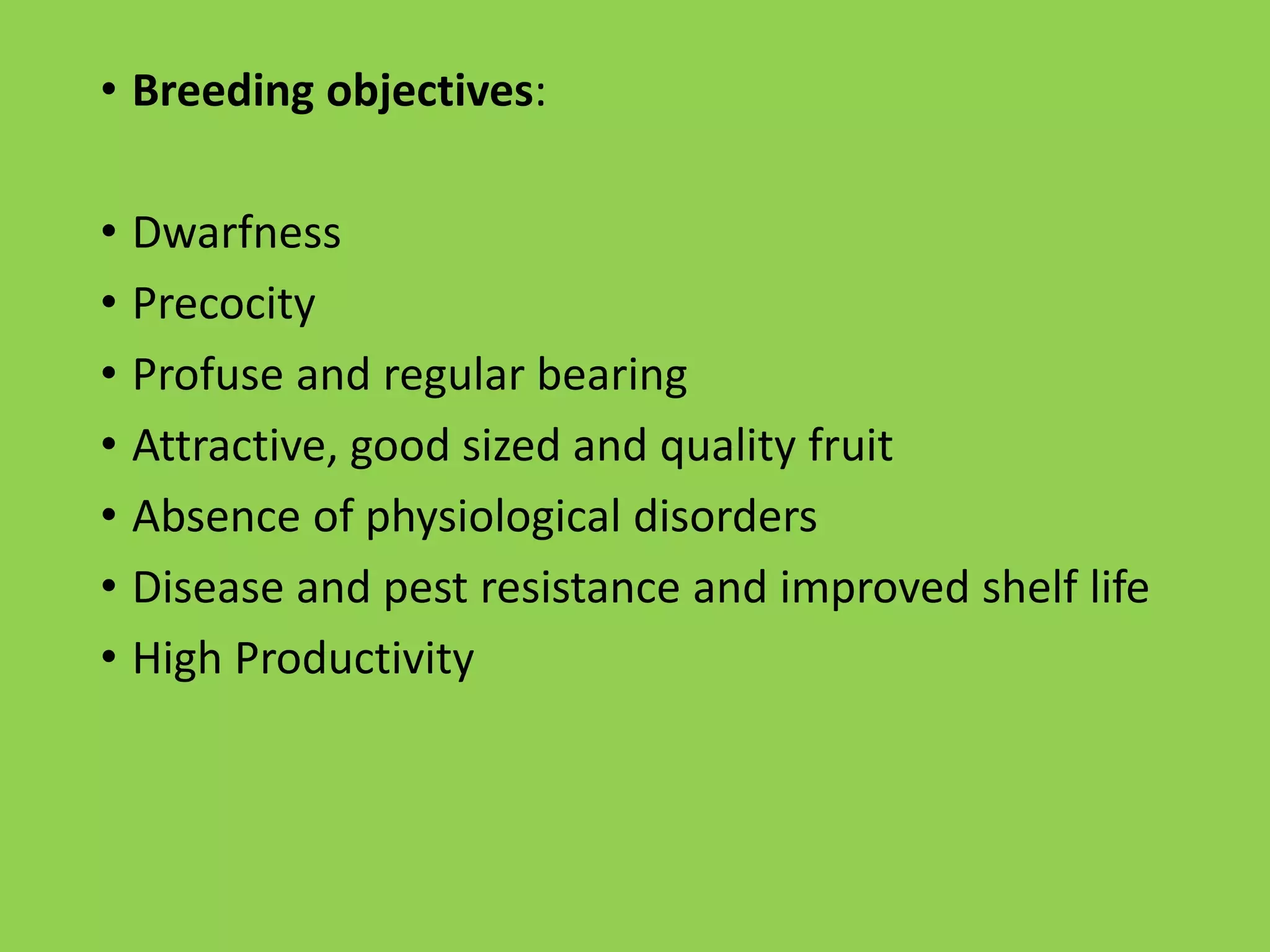
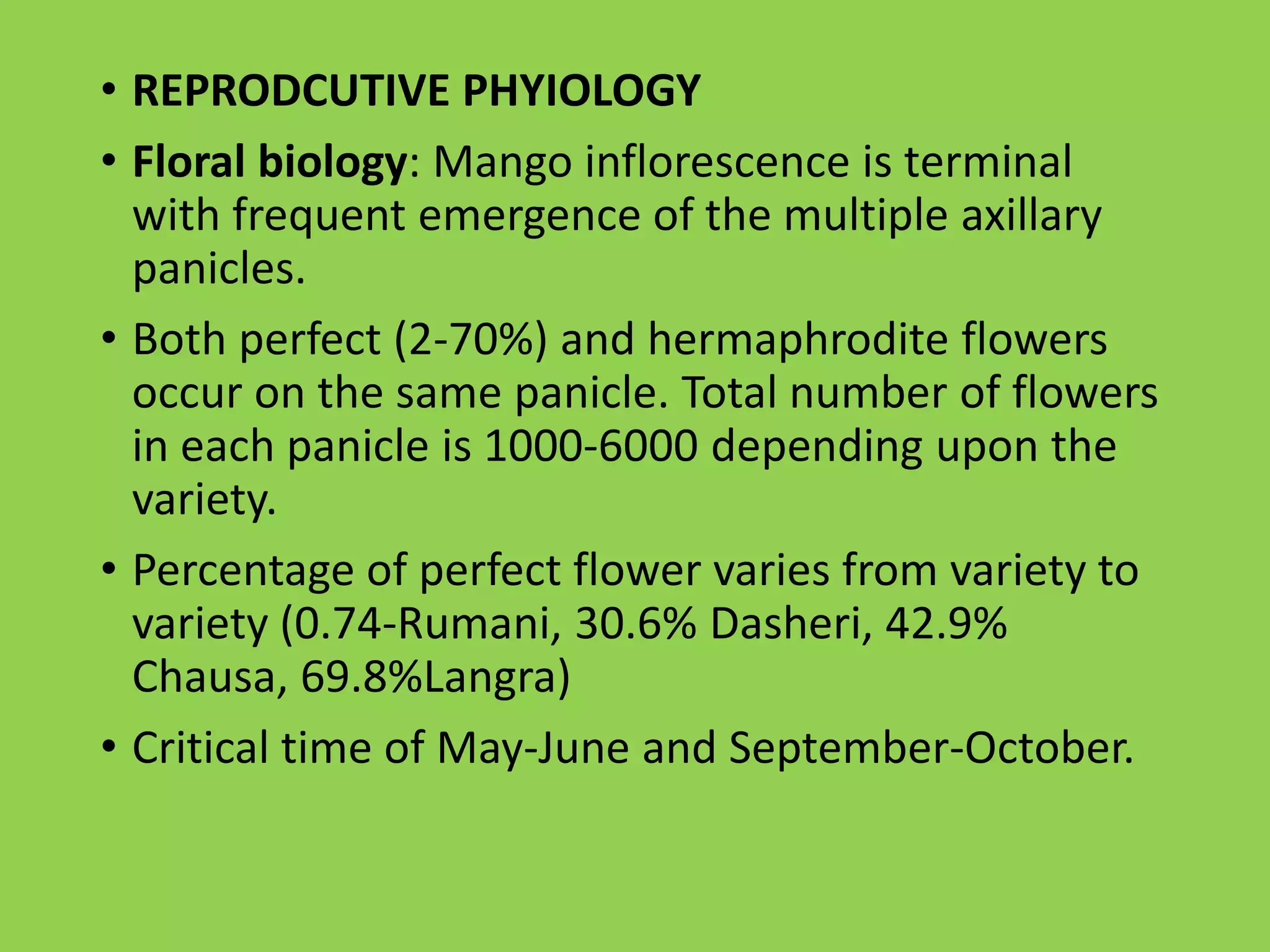
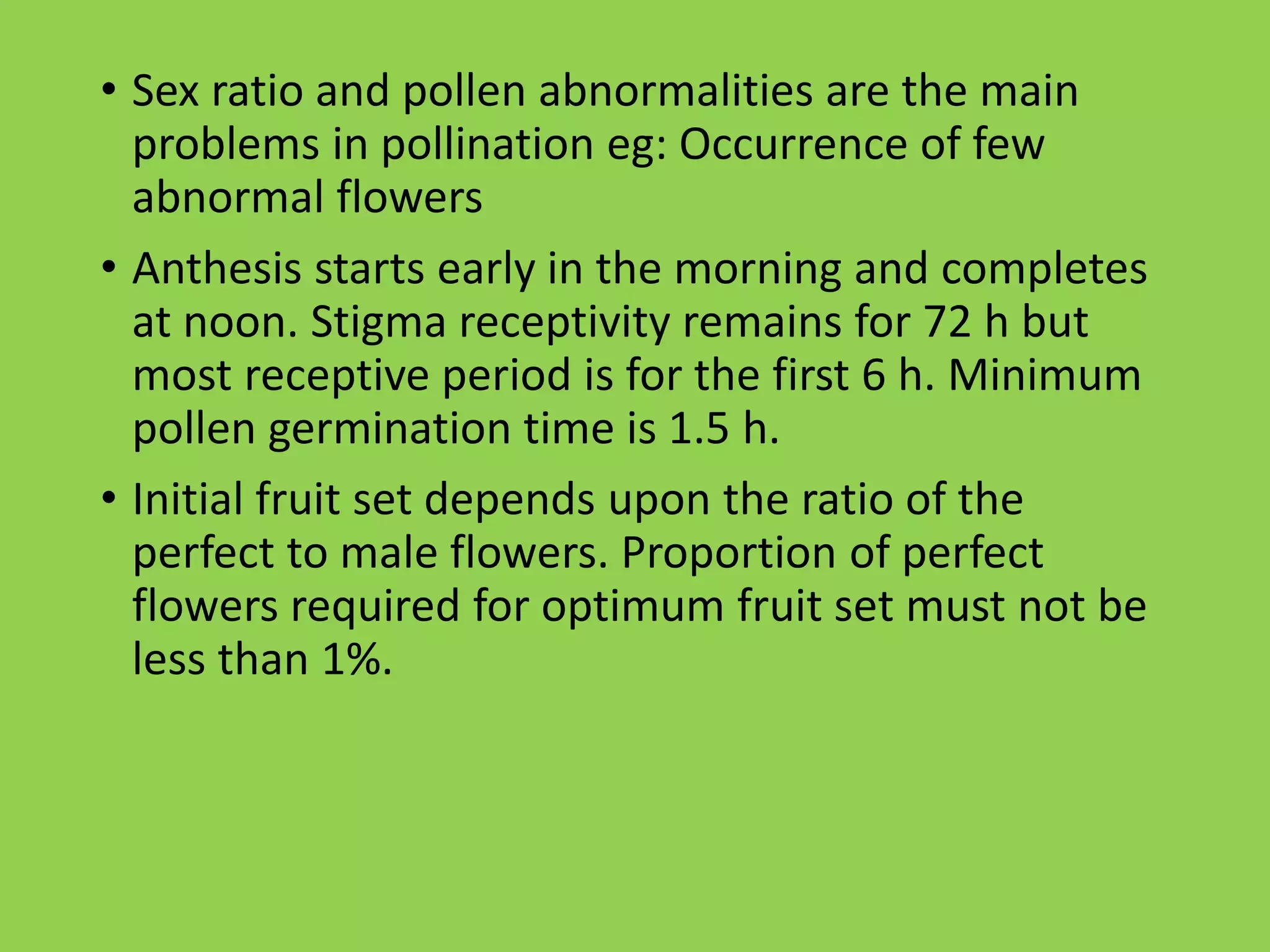
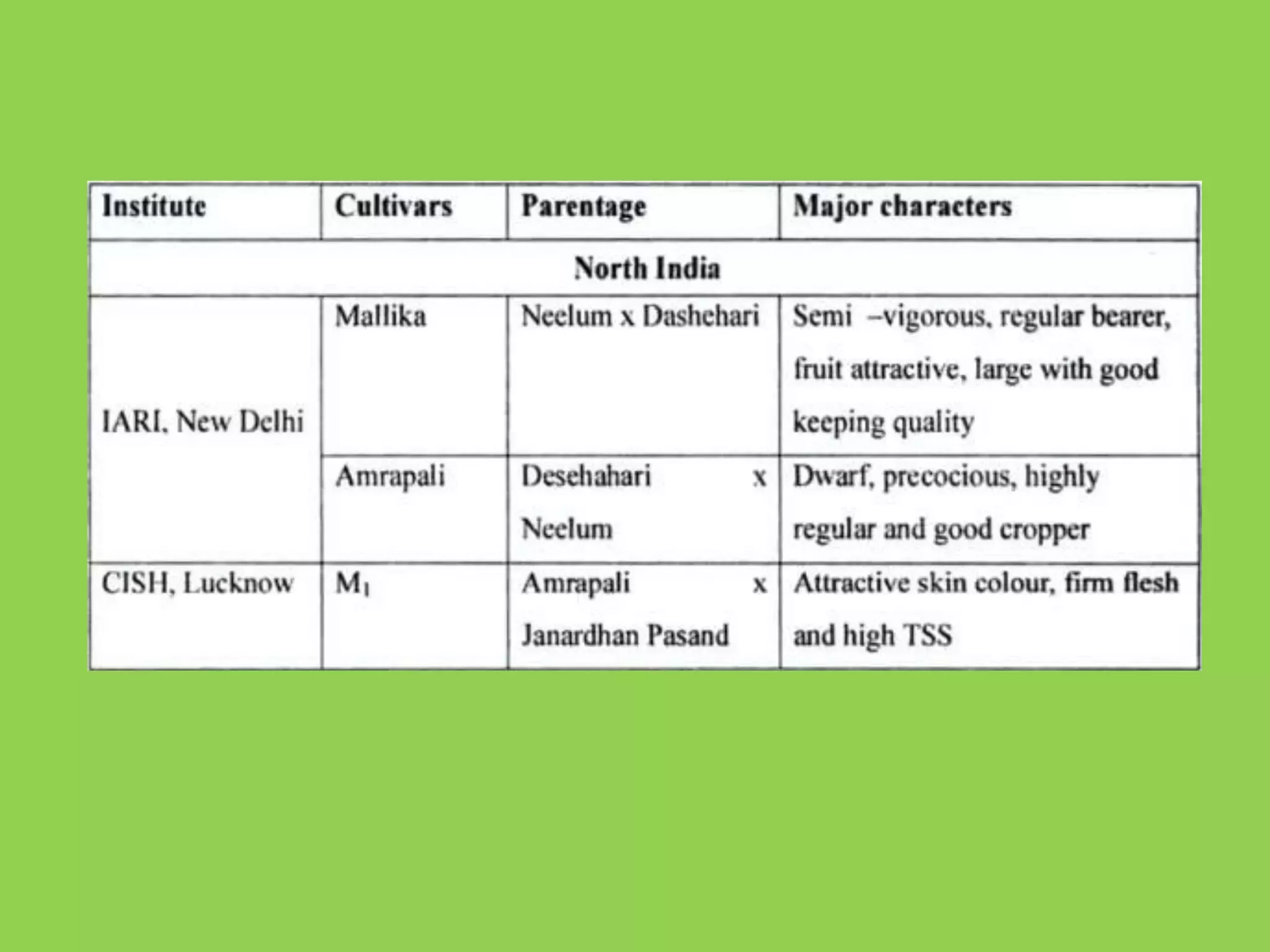
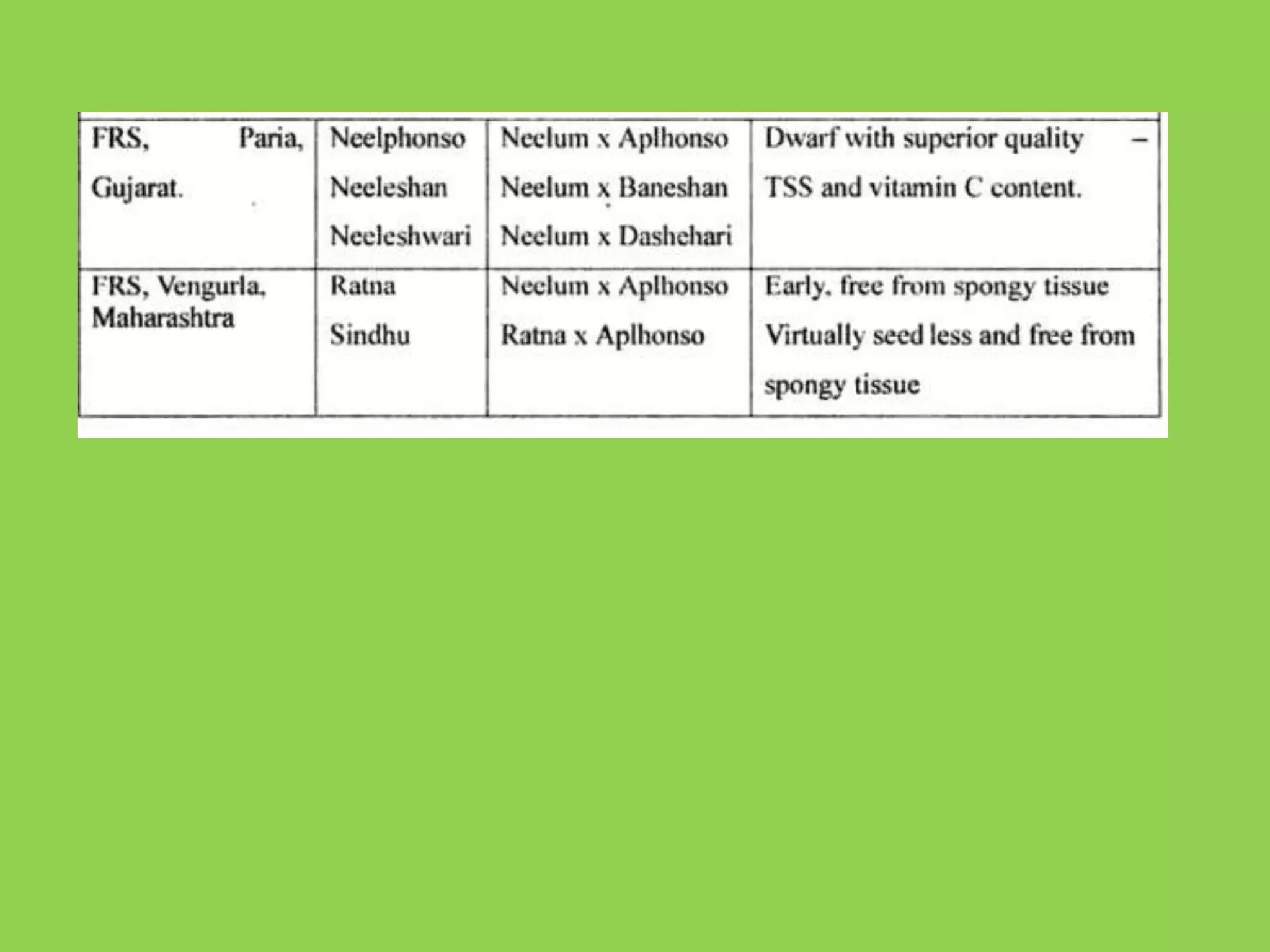
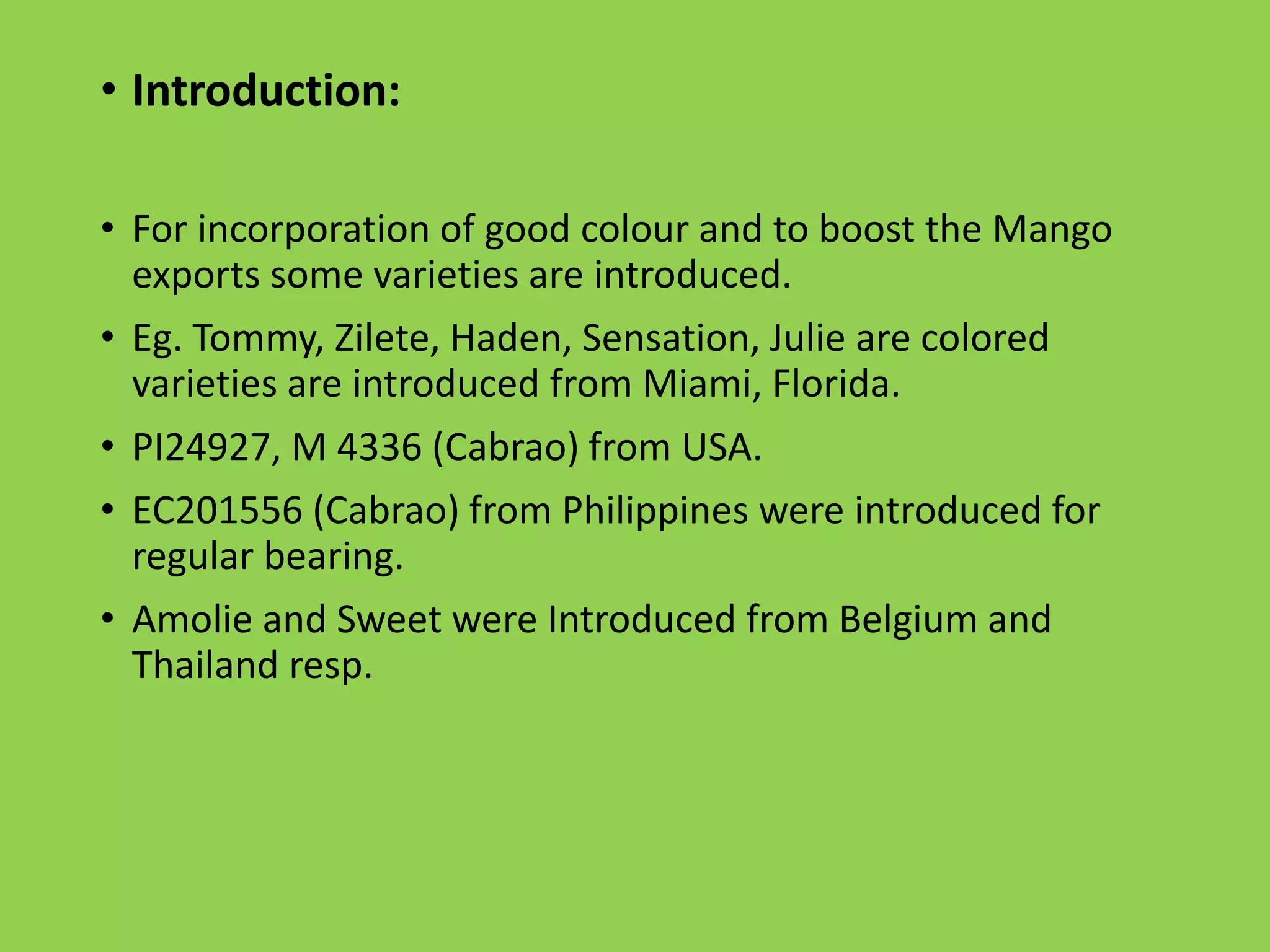
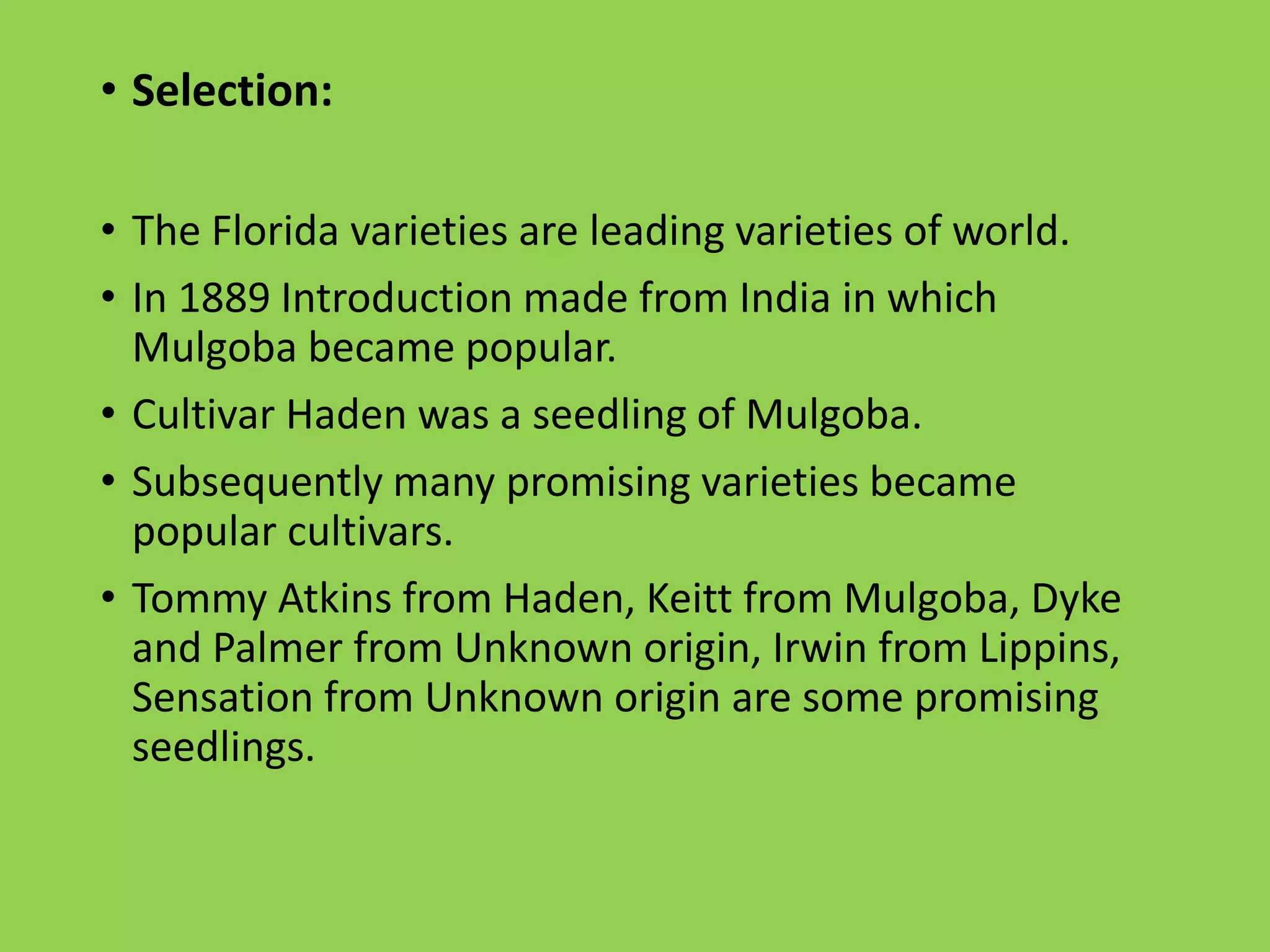
Mango (Mangifera indica L.), originating from the Indo-Burma region, is a vital fruit crop in India, known as the 'King of Fruits.' With over 1000 varieties, it faces breeding challenges but offers diverse germplasm resources. Key breeding objectives include disease resistance and improved fruit qua

Slide 1

Slide 1

Slide 2

Slide 2

Slide 3

Slide 3

Slide 4

Slide 4

Slide 5

Slide 5

Slide 6

Slide 6

Slide 7

Slide 7

Slide 8

Slide 8

Slide 9

Slide 9

Slide 10

Slide 10

Slide 11

Slide 11

Slide 12

Slide 12

Slide 13

Slide 13

Slide 14

Slide 14

Slide 15

Slide 15

Slide 16

Slide 16

Slide 17

Slide 17

Slide 18

Slide 18
1 / 18