This lecture covers the major problems, physiological disorders, pests, diseases, and integrated management practices in mango cultivation. Key issues such as alternate bearing, mango malformation, and spongy tissue are discussed, along with important pests and diseases affecting mango. Emphasis is placed on effective management strategies to ensure sustainable production and improved fruit quality. Important academic keywords include physiological disorders, alternate bearing, malformation, integrated management, and pests.
Introduction to Major Problems in Mango
- Mango faces several physiological disorders, pests, and diseases affecting yield and quality.
- Major problems include alternate bearing, malformation, spongy tissue, and fruit drop.
- Effective integrated management is essential for sustainable production.
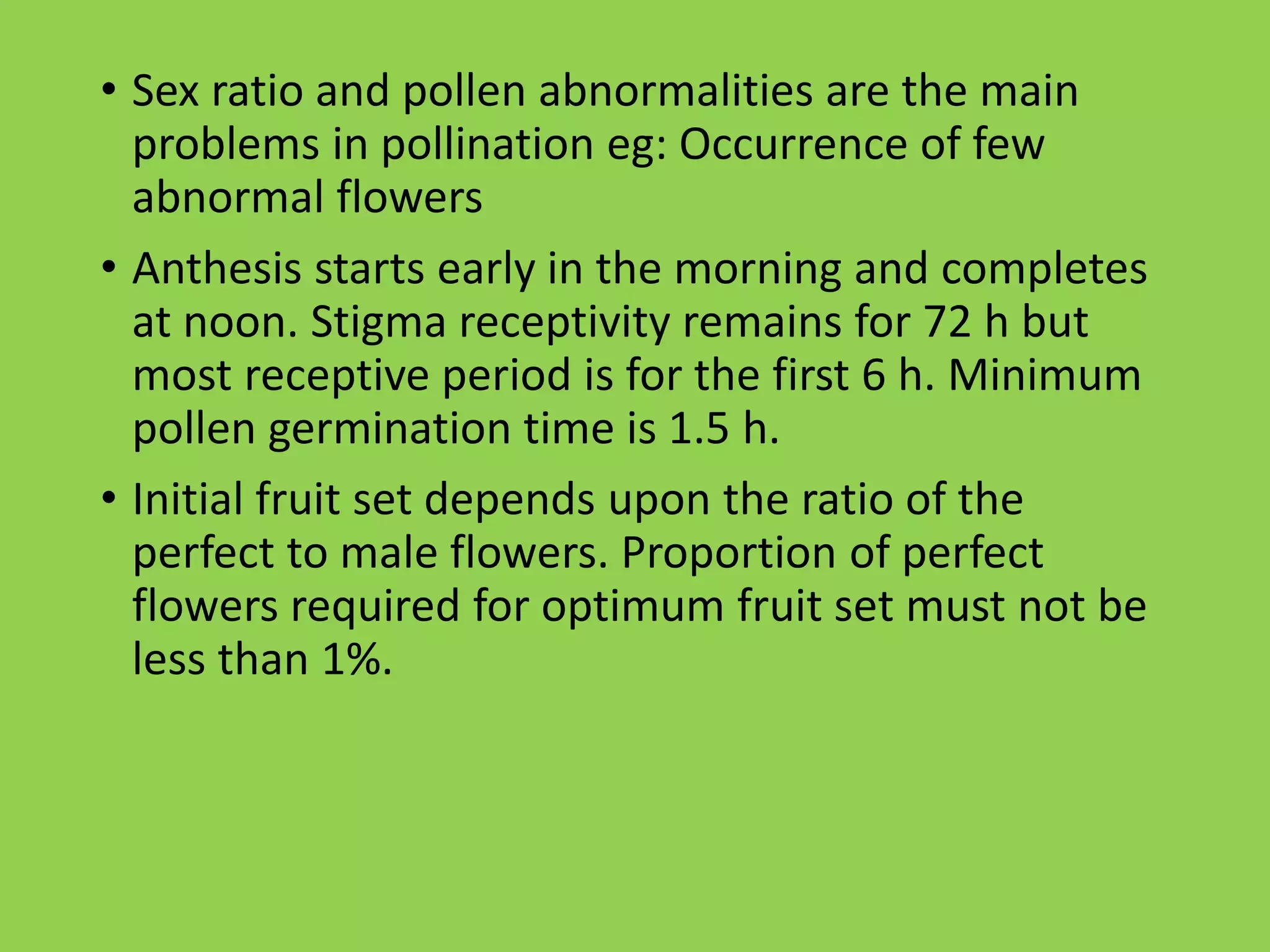
Alternate Bearing
Definition:
- Irregular fruiting pattern with heavy crop one year and little or none the next.
Occurrence:
- Common in north Indian varieties; south Indian varieties are mostly regular bearers.
Management:
- Soil drenching with paclobutrazol (5–10 g/tree) induces flowering and increases yield.
- Proper nutrition and irrigation management help reduce alternate bearing.
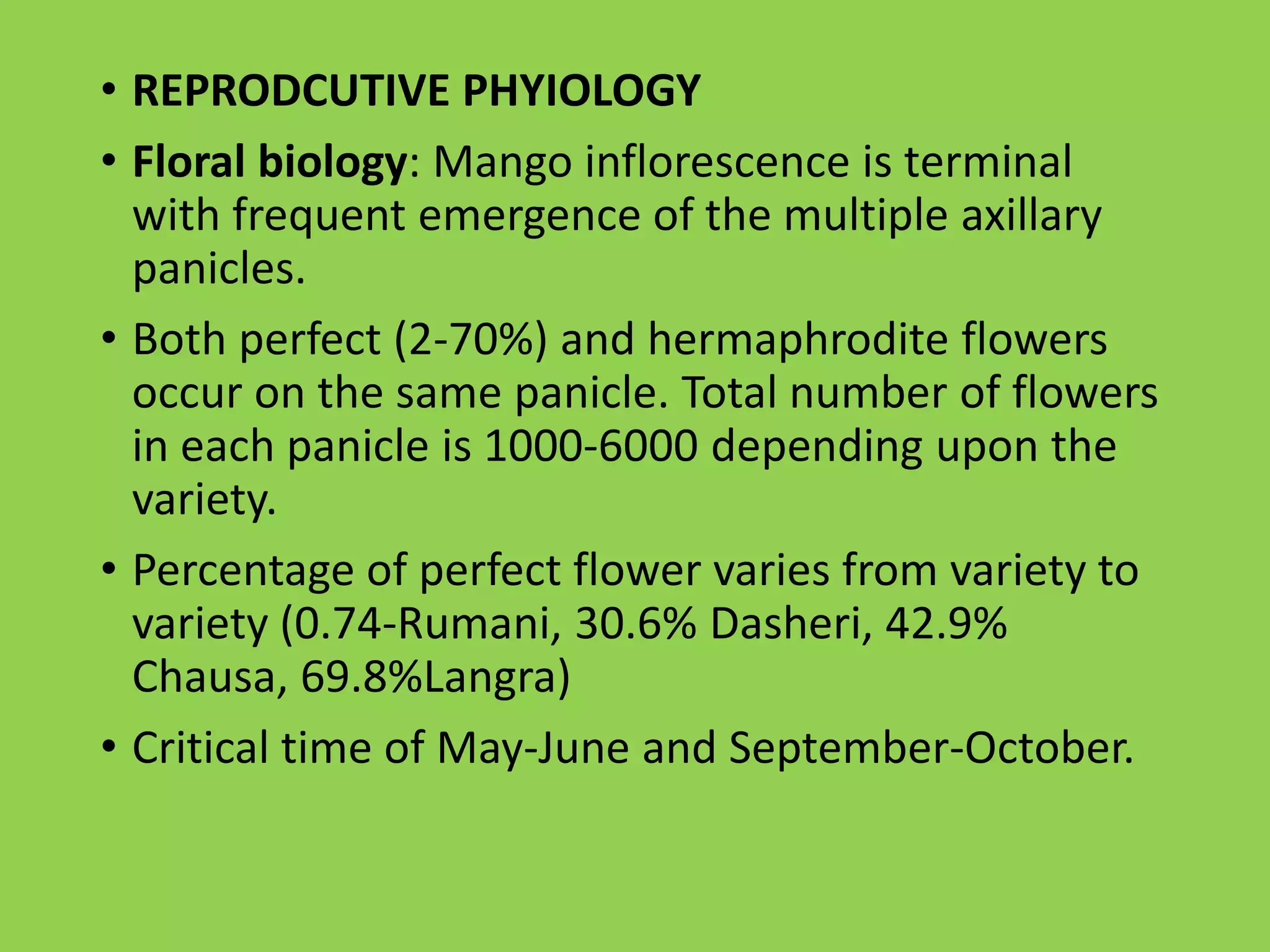
Mango Malformation
Types:
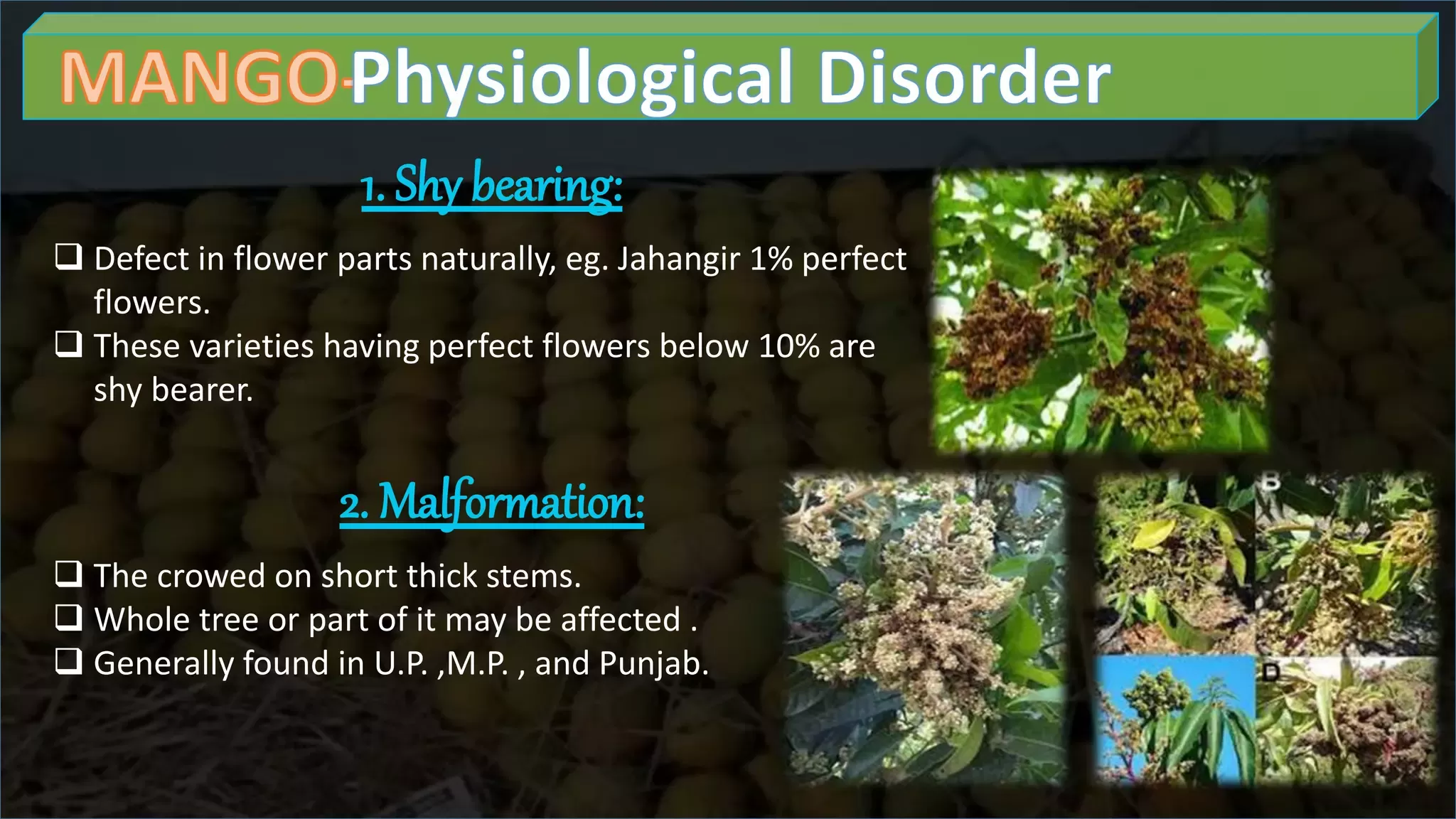
- Vegetative malformation (common in seedlings and young plants).
- Floral malformation (affects bearing trees, reduces productivity).
Symptoms:
- Bunchy top: compact leaves at shoot apex; arrested shoot growth.
- Malformed panicles in floral malformation.
Management:
- Deblossoming and spraying 200 ppm NAA reduce malformed panicles.
- Remove and destroy affected shoots and panicles.
Black Tip Disorder
Symptoms:
- Distal end of fruit turns black, hardens, and ripens prematurely.
- Affected fruits become unmarketable.
Causes:
- Smoke from brick-kilns (CO, CO2, SO2, acetylene) within 600 m.
Management:
- Increase chimney height of brick-kilns.
- Spray borax (0.6%) at 10–14 day intervals from fruit set.
Clustering (Jhumka)
Symptoms:
- Cluster of small, dark green fruitlets at panicle tip (bunch tip).
- Fruitlets grow to marble size, then growth ceases.
Causes:
- Adverse climate, especially low temperature during February–March.
- Poor embryo development.
Management:
- Protect trees from adverse weather; select tolerant varieties.
Spongy Tissue
Occurrence:
- Specific to Alphonso mango; affects export quality.
Symptoms:
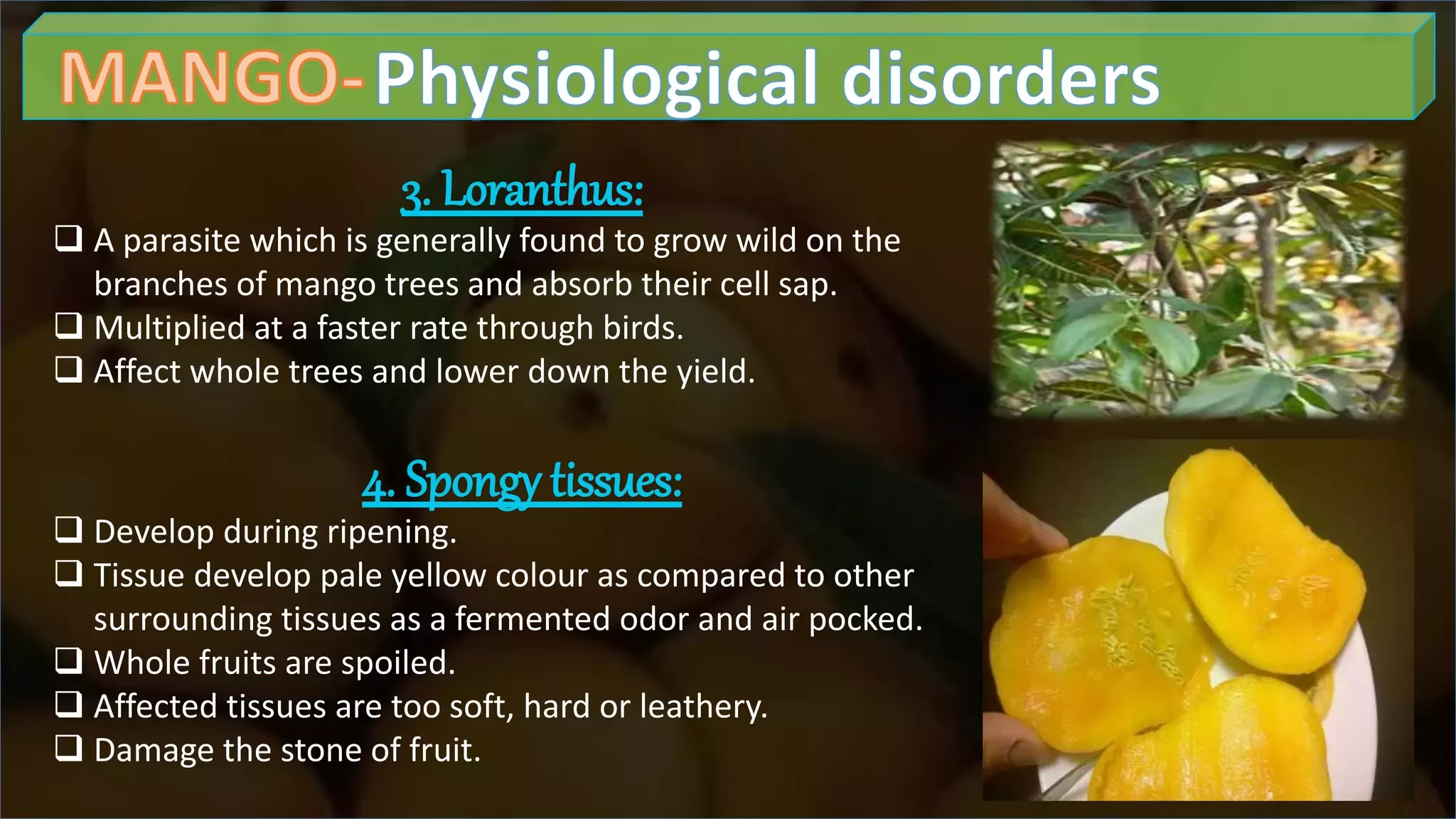
- Normal external appearance; internal flesh patch is spongy, yellowish, and sour.
Causes:
- High temperature, convective heat, post-harvest sun exposure.
Management:
- Use sod culture and mulching to reduce incidence.
- Harvest at three-fourths maturity.
- Use resistant hybrids (e.g., Ratna, Arka Puneet).
Fruit Drop and Use of Growth Regulators
Problem:
- High fruit drop rate, especially in first four weeks after fruit set (up to 99%).
Management:
- Regular irrigation during fruit development.
- Timely pest and disease control.
- Apply NAA (50 ppm) or 2,4-D (20 ppm) six weeks after fruit set.
Major Pests of Mango and Their Management
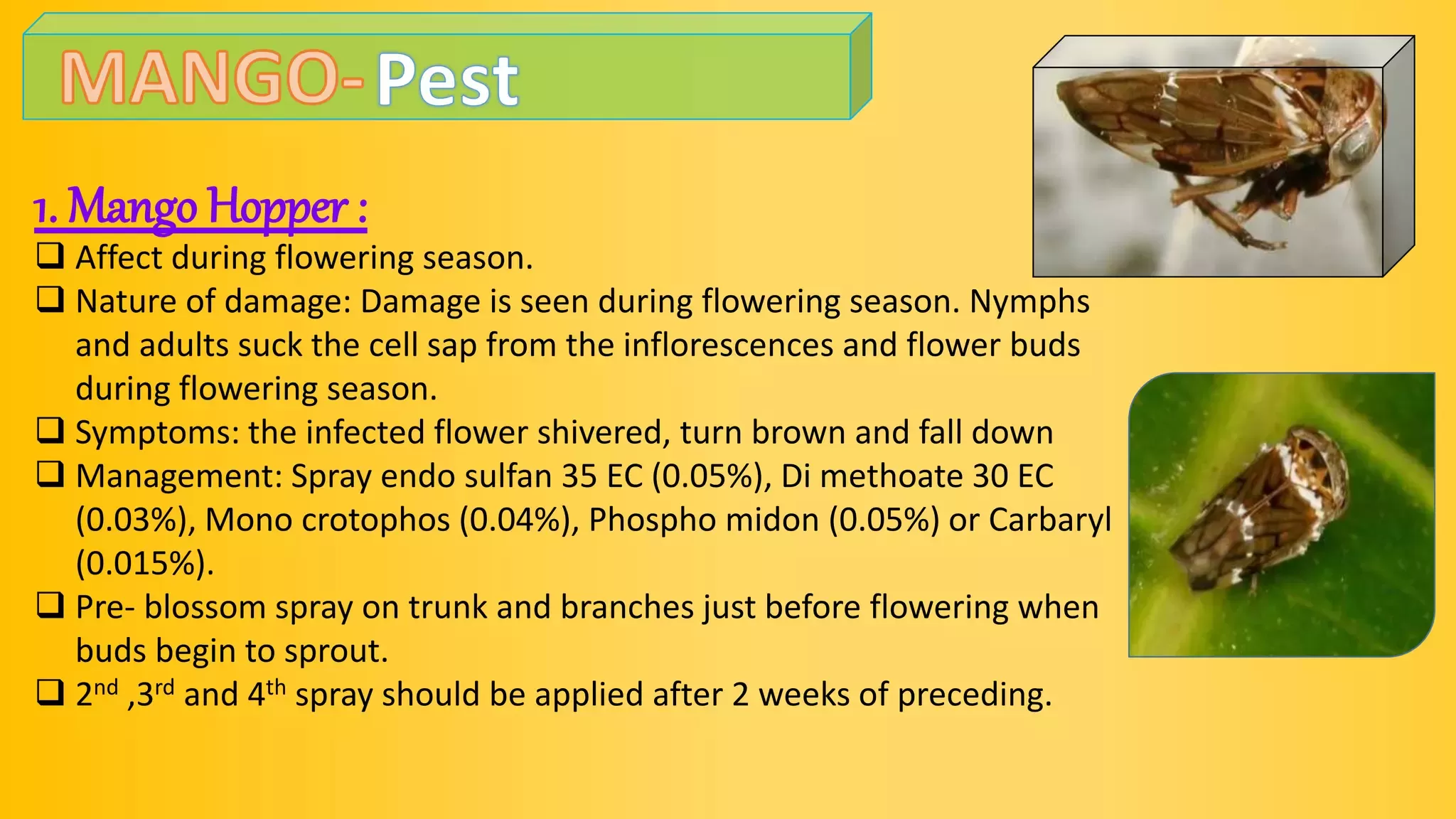
Mango Hopper (Idioscopus spp., Amritodus atkinsoni):
- Spray phosalone 0.05%, carbaryl 2 g/L, or phosphamidon 1 mL/L.
Nut Weevil (Cryptorrhynchus mangiferae):
- Maintain orchard cleanliness; destroy adults in bark crevices.
- Spray fenthion 0.1%.
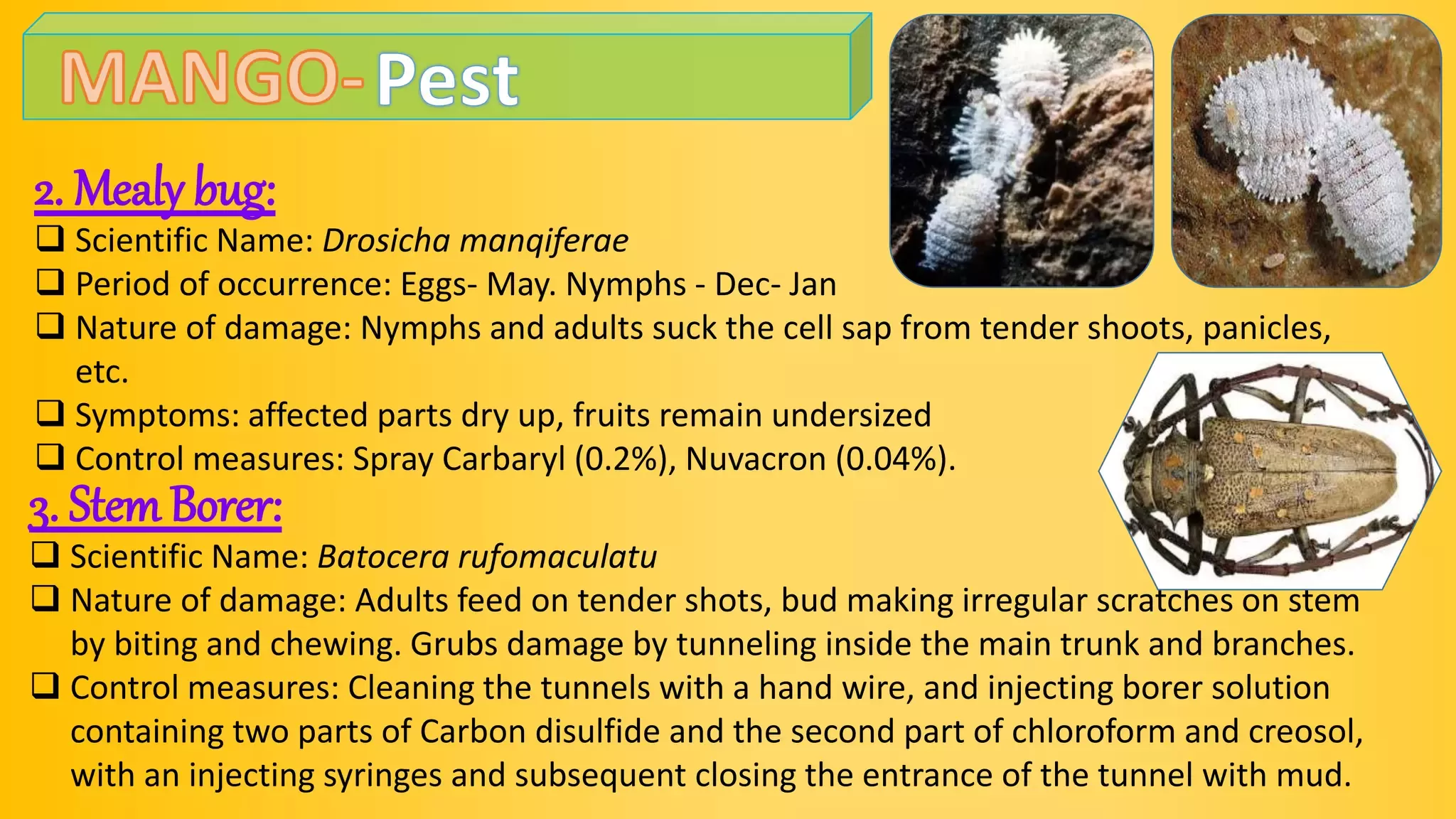
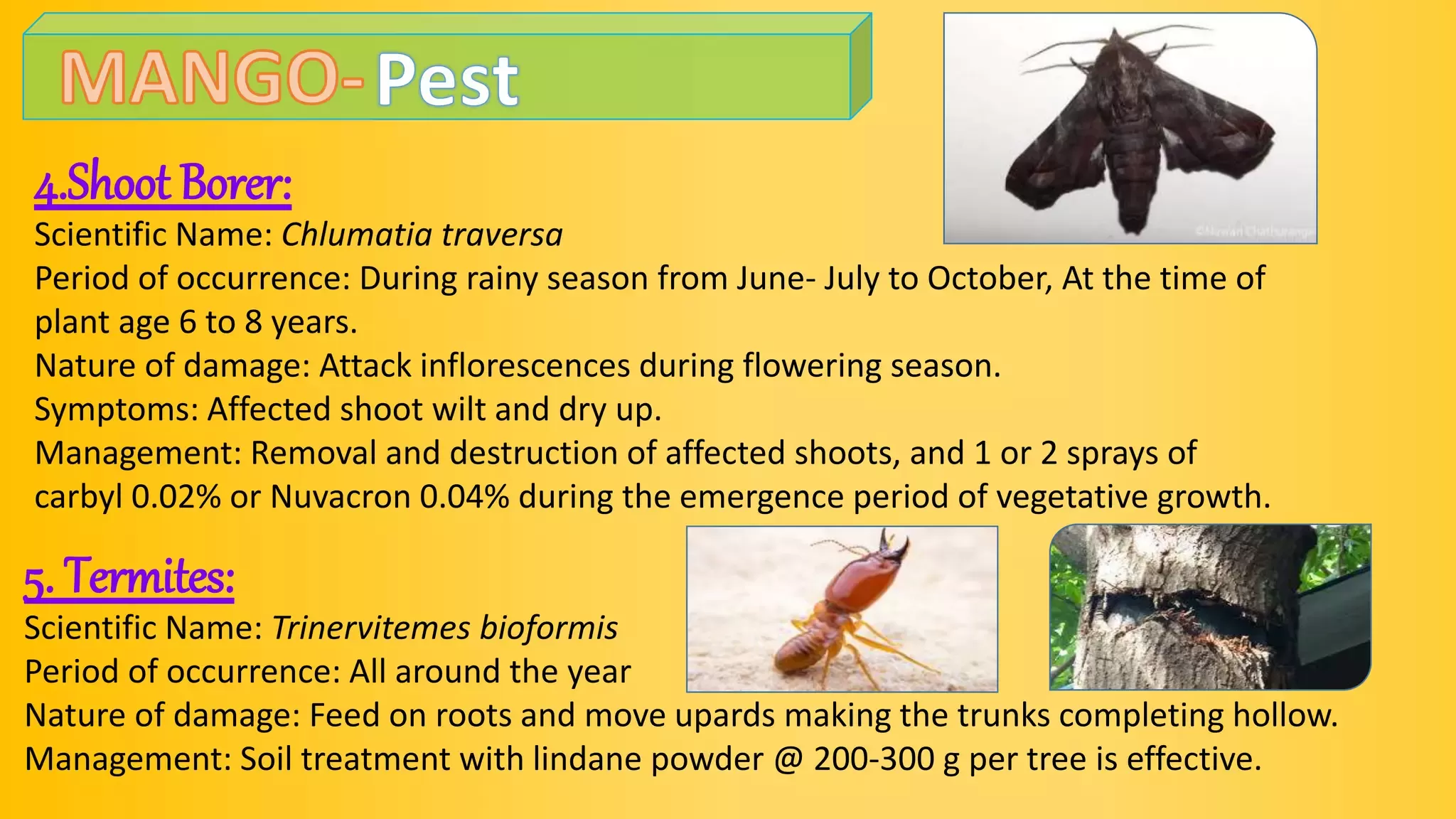
Stem Borer (Batocera rufomaculata):
- Apply monocrotophos 36 WSC (10 mL/tree) via padding.
- Apply carbofuran 3G (5 g/bore hole) and plug with mud.
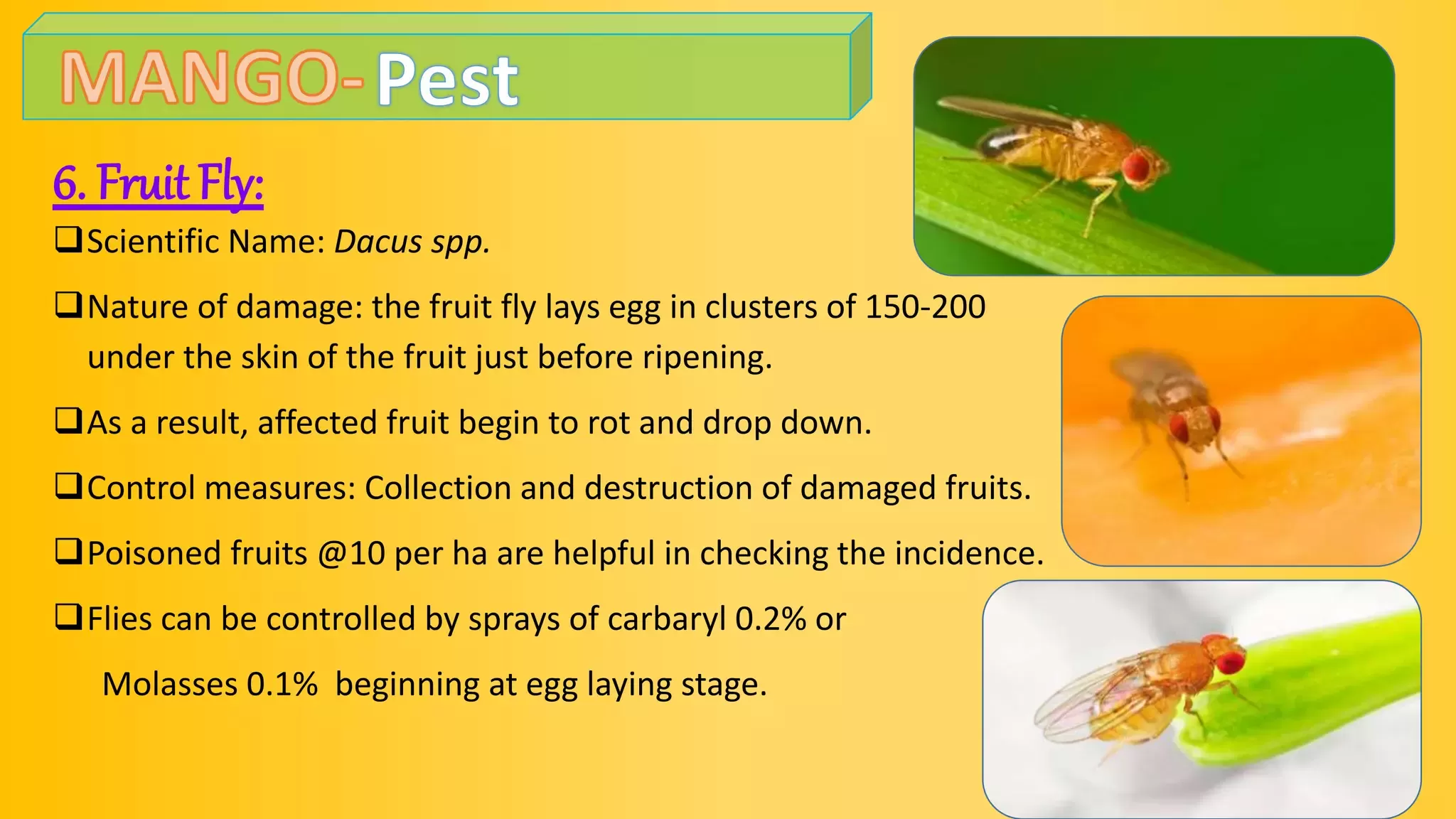
Fruit Fly (Bactrocera spp.):
- Plough interspaces to expose pupae.
- Use methyl eugenol traps; remove and bury fallen fruits.
Major Diseases of Mango and Their Management
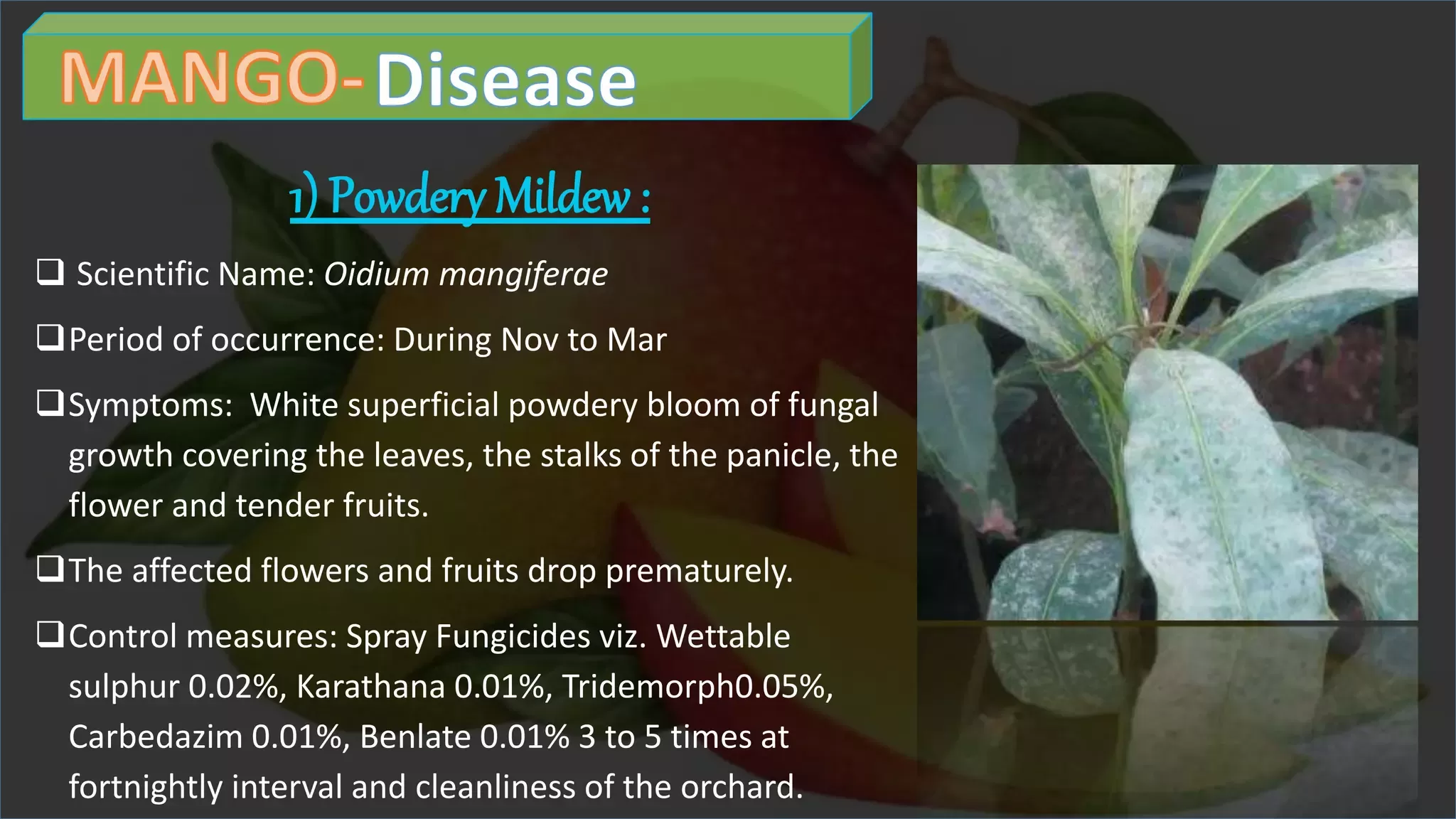
Powdery Mildew (Oidium mangiferae):
- Apply sulphur dust (350 mesh) in early morning.
- Spray wettable sulphur 0.2% or tridemorph 0.05%.
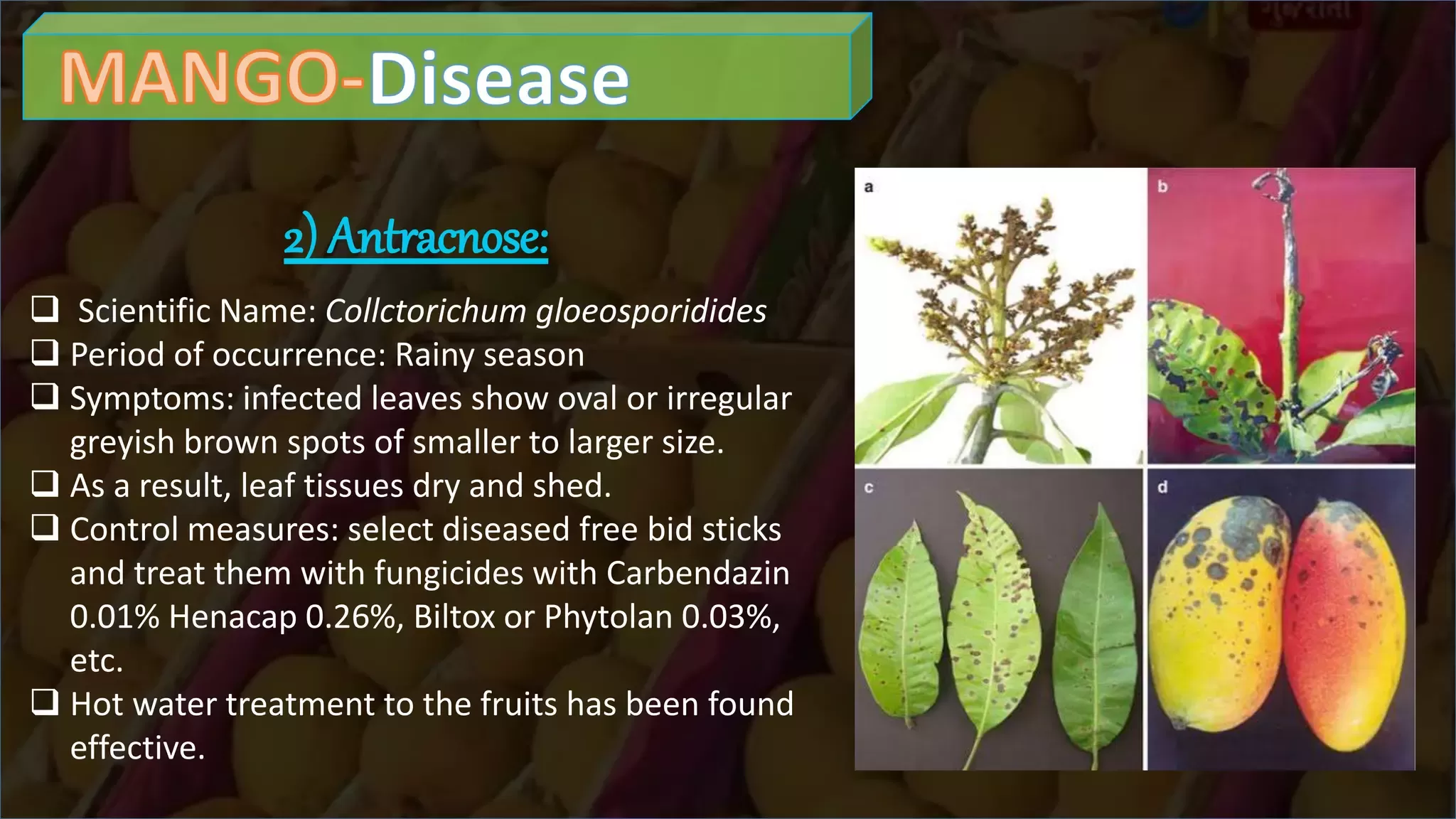
Anthracnose and Stalk/End Rot (Colletotrichum gloeosporioides):
- Spray mancozeb 0.2% or carbendazim 0.1% preharvest, 3 times at 15-day intervals.
Sooty Mould (Capnodium spp.):
- Spray dimecron 0.03% + maida 5% (1 kg maida/starch boiled in 1 L water, diluted to 20 L).
Integrated Management Practices and Summary
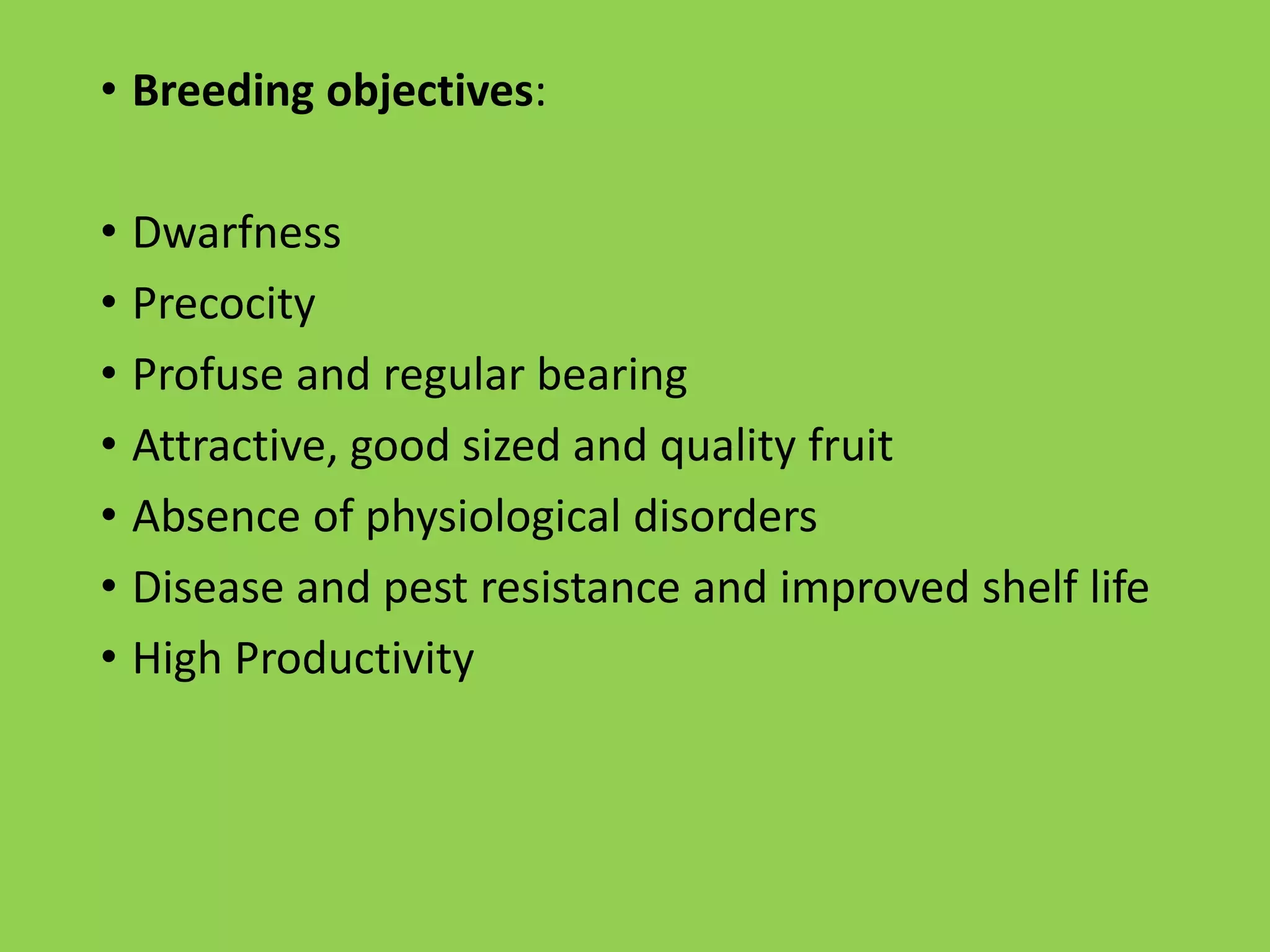
- Adopt integrated pest and disease management (IPDM) for sustainable mango production.
- Combine cultural, chemical, and biological methods for effective control.
- Regular monitoring and timely interventions are crucial.
- Use resistant varieties and proper orchard sanitation.
Objective Questions
Q1. Which chemical is used for flower induction in mango?
A. Paclobutrazol
B. Mancozeb
C. Fenthion
D. Carbofuron
Answer: A

Q2. Which type of mango malformation is more common in nursery seedlings and young plants?
A. Floral malformation
B. Vegetative malformation
C. Black tip
D. Spongy tissue
Answer: B

Q3. What is the main cause of black tip disorder in mango?
A. High temperature
B. Smoke from brick-kilns
C. Insect infestation
D. Boron deficiency
Answer: B

Q4. Which mango disorder is specific to the Alphonso variety?
A. Black tip
B. Spongy tissue
C. Clustering (Jhumka)
D. Mango malformation
Answer: B

Q5. Which growth regulator is recommended at 50 ppm to reduce fruit drop in mango?
A. 2,4-D
B. NAA
C. Paclobutrazol
D. Tridemorph
Answer: B

Q6. Which pest can be controlled by spraying phosalone 0.05% or carbaryl 2 g/litre?
A. Nut weevil
B. Mango hopper
C. Fruit fly
D. Stem borer
Answer: B

Q7. What is the recommended method to control stem borer in mango trees?
A. Ploughing interspaces
B. Padding with monocrotophos
C. Spraying Mancozeb
D. Spraying sulphur dust
Answer: B

Q8. Which practice helps reduce the incidence of spongy tissue in Alphonso mango?
A. Spraying borax
B. Sod culture and mulching
C. Raising chimney height
D. Application of NAA
Answer: B

Q9. Which disease is managed by spraying Mancozeb 0.2% or Carbendezim 0.1% preharvest?
A. Powdery mildew
B. Sooty mould
C. Anthracnose
D. Black tip
Answer: C

Q10. What is a characteristic symptom of clustering (Jhumka) in mango?
A. Blackened fruit tip
B. Spongy yellowish flesh
C. Cluster of fruitlets at panicle tip
D. Compact leaves in a bunch
Answer: C
This lecture covers the essential aspects of mango (Mangifera indica) cultivation, including suitable soil and climate requirements, recommended varieties, propagation methods, high-density planting, and best practices for nutrient and water management. It also discusses intercropping, off-season production, and postharvest handling to optimize yield and fruit quality. These concepts are crucial for students preparing for competitive exams in horticulture and allied sciences.
Introduction to Mango Cultivation
- Mango (Mangifera indica) is known as the ‘king of fruits’ in India.
- India accounts for about 56% of global mango production.
- Major producing states: Andhra Pradesh, Uttar Pradesh, Bihar, Karnataka, Maharashtra, West Bengal, Gujarat.
- Mango contributes nearly 39.5% of India’s total fruit production.
Soil and Climate Requirements
Soil:
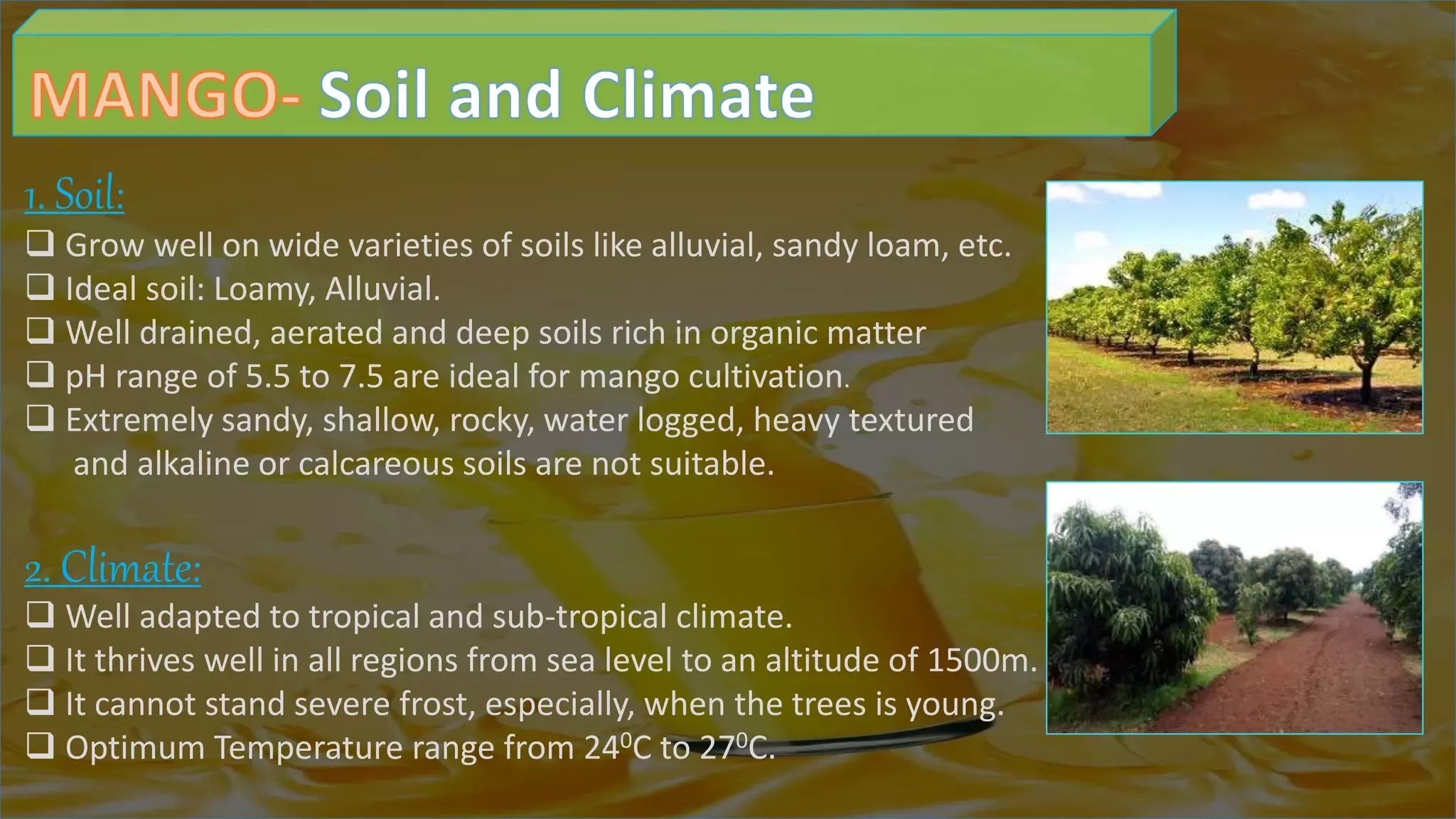
- Grows in alluvial to lateritic soils; avoid poorly drained black cotton soils.
- Prefers slightly acidic soils (pH 5.5–7.5); poor growth above pH 7.5.
- Good drainage is essential for healthy growth.
Climate:
- Tropical to subtropical; can be grown up to 1,100 m above sea level.
- Optimal temperature: 24–27°C; higher temperatures improve fruit quality.
- Requires 25–250 cm annual rainfall; avoid high humidity and frost during flowering.
Major Mango Varieties in India
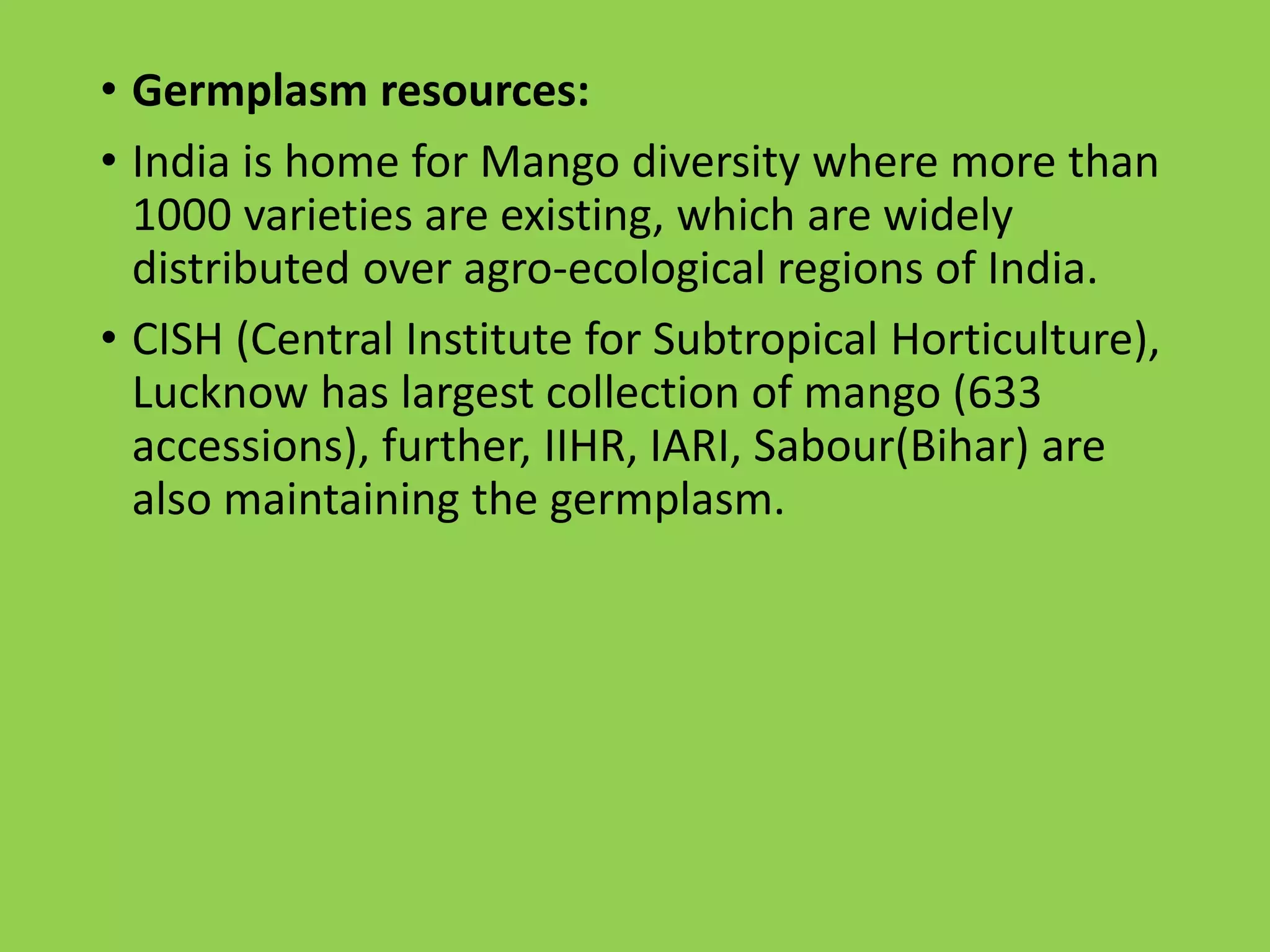
- Over 1,000 varieties exist; about 20 are commercially important.
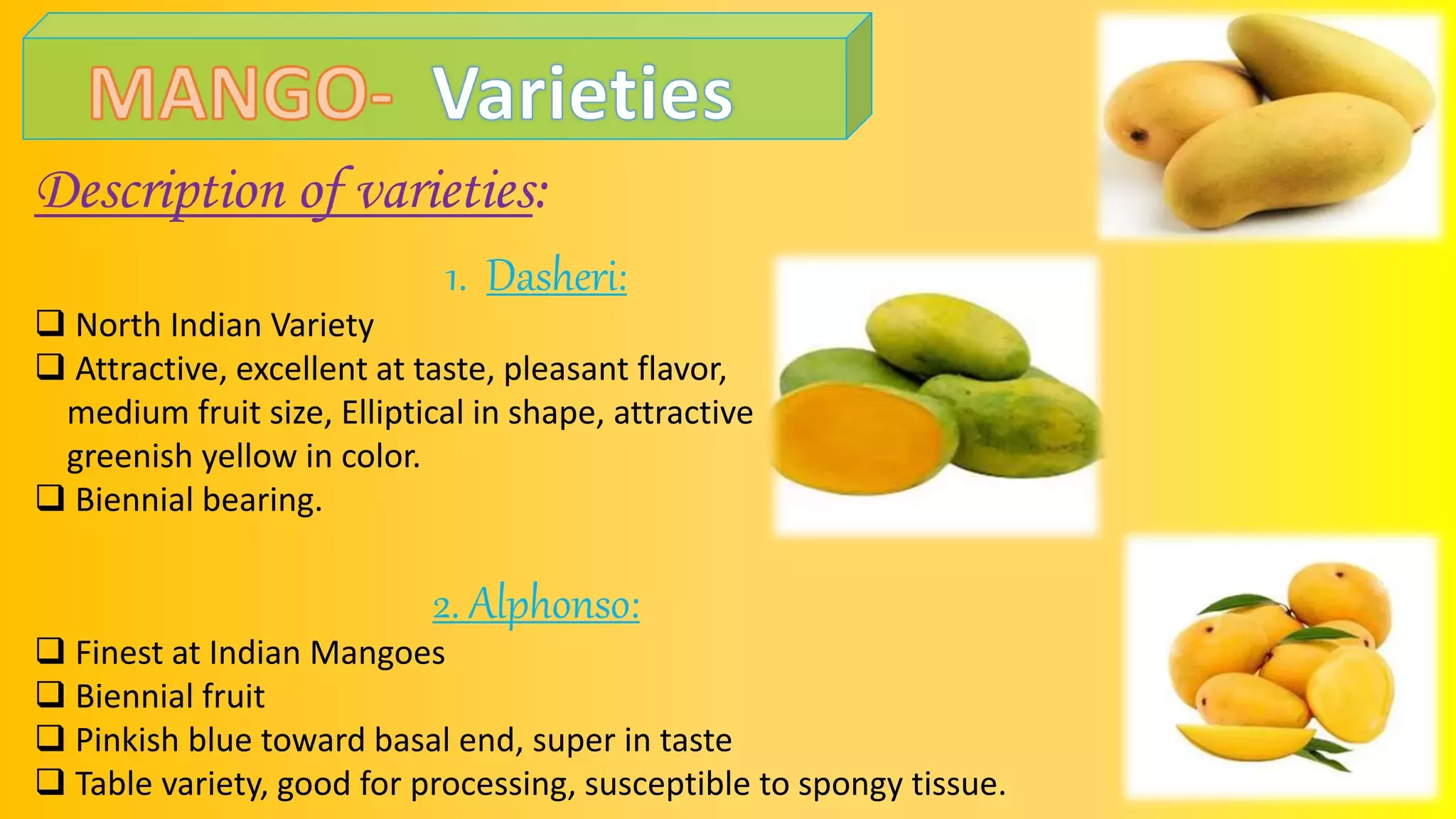
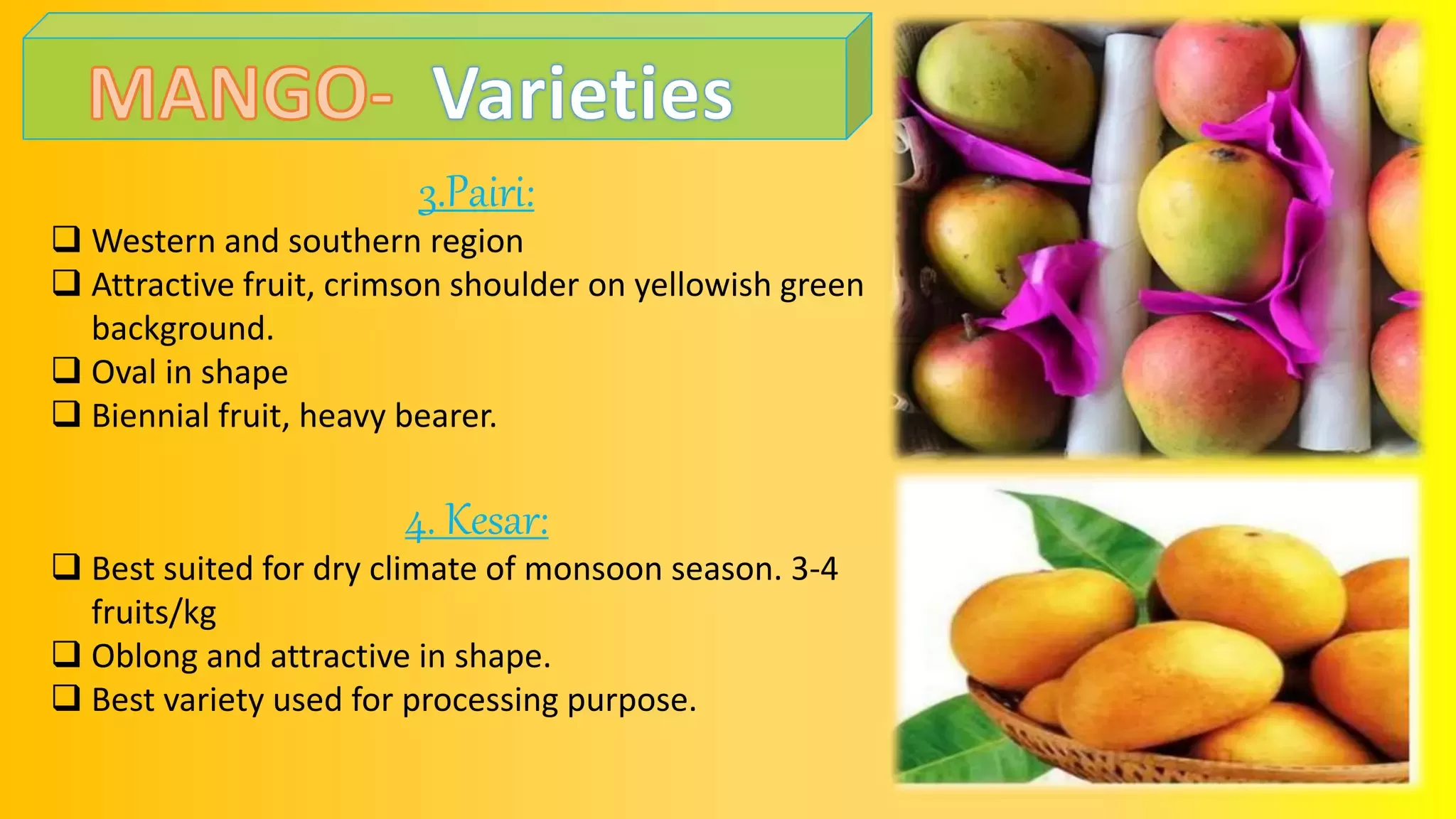
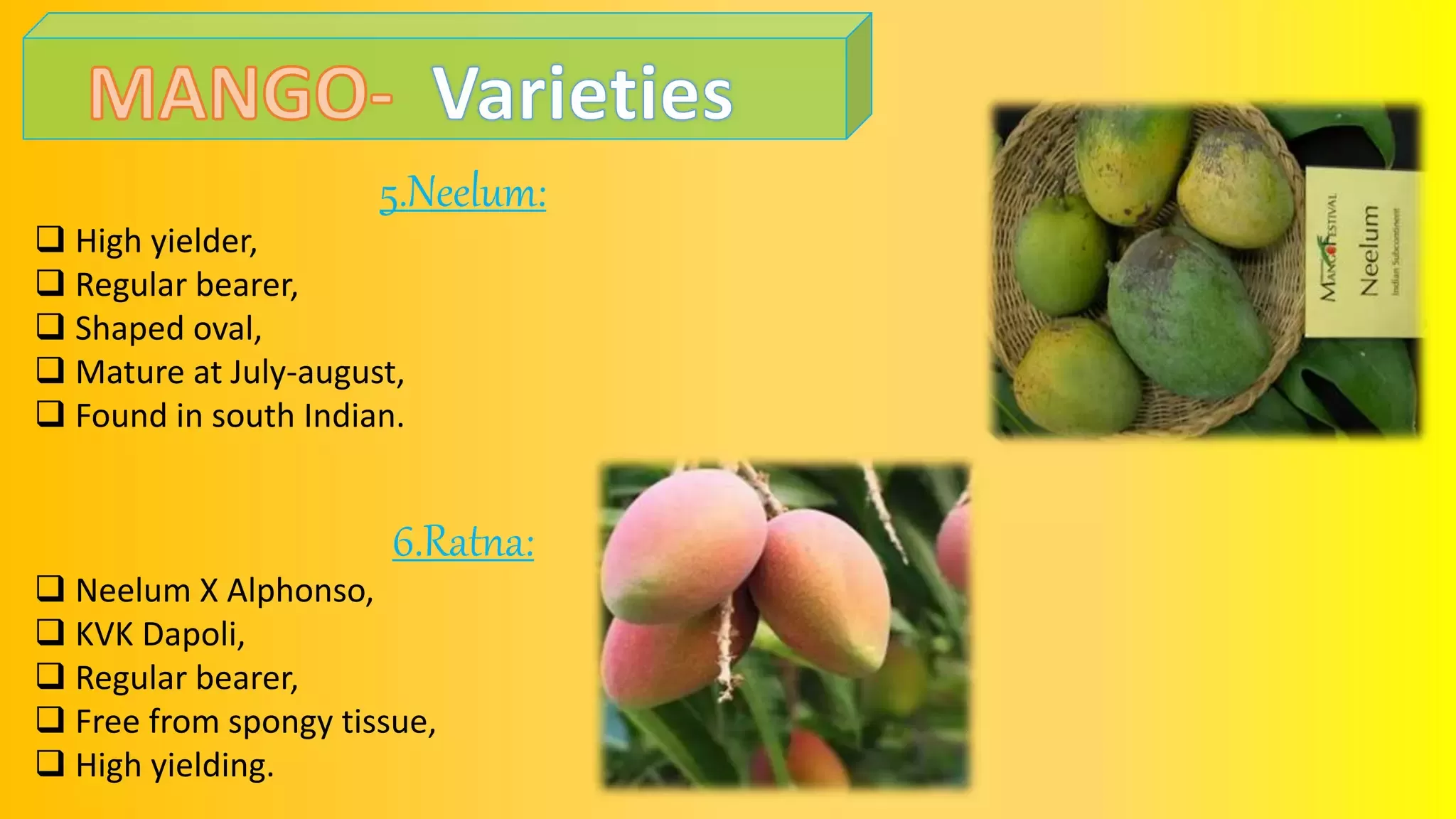
- Popular varieties: Alphonso, Banganapalli, Bombay Green, Chausa, Dashehari, Fazli, Gulab Khas, Himsagar, Kesar, Kishenbhog, Langra, Mankurad, Neelum, Pairi, Totapuri.
- Varietal preference varies by state and region.
- North Indian varieties often alternate-bearers; South Indian varieties are generally regular-bearers.
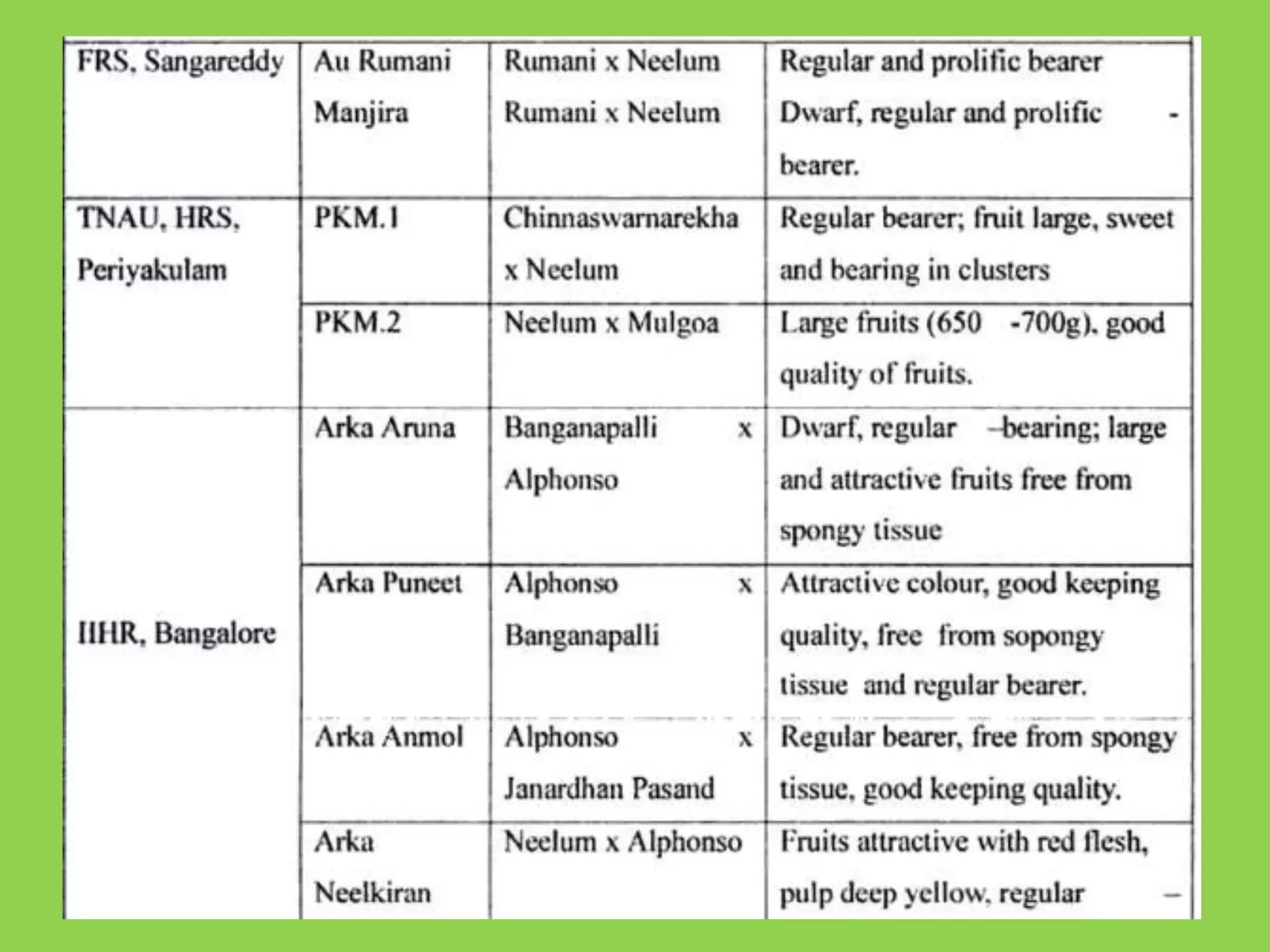
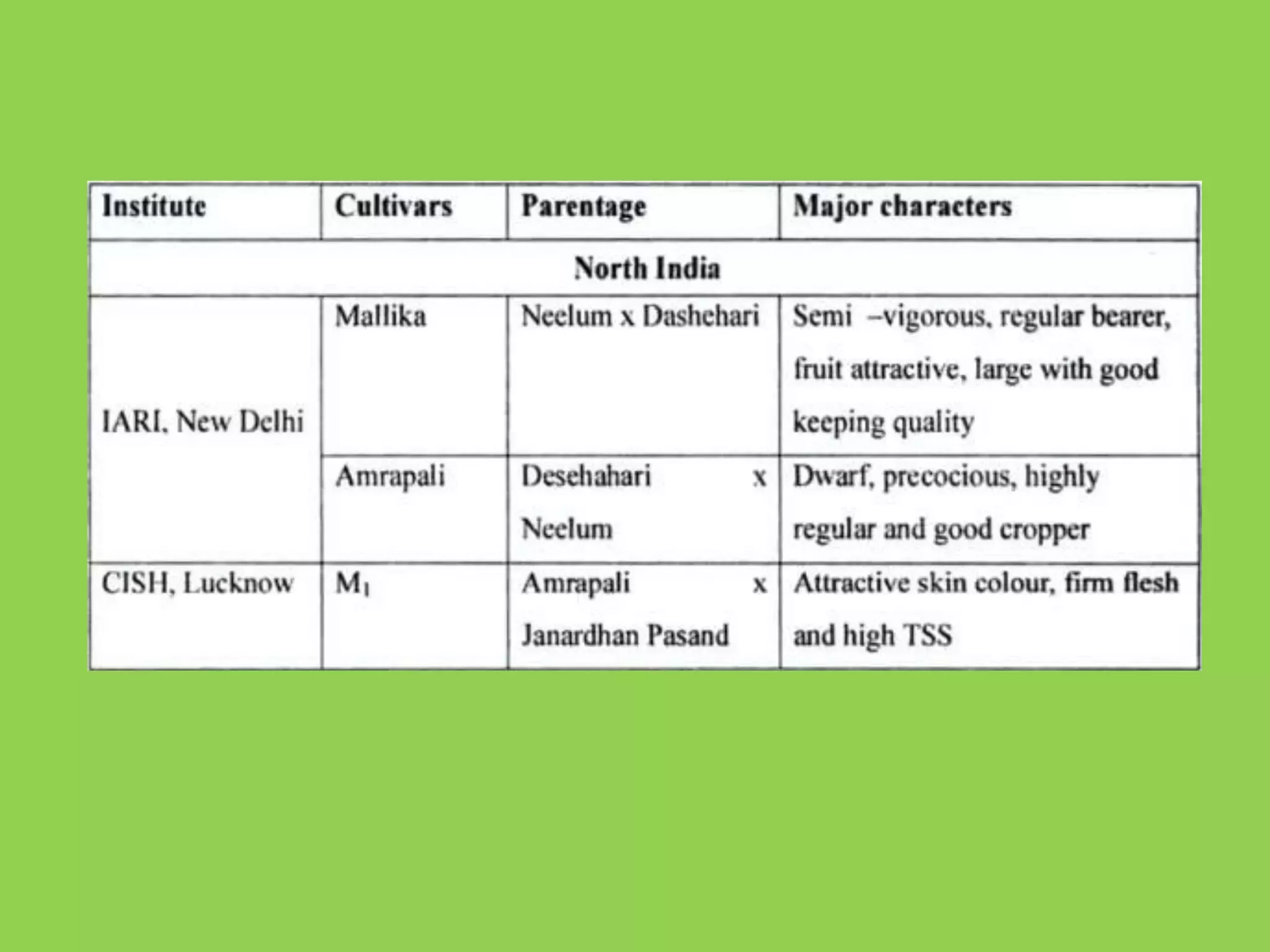
Important Mango Hybrids and Clonal Selections
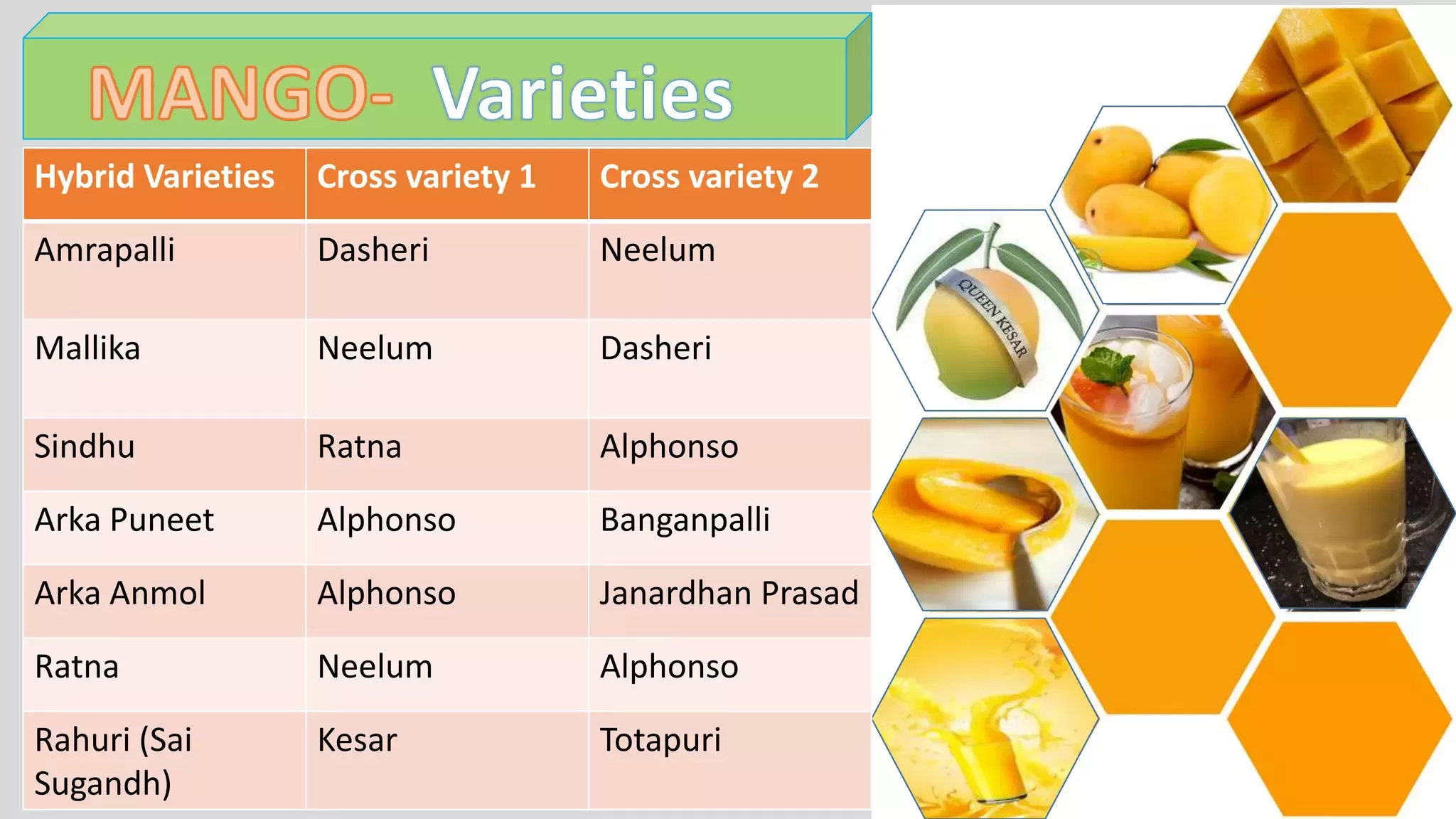
| Hybrid |
Parentage |
Key Features |
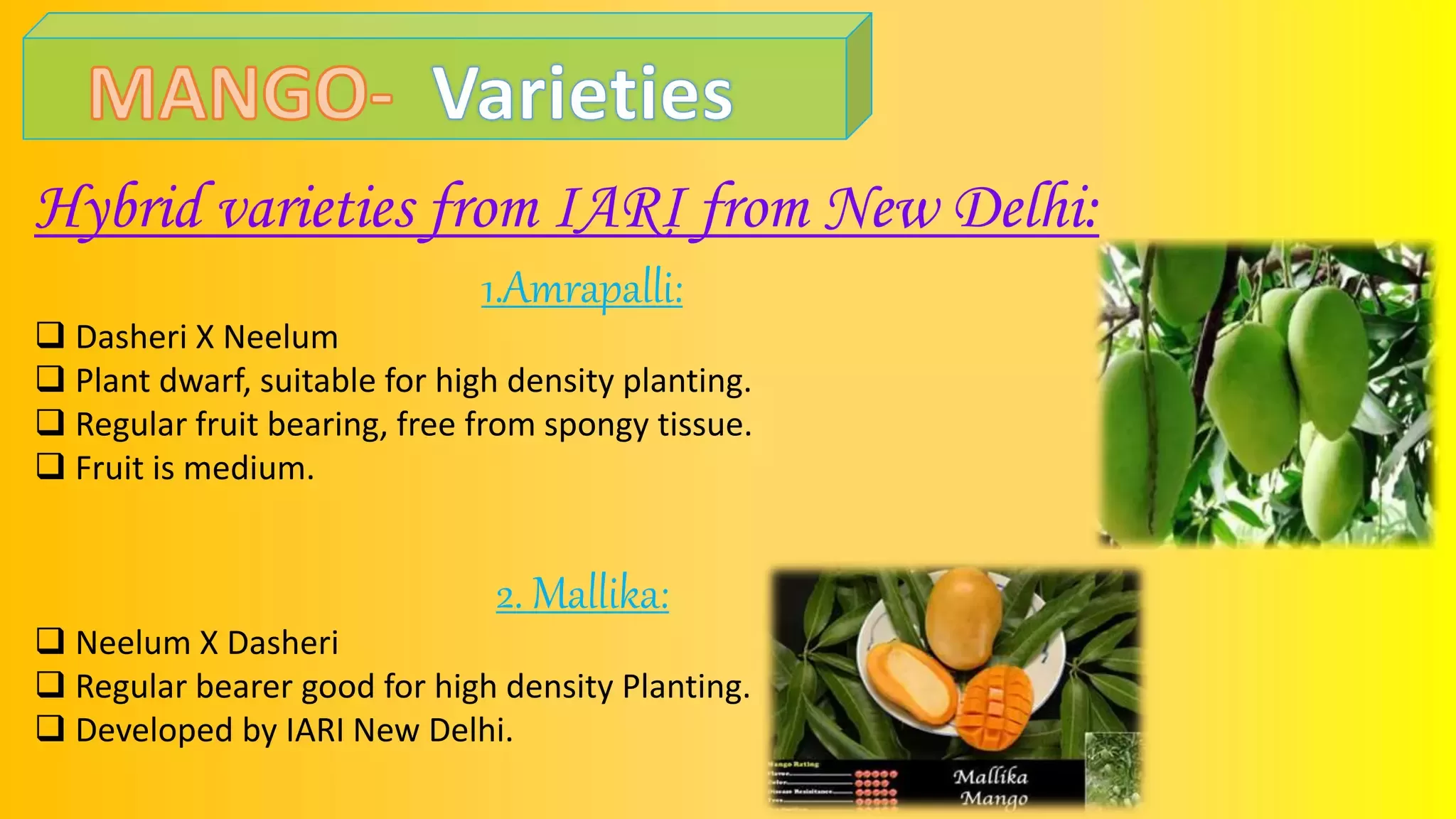
| Mallika |
Neelum × Dashehari |
Regular-bearer, high TSS, good colour, uniform fruits |
| Amrapali |
Dashehari × Neelum |
Dwarf, regular-bearer, cluster-bearing, good keeping quality |
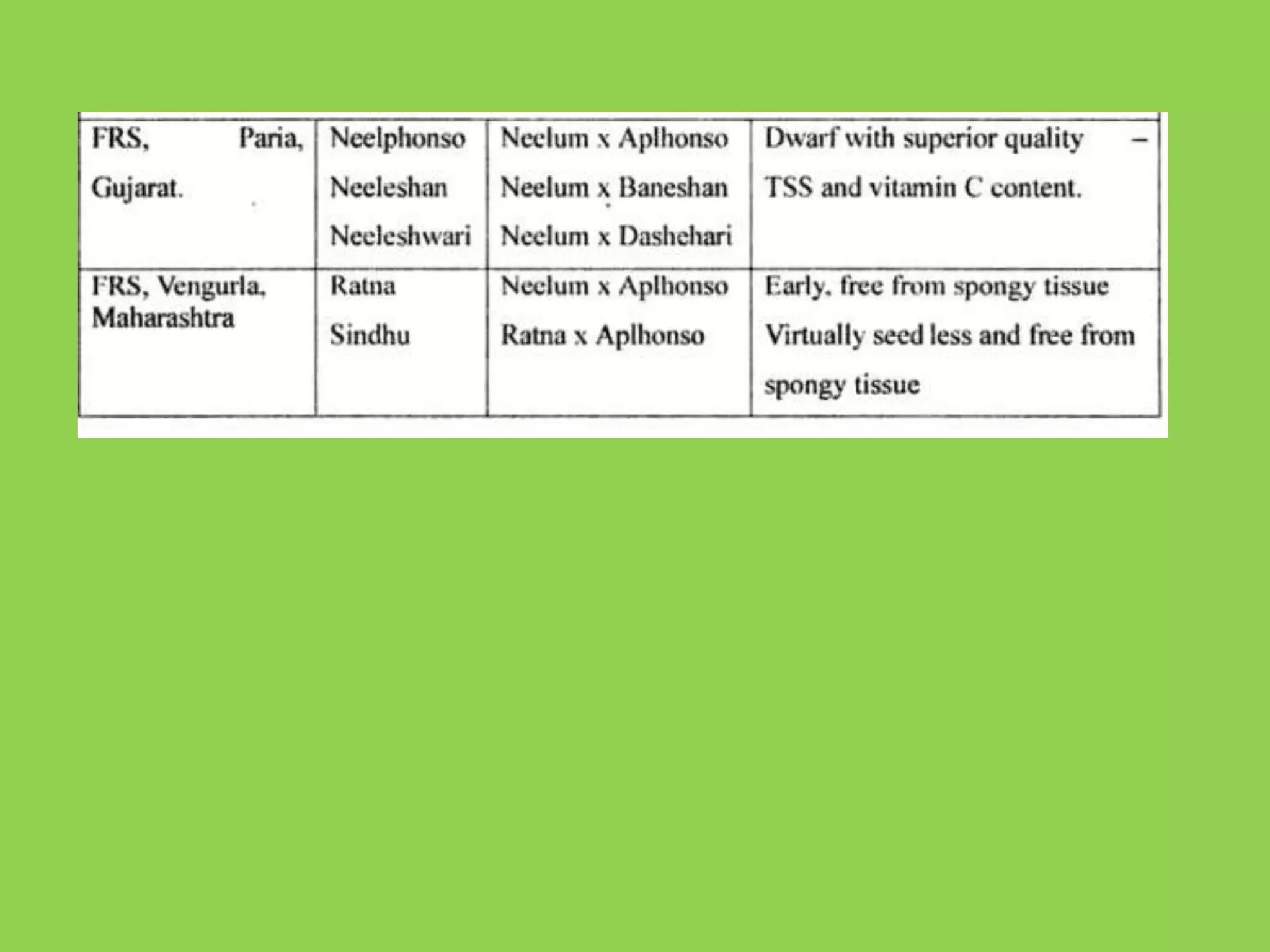
| Ratna |
Neelum × Alphonso |
Regular-bearer, free from spongy tissue and fibre |
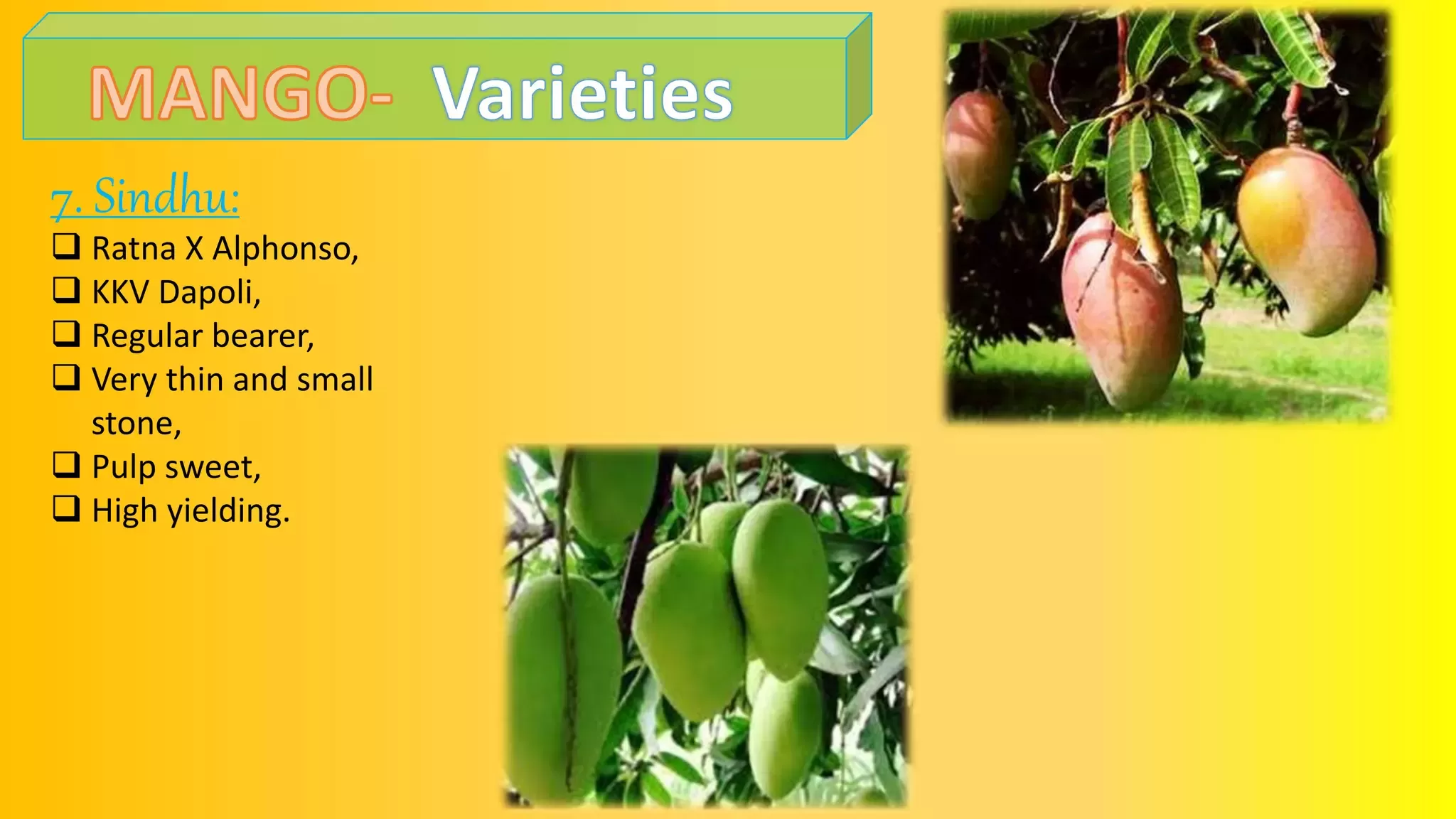
| Sindhu |
Ratna × Alphonso |
Regular-bearer, thin stone |
| Arka Puneet |
Alphonso × Banganapalli |
Regular-bearer, attractive skin, good keeping quality |
Propagation Methods
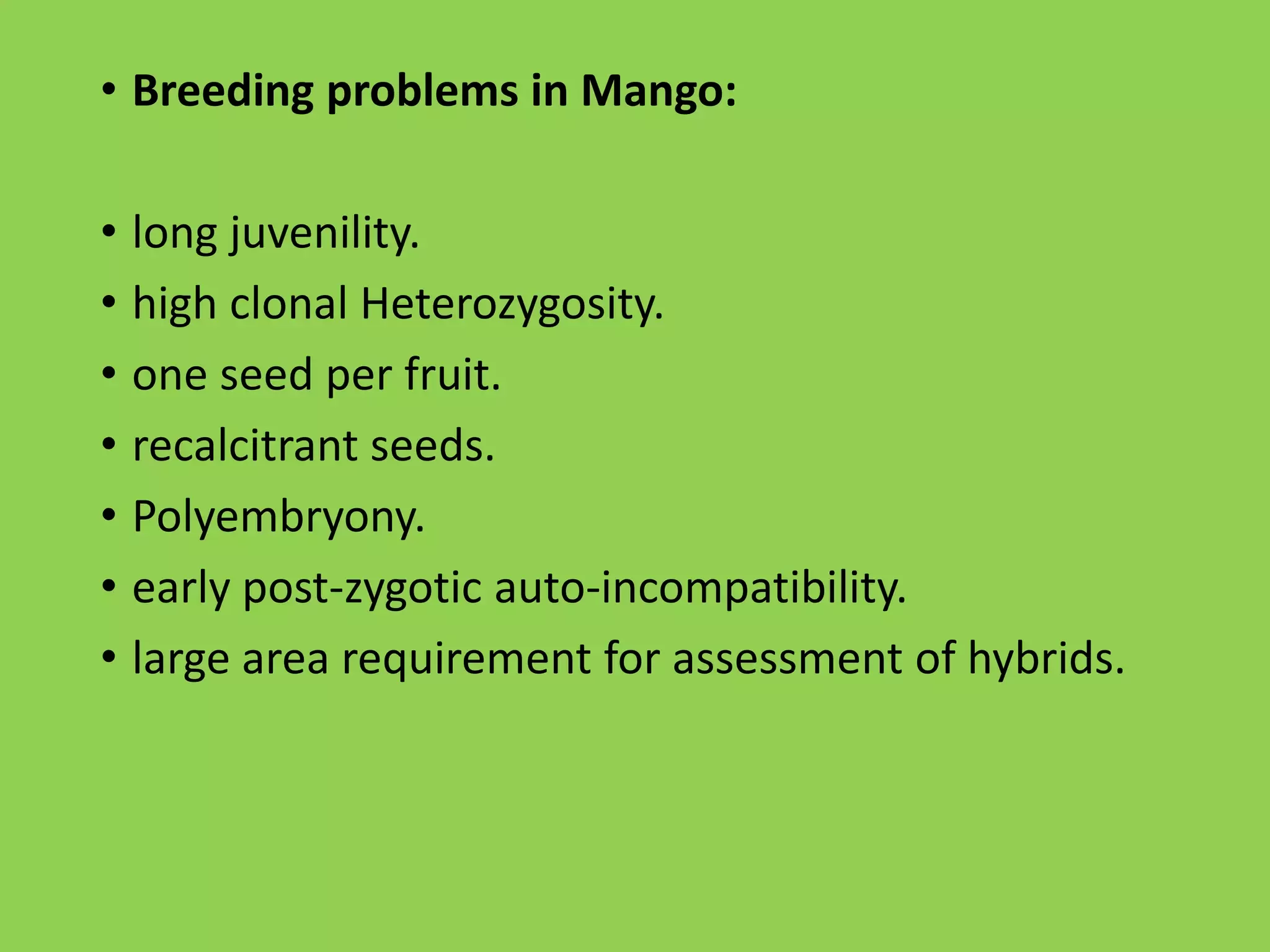
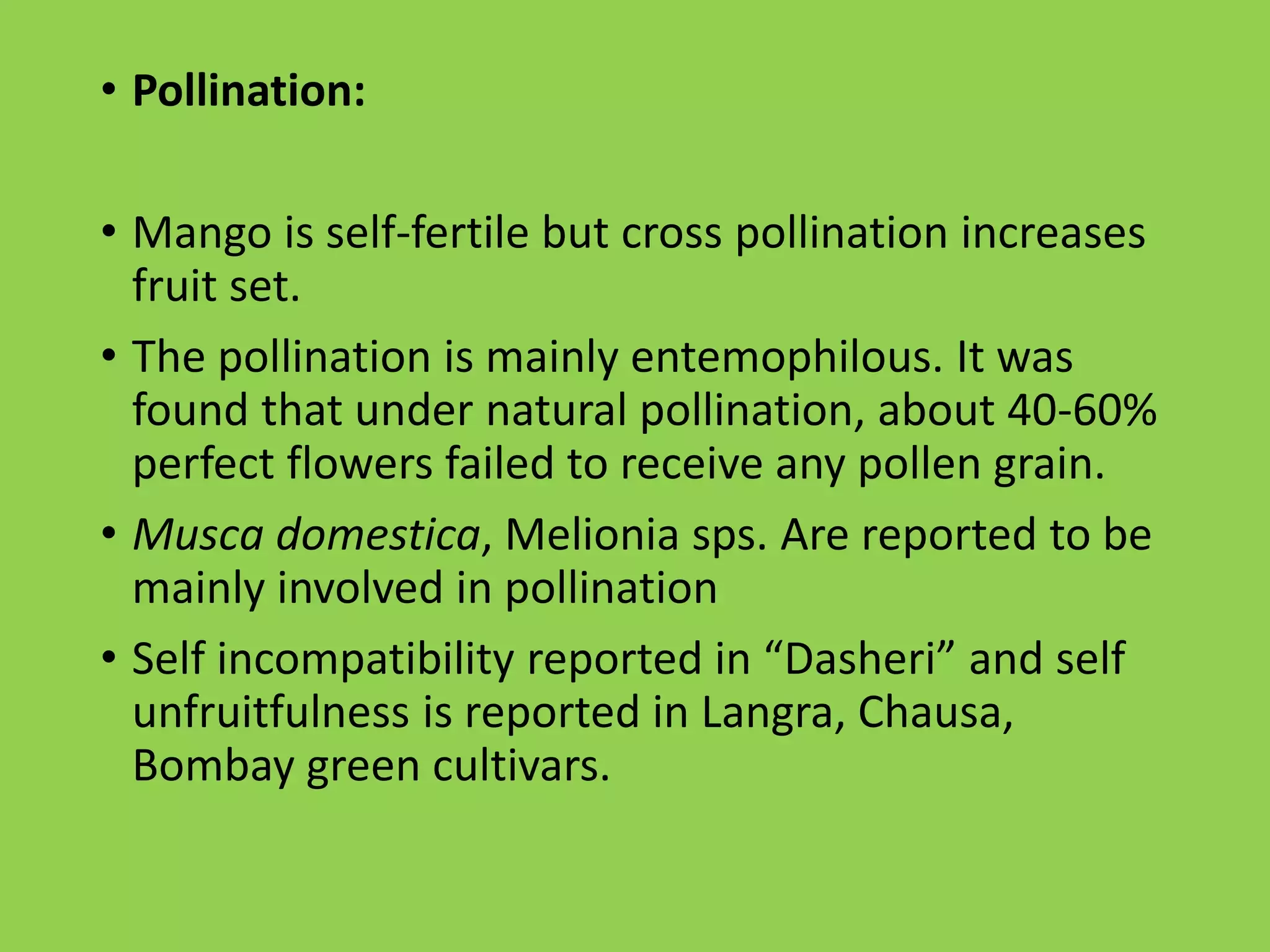
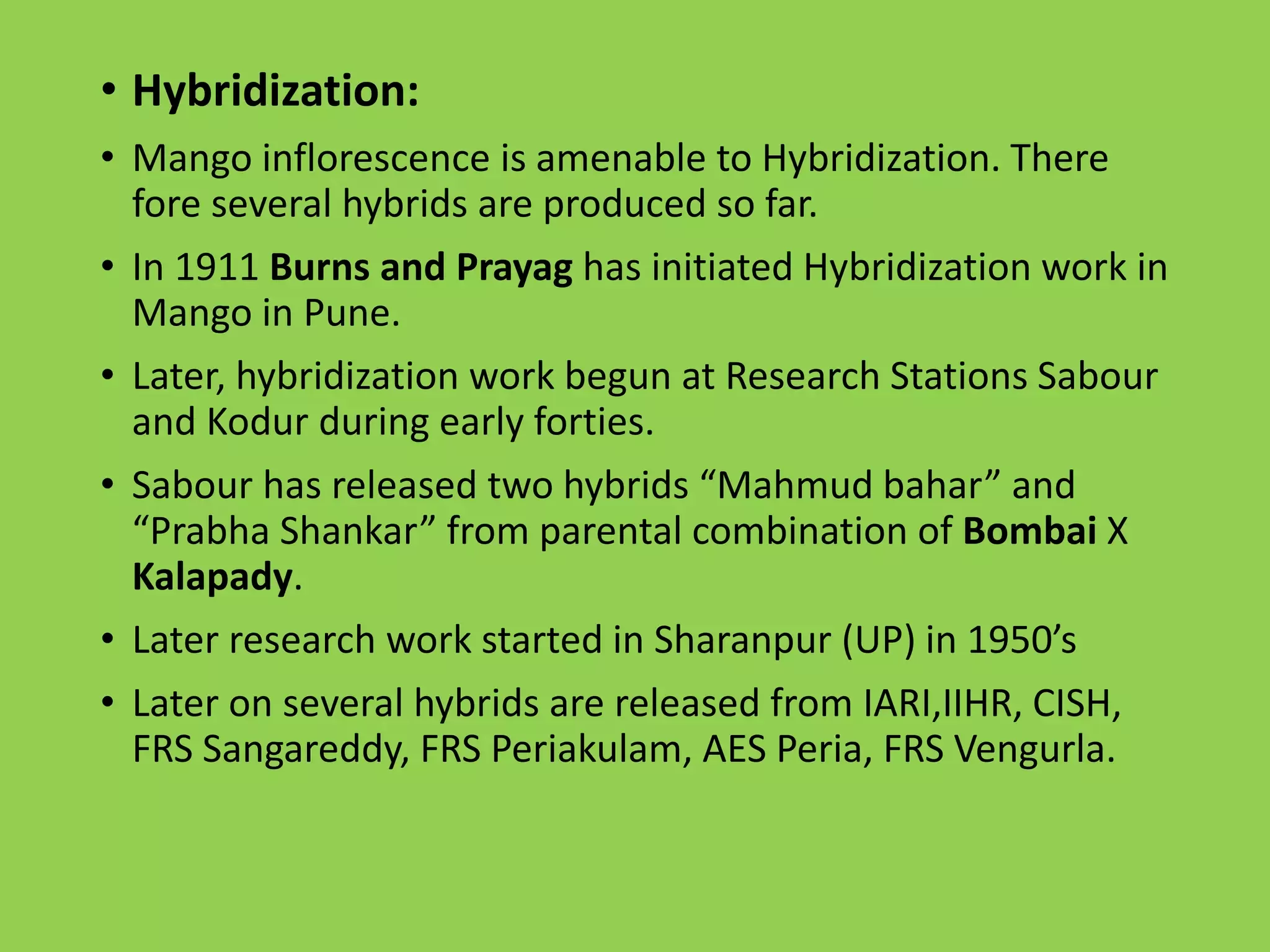
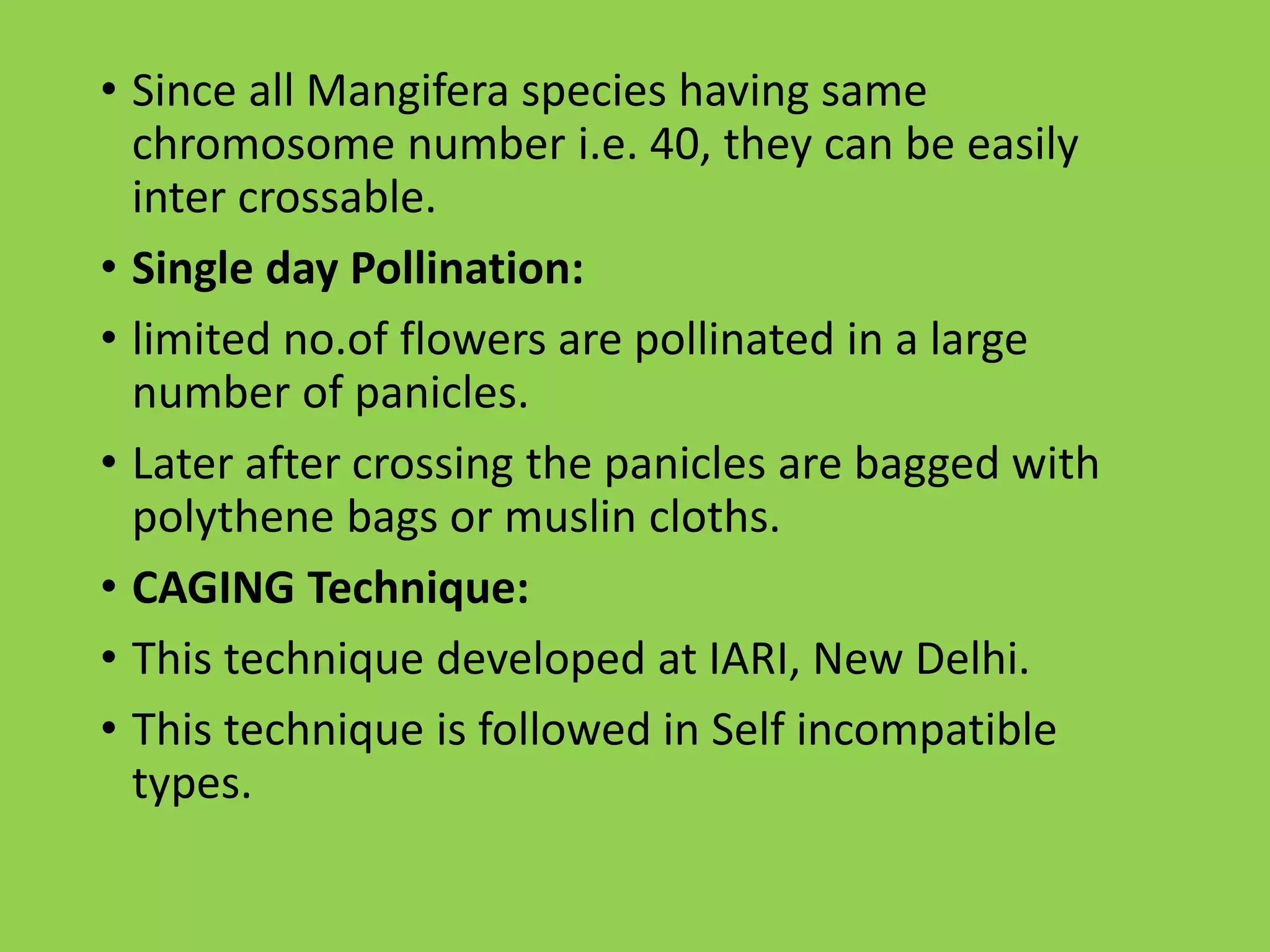
- Mango is highly heterozygous and cross-pollinated.
- Polyembryonic varieties (mainly in South India) can be grown from seed; monoembryonic (North India) require vegetative propagation.
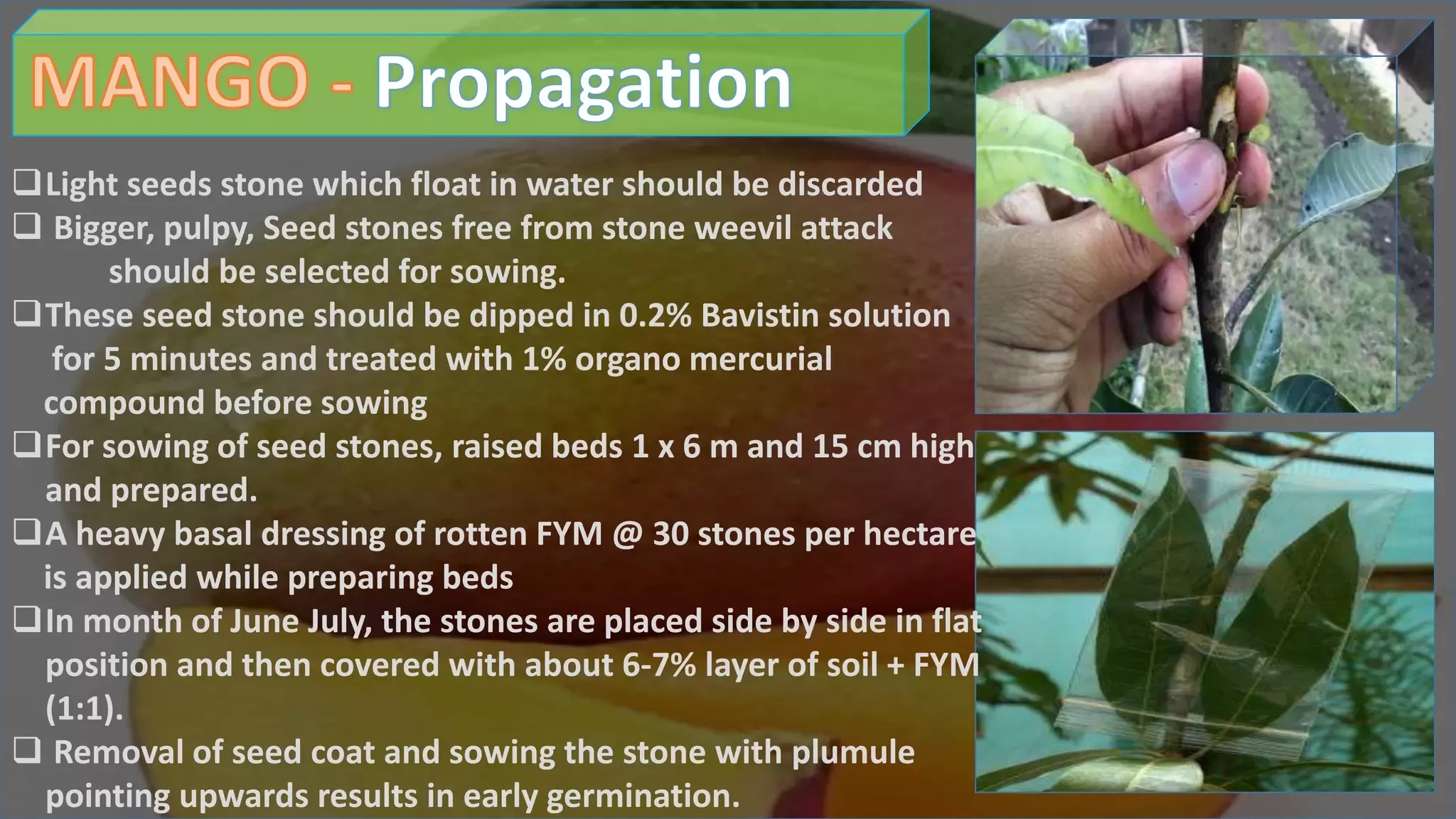
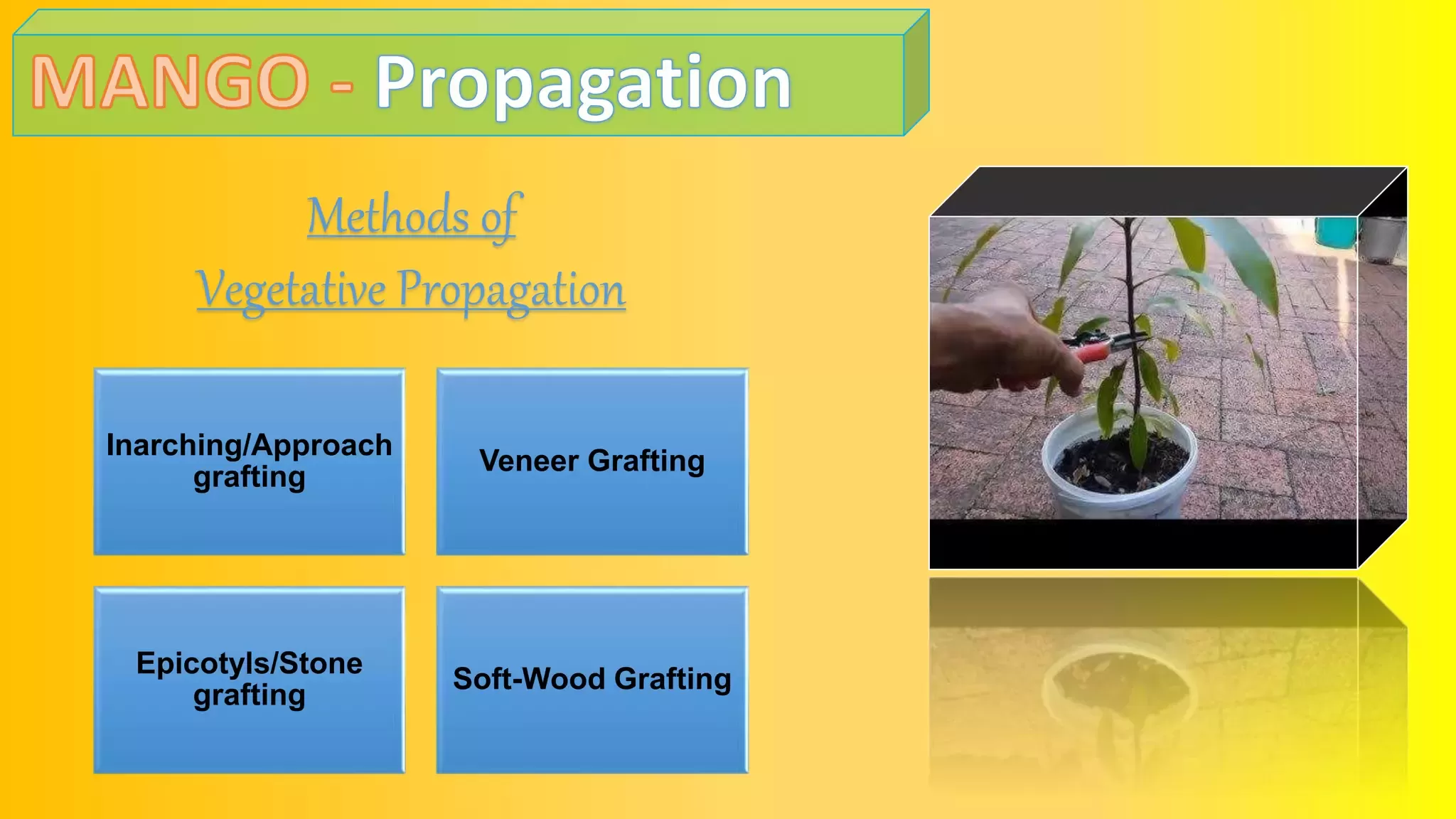
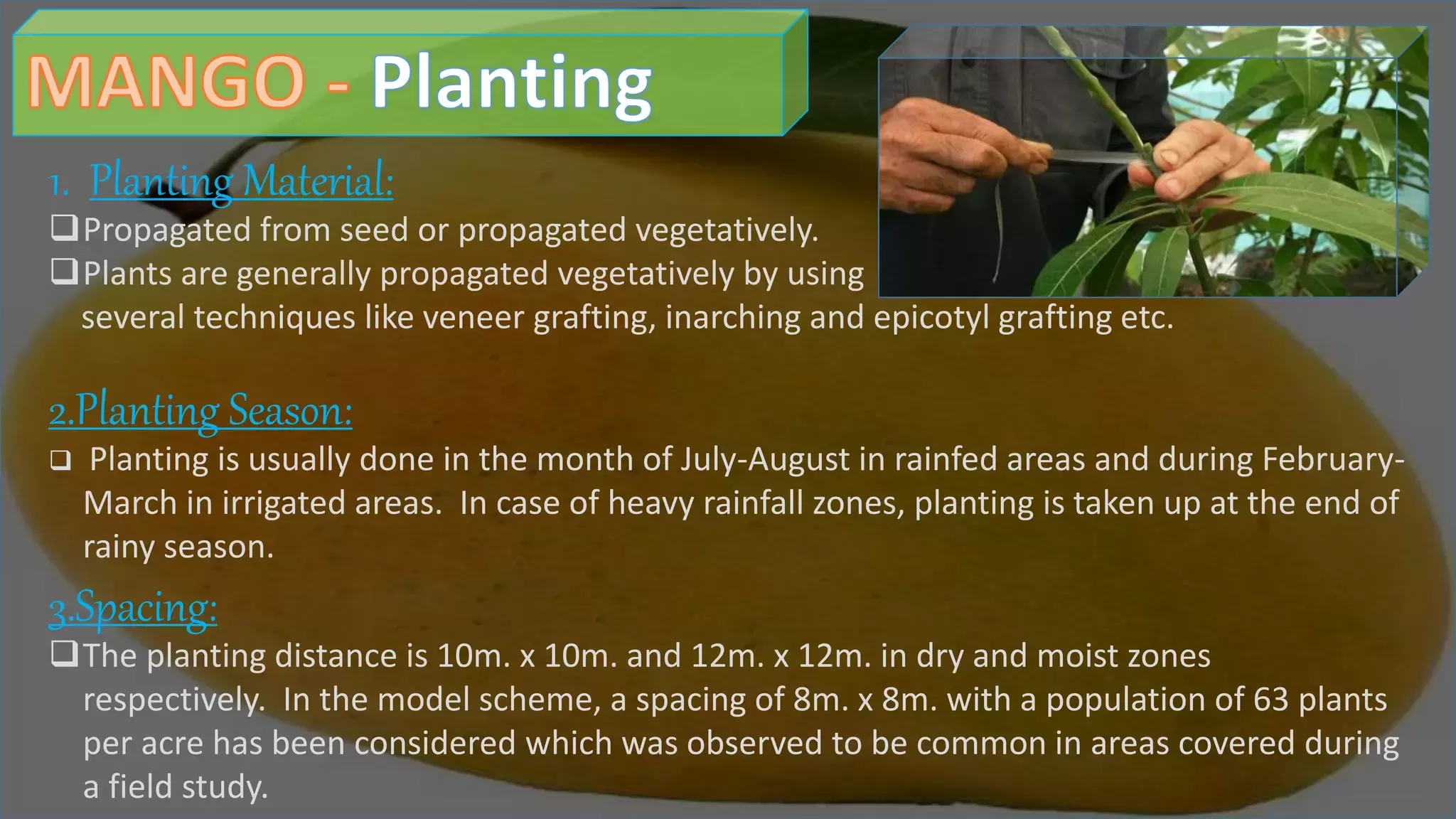
- Common propagation methods: inarching, veneer grafting, side grafting, epicotyl/stone grafting.
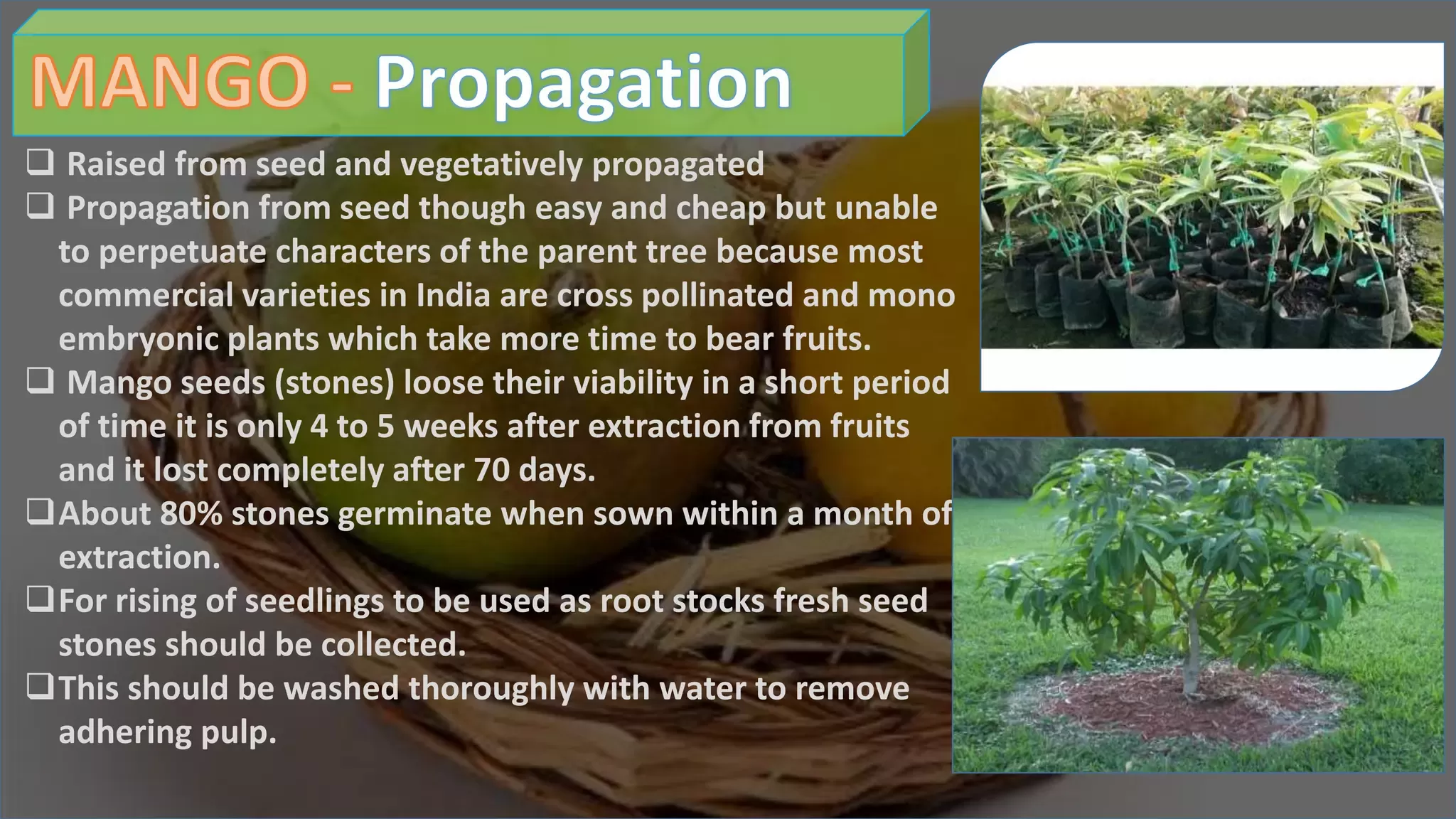
- Rootstock seedlings are raised from fresh seeds (sown within 4–5 weeks of extraction).
Planting Systems and Spacing
- Planting systems: square, rectangular, and hexagonal; square and rectangular are most common.
- Spacing depends on variety vigor and cropping system; typically 10–12 m for traditional planting.
- Pits of 1 m × 1 m × 1 m are prepared and filled with well-rotted farmyard manure.
- Planting is best done during the rainy season (June–September).
High-Density Planting in Mango
- High-density planting increases yield per unit area.
- Amrapali is suitable for high-density planting (2.5 m × 2.5 m spacing).
- Paclobutrazol (2 ml/tree) induces flowering in off-years.
- Pruning and use of dwarfing rootstocks (e.g., Vellaikolumban) help manage tree size.
Training, Pruning, and Aftercare
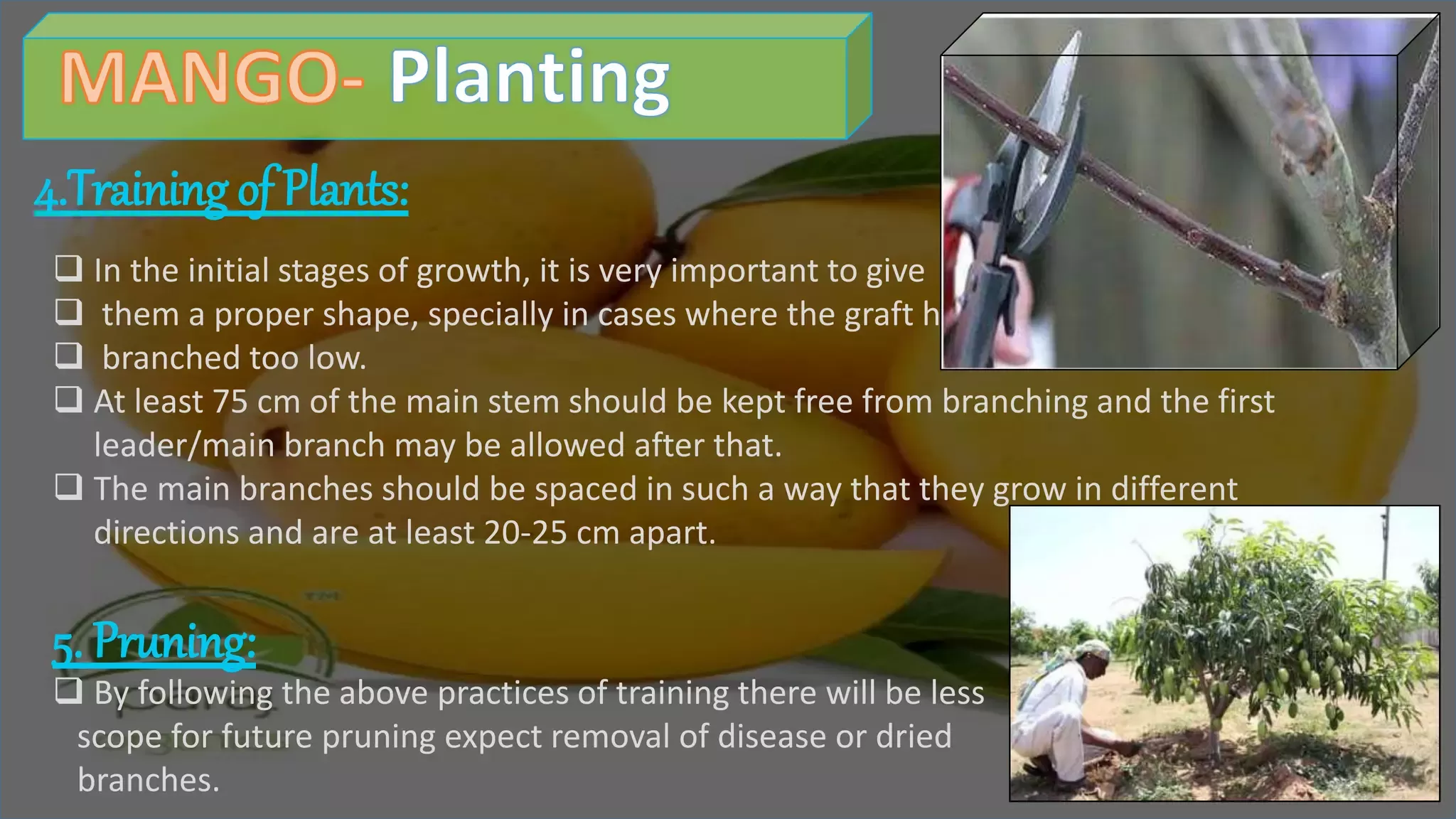
- Training is essential in early years to develop a strong framework.
- Proper branch spacing facilitates intercultural operations.
- Pruning is minimal; mainly removal of diseased, dead, or crossing branches.
Nutrient and Water Management
Manuring and Fertilization:
- Apply 73 g N, 18 g P2O5, 68 g K2O per year of age (up to 10 years).
- After 10 years: 730 g N, 180 g P2O5, 680 g K2O per tree/year in two split doses (June–July, Sept–Oct).
- Correct micronutrient deficiencies with foliar sprays: 0.3% zinc sulphate, 0.5% borax, 0.5% manganese sulphate.
Irrigation:
- Young plants (up to 2 years) require regular watering (about 30 L/week).
- Irrigation during pre-flowering and fruit set increases yield.
- Established trees: irrigate at 10-day intervals after fruit set.
Intercropping and Cover Crops
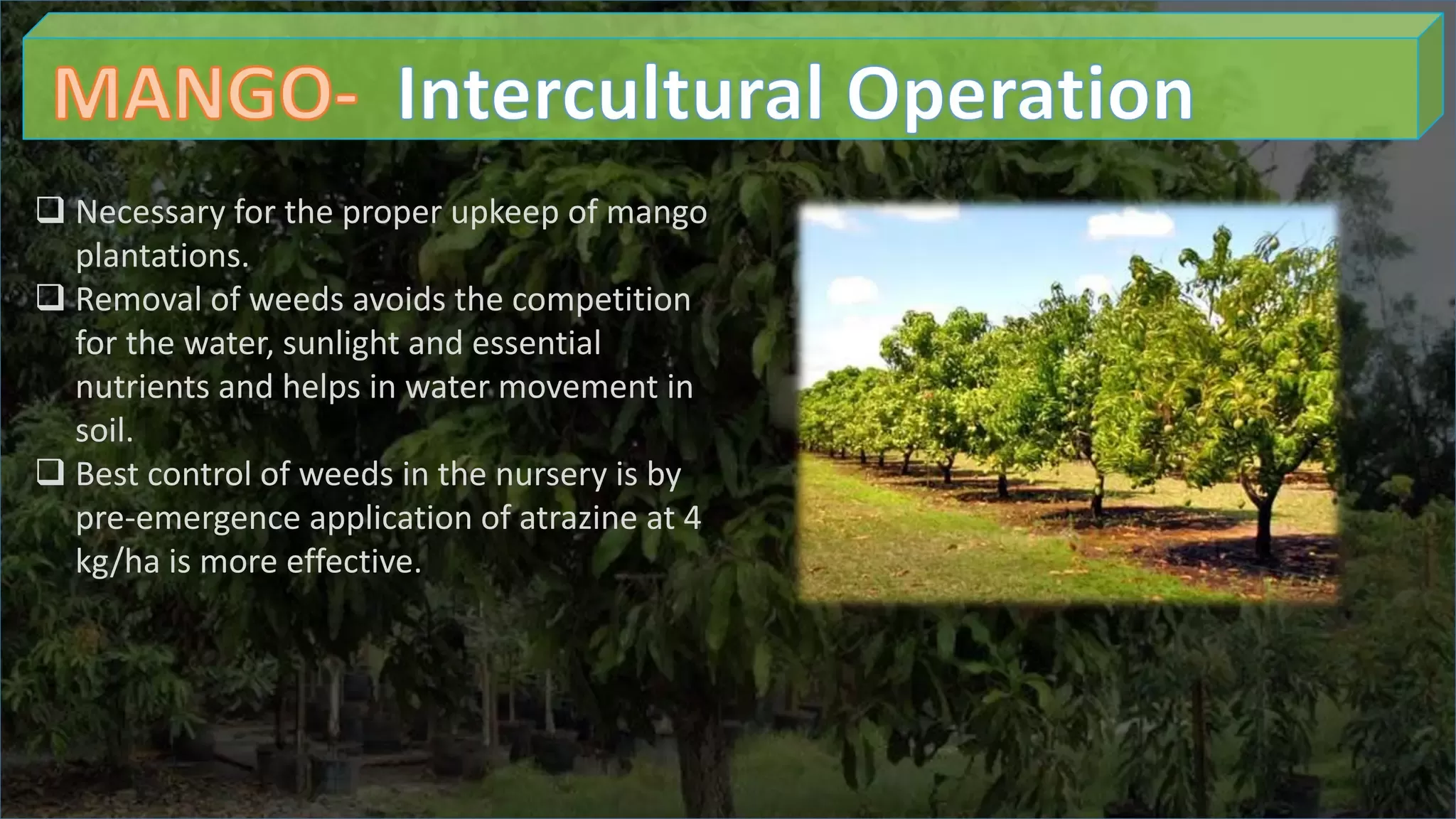
- Intercropping reduces weed growth and nutrient loss.
- Suitable intercrops: blackgram, wheat, brinjal, onion.
- Cover crops like sunhemp, cowpea, and pea help prevent soil erosion.
Harvesting and Postharvest Management
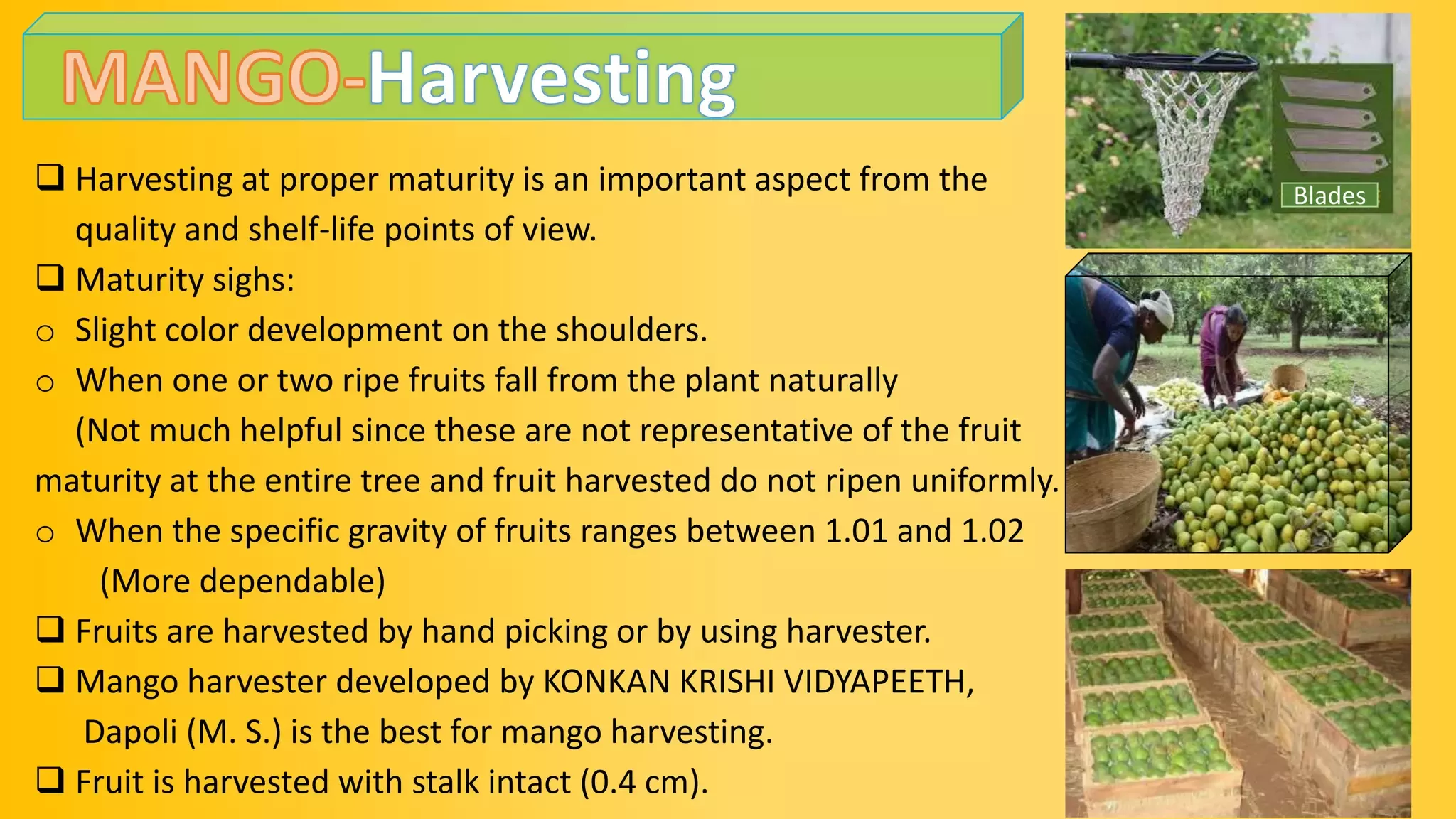
- Harvest mangoes with pedicel to reduce injury and fungal infection.
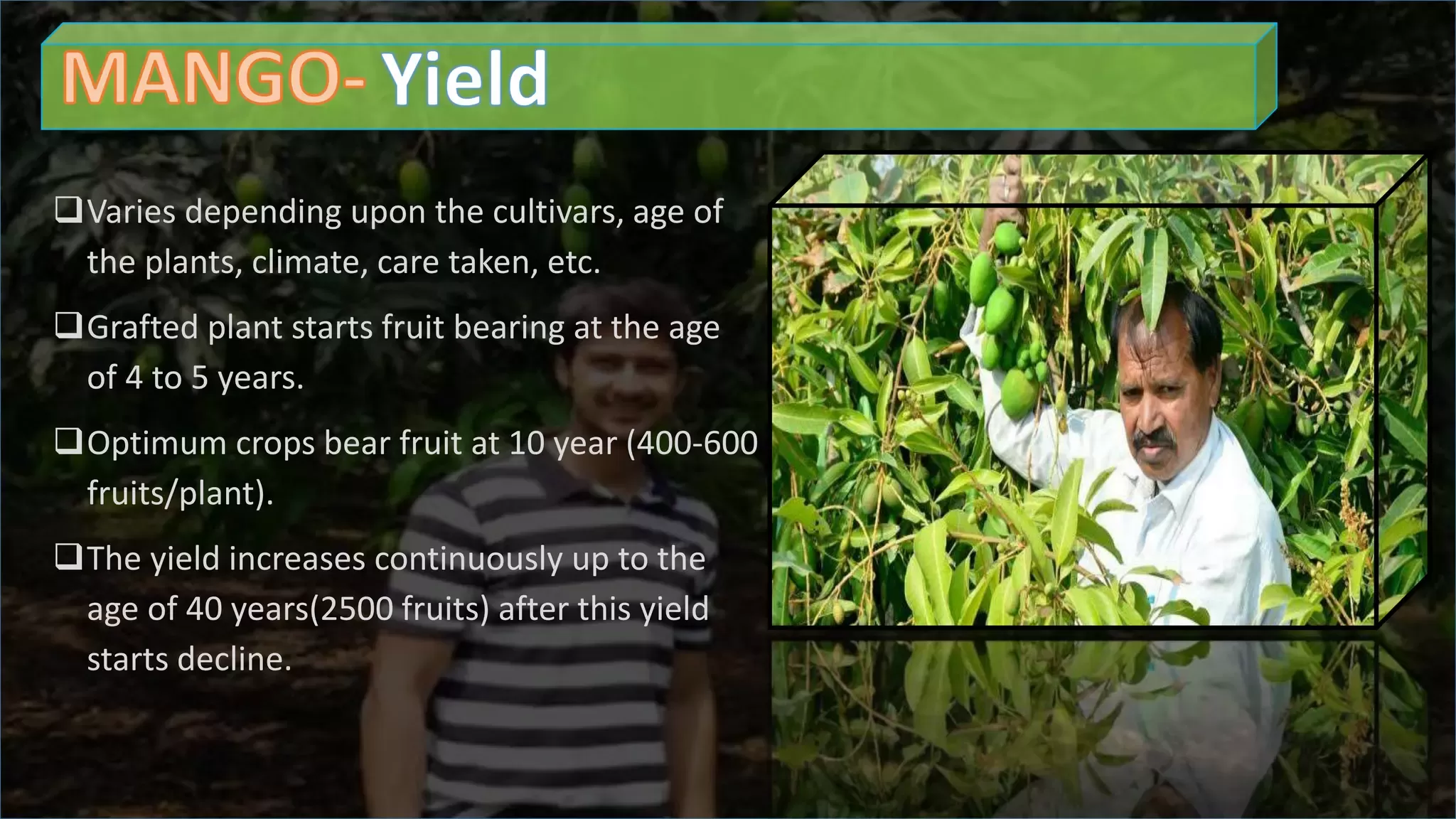
- Average yield: 8 tonnes/ha; 1,000–2,000 fruits/tree during bearing age.
- Sort and grade fruits by size; use proper packaging (perforated cardboard boxes preferred).
- Store mature green mangoes at 5–16°C; avoid chilling injury.
- Postharvest treatments: waxing, hot-water treatment, individual wrapping, hydro-cooling extend shelf life.
Summary and Key Points
- Mango thrives in well-drained, slightly acidic soils and warm, humid climates.
- Choose suitable varieties and hybrids for region and market demand.
- Adopt high-density planting and proper nutrient management for higher productivity.
- Intercropping and postharvest care improve sustainability and fruit quality.
Objective Questions
Q1. Which state leads in total mango production in India?
A. Uttar Pradesh
B. Andhra Pradesh
C. Maharashtra
D. Bihar
Answer: B

Q2. Mango cultivation is NOT recommended in which type of soil?
A. Alluvial
B. Lateritic
C. Black cotton with poor drainage
D. Slightly acidic
Answer: C

Q3. Which mango variety is mainly grown in the Ratnagiri area of Maharashtra?
A. Kesar
B. Banganapalli
C. Alphonso
D. Langra
Answer: C

Q4. Which hybrid mango is a result of crossing Neelum and Dashehari?
A. Mallika
B. Amrapali
C. Ratna
D. Sindhu
Answer: A

Q5. Which propagation method is widely practiced in the Konkan region of Maharashtra?
A. Inarching
B. Veneer grafting
C. Epicotyl/stone grafting
D. Side grafting
Answer: C

Q6. What is the recommended spacing for high-density planting of Amrapali mango in North India?
A. 5m x 5m
B. 2.5m x 2.5m
C. 4m x 4m
D. 3m x 3m
Answer: B

Q7. Which nutrient should be sprayed at 0.3% concentration during February, March, and May to correct deficiency in mango?
A. Borax
B. Zinc sulphate
C. Manganese sulphate
D. Ammonium sulphate
Answer: B

Q8. Which intercropping combination provides better monetary benefits in mango orchards?
A. Sunhemp-cowpea-mango
B. Blackgram-wheat-mango
C. Pea-sunhemp-mango
D. Cowpea-brinjal-mango
Answer: B

Q9. Which mango variety is a biennial-bearer and has characteristic turpentine flavour?
A. Himsagar
B. Langra
C. Kesar
D. Neelum
Answer: B

Q10. What is a major symptom of chilling injury in mangoes stored at low temperatures?
A. Fruit splitting
B. Loss of flavour and undesirable softening
C. Increased sweetness
D. Enhanced colour development
Answer: B