Description
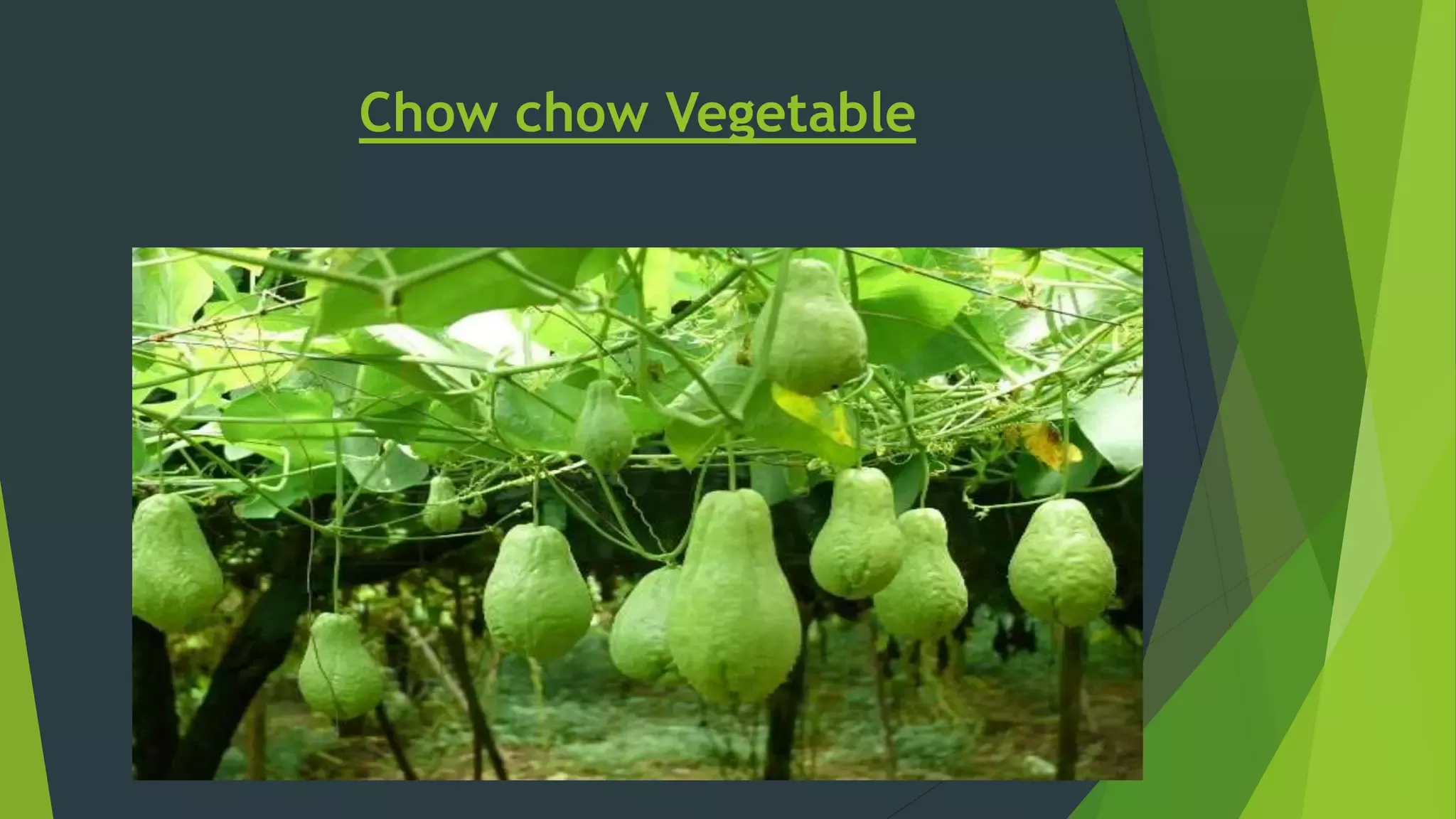
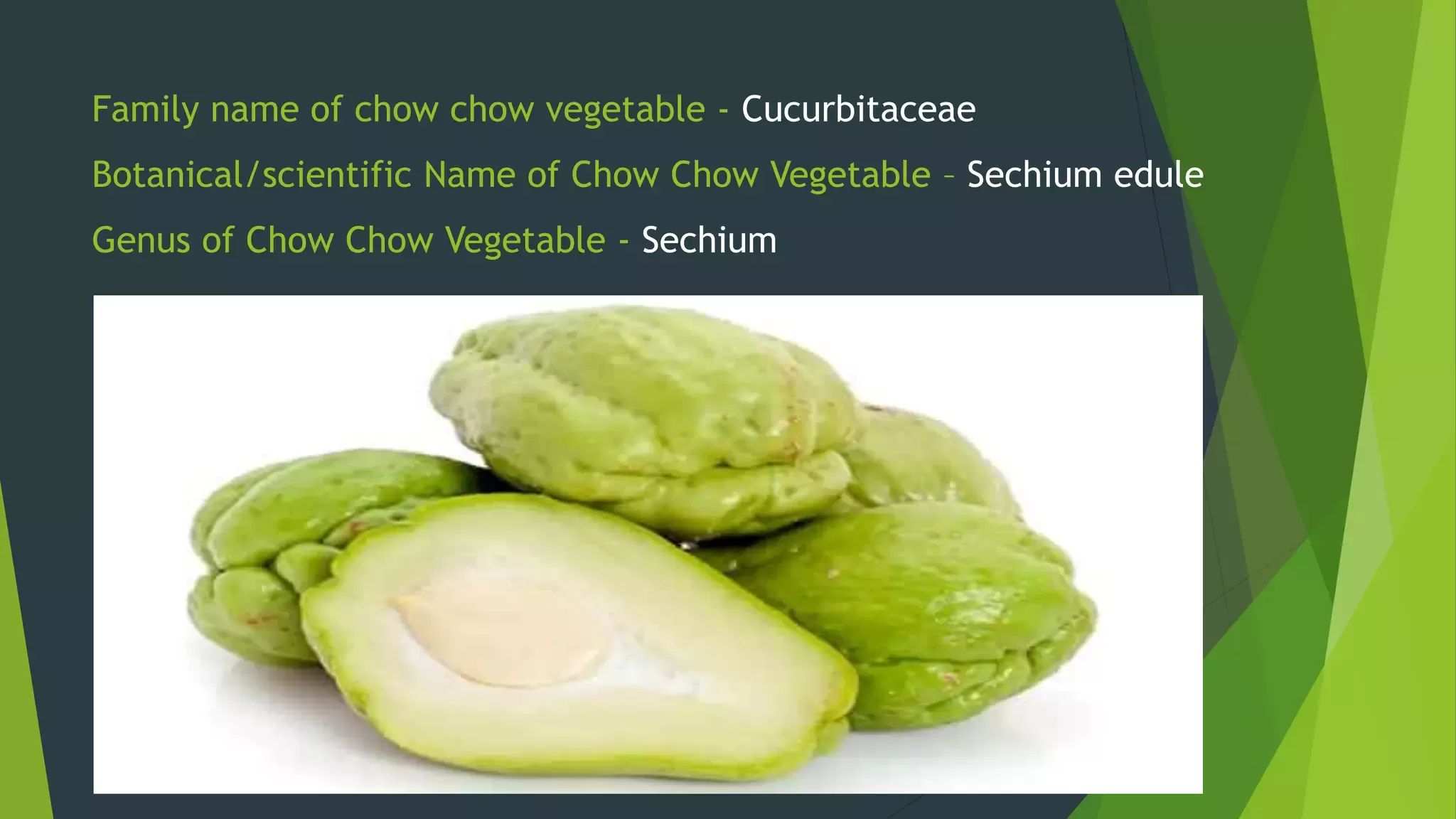
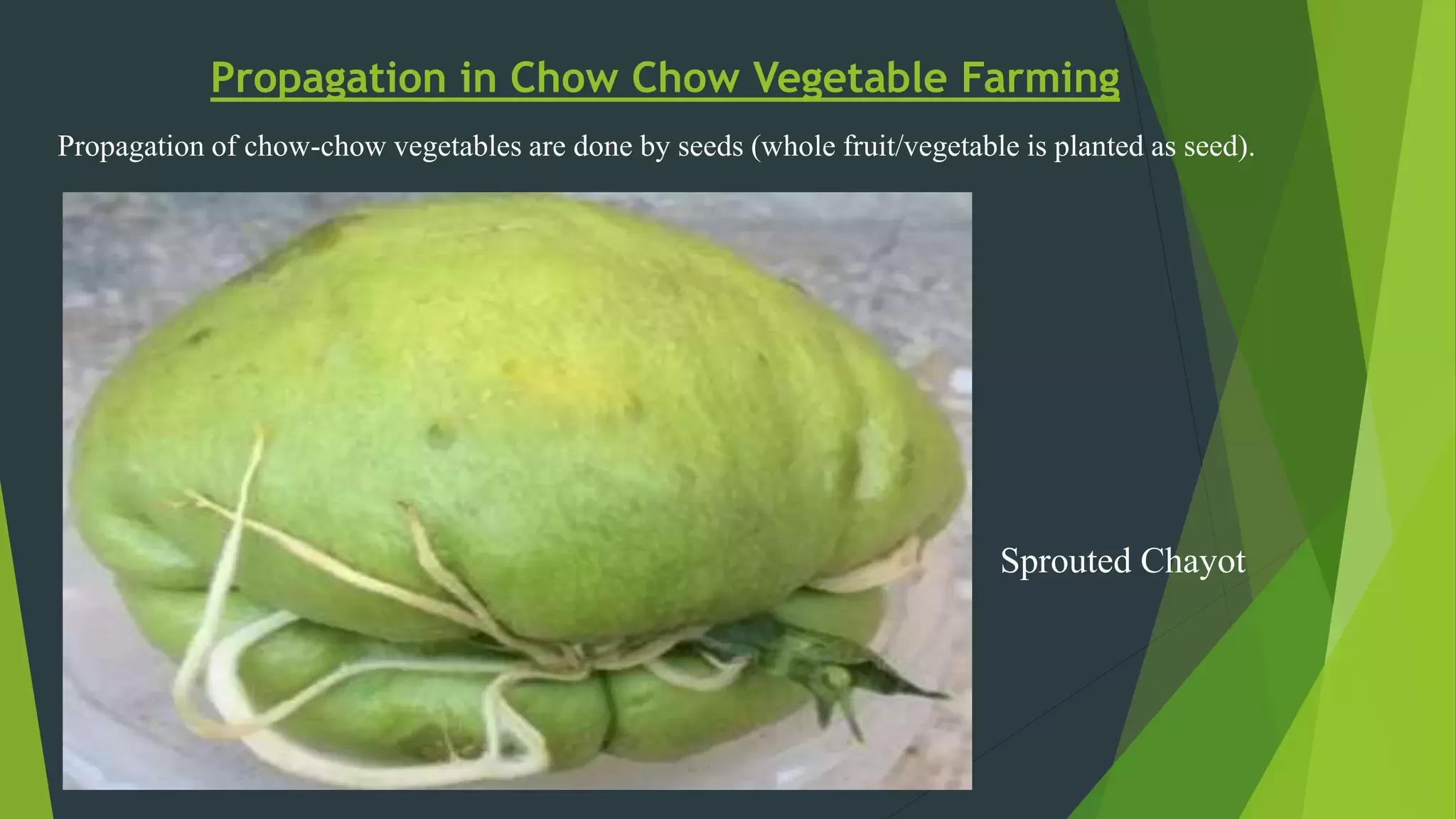
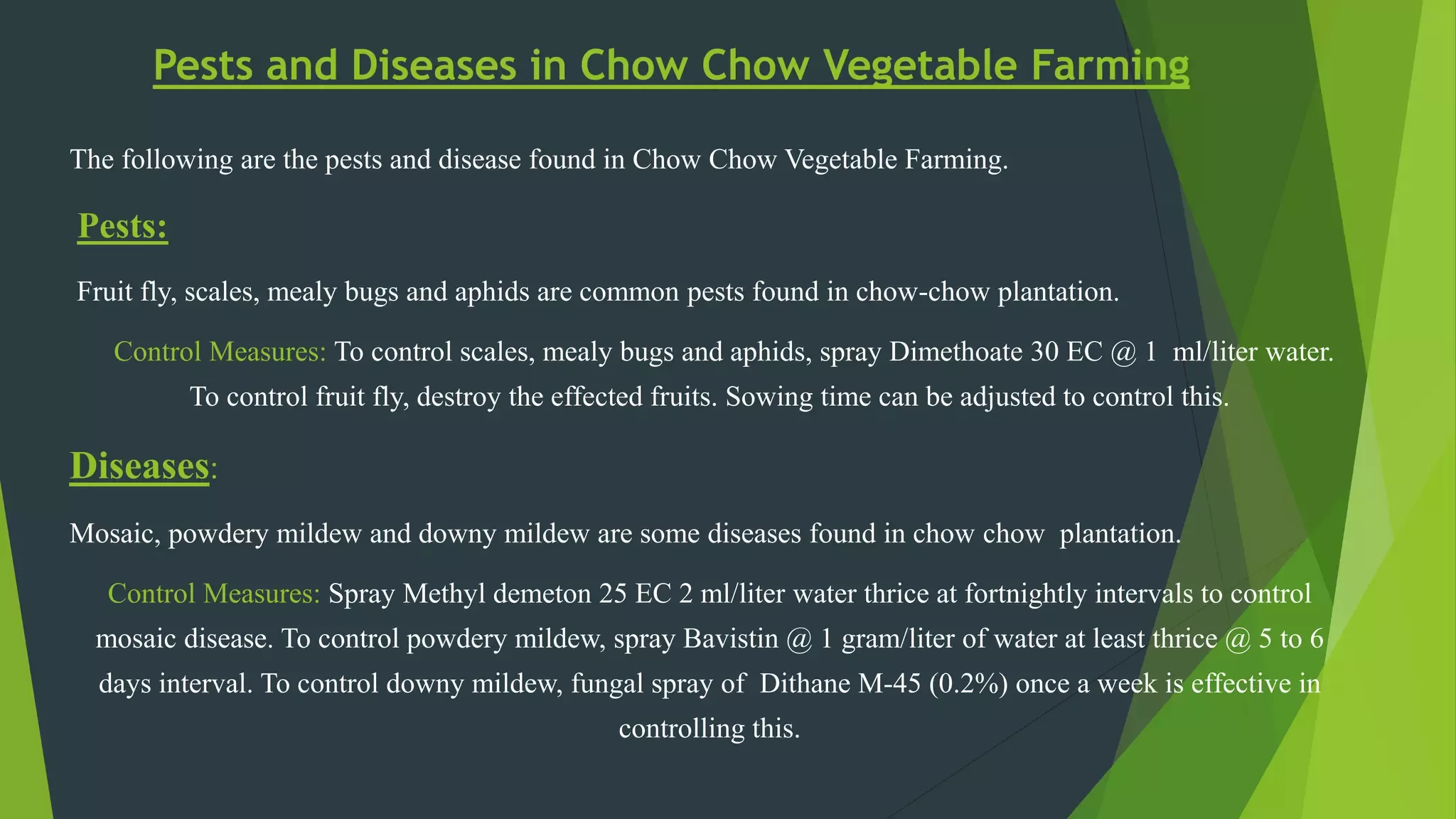
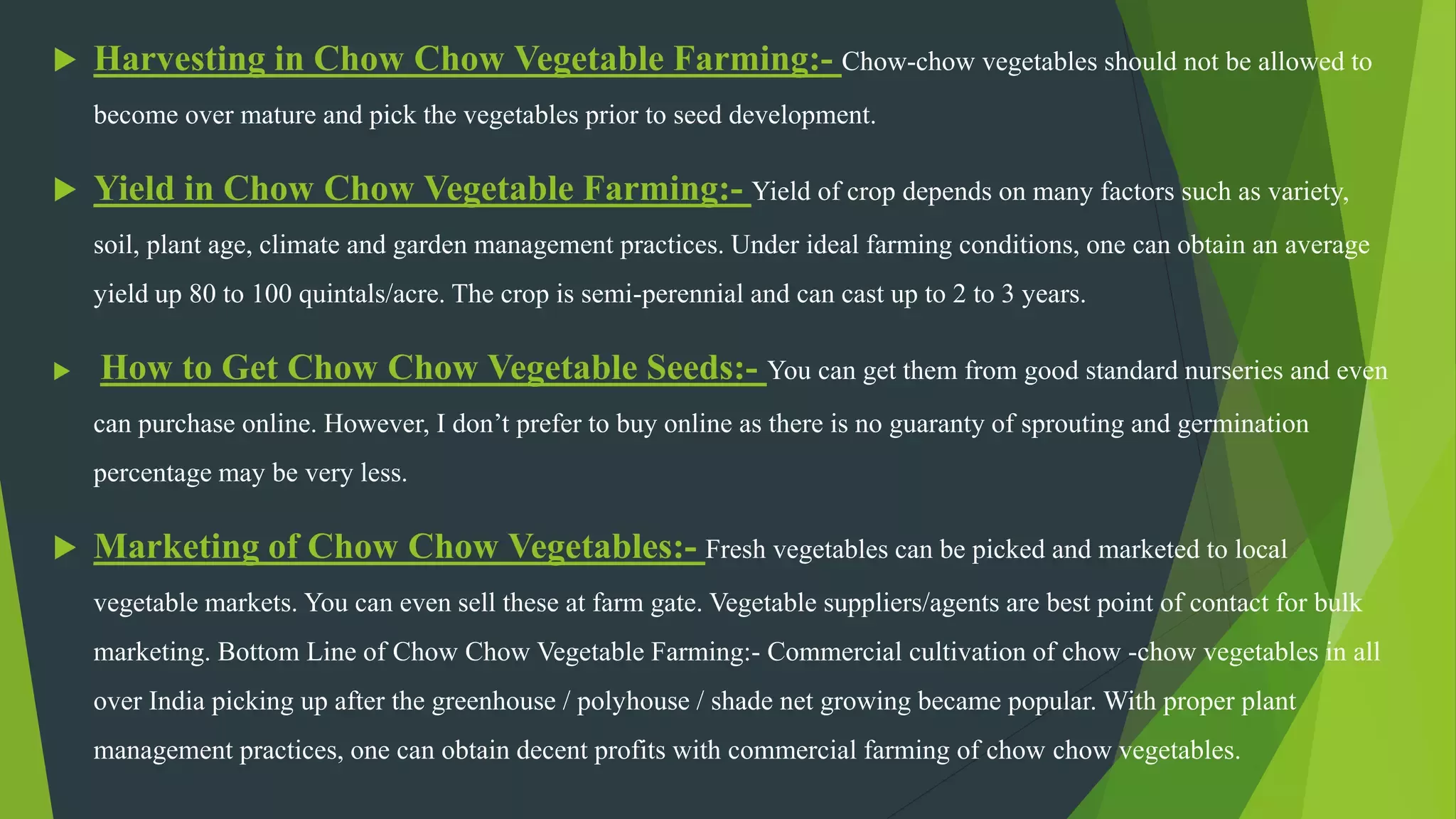
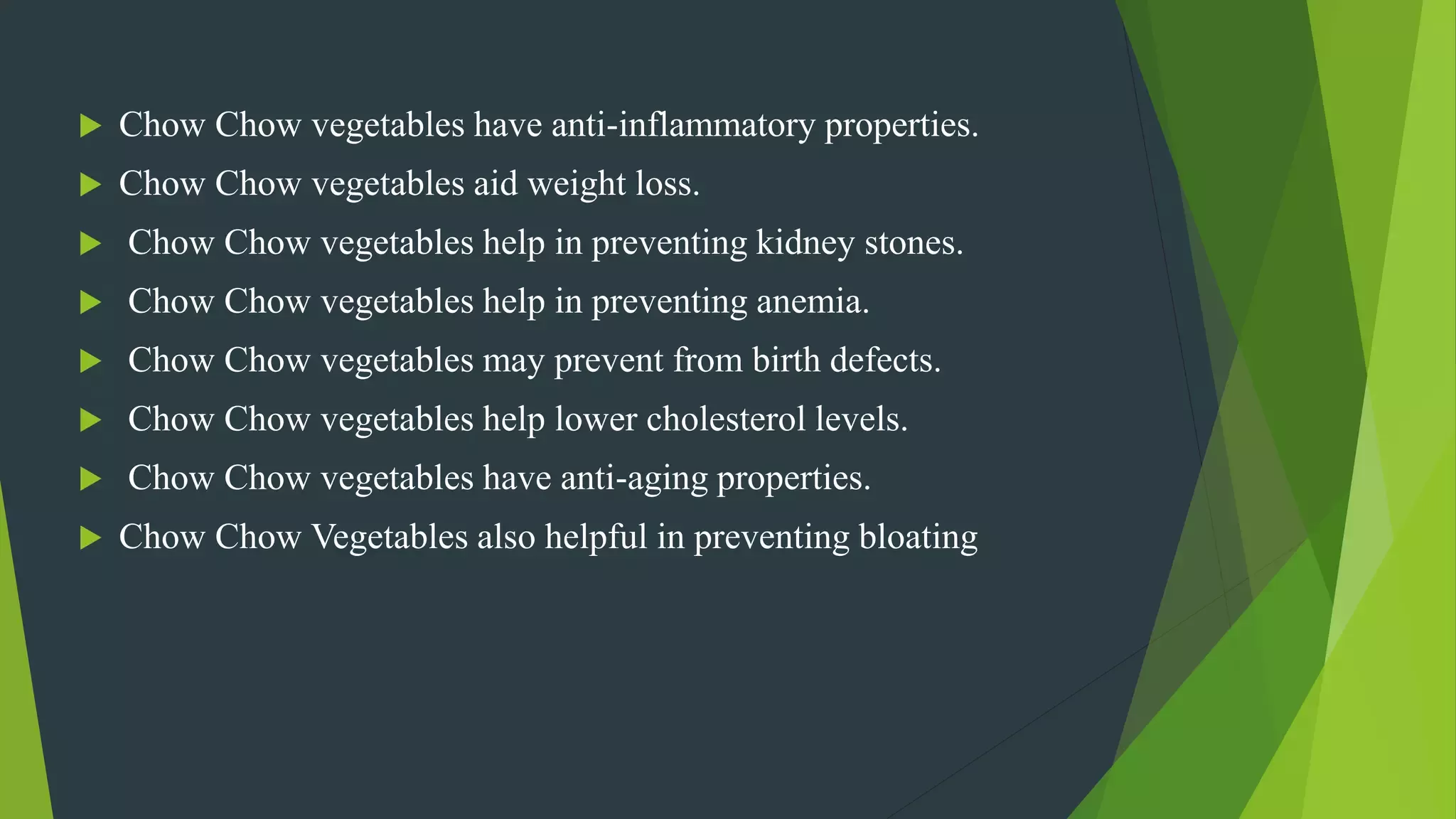
Chow Chow Vegetable: An Overview of its Attributes, Farming Practices, and Health Benefits Chow Chow, also recognized as Chayote or pear squash, is a unique edible perennial plant that belongs to the Cucurbitaceae family, which encompasses various types of gourds, melons, cucumbers, and squashes. Scientifically classified as Sechium edule, this versatile vegetable has acquired numerous names across regions and cultures, including Bengaluru venkaaya in India and Ishkus in Dargiling. The fruit of the Chow Chow plant is distinctively pear-shaped, typically measuring between 10 to 15 cm in length, with a surface that exhibits coarse wrinkles. In South India, the vegetable is commonly incorporated into local dishes such as pickles and sambar, while other parts of the plant, including the leaves and tuberous roots, are also edible, showcasing its overall utility in culinary practices. Chow Chow cultivation is gaining traction, particularly in India, where two primary varieties are recognized: white and green. While these varieties lack specific commercial designations, certain high-yielding genotypes can produce an impressive 35 to 40 kg per plant. Favorable growing conditions include warm climates characterized by high humidity, making these vegetables best suited for tropical and subtropical regions. The ideal temperature for optimal fruit growth is around 30 °C, with the plant thriving in both full sunlight and shaded areas. Soil quality is a crucial factor in Chow Chow farming, as it requires well-drained, fertile soil rich in organic matter. Although slightly tolerant to acidic soils, the pH level ideally should fall between 5.5 and 6.5. Successful cultivation also necessitates appropriate land preparation, which includes deep plowing and the addition of decomposed farmyard manure. The propagation of Chow Chow typically involves planting sprouted fruits directly into the soil, making for relatively straightforward cultivation practices. In terms of maintenance, effective irrigation is key throughout the growing season, especially during dry spells. Utilizing methods such as drip irrigation can conserve water while ensuring consistently moist soil conditions. Moreover, regular intercultural practices like weed control and proper vine training on trellises or supports are essential for promoting healthy growth and maximizing yield. Harvesting Chow Chow requires vigilance, as the vegetables must be picked before they mature fully to avoid detrimental seed development. With optimal management practices, the yield can reach remarkable levels, averaging between 80 and 100 quintals per acre. Beyond its agricultural benefits, Chow Chow is also celebrated for its remarkable health benefits. Rich in Vitamin C, fiber, and essential trace minerals, this vegetable plays a role in cancer prevention, supports digestive health, and contributes to thyroid function. Furthermore, it is known to be beneficial for heart health, aids in weight loss, and possesses anti-inflammatory properties. The increasing popularity of Chow Chow within the agricultural community and its health-promoting attributes make it a valuable addition to diets and farming practices alike. As it transitions into commercial cultivation, especially through greenhouse and polyhouse methods, Chow Chow holds promise for both farmers and consumers seeking healthy lifestyle choices. With its myriad benefits, fostering its growth can lead to rewarding outcomes in terms of both health and profitability in the agricultural sector.