Home Quiz Old Paper PPT

Ppt on Apple: Origin, Botany, Climate Requirements And Recommended Varieties

This presentation covers the production technology of apple (Malus domestica), an important temperate fruit crop. It includes taxonomy, origin, climatic and soil requirements, recommended varieties, major pests and diseases, and management practices. The content is structured for academic and exam preparation, emphasizing key aspects of apple cultivation. Important academic keywords: Malus domestica, chilling requirement, varieties, pest management, apple scab.
Introduction to Apple
  • Botanical name: Malus domestica; Family: Rosaceae
  • Origin: Central Asia, including Caucasus and Hindu-Kush Himalayan region
  • Chromosome number: 2n = 34, 51, 68 (x = 17)
  • Genus Malus has about 25 species
Importance and Distribution
  • Major temperate fruit crop, rich in carbohydrates, potassium, phosphorus, and calcium
  • Introduced in India in 1865 (Kullu Valley, Himachal Pradesh)
  • Commercially grown in Jammu & Kashmir, Himachal Pradesh, Uttarakhand
  • Also cultivated in NE states and Nilgiri hills
  • India: ~2.8 lakh ha area, ~1.77 million tonnes production
Climatic and Soil Requirements
  • Requires 1000–1600 chilling hours; low-chill varieties need 500–800 hours
  • Optimal summer temperature: 21–24°C; pollination best at 18–22°C
  • Frost-free spring, mild summer, and 100–125 cm well-distributed rainfall ideal
  • Prefers deep, fertile, loamy soils with pH 6.0–6.5 and good drainage
Taxonomic Classification and Species
  • Family: Rosaceae; Genus: Malus
  • Important species: M. domestica (edible apple), M. floribunda (flowering crab), M. baccata (Siberian crab), M. coronaria (American crab), M. angustifolia (narrow-leaved crab)
  • Crab apples used as pollinizers and ornamentals
Recommended Varieties in India
  • Early: Irish Peach, Benoni, Tydeman’s Early Worcester, Mollies Delicious, Anna
  • Mid-season: Starking Delicious, Red Delicious, Rich-a-Red, Top Red, Scarlet Gala
  • Late: King Pippin, Golden Delicious, Red Fuji, Granny Smith, Mutsu
  • Spur types: Red Chief, Oregon Spur, Silver Spur, Well Spur
  • Low-chill: Michal, Schlomit, Anna, Vered, Tropical Beauty
Notable Apple Varieties
  • Red Delicious: Large, oblong-conical, greenish-yellow with red streaks, ripens August
  • Starking Delicious: Limb sport of Red Delicious, large, conical, yellow with red stripes
  • Fuji: Pink speckled flush, crisp, juicy, late-maturing
  • Black Diamond: Rare, purple skin, grown at high altitude (Tibet)
  • Mutsu: Cross of Golden Delicious × Indo, large, green to yellow, late, good pollinizer
Pollinizing Varieties and Colour Sports
  • Pollinizers: Golden Delicious, Red Gold, Tydeman’s Early Worcester, Granny Smith, Winter Banana
  • Flowering crabs (e.g., Malus floribunda) also used as pollinizers
  • Colour sports: Red Chief, Oregon Spur, Super Chief, Vance Delicious, Top Red
Major Pests: San Jose Scale
  • Scientific name: Quadraspidiotus perniciosus
  • Polyphagous, sucks sap from aerial parts, reduces vigour and fruit quality
  • Symptoms: Grey overlapping scales on bark, poor fruit set
  • Management: Spray 2% dormant oil or 1.5% summer oil at appropriate stages; 0.04% chlorpyriphos after petal fall
Major Pests: Woolly Apple Aphid
  • Scientific name: Eriosoma lanigerum
  • Colonies form white woolly masses on aerial parts and roots
  • Damage: Sap sucking, gall formation, stunted growth, reduced fruit set
  • Management: Spray 0.04% chlorpyriphos in May–June and October; use resistant rootstocks (Malling Merton series)
Major Disease: Apple Scab
  • Pathogen: Venturia inaequalis
  • Symptoms: Olive green to black spots on leaves and fruits, leaf curling, fruit cracking
  • Management: Scheduled sprays of dodine, mancozeb, carbendazim, zineb at key growth stages; 5% urea post-harvest
Maturity Indices, Harvesting, and Yield
  • Apple trees start bearing from 4th year onwards
  • Maturity: Change in ground colour, seed colour, and ease of fruit detachment
  • Harvesting time depends on variety and region
  • Average yield: 10–20 kg/tree/year in well-managed orchards
Summary: Integrated Apple Production
  • Select suitable varieties and pollinizers for region and climate
  • Ensure proper chilling, soil, and water management
  • Implement regular pest and disease monitoring and control
  • Follow recommended harvesting and post-harvest practices for quality fruit

Ppt on Apple Production Technology: Botany, Varieties, Climate, And Cultivation Practices

Apple (Malus domestica) is a major temperate fruit crop known for its high nutritional value and economic importance. This presentation covers the botany, climate requirements, varieties, propagation, orchard management, pest and disease control, and post-harvest practices of apple cultivation. Key academic concepts include rootstocks, chilling requirement, self-incompatibility, high-density planting, and integrated pest management.
Introduction to Apple Cultivation
  • Apple is called the ‘King of Temperate Fruits’ and is a symbol of health.
  • Deciduous fruit tree, widely grown in temperate regions worldwide.
  • India’s main apple-producing states: Himachal Pradesh, Jammu & Kashmir, Uttarakhand.
  • Apples have a long storage life and high economic value.
Nutritional Value of Apple
  • Rich in carbohydrates, dietary fiber, vitamins (A, C), and minerals (K, Ca).
  • Contains antioxidants and phytochemicals beneficial for health.
  • Low in fat and cholesterol.
Taxonomy and Botanical Features
  • Botanical name: Malus domestica; Family: Rosaceae; Subfamily: Maloideae.
  • Chromosome number: 2n=34 (x=17).
  • Origin: Southwestern Asia.
  • Fruit type: Pome; Edible part: fleshy thalamus (mesocarp).
  • Major sugar: Sorbitol; Flower color: white to pink.
Area and Production
  • China is the largest apple producer globally.
  • In India, apples account for 55% area and 75% production among temperate fruits.
  • Major Indian states: Himachal Pradesh (83% area), Jammu & Kashmir (45%), Uttarakhand (30%).
  • Also grown in NE states and Nilgiri hills (Tamil Nadu).
Climate and Soil Requirements
  • Altitude: 1500–2700 m above mean sea level.
  • Temperature: 21–24°C (fruit set: 21.1–26.7°C).
  • Chilling requirement: 1000–1500 hours below 7°C in winter.
  • Rainfall: 100–125 cm annually.
  • Soil: Loamy, rich in organic matter, pH 5.5–6.5.
Apple Varieties and Their Features
  • Early: Tydeman’s Early, Benoni, Early Shanburry.
  • Mid-season: Starking Delicious, Red Delicious, McIntosh.
  • Late: Golden Delicious, Yellow Newton, Granny Smith.
  • Spur types: Red Spur, Starkrimson, Oregon Spur.
  • Scab-resistant: Co-Op-12, Florina, Firdous.
  • Low-chilling: Michal, Schlomit.
  • Triploid: Baldwin, Mutsu, Bramley’s Seedling.
Rootstocks in Apple Cultivation
  • Seedling rootstocks: Raised from Malus baccata or commercial cultivars.
  • Clonal rootstocks: Propagated by mound/stool layering.
  • Dwarfing: M9 (high-density planting, weak anchorage).
  • Semi-dwarf: M4, M7, MM106 (aphid-resistant, collar rot susceptible).
  • Semi-vigorous: MM111, MM104 (drought-tolerant, aphid-resistant).
  • Vigorous: Merton 793 (aphid and collar rot resistant).
Spacing and Planting Density
  • Depends on scion-rootstock combination and tree vigor.
  • Standard: 6×6 m (278 trees/ha); Semi-dwarf: 4.5×4.5 m (494 trees/ha).
  • Dwarf: 1.5×1.5 m (4444 trees/ha) for high-density planting.
  • Ultra-high density: >1250 trees/ha.
Propagation Methods
  • Whip and tongue grafting is commonly used.
  • Rootstocks: Malus sylvestris, M. prunifolia, M. sikkimensis, or hybrids.
  • Grafting/budding performed on one-year-old rootstock seedlings.
Planting Practices
  • Pit size: 1m x 1m x 1m; Planting systems: square or hexagonal.
  • Best planting time: January–February.
  • Apply 30–40 kg FYM, 500 g single super phosphate, 50 g Malathion dust per pit.
Pollination and Pollinizers
  • Apple is self-incompatible; cross-pollination is essential.
  • Pollinizer plants should comprise 11–30% of orchard trees.
  • Recommended pollinizers: Royal Delicious, Red Delicious, Golden Delicious.
Fertilizer and Nutrient Management
  • FYM: 10 kg/year age of tree.
  • N:P:K: 70:35:70 g/year age (up to 10th year).
  • Micronutrient sprays: Urea (5%), CaCl2 (0.5%), ZnSO4 (0.5%), MnSO4 (0.4%), H3BO3 (0.1%).
  • Adjust fertilizer in ‘off’ years (lower crop load).
Irrigation and Water Management
  • Critical stage: fruit set (April–August).
  • Annual water requirement: ~114 cm (15–20 irrigations/year).
  • Summer: irrigate every 7–10 days; Winter: every 3–4 weeks.
Weed Management and Mulching
  • Herbicides: Glyphosate (800 ml/ha), Paraquat (0.5%) for post-emergence control.
  • Mulching with hay, black alkathene, dry grass, or oak leaves conserves moisture and suppresses weeds.
Intercropping and Green Manuring
  • Green manure crops (sunflower, bean) improve soil texture and fertility in young orchards.
  • Intercropping is recommended during early years of plantation.
Fruit Drop in Apple
  • Three types: early drop (poor pollination), June drop (moisture stress), pre-harvest drop (economic loss).
  • Pre-harvest drop controlled by NAA spray (10 ppm) one week before expected drop.
Use of Plant Growth Regulators
  • Carbaryl (750–1000 ppm) or NAA (10–20 ppm) at petal fall improves fruit set and color.
  • Growth regulators enhance flowering and fruit quality.
Training and Pruning Systems
  • Modified central leader system for standard trees ensures good light penetration.
  • Spindle bush system for high-density planting in mid hills.
  • Pruning maintains balance between vegetative growth and fruiting spurs.
  • Remove weak/undesirable branches after six years.
Harvesting and Yield
  • Economic bearing starts from 8th year; productive life up to 30–40 years.
  • Harvest before full ripeness; maturity index: color change, starch index 1–2.
  • Average yield: 11–13 t/ha (Himachal Pradesh, J&K); 5–6 t/ha (Uttarakhand).
Harvesting Methods
  • Hand harvesting, ladder harvesting, and mechanical harvesting are used.
  • Handle fruits carefully to avoid bruising and post-harvest losses.
Major Insect Pests and Management
  • Woolly aphid (Eriosoma lanigerum): Sucks sap, weakens trees.
  • Control: Resistant rootstocks (M778, MM14), dimethoate 0.06%, methyl demeton 0.025%, natural predator Aphytis mali.
  • San Jose scale (Quadraspidiotus perniciosus): Causes bark discoloration, fruit damage.
  • Control: Phosalone 0.05%, fenitrothion 0.05%, winter diesel oil emulsion spray.
Major Diseases and Management
  • Apple scab (Venturia inaequalis): Olive to black velvety spots on leaves/fruits.
  • Control: Clean cultivation, Tridemorph 0.1%, Mancozeb 0.25%.
  • Fire blight (Erwinia amylovora): Water-soaked, shriveled, blackened leaves.
  • Control: Remove affected parts, spray Streptomycin 500 ppm.
Physiological Disorders and Correction
  • Water core: Boron deficiency; correct with borax application.
  • Bitter pit: Calcium deficiency; correct with CaCO3 application.
  • Rosette leaf: Zinc deficiency; correct with ZnSO4 application.
Post-Harvest Technology
  • Steps: Harvesting, precooling, grading, storage, packing, transportation, marketing.
  • Storage: 4–8 months at 0–1.1°C, 85–90% RH.
  • Packing: Wooden boxes or corrugated fiberboard cartons (10–20 kg).
Constraints in Apple Cultivation
  • Old orchards with declining productivity.
  • Inadequate pollinizers and outdated varieties.
  • Poor adoption of clonal rootstocks, pruning, and micronutrient management.
  • Low water/fertilizer use efficiency; weather risks (frost, hail).
  • Major disease: Apple scab; post-harvest losses due to poor handling.
Future Thrust and Recommendations
  • Expand cultivar base and adopt low-chilling, disease-resistant varieties.
  • Promote high-density planting, scientific water management, and renewal pruning.
  • Improve post-harvest infrastructure and processing capacity.
  • Encourage tissue culture for rapid multiplication of quality planting material.
Conclusion
  • Apple is vital for India’s horticultural economy, especially in hill regions.
  • Systematic cultivation, improved varieties, and modern management can boost productivity and income.
  • Focus on high-density planting, integrated nutrient and pest management, and post-harvest practices is essential.

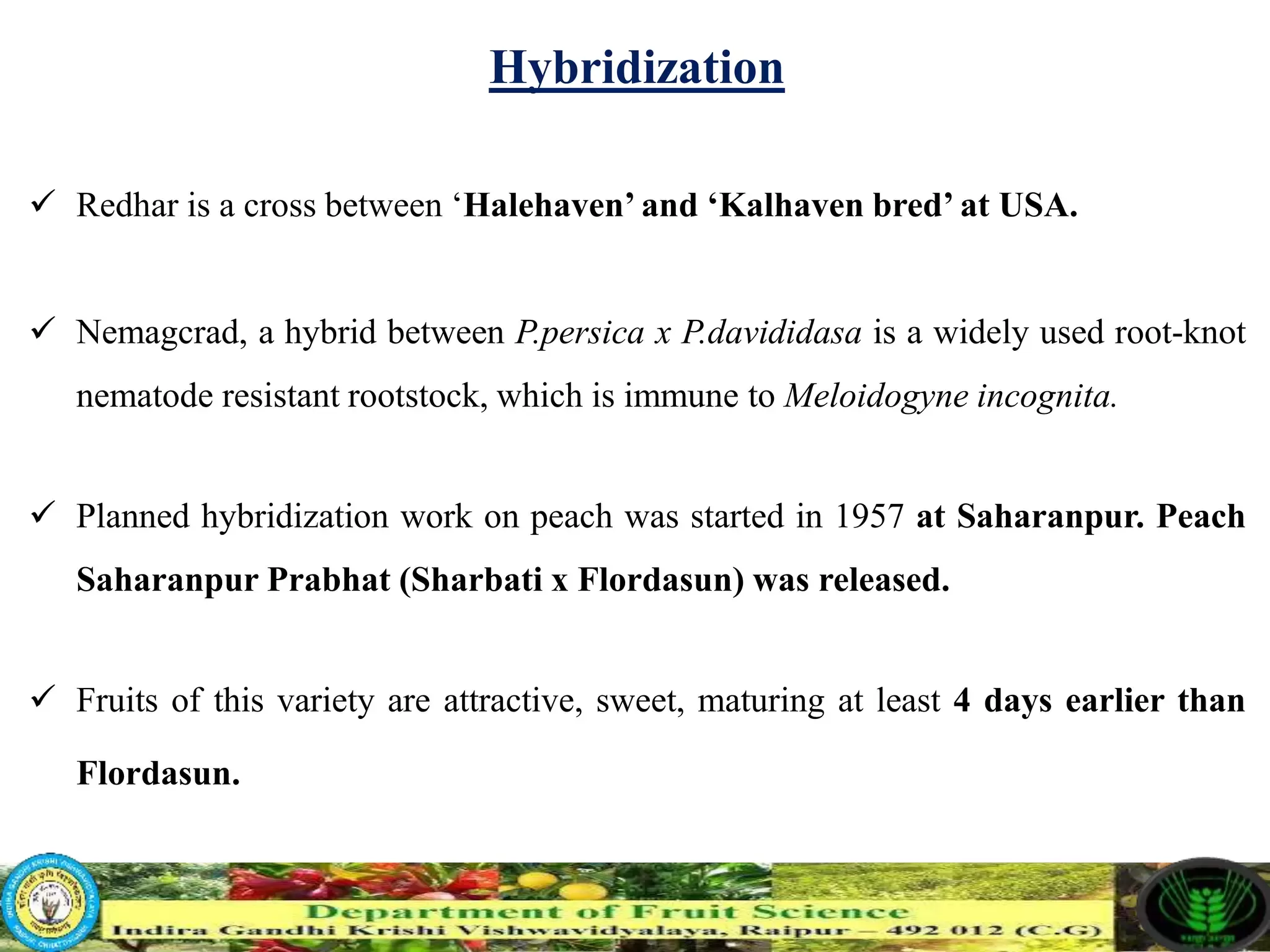
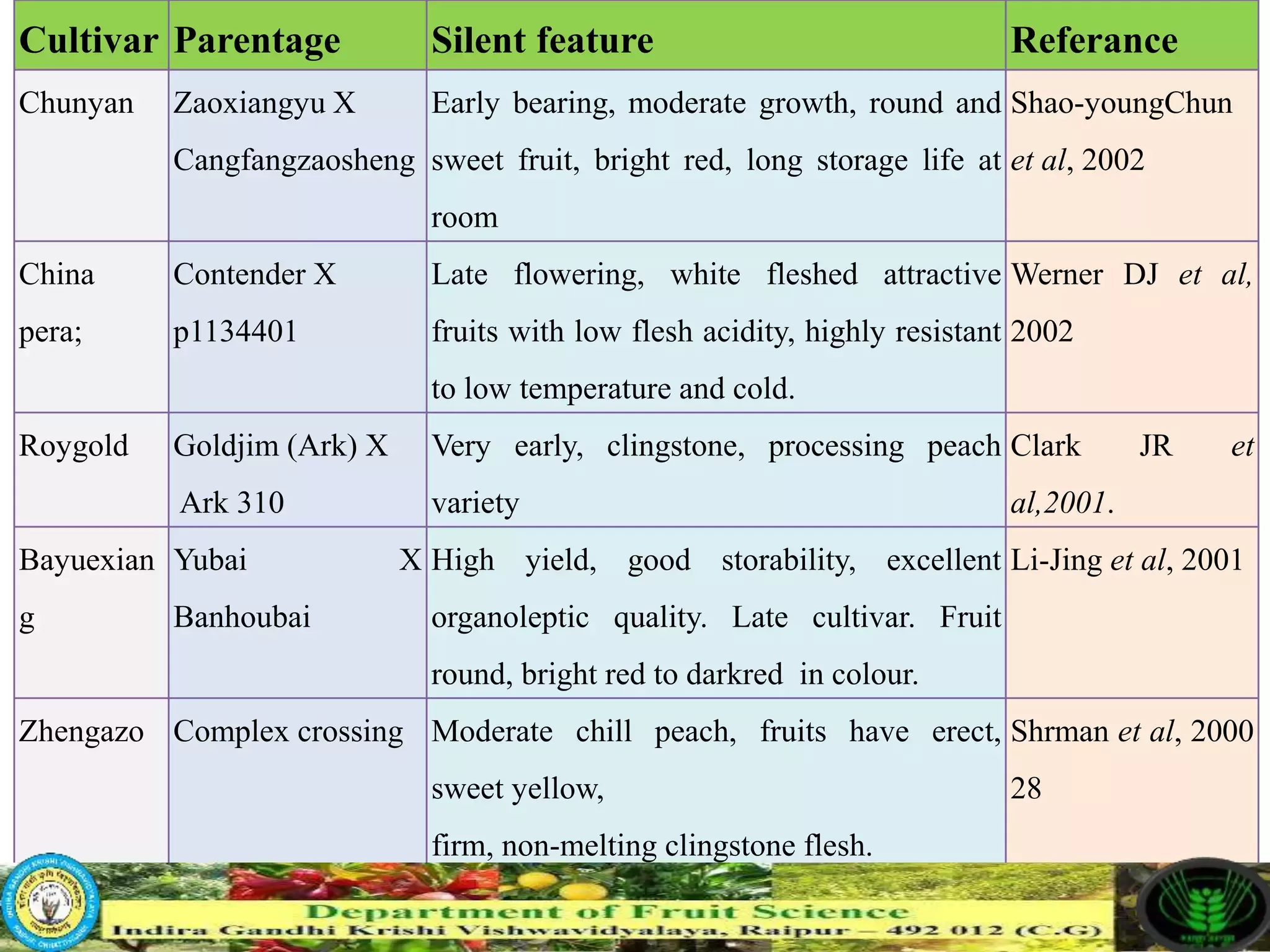
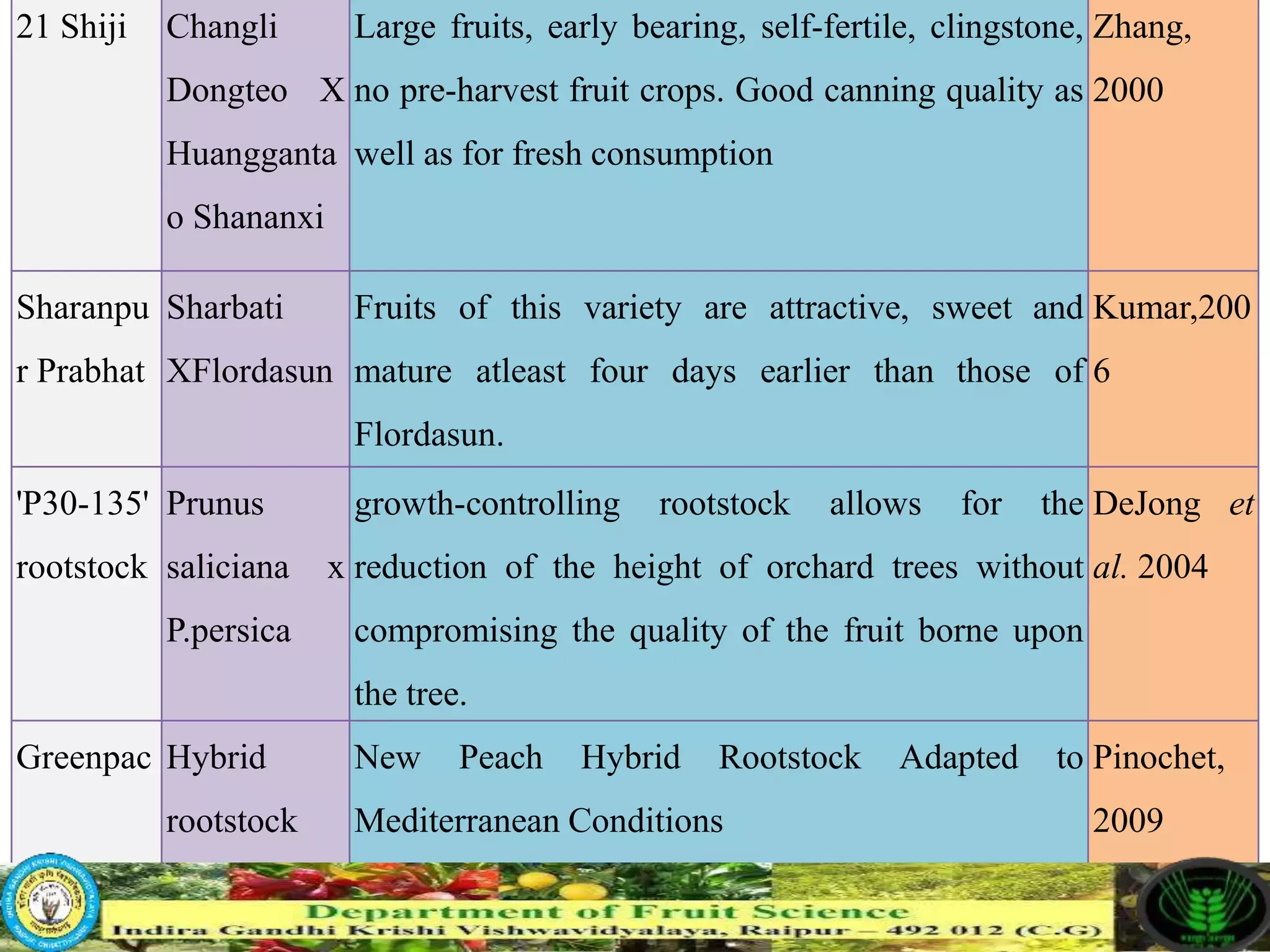
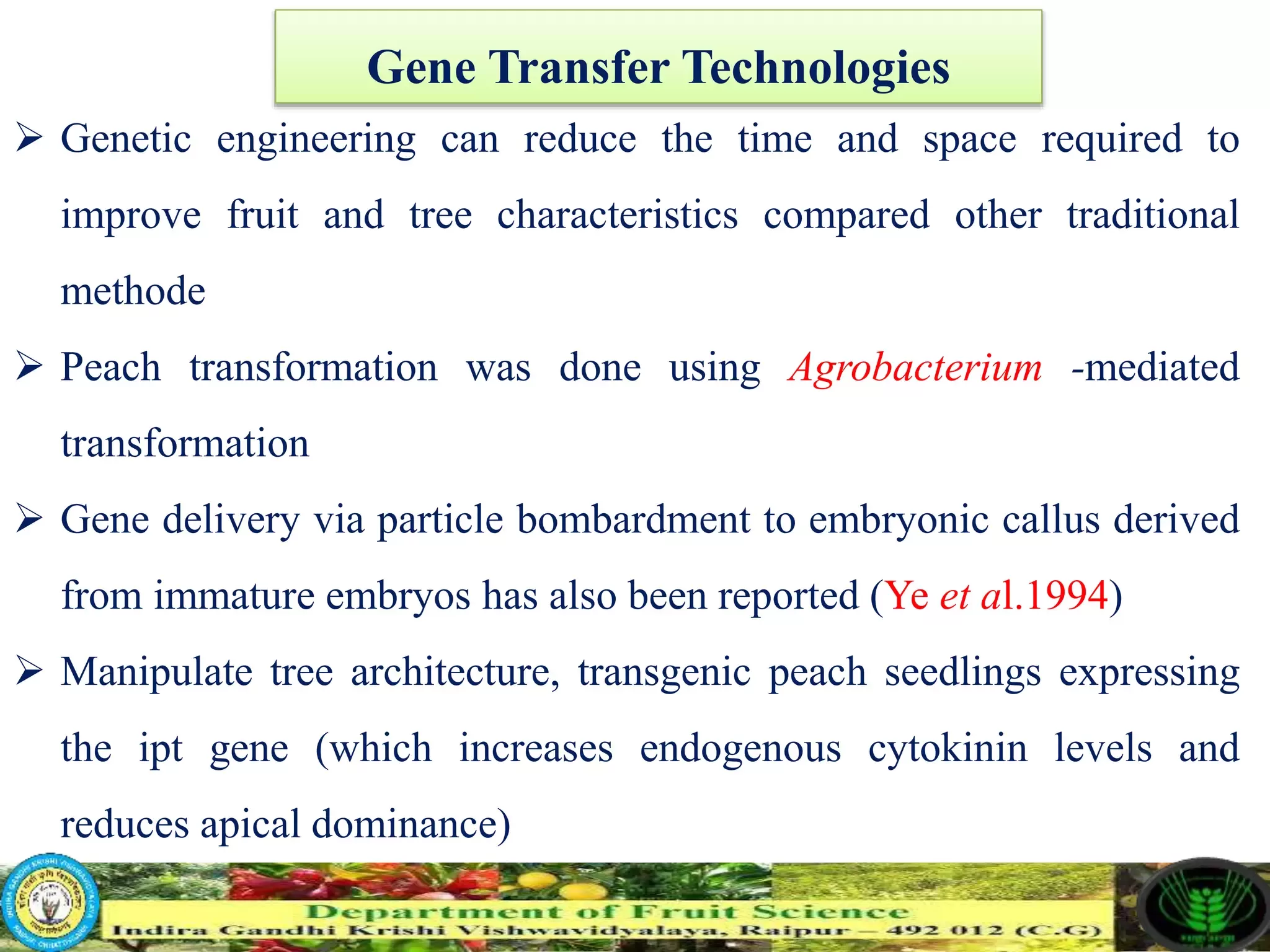
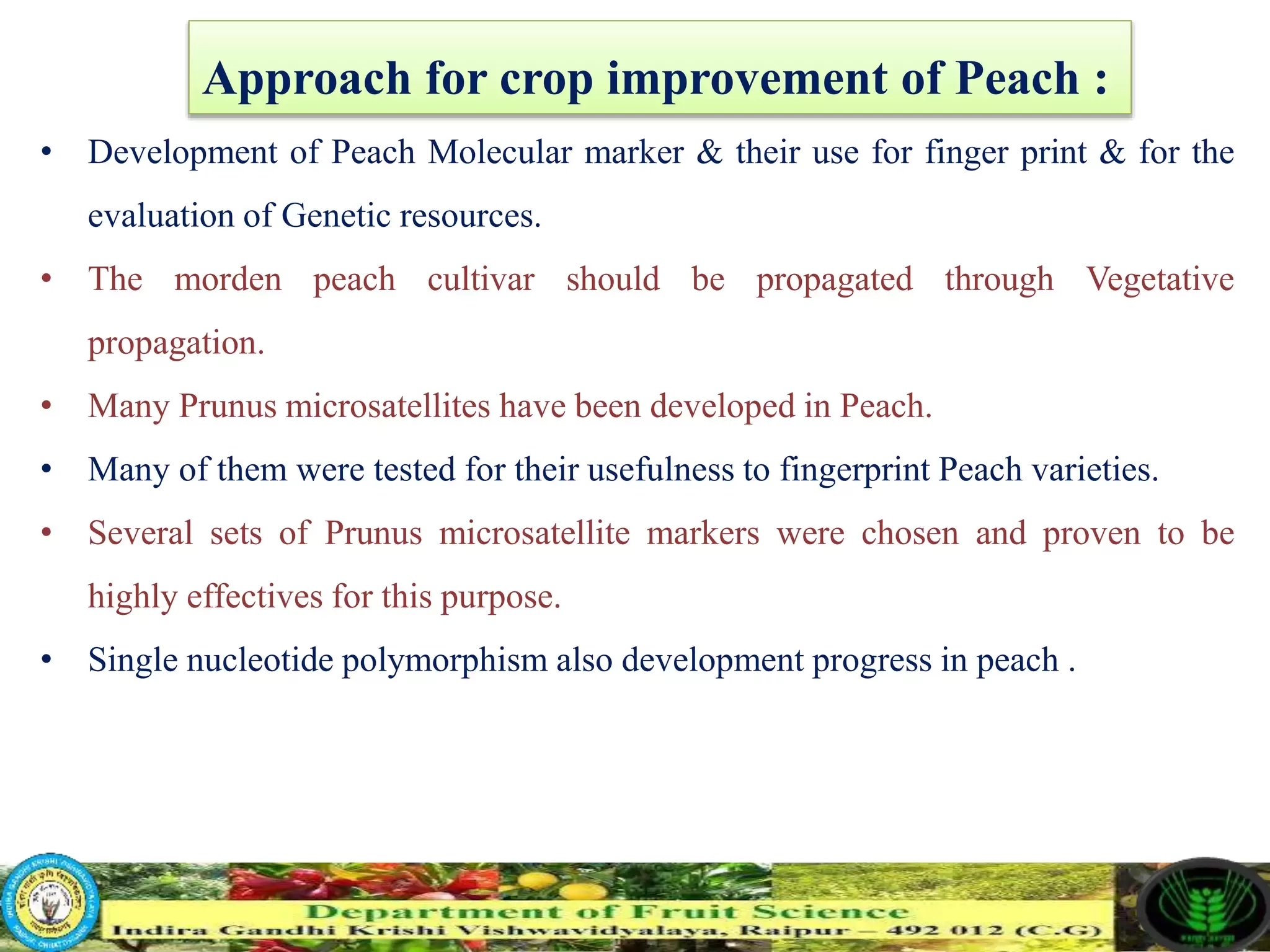
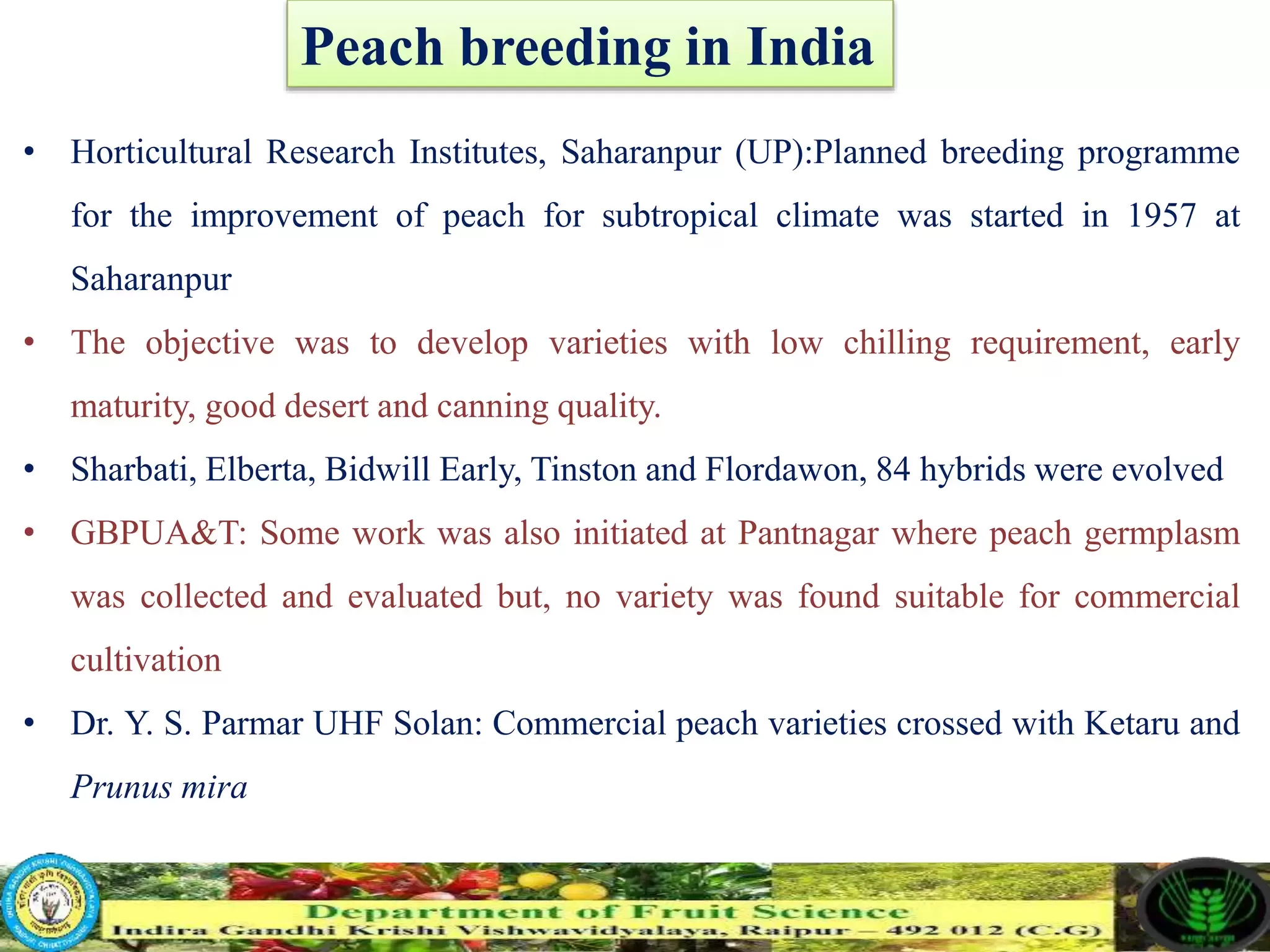
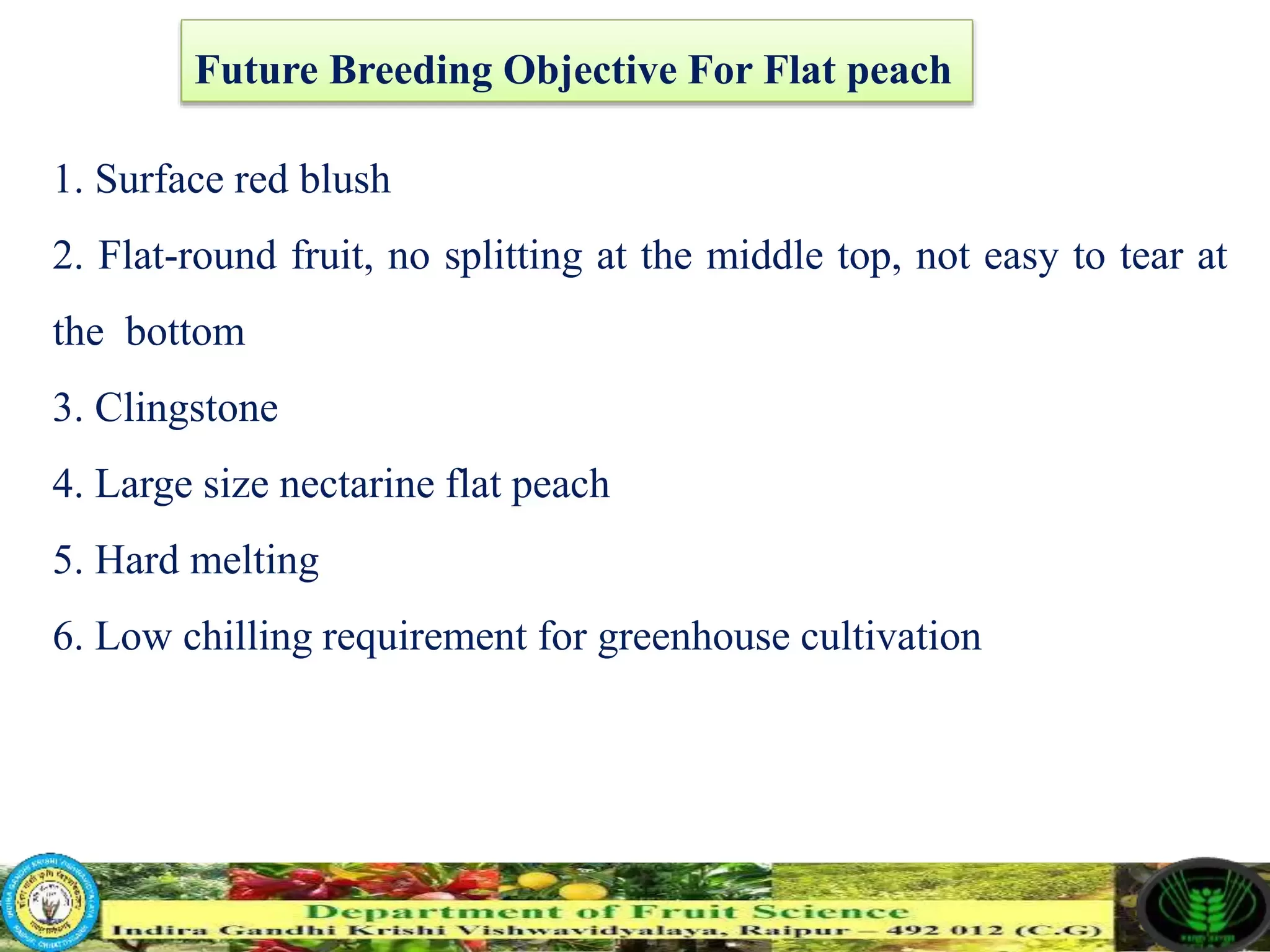
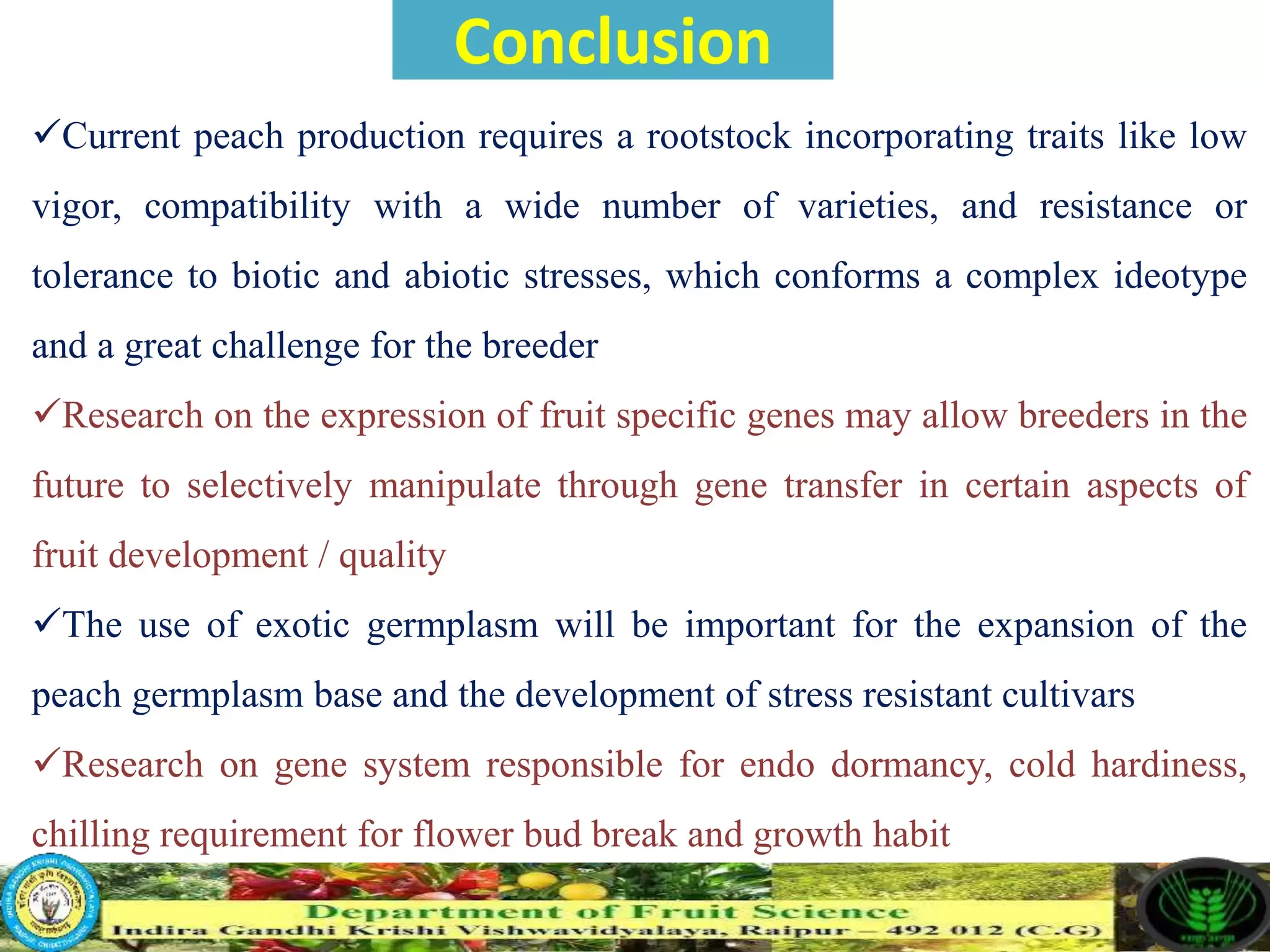
Ppt on Advances breeding of Peach

Summary:

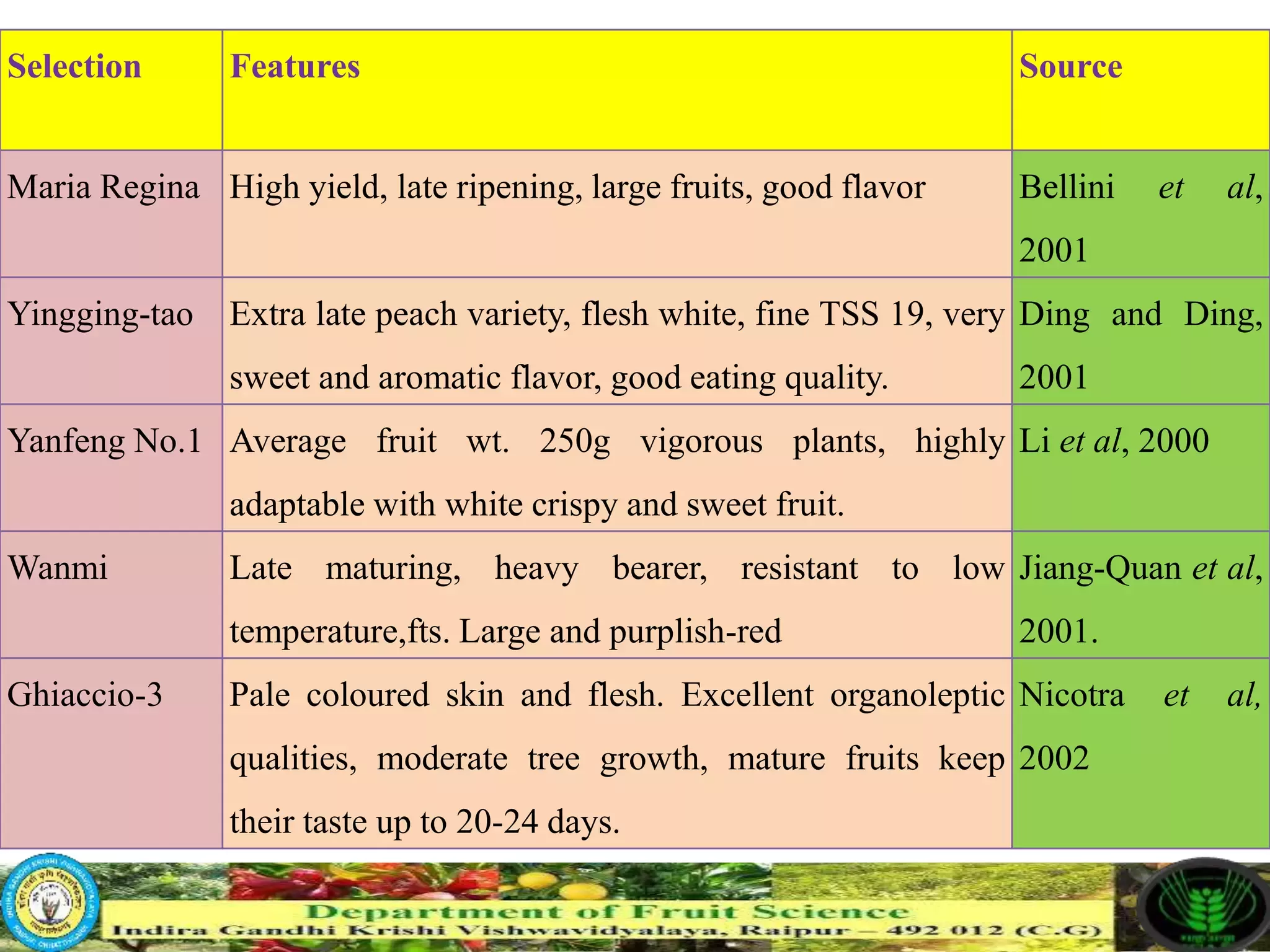
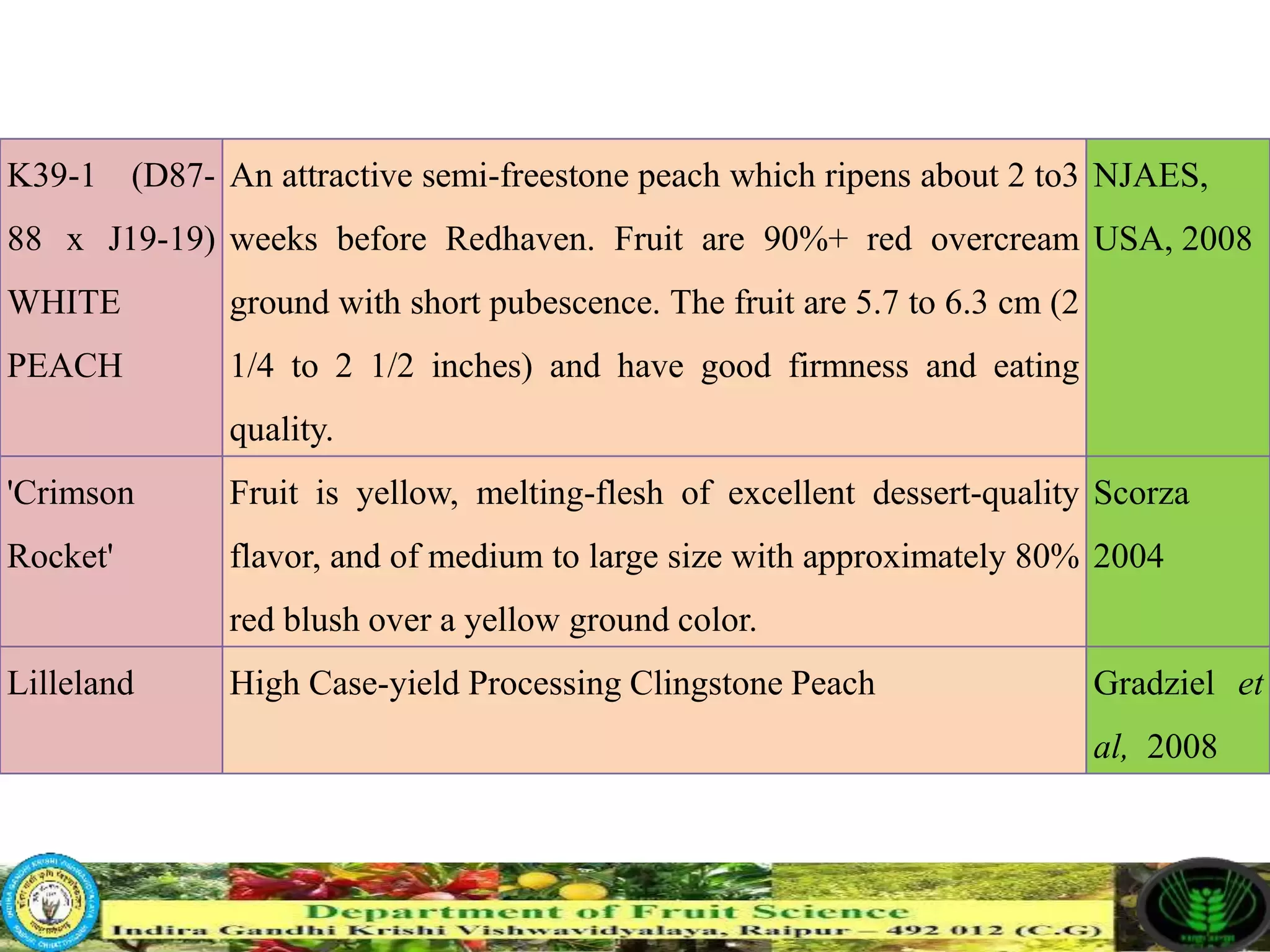
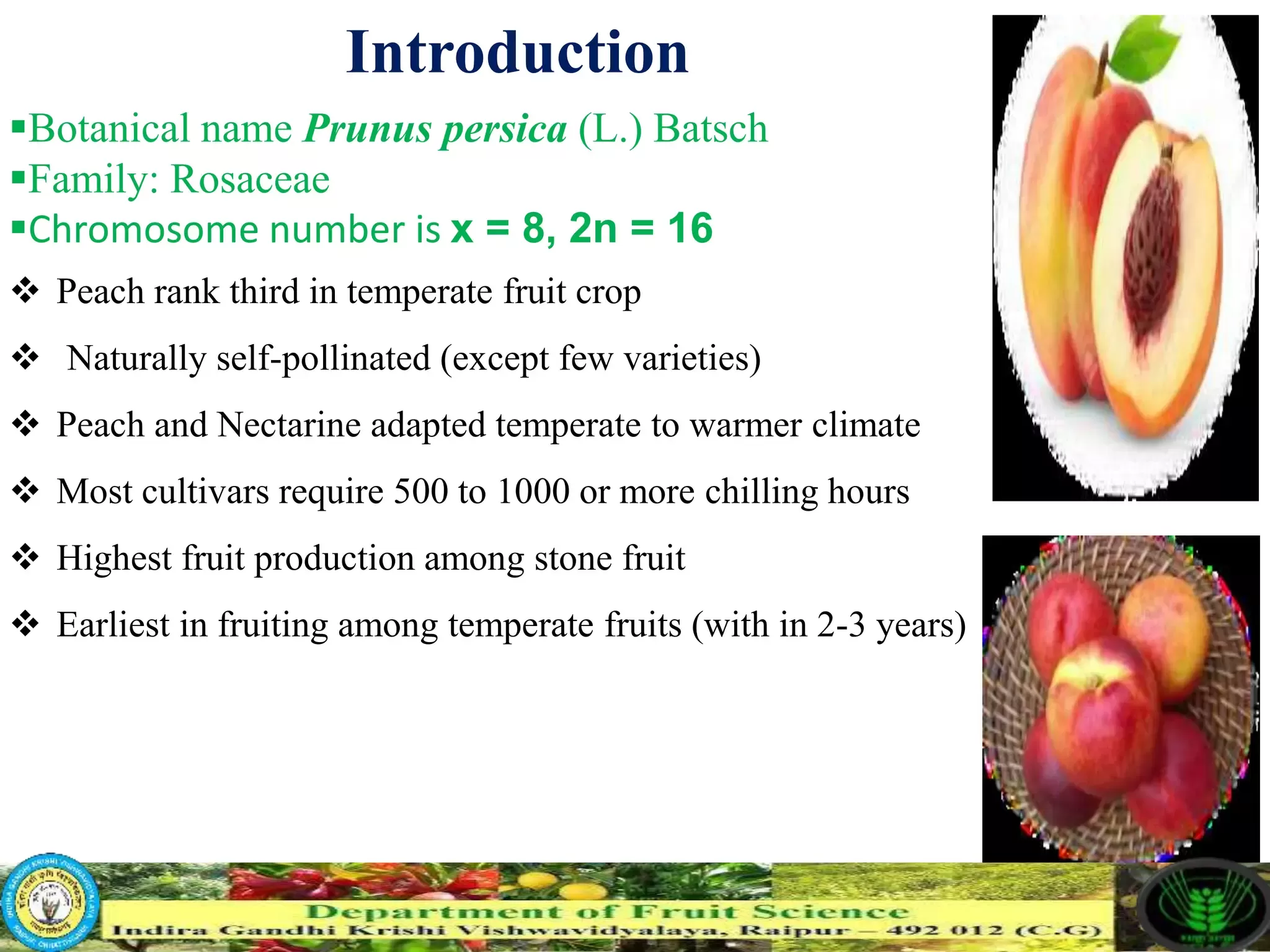
Discover the latest advancements in peach breeding with this informative PPT presentation. Learn about the cultivation, genetic diversity, and growth requirements of this popular temperate fruit crop.

Summary

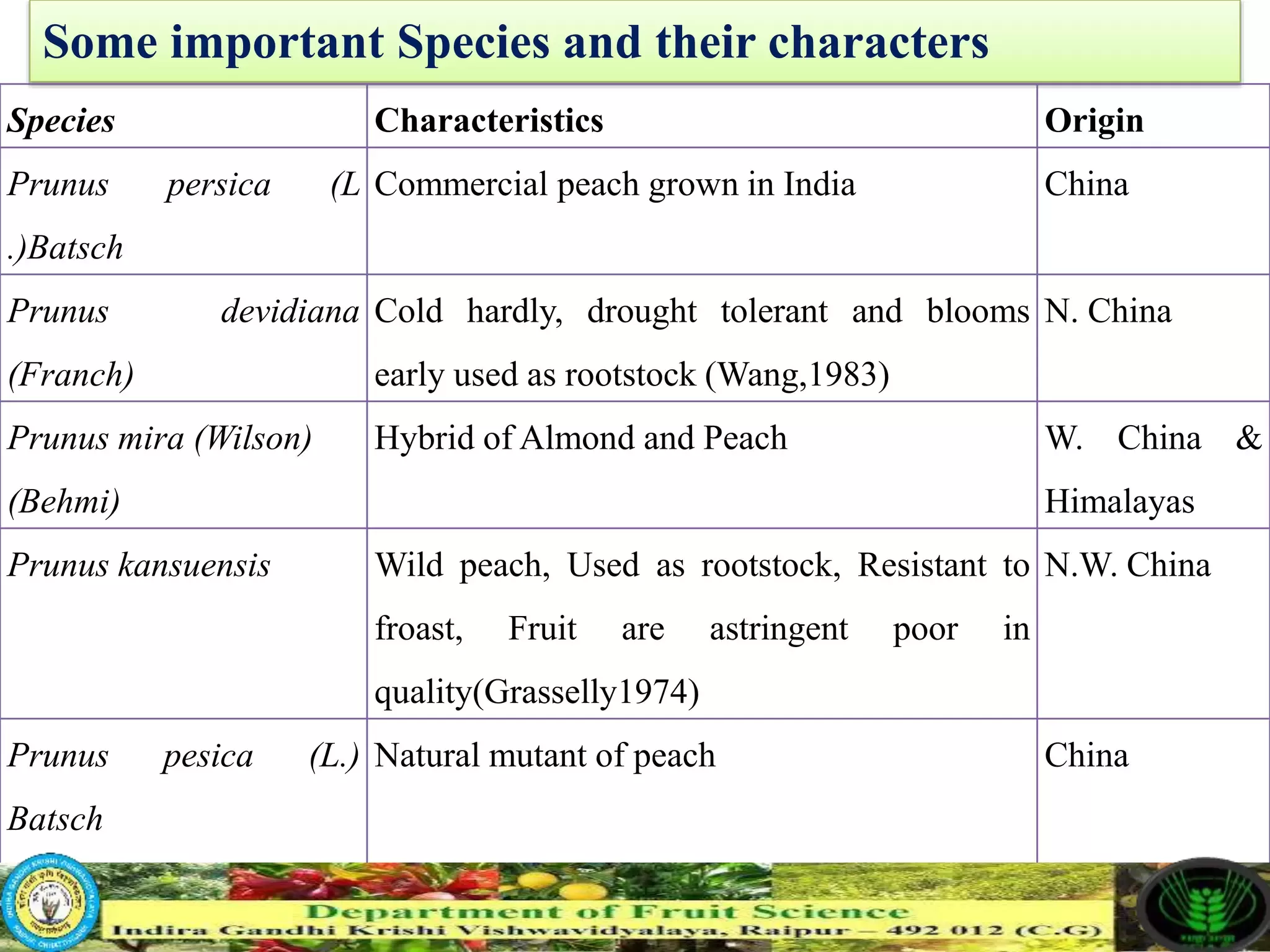
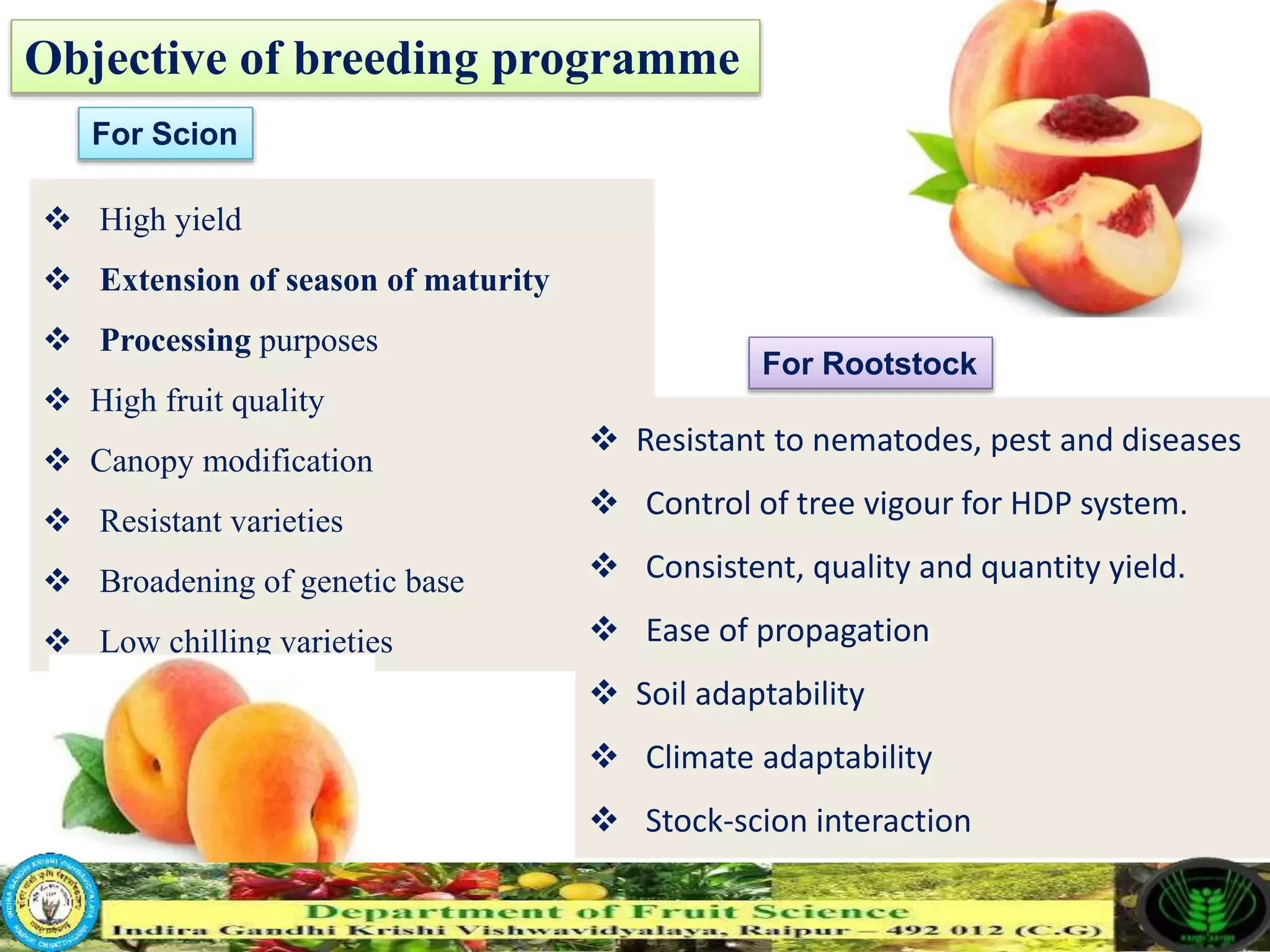
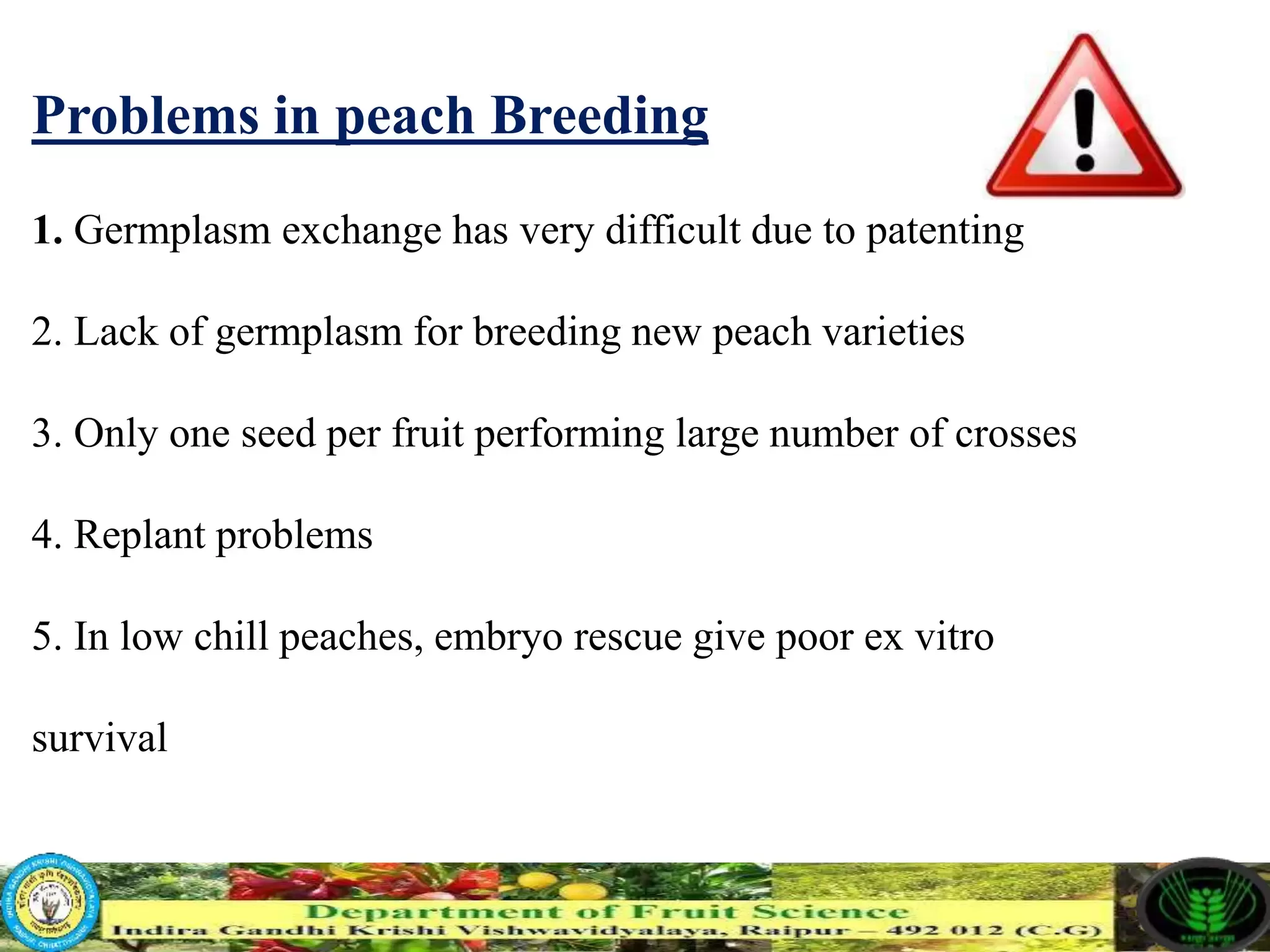
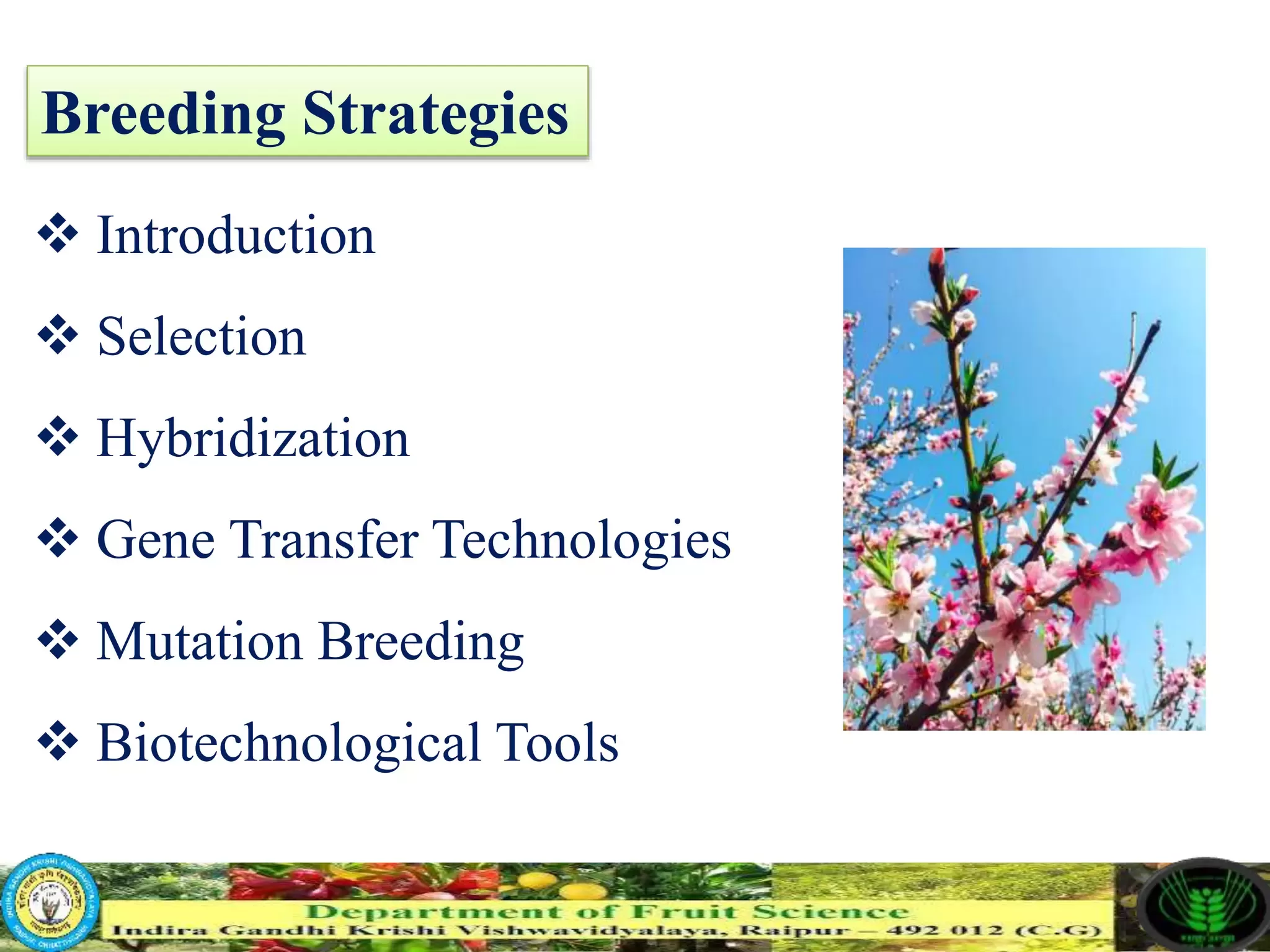
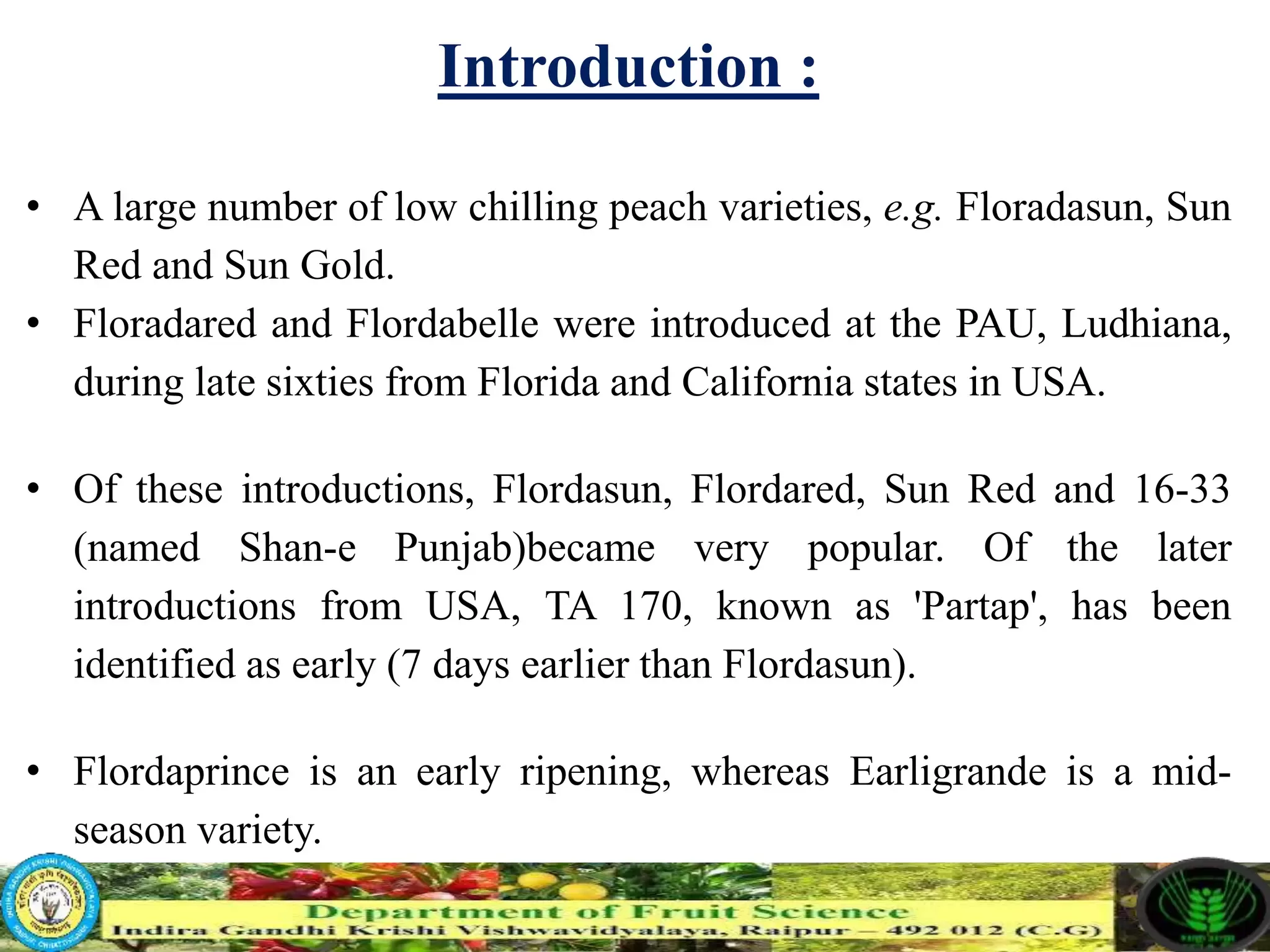
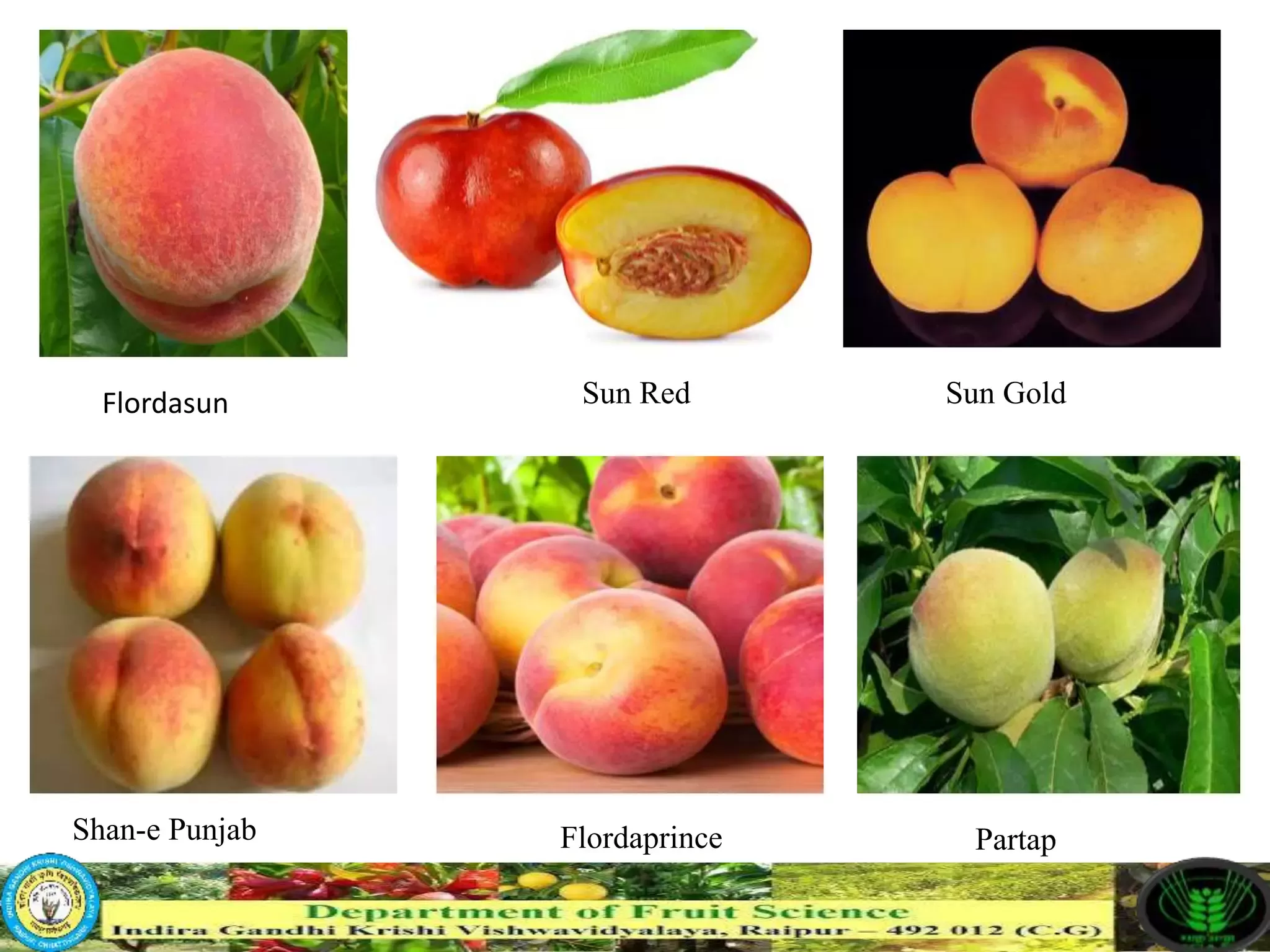
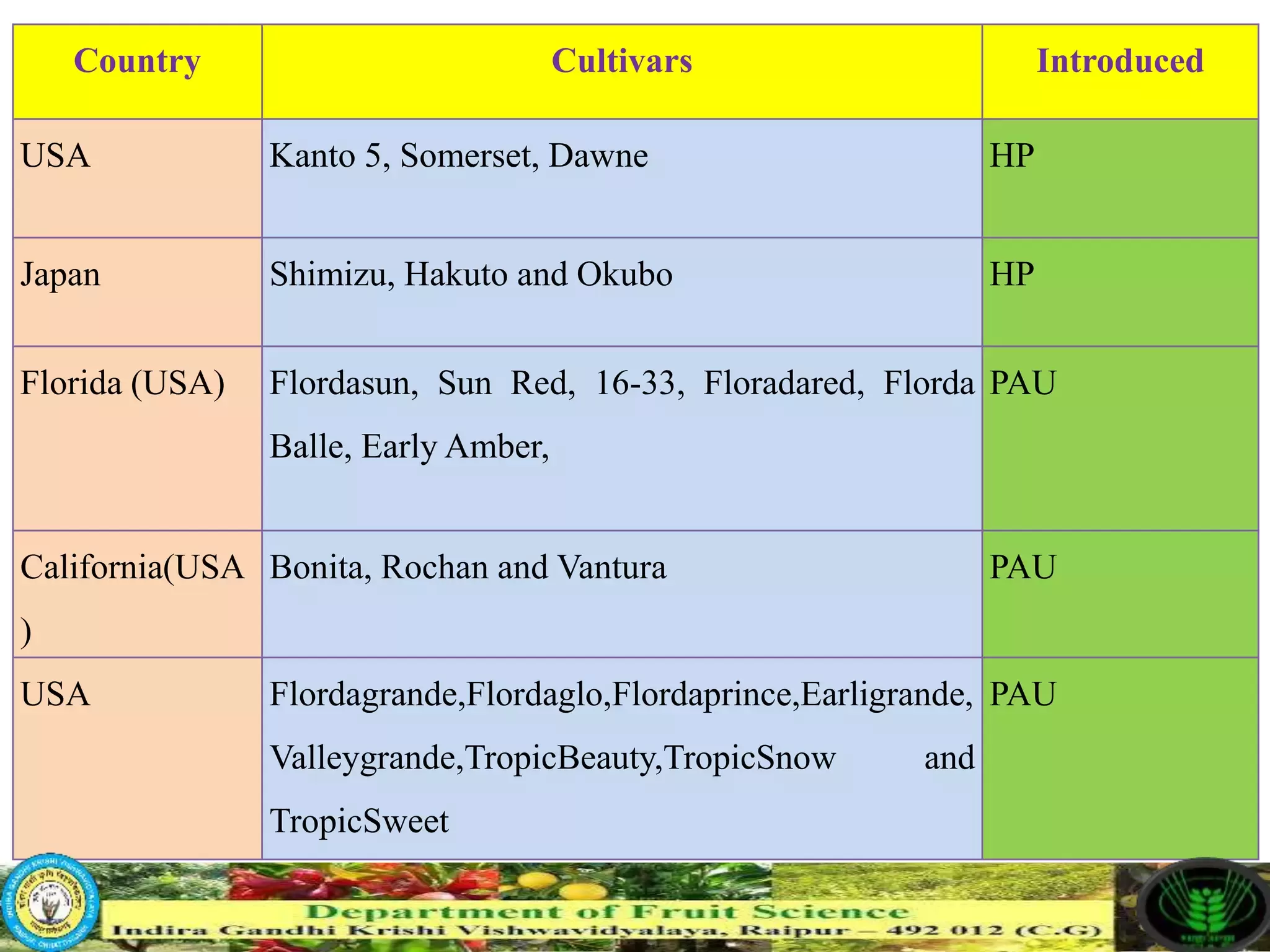
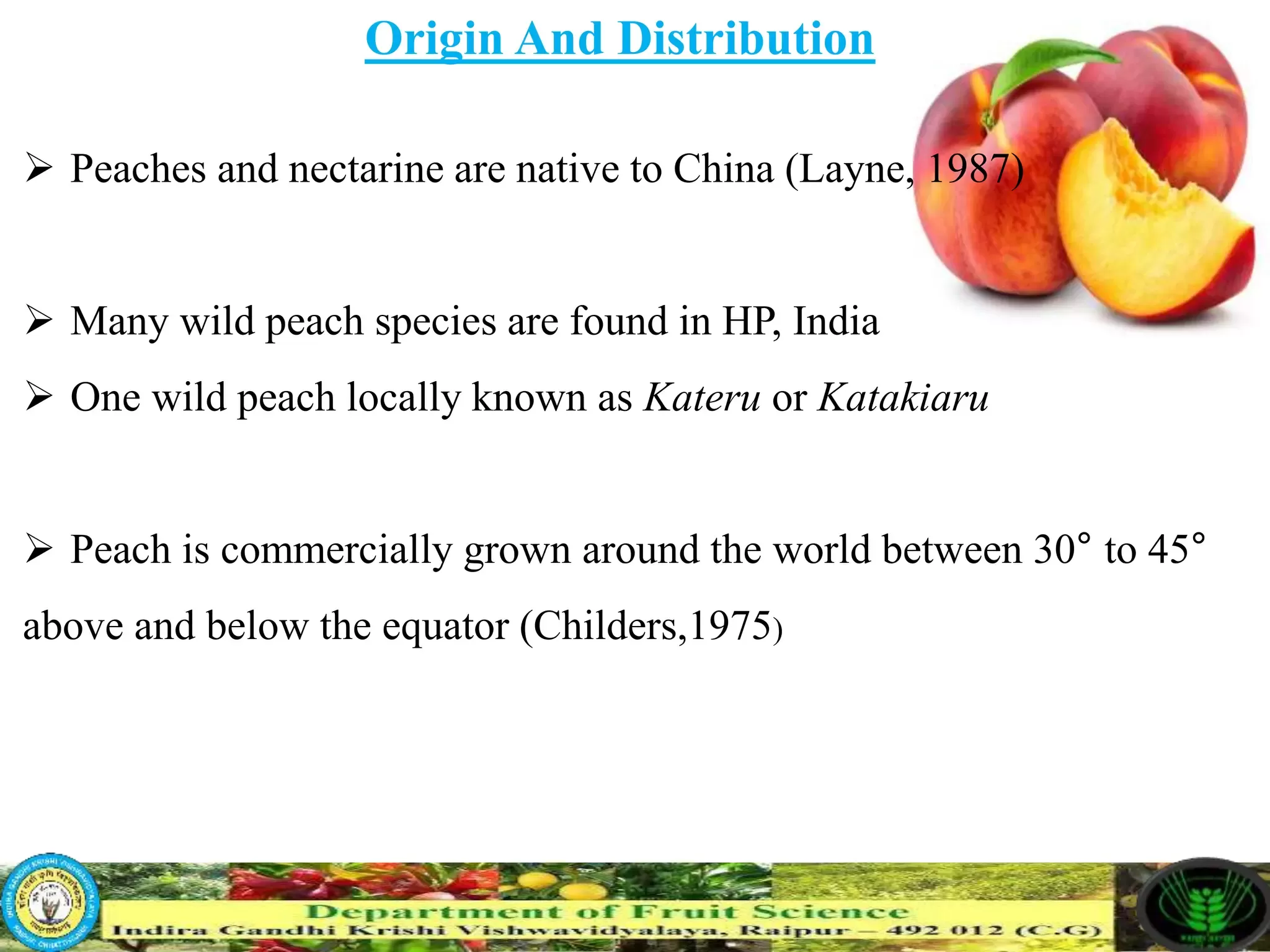
The peach, scientifically known as Prunus persica, belongs to the Rosaceae family and is a significant temperate fruit crop, ranking third in production. It is primarily self-pollinated, with most cultivars requiring between 500 to 1000 chilling hours for optimal growth. Peaches and nectarines are native to China, with various wild species found in India. The fruit is commercially cultivated in
Slide 1

Slide 1

Slide 2

Slide 2

Slide 3

Slide 3

Slide 4

Slide 4

Slide 5

Slide 5

Slide 6

Slide 6

Slide 7

Slide 7

Slide 8

Slide 8

Slide 9

Slide 9

Slide 10

Slide 10

Slide 11

Slide 11

Slide 12

Slide 12

Slide 13

Slide 13

Slide 14

Slide 14

Slide 15

Slide 15

Slide 16

Slide 16

Slide 17

Slide 17

Slide 18

Slide 18

Slide 19

Slide 19

Slide 20

Slide 20

Slide 21

Slide 21

Slide 22

Slide 22

Slide 23

Slide 23
1 / 23