This presentation provides an in-depth overview of the major diseases affecting brinjal (Solanum melongena), focusing on their etiology, symptoms, epidemiology, and management strategies. Emphasis is placed on the identification and integrated control of fungal, bacterial, and physiological disorders to ensure sustainable brinjal production.
Introduction to Brinjal Diseases
Brinjal (Solanum melongena) is susceptible to several economically significant diseases.
Major diseases include damping off, Phomopsis blight, bacterial wilt, Fusarium wilt, Verticillium wilt, Alternaria blight, and little leaf.
These diseases can cause substantial yield losses and affect fruit quality.
Understanding disease etiology and epidemiology is crucial for effective management.
Symptoms: Yellowing of lower leaves at flowering, premature leaf death, and browning of vascular bundles.
One or more branches may be affected; cross-sections reveal vascular discoloration.
Fusarium Wilt: Etiology and Epidemiology
Mycelium is septate, hyaline, becoming cream-colored; some isolates produce blue or red pigment.
Microconidia are ellipsoidal, 1–2 celled; macroconidia are falcate, 3–5 septate, hyaline.
Chlamydospores are thick-walled, terminal or intercalary, solitary or in chains.
Pathogen is soil-borne, survives as mycelium and chlamydospores in debris and soil.
Spread via water, contaminated equipment, and infected transplants; favored by hot, dry weather and acidic soils (pH 5.6–6.5).
Fusarium Wilt: Management
Practice crop rotation with non-solanaceous crops and use healthy seed.
Avoid water movement from infected to healthy plants.
Apply combined inorganic fertilizers and organic manures; phosphate and nitrate fertilizers reduce incidence.
Seed treatment with carbendazim (0.2%) and drenching with carbendazim/benomyl (0.1%) are effective.
Use Pseudomonas isolates from rhizosphere to reduce infection.
Alternaria Leaf Spots (Alternaria spp.)
Caused by Alternaria solani and Alternaria alternata f.sp. lycopersici.
A. solani: Dark brown concentric ring spots (target board effect), coalescing into patches, leading to defoliation.
A. alternata: Small, angular, light brown spots on leaves, stems, and branches; no yellow halo.
Alternaria Leaf Spots: Etiology and Epidemiology
A. solani: Septate, branched, light brown hyphae; beaked, muriform conidia with multiple septa.
A. alternata: Conidia are 1–5 septate, found on leaflet and stem lesions.
Pathogen survives in plant debris and is seed-borne; primary infection via conidia from soil debris.
Secondary spread by wind, water, and insects; optimal infection temperature is 25–30°C.
Alternaria Leaf Spots: Management
Remove and destroy infected plant debris; practice at least two years of crop rotation.
Use healthy seed and treat with captan (0.3%).
Remove lower foliage (15–20 cm) in indeterminate varieties to reduce humidity.
Spray chlorothalonil (0.2%) or mancozeb (0.25%) at 10–14 day intervals.
Objective Questions
Q1. Which of the following is the causal organism of Phomopsis blight in brinjal?
A. Phomopsis vexans (Diaporthe vexans)
B. Ralstonia solanacearum
C. Verticillium dahliae
D. Fusarium oxysporum f.sp. lycopersici
Answer: A
Q2. Which structure is characteristic of Phomopsis vexans in infected brinjal tissue?
A. Pycnidia
B. Sclerotia
C. Chlamydospores
D. Oospores
Answer: A
Q3. Which of the following management practices is NOT recommended for bacterial wilt of brinjal?
A. Application of carbendazim (0.2%)
B. Long crop rotation with non-solanaceous crops
C. Use of resistant cultivars/hybrids
D. Application of bleaching powder (15 kg/ha)
Answer: A
Q4. In Fusarium wilt of brinjal, which soil condition enhances disease severity?
A. Acidic soils (pH 5.6 to 6.5)
B. Alkaline soils (pH above 7.5)
C. Neutral soils (pH 7.0)
D. Calcareous soils
Answer: A
Q5. Which symptom is most characteristic of Alternaria solani infection in brinjal?
A. Dark brown spots with concentric rings (target board effect)
B. V-shaped lesions from leaf margin
C. Mummification of fruit
D. Milky bacterial ooze from stem
Answer: A
Q6. Which of the following is a distinguishing feature of Verticillium wilt in brinjal?
A. Longitudinal light brown to cream colored streaks under stem tissue
B. Pycnidia formation on fruit surface
C. Milky ooze from cross-sectioned stem
D. Target board effect on leaves
Answer: A
Q7. Which conidial characteristic is typical of Alternaria solani?
A. Beaked, muriform, dark, with 5-10 transverse septa and a few longitudinal septa
B. Filiform, curved, hyaline, and septate
C. Subcylindrical, one-celled, hyaline
D. Falcate, 3-5 septate, hyaline
Answer: A
Q8. Which of the following is NOT a recommended chemical for seed treatment against Phomopsis blight in brinjal?
A. Streptocycline
B. Carbendazim (0.2%)
C. Thiophenate methyl (0.2%)
D. Captan (0.3%)
Answer: A
Q9. Which environmental condition favors the development of bacterial wilt in brinjal?
A. High soil moisture and high soil temperature
B. Low soil moisture and low temperature
C. Acidic soils with low nitrogen
D. Cool, dry weather
Answer: A
Q10. Which of the following statements about Fusarium wilt management in brinjal is correct?
A. Application of ammonium fertilizers increases disease development
B. Application of nitrate fertilizers increases disease development
C. Monoculture reduces disease incidence
D. Hot dry weather suppresses wilt development
Answer: A
This presentation provides an in-depth overview of major diseases affecting brinjal (eggplant), focusing on their pathogens, symptoms, epidemiology, and management strategies. Emphasis is placed on the biology of the causal agents, disease cycles, and integrated approaches for effective control. Understanding these aspects is crucial for sustainable brinjal production and minimizing crop losses.
Little Leaf Disease of Brinjal
Caused by Phytoplasma, an ovoid to spherical pathogen localized in phloem sieve tubes.
Characterized by small, yellow, soft leaves with shortened petioles and internodes, giving a bushy appearance.
Axillary buds enlarge but remain stunted; flowering is rare and flowers, if present, remain green.
Fruiting is uncommon; any formed fruits are hard, necrotic, and often mummified.
Pathogen survives in weed hosts and is transmitted mainly by jassids (Hishimonas phycitis) and less efficiently by Empoasca devastans.
Epidemiology and Management of Little Leaf Disease
Collateral hosts include Datura spp., Vinca rosea, Argemone mexicana, chilli, tomato, and tobacco.
Disease cycle involves survival in weed hosts and transmission by insect vectors.
Management includes use of tolerant varieties (Pusa Purple Round, Pusa Purple Cluster, Arka Sheel).
Destruction of infected plants and eradication of solanaceous weeds are essential.
Chemical control: Spray methyl demeton (2 ml/L) or apply phorate granules; seed dip in tetracycline (10–50 ppm) recommended.
Bacterial Wilt of Brinjal
Caused by Ralstonia solanacearum, a Gram-negative, motile rod with polar flagella.
Race 1 infects solanaceous crops (tomato, eggplant) and some non-solanaceous hosts.
Symptoms include sudden wilting, leaf epinasty, yellowing, stunting, and browning of vascular tissues.
Whitish bacterial exudate may be observed from cross-sections of infected stems.
Epidemiology and Management of Bacterial Wilt
Pathogen is both soil- and seed-borne, surviving in plant debris, wild hosts, and weeds.
Spread occurs via irrigation water, infested soil, and contaminated tools.
Favored by high soil moisture and temperature.
Management: Grow resistant varieties (Pant Samrat, Arka Nidhi, Arka Neelakantha, Surya, BB 1, 44, 49).
Practices include crop rotation with non-solanaceous crops, green manuring (Brassica spp.), soil solarization, and biological control (Pseudomonas fluorescens, Bacillus spp., Erwinia spp.).
Integrated Management of Bacterial Wilt
Nursery: Treat seeds with talc-based Pseudomonas fluorescens (10g/100g seed); apply to nursery soil (50g/kg soil).
Main field: Dip seedlings in P. fluorescens or Bacillus subtilis suspension (25g talc formulation/L water) for 20–30 minutes before transplanting.
Drench leftover solution around root zones (50 ml/plant) to enhance protection.
Phomopsis Fruit Rot (Blight) of Brinjal
Severe in tropical and subtropical regions; first reported in India (Gujarat, 1935).
Pathogen produces septate, hyaline mycelium; pycnidia become erumpent with age.
Conidia are of two types: alpha (subcylindrical) and beta (filiform, curved); perfect stage forms perithecia with bicelled ascospores.
Attacks all growth stages, causing damping-off in nurseries, collar rot in young plants, and fruit rot in mature plants.
Symptoms and Epidemiology of Phomopsis Fruit Rot
Leaf symptoms: Circular to irregular grayish-brown spots with light centers; yellowing and premature leaf drop.
Stem lesions: Dark brown, oval, with grayish centers and pycnidia; can cause cankers and plant toppling.
Fruit symptoms: Pale, sunken spots that enlarge and become watery, leading to soft rot and mummification.
Pathogen is seed-borne and survives in plant debris as mycelium and pycnidia.
Dissemination via rain splash, irrigation, tools, and insects.
Management of Phomopsis Fruit Rot
Remove and destroy diseased crop debris to reduce inoculum.
Practice crop rotation and summer ploughing to minimize pathogen survival.
Use disease-free seed; hot water treat seed at 50°C for 30 minutes.
Seed treatment with thiophanate methyl (1g/kg seed) recommended.
Spray thiophanate methyl or carbendazim (0.1%) twice at 20-day intervals for effective control.
Cercospora Leaf Spot of Brinjal
Caused by Cercospora spp., leading to significant yield losses under high humidity.
Symptoms: Large, circular to irregular brown or grayish-brown leaf spots; coalescence leads to premature leaf drop and occasional fruit rot.
Fungus survives in infected plant debris and seeds; warm days, cool nights, and high humidity favor disease development.
Transmission facilitated by moist wind, irrigation water, and insects.
Management of Cercospora Leaf Spot
Adopt cultural practices: Destroy crop debris, rotate crops, use disease-free seeds, and maintain wider plant spacing.
Initiate fungicidal sprays (zineb 0.25%, carbendazim 0.1%, or thiophanate methyl 0.1%) at disease onset.
Repeat sprays at 10–14 day intervals for sustained protection.
Objective Questions
Q1. Which pathogen is responsible for little leaf disease in brinjal?
A. Phytoplasma
B. Ralstonia solanacearum
C. Cercospora melongenae
D. Phomopsis vexans
Answer: A
Q2. Which vector is considered a less efficient transmitter of little leaf disease in brinjal?
A. Hishimonas phycitis
B. Emposca devastans
C. Bemisia tabaci
D. Myzus persicae
Answer: B
Q3. Which management practice is NOT recommended for bacterial wilt of brinjal?
A. Use of resistant varieties like Pant Samrat and Arka Nidhi
B. Green manuring with Brassica species
C. Spraying methyl demeton
D. Soil solarization with transparent polyethylene sheet
Answer: C
Q4. What is the main symptom of Phomopsis fruit rot on brinjal fruits?
A. Small pale sunken spots that enlarge and cover the fruit surface
B. Water-soaked lesions with concentric rings
C. Powdery white growth on fruit surface
D. Black streaks along the fruit
Answer: A
Q5. Which of the following is NOT a collateral host for little leaf phytoplasma in brinjal?
A. Datura fastuosa
B. Vinca rosea
C. Brassica juncea
D. Argemone mexicana
Answer: C
Q6. Which of the following is a recommended seed treatment for managing Phomopsis fruit rot in brinjal?
A. Tetracycline 10-50 ppm
B. Hot water at 50°C for 30 minutes
C. Carbendazim 0.5% for 10 minutes
D. Copper oxychloride 0.2%
Answer: B
Q7. Which environmental condition most favors the development of Cercospora leaf spot in brinjal?
A. High humidity and heavy persistent dews
B. Low temperature and dry weather
C. High soil salinity
D. Alkaline soil pH
Answer: A
Q8. Which symptom is characteristic of bacterial wilt in brinjal?
A. Sudden wilting and death of infected plants
B. Mosaic pattern on leaves
C. Leaf curling and stunting
D. Brown pustules on stems
Answer: A
Q9. Which of the following is NOT a management strategy for little leaf disease in brinjal?
A. Destruction of affected plants
B. Eradication of solanaceous weed hosts
C. Crop rotation with solanaceous crops
D. Seed dip in tetracycline
Answer: C
Q10. Which type of conidia produced by Phomopsis fruit rot pathogen has an unclear role in disease epidemiology?
A. Alpha conidia
B. Beta conidia
C. Gamma conidia
D. Delta conidia
Answer: B
This presentation covers the principles and practices of harvesting and post-harvest handling of vegetable crops, focusing on maturity indices, harvesting methods, post-harvest operations, and marketing. Emphasis is placed on maintaining crop quality, minimizing post-harvest losses, and optimizing economic returns. Key concepts include maturity indices, post-harvest handling, sorting and grading, storage, and marketing systems.
Introduction to Harvesting and Post-Harvest Handling
Harvesting: Gathering mature crops from the field.
Post-harvest handling: Operations after harvest to maintain quality and reduce losses.
Proper techniques are essential for quality, shelf-life, and profitability.
Maturity and Maturity Indices
Maturity: Stage when a crop is ready for harvest.
Maturity indices: Observable signs indicating readiness for harvest.
Indices include color, size, shape, texture, weight, and composition.
Maturity Indices of Selected Vegetables
Vegetable
Maturity Index
Potato
Culm yellow and dry; skin does not slip easily.
Cabbage
Compact head; firm when pressed.
Cauliflower
Compact, creamy-white curd; no discoloration.
Sweet corn
Kernels exude milky sap when pierced.
Lettuce, Mustard, Pechay
Well-developed, green leaves; not yellowing.
Sweet pepper
Full size, firm, deep color.
Radish
Large, firm, crispy roots; not pithy.
Tomato
Green for distant markets; breaker to ripe for local.
Types of Maturity
Physiological maturity: Crop has completed development; ripening begins.
Commercial maturity: Harvest stage based on market or processing needs.
Mechanical: Cuts, punctures, cracks, abrasions from poor handling.
Non-technological: Lack of storage, transport, adverse weather, market demand.
Microbial decay often follows mechanical or physiological damage.
Signs of Deterioration in Vegetables
Vegetable
Sign of Deterioration
Leafy vegetables
Yellowing
Cauliflower, Broccoli
Opening florets, softening
Sweet corn
Loss of sweetness
Okra
Softening
Cucumber
Yellowing
Beans
Toughening, yellowing
Chayote, Tomato, Pepper
Seed germination
Asparagus
Elongation, feathering
Onion, Garlic, Sweet potato, Ginger
Sprouting, rooting
Carrot
Softening
Marketing of Vegetable Products
Marketing: Transfer of goods from producer to consumer.
Types: Local market, nearby town market, wider regional/national markets.
Freshness is crucial for leafy and perishable vegetables.
Methods of Marketing
Retailing directly to consumers: Farmer sells in local markets.
Selling to middlemen/wholesalers: Middlemen harvest and market crops.
Selling at the farm: Direct negotiation with buyers.
Selling through contracting companies: Pre-agreed contracts specify terms.
Selling through cooperatives: Collective marketing for better returns.
Farm Records and Accounts
Farm records: Written statements of facts and figures for management.
Farm accounts: Financial statements tracking income and expenses.
Essential for monitoring financial status and decision-making.
Classification of Costs in Vegetable Production
Fixed costs: Incurred regardless of production (e.g., land tax, equipment depreciation).
Variable costs: Change with production (e.g., seeds, fertilizers, labor).
Cash costs: Actual money spent (e.g., hired labor, inputs).
Non-cash costs: Family labor, own capital interest.
Computation of Net Income
Gross income = Quantity produced × Price per unit.
Total cost = Fixed costs + Variable costs.
Net income = Gross income – Total cost.
Summary: Best Practices in Harvesting and Post-Harvest Handling
Harvest at correct maturity using appropriate indices.
Handle produce gently to avoid mechanical damage.
Sort, grade, and pack properly for market requirements.
Use suitable storage and transport methods to minimize losses.
Maintain accurate records for better farm management.
Objective Questions
Q1. Which of the following is NOT a maturity index for vegetable crops?
A. Aroma
B. Color
C. Weight
D. Texture
Answer: A
Q2. What is the recommended method for checking if a green tomato is mature?
A. Smell the fruit
B. Slice and check if seeds slip away from the knife
C. Weigh the fruit
D. Check for yellowing of the skin
Answer: B
Q3. Which method is used to measure the softness of a fruit during maturity determination?
A. Visual method
B. Chemical analysis
C. Pressure tester
D. Computation method
Answer: C
Q4. What is the main purpose of curing newly dug tubers or roots?
A. Increase sweetness
B. Heal bruised or wounded produce
C. Reduce weight
D. Enhance color
Answer: B
Q5. Which of the following is considered a physiological loss in vegetables?
A. Cuts and abrasions
B. Yellowing and toughening of beans
C. Cracks and splits
D. Abrasion of outer covering
Answer: B
Q6. Which packing material is now commonly used for trading vegetable products?
A. Metal boxes
B. Polyethylene bags
C. Glass jars
D. Paper sacks
Answer: B
Q7. What is the main cause of sunscald in harvested tomatoes and peppers?
A. Exposure to rain
B. Exposure to sunlight
C. Exposure to cold
D. Exposure to wind
Answer: B
Q8. Which marketing method assures the farmer of a ready market and relieves him of many risks?
A. Retailing directly to consumers
B. Selling to middlemen or wholesalers
C. Selling in the farm
D. Selling through cooperatives
Answer: B
Q9. Which of the following is a fixed, non-cash cost in vegetable production?
A. Hired labor
B. Land tax
C. Care of implements
D. Seeds
Answer: C
Q10. To compute net income from vegetable production, which of the following is subtracted from gross income?
A. Only fixed costs
B. Only variable costs
C. Total cost of production
D. Total cost of marketing
Answer: C
Post-harvest management of vegetable crops involves a series of methods and technologies aimed at reducing losses and maintaining product quality from harvest to consumption. Effective post-harvest handling is essential for minimizing spoilage, extending shelf life, and ensuring food security. Key aspects include proper harvesting, handling, storage, packaging, and transportation, all of which impact the final quality and marketability of vegetables. Important academic concepts include senescence, post-harvest losses, maturity indices, storage conditions, and packaging.
Introduction to Post-Harvest Management of Vegetables
Fresh vegetables are highly perishable due to active senescence processes.
Post-harvest management includes all activities from harvest to consumption.
Main goal: minimize losses and maintain quality and nutritional value.
Key activities: harvesting, handling, storage, processing, packaging, transport, and marketing.
Objectives of Post-Harvest Management
Understand techniques to reduce post-harvest losses in vegetables.
Identify causes and control measures for post-harvest losses.
Recognize marketing channels and associated losses.
Learn various post-harvest management techniques.
Importance of Post-Harvest Management
Maintains quality and extends shelf life of vegetables.
Reduces food losses, poverty, and food insecurity.
Improves market share and competitiveness for smallholders.
Enhances human nutrition and health.
Reducing losses is often easier than increasing yield.
Technique for reducing water loss in hardy vegetables (e.g., onion, garlic, sweet potato).
Involves drying under shade to heal wounds and toughen outer layers.
Prevents decay and moisture loss during storage.
Cleaning and Washing
Removes dust, dirt, and pathogens from produce surface.
Methods: dry dusting, wet washing with clean water and mild detergent (0.1%).
Washing duration: 3–5 minutes at room temperature (~27°C).
Sorting and Grading
Sorting: Removal of diseased, damaged, or deformed produce.
Grading: Categorization by size, weight, color, maturity, and quality.
Improves market value and reduces spread of infection.
Packaging of Vegetables
Protects produce from physical damage and contamination.
Should be cost-effective, easy to handle, and suitable for transport.
Reduces losses during marketing and storage.
Materials: cartons, crates, baskets, plastic containers, etc.
Storage of Vegetables
Different vegetables require specific storage conditions.
Starchy vegetables: store at 15.5–21.1°C in dry locations.
Most others: store at refrigerator temperatures (0–5°C).
Keep away from ethylene-producing fruits to prevent premature ripening.
Temperature Management in Storage
Temperature is critical for extending shelf life and reducing spoilage.
Improper temperature causes chilling or heat injuries.
Optimal temperature inhibits pathogen growth and delays senescence.
Respiration Rate and Perishability
Vegetables have varying respiration rates affecting shelf life.
High respiration rate: shorter shelf life (e.g., asparagus, mushrooms).
Low respiration rate: longer shelf life (e.g., onions, potatoes).
Transportation of Vegetables
Transport is a major factor in post-harvest losses.
Produce should be transported quickly and efficiently.
Proper packaging and loading are essential to minimize damage.
Use refrigerated vehicles for long distances when possible.
Transport Equipment
Refrigerated and non-refrigerated vehicles for highways.
Containers for air, rail, and sea transport.
Pallets for bulk handling.
Manual transport: carts, wheelbarrows, animal-drawn vehicles for short distances.
Summary and Recommendations
Post-harvest losses in vegetables can reach 20–50% between harvest and retail.
Losses increase with more intermediaries in the marketing chain.
Proper post-harvest technologies and timely operations minimize losses.
Focus on harvesting at optimum maturity, cleaning, sorting, grading, packaging, storage, and transport.
Objective Questions
Q1. Which of the following is NOT a type of post-harvest loss?
A. Biological
B. Chemical
C. Mechanical
D. Genetic
Answer: D
Q2. What is the most effective tool for extending the shelf life of fresh horticultural commodities?
A. Washing
B. Temperature control
C. Packaging
D. Grading
Answer: B
Q3. Which vegetable is best stored at 15.5 - 21.1°C in a dry location?
A. Tomato
B. Potato
C. Broccoli
D. Spinach
Answer: B
Q4. Which of the following is a physiological cause of post-harvest loss?
A. Sprouting
B. Bruising
C. Rot
D. Chemical contamination
Answer: A
Q5. What is the recommended temperature for washing vegetables during post-harvest management?
A. 10°C
B. 27°C
C. 40°C
D. 5°C
Answer: B
Q6. Which post-harvest activity involves removing diseased, damaged, or deformed vegetables?
A. Grading
B. Sorting
C. Packaging
D. Curing
Answer: B
Q7. Which of the following is a correct marketing channel for vegetables?
A. Farmers - Consumers
B. Farmers - Retailers - Wholesalers - Consumers
C. Farmers - Processors - Wholesalers - Consumers
D. Farmers - Exporters - Retailers - Consumers
Answer: A
Q8. Which process is specifically intended to reduce water loss during storage of hardy vegetables like onion?
A. Washing
B. Curing
C. Grading
D. Trimming
Answer: B
Q9. What is a key effect of abnormal storage temperature on vegetables?
A. Increased sweetness
B. Chilling and heat injuries
C. Enhanced color
D. Reduced respiration rate
Answer: B
Q10. Which of the following is NOT a maturity index for vegetables?
A. Specific gravity
B. Oil content
C. Seed color
D. Lenticel number
Answer: C
This presentation covers major diseases of okra, focusing on their cause, etiology, symptoms, disease cycle, and management. Key diseases include Powdery Mildew, Fusarium Wilt, Alternaria Leaf Spot, and Yellow Vein Mosaic. Understanding the pathogens, epidemiology, and integrated management strategies is essential for effective disease control and sustainable okra production.
Introduction to Okra Diseases
Okra (Abelmoschus esculentus) is affected by several fungal and viral diseases.
Spray systemic insecticides (cypermethrin, deltamethrin, triazophos) to control vectors.
Summary: Integrated Disease Management in Okra
Use disease-free, treated seeds and resistant varieties.
Practice crop rotation, field sanitation, and timely removal of infected plants.
Apply recommended fungicides and insecticides judiciously.
Adopt biological control agents where feasible.
Monitor fields regularly for early detection and management.
Objective Questions
Q1. Which causal organism is responsible for powdery mildew in okra?
A. Erysiphe cichoracearum
B. Fusarium oxysporum f. sp. vasinfectum
C. Alternaria alternata
D. Yellow Vein Mosaic Virus
Answer: A
Q2. What is the optimum temperature range for Fusarium wilt disease development in okra?
A. 15–20°C
B. 22–28°C
C. 30–35°C
D. 10–15°C
Answer: B
Q3. Which structure allows Fusarium oxysporum to survive in soil for long periods?
A. Cleistothecia
B. Chlamydospores
C. Conidiophores
D. Sclerotia
Answer: B
Q4. Which of the following is NOT a recommended management practice for yellow vein mosaic in okra?
A. Spraying systemic insecticides
B. Mixed cropping with pumpkin
C. Removal of wild hosts
D. Use of resistant cultivars
Answer: B
Q5. Which symptom is characteristic of Alternaria leaf spot in okra?
A. White powdery growth on leaves
B. Brown spots with concentric rings
C. Vein yellowing and thickening
D. Blackening of stem
Answer: B
Q6. Which fungicide is recommended for seed treatment against Alternaria leaf spot in okra?
A. Carbendazim
B. Mancozeb
C. Thiram
D. Wettable sulphur
Answer: C
Q7. What is the main vector for transmission of yellow vein mosaic virus in okra?
A. Aphid
B. Thrips
C. White fly
D. Leafhopper
Answer: C
Q8. Which of the following is a biological control agent used against powdery mildew in okra?
A. Bacillus subtilis
B. Thiram
C. Cypermethrin
D. Deltamethrin
Answer: A
Q9. Which symptom is NOT associated with Fusarium wilt in okra?
A. Yellowing and stunting
B. Dark brown vascular discoloration
C. Brown spots with yellow halo
D. Wilting and rolling of leaves
Answer: C
Q10. Which of the following is a resistant variety for Fusarium wilt in okra?
A. Punjab Padmini
B. CS-3232
C. Prabhani Kranti
D. Hissar Unnat
Answer: B
This presentation covers major fungal diseases affecting cabbage, detailing their pathogens, symptoms, disease cycles, and management strategies. Emphasis is placed on identification, prevention, and integrated management practices for effective disease control. Key concepts include pathogen identification, symptomatology, disease cycle, management strategies, and integrated disease management.
Introduction to Fungal Diseases of Cabbage
Cabbage is susceptible to several economically important fungal diseases.
Fungal pathogens affect yield and quality.
Early identification and management are crucial for disease control.
Integrated approaches are recommended for sustainable management.
Wirestem (Rhizoctonia solani)
Pathogen: Rhizoctonia solani.
Symptoms: Stem constriction at base, stunted growth, seedlings may break at ground level.
Favored by mechanical injury and wet conditions.
Management: Use certified disease-free transplants, avoid injury, ensure good drainage.
Fusarium Yellows (Fusarium oxysporum f. sp. conglutinans)
This presentation covers major diseases of brinjal (eggplant), focusing on their causal agents, symptoms, disease cycles, and management strategies. Emphasis is placed on identification, epidemiology, and integrated disease management. Key topics include little leaf, bacterial wilt, Phomopsis fruit rot, and Cercospora leaf spot. Important academic keywords: Phytoplasma, Ralstonia solanacearum, Phomopsis, epidemiology, management.
Introduction to Brinjal Diseases
Brinjal (Solanum melongena) is affected by several major diseases.
Diseases reduce yield and fruit quality significantly.
Understanding pathogens and symptoms is crucial for effective management.
Little Leaf Disease of Brinjal
Pathogen: Phytoplasma, localized in phloem sieve tubes.
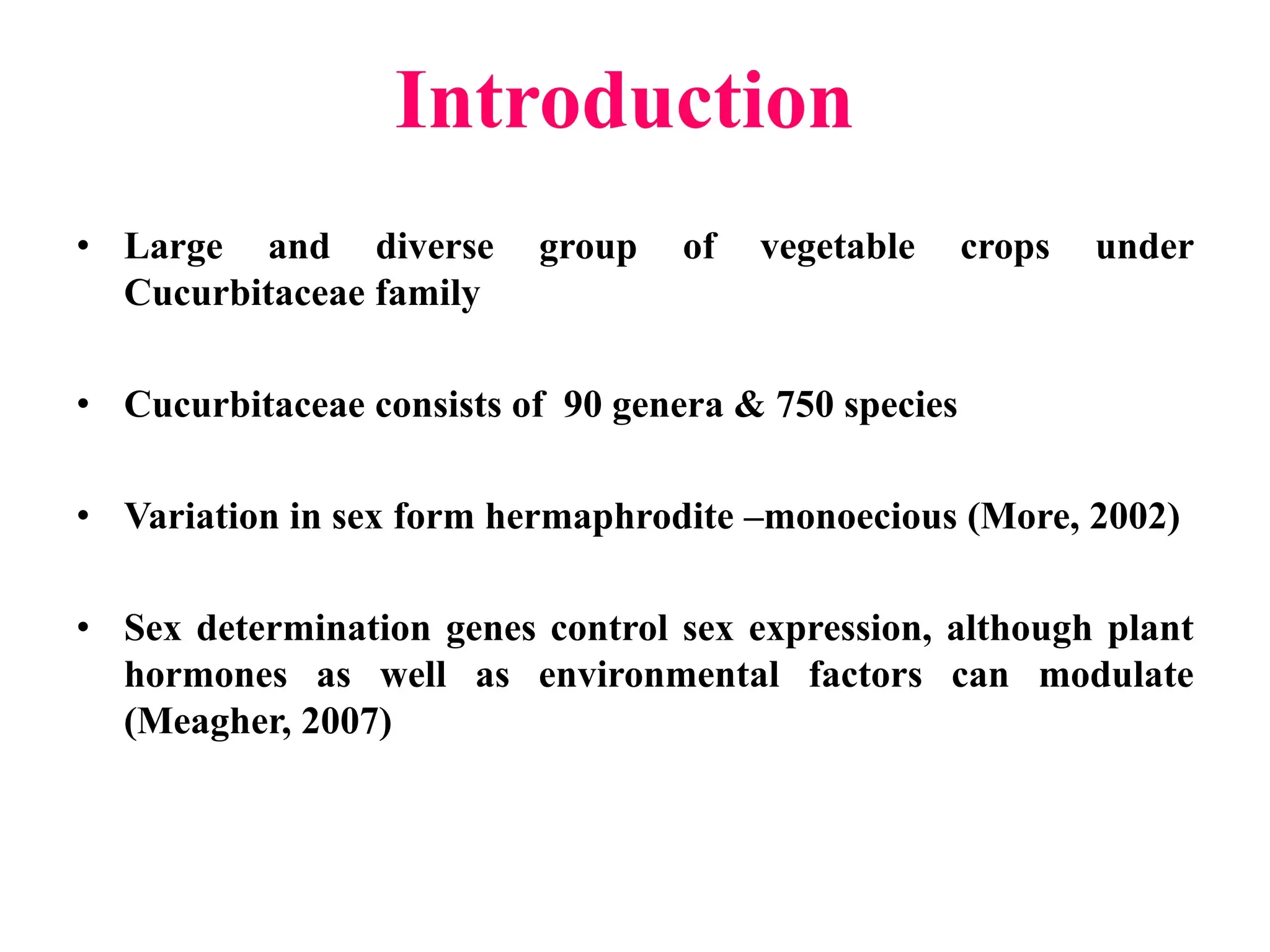
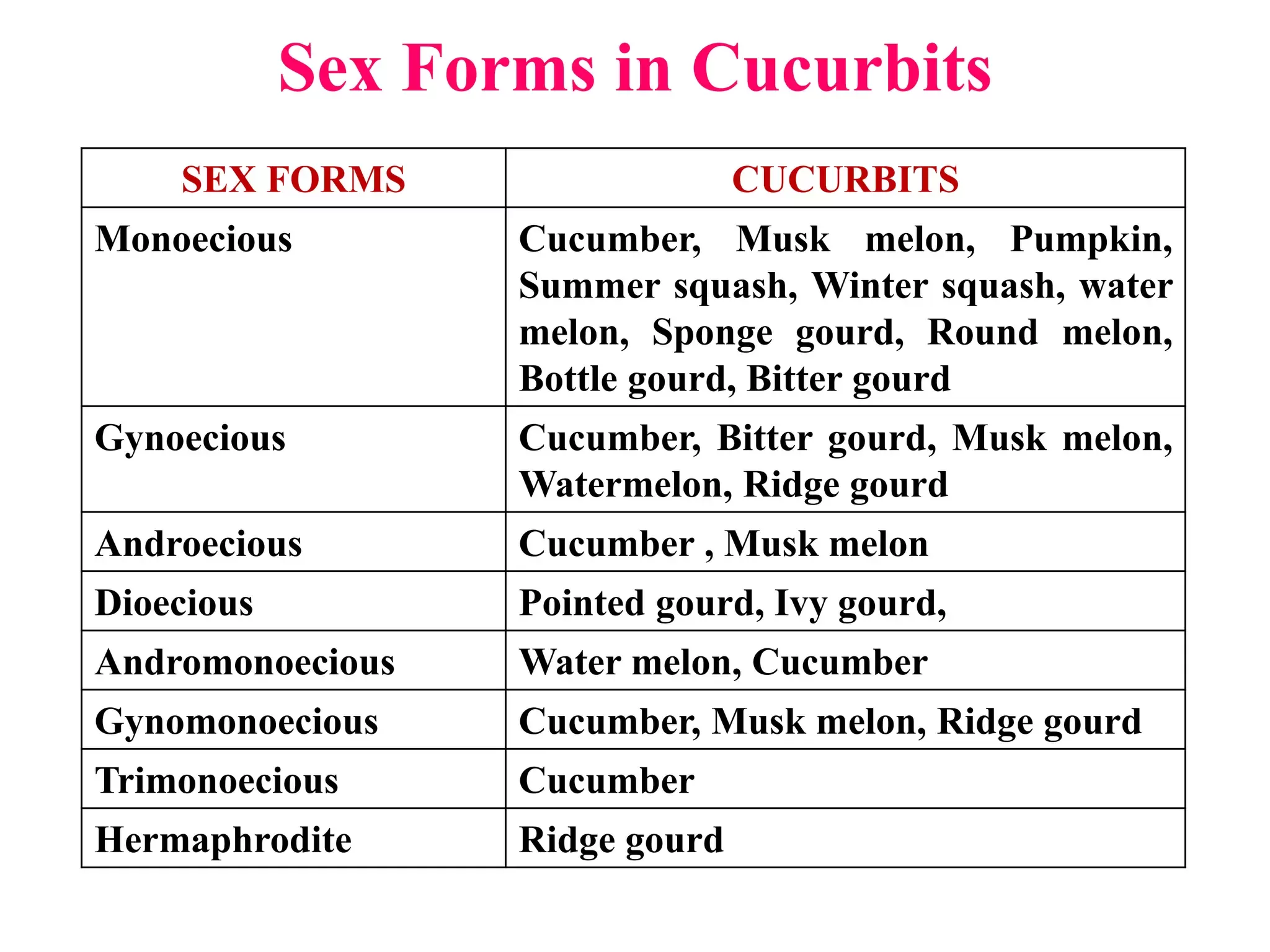
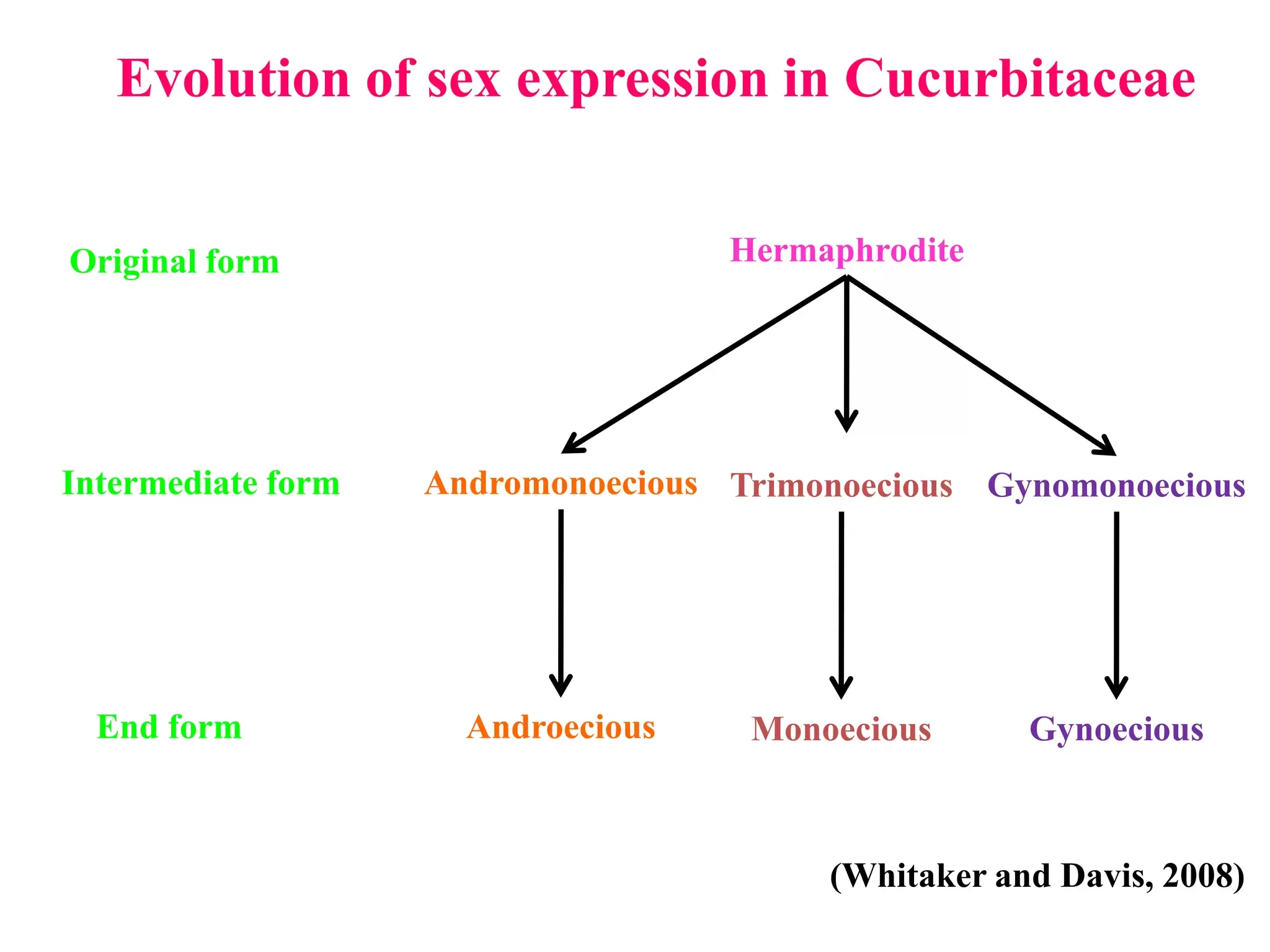
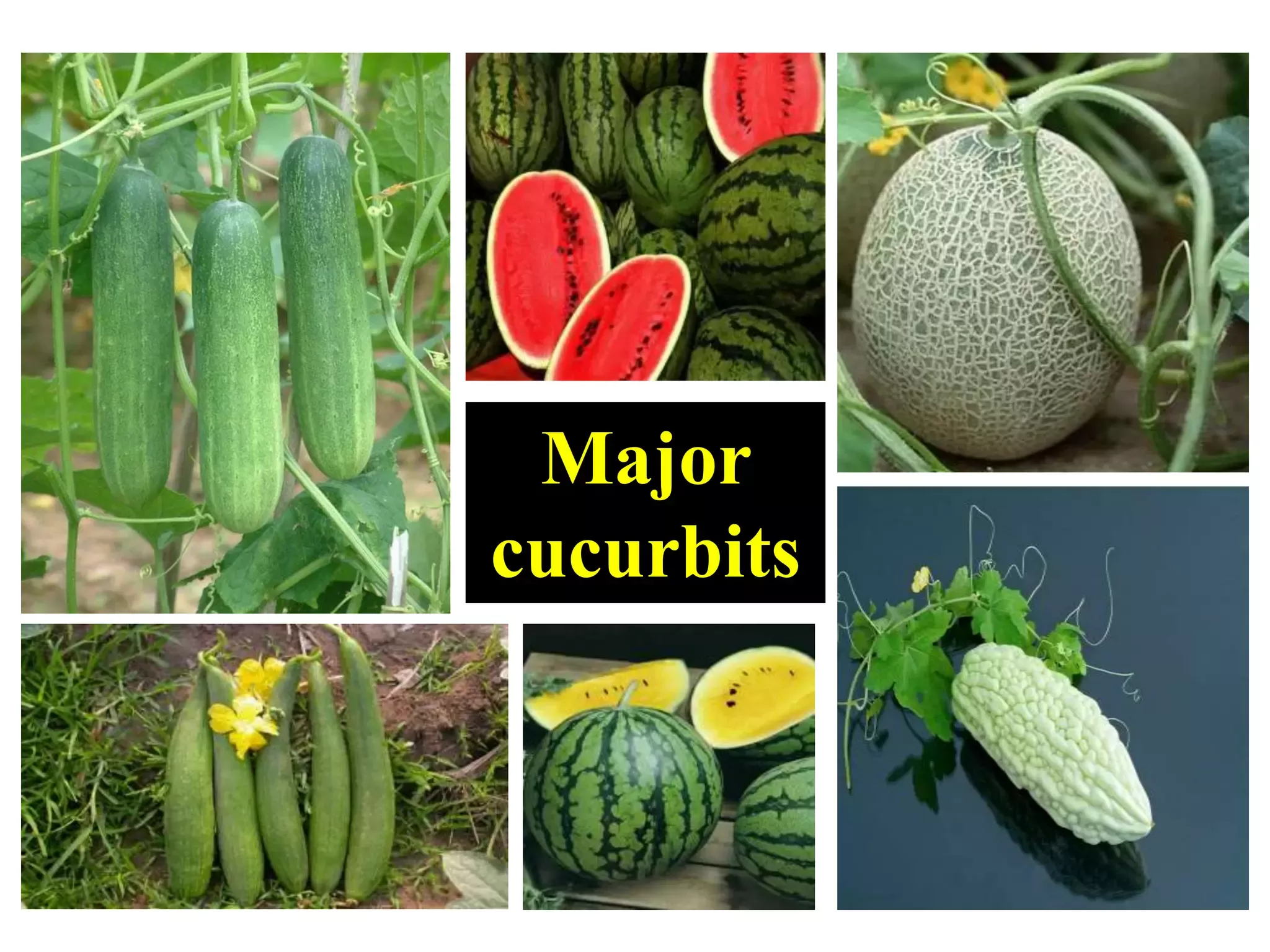
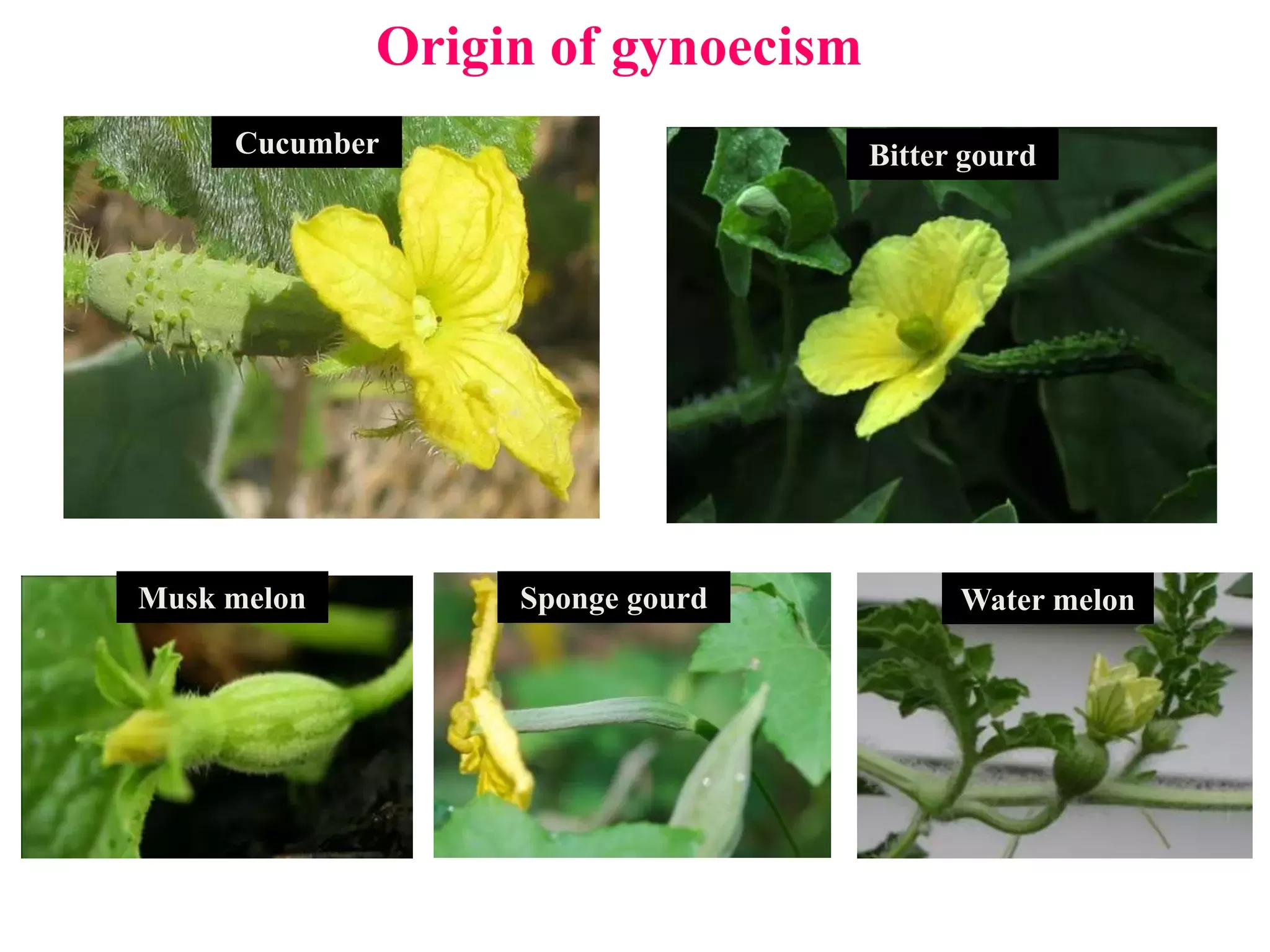
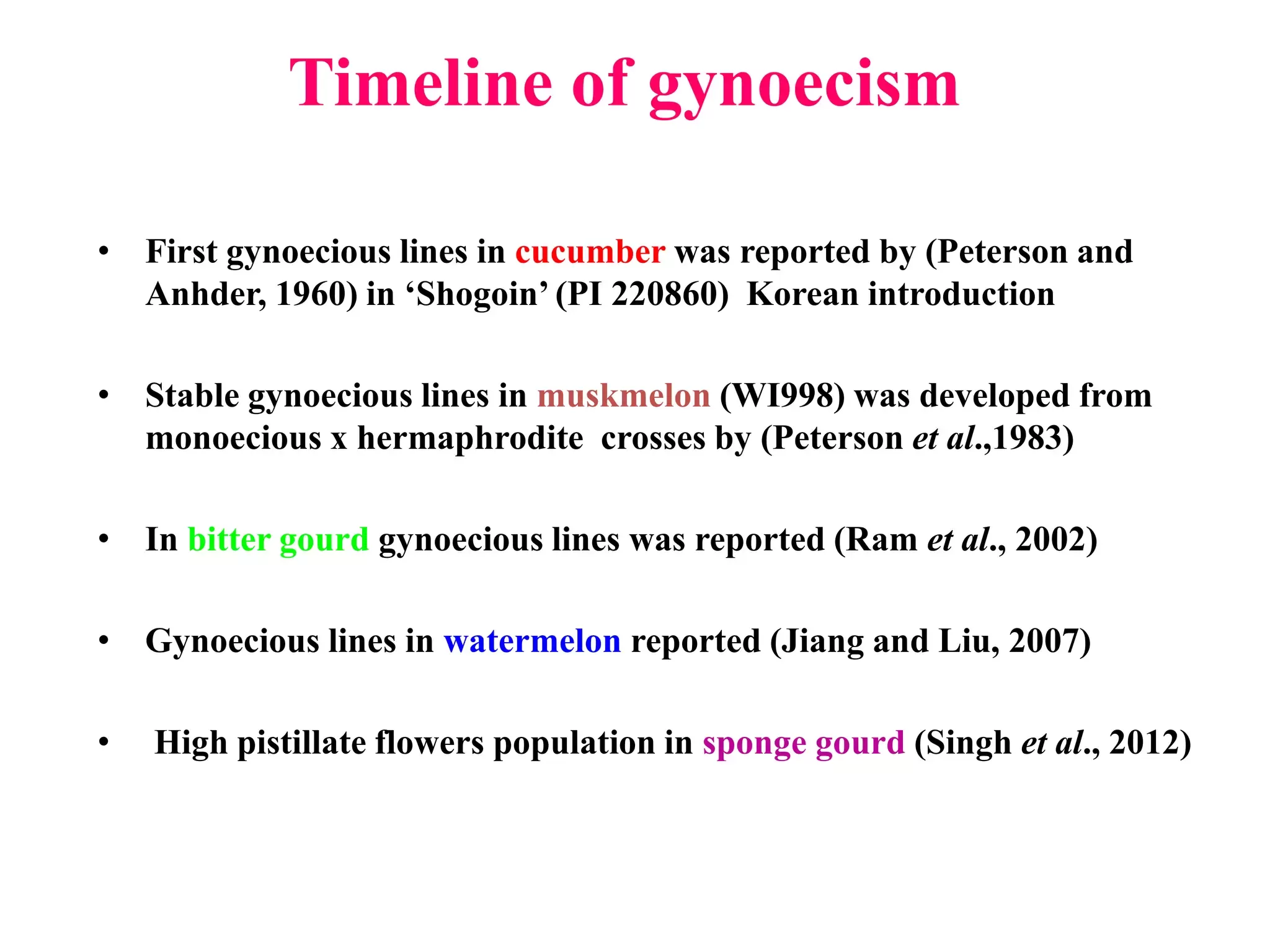
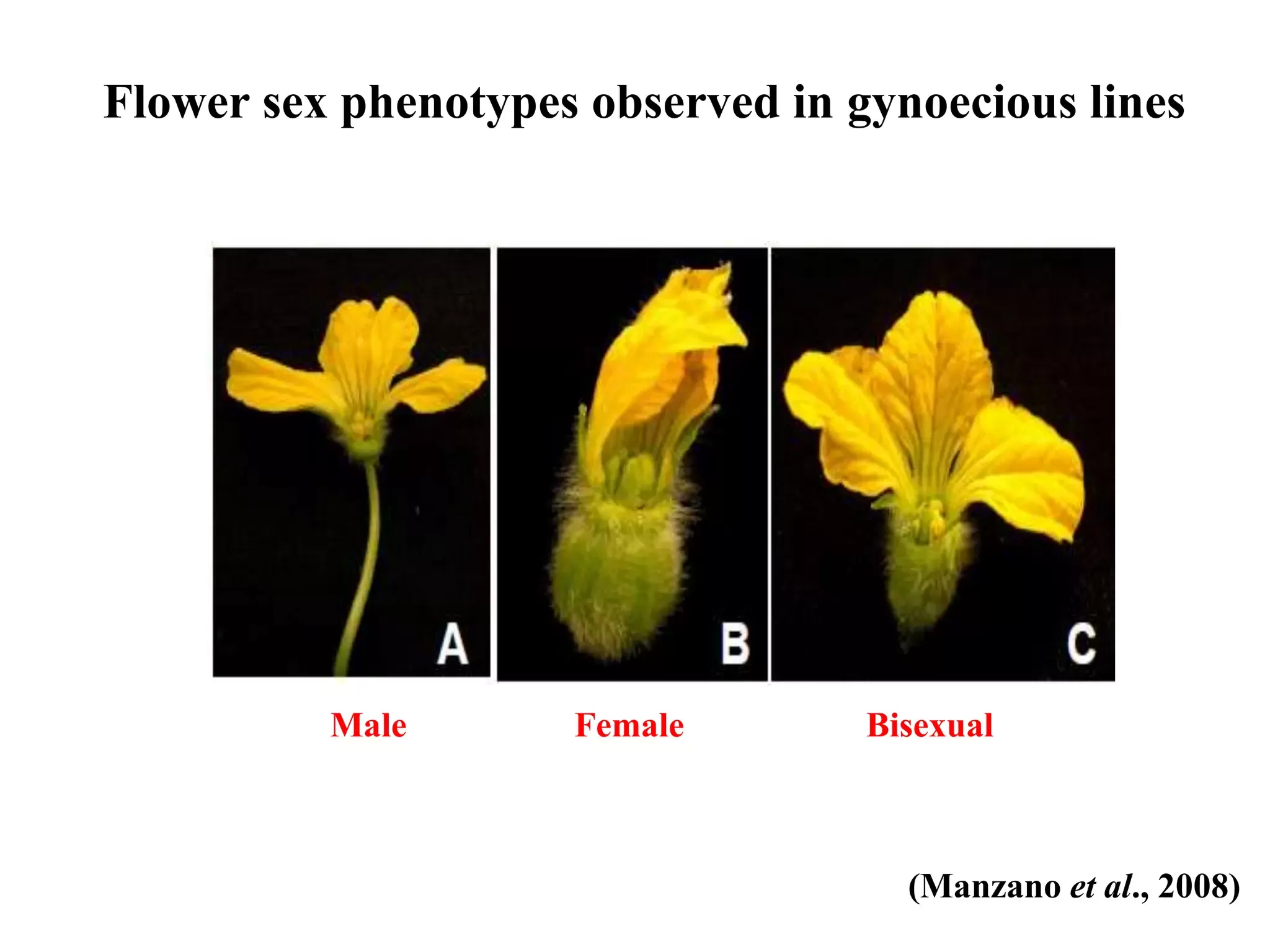
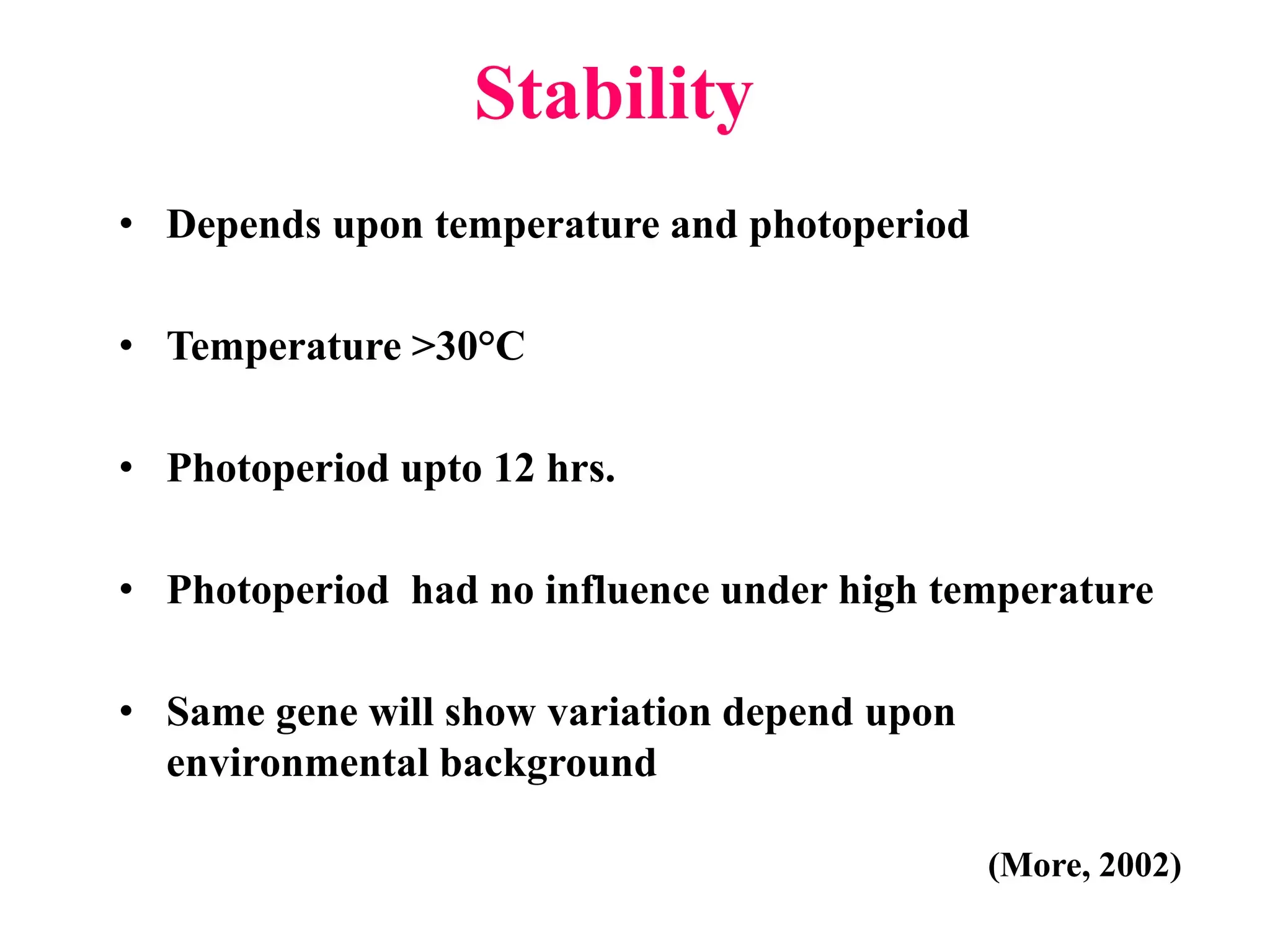
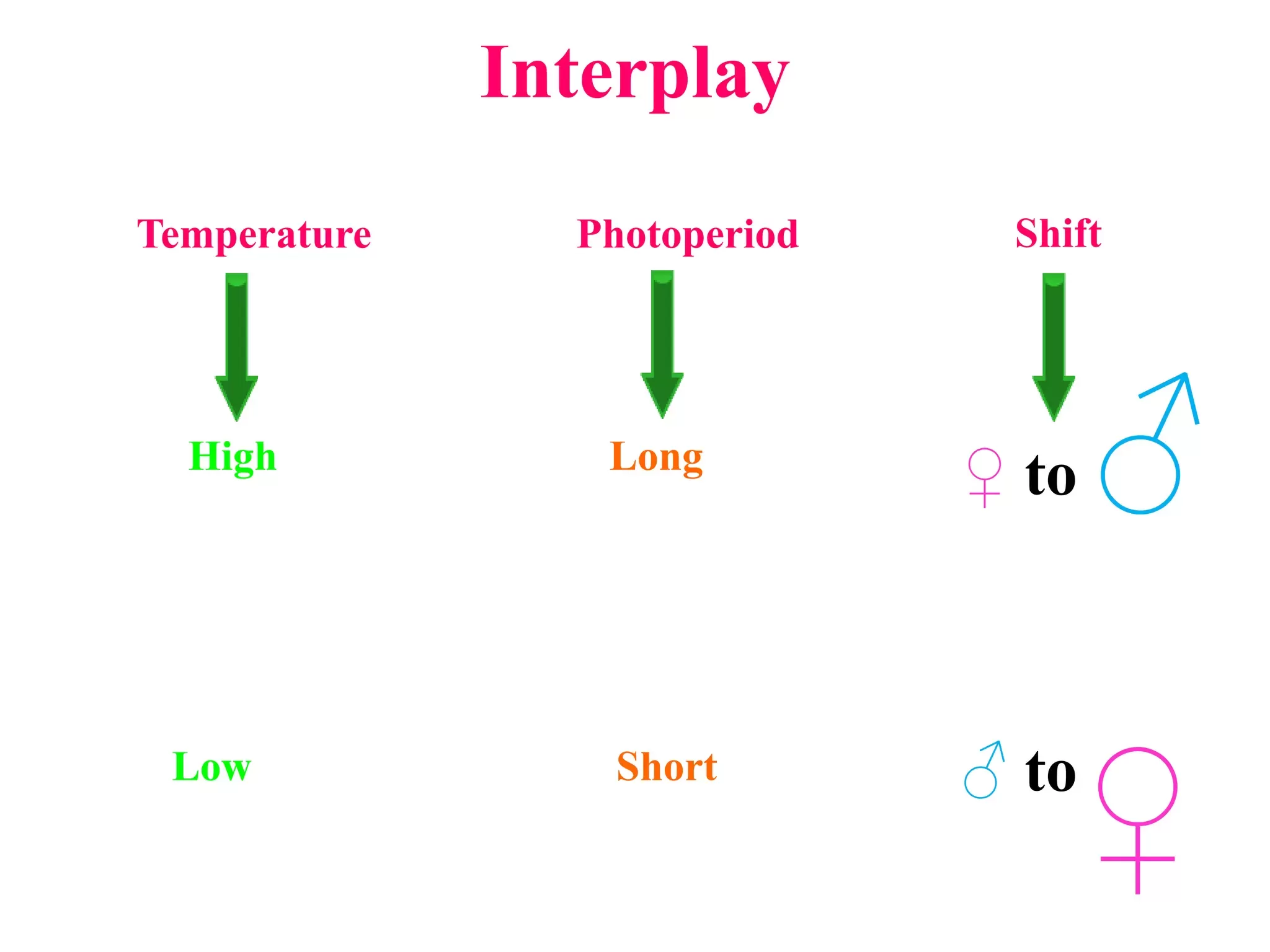
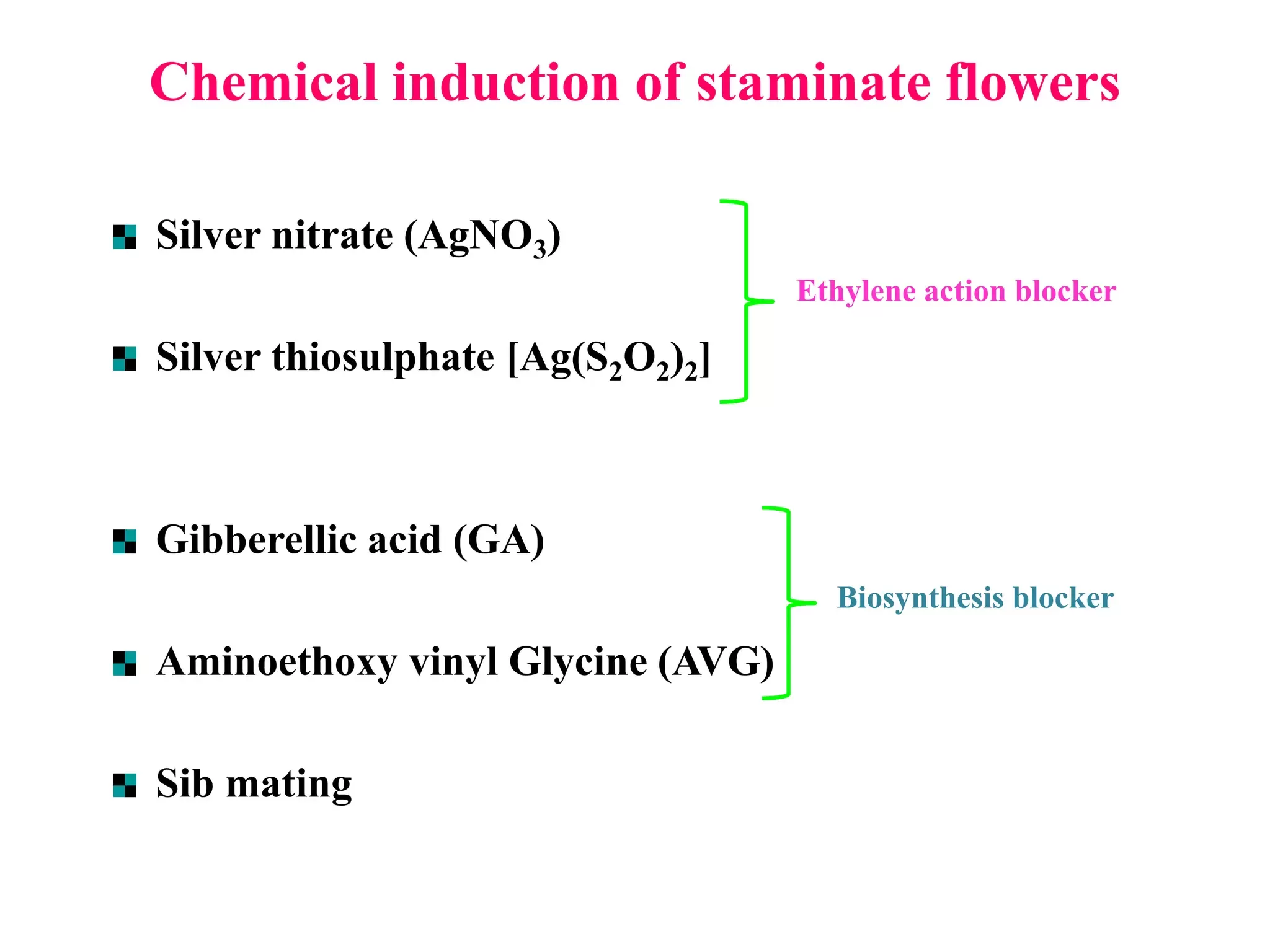
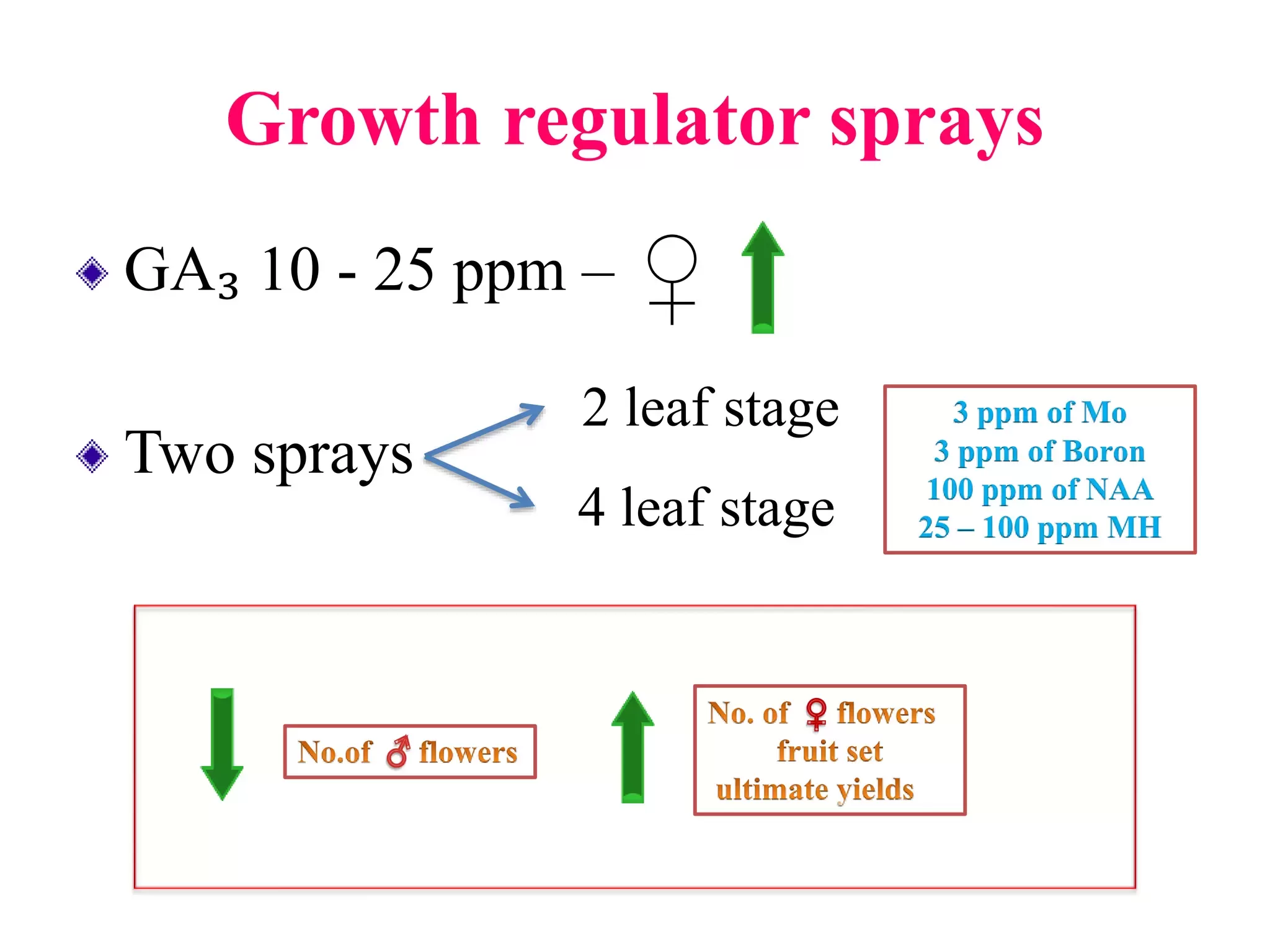
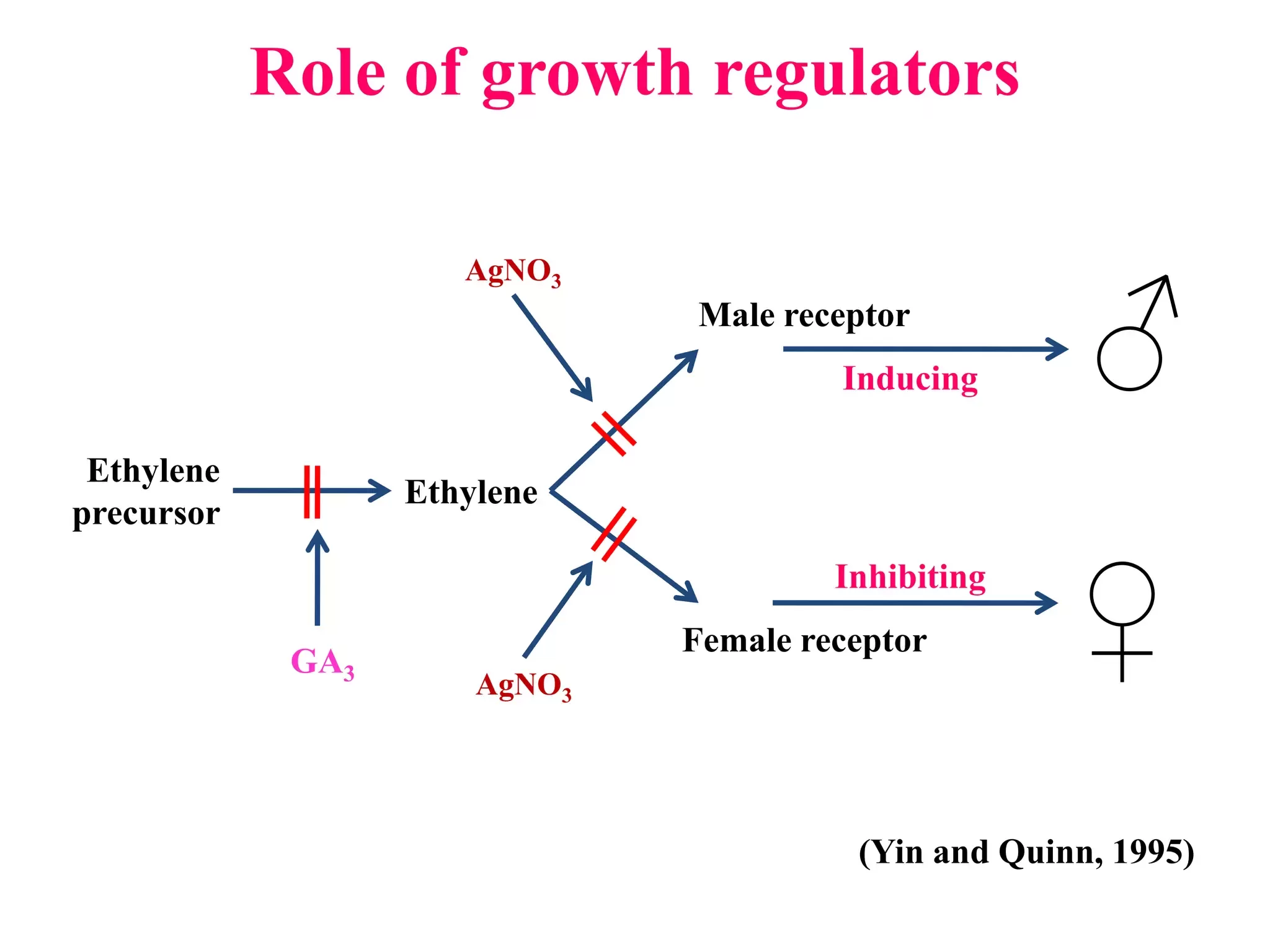
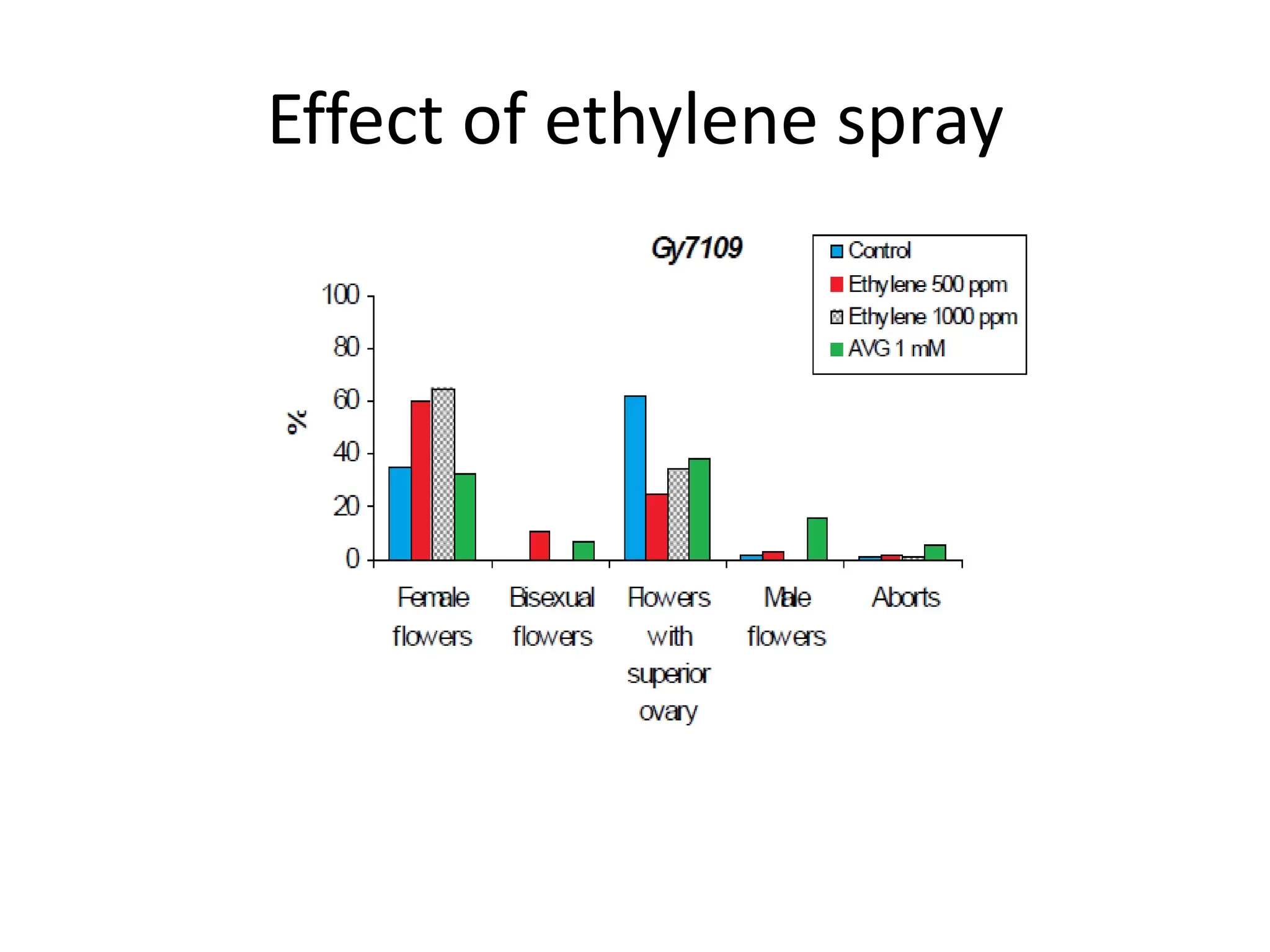
The Cucurbitaceae family is a vast and intriguing category within the plant kingdom, encompassing an expansive array of vegetable crops that are celebrated worldwide. This family consists of around 90 genera and approximately 750 species, showcasing a rich diversity that offers unique opportunities and challenges for cultivation and breeding. The sex forms exhibited by these plants are notably varied and include hermaphroditic and monoecious traits, revealing complex mechanisms behind their sexual development. The determination of these sex forms is primarily governed by sex determination genes; however, it is essential to recognize the influence of plant hormones and environmental factors, such as temperature and photoperiod, which can significantly modulate sex expression. In cucurbits, different sex forms manifest in various species, which can be categorized primarily into monoecious, gynoecious, androecious, dioecious, and hermaphrodite forms. Notable examples of monoecious plants include cucumber, musk melon, and several types of squash. Gynoecious forms, which predominantly produce female flowers, are found in crops like cucumber and watermelon, while androecious varieties exhibit exclusively male flowers. Interestingly, some plants display multiple sex forms, such as andromonoecious and gynomonoecious varieties, which present a blend of male and female flowers. The evolution of these sex expressions within Cucurbitaceae is a subject of much study and fascination. Historically, significant advancements in breeding gynoecious lines have been documented, starting with the first gynoecious lines reported in the cucumber ‘Shogoin’ during the 1960s. This foundational work laid the groundwork for later developments in muskmelon and bitter gourd, and ongoing research continues to enhance our understanding of these unique traits. The stability of sex expression in cucurbits is influenced by both temperature and photoperiod, with findings suggesting that high temperatures (over 30°C) can alter flower phenotype stability. The interplay of these environmental factors creates a complex landscape where the same genetic makeup can express varied sexual forms based on the surrounding conditions. Further exploring the mechanisms of flower development, chemical and growth regulator interventions play a crucial role in stimulating specific flower sex phenotypes. Substances such as silver nitrate and gibberellic acid have been noted for their ability to induce or inhibit the development of male flowers. Additionally, employing growth regulators at specific plant growth stages has proven effective in managing flower sex ratios, supporting crop optimization. In conclusion, the Cucurbitaceae family is a critical focus in agricultural practices due to its extensive variety and adaptability. Understanding the dynamics of sex forms and their influences is essential for maximizing yield and improving crop quality. As the saying goes, cucurbits are “everyone’s crop,” resonating with farmers and consumers alike who appreciate their nutritional value and versatility in culinary applications. Continued research in this area promises to enhance our knowledge and capability in cultivating these remarkable plants.
Discover the fascinating world of brinjal breeding through this informative PowerPoint presentation. Explore the history, cultivation, and breeding methods of eggplant, a significant vegetable crop in various countries. Dive into the different botanical varieties, traits, and challenges faced in breeding for high yield and quality. Whether you are a researcher, farmer, or vegetable enthusiast, this presentation offers valuable insights into enhancing brinjal production and sustainability.
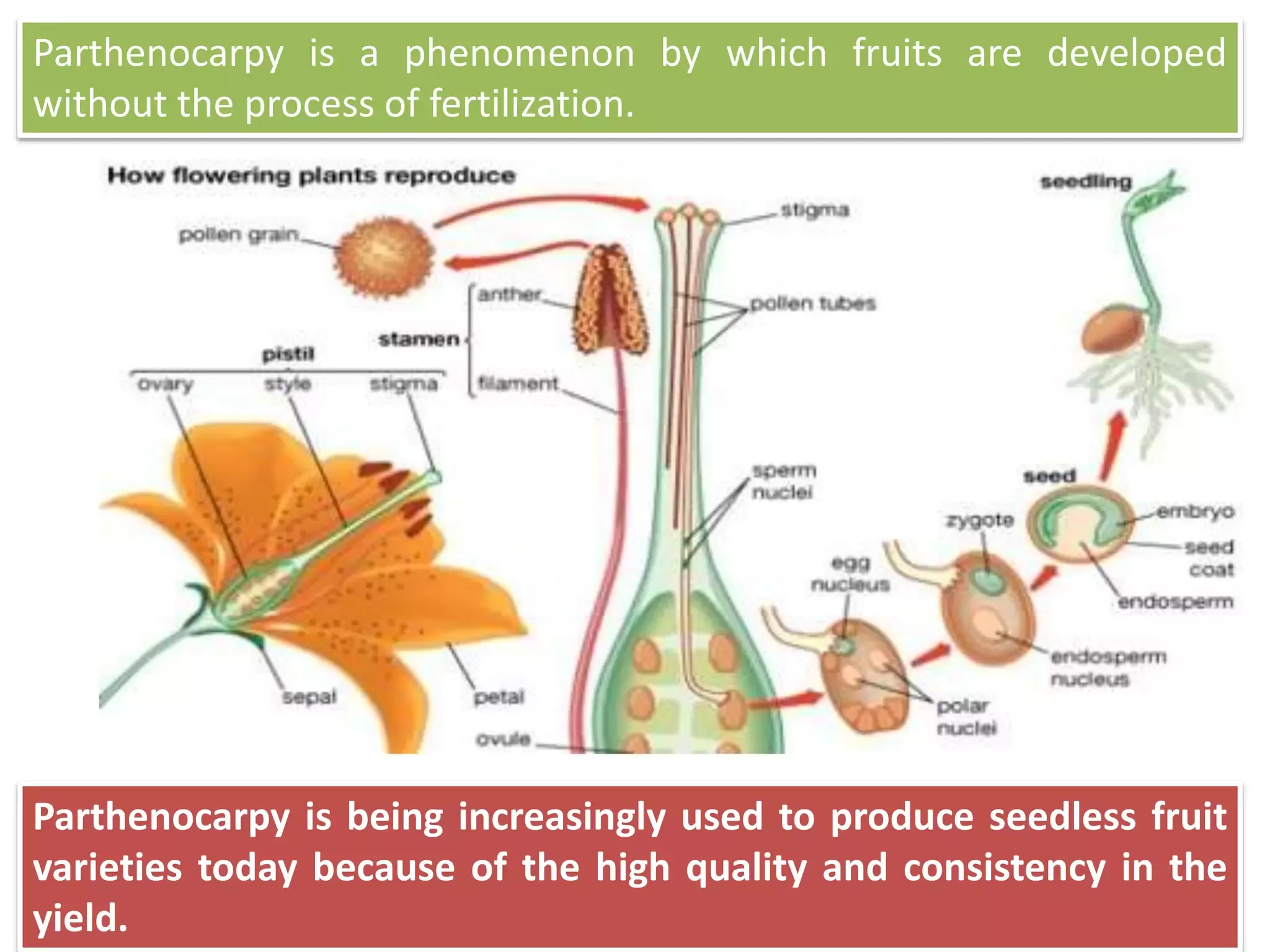
Summary
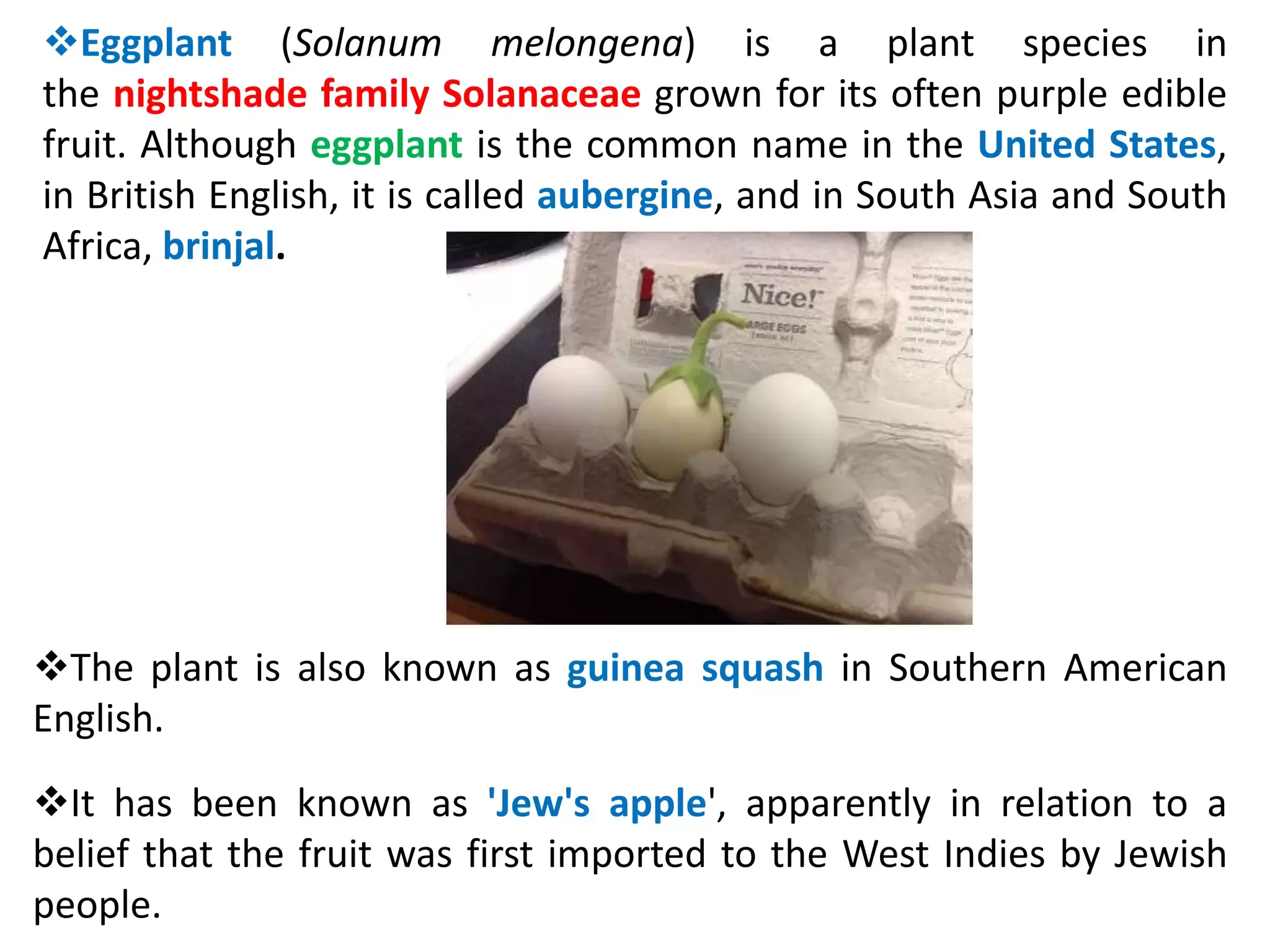
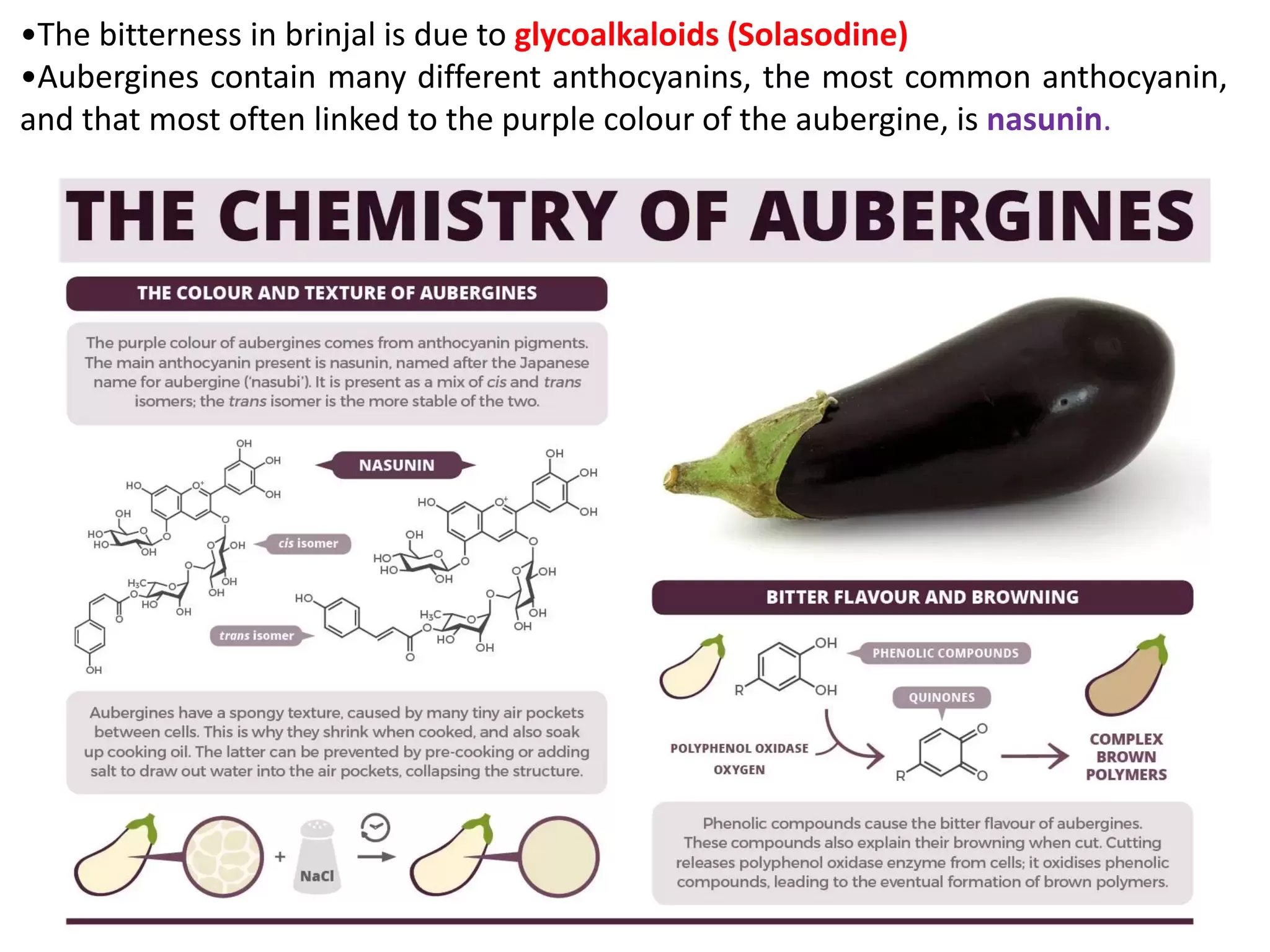
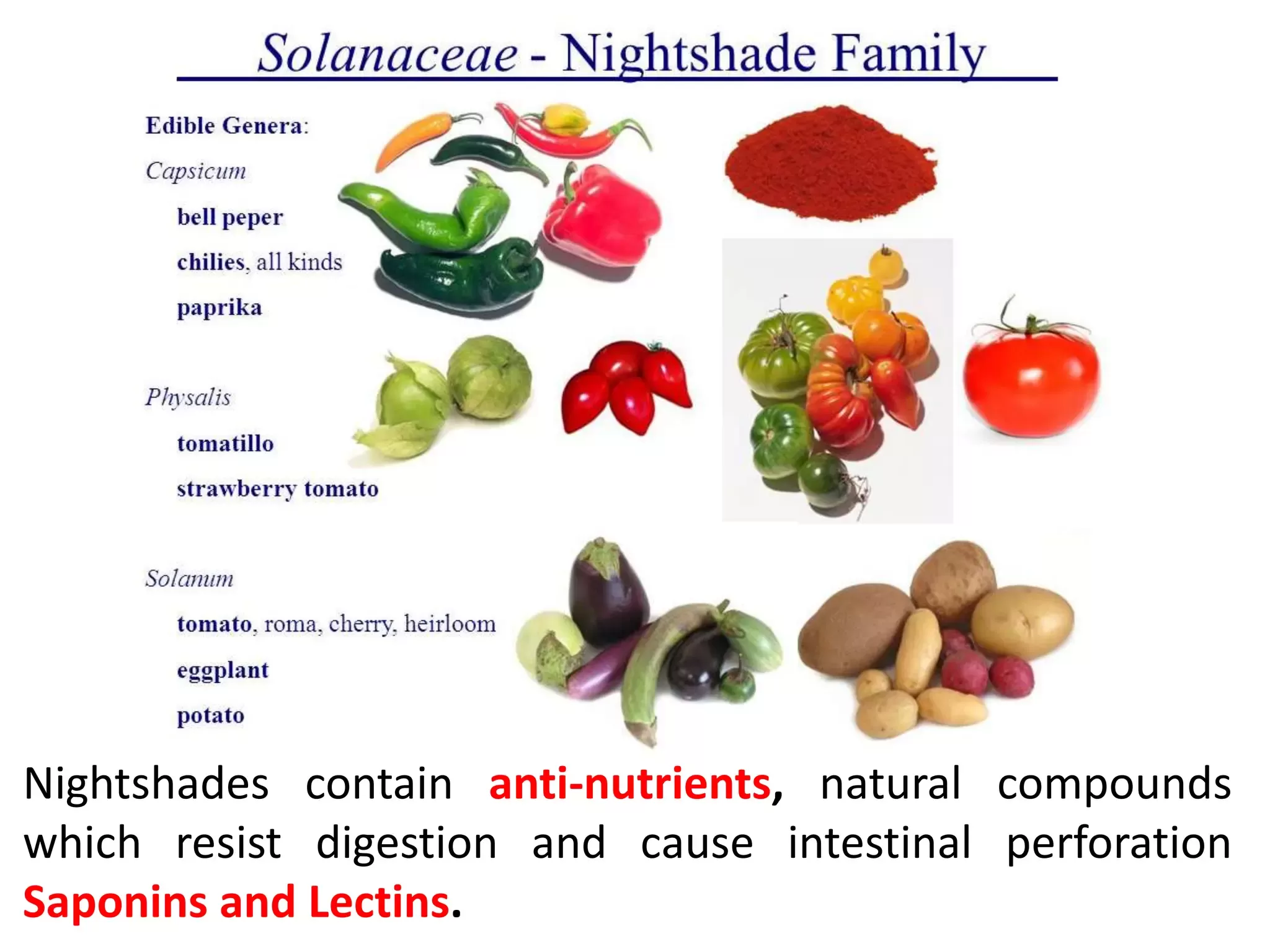
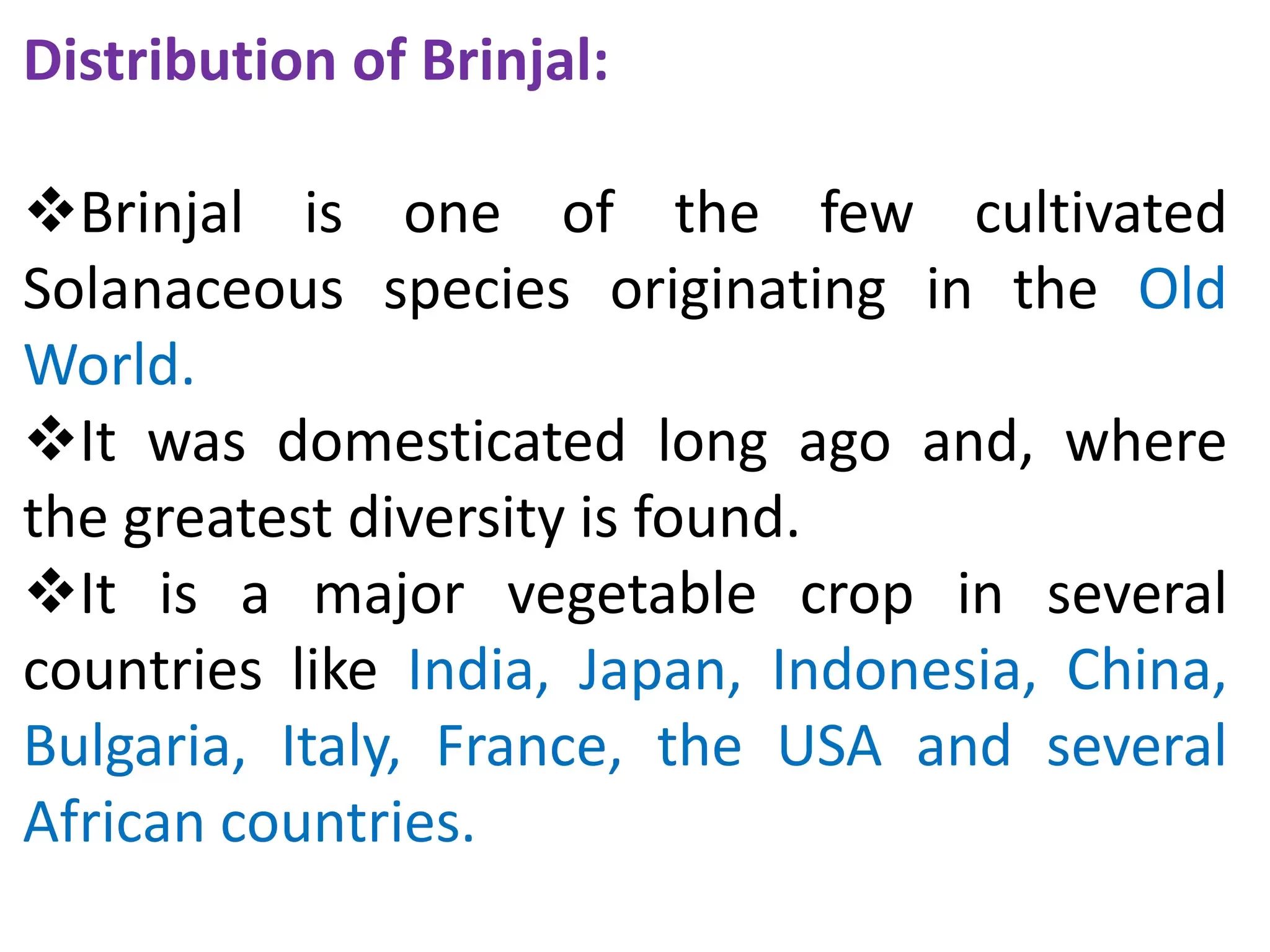
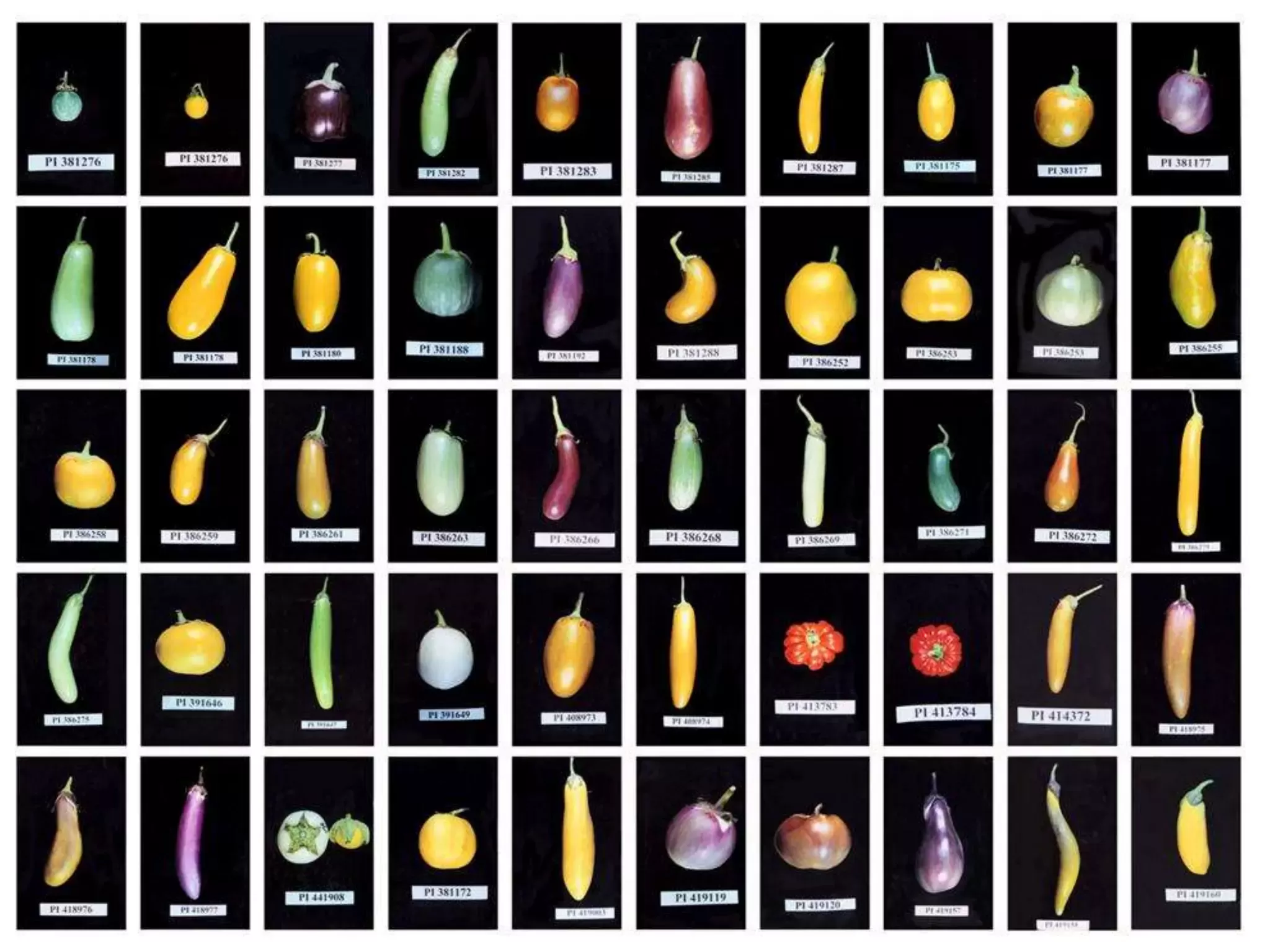
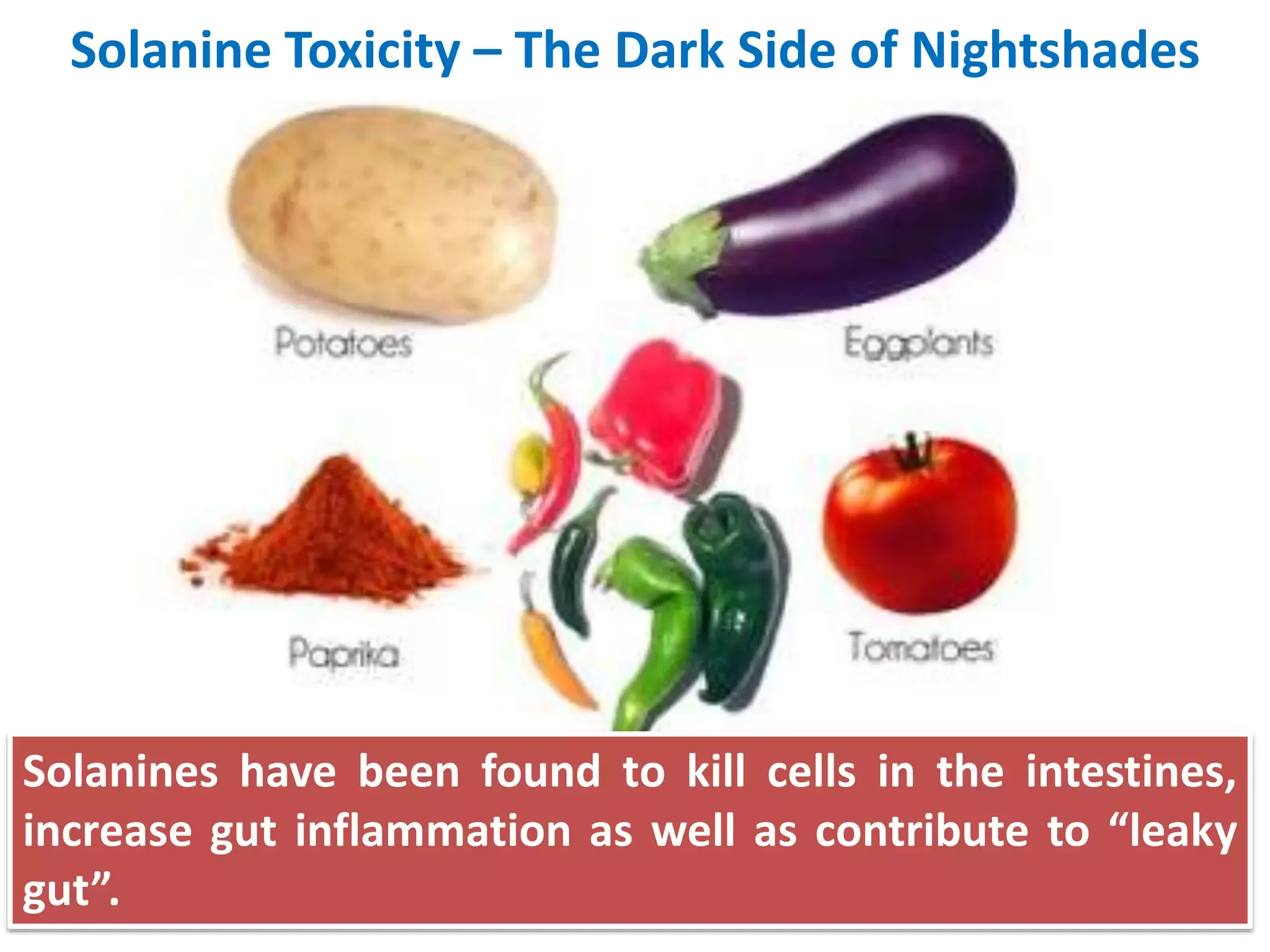
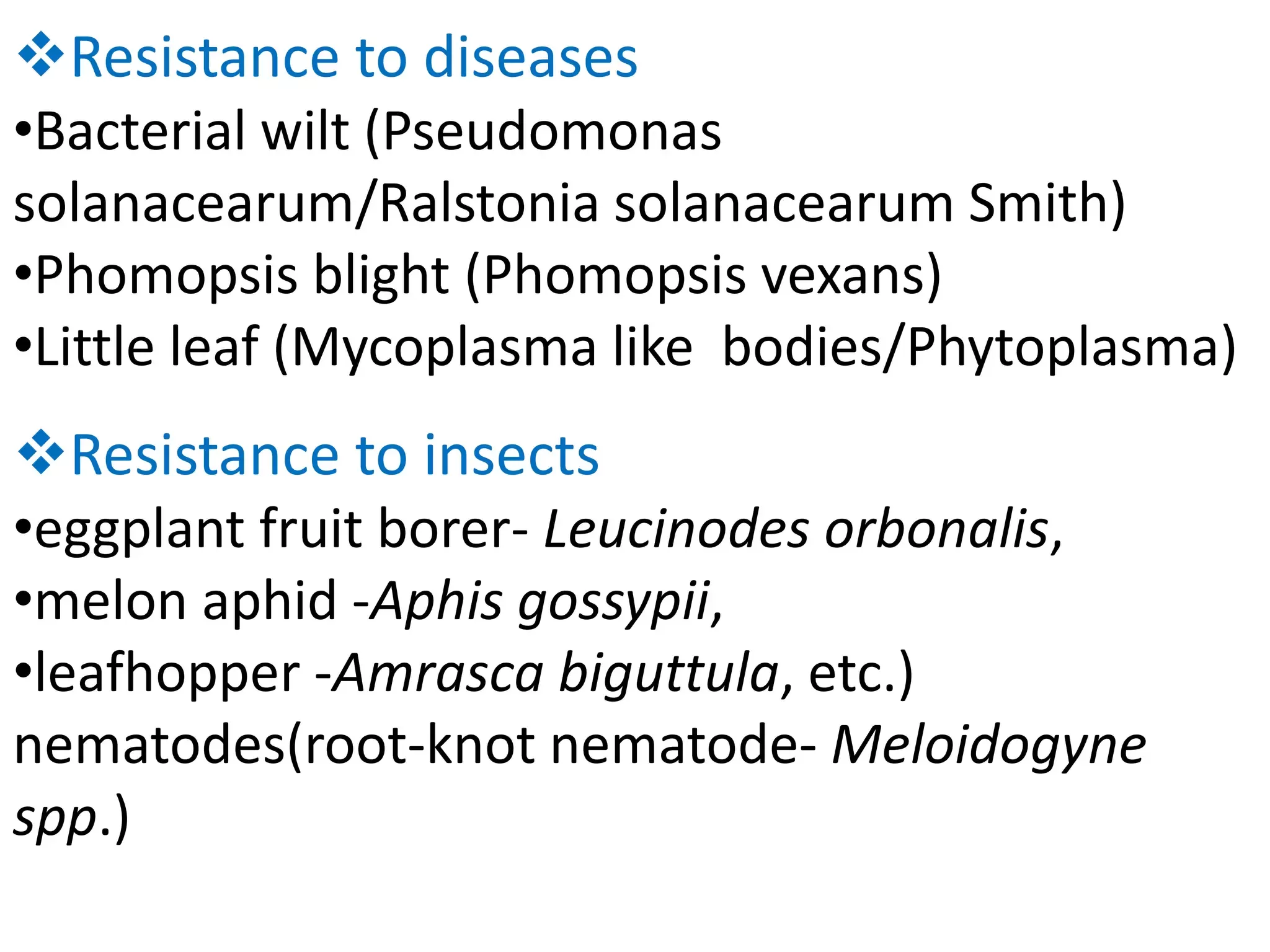
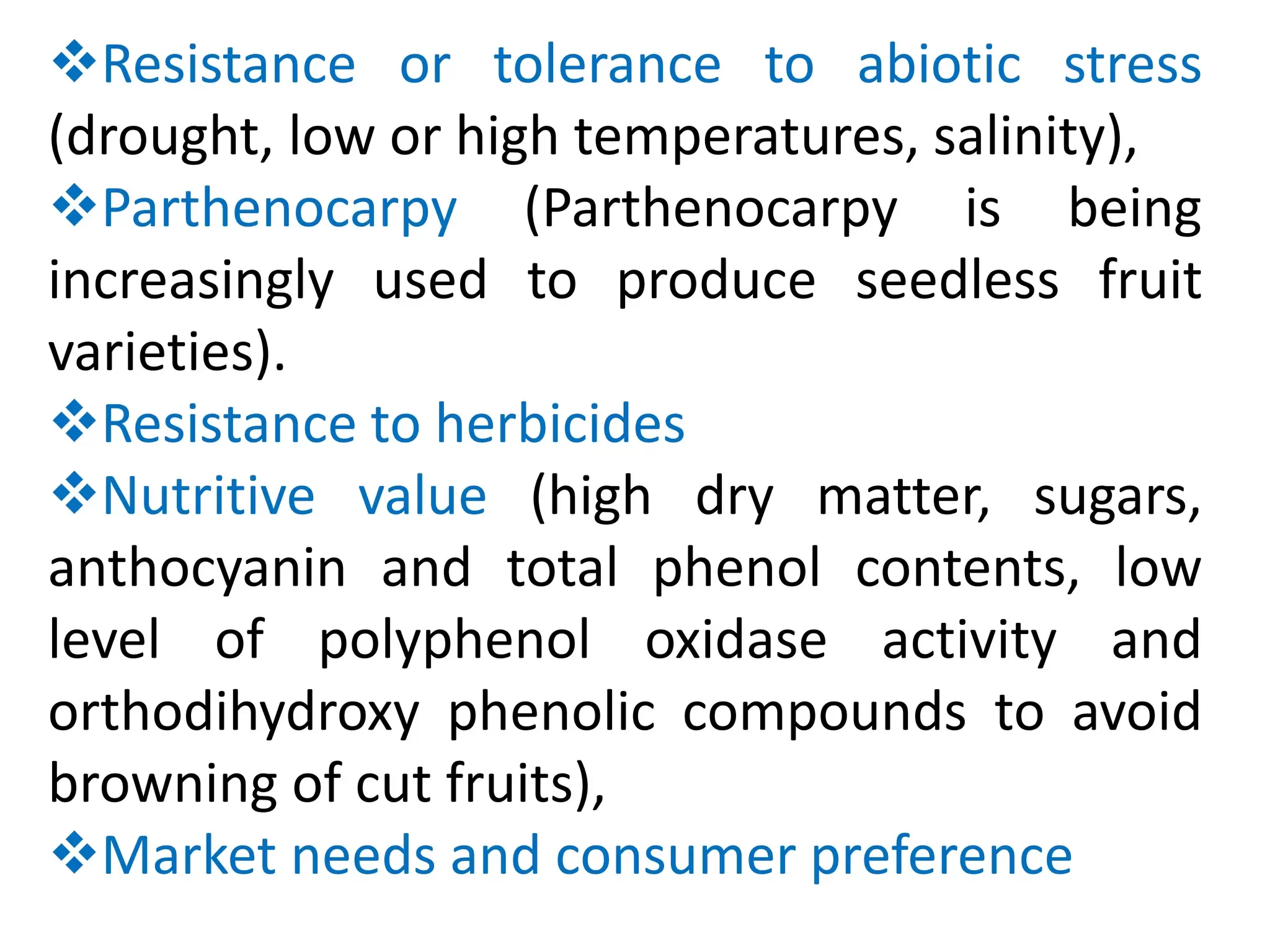
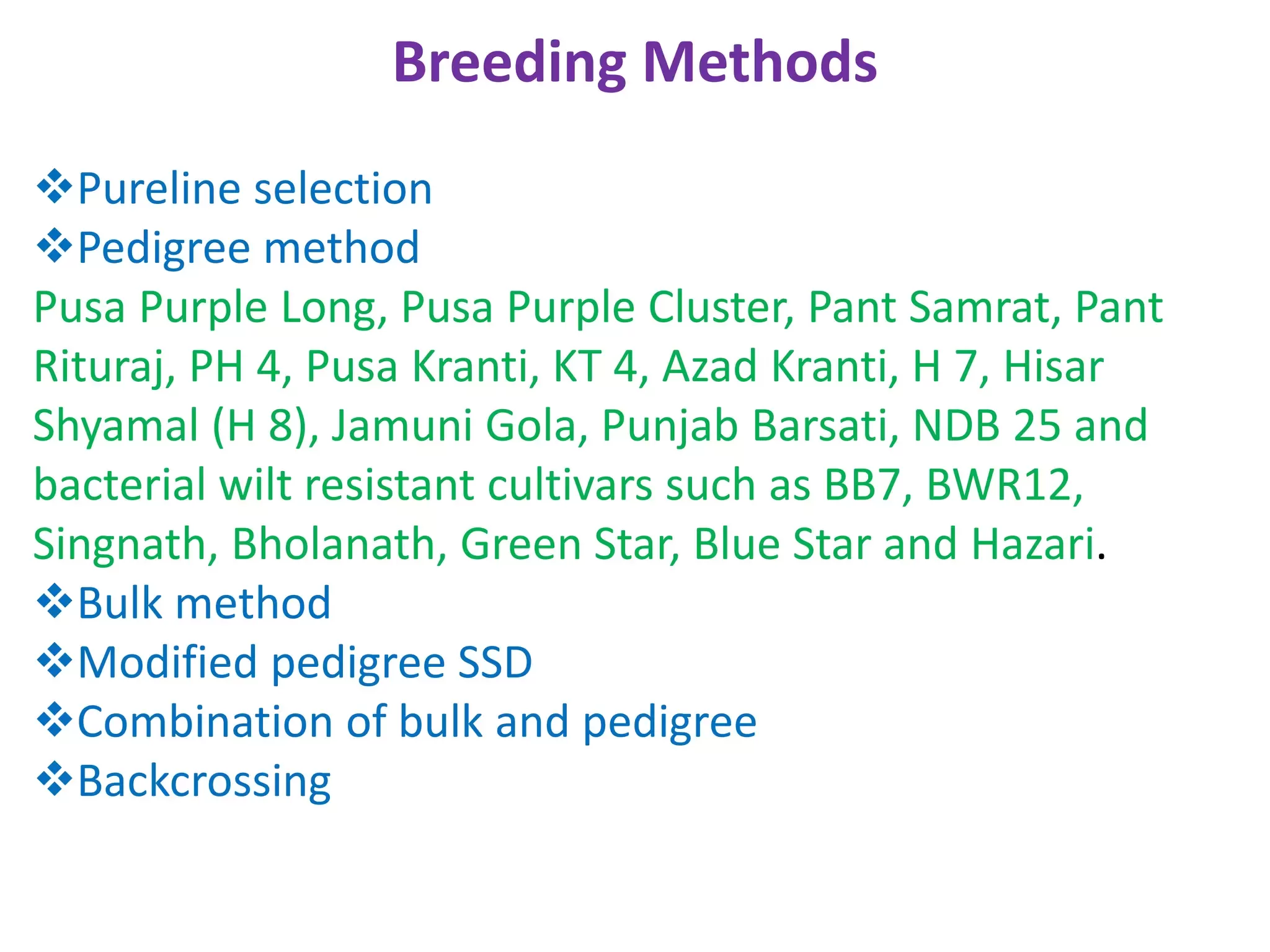
Eggplant (Solanum melongena), commonly known as aubergine in British English and brinjal in South Asia, is a member of the nightshade family Solanaceae, cultivated for its edible fruit, which is often purple. This plant species has a rich history of domestication, primarily in the Old World, and is a significant vegetable crop in countries like India, Japan, and the USA. Eggplant exhibits great morphological diversity and is categorized into three botanical varieties based on fruit shape: round, long slender, and small miniature types. Cultivation focuses on breeding for high yield, quality, disease resistance, and consumer-preferred traits, while also addressing issues like solanine toxicity and pest resistance. Notable pests include the eggplant fruit borer, and breeding methods include pureline selection and
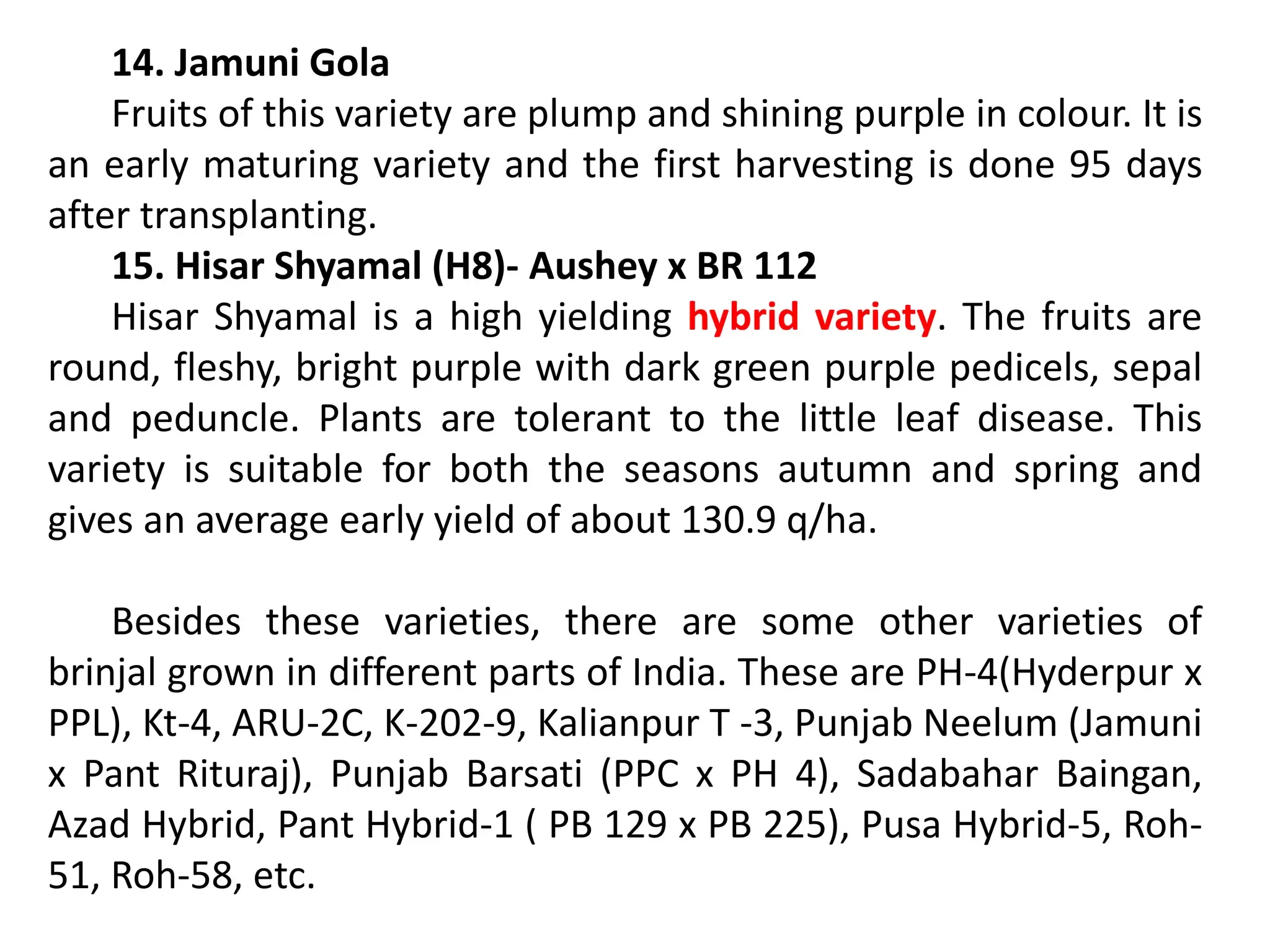
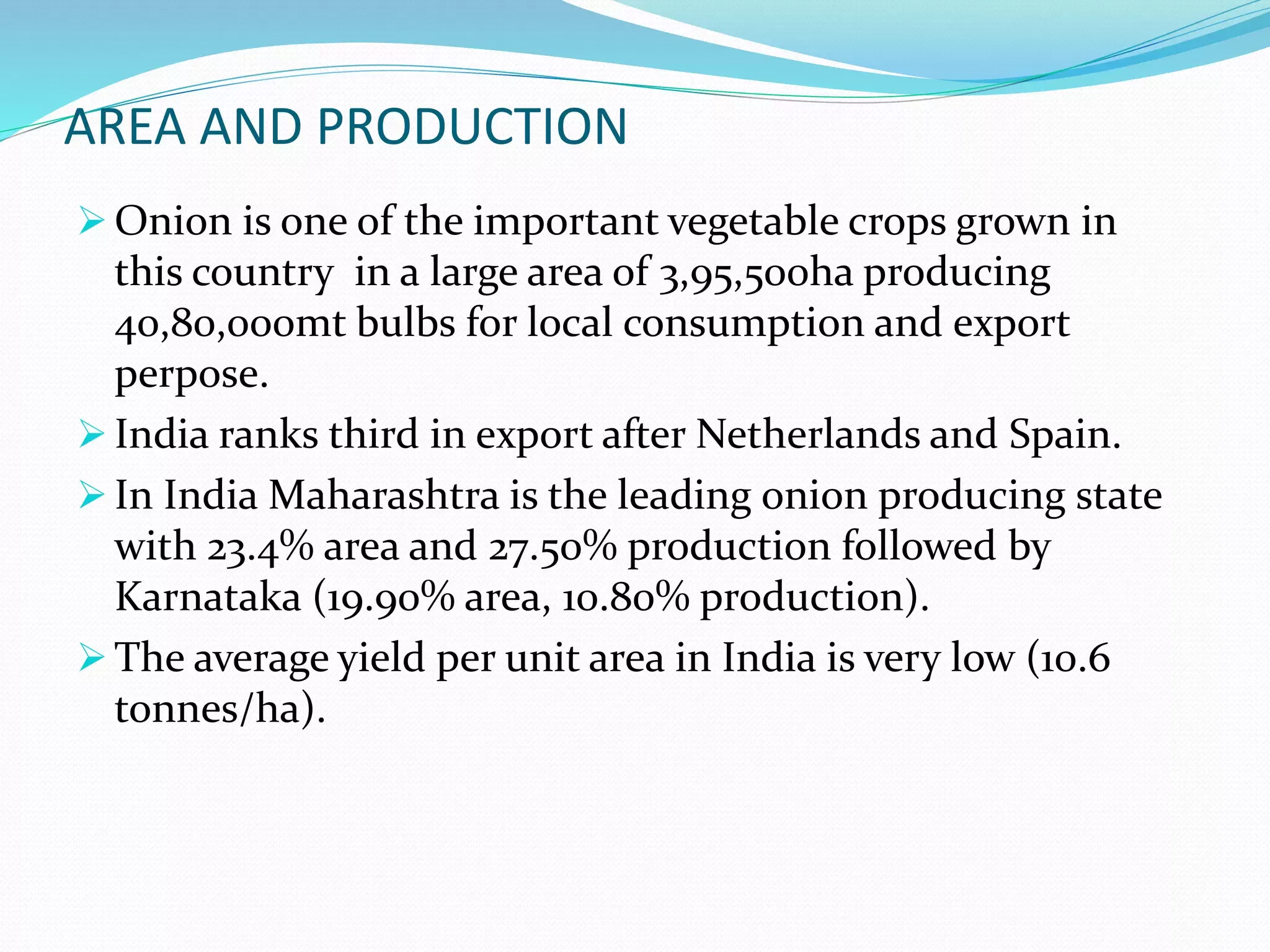
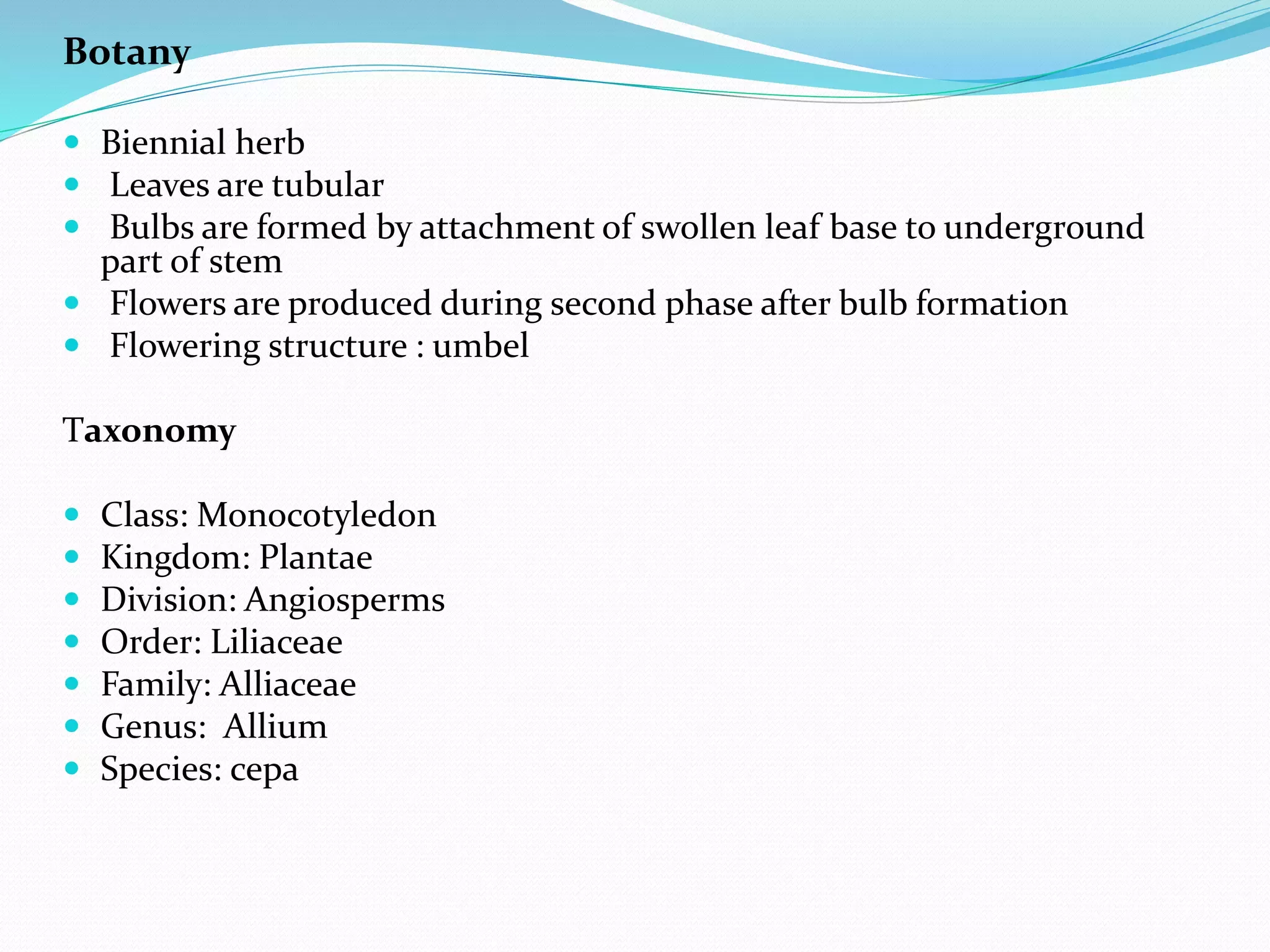
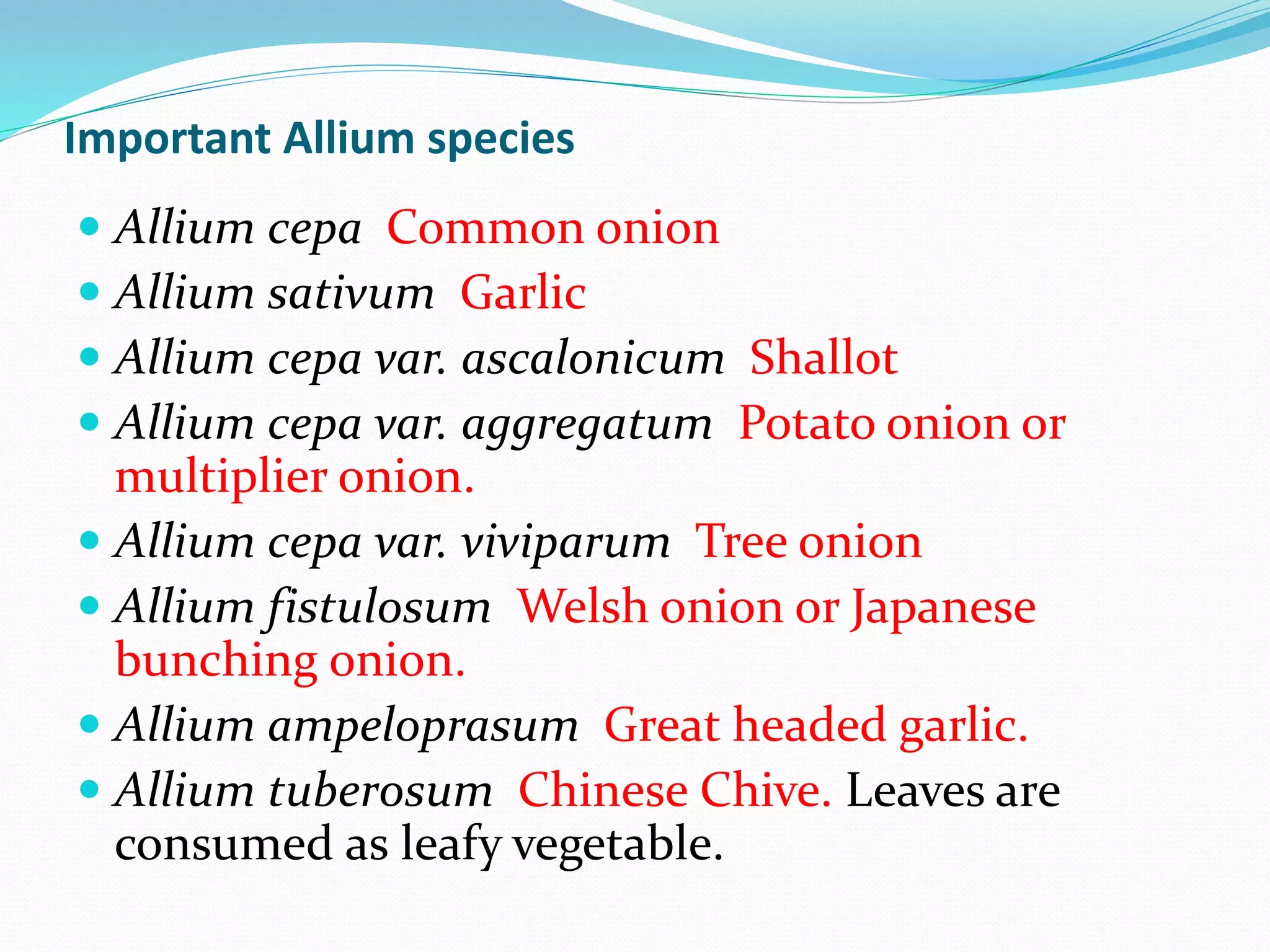
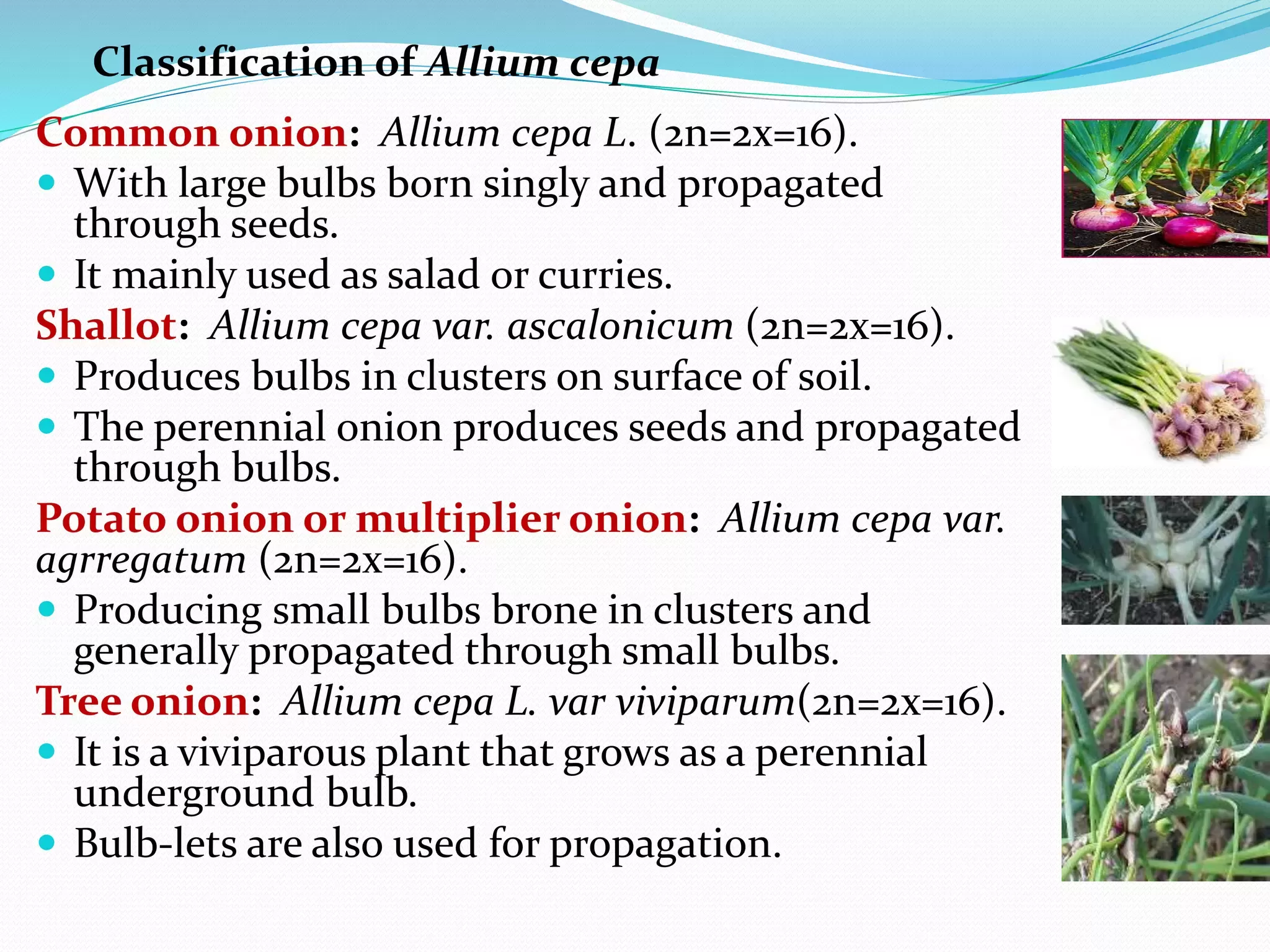
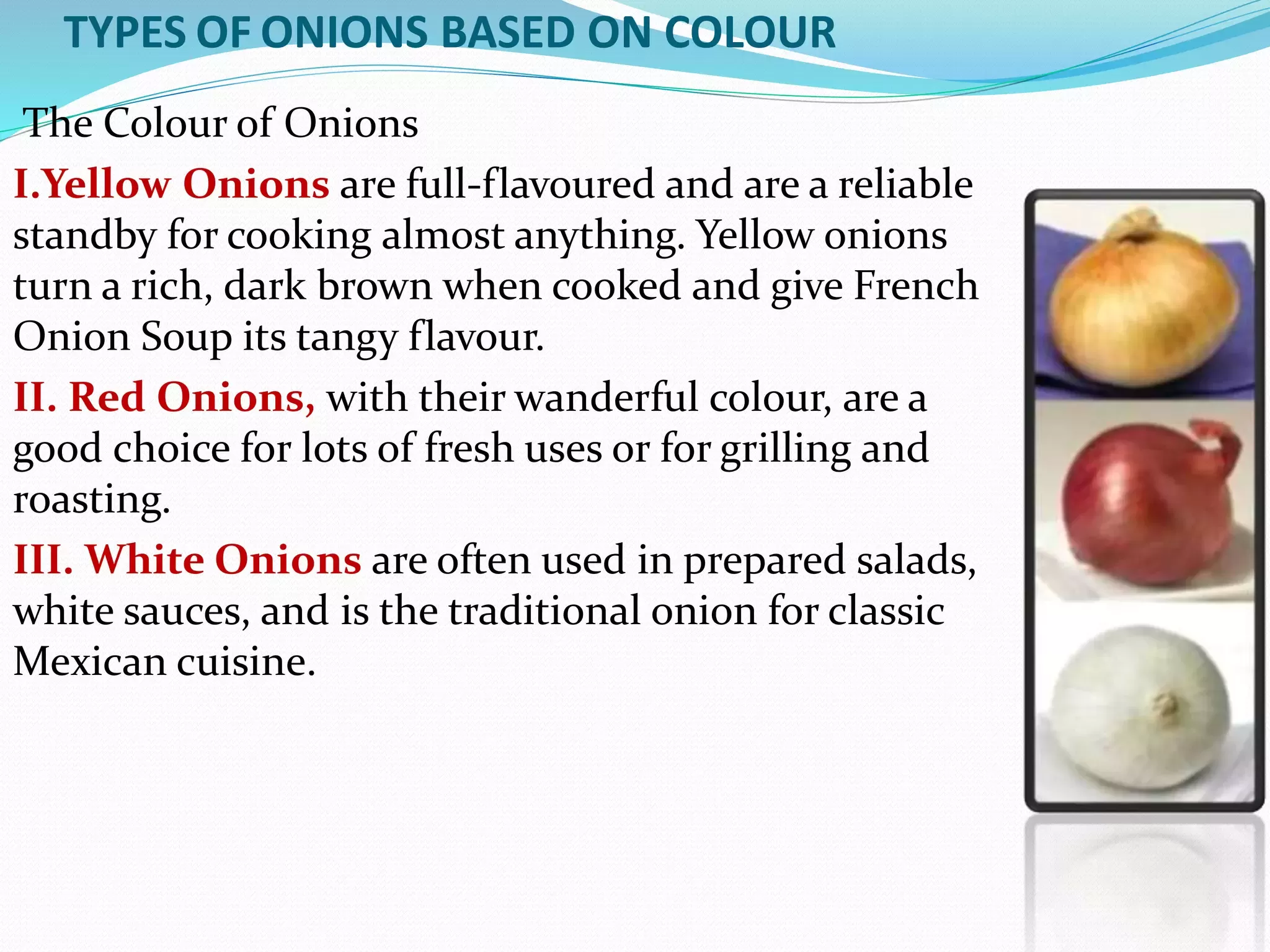
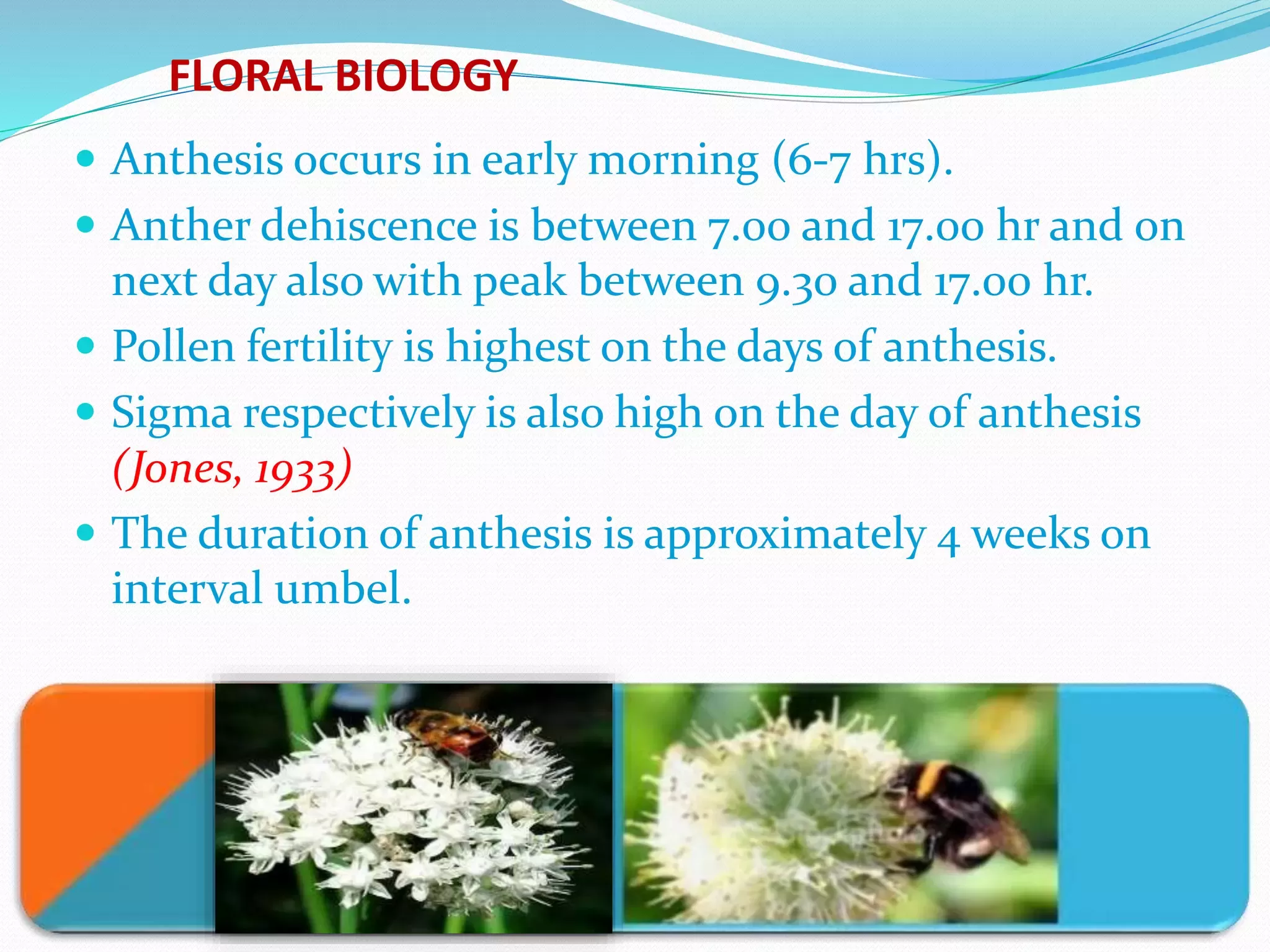
Discover the world of onions, their cultivation, nutritional value, and significance in agriculture with this informative PowerPoint on crop improvement in onions (Allium cepa L.). Explore the different onion types, cultivation requirements, major producing countries, and more. Perfect for anyone interested in enhancing their knowledge of onion farming and its impact on the global market.
Summary
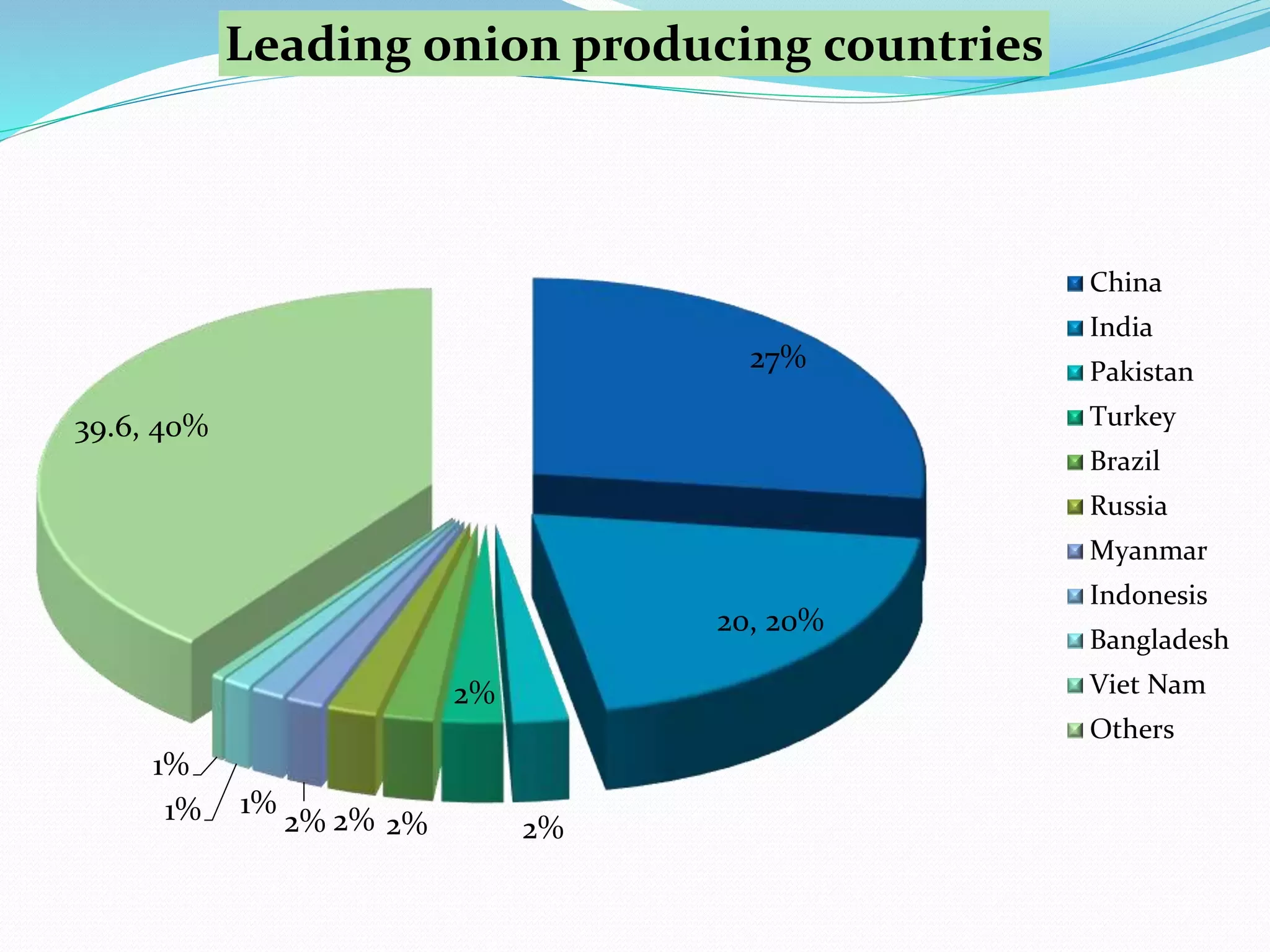
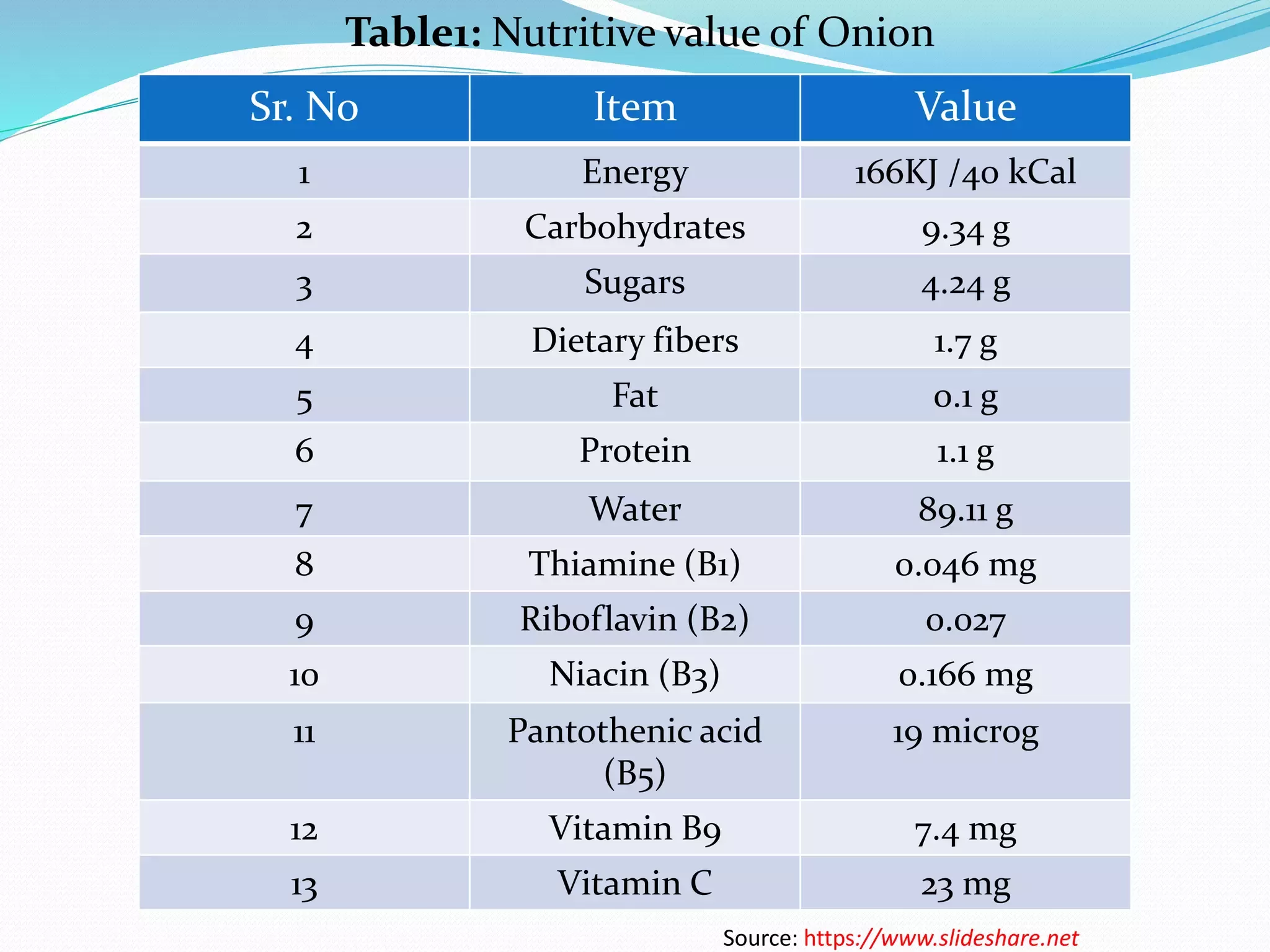
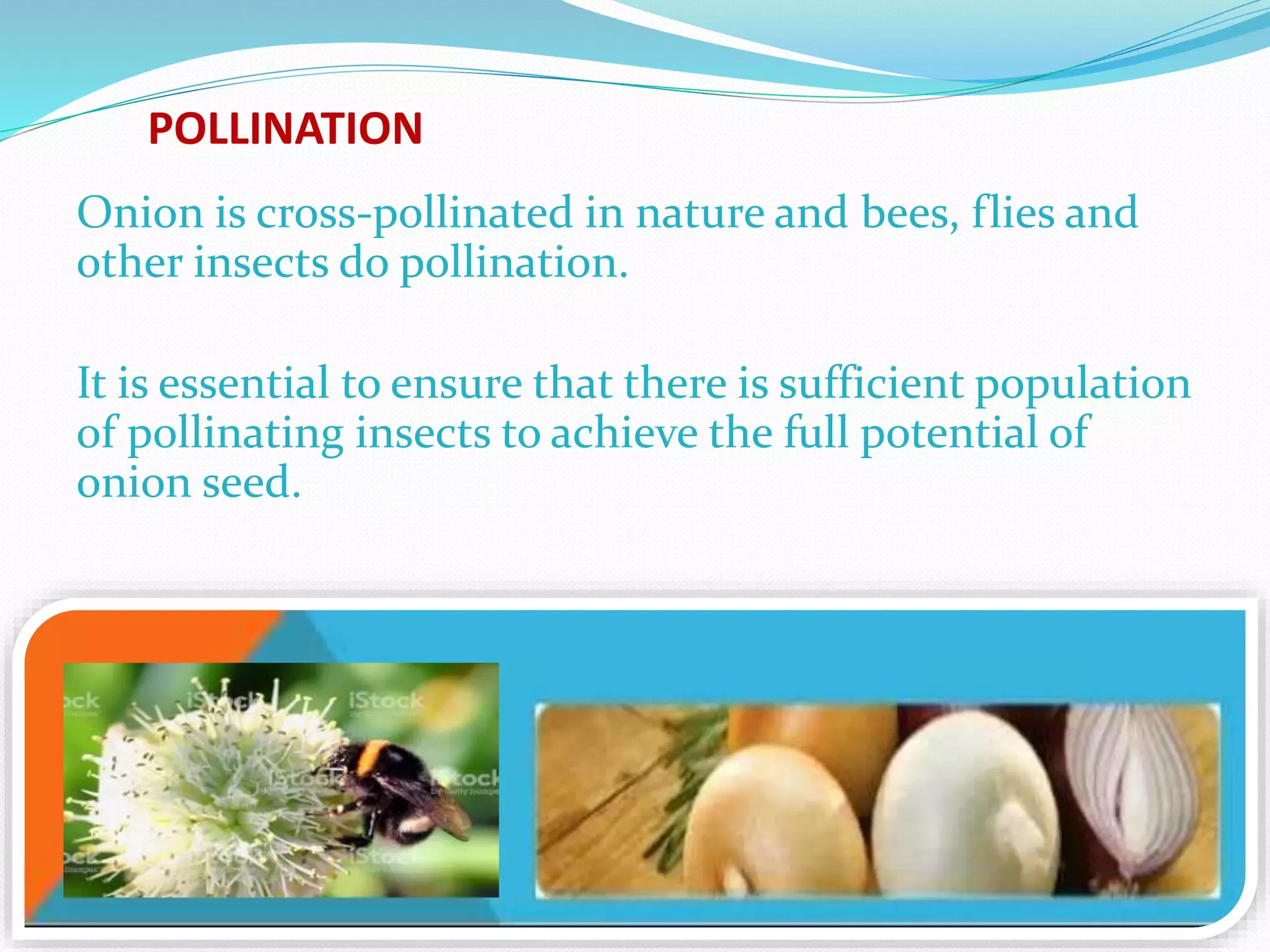
Onions, scientifically known as Allium cepa, belong to the Alliaceae family and originated in Asia. They are a biennial herb characterized by tubular leaves and bulbs formed from swollen leaf bases attached to the underground stem. Major onion-producing countries include China, India, and Pakistan, with India ranking third in exports, primarily from Maharashtra and Karnataka. Onions thrive in a variety of climates but require specific conditions for optimal growth, including well-drained soil and adequate pollination, primarily by insects. Cultivation highlights include the development of various onion types based on color, such as yellow, red, and white, each serving different culinary purposes. Onions are rich in nutrients, providing energy, carbohydrates, and vitamins. They are significant in agriculture for their high yield